 Hatha Yoga
Yoga for Weight Loss: An Honest Look at Calories, Habits and Sleep
Hatha Yoga editorial team · Updated · 8 min read
Yoga for weight loss is usually sold with big promises: drop a size in a month, flatten your belly in a week. The honest answer is more modest. A calm practice burns little energy and, on its own, barely moves the scale.
What it can do is help you build the things your weight actually depends on: more movement, more attention to how you eat, and decent sleep. Below you'll find the numbers from research, the most active routines in the app, and a simple weekly plan.
How many calories does yoga burn?
Exercise intensity is often measured in METs (metabolic equivalents). One MET is what your body uses at rest; under three METs counts as light activity, and three to six as moderate. A 2016 systematic review pulled together 17 studies that measured the energy cost of yoga through gas exchange.
A full session averaged about three METs, individual poses 2.2 METs, and breathing exercises 1.3 METs. The author classified most of the practices as light activity.
The exception is Sun Salutation. In several measurements this sequence reached moderate or even vigorous intensity. The review concludes that a sequence kept above three METs for more than ten minutes can count toward your daily target for moderate activity.
Put simply, a gentle hatha class burns less energy than brisk walking, running or swimming. Dynamic sequences narrow that gap.
Is yoga good for weight loss? What studies show
A 2016 meta-analysis combined 30 randomized trials with 2,173 participants. Overall, the authors found no effect of yoga on body weight, body mass index, body fat percentage or waist size. In people with overweight or obesity, BMI did go down compared with usual care, but the authors call this finding preliminary because the trials had methodological weaknesses.
The NCCIH, a federal research agency in the US, points to two more findings. In a study of 60 women with obesity, the benefit of yoga for BMI depended on whether the women started moving more and eating more fruit and vegetables.
And in a survey of 1,820 young adults, regular practice went hand in hand with healthier eating and activity habits. It looks like yoga affects weight less through calories and more through lifestyle.
If you live with obesity, diabetes, heart disease or joint problems, check with your doctor about the right level of effort before you start.
How yoga helps in indirect ways
- Paying attention. People in that same survey said yoga made them more mindful and nudged them toward other kinds of activity and healthier food.
- Routine. A set time for practice gives your day a rhythm. A morning session easily becomes the anchor for breakfast and a walk.
- Sleep. In observational studies, short sleep is linked to a higher risk of obesity in both children and adults. Studies like these can't prove that one causes the other, but getting enough sleep is worth it either way. A quiet bedtime practice helps you wind down at night.
- A pause before snacking. If a hard day sends you to the fridge in the evening, try ten minutes of gentle practice and a couple of minutes of slow breathing first. Sometimes that's enough to tell hunger from fatigue.
Weight loss yoga routines with more movement
More rounds of Sun Salutation and more strength poses mean a higher workload. A good place to begin is 10-Minute Morning. It warms you up with a trio of Sun Salutations before a standing forward fold, Downward-Facing Dog, Cobra Pose and rest. Being a beginner routine, it works as an everyday morning habit.
Once it starts to feel easy, move on to Strength & Tone. This 25-minute intermediate routine opens with a quartet of Sun Salutations and then works through Chair Pose, three warriors, planks, Boat Pose and backbends on your belly. Holds in Chair Pose, Warrior II and Plank Pose go up to 75 seconds.
For busy days there's a short option: Power Wave, which takes 12 minutes. It has no long pauses. Down Dog flows into plank, your arms work through chaturanga push-ups, and your core switches on in a breath-paced boat.
Yoga poses that work your biggest muscles
Yoga feels like real work in poses that recruit large muscle groups: legs, glutes and core. All six poses below are part of Strength & Tone.
Legs and glutes
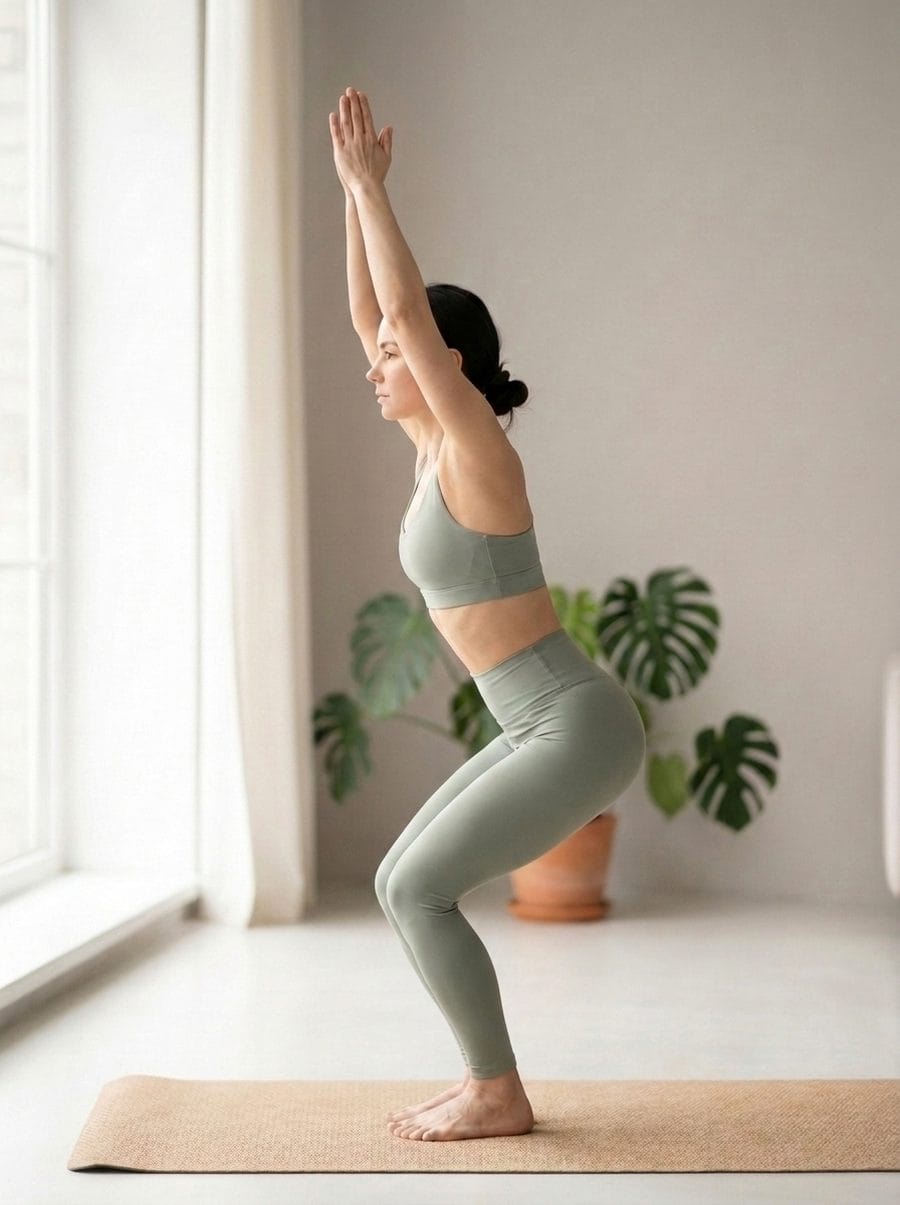
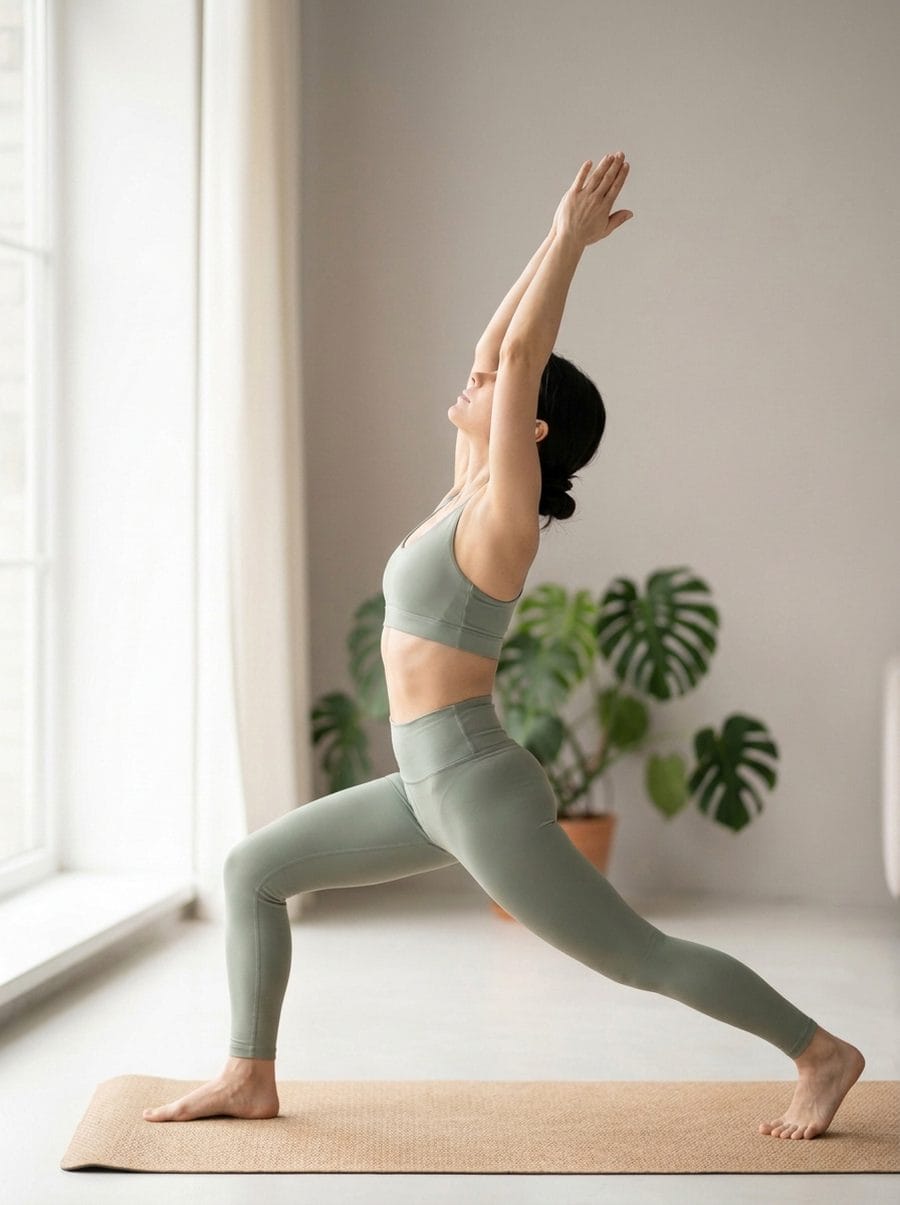
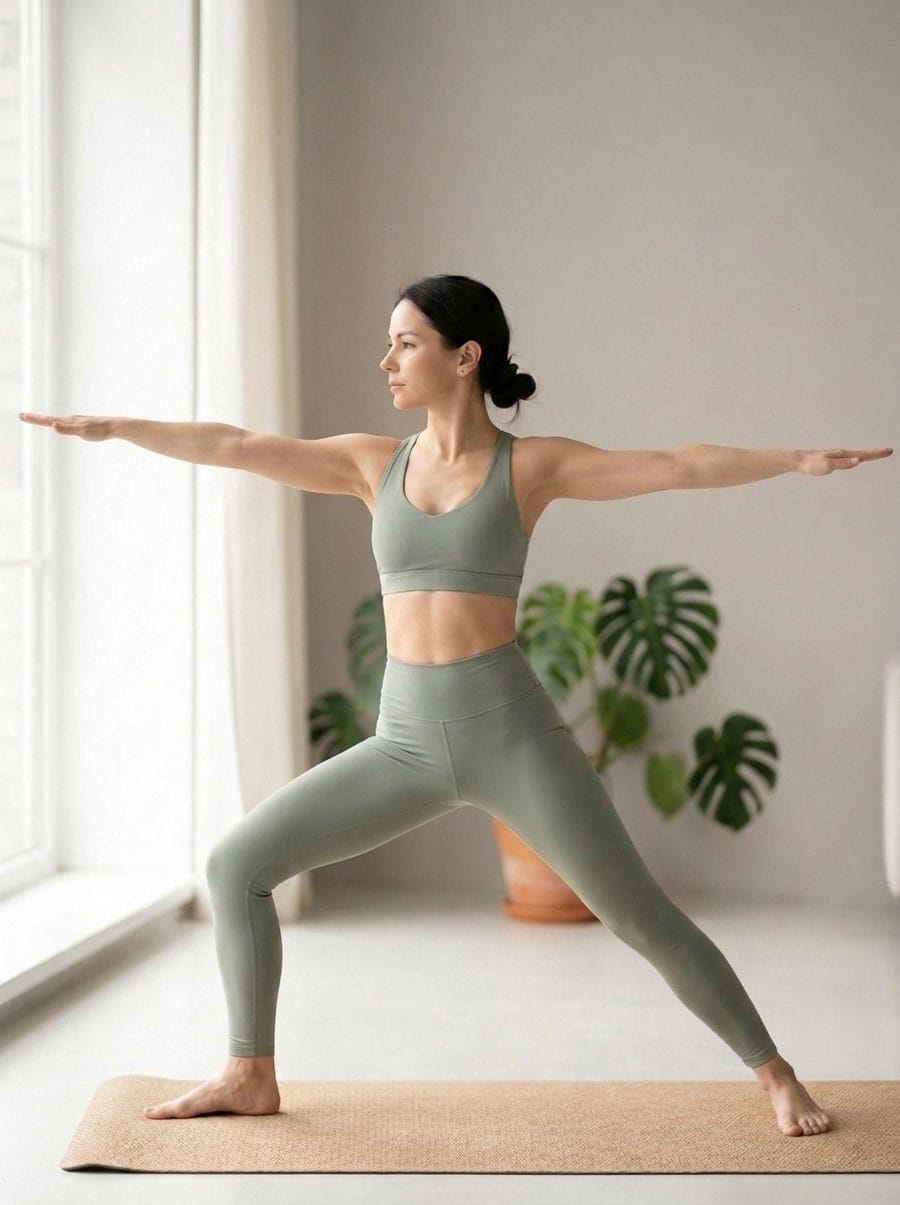
In Chair Pose your hips travel back as though you're lowering onto a low stool, and your thighs tire out fast. Warrior I and Warrior II load your legs in a lunge and train you to keep the knee right over the ankle.
Core and arms
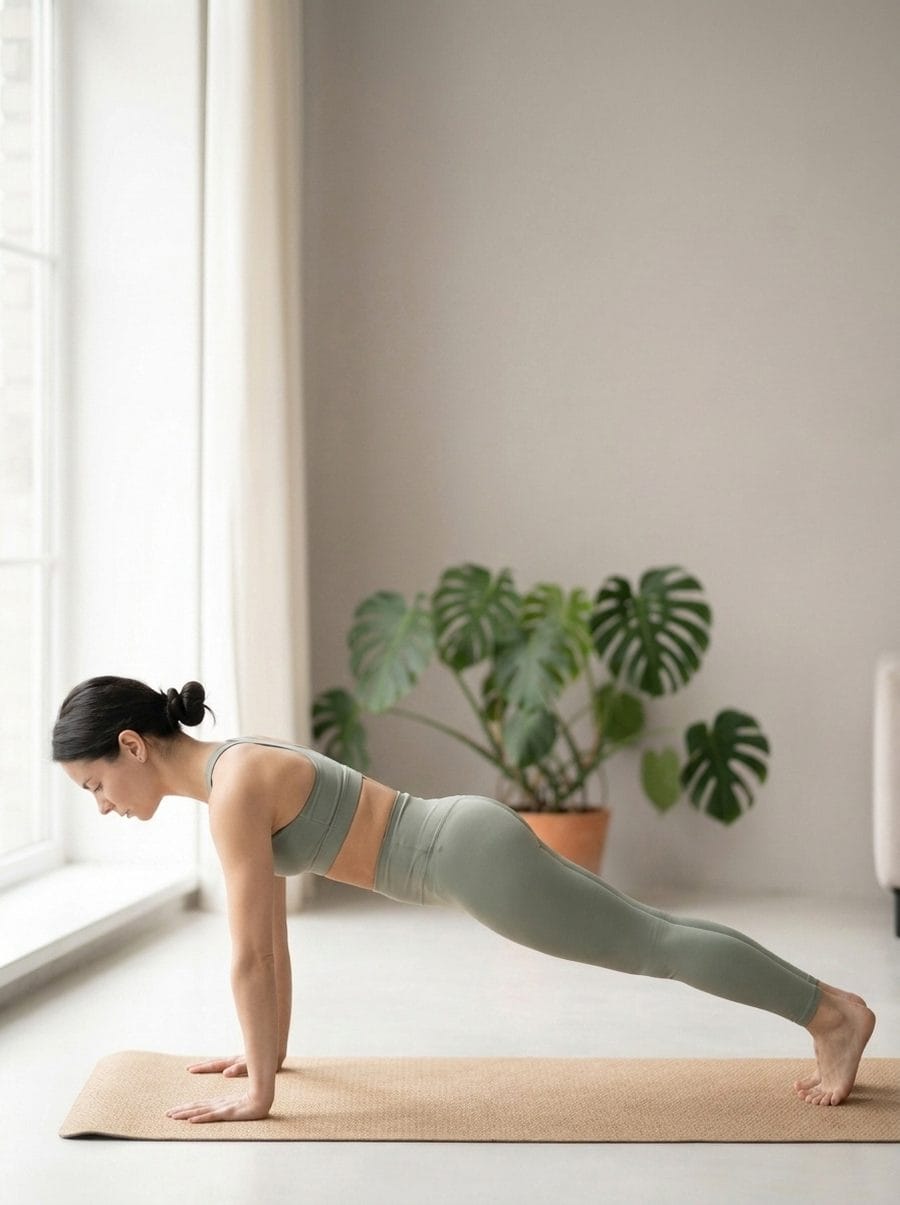
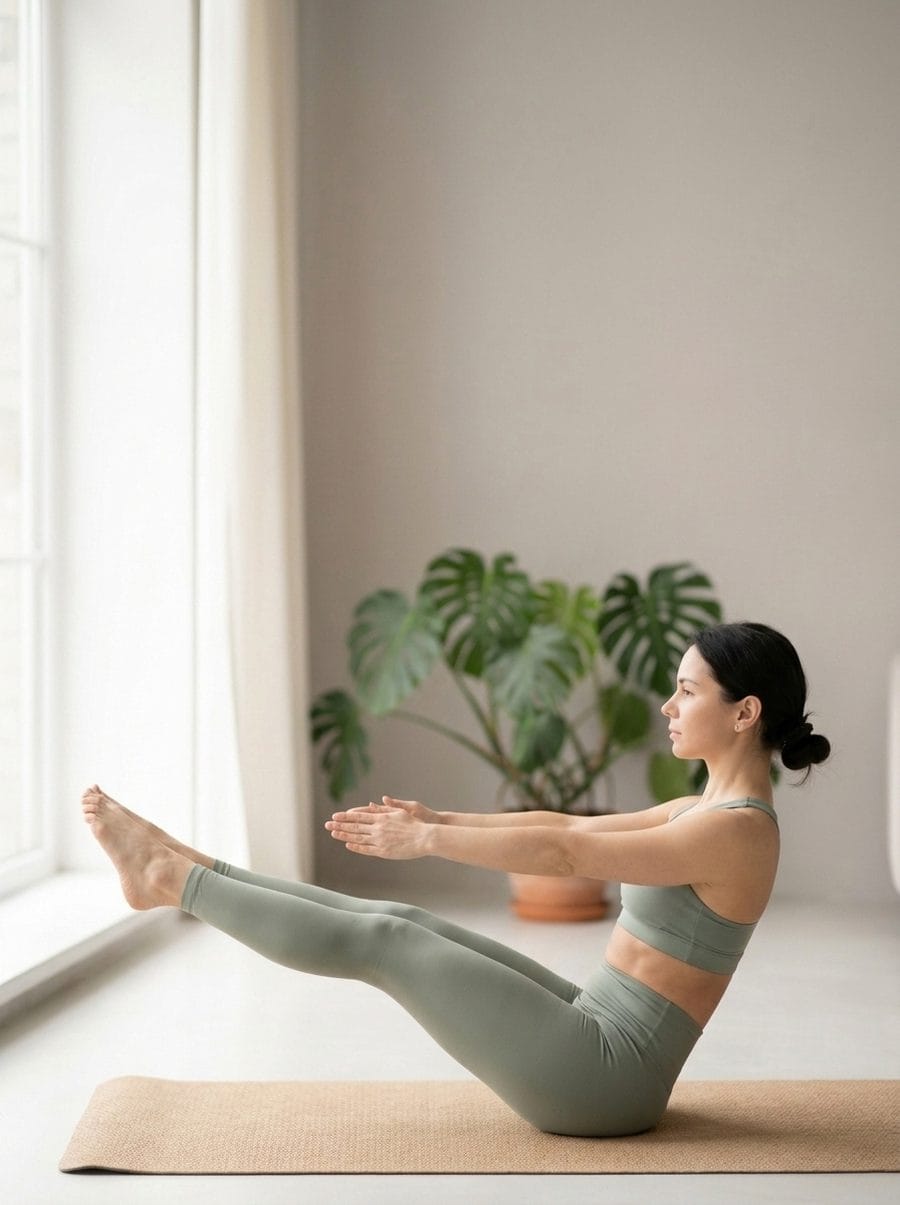
Plank Pose holds your whole body up on your hands and toes, Boat Pose works your abs while you balance seated, and Bridge Pose strengthens your glutes and back. If you can't hold a plank yet, drop your knees to the floor and keep your body straight from knees to head.

Yoga for belly fat: can you target one spot?
"Yoga for belly fat" is one of the most common searches. Core poses make your muscles stronger, but they don't burn fat from your belly specifically. In a small randomized study, 24 people did ab exercises five days a week for six weeks.
Their abdominal endurance improved, yet their weight, body fat percentage and waist measurements didn't change compared with the control group.
So Boat Pose and Plank Pose are there for a strong core and good posture. Your waist changes along with the rest of your body, through overall activity, food and sleep. If you want focused core work, the app has a separate routine called Strong Core.
How to plan your week
The NHS in the UK tells adults to aim for 150 or more minutes of moderate activity each week and to do strengthening exercises for all the major muscle groups on at least two days. The NHS lists yoga among strengthening activities. That gives you a simple plan:
- Two or three days of dynamic yoga for 15 to 25 minutes: Strength & Tone, Energy Boost or a morning routine.
- Most days, a brisk walk or other cardio to reach your 150 minutes.
- One or two evenings, the calm 10-minute Before Bed routine.
- Judge progress by the month, not by the day: how many sessions you managed, how you're sleeping, how your clothes fit.
Safety
Keep the pace manageable. If your breath gets ragged, choose an easier version of the pose or take a break in Child's Pose.
- High blood pressure. Skip the standing forward fold, Locust Pose and Warrior III, and with hypertension leave out Bow Pose as well. Warrior I also works with your hands resting at your waist.
- Disc herniation. For a herniated lumbar disc, drop Boat Pose, Cobra Pose and Locust Pose; any herniated disc in the spine also rules out Bow Pose.
- Diastasis recti. Leave out Plank Pose and Boat Pose.
- Knees. Chair Pose, Warrior I and Warrior II are not for injured knees.
- Neck and lower back. Bridge Pose waits until your neck injury has passed and any lower back flare-up is over.
- Pregnancy. Boat Pose, Cobra Pose, Locust Pose and Bow Pose are contraindicated, so these strength routines aren't a fit.
Breathing exercises are the lightest form of practice in energy terms, so think of "breathing for weight loss" as a way to calm down rather than burn calories. Skull Shining Breath isn't suitable for many people anyway: it's contraindicated during pregnancy and menstruation, with hypertension or heart disease, with abdominal hernias, and after recent abdominal surgery.
Pose cautions in this article
- Knee injuries (Chair Pose, Warrior I, Warrior II)
- Flare-up of lower back problems (Chair Pose)
- High blood pressure — you can keep your hands on your hips (Warrior I)
- Wrist injuries — practice on your forearms (Plank Pose)
- Diastasis recti (Plank Pose, Boat Pose)
- Lumbar disc herniation (Boat Pose)
- Pregnancy (Boat Pose)
- Neck injuries (Bridge Pose)
- Flare-up of lower back pain (Bridge Pose)
This site is for general information and is not medical advice. If you have pain, an injury, a chronic condition, or are pregnant, check with a qualified professional before practicing.
Questions
Can you lose weight doing only hatha yoga? Gentle hatha yoga uses little energy, so without changes in diet and activity your weight usually shifts very little. Your odds improve when the practice becomes part of a new routine.
How many calories does yoga burn? The exact number depends on your weight, age and pace. In terms of intensity, most sessions count as light activity, while dynamic sequences such as Sun Salutation can reach moderate levels.
How often do I need to practice yoga to lose weight? A good benchmark is two or three dynamic sessions of 15 to 25 minutes plus a daily walk. Sticking with it for months matters more than one long session.
Which style of yoga works best for weight loss? The kind with more movement: routines with rounds of Sun Salutation and strength poses. If you're new, start with a gentle routine and build up the pace gradually; the first steps are covered in Yoga for Beginners.
Sources
- Larson-Meyer DE. A Systematic Review of the Energy Cost and Metabolic Intensity of Yoga. Medicine & Science in Sports & Exercise, 2016.
- Lauche R, et al. A systematic review and meta-analysis on the effects of yoga on weight-related outcomes. Preventive Medicine, 2016.
- Vispute SS, et al. The effect of abdominal exercise on abdominal fat. Journal of Strength and Conditioning Research, 2011.
- Cappuccio FP, et al. Meta-analysis of short sleep duration and obesity in children and adults. Sleep, 2008.
- National Center for Complementary and Integrative Health (NIH). Yoga: Effectiveness and Safety.
- NHS. Physical activity guidelines for adults aged 19 to 64.
- Pose technique and cautions, and the contents of the routines: the Hatha Yoga app. More on how we review our texts on the How We Prepare Our Content page.
Read next
- Yoga for Arthritis and Osteoporosis: How to Protect Your Joints and Bones7 min read
- Ashtanga Yoga Explained: The Series, the Breath and the Difference from Hatha6 min read
- Ayurveda Explained Simply: The Basics and a Daily Routine (Dinacharya)5 min read
- Balance Exercises: 10 Yoga Poses for Balance and Stability7 min read