 Hatha Yoga
Breathing Exercises: 8 Yoga Breathing Techniques for Beginners
Hatha Yoga editorial team · Updated · 5 min read
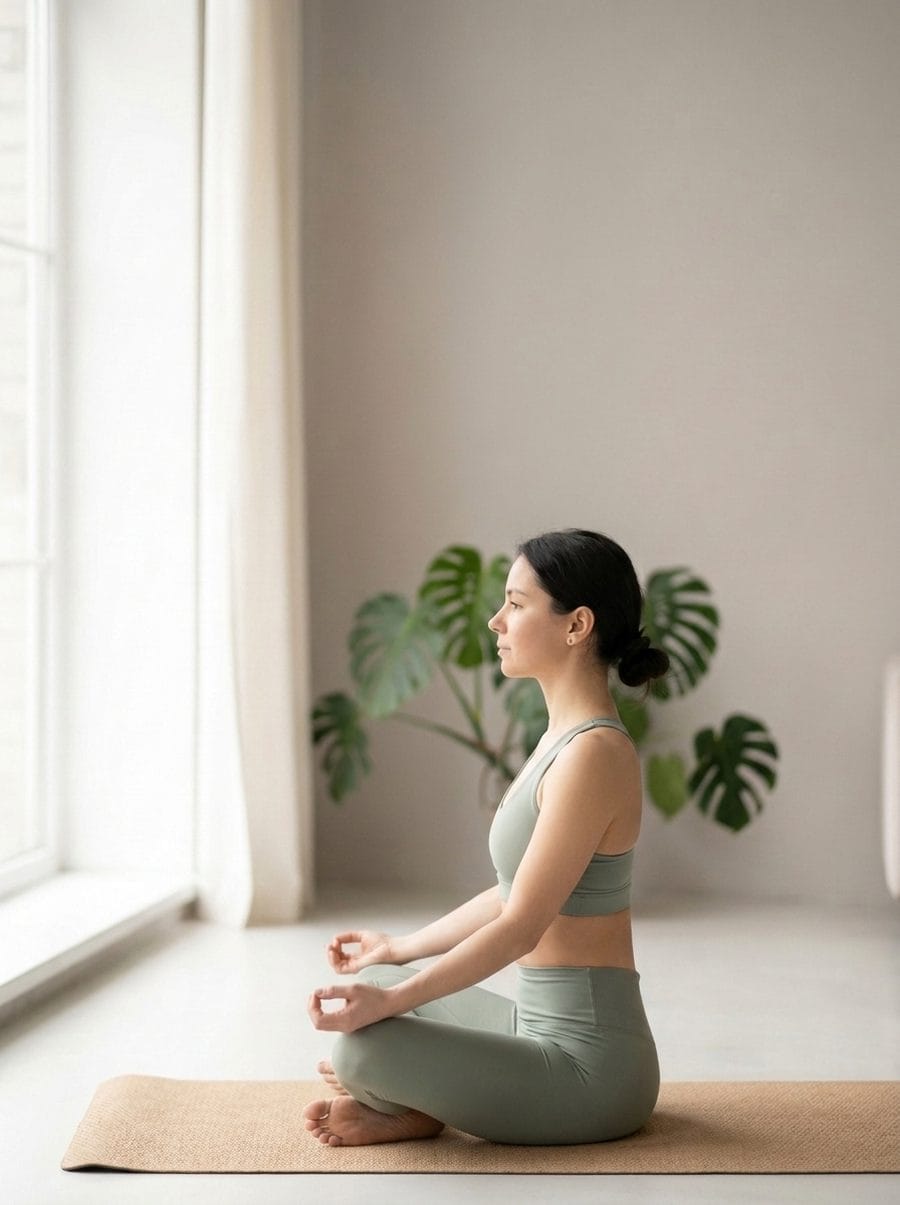
Breathing is the only body function that runs on autopilot yet still answers to your control. Change the rhythm of your inhale and exhale, and within a couple of minutes you can calm down, sharpen your focus or feel more awake.
In yoga, these practices are called pranayama. Below are 8 breathing techniques for beginners with exact counts, tips on how to sit and how long to practice, and honest cautions for each of them.
How breathing exercises differ from everyday breathing
Day to day, we breathe on autopilot: often high in the chest, shallowly, and sometimes we hold our breath without noticing while we concentrate. Breathing exercises turn the breath into something slow and deliberate. The core principle for beginners: make your exhale the same length as your inhale, or longer.
A long exhale helps you settle down, while an even rhythm helps you feel balanced.
Begin with the basics: breathe through your nose and learn to let your belly move, not only your chest. This is what people mean by diaphragmatic or belly breathing, and you'll find it explained in detail in Breath in Practice.
How to sit for breathing practice
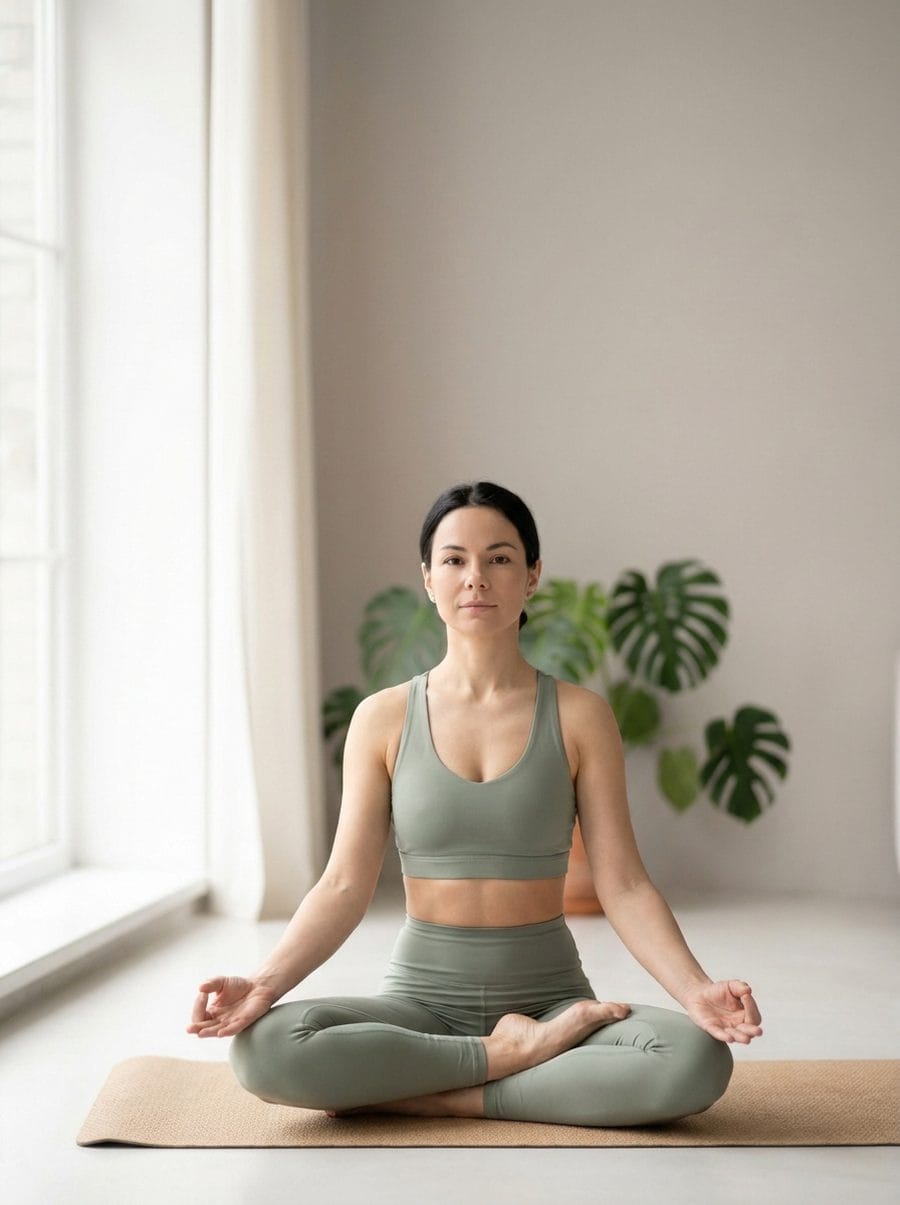
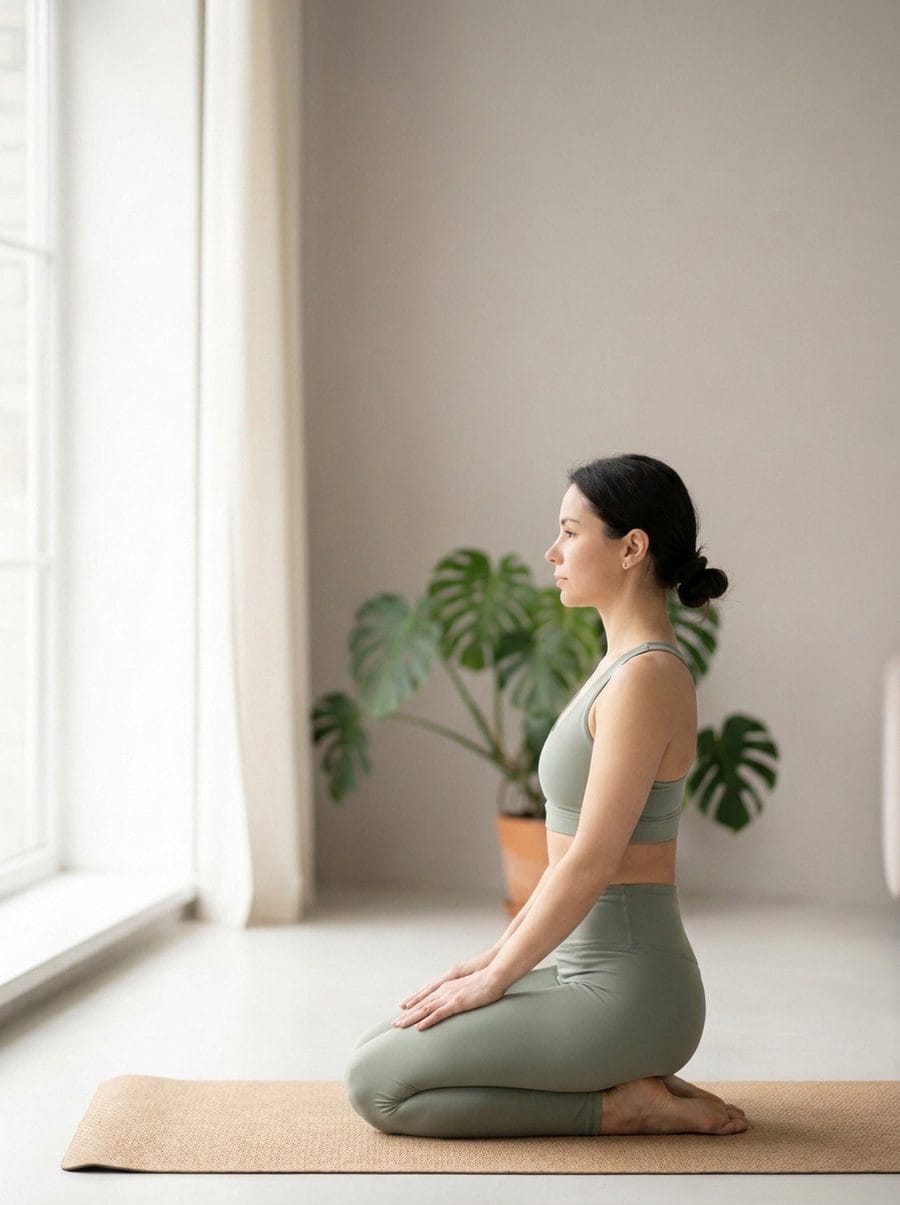
Keep your spine tall but not stiff, your shoulders down and your face soft. Any stable position will do: Easy Pose, Accomplished Pose, or sitting on your heels in Thunderbolt Pose. If your knees end up higher than your hips, sit on a folded blanket.
Thunderbolt Pose is not an option if your knees or ankles are injured. For Full Yogic Breath, lying on your back is the simplest way to begin.

8 yoga breathing exercises (pranayama)
The counts below are in seconds, exactly as the app sets them, in this order: inhale, hold after the inhale, exhale, hold after the exhale.
To calm down
- Full Yogic Breath. Inhale 4, exhale 6. The air fills your belly, then your ribs, then your chest. The best technique to learn first. 5 minutes.
- Coherent Breathing. Inhale 5, exhale 5, which works out to six breaths per minute. In France, this rhythm is practiced according to the "365" rule: three times a day, five minutes at a time.
- Alternate Nostril Breathing (Nadi Shodhana). Inhale 4, hold 2, exhale 6, switching nostrils as you go. Start with 5 to 9 rounds. 7 minutes.
- Bee Breath (Bhramari). Inhale 4, exhale 8 while humming softly. A lovely choice for the evening. 5 minutes.
To focus
- Box Breathing. Inhale 4, hold 4, exhale 4, hold 4. The steady rhythm helps you collect yourself before a task. 5 minutes.
- Ujjayi Breath. Inhale 4, exhale 6 with a soft sound at the back of your throat that resembles ocean waves. It's often used during the poses themselves.
To cool down
- Cooling Breath (Shitali). Inhale through your tongue curled into a tube for 4, hold 2, exhale through your nose for 6. Handy on hot days. 4 minutes.
To energize
- Skull Shining Breath (Kapalabhati). Short, active exhales driven by the belly, with passive inhales in between: three rounds of 30 exhalations. This is an intermediate technique, so learn it after you're comfortable with the first four.
Breathing and movement together
You can also train your breath while you move. The app's Flow with the Breath program pairs every movement with an inhale or an exhale: a joint warm-up, gentle forward folds, Cat-Cow, Bridge Pose done as a flow, and a twist. It takes 12 minutes and is beginner level.
How long to do breathing exercises
To start, 5 minutes a day with a single technique is enough. Once two weeks have passed, bring in a second one. A simple plan that works well: Box Breathing or Full Yogic Breath in the morning, Bee Breath or a lengthened exhale in the evening.
Doing it regularly matters more than doing it for long. To go deeper into pranayama, explore the Pranayama section, and for evenings there are bedtime yoga poses.
We cover some techniques in more depth: diaphragmatic breathing, 4-7-8 breathing, nasal breathing and breath retention. People also ask about methods from outside yoga: Wim Hof breathing and the Buteyko method.
Safety
Breathing exercises look harmless, but some of the techniques come with cautions in the app:
- Breath holds in Box Breathing and Alternate Nostril Breathing are off the table during pregnancy and when your blood pressure runs high; with heart disease, practice Alternate Nostril Breathing without the holds too. If your nose is badly congested, put Alternate Nostril Breathing on hold.
- Skull Shining Breath is not for you with high blood pressure, pregnancy, heart disease or abdominal hernias, during your period, or after recent abdominal surgery.
- Cooling Breath is a poor fit for low blood pressure, chronic bronchitis or chilly weather.
- Bee Breath is out while an ear is inflamed.
If you get dizzy, stop the exercise, go back to breathing normally and stay seated for a little while. Never practice breathing exercises in water or behind the wheel.
Pose cautions in this article
- Knee discomfort — sit on a prop (Easy Pose)
- Knee injuries — use a prop under your hips (Accomplished Pose)
- Knee and ankle injuries (Thunderbolt Pose)
This site is for general information and is not medical advice. If you have pain, an injury, a chronic condition, or are pregnant, check with a qualified professional before practicing.
Questions
Which breathing exercise should I start with? Full Yogic Breath: inhale for a count of 4, exhale for 6. It teaches you to breathe with your belly and suits nearly everyone.
How many times a day should you do breathing exercises? Once or twice a day for 5 minutes is enough. In France, Coherent Breathing is usually done three times a day.
Can you do breathing exercises before bed? Yes, especially techniques with a longer exhale, such as Full Yogic Breath and Bee Breath. Save the energizing Skull Shining Breath for the morning.
Why do I get lightheaded during breathing practice? Most often the breaths are too deep or too fast. Breathe in less deeply and make your exhale longer.
Sources
- Rhythm, technique, duration and cautions for each pranayama, and the contents of the program: the Hatha Yoga app. How we verify our texts is explained on the How We Prepare Our Content page.
Read next
- Yoga for Arthritis and Osteoporosis: How to Protect Your Joints and Bones7 min read
- Ashtanga Yoga Explained: The Series, the Breath and the Difference from Hatha6 min read
- Ayurveda Explained Simply: The Basics and a Daily Routine (Dinacharya)5 min read
- Balance Exercises: 10 Yoga Poses for Balance and Stability7 min read