 Hatha Yoga
Accomplished Pose
Siddhāsana
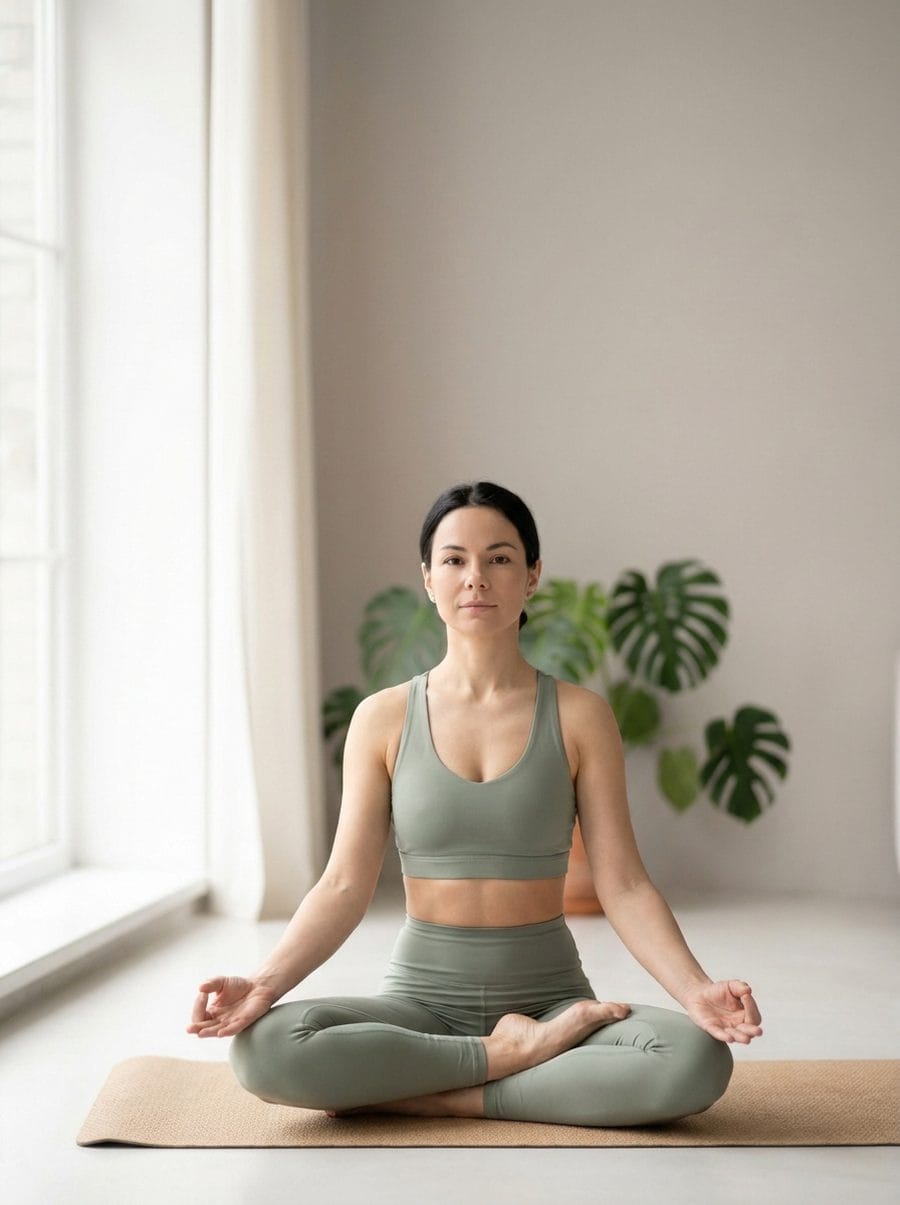
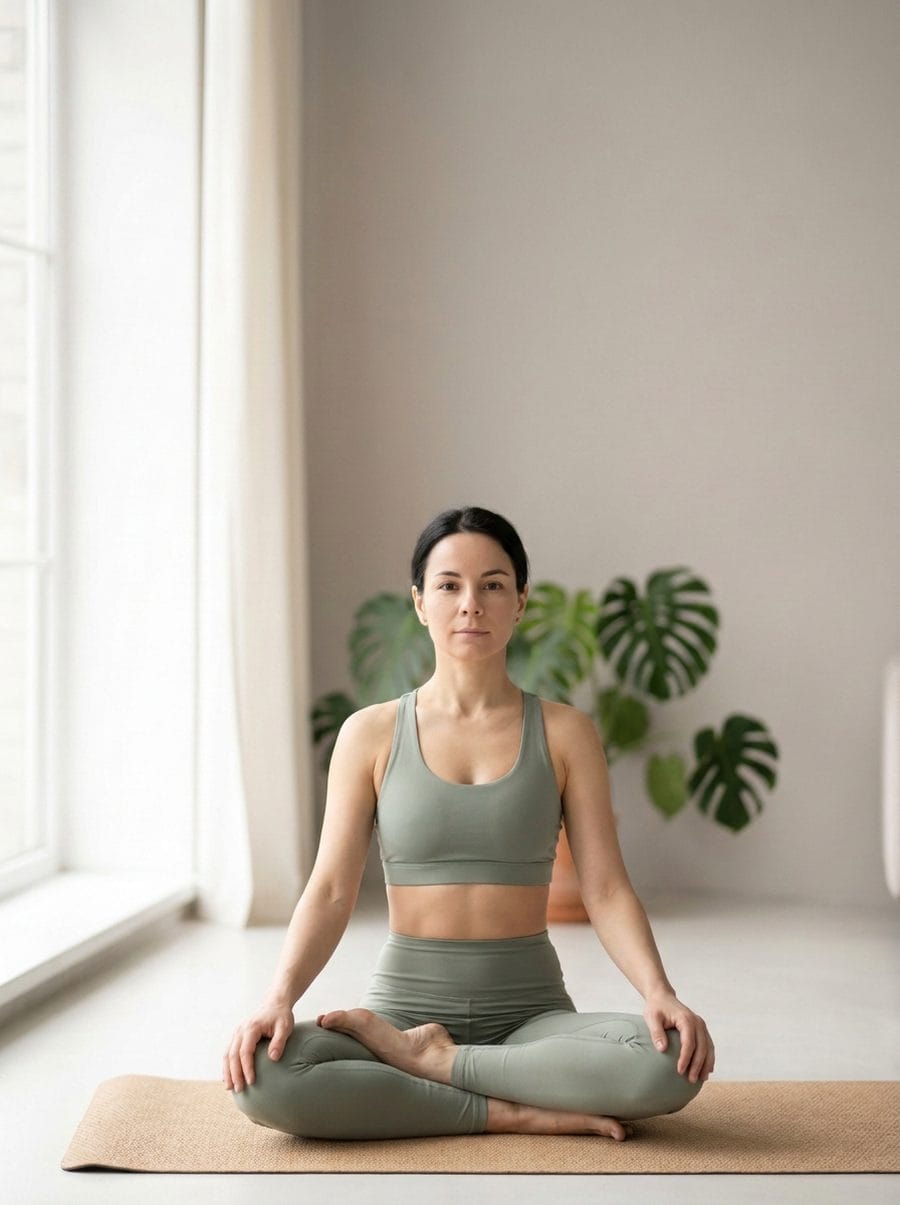
Siddhasana, or Accomplished Pose, is a classic seat for pranayama and meditation: your heels stack along your midline, one above the other, while your knees open wide and sink toward the floor. In Sanskrit, "siddha" means an accomplished or perfected one.
The app files it under beginner poses and gives it 60 seconds on its card, and Path to Lotus sits in it for 55 seconds.
How to do it
- EnterSitting, press the heel of one foot against your perineum and place the other foot on top, along the first shin. Tuck your toes between your thigh and calf.
- HoldSpine long, chin slightly lowered. Knees reach toward the floor. This seat is traditionally considered the best for pranayama: steady and collected.
- ExitUncross your legs and gently extend them.
More detail
It's easiest to perch on the front edge of a firm cushion or a thickly folded blanket. With your hips slightly higher than your knees, your spine rises on its own, without gripping in the lower back. Warm up your hips first, since Siddhasana asks your thighs to open freely out to the sides.
Line up your heels roughly beneath the pubic bone. If one knee floats in the air, tuck a rolled towel under it. Hands rest on the knees, chin dips slightly. Alternate the top leg every time you practice. Start with about a minute and build up as your legs stop falling asleep.
Benefits
A classic pose for pranayama: steady, with a level pelvis.
Your knees and pelvis form a wide base, and your spine stays upright with very little muscular effort. That's why Siddhasana suits long breathing practices, such as Alternate Nostril Breathing, and meditation. For the hips it's gentle opening work that gradually prepares you for Lotus.
Cautions
- Knee injuries — use a prop under your hips
This site is for general information and is not medical advice. If you have pain, an injury, a chronic condition, or are pregnant, check with a qualified professional before practicing.
Common mistakes
- Sitting on a bare floor when your knees are higher than your hips. Your back rounds and the seat loses its stability.
- Pushing on your knees to flatten them. Give them time; they settle as your hips release.
- Resting ankle bone directly on ankle bone. Shift your feet until the bones stop digging into each other.
- Ignoring numbness. Tingling in your feet means it's time to come out and stretch your legs.
Where it appears
- Path to Lotus 30 min · Advanced
Similar poses
Questions
What's the difference between Siddhasana and Padmasana? In Lotus Pose both feet rest on the opposite thighs, soles up, which takes a strong outward rotation of the hip. In Siddhasana your feet stay low, so the app rates it beginner while Lotus is intermediate.
Siddhasana vs Sukhasana: which is easier? In Easy Pose your shins simply cross, with the feet tucked beneath the knees. Siddhasana gathers the heels at the center, so the seat is more compact and steady but asks more of your hips.
Can I sit in Siddhasana with knee problems? Yes, if a prop lifts your hips: that's the app's condition for injured knees, so the joint never bends all the way. If the knee still hurts with that support, stop and talk to your doctor.
Featured in
- The Bhagavad Gita and Yoga: Karma, Bhakti and Jnana as Three Paths6 min read
- The History of Yoga: From Ancient Texts to Modern Studios6 min read
- Vipassana and Other Types of Meditation: How They Differ6 min read
- The Yoga Sutras of Patanjali: What the Book Is About and How to Read It6 min read
- Nasal Breathing and Breath Holding: What Yoga Really Trains6 min read
- Buteyko Breathing: What It Is and How It Compares with Pranayama5 min read
- Chakras in Yoga: The Traditional Model Without the Mysticism6 min read
- Mantras and Om: Meaning and How to Chant Them7 min read
- Mudras: Key Hand Gestures and How to Use Them in Yoga6 min read
- Meditation for Beginners: How to Start Meditating at Home7 min read
- Breathing Exercises: 8 Yoga Breathing Techniques for Beginners5 min read
Updated: