 Hatha Yoga
The Bhagavad Gita and Yoga: Karma, Bhakti and Jnana as Three Paths
Hatha Yoga editorial team · Updated · 6 min read
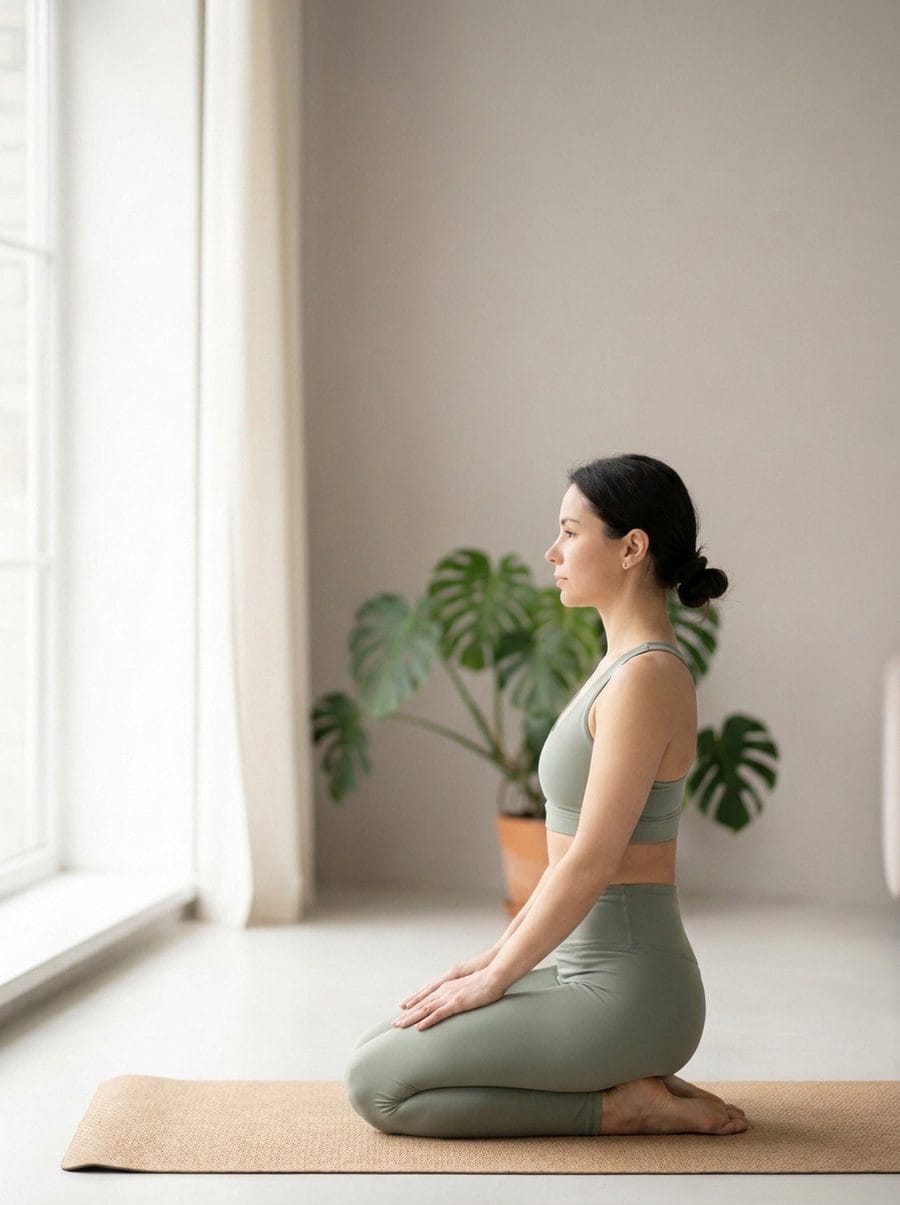
The Bhagavad Gita is counted among the great books of Indian thought, and no ancient text uses the word "yoga" more often. Here yoga is also a way to work, love and understand the world, not just a hermit's meditation.
This guide covers it in plain words: what the book is, how it connects to the Vedas and Upanishads, the three paths of yoga it describes, and what you can bring from it into everyday practice.
What is the Bhagavad Gita? Meaning and summary
The title is usually translated as "Song of the Lord." The Gita sits inside the sixth book of the vast epic Mahabharata and runs to 18 chapters and about 700 verses. The story is brief. Before a battle on the field of Kurukshetra, Prince Arjuna sees relatives and teachers in the enemy ranks and refuses to fight.
His charioteer Krishna, whom Arjuna later recognizes as a divine incarnation, answers with a conversation about duty, the nature of the soul and how to act rightly.
Most scholars date it within a few centuries either side of year one. In Hinduism it's scripture, yet for centuries people have also read it as philosophy: about choice, responsibility and inner calm. India's greatest philosophers wrote commentaries on it, and in the 20th century Mahatma Gandhi wrote about it at length.
The Gita, the Vedas and the Upanishads
The Vedas are older: four collections of hymns and ritual texts. The Rigveda holds hymns to the gods, the Samaveda chants for ceremonies, the Yajurveda sacrificial formulas, and the Atharvaveda spells and household rites. Tradition classes them as shruti, revelation that was "heard." The Upanishads close the Vedic corpus with philosophical dialogues about the self and the world.
The Gita belongs to smriti, tradition that was "remembered," but it carries forward many ideas of the Upanishads. Together with the Upanishads and the Brahma Sutras, it forms the three foundations of Vedanta philosophy. For how these texts followed one another, see our history of yoga.
What yoga means in the Bhagavad Gita
The Gita defines yoga more than once, and every definition is broader than "poses and breathing." In the second chapter, Krishna advises acting while staying even in success and failure, and he calls that evenness of mind yoga. A little later comes another formula: yoga is skill in action.
Here the word means something closer to "discipline" or "attitude" than exercise. In traditional editions, each of the 18 chapters is titled as the yoga of something: the third is devoted to karma yoga, the sixth to meditation, the twelfth to bhakti yoga.
The three paths: karma, bhakti and jnana yoga
Karma yoga: action without chasing results
The Gita's most quoted line, karmany evadhikaras te ma phaleshu kadachana, says you have a right to your action, but never to its fruits. Give your work your all, and don't make the outcome a condition for your peace of mind.
Today that sounds practical: what matters is that you took the step, not how fast the payoff came. The third chapter adds that inaction is no way out, since without action you couldn't even keep the body alive.
Bhakti yoga: the path of love and devotion
The twelfth chapter speaks of devotion to the divine. Bhakti is considered the most accessible path: it asks for no learning, only sincere feeling and dedicating what you do to something larger than yourself. In the ninth chapter Krishna says he will accept even a leaf, a flower, a fruit or some water when it's offered with love.
Jnana yoga: the path of knowledge
This is the path of discernment: seeing what in you changes (body, moods, thoughts) and what stays the same. Krishna tells Arjuna that the true self is neither born nor dies, and that understanding dissolves fear.
Later, at the end of the 19th century, Swami Vivekananda described four yogas, adding raja yoga, the path of meditation from Patanjali's Yoga Sutras, to the Gita's three.
Chapter six: meditation and moderation
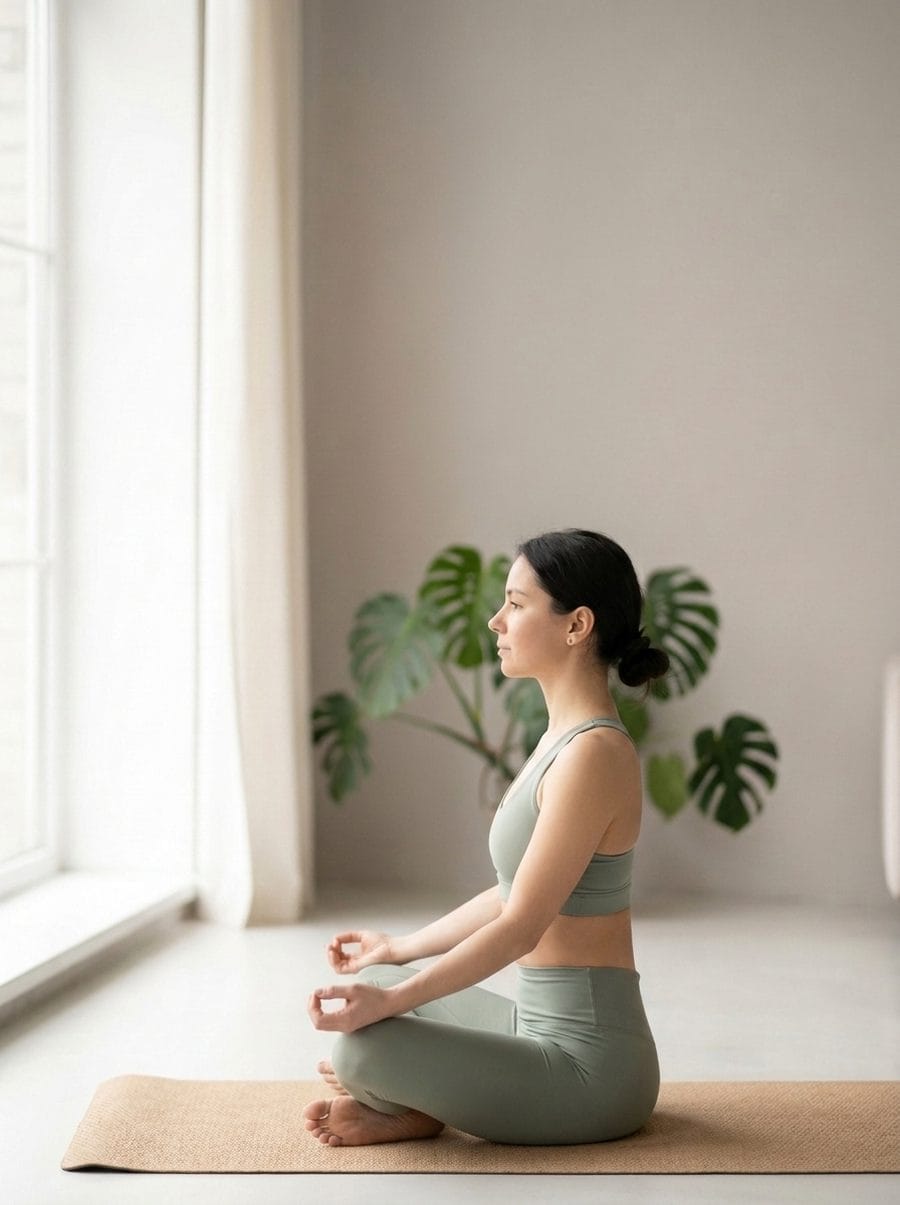
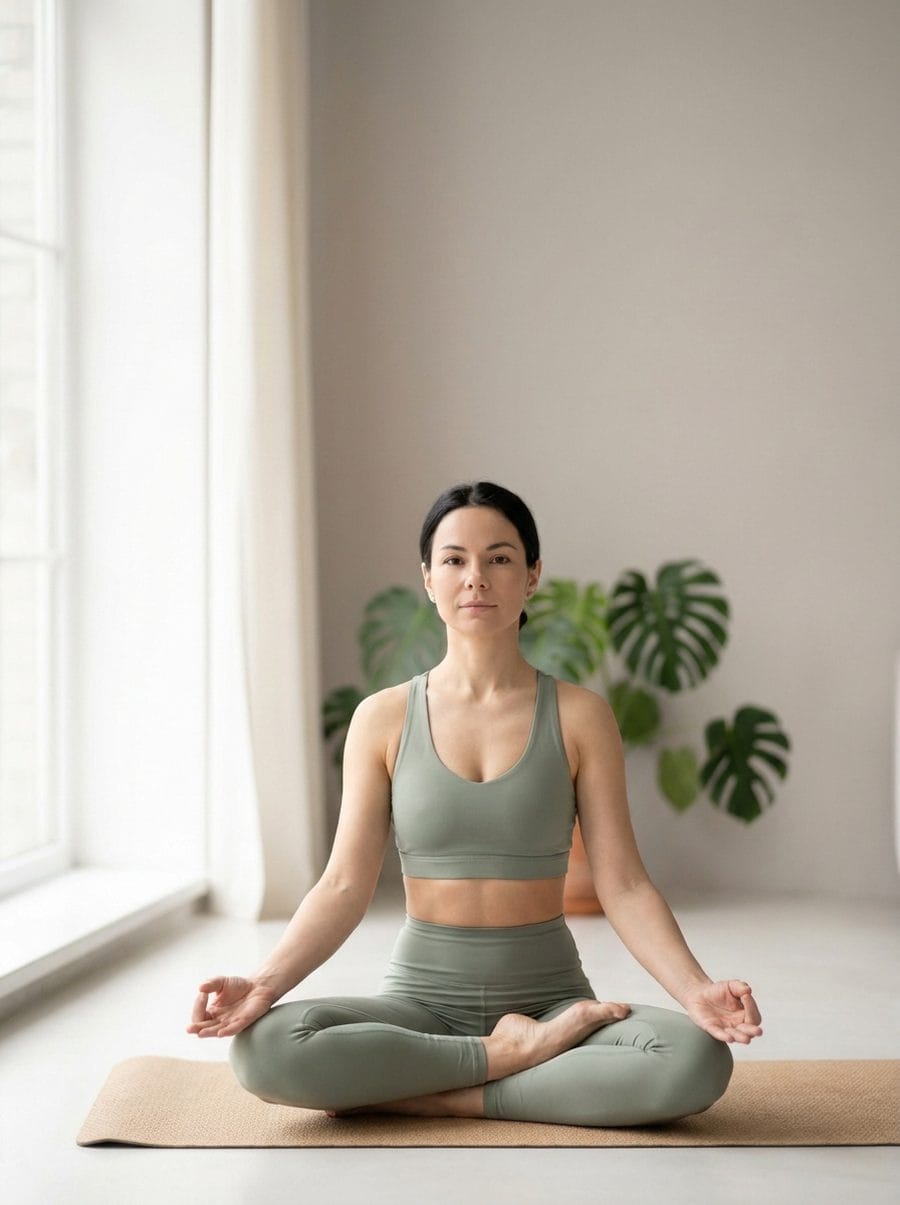
The sixth chapter is the closest to what we do on the mat. For meditation, the Gita advises choosing a clean place and a firm seat, neither too high nor too low, and keeping the body, neck and head aligned and still.
Below are poses that make that kind of sitting comfortable, plus Savasana to relax after practice.

The same chapter offers advice on balance. Yoga won't work for someone who overeats or starves, who oversleeps or denies themselves sleep. It works for the person who keeps measure in food, rest, work, sleep and waking. Some two thousand years later, that's still a sound rule for a daily routine.
How to bring the Gita's ideas into your practice
- Practice for its own sake. Step onto the mat without expecting quick results. That's karma yoga in miniature.
- Evenness in the pose. Notice when you start fighting your body, and come back to steady breathing.
- Moderation in everything. A short daily session beats an exhausting one once a week.
- Dedication. Before you begin, choose what today's practice is for: calm, the people you love, your health.
To get started, try First Practice in the app: a quarter hour of gentle beginner poses that ends in Savasana.
Safety
Any pose works for meditation as long as your spine stays tall and your feet keep their feeling. Skip Thunderbolt Pose altogether when you're dealing with knee or ankle injuries. If a knee is hurt, sit in Accomplished Pose on a support, with a block or cushion under your pelvis.
A cushion helps in Easy Pose too when your knees feel uncomfortable. Savasana suits everyone. More in Safety and Contraindications.
Pose cautions in this article
- Knee discomfort — sit on a prop (Easy Pose)
- Knee injuries — use a prop under your hips (Accomplished Pose)
- Knee and ankle injuries (Thunderbolt Pose)
This site is for general information and is not medical advice. If you have pain, an injury, a chronic condition, or are pregnant, check with a qualified professional before practicing.
Questions
What religion is the Bhagavad Gita from? It's a sacred text of Hinduism and part of the epic Mahabharata. Many people also read it as a work of philosophy, without any religious affiliation.
How long is the Bhagavad Gita? 18 chapters and about 700 verses. It's a small part of the Mahabharata, found in the epic's sixth book.
How is the Gita different from the Vedas? The Vedas are older and consist of hymns and ritual texts. The Gita came later, is written as a dialogue, and builds on ideas from the Upanishads, which close the Vedic corpus.
Where does the Gita talk about meditation? Mostly in chapter six: the place, the seat, the position of the body, and moderation in food and sleep.
Sources
- Primary texts: the Bhagavad Gita (Mahabharata, sixth book) and the Upanishads.
- Yama and niyama: the theory sections of the Hatha Yoga app, which is also the source for pose technique, cautions and routine contents. How we check our texts is explained on the How We Prepare Our Content page.
Read next
- Yoga for Arthritis and Osteoporosis: How to Protect Your Joints and Bones7 min read
- Ashtanga Yoga Explained: The Series, the Breath and the Difference from Hatha6 min read
- Ayurveda Explained Simply: The Basics and a Daily Routine (Dinacharya)5 min read
- Balance Exercises: 10 Yoga Poses for Balance and Stability7 min read