 Hatha Yoga
The Yoga Sutras of Patanjali: What the Book Is About and How to Read It
Hatha Yoga editorial team · Updated · 6 min read
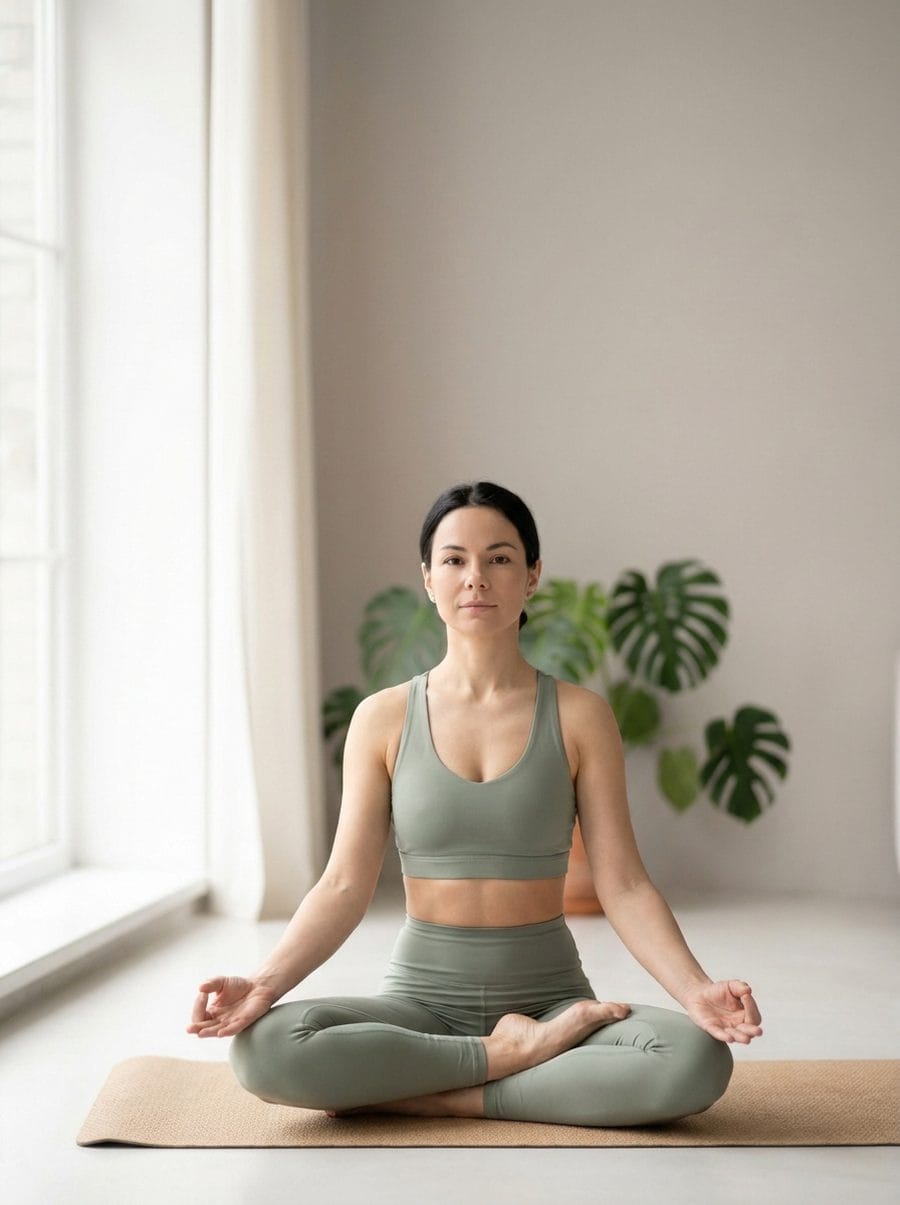
The Yoga Sutras of Patanjali are often called the core text of yoga, yet plenty of people practice for years without ever opening them. The book is short, around two hundred lines, and nearly every line packs a whole idea.
Here it is in plain words: what the four chapters cover, which ideas are worth knowing, what Patanjali says about asana (it gets very few lines), and how to read the sutras so they actually support your practice.
What are the Yoga Sutras?
"Sutra" is Sanskrit for "thread." Sutras were written to be as compact as possible so they could be memorized and explained out loud, which is why many of them sound cryptic without commentary. The book contains about 195 sutras (some editions count 196), divided into four chapters.
Little is known about the author. Tradition sometimes identifies him with the Patanjali who wrote a commentary on Panini's grammar, but most scholars doubt it. The date is just as uncertain: some researchers place the text before the Common Era, while others place it in the 4th–5th centuries CE.
To see where it fits in the bigger picture, read our history of yoga.
What the four chapters cover
- Samadhi Pada, on concentration. It defines yoga, describes the states of the mind and how to quiet them.
- Sadhana Pada, on practice. It explains what clouds clarity and introduces the eight limbs of yoga, covering the first five in detail.
- Vibhuti Pada, on the fruits of practice. The last three limbs, plus the unusual abilities deep concentration may bring. The text itself warns that getting caught up in them becomes an obstacle.
- Kaivalya Pada, on liberation. The most philosophical part, about the nature of consciousness and kaivalya, freedom from habitual conditioning.
Key ideas, explained simply
Yoga as stilling the mind
The book opens with the words "Now, the teaching of yoga." The second sutra holds the key to the whole text: yoga is quieting the mind's restless movements. The third goes on: then the seer rests in its true nature.
The fourth: at other times, it identifies with those fluctuations. Postures, breathing and ethics all serve one aim: a mind that stops racing, so you can see things as they really are.
Practice and letting go
Patanjali names two tools: abhyasa, steady practice, and vairagya, non-attachment. Practice becomes firmly rooted when it's kept up for a long time, without breaks, and with genuine care. That may be the most useful advice for anyone stepping onto a mat: a little every day beats a heroic effort once a month.
Five obstacles
The second chapter lists the kleshas, the sources of suffering: ignorance, identifying with your ego, clinging to what's pleasant, aversion to what's unpleasant, and clinging to life. Patanjali sees ignorance as the root; the other four grow out of it.
Four attitudes toward others
The first chapter offers advice you can use today. The mind settles when you meet happy people with friendliness, suffering people with compassion, those who act well with gladness, and those who act badly with equanimity. It isn't about judging others; it's about letting their actions shake you less.
The eightfold path in brief
The eightfold path is laid out across the second and third chapters. Yama and niyama shape how you relate to the world and to yourself, asana and pranayama work with the body and breath, pratyahara turns attention inward, and dharana, dhyana and samadhi lead to complete absorption.
Each limb has its own page on this site: the eight limbs of yoga, yama with ahimsa and satya, and niyama with tapas and svadhyaya.
Notice the last three niyamas: tapas, svadhyaya and ishvara pranidhana. At the start of the second chapter Patanjali groups them under the name kriya yoga, meaning yoga in action. They amount to discipline, self-study and trust in something larger than yourself.
What Patanjali says about asana
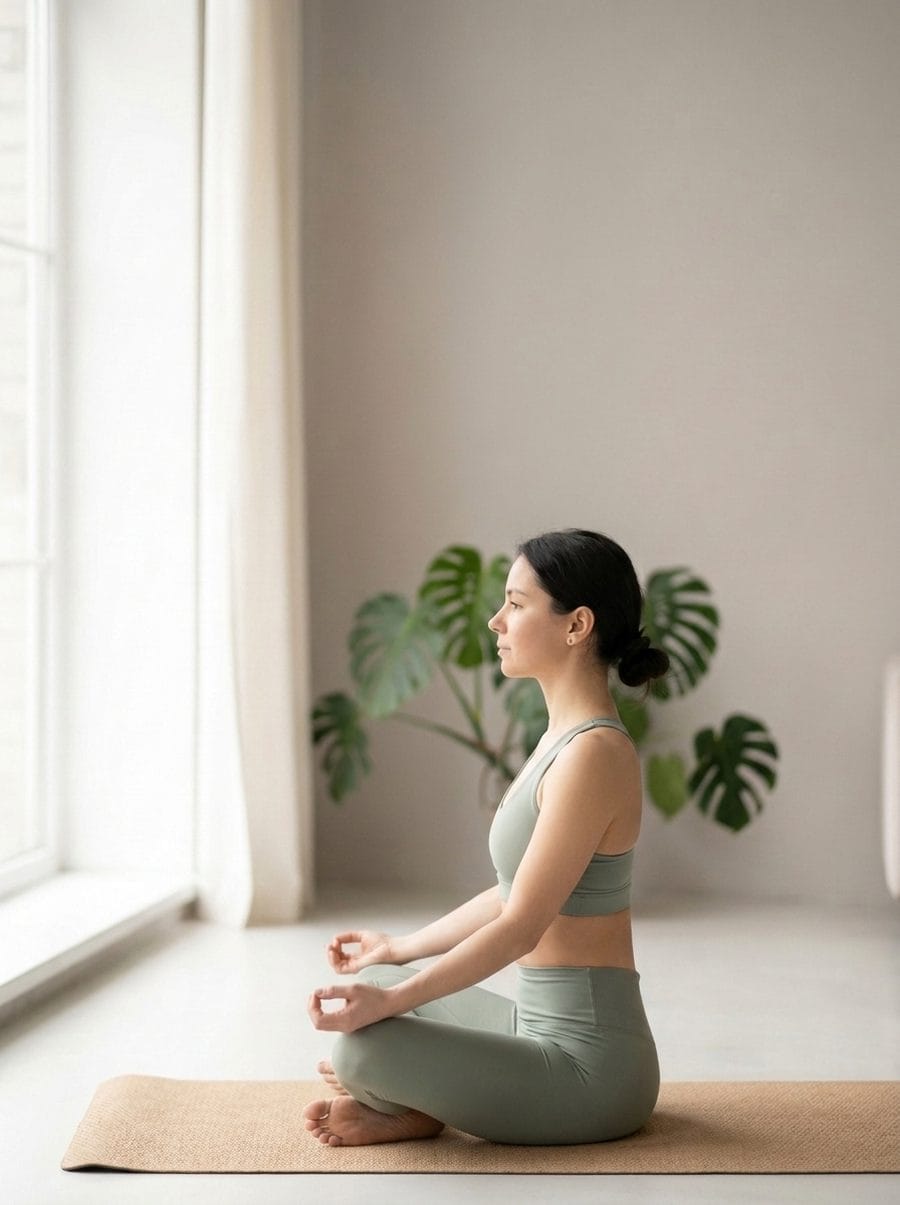
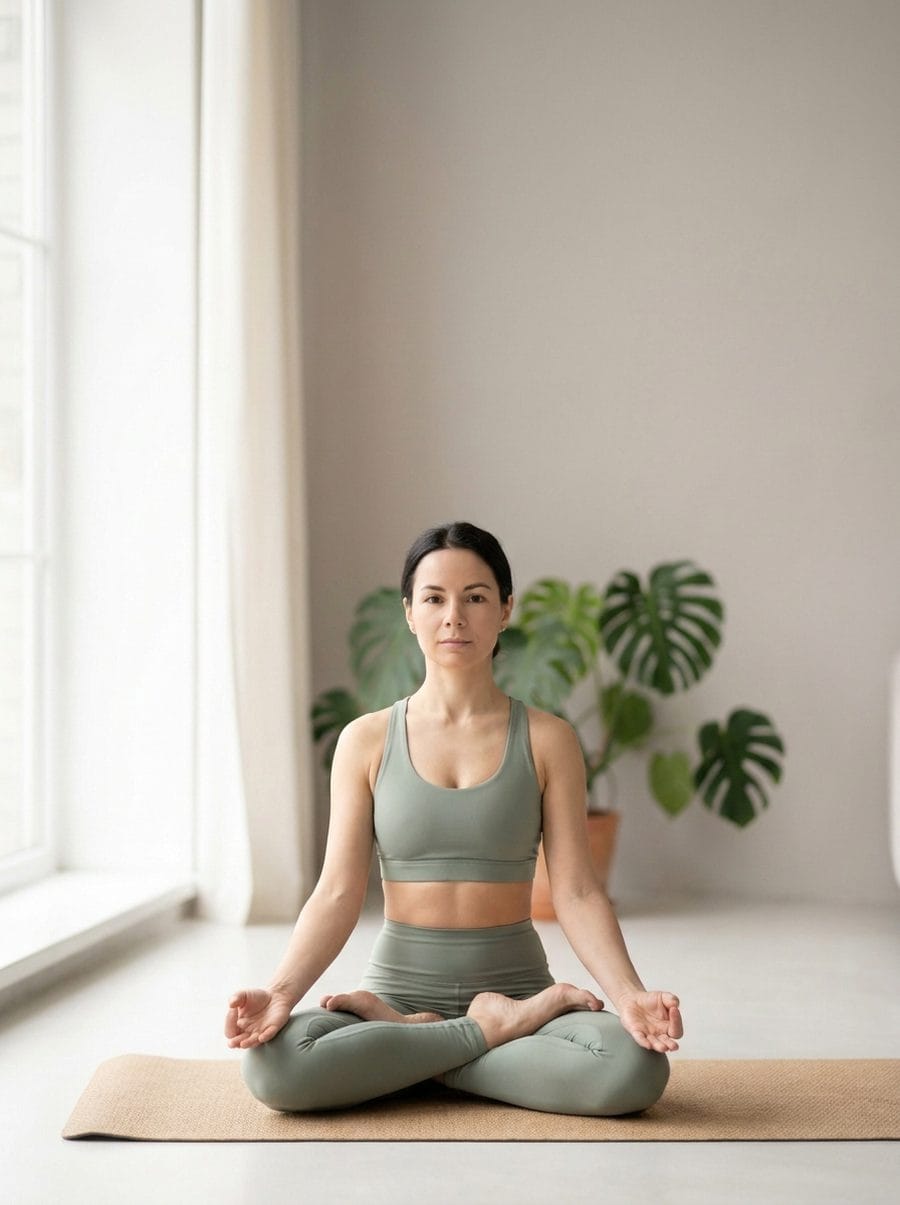
Asana gets three lines in the sutras, and none of them names a pose. The seat, the sutra says, is steady and at ease. You reach it by easing unnecessary effort and resting your attention on the infinite. Once the posture is established, opposites like heat and cold disturb you less.
Right after that comes pranayama, working with the rhythm of the inhale and exhale.
What's meant here is mainly a position for sitting a long time. Later commentators and hatha yoga texts named suitable seats: Easy Pose, Accomplished Pose, Lotus Pose. Choose the one where your back stays upright without strain, and finish your session lying in Savasana.

If you'd like to live the whole chain from posture to relaxation on the mat, try the app's Classic Full Practice. It's a 50-minute intermediate session that has it all: the Sun Salutation six times through, standing asanas, forward folds, backbends, upside-down poses and a long Savasana.
How to read the Yoga Sutras
- With a commentary. The oldest surviving commentary is attributed to Vyasa. Well-known modern ones include Swami Vivekananda's Raja Yoga (1896) and B.K.S. Iyengar's Light on the Yoga Sutras of Patanjali.
- Slowly. Two or three sutras at a time, with a pause to think. It's a book to reread, not to finish in one evening.
- Comparing translations. Sanskrit terms carry several meanings, and two translations of the same line often complement each other.
- Through practice. Pick one idea a week, such as ahimsa, and watch for it on the mat and through your day.
Safety
Sitting for a long time shouldn't hurt. Skip Lotus Pose with injured knees, and don't pull your legs into it by force even when your knees are healthy. With sore knees, do Accomplished Pose sitting on a block or cushion.
In Easy Pose, a blanket under your hips helps if your knees ache. From Classic Full Practice, Shoulder Stand and Plow Pose are dropped by anyone whose neck is injured, whose blood pressure runs high, or who has glaucoma, and also during menstruation or pregnancy. Read more in Safety and Contraindications.
Pose cautions in this article
- Knee discomfort — sit on a prop (Easy Pose)
- Knee injuries — use a prop under your hips (Accomplished Pose)
- Knee injuries (Lotus Pose)
- Don't force it — knees don't forgive rushing into Lotus (Lotus Pose)
This site is for general information and is not medical advice. If you have pain, an injury, a chronic condition, or are pregnant, check with a qualified professional before practicing.
Questions
Who wrote the Yoga Sutras? The sage Patanjali. Almost nothing is known about him, and many scholars question whether he was the grammarian of the same name.
When were the Yoga Sutras written? There's no consensus. Early estimates reach back before the Common Era, while some modern scholars lean toward the 4th–5th centuries CE.
How many Yoga Sutras are there? About 195; some editions count 196. They fall into four chapters: on concentration, on practice, on the fruits of practice and on liberation.
Do I need to read the Yoga Sutras to practice yoga? No, you can practice without them. But the book explains why postures and breathing matter, and it helps you see more in your sessions than gymnastics.
Sources
- Primary text: Patanjali's Yoga Sutras with the commentary attributed to Vyasa.
- The eight limbs, yama and niyama: the theory sections of the Hatha Yoga app, which is also the source for pose technique, cautions and routine contents. How we check our texts is explained on the How We Prepare Our Content page.
Read next
- Yoga for Arthritis and Osteoporosis: How to Protect Your Joints and Bones7 min read
- Ashtanga Yoga Explained: The Series, the Breath and the Difference from Hatha6 min read
- Ayurveda Explained Simply: The Basics and a Daily Routine (Dinacharya)5 min read
- Balance Exercises: 10 Yoga Poses for Balance and Stability7 min read