 Hatha Yoga
Nasal Breathing and Breath Holding: What Yoga Really Trains
Hatha Yoga editorial team · Updated · 6 min read
Breath holding is often trained for records and "bigger lungs," while nasal breathing gets treated as a detail. Yoga flips that around: the nose stays the main airway, and pauses in the breath are added gradually, never by force. Here you'll learn why nasal breathing matters, how the holds in the Hatha Yoga app's pranayama techniques work, how to lengthen them safely, what breathing practice does for your lungs, and when holding your breath is a bad idea.
Nasal breathing benefits
Your nose is more than an opening for air. The upper airway protects the lungs by warming, humidifying and filtering the air you inhale, as a 2012 review by Belgian ear, nose and throat specialists describes. The nose has another feature, linked to nitric oxide.
In 1995, Swedish physiologists showed that the cells lining the paranasal sinuses produce it in high concentrations, and they suggested it may help keep the sinuses sterile.
That leads to the first breathing rule in hatha yoga: inhale and exhale through the nose unless a technique says otherwise. The app has one exception: in Cooling Breath, air comes in over a rolled tongue. If your mouth falls open on its own during a pose, the load is higher than it should be, so pick an easier variation.
When your nose is blocked
With severe nasal congestion, the app advises postponing Alternate Nostril Breathing. For cleansing the nose, hatha yoga offers Jala Neti, a saline rinse. It's not done with an ear infection, frequent nosebleeds or severe inflammation of the nose and throat.
A separate case is breathing that stops during sleep. That isn't a practice; it can be a sign of sleep apnea. According to the UK's NHS, it's time for a medical appointment if your breathing stops and starts while you sleep, you gasp or snort in your sleep, or you feel very tired all day.
Breath retention in pranayama
In yoga, a pause in the breath is called kumbhaka. Three of the app's techniques include one, and each time it's short and gentle:
- Box Breathing. Inhale, pause, exhale, pause, 4 seconds each. If four is too much, the app suggests starting with three.
- Alternate Nostril Breathing. The pause after the inhale grows from 2 seconds in the beginner version to 4 in the classic one and 10 in the advanced one.
- Cooling Breath. Inhale 4, pause 2, exhale 6.
During the pause, the throat stays open. The air stays in not because you've clamped it shut with muscle, but because you've briefly stopped the movement. The Hatha Yoga Pradipika, which the app cites, recommends learning Alternate Nostril Breathing step by step, without straining the breath.
How to train breath holding safely
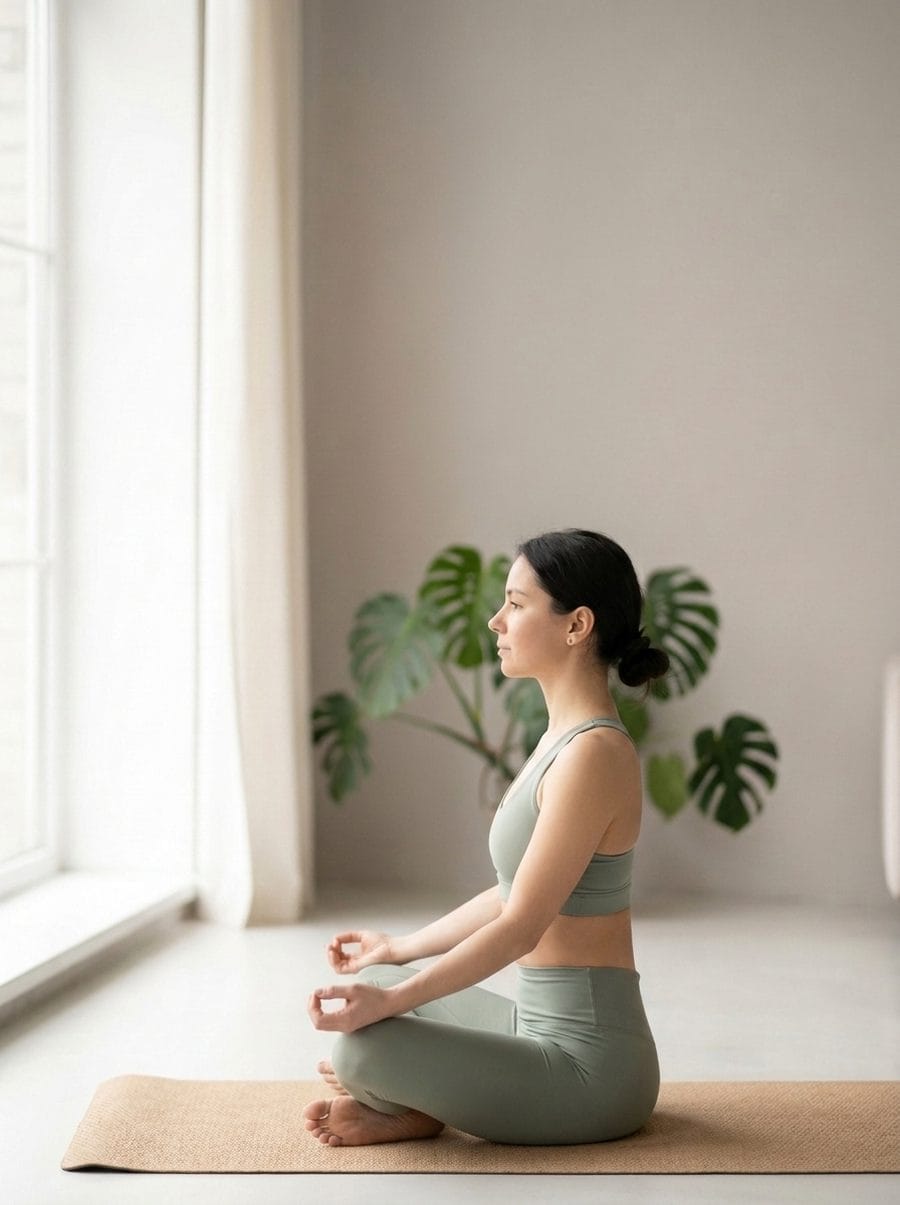
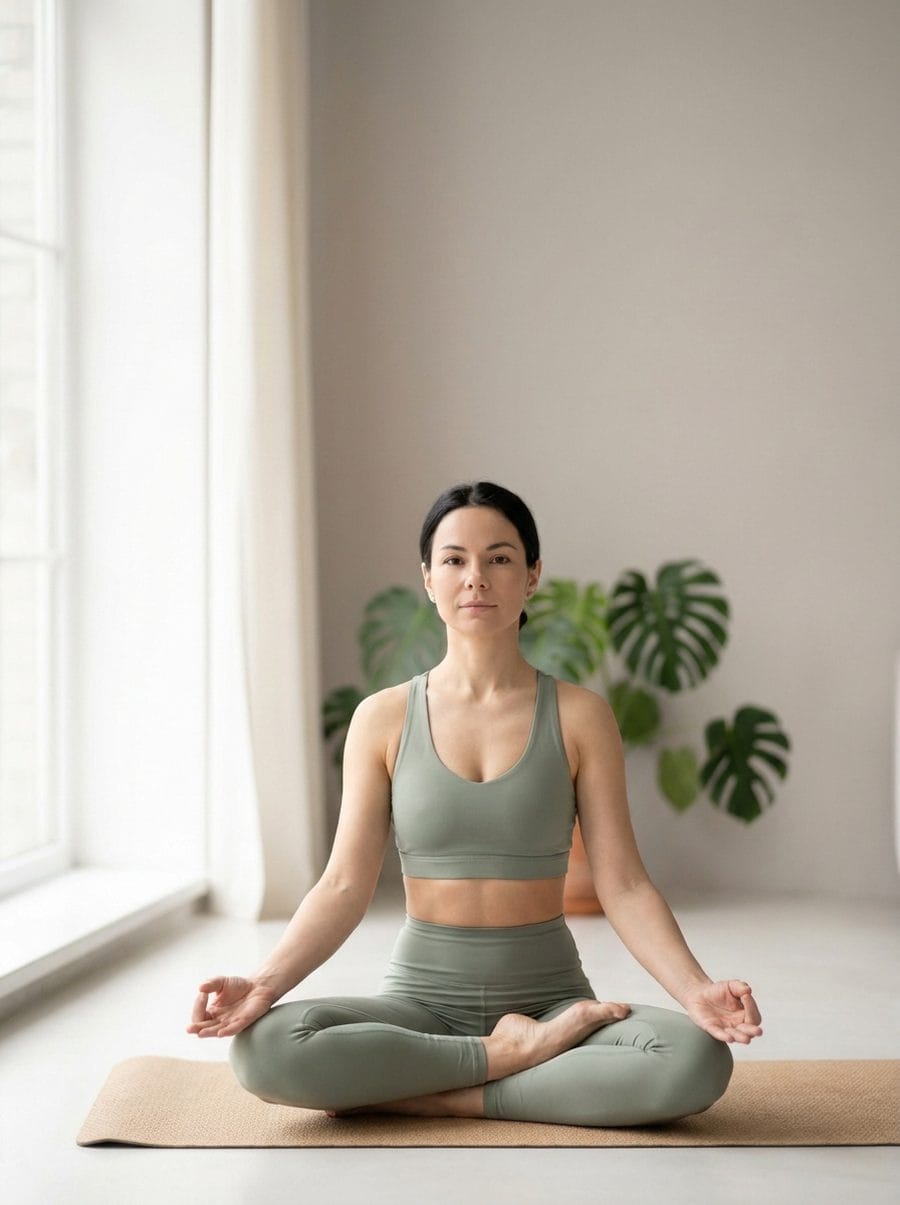
- Sit in a stable position. Easy Pose or Accomplished Pose both work; for the latter, an injured knee calls for a folded blanket under the sitting bones.
- Start with short, equal phases. Box Breathing at 3 seconds, then at 4.
- Lengthen one step at a time. In Alternate Nostril Breathing, move to the classic and then the advanced rhythm only once the previous one feels easy.
- Listen to the first inhale after the pause. If you feel the urge to gulp air, the pause is too long for you right now.
- Don't chase a number. There's no age chart of "normal" here: breath-hold time depends on many factors and says nothing about your health on its own.
Breathing exercises for lung capacity: what the evidence shows
People often search for ways to increase lung capacity, and the evidence-based reply is humbler than the ads. A 2026 meta-analysis (Bandyopadhyay et al.) pooled 11 studies of healthy adults who practiced pranayama for 4 weeks to 4 months, at least 10 minutes a session.
On average, spirometry results improved moderately: forced vital capacity, the volume exhaled in the first second, and peak expiratory flow. Results varied a lot from study to study, though, so read these numbers as a rough guide, not a promise.
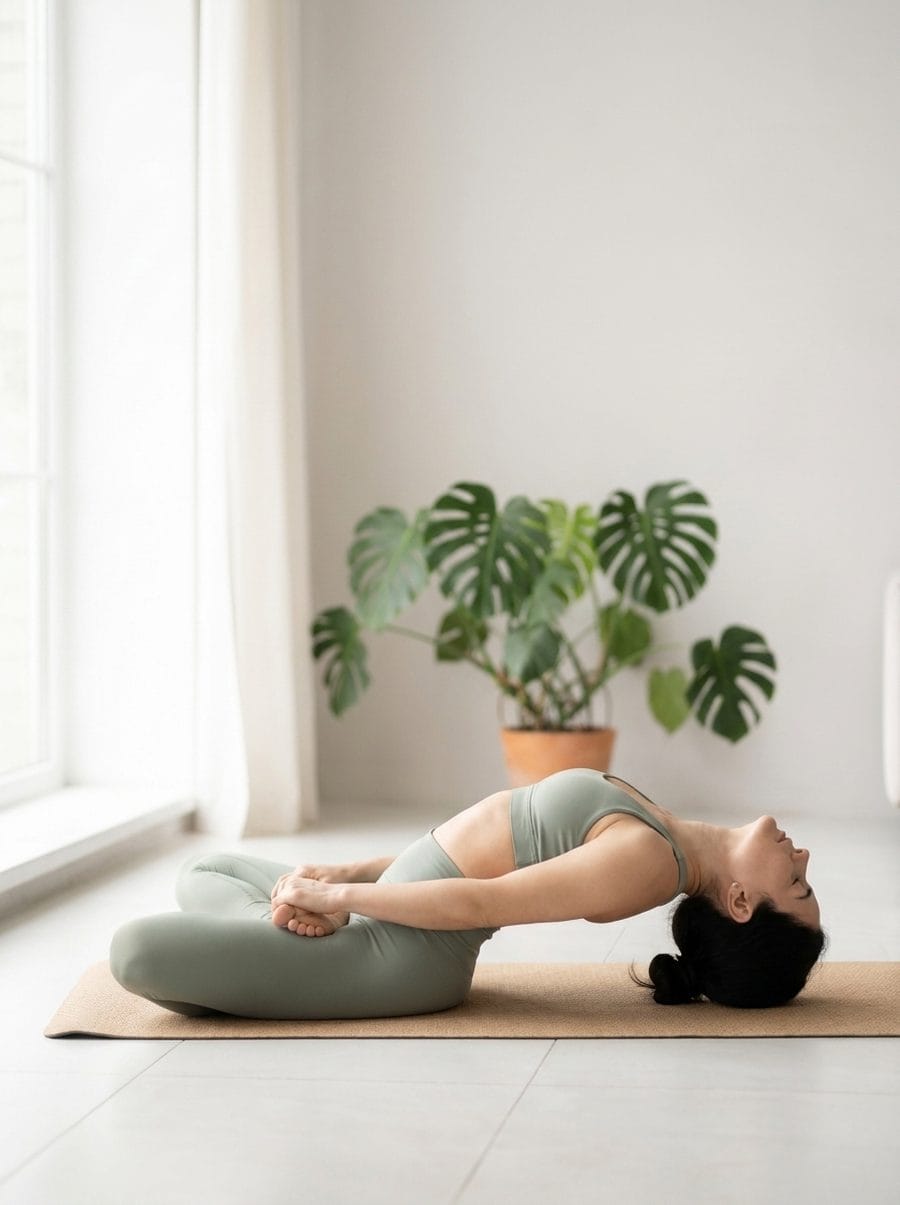
A free chest helps breathing too. After a day at a desk, the shoulders round forward and the chest seems to fold in. Puppy Pose gently unlocks the shoulders and the upper spine, and Fish Pose opens the chest and throat, inviting deep chest breathing.
At the end of practice, Relaxation Pose lets your breath return to its natural rhythm.
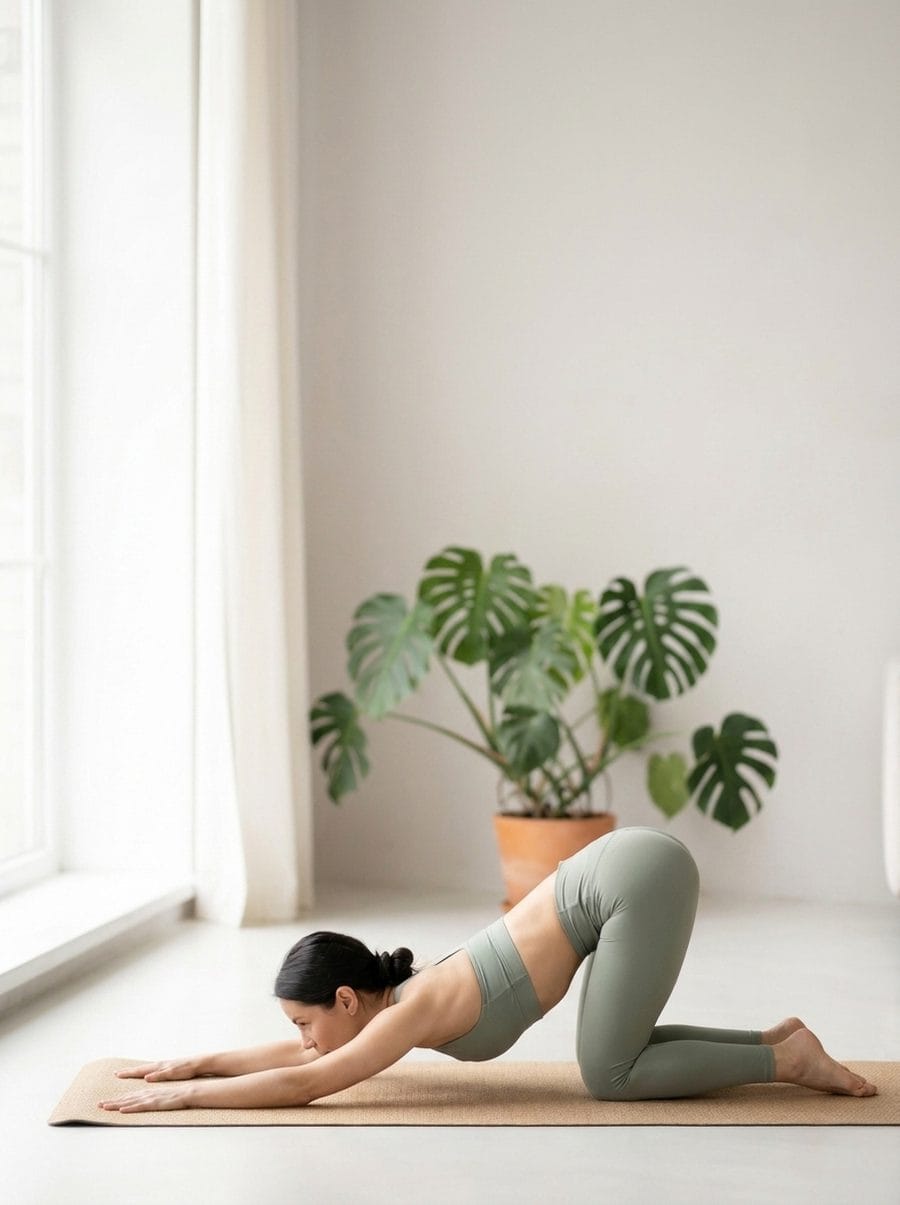

Both poses are part of the Office Reset program: 10 minutes, beginner level, 11 poses for the neck, shoulders and chest, and it closes with 2 minutes of rest. Try it as a warm-up for pranayama after a day of sitting.
What not to do with breath holds
In 2015, a report in MMWR, the weekly bulletin of the US Centers for Disease Control and Prevention (CDC), examined drownings linked to dangerous underwater breath holding. It was prompted by the deaths of two healthy young men in a New York City pool: they hyperventilated on purpose before going under and lost consciousness underwater.
Across New York State, investigators found 16 such cases between 1988 and 2011.
- Never train breath holds in water, in the bathtub or alone near water.
- Don't take a series of fast, deep breaths before a hold.
- Don't hold your breath while driving.
- Don't combine the energizing Skull Shining Breath (Kapalabhati) with holds; it's also ruled out by hypertension, pregnancy and heart disease.
Safety
With hypertension, the app allows Box Breathing, and likewise Alternate Nostril Breathing, only in their pause-free form. Pregnancy brings the same rule for the box pattern, and heart disease does so for the nostril technique. Cooling Breath is not for anyone whose pressure runs low or who has chronic bronchitis, and it waits for warmer weather.
Among the poses, avoid Fish Pose if you have neck trouble, hypertension or migraines, and avoid Puppy Pose if a shoulder is injured. With asthma, a chronic lung condition or after chest surgery, get medical advice before you begin.
Pose cautions in this article
- Knee discomfort — sit on a prop (Easy Pose)
- Knee injuries — use a prop under your hips (Accomplished Pose)
- Shoulder injuries (Puppy Pose)
- Neck injuries (Fish Pose)
- Hypertension (Fish Pose)
- Migraines (Fish Pose)
This site is for general information and is not medical advice. If you have pain, an injury, a chronic condition, or are pregnant, check with a qualified professional before practicing.
Questions
How long should you be able to hold your breath? There's no single standard for practice, and we don't publish charts. In the app's pranayama, pauses last 2 to 10 seconds and grow gradually.
Nasal vs. mouth breathing: why breathe through the nose in yoga? The nose warms, humidifies and filters the air, and a nasal rhythm is easier to slow down. You open your mouth only when a technique calls for it.
Can I practice breath holding in a pool? Not on your own. Underwater holds, especially after hyperventilating, can end in blackout. Yoga pauses are done seated, on dry land.
What does it mean if you stop breathing in your sleep? Pauses in breathing at night, snorting and heavy daytime tiredness can be signs of sleep apnea. With those symptoms, see a doctor rather than training your breath.
Sources
- Collet S, et al. Different aspects of respiration: relationships between the upper and lower respiratory tracts, and the middle ear cleft, nasal versus oral breathing. B-ENT, 2012.
- Lundberg JO, et al. High nitric oxide production in human paranasal sinuses. Nature Medicine, 1995.
- Bandyopadhyay N, et al. Yogic Breathing Practices a Non-Pharmacological Alternative Medicine for Managing Pulmonary Functions of Healthy Adults: A Systematic Review and Meta-analysis. Indian Journal of Community Medicine, 2026.
- Boyd C, et al. Fatal and nonfatal drowning outcomes related to dangerous underwater breath-holding behaviors: New York State, 1988-2011. MMWR, 2015.
- NHS. Sleep apnoea.
- Pranayama and shatkarma rhythms and cautions, poses and program contents: the Hatha Yoga app. How we verify our texts is explained on the How We Prepare Our Content page.
Read next
- Yoga for Arthritis and Osteoporosis: How to Protect Your Joints and Bones7 min read
- Ashtanga Yoga Explained: The Series, the Breath and the Difference from Hatha6 min read
- Ayurveda Explained Simply: The Basics and a Daily Routine (Dinacharya)5 min read
- Balance Exercises: 10 Yoga Poses for Balance and Stability7 min read