 Hatha Yoga
Mantras and Om: Meaning and How to Chant Them
Hatha Yoga editorial team · Updated · 7 min read
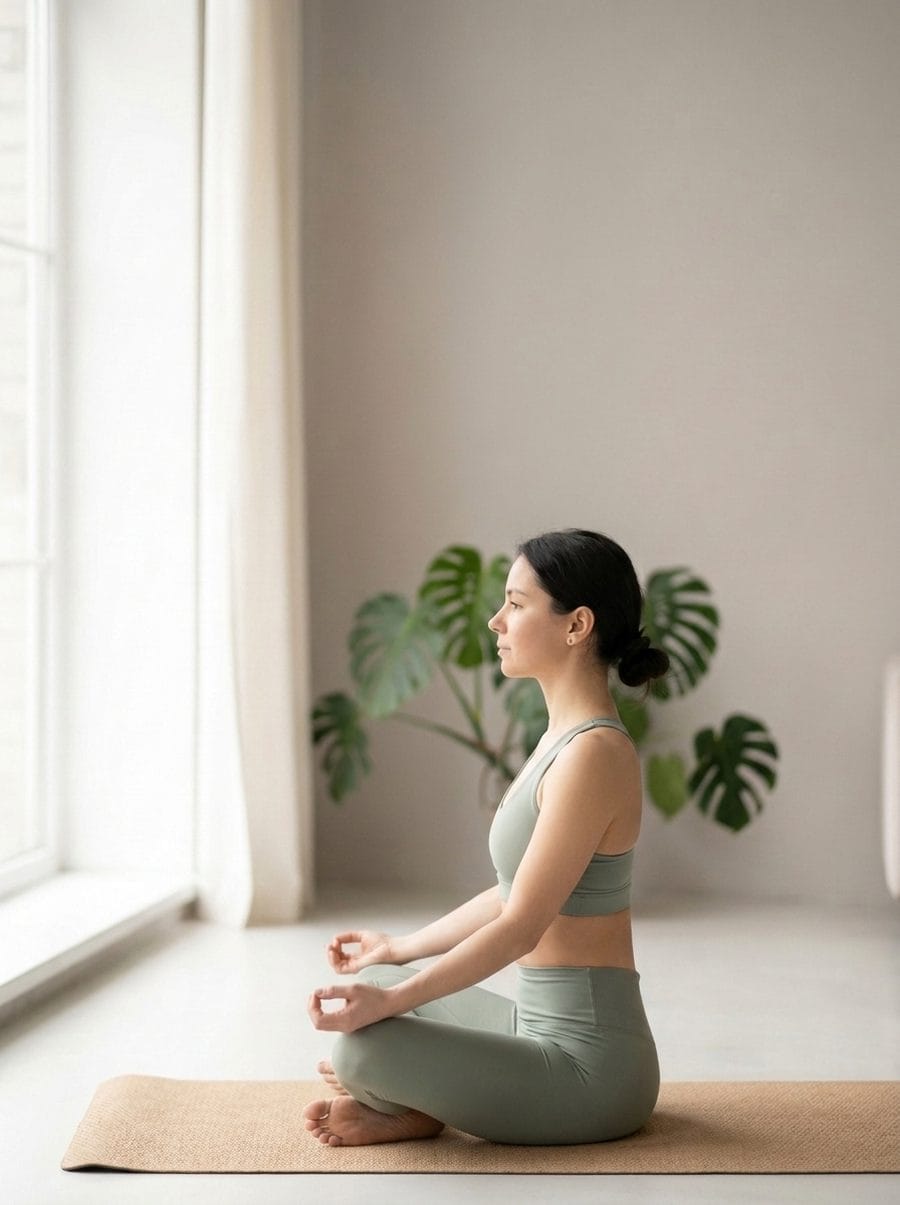
The word mantra sounds mysterious, yet a mantra is simply a short syllable or phrase you repeat out loud, in a whisper or silently to keep your attention in one place. Om, the best known mantra in yoga, opens and closes many classes.
Here you'll find what mantras are and where they come from, what Om means, how to chant it on the exhale, why a mala has 108 beads and how to add sound to your own practice.
What is a mantra?
Mantra is a Sanskrit word. It's usually broken into two parts: "man" (to think, the mind) and "tra" (a tool or means). Put together, a mantra is a tool for the mind. The oldest mantras appear in the Vedas, hymns that were passed down orally in India for centuries and memorized along with their exact intonation.
Later, mantras became part of Hinduism, Buddhism and Jainism, and from there they found their way into yoga.
In practice, a mantra has one simple job: it gives your attention something to rest on. Thoughts jump from topic to topic, and repeating a single sound helps them settle. In Patanjali's Yoga Sutras, holding the mind on one object is called dharana, the sixth limb of yoga.
Sound serves the same role as the breath or a candle flame. You can read about every limb in order in The Eight Limbs of Yoga.
A mantra doesn't have to be tied to faith. Many studios chant Om as a way to tune in, with no religious meaning attached. If that feels right to you, approach it the same way.
What does Om mean?
In the Indian tradition, Om (also written Aum) is called pranava. The Yoga Sutras (I.27–28) say that pranava stands for Ishvara, the highest principle, and that the practice is to repeat the sound while reflecting on its meaning. The Mandukya Upanishad breaks Om into three sounds plus the silence that follows them:
- A corresponds to waking;
- U to dreaming sleep;
- M to deep, dreamless sleep;
- silence to a fourth state, turiya, which lies beyond the other three.
This is a philosophical model, not a description of how the brain works. Still, it explains why the pause after Om is seen as part of the mantra: the sound fades, and your attention stays in the quiet.
How to chant Om
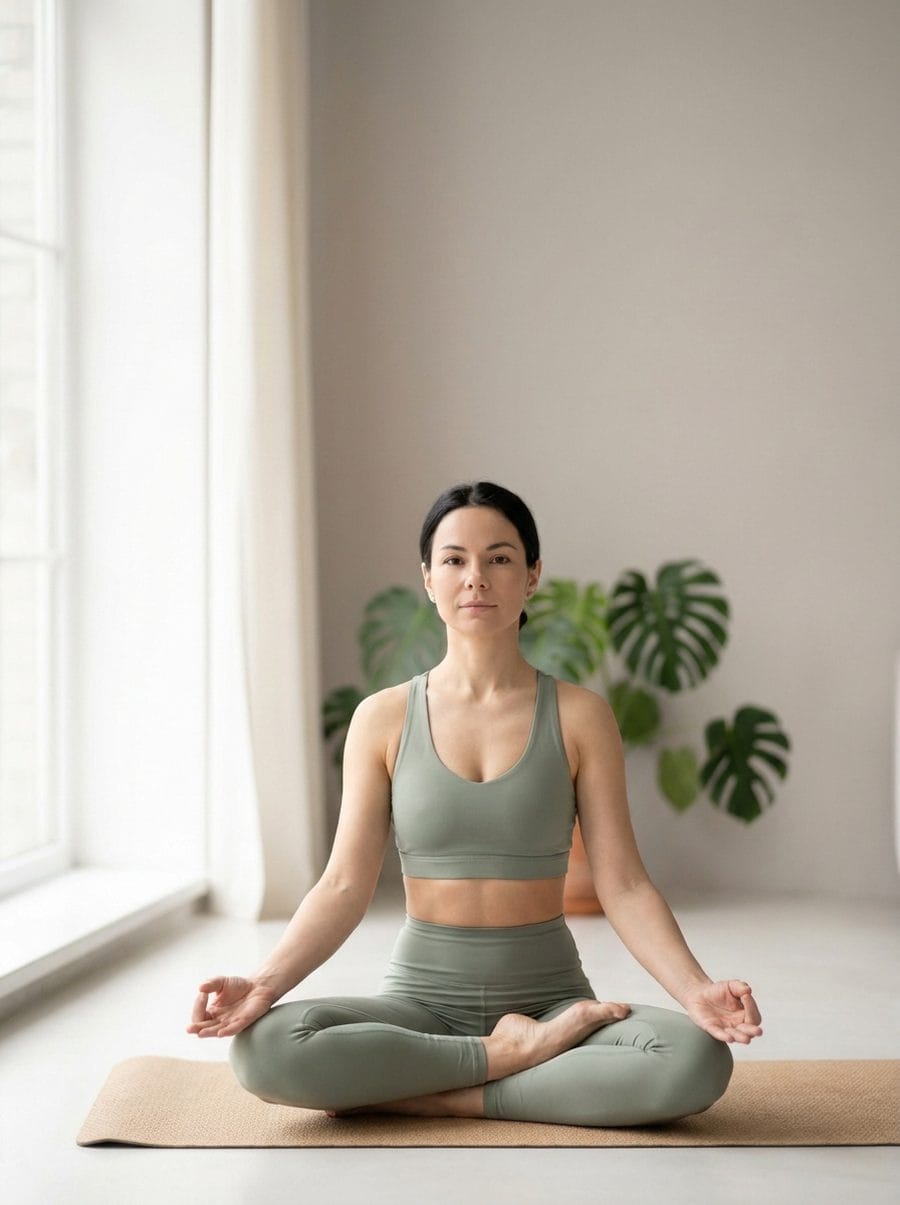
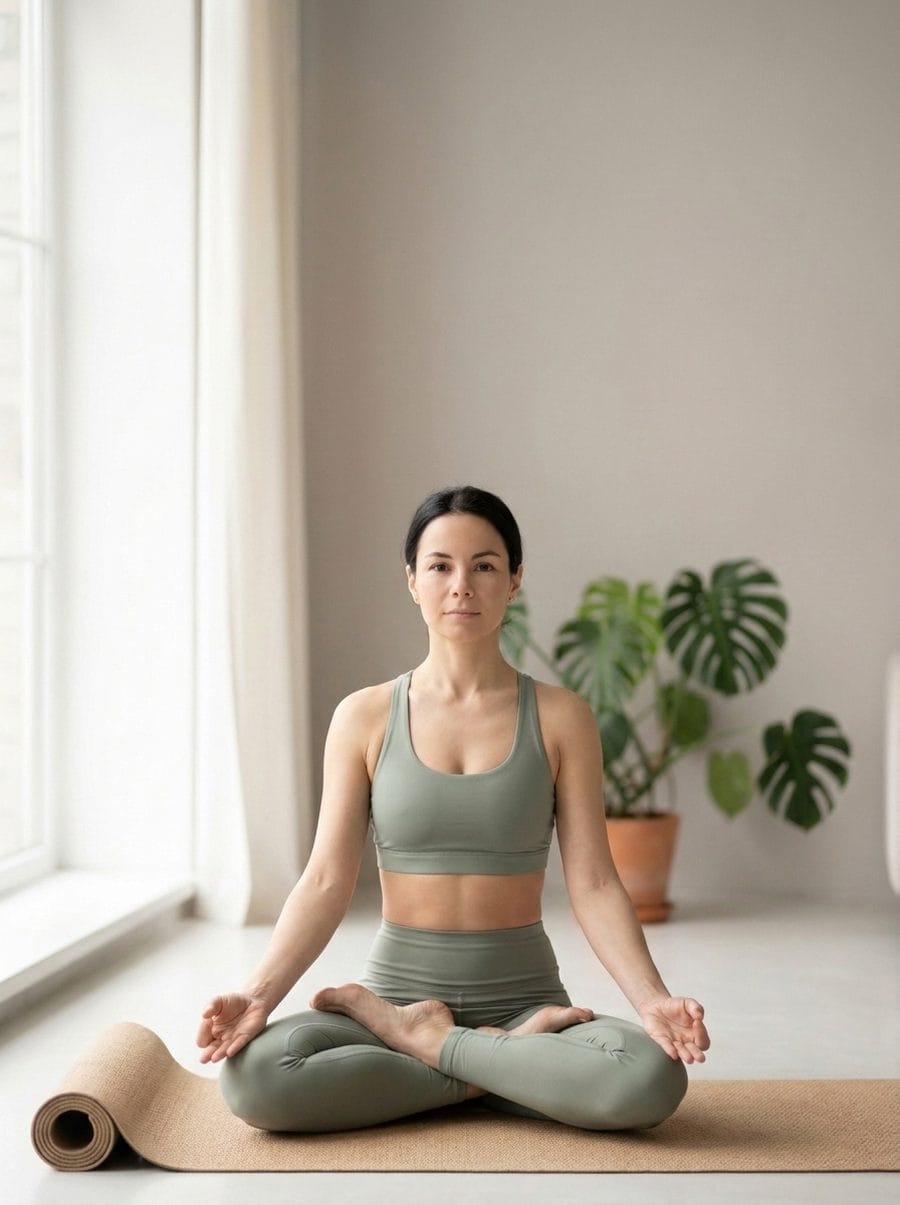
1. Find a steady seat: Easy Pose, Accomplished Pose or Half Lotus Pose. Lengthen through the crown of your head and let your shoulders drop. 2. Take a calm breath in through your nose, without straining. 3. As you exhale, start with an open "A," round your lips for "U," then close them for "M." The "mmm" lasts longer than the first two sounds, and you'll feel it buzz in your face and chest. 4.
When your breath runs out, don't push the sound further. Rest in the silence for a few seconds, then breathe in normally. 5. Repeat three times. That's plenty to open or close a session.
Keep your voice at a comfortable pitch and don't force it. Volume doesn't matter: a soft, steady tone beats a loud, strained one. If chanting out loud feels awkward, whisper Om or say it silently on every exhale.
A long Om is really just a long exhale with sound. A close cousin exists among the pranayamas: in Bee Breath, you make an even "mmm" on the exhale with your mouth closed. It's an easy place to begin if Om still feels self-conscious.
Popular mantras and their meanings
- Om Shanti Shanti Shanti. "Shanti" means peace. Many ancient recitations end with shanti said three times, and it often closes a yoga class too.
- Om Namah Shivaya. "Salutations to Shiva." Five syllables follow the Om, and it's one of the central mantras of Shaivism.
- Om Mani Padme Hum. A six-syllable mantra from Tibetan Buddhism, linked to Avalokiteshvara, the bodhisattva of compassion. It's often rendered as "the jewel in the lotus," although scholars read its exact sense in different ways.
- Gayatri Mantra. A verse from the Rigveda (III.62.10) addressed to Savitr, a solar deity. It's among the most revered mantras in Hinduism.
- So Hum. "I am That." Traditionally "so" rides the inhale and "hum" the exhale, so this mantra is repeated silently in rhythm with the breath.
If you're new to this, Om and So Hum are the easiest starting points: they're short and fall naturally into the breath.
Why are mantras chanted 108 times?
Repeating a mantra many times is called japa. To keep count, people use a mala, a string of 108 beads plus one extra bead that isn't counted. The number 108 is considered sacred in Indian tradition, and there are many explanations for it, from the number of Upanishads in one classical list to astronomical coincidences.
There's no single answer. Malas with 54 or 27 beads exist too, so a shorter round works fine when you're starting out.
Japa can be done aloud, in a whisper or silently. Tradition regards silent repetition as the subtlest form: your lips stay still while the sound keeps going inside.
How to use mantras in your yoga practice
- At the start of class. Sit down, take a few calm breaths and chant Om three times. It makes it easier to leave the day's business at the door.
- At the end. After Relaxation Pose, come back to sitting and close your practice with one Om or "Om Shanti." The pause after the sound bridges your practice and the hours that follow.
- Instead of counting. During slow breathing such as Full Yogic Breath, repeat "so" silently as you inhale and "hum" as you exhale.
For evenings, open Evening Unwind in the app: 15 minutes, beginner level, eight poses on the floor and a final relaxation lasting close to four and a half minutes. Then sit up in Easy Pose and finish the evening with three rounds of Om.
Safety
- Keep your throat relaxed. If you get hoarse or start coughing, chant more quietly or repeat the mantra silently.
- Lightheadedness can come from an exhale that's too long. Let your breath return to its usual pace while you stay seated.
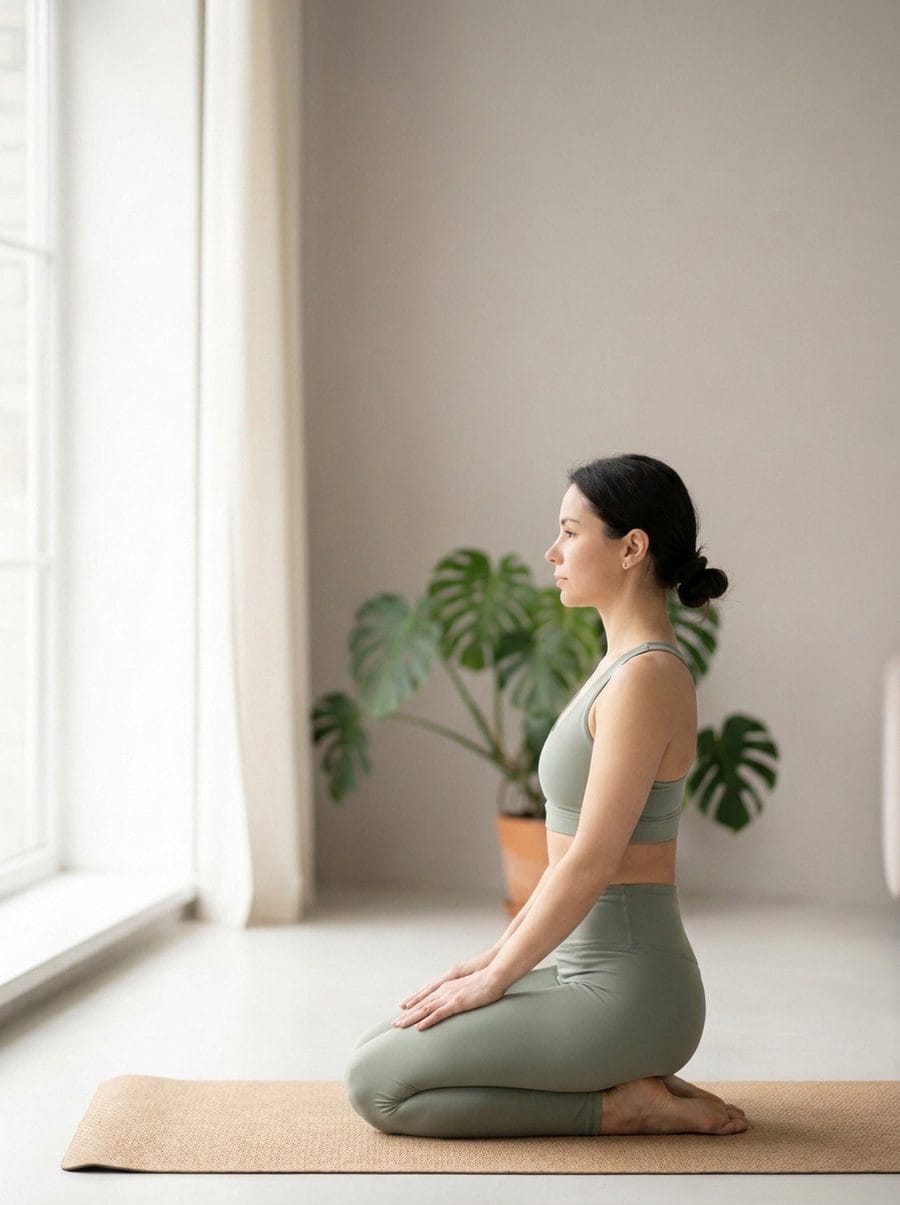
- Choose your seat for your knees. With knee or ankle injuries, skip Thunderbolt Pose and Half Lotus Pose. With knee injuries, do Accomplished Pose with a prop under your hips, and in Easy Pose sit on a prop if your knees feel uncomfortable.
- One pose in the program needs a check. That's Legs-Up-the-Wall Pose, which any of three conditions rules out: menstruation, glaucoma or uncontrolled hypertension. Skip Child's Pose with knee injuries.
Mantras belong to a tradition and a practice of attention, not to medicine. If worry or restless nights start running your days, see a doctor. General guidelines are collected in Safety and Contraindications.
Pose cautions in this article
- Knee discomfort — sit on a prop (Easy Pose)
- Knee injuries — use a prop under your hips (Accomplished Pose)
- Knee and ankle injuries (Half Lotus Pose, Thunderbolt Pose)
This site is for general information and is not medical advice. If you have pain, an injury, a chronic condition, or are pregnant, check with a qualified professional before practicing.
Questions
What does Om mean? In the Yoga Sutras, Om stands for the highest principle. The Mandukya Upanishad sees three states of consciousness in the sounds A, U and M, and a fourth in the silence after them.
Can I just listen to mantras? You can, but in yoga you usually chant the mantra yourself: sound on the exhale holds your attention and slows your breathing. Try at least three rounds of Om in your own voice.
Why do people chant a mantra 108 times? It's a sacred number in Indian tradition and the number of beads on a mala. The number has many explanations, and a handful of repetitions is enough to begin.
Do I need to be Hindu or Buddhist to chant Om? No. In yoga classes, Om is used as a sound for tuning in. If it doesn't sit well with your beliefs, spend that moment in silence and simply watch your breath.
Sources
- Patanjali's Yoga Sutras (I.27–28), the Mandukya Upanishad and the Rigveda as historical texts, summarized in our own words. Poses, pranayamas and the program contents: the Hatha Yoga app. How we verify our texts is explained on the How We Prepare Our Content page.
Read next
- Yoga for Arthritis and Osteoporosis: How to Protect Your Joints and Bones7 min read
- Ashtanga Yoga Explained: The Series, the Breath and the Difference from Hatha6 min read
- Ayurveda Explained Simply: The Basics and a Daily Routine (Dinacharya)5 min read
- Balance Exercises: 10 Yoga Poses for Balance and Stability7 min read