 Hatha Yoga
What Is Mindfulness? 7 Mindfulness Exercises for Everyday Life
Hatha Yoga editorial team · Updated · 6 min read
Mindfulness sounds like something complicated, yet it starts simply: noticing what you're doing while you're doing it. This guide explains what mindfulness means in plain language, then gives you 7 exercises that fit into an ordinary day without carving out extra time, a short mindfulness meditation for beginners, and yoga as a way to train attention.
We close with what the research shows and who should take it slowly.
What is mindfulness?
Mindfulness is paying attention to what's happening right now, inside you and around you. You notice thoughts, feelings, body sensations, sounds and smells, without rushing to judge them or fix them.
Much of the day runs on autopilot. We eat without tasting, walk down the street while arguing with a coworker in our heads, and scroll through a feed only to forget what we just read. Mindfulness brings you back to the present.
It isn't about emptying your head: the thoughts stay, but you start to see them as events that come and go rather than orders to follow.
Psychology has built whole programs on this idea, such as mindfulness-based stress reduction (MBSR) and mindfulness-based cognitive therapy (MBCT). Still, the core skill is open to anyone, with no course or special setting required.
Mindfulness in yoga: the body as an anchor
Yoga is a great training ground for mindfulness because your body is always in the here and now. Thoughts can drift into the past or the future, but the feeling of your feet on the mat only happens in the present.
Patanjali's system calls this turning of attention inward pratyahara, and poses and breathing practice lead you there naturally.
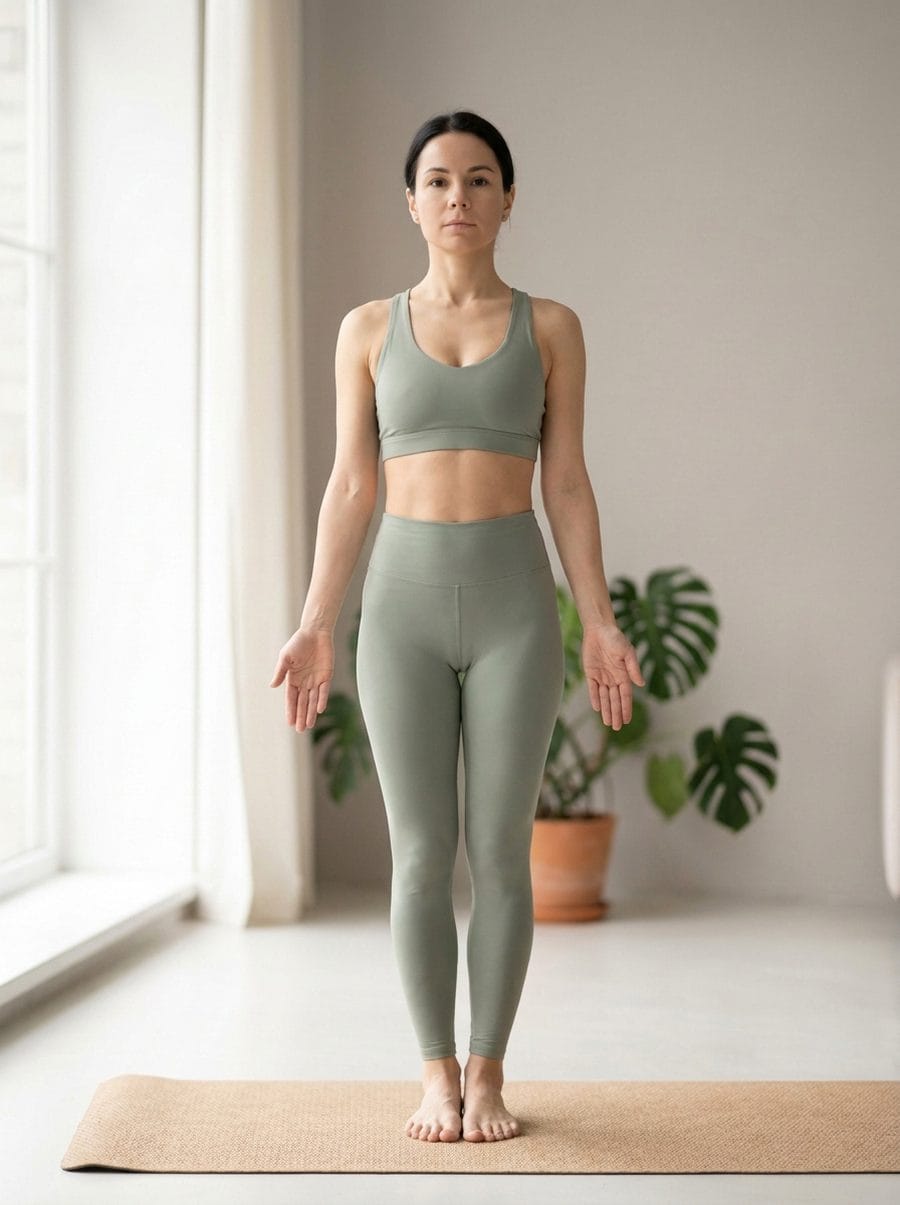
- Mountain Pose. Stand tall and feel how your weight spreads between your heels and toes. A single minute of standing like this already counts as practice.
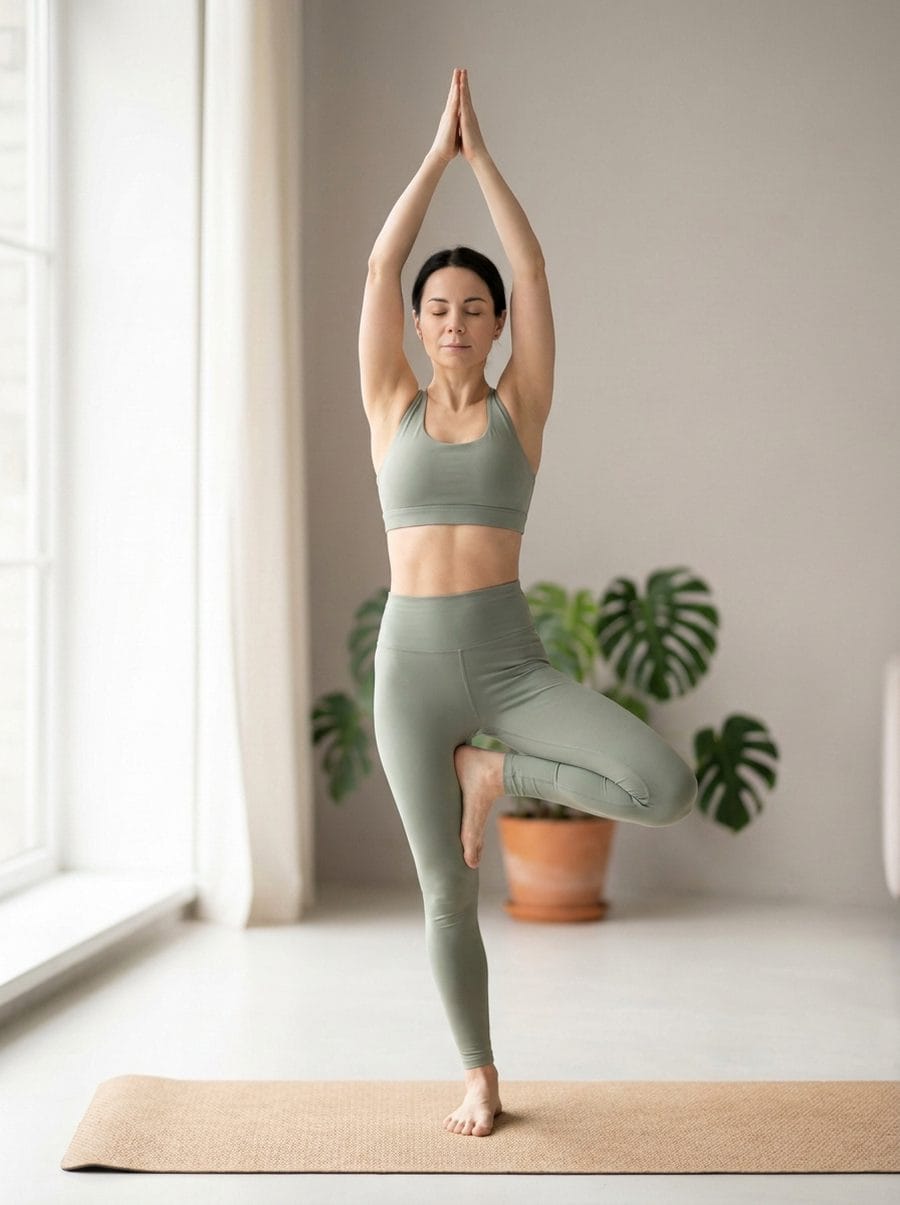
- Tree Pose. Balance shows you right away where your attention has gone: the moment you start thinking about your to-do list, you begin to wobble. If dizzy spells are an issue for you, practice it beside a wall.
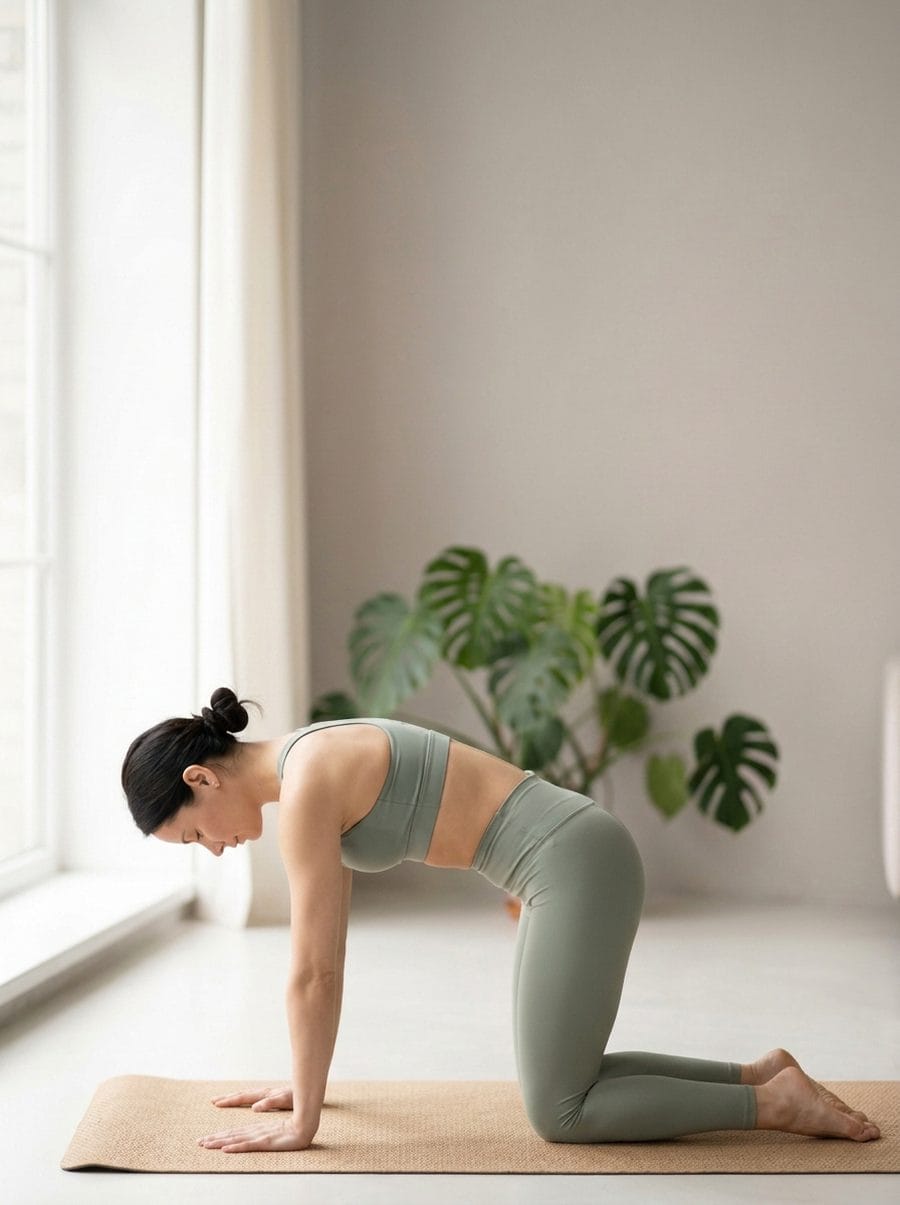
- Cat-Cow. The movement of your spine follows the breath: the inhale arches it, the exhale rounds it. With sharp, acute back pain, leave this pose out. If your wrists hurt, rest on your fists.
7 mindfulness exercises you can do anywhere
These practices need no mat and take anywhere from 30 seconds to a few minutes. Pick one per week and tie it to a routine that's already part of your day.
1. Three breaths before a task. Before you open your laptop or pick up a call, take three slow breaths and notice the air coming in and going out. 2. Five senses. Silently name five things you can see, four sounds, three things you can feel against your skin, two smells and one taste. It's a reliable way back to reality when your thoughts start spinning. 3. The first three bites. Start your meal without your phone.
Eat the first three bites slowly, noticing flavor, temperature and texture. 4. Steps. On your way to the store or the bus stop, feel how each foot meets the ground: heel, arch, toes. When you drift into thinking, return to your steps. 5. A chore with attention. Washing dishes or showering: the temperature of the water, the sound, the scent of the soap.
An ordinary task turns into a short meditation. 6. Label the thought. When things pile up, tell yourself: "Here's the thought that I won't finish in time," or "This is irritation." A named feeling has a little less control over you. 7. Pause before you reply. Got a sharp message? Take one long exhale before you type an answer. That second is often enough to respond instead of snapping back.
Mindfulness meditation for beginners
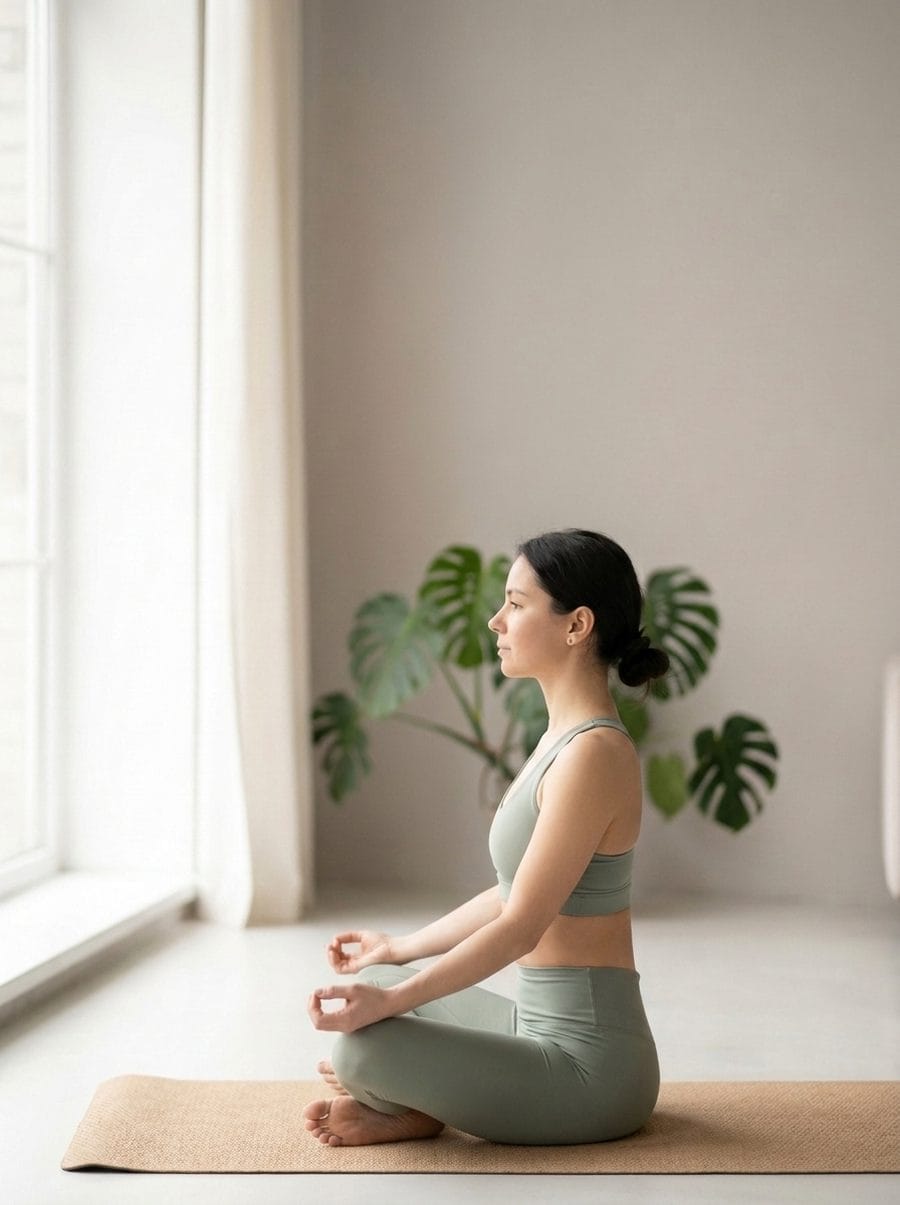
Besides the exercises you sprinkle through the day, it helps to set aside a few minutes for formal practice. Take Easy Pose on a cushion or on a chair with a tall spine. Set a timer for 5 minutes.
Start with the breath: notice each inhale and exhale without changing them. After a couple of minutes, widen your attention to sounds, then to sensations in your body. When a thought shows up, tag it with the word "thinking" and gently come back to the breath.
The goal isn't a quiet head; it's noticing where your attention has gone. In the evening you can run the same cycle lying in Relaxation Pose. For a detailed 10-minute plan and tips on how to sit, see Meditation for Beginners.

Mindful movement: a yin practice
If sitting still feels hard for now, begin with a practice where your attention rests on body sensations. The app's Yin Practice program has 8 steps, and in some poses you stay for up to four minutes. That's long enough for everything to surface: the urge to come out, thoughts about errands, warmth in the muscles, shifts in your breathing.
You don't push deeper; you watch the body let go little by little. It's beginner level, runs 35 minutes and finishes with five minutes of savasana.
Short on time? Try a mini version: 2 to 3 minutes in Child's Pose with your attention on the breath moving into your back. With a knee injury, skip it and spend those minutes in Relaxation Pose instead.
How to build mindfulness: a habit, not a heroic effort
- Often and brief. Ten pauses of 30 seconds spread through the day do more than one long session now and then.
- Reminders. A sticky note on your monitor, a silent alarm, or a doorway as your cue to take a breath.
- No self-judgment. Realizing that an hour went by on autopilot is itself a moment of mindfulness.
- One line at night. Write down one moment of the day you truly lived rather than rushed through.
To add breathwork to the mix, check out our breathing exercises: calm techniques with a longer exhale make a great anchor for attention.
What the research says, and who should be careful
A 2015 meta-analysis pooled 29 studies of the MBSR program with 2,668 healthy adults. The program moderately reduced stress, anxiety and low mood and improved quality of life. The authors note that the studies varied a lot in design, so the numbers deserve some caution.
Britain's NHS website is blunt about it: mindfulness helps many people, but it isn't right for everyone, and some people feel worse. If practice heightens your anxiety or brings up painful memories, stop and reach out to a psychologist or doctor. Mindfulness doesn't replace professional care for depression, anxiety disorders or other conditions.
Pose cautions in this article
- Dizziness — practice near a wall (Tree Pose)
- Acute back pain (Cat-Cow)
- Wrist injuries — practice on your fists (Cat-Cow)
- Knee discomfort — sit on a prop (Easy Pose)
- Pregnancy — widen your knees (Child's Pose)
- Knee injuries (Child's Pose)
This site is for general information and is not medical advice. If you have pain, an injury, a chronic condition, or are pregnant, check with a qualified professional before practicing.
Questions
What's the difference between mindfulness and meditation? Meditation is dedicated time for training attention. Mindfulness is a quality of attention you can bring to anything: eating, walking, a conversation.
Can mindfulness meditation be harmful? For most people it's safe, but for some it stirs up anxiety or difficult memories. If that happens, pause the practice and talk to a professional.
When will I notice a difference? There's no set timeline. Start with 5 minutes of formal practice and a few short pauses a day. Regular practice matters more than long sessions.
Can you be mindful all day long? No, and that's not the goal. Your attention will wander again and again. The skill is noticing it more often and coming back.
Sources
- Khoury B, et al. Mindfulness-based stress reduction for healthy individuals: A meta-analysis. Journal of Psychosomatic Research, 2015.
- NHS. Mindfulness.
- Pose technique and cautions, program contents: the Hatha Yoga app. How we verify our texts is explained on the How We Prepare Our Content page.
Read next
- Yoga for Arthritis and Osteoporosis: How to Protect Your Joints and Bones7 min read
- Ashtanga Yoga Explained: The Series, the Breath and the Difference from Hatha6 min read
- Ayurveda Explained Simply: The Basics and a Daily Routine (Dinacharya)5 min read
- Balance Exercises: 10 Yoga Poses for Balance and Stability7 min read