 Hatha Yoga
Prenatal Yoga: What's Safe in Each Trimester and What to Skip
Hatha Yoga editorial team · Updated · 7 min read
Yoga during pregnancy is possible, but it should start with a conversation with the doctor or midwife who looks after your pregnancy. To be upfront: the Hatha Yoga app has no prenatal program, and its safety section states plainly that pregnancy calls for a specialized practice.
Below you'll find what medical guidance says, what changes by trimester, which app poses to skip, how to adapt a gentle practice, and the warning signs for ending a session at once.
Is yoga safe during pregnancy?
The NHS in the UK considers exercise in pregnancy safe for you and your baby: start anything new gently, and you can usually keep up activities you already do. The NHS counts yoga as moderate activity toward the recommended 150 minutes a week, and describes prenatal yoga as a way to relax and ease tension through gentle stretching and breathing.
The key condition is approval from your doctor or midwife. If your pregnancy has complications or you have a long-term illness, only your doctor can decide which exercise is right for you. The best setting is a class or private sessions with a teacher trained specifically in prenatal yoga. Always tell your instructor you're pregnant, even in a regular class.
What doctors and research say
ACOG, the main U.S. professional body for obstetricians, writes in a 2020 committee opinion that, without obstetric or medical complications or contraindications, physical activity during pregnancy is safe and desirable. The risks are minimal, although normal changes in your body may require some adjustments to your usual routine.
A small 2015 study tested 26 yoga poses in 25 healthy women at 35 to 37 weeks. Each session was one-on-one with an instructor, with continuous monitoring of the mother's vital signs, uterine activity and the baby's heart rate. All readings stayed normal in every pose, and there were no falls or injuries.
That's reassuring, but the group was tiny, the setting was closely supervised, and the result doesn't override the guidance below.
First trimester
All the app's "Pregnancy" contraindications apply from the very first weeks; the full list is further down. The NHS suggests that newcomers begin with around 10 minutes of activity a day and build up slowly, and it doesn't recommend taking up a new vigorous sport while pregnant.
Don't exercise on an empty stomach, drink water, avoid overheating, and stop if you feel uncomfortable, too hot or unwell.
The NHS calls pelvic floor exercises really important during pregnancy. You'll find the technique in Kegel Exercises and Pelvic Floor Yoga.
Second trimester
- Belly-down poses. From the second trimester, skip Crocodile Pose, because the pose puts you belly-down.
- Knees-to-Chest Pose. The app gives two options: spread the knees farther apart than your bump, or don't do the pose at all.
- Child's Pose and Hare Pose. Widen your knees.
- Poses on your back. The NHS advises avoiding exercise that keeps you lying on your back for more than a few minutes, especially after 16 weeks: the weight of the bump presses on a major blood vessel, which can lower your blood pressure and make you dizzy. Rest on your side instead.
Third trimester
In late pregnancy, the app adds six more poses to skip: Happy Baby Pose, four Bridge Pose variations (with an ankle hold, with straight legs, on one leg, and on one straight leg) and Three-Legged Dog.
Your balance changes too. The NHS suggests avoiding activities with a risk of falling, so practice one-legged standing poses next to a wall you can reach for. Listen to your body and don't push into exhaustion: as the bump grows, many women find calmer variations more comfortable.
Which app poses to skip
In the app, 38 poses list "Pregnancy" as a contraindication. Skip them for the whole pregnancy:
- Belly-down and deep backbends: Cobra Pose, Cobra Flow, King Cobra Pose, Revolved Cobra Pose, Locust Pose, Locust Flow, Inverted Locust Pose, Snake Pose, Bow Pose and three of its variations, Upward-Facing Dog, Wheel Pose, Wild Thing.
- Twists: Seated Twist, Marichi's Twist, Noose Pose, Revolved Triangle Pose, Revolved Side Angle Pose, Revolved Chair Pose, Revolved Abdomen Pose, Supine Twist Flow, Thread the Needle.
- Core work: Boat Pose, Half Boat Pose, Full Boat Pose, Revolved Boat Pose, Boat Flow, Side-Lying Double Leg Lift, Plank to Chaturanga Flow.
- Inversions: Shoulder Stand, Plow Pose, Headstand.
- Others: Two-Legged Arm Balance, Side Splits and its side-bend version, Yogic Seal Pose.
Among breathing and cleansing practices, Skull Shining Breath, Agnisara Kriya, Kapalabhati Kriya and the full bandhas are ruled out. Do Box Breathing without the holds.
What you can adapt
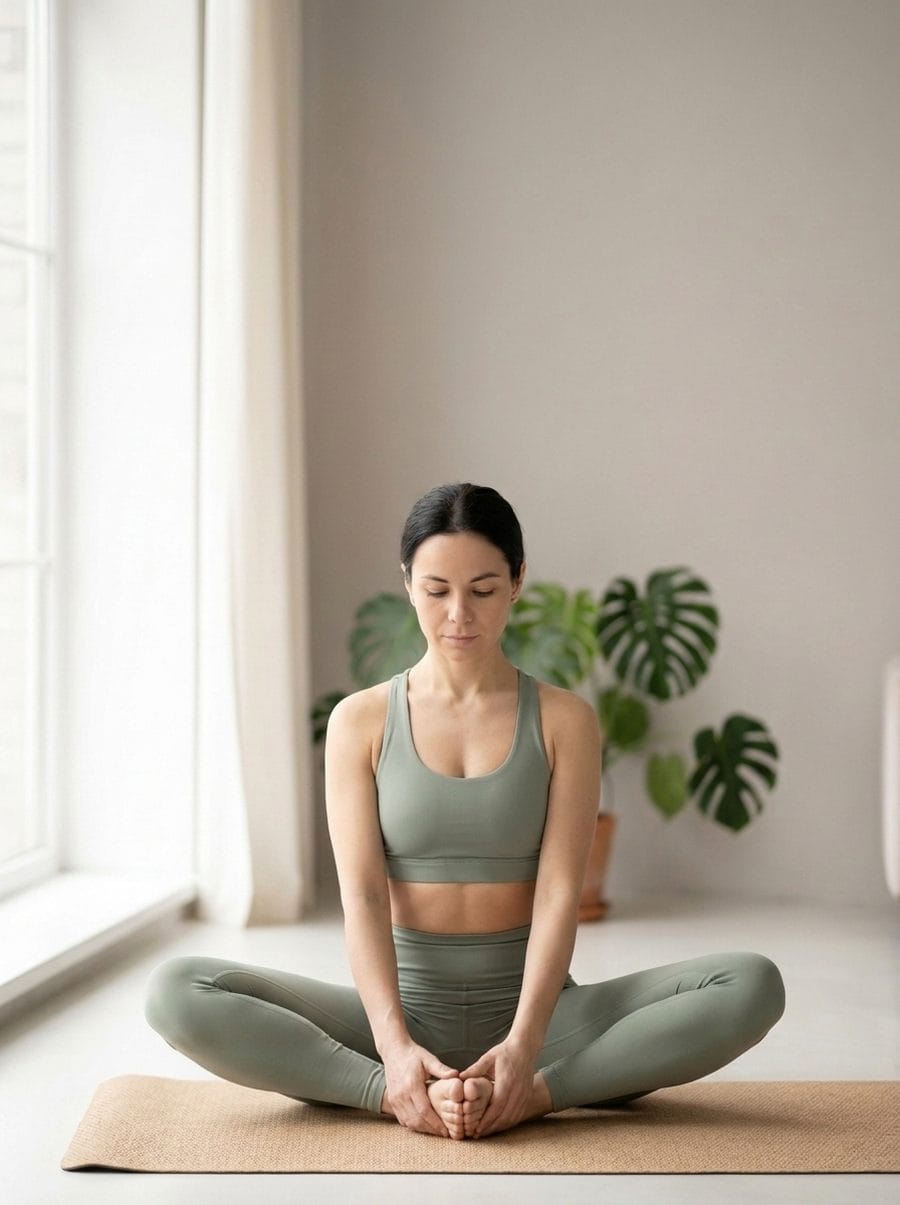
The first four poses below carry no pregnancy note in the app, and for Child's Pose the app's advice is to spread the knees wide. Check them with your teacher all the same. Easy Pose and Cat-Cow move the spine gently, Butterfly Pose opens the hips, and Mountain Pose helps you find a steady base.
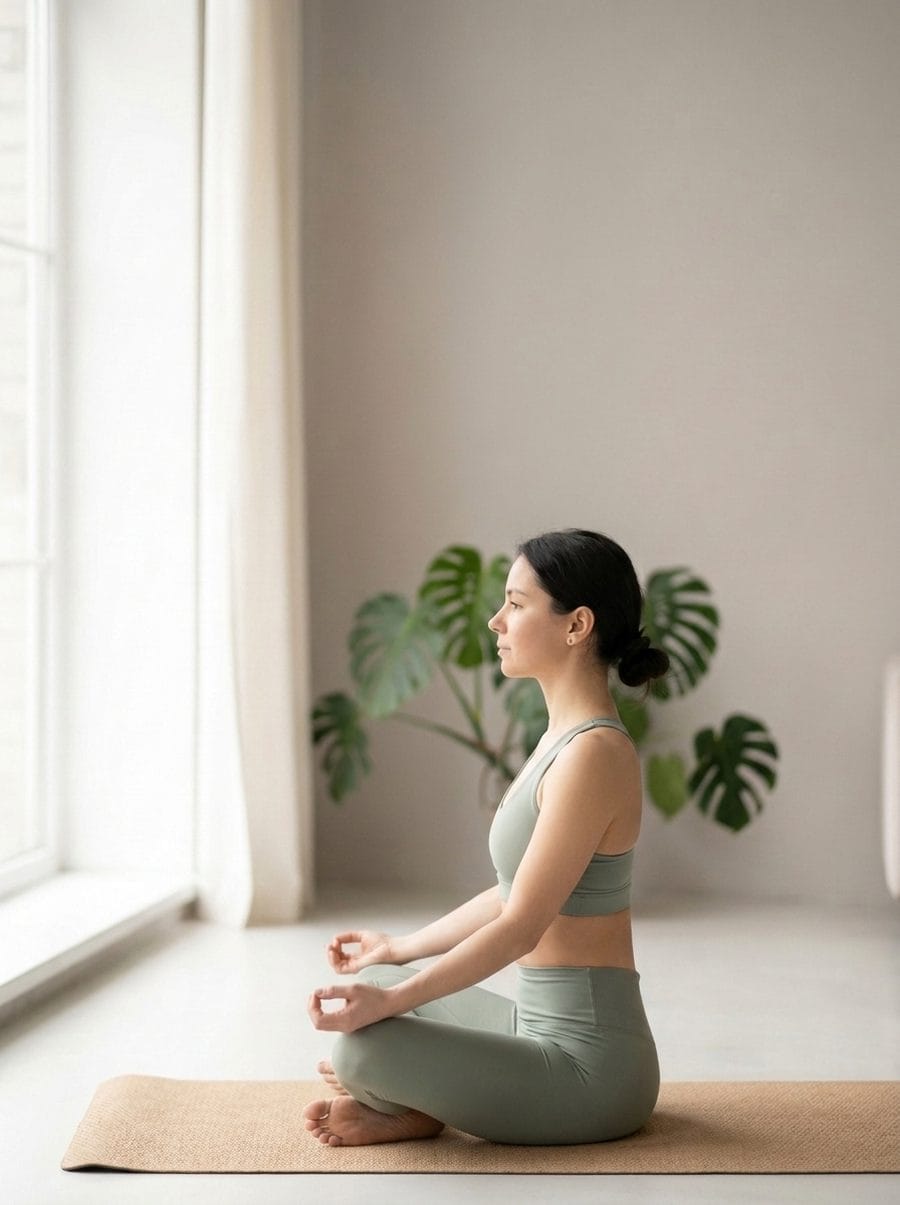
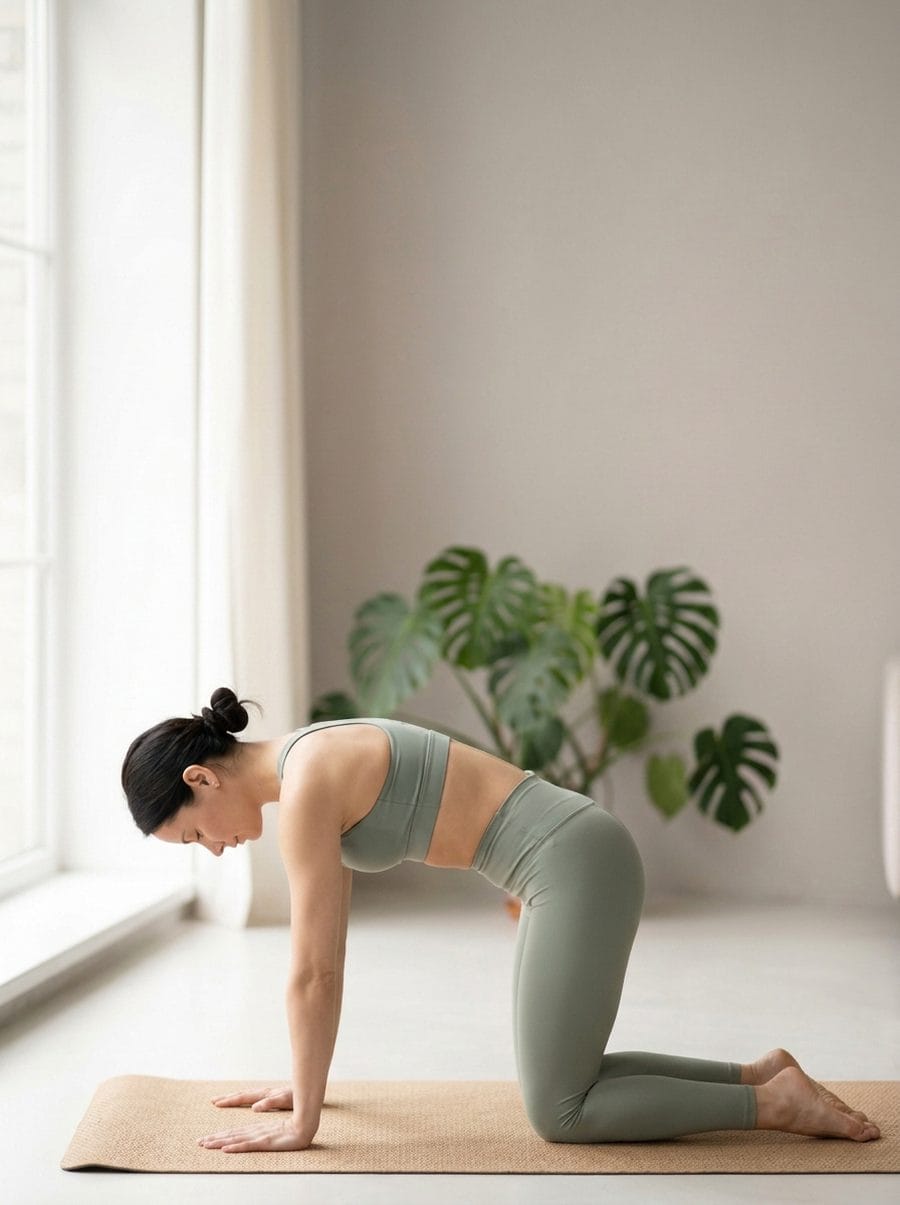
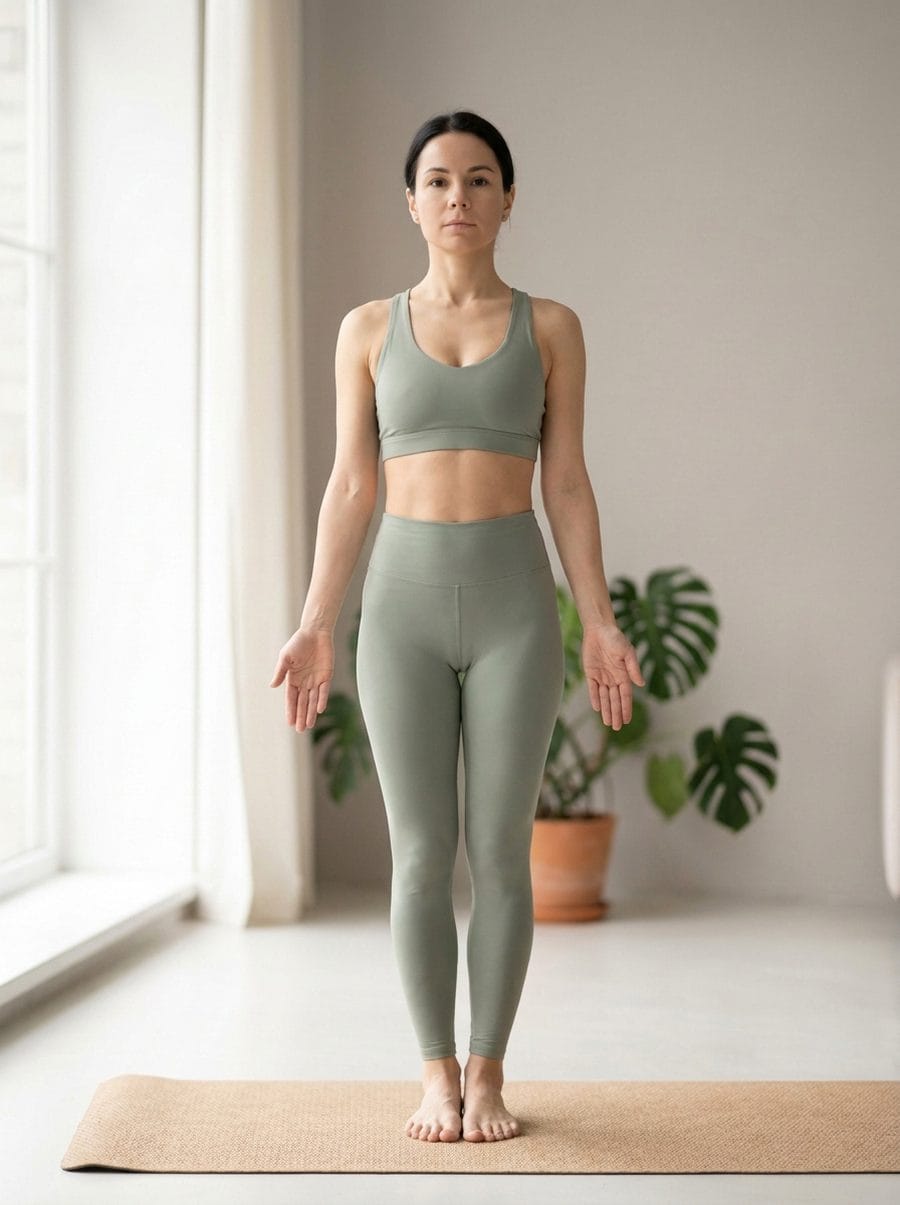
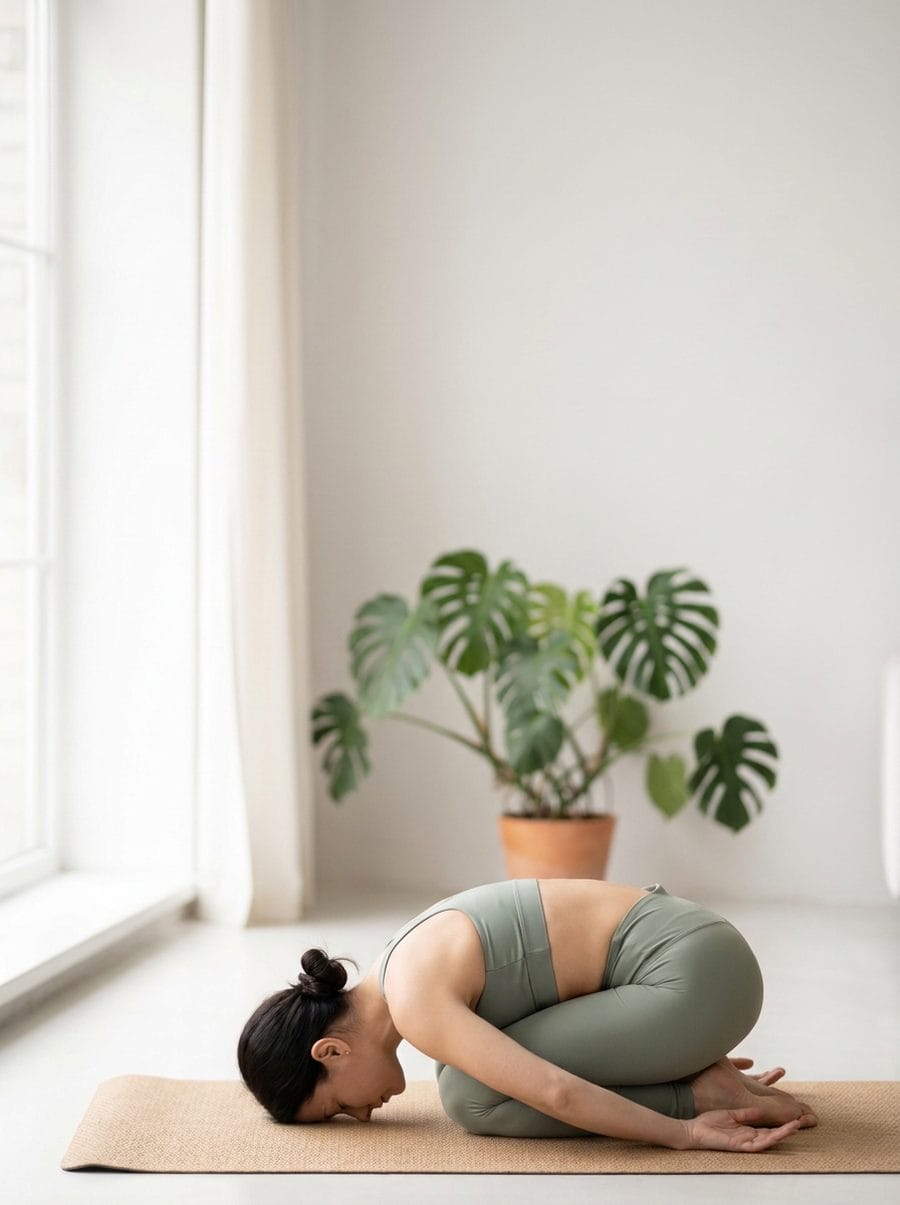
One of the gentlest routines in the app is Evening Unwind, 15 minutes long. It is not a prenatal program: use it only once your doctor has said yes and yoga is already familiar to you.
What to change: spread the knees in Child's Pose, and don't squeeze your belly in Head-to-Knee Pose. After 16 weeks, spend no more than a couple of minutes in any pose done on your back (here: Reclining Butterfly Pose, Legs-Up-the-Wall Pose, Supine Twist, final relaxation), or rest on your side instead.
With high blood pressure, leave Legs-Up-the-Wall Pose out entirely. For breathing, Full Yogic Breath with no holds is a good fit.
When to stop and call for help
End the session if you feel unwell, overheated, dizzy, or have pain. Contact your midwife or maternity unit right away if:
- you have vaginal bleeding;
- your waters break or fluid is leaking;
- your baby is moving less than usual, or the pattern of movements has changed;
- you're less than 37 weeks pregnant and think labor may be starting;
- you have a severe headache that simple painkillers don't ease, problems with your vision, or sudden swelling of your face, hands or feet.
If the bleeding is heavy, or it comes with severe belly pain, weakness or dizziness, call emergency services. The app's general rules are in Safety and Contraindications.
Pose cautions in this article
- Knee discomfort — sit on a prop (Easy Pose)
- Acute back pain (Cat-Cow)
- Wrist injuries — practice on your fists (Cat-Cow)
- Groin and knee injuries — place supports under your thighs (Butterfly Pose)
- Pregnancy — widen your knees (Child's Pose)
- Knee injuries (Child's Pose)
This site is for general information and is not medical advice. If you have pain, an injury, a chronic condition, or are pregnant, check with a qualified professional before practicing.
Questions
Is it safe to do yoga while pregnant? Yes, if your doctor has found no reason against it. Classes with a prenatal yoga teacher are the best choice. Skip the poses marked "Pregnancy" in the app.
Can you do yoga in the first trimester? Yes, with your doctor's okay, gently and without overheating. For newcomers, the NHS suggests starting with about 10 minutes a day and not taking up a new vigorous sport.
Which poses does the app rule out during pregnancy? According to the app: belly-down backbends, deep twists, core poses, inversions and a few other demanding poses, 38 in total. Late in pregnancy, Bridge Pose variations, Happy Baby Pose and Three-Legged Dog join the list.
Can you lie on your back during prenatal yoga? Only briefly. The NHS advises against lying on your back for more than a few minutes, especially after 16 weeks. Resting on your side is more comfortable.
Sources
- ACOG. Physical Activity and Exercise During Pregnancy and the Postpartum Period: ACOG Committee Opinion, Number 804. Obstetrics & Gynecology, 2020.
- Polis RL, Gussman D, Kuo YH. Yoga in Pregnancy: An Examination of Maternal and Fetal Responses to 26 Yoga Postures. Obstetrics & Gynecology, 2015.
- NHS: Exercise in pregnancy, Exercising in pregnancy, Your baby's movements, Signs that labour has begun, Pre-eclampsia, Vaginal bleeding in pregnancy.
- Pose and practice cautions, and routine contents: the Hatha Yoga app. More on the How We Prepare Our Content page.
Read next
- Yoga for Arthritis and Osteoporosis: How to Protect Your Joints and Bones7 min read
- Ashtanga Yoga Explained: The Series, the Breath and the Difference from Hatha6 min read
- Ayurveda Explained Simply: The Basics and a Daily Routine (Dinacharya)5 min read
- Balance Exercises: 10 Yoga Poses for Balance and Stability7 min read