 Hatha Yoga
Kegel Exercises and Yoga for the Pelvic Floor: Technique, Poses and Safety
Hatha Yoga editorial team · Updated · 8 min read
Kegel exercises train your pelvic floor, the muscles that support your bladder, uterus and bowel. This guide covers how to find those muscles and squeeze them correctly, why Kegels sometimes don't seem to work, what yoga poses add, what's known about the stomach vacuum, and which poses are off the table, per the app, with diastasis recti.
If you're dealing with bladder leaks, a heavy feeling low in your belly or pelvic pain, see your doctor or gynecologist first.
Why train your pelvic floor?
Picture the pelvic floor as a hammock of muscle across the bottom of your pelvis. According to the NHS in the UK, pelvic floor exercises strengthen the muscles around the bladder, vagina and bottom, can help stop urine leaks, and can improve prolapse.
The strongest evidence is about urinary incontinence. A 2018 Cochrane review pooled 31 trials with 1,817 women. Among women with stress incontinence, meaning leaks when you cough, laugh or jump, 56% in the pelvic floor training groups reported that their leaking had stopped, compared with 6% of those who didn't train.
The authors suggest this kind of training could form the first line of conservative care for incontinence.
How to do Kegel exercises
To find the right muscles, imagine holding in both pee and gas at the same moment. You'll feel the area between your legs draw gently up and in. Your buttocks, thighs and belly stay relaxed.
- Long squeezes. Tighten the muscles and hold. Begin with 2 seconds and work up to 10; longer holds aren't needed. Let go completely after each one.
- Quick squeezes. Tighten fast and release right away.
- How many. The NHS suggests building up to 10 repetitions of each type, at least three times a day.
- Keep breathing. Don't hold your breath, and don't suck your belly in along with the squeeze.
- Any position works: lying down, sitting or standing. Beginners usually find lying down easiest.
Give it time. The NHS notes that it can take a few months of practice before you see any benefit.
Why Kegels aren't working for you
- The wrong muscles are doing the work. Your glutes or belly tighten while the pelvic floor barely moves. Rest a hand on your belly: it should stay soft.
- Bearing down instead of lifting. The muscles push down, as if straining. The right movement goes up and in.
- No release. Letting go matters as much as squeezing. Without rest between squeezes, the muscles tire quickly.
- Not enough time. A few weeks is usually too early to judge.
- The muscles are already too tight. A pelvic floor can be overactive, not only weak. If squeezing hurts or sex is painful, don't add more reps. Ask a gynecologist or pelvic floor physical therapist to check your technique.
Is yoga good for the pelvic floor?
A U.S. trial published in 2024 compared two programs in 240 women aged 45 to 90 who leaked urine every day. For 12 weeks, one group did Hatha yoga focused on the pelvic floor and the other did general stretching and strengthening.
Leaks went down in both groups, by an average of 2.3 episodes a day with yoga and 1.9 with the general program. Yoga did not beat ordinary exercise.
The practical takeaway: yoga doesn't replace targeted Kegels, but it complements them well. Poses make it easier to feel how the pelvic floor works together with your breath, legs and trunk.
Yoga poses for the pelvic floor
Engage the muscles
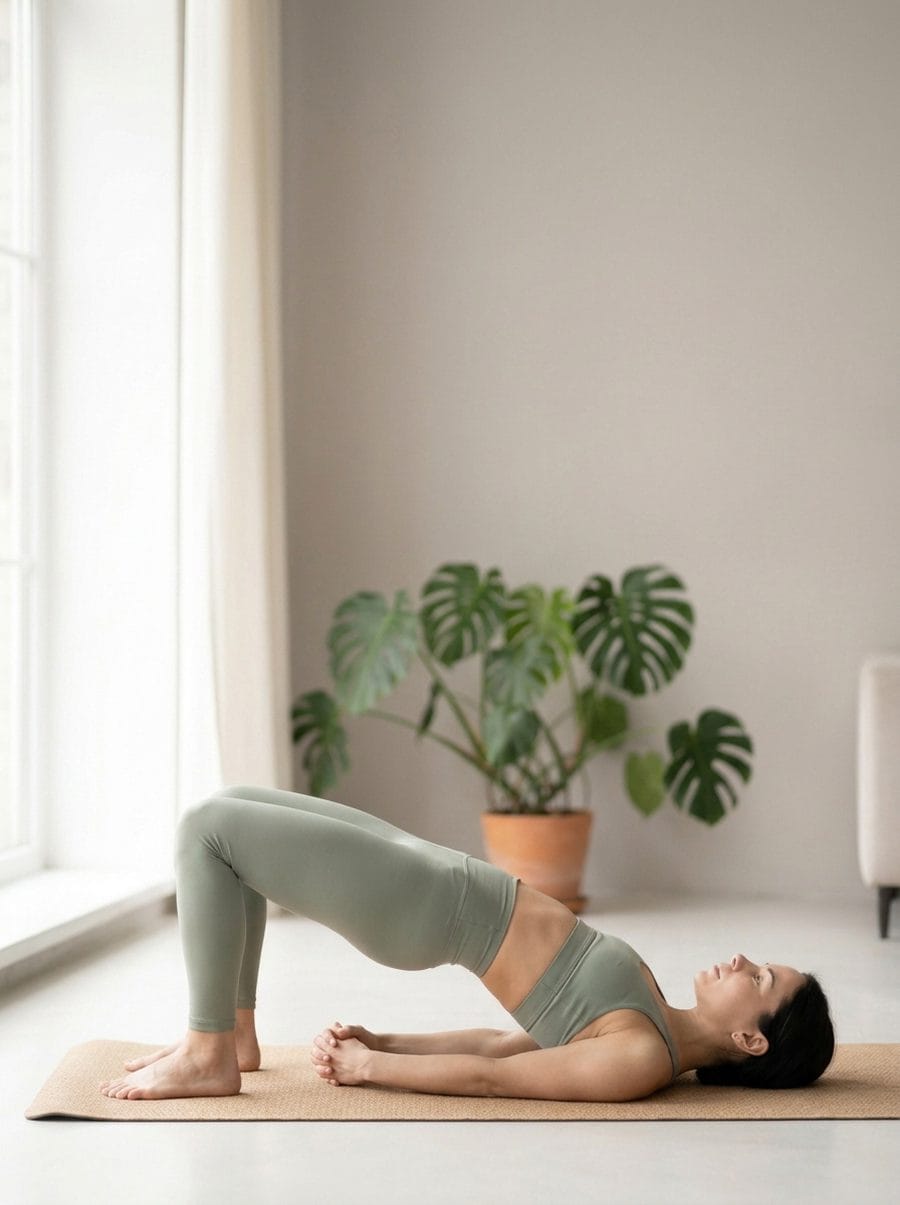
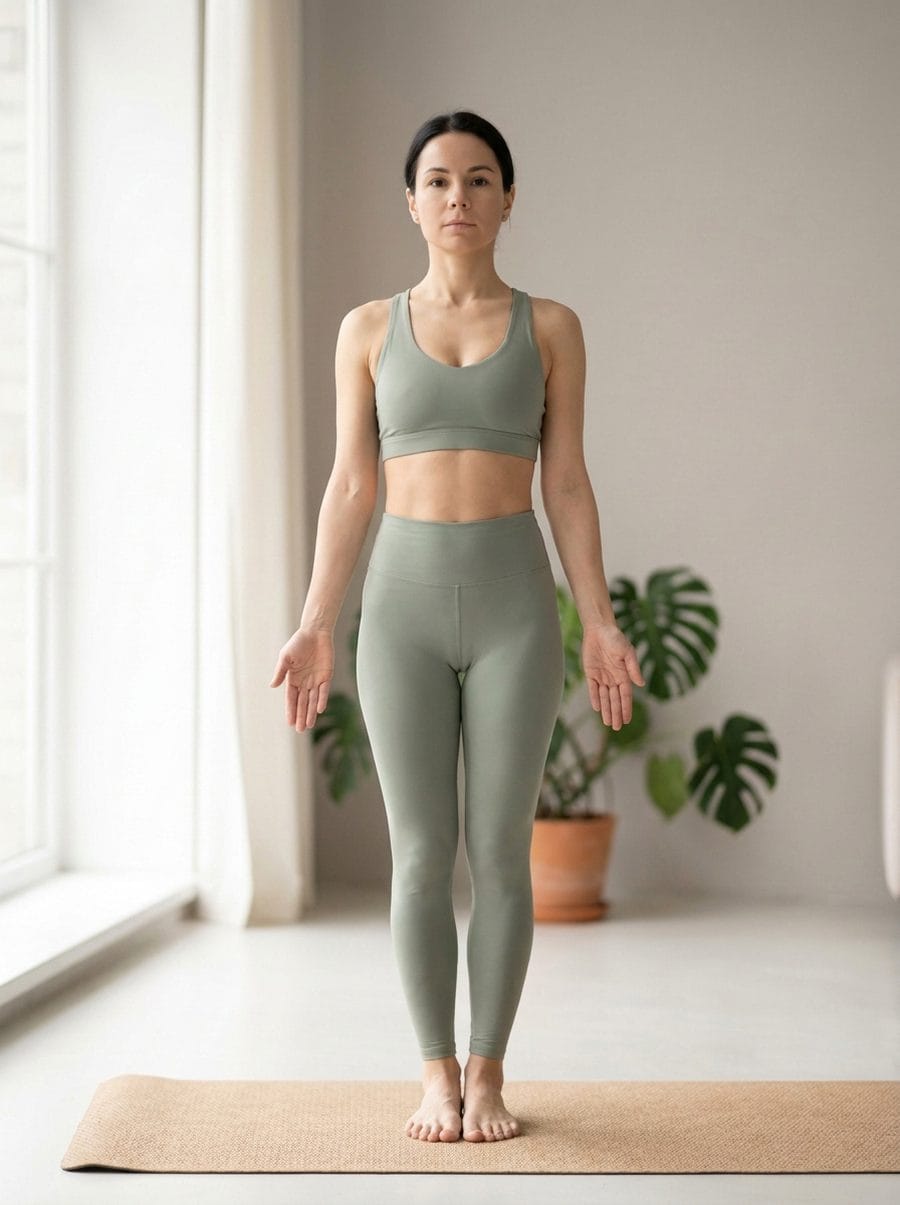
The app calls this mula bandha: a gentle lift of the pelvic floor muscles, explained in Bandhas: Energy Locks. Try it in Mountain Pose: lift the pelvic floor softly, keeping the effort to a third rather than a full clench, and notice how your body gathers around its center line.
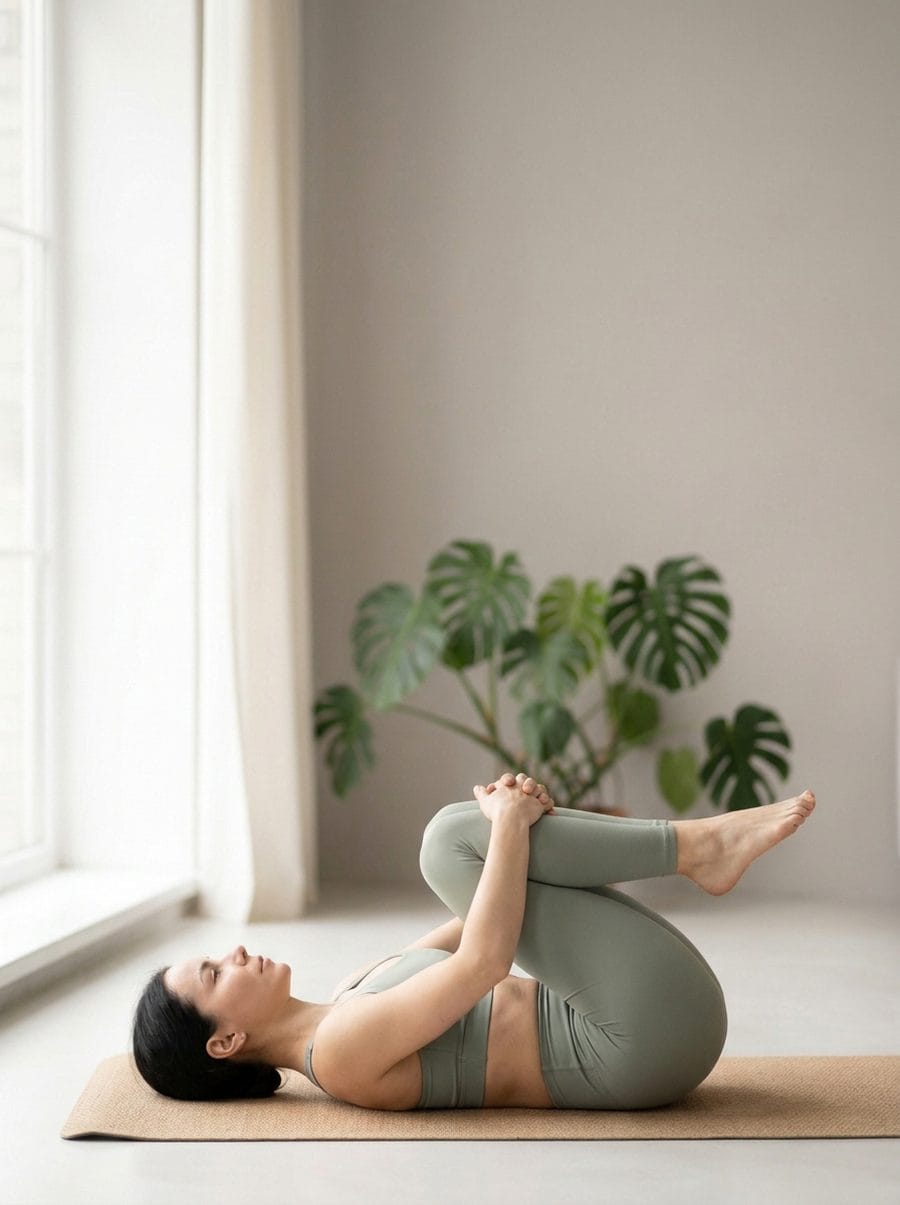
In Bridge Pose, lift your hips as you exhale with a light lift of the pelvic floor, and lower as you inhale, letting go completely. Knees-to-Chest Pose afterward eases the lower back.
Relax and open the pelvis
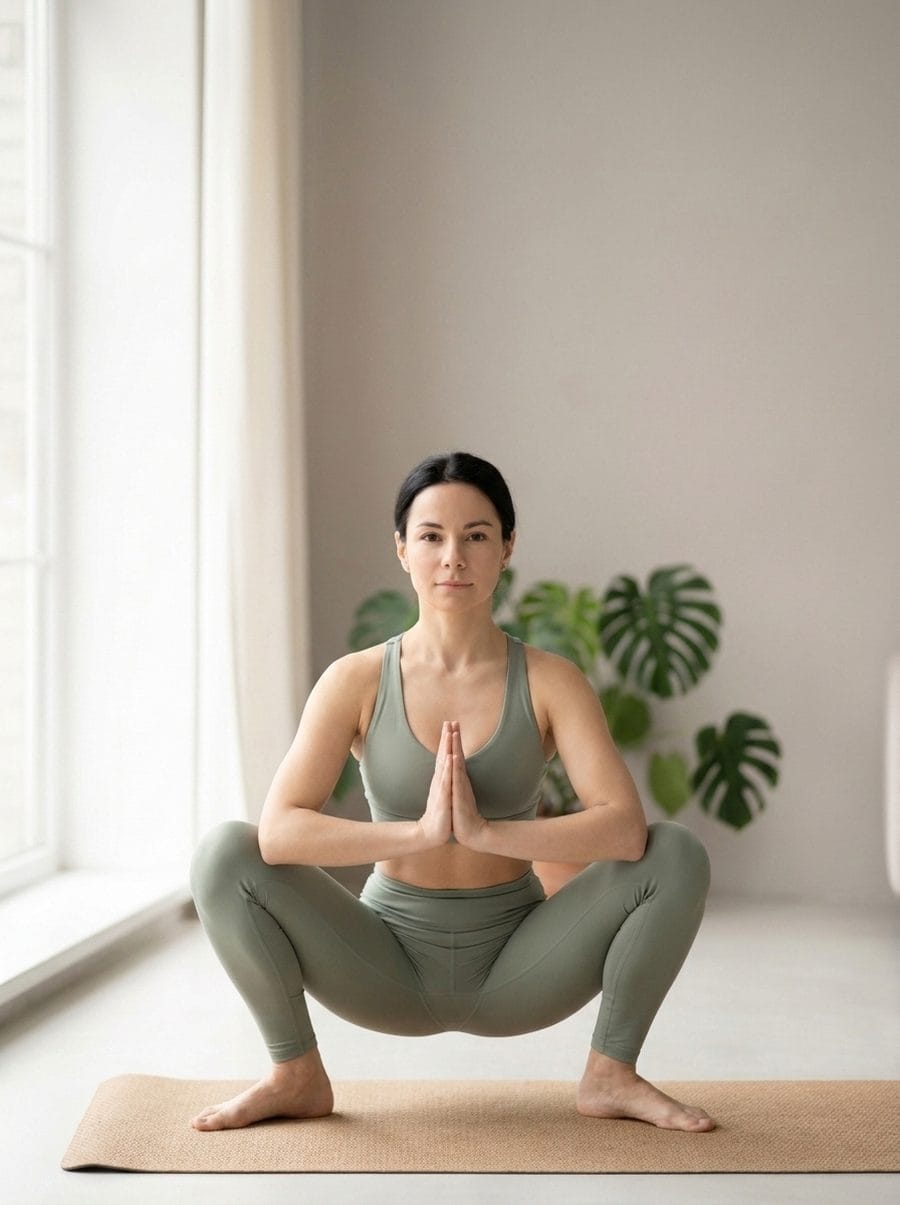
Your pelvic floor needs rest as well. In Garland Pose, Butterfly Pose, Reclining Butterfly Pose and Happy Baby Pose, breathe low into your belly: as you inhale, let the pelvic floor soften and widen, and as you exhale, don't do anything on purpose. Child's Pose rounds things off.
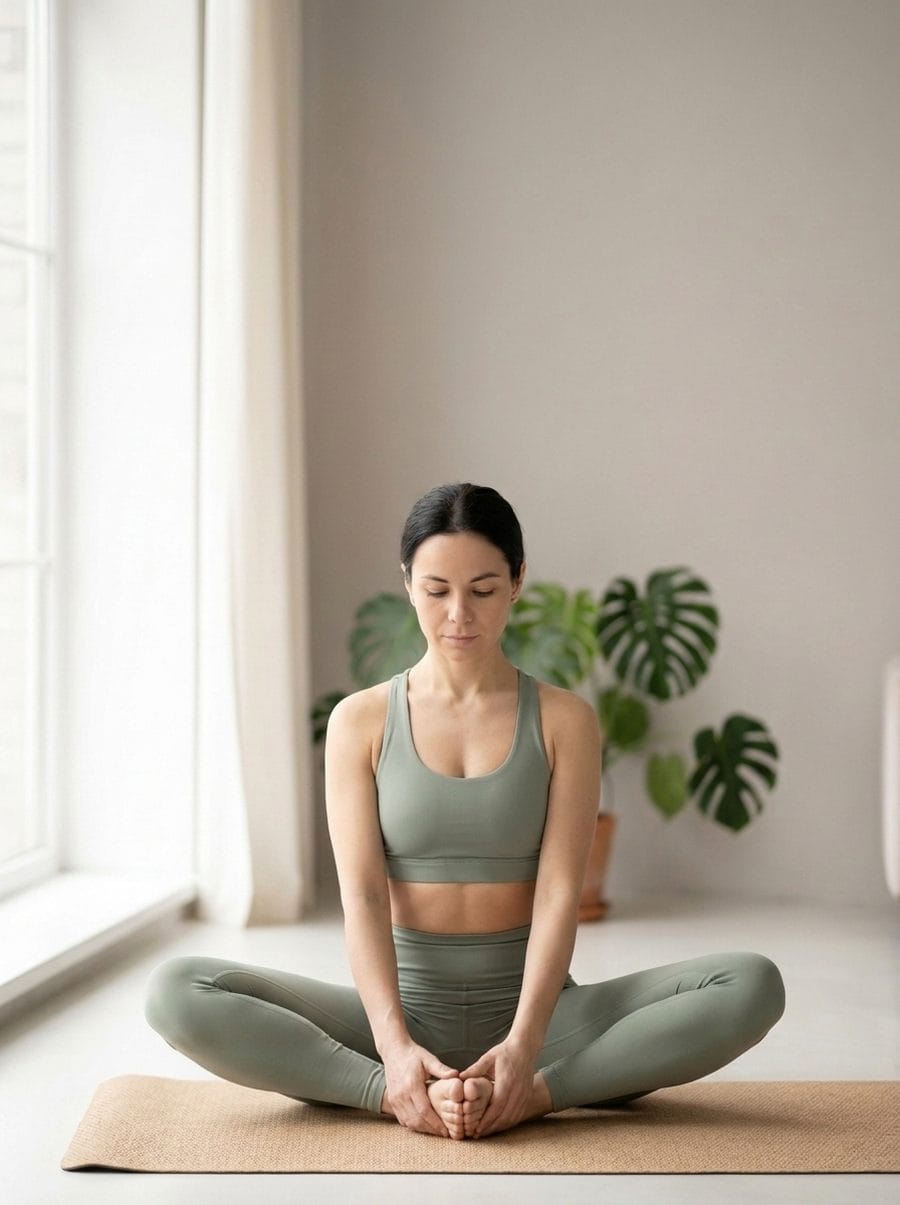
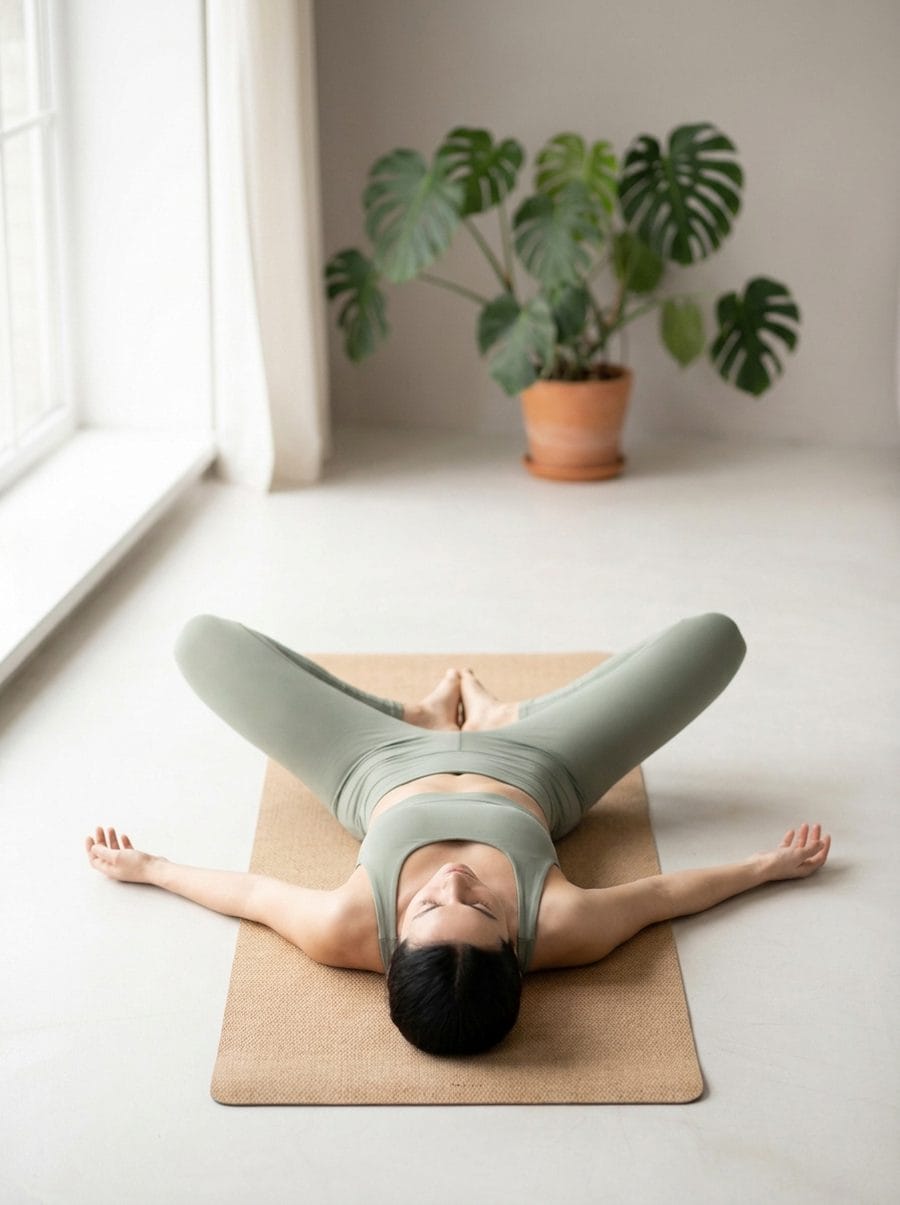
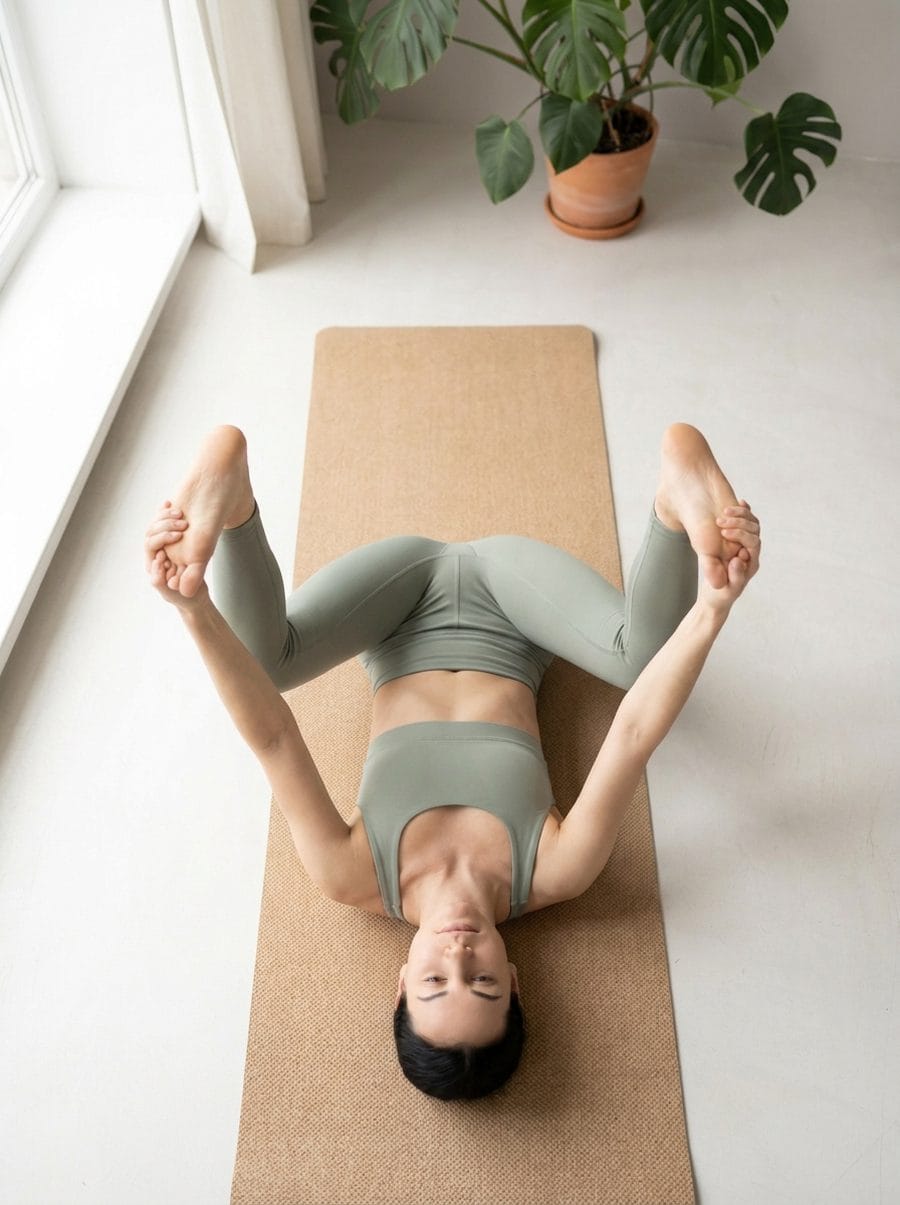

The Hip Opening routine
This app routine takes 20 minutes and is meant for people with some experience. It has 13 steps. It starts with a warm-up of Hip Circles, Cat-Cow and Downward-Facing Dog, moves on to standing hip openers and Garland Pose for a deep squat, and spends its second half on the floor, opening the hips seated and then lying down, before a final Savasana.
Knee trouble? Then Warrior II, Side Angle Pose and Garland Pose stay out, and Pigeon Pose (Prep) gets replaced, as the app recommends, by lying on your back and twisting with a knee hugged in to the chest. A lower back disc herniation means no Wide-Angle Seated Forward Fold.
Stomach vacuum, uddiyana bandha and agnisara
The stomach vacuum is close in technique to uddiyana bandha: you draw the belly up and in after a full exhale. The app's cleansing practices include a related technique, Agnisara Kriya, where you rhythmically pull in and release the belly while holding the breath out, always on an empty stomach.
The app advises against agnisara during pregnancy or your period, after recent surgery, and with hypertension, heart disease or a peptic ulcer. If any of these six applies to you, skip both the vacuum and agnisara. For the full bandhas, the app's own limits are pregnancy, hypertension and flare-ups of abdominal conditions.
Hypopressive exercises, a close relative of the vacuum, haven't been studied much. In a 2024 review they showed positive results, but no more than pelvic floor training, and adding them to that training brought no extra benefit. The authors call the evidence preliminary.
So the vacuum is no substitute for Kegels. If it hurts while you do it, stop and go over your technique with a specialist.
Diastasis recti: exercises to avoid
Diastasis recti is a separation of the two long abdominal muscles along the midline. In the app, three poses carry the "Diastasis recti" limit: Plank Pose, Boat Pose and Half Boat Pose. Skip them if you have diastasis. All three are part of the Strong Core routine, so that routine isn't a fit for you.
The app has no separate diastasis note for the vacuum or agnisara. There's also little evidence that the vacuum helps with diastasis, so choose your ab work together with a physical therapist. If your diastasis appeared after giving birth, read Postpartum Yoga.
When to see a doctor
- Leaks disrupt your day-to-day routine, or they started recently.
- You feel heaviness or a bulge in the vagina: per the NHS, any lump in or around the vagina warrants a GP visit.
- You have pelvic pain, pain during sex, or pain when you try the exercises.
Call emergency services if, along with back pain, you lose feeling around the genitals or anus or notice sudden trouble holding urine or stool. With prolapse, the NHS advises avoiding heavy lifting, running and trampolining. General safety rules for practice are collected in Safety and Contraindications.
Pose cautions in this article
- Neck injuries (Bridge Pose)
- Flare-up of lower back pain (Bridge Pose)
- Pregnancy from the second trimester onward — take your knees wider than your belly or skip the pose (Knees-to-Chest Pose)
- Knee injuries (Garland Pose, Child's Pose)
- If your heels don't reach the floor, place a blanket under them (Garland Pose)
- Groin and knee injuries — place supports under your thighs (Butterfly Pose)
- Groin discomfort — place supports under your knees (Reclining Butterfly Pose)
- Late pregnancy (Happy Baby Pose)
- Pregnancy — widen your knees (Child's Pose)
This site is for general information and is not medical advice. If you have pain, an injury, a chronic condition, or are pregnant, check with a qualified professional before practicing.
Questions
How do you do Kegel exercises correctly? Lift the muscles between your legs up and in, as if holding in both pee and gas. Hold for 2 to 10 seconds, then release fully. Breathe normally and keep your belly and buttocks relaxed.
How many Kegels should you do a day? The NHS suggests working up to 10 long and 10 quick squeezes at least three times a day. Be patient: according to the NHS, it can take months before you notice a difference.
Is the stomach vacuum safe with diastasis recti? The app doesn't list diastasis as a limit for it, but there's no solid evidence of benefit either. With diastasis, leave Plank Pose, Boat Pose and Half Boat Pose out, and plan your ab exercises with a physical therapist.
Which is better for the pelvic floor, yoga or Kegels? Targeted Kegels are the foundation. Yoga adds to them: in a 2024 trial it matched ordinary stretching and strengthening but didn't outperform it.
Sources
- Dumoulin C, et al. Pelvic floor muscle training versus no treatment, or inactive control treatments, for urinary incontinence in women. Cochrane Database of Systematic Reviews, 2018.
- Huang AJ, et al. Efficacy of a Therapeutic Pelvic Yoga Program Versus a Physical Conditioning Program on Urinary Incontinence in Women: A Randomized Trial. Annals of Internal Medicine, 2024.
- Katz CMS, Barbosa CP. Effects of hypopressive exercises on pelvic floor and abdominal muscles in adult women: A systematic review of randomized clinical trials. Journal of Bodywork and Movement Therapies, 2024.
- NHS: 10 ways to stop leaks, Your post-pregnancy body, Pelvic organ prolapse, Back pain.
- Technique and cautions for poses and cleansing practices, bandhas, and routine contents: the Hatha Yoga app. More on the How We Prepare Our Content page.
Read next
- Yoga for Arthritis and Osteoporosis: How to Protect Your Joints and Bones7 min read
- Ashtanga Yoga Explained: The Series, the Breath and the Difference from Hatha6 min read
- Ayurveda Explained Simply: The Basics and a Daily Routine (Dinacharya)5 min read
- Balance Exercises: 10 Yoga Poses for Balance and Stability7 min read