 Hatha Yoga
Postpartum Yoga: When to Start and How to Recover Safely
Hatha Yoga editorial team · Updated · 7 min read
Postpartum yoga can help your body find its support again, but there's no need to rush. Here you'll learn when to start after a vaginal birth or a C-section, which exercises come first, how to handle diastasis recti, which poses and practices the app says to postpone, and which symptoms call for a doctor.
Get the go-ahead from your doctor or midwife first; after a C-section or a complicated birth, consider it mandatory.
When can you start yoga after giving birth?
The NHS in the UK offers a clear guide. If your birth was straightforward, you can begin gentle exercise as soon as you feel up to it: walking, light stretching and pelvic floor exercises. Before high-impact activity such as running or aerobics, it's wise to wait for your postnatal check, which usually happens 6 to 8 weeks after the birth.
Recovery takes longer after a C-section or a complicated delivery. The NHS notes that many women don't return to exercise for 6 weeks or so after a cesarean, and only once it no longer feels uncomfortable. Confirm your timing with your doctor or midwife.
The American College of Obstetricians and Gynecologists (ACOG), in its 2020 committee opinion, calls physical activity an important part of health after birth as well. Women who were active before pregnancy can ease back into their usual activities, and staying active may play a role in preventing postpartum depression.
Why it pays to go slowly
Your body after birth isn't the same as before. According to the NHS, your lower back and core muscles may be weaker for a while, and your ligaments and joints stay softer and more flexible for a few months. That makes deep stretches and twists riskier than they feel: the flexibility is there, but the support isn't yet.
A practical rule of thumb: work at roughly half your usual effort, with no deep folds and no strong twists. While postpartum bleeding continues, put inversions on hold and ask your doctor when to bring them back.
Where to begin: pelvic floor and breath
You can start the first exercises while still in bed. The NHS describes two kinds of pelvic floor squeezes. Long ones: lift the muscles and hold, for 10 seconds at most. Quick ones: lift fast and let go at once.
Gradually work up to ten of each, done in three or more sessions daily. Breathe freely and leave your belly out of the squeeze. You'll find the full technique in Kegel Exercises and Pelvic Floor Yoga.
A 2025 meta-analysis gathered 65 studies with more than 21,000 women in their first year after birth. Pelvic floor training lowered the odds of urinary incontinence by 37%, and one trial found fewer cases of prolapse. Abdominal exercises narrowed the gap between the stomach muscles, though confidence in that finding is low.
For breathing, try Full Yogic Breath: a slow inhale fills the belly and ribs, and the exhale lasts longer than the inhale.
Diastasis recti after pregnancy
During pregnancy, the two long stomach muscles often move apart, usually by about two finger widths. The NHS says the gap generally closes back to normal by the time your baby is 8 weeks old. To check it, lie face up, knees bent and feet flat, lift your shoulders slightly, and use your fingertips to feel for the gap above and below your belly button.
If it's still obvious 8 weeks after the birth, see your doctor, who can refer you to a physical therapist.
Early on, the NHS advises leaving out sit-ups, planks and high-impact exercise, and avoiding straining and heavy lifting. The app marks three poses with "Diastasis recti": Plank Pose, Boat Pose and Half Boat Pose. Skip them while you have diastasis.
A 2021 review found that the evidence for any particular exercise program for postpartum diastasis is still very weak, so it's best to build your plan with a physical therapist.
First poses after birth
Lying down and on all fours
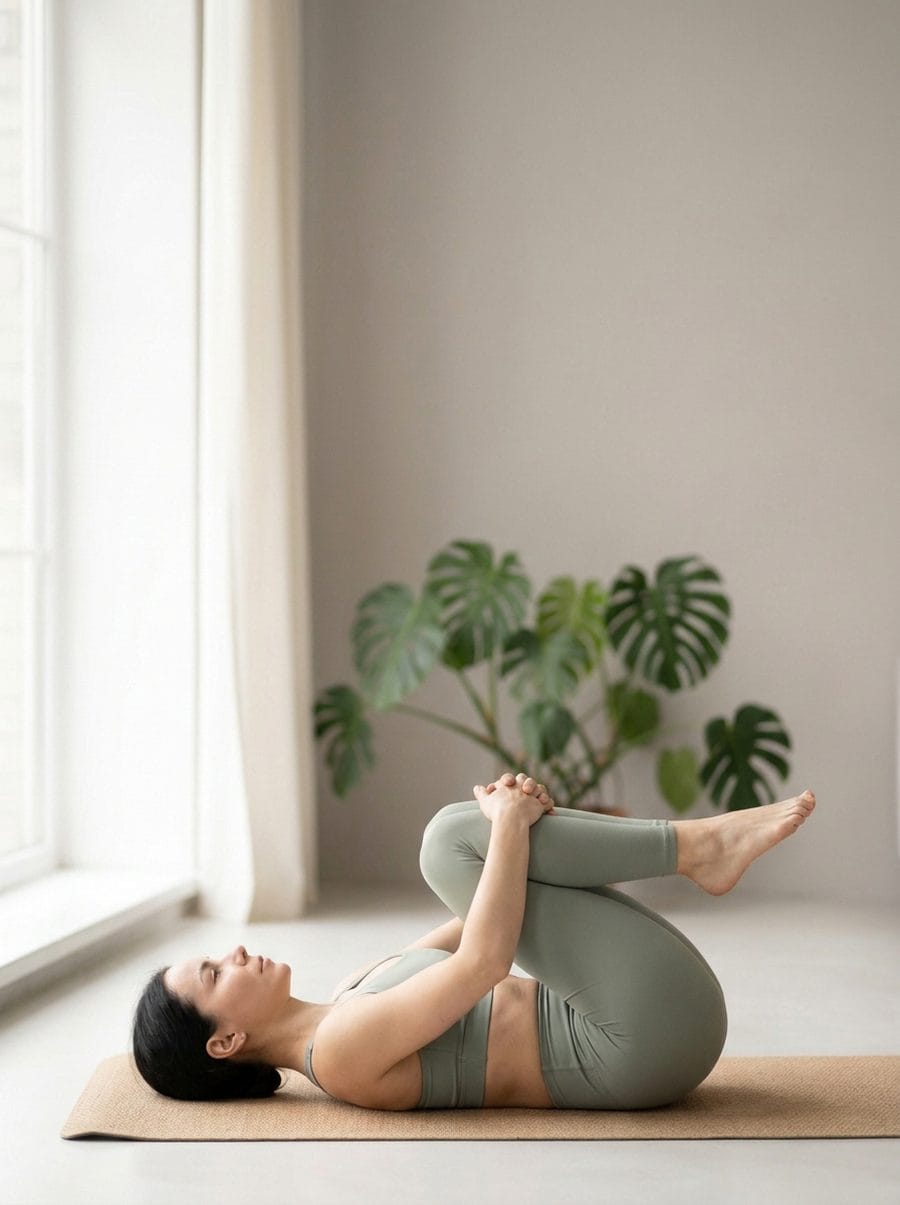
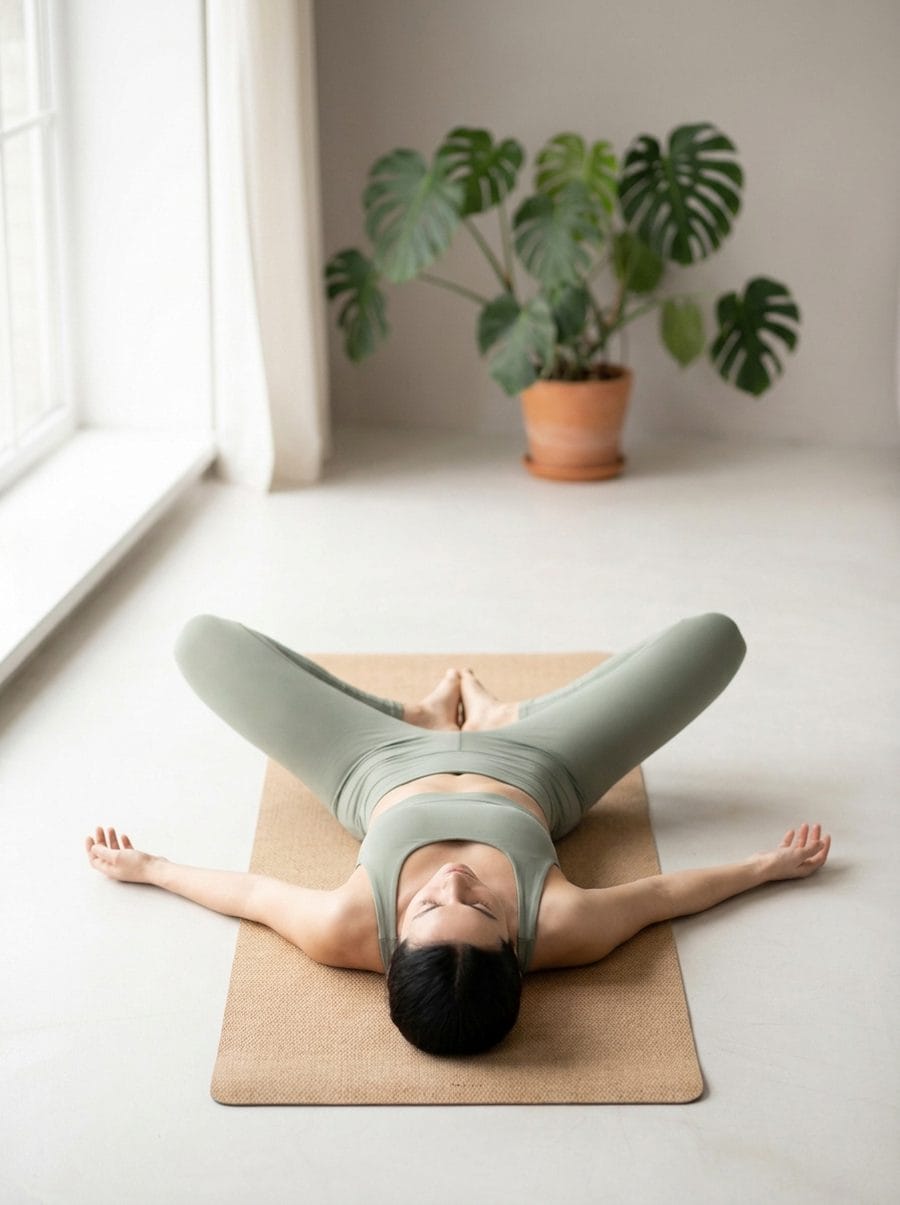
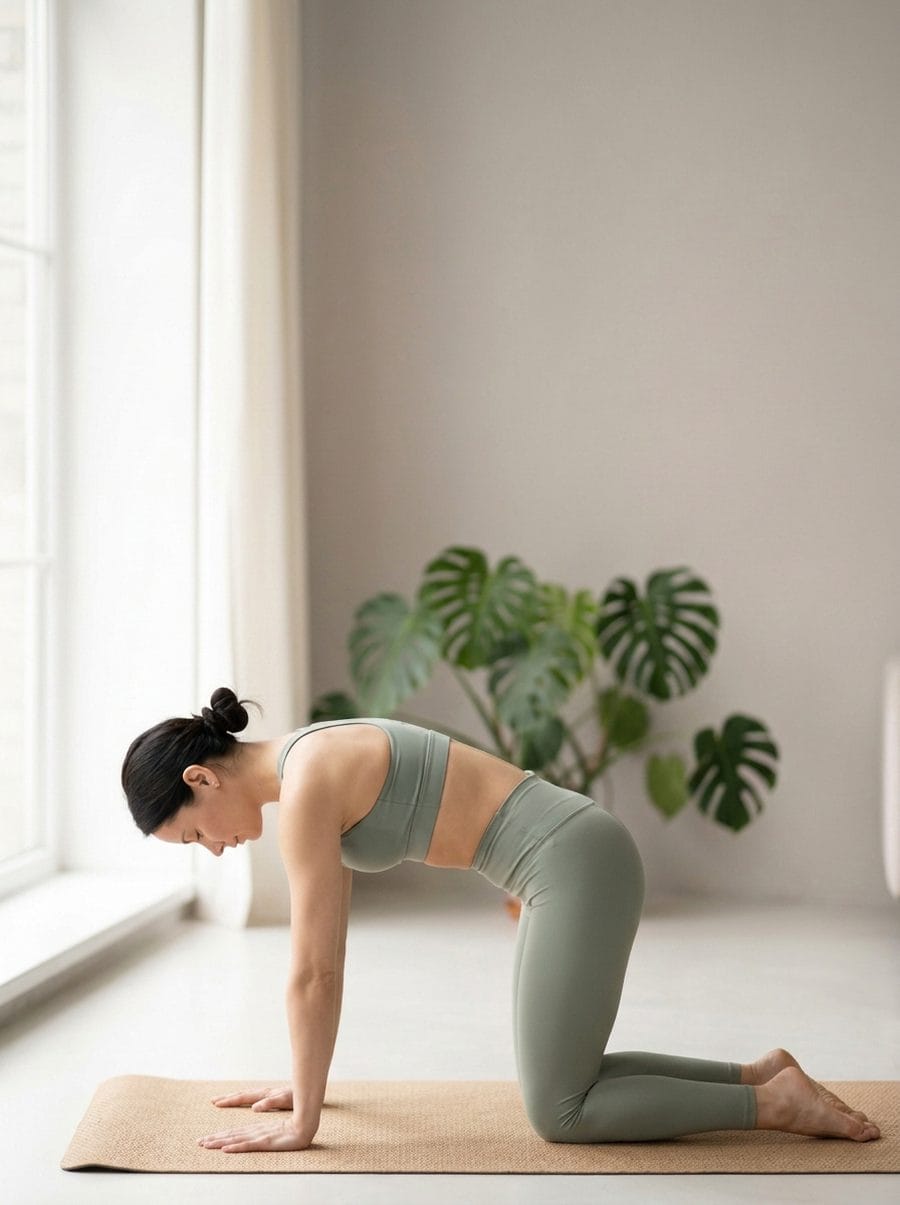
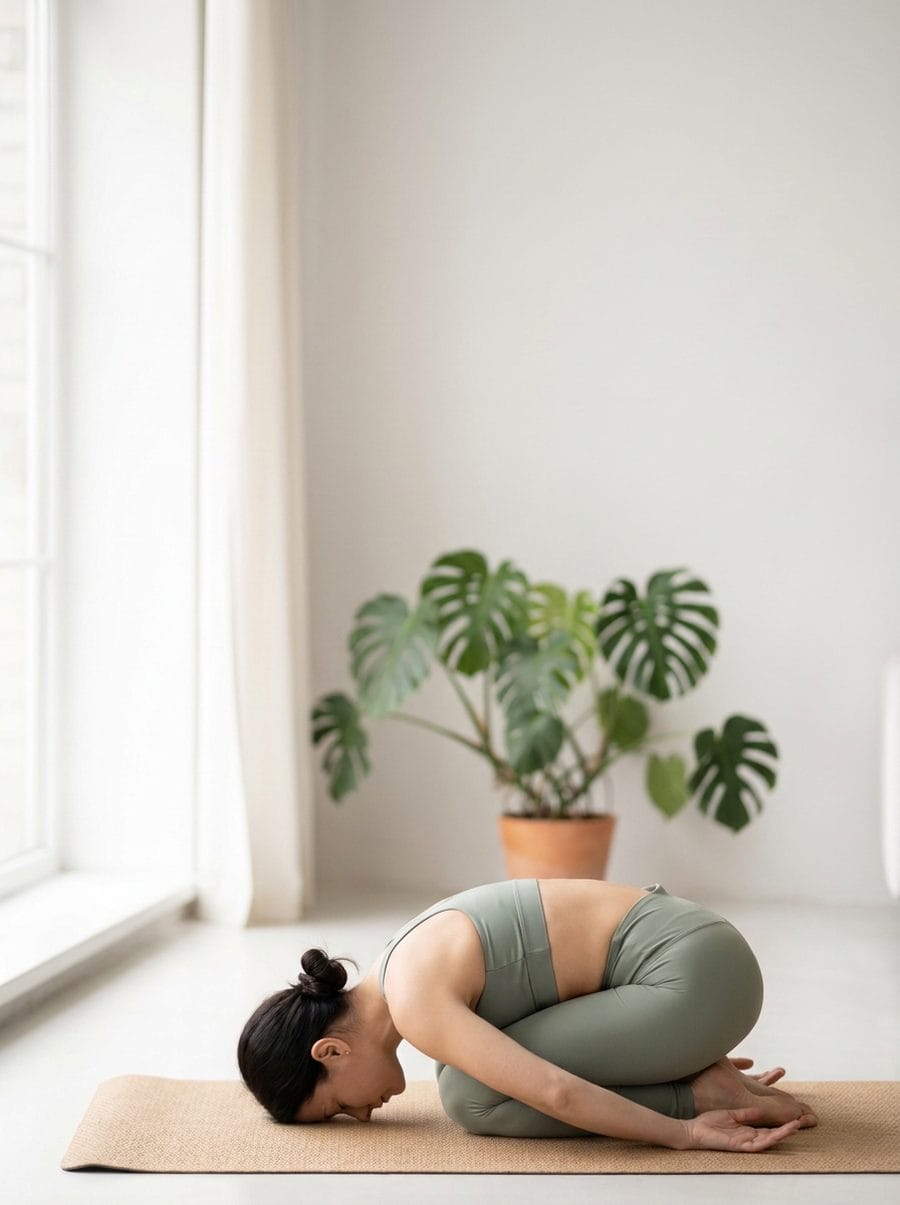
Hugging your knees in Knees-to-Chest Pose lets the lower back unwind. Reclining Butterfly Pose lets you lie with your hips open and breathe into your belly. Keep Cat-Cow slow and the movement small. Child's Pose is a quick break between baby tasks.
Neck and shoulders after feeding
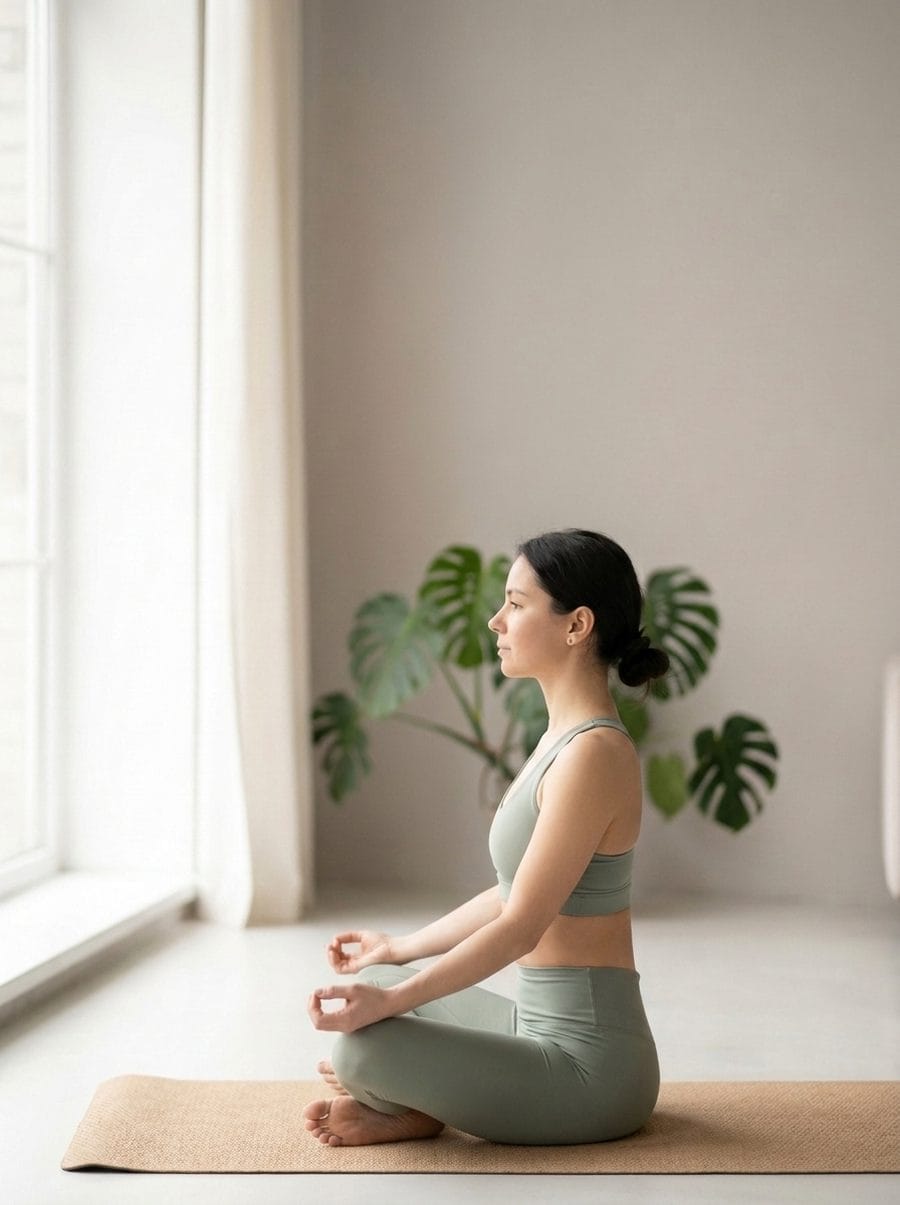
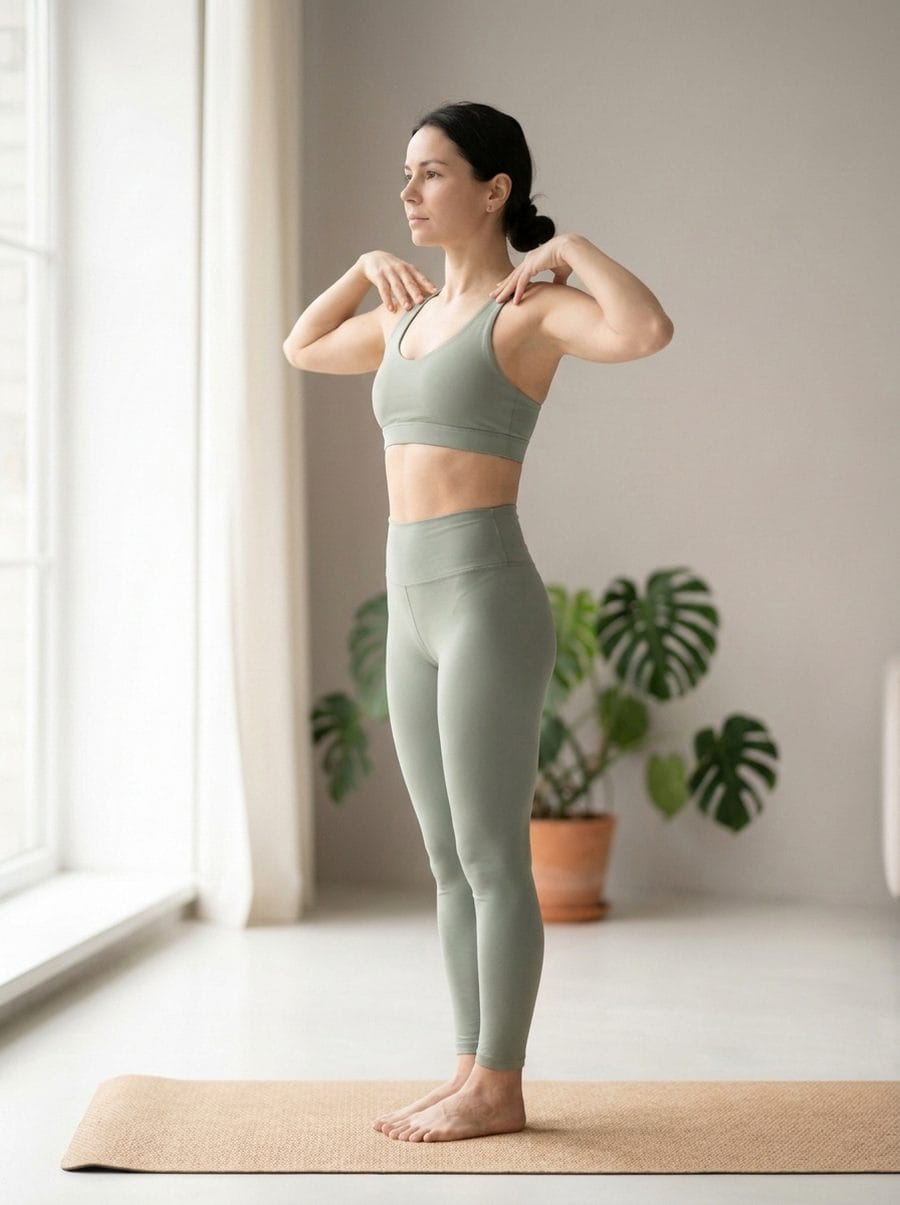
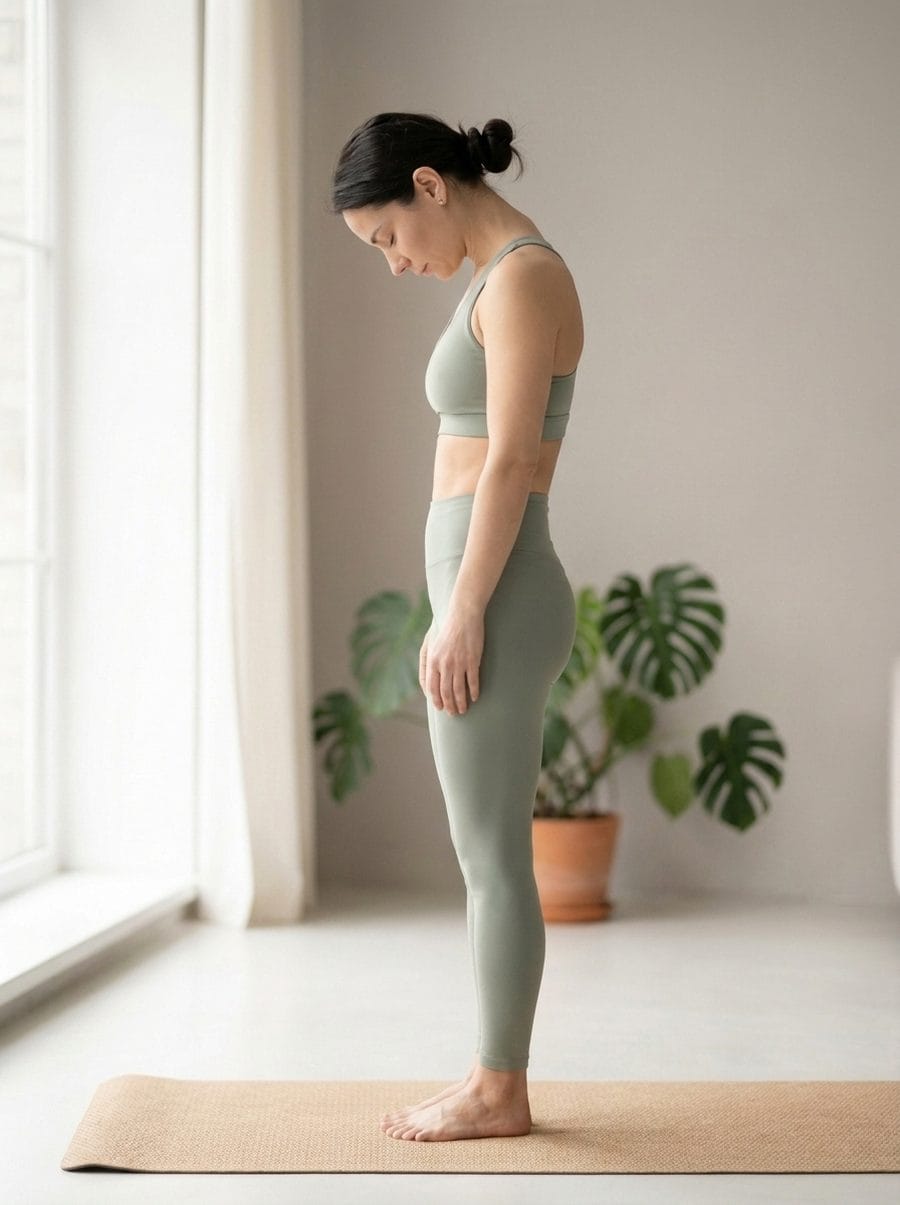
While you feed your baby, your shoulders creep up and your head tips forward. Sit in Easy Pose, do Shoulder Rolls and the Neck Warm-Up, then lie down in Relaxation Pose for at least a couple of minutes. Per the app, dizziness or acute neck pain rules out the Neck Warm-Up.

The Low-Energy Day routine
When sleep is short and energy is shorter, this 14-minute routine from the app fits well, because it keeps you seated or lying the whole time. It moves from Easy Pose through gentle neck and shoulder work, Cat-Cow, Hare Pose, soft backbends, Bridge Flow and Knees-to-Chest Pose, and ends with Legs-Up-the-Wall Pose followed by an extended Relaxation Pose.
Come back to it once your doctor clears you for regular exercise. After a C-section, hold off on the belly-down poses (Cobra Flow and Crocodile Pose) while your scar still bothers you. Hold Legs-Up-the-Wall Pose back until postpartum bleeding has stopped. If lying on your stomach is uncomfortable because of your breasts, drop Crocodile Pose.
What to postpone
- Plank Pose, Boat Pose and Half Boat Pose while you have diastasis.
- Stomach vacuum and Agnisara Kriya. Agnisara carries a "Recent surgery" limit in the app, so after a C-section skip it. After a vaginal birth there's no fixed timeline for the vacuum: rebuild your pelvic floor and breathing first, then decide together with your doctor or physical therapist.
- Skull Shining Breath. The app lists recent abdominal surgery among its limits.
- Deep stretches and twists in the first months, while your ligaments are still soft.
When to call a doctor right away
The NHS lists signs that mean you should contact your midwife or doctor straight away after a C-section: severe pain, leaking urine, pain when you pee, heavy vaginal bleeding, a wound that becomes redder, more painful, swollen or starts to discharge, a cough or shortness of breath, and pain or swelling in your lower leg. Don't ignore these signs after a vaginal birth either.
If your mood stays low for a long time or you feel you can't cope, tell your doctor too: help is available. General guidance is in Safety and Contraindications.
Pose cautions in this article
- Pregnancy from the second trimester onward — take your knees wider than your belly or skip the pose (Knees-to-Chest Pose)
- Groin discomfort — place supports under your knees (Reclining Butterfly Pose)
- Acute back pain (Cat-Cow)
- Wrist injuries — practice on your fists (Cat-Cow)
- Pregnancy — widen your knees (Child's Pose)
- Knee injuries (Child's Pose)
- Knee discomfort — sit on a prop (Easy Pose)
- Acute neck pain (Neck Warm-Up)
- Dizziness (Neck Warm-Up)
This site is for general information and is not medical advice. If you have pain, an injury, a chronic condition, or are pregnant, check with a qualified professional before practicing.
Questions
When can I start yoga after giving birth? After an uncomplicated birth, you can begin gentle movement, breathing and pelvic floor work as soon as you feel ready. Save high-impact exercise for after your postnatal check, typically about 6 to 8 weeks after delivery. After a C-section, your doctor sets the timeline.
Is yoga safe after a C-section? Yes, though later on and only once your doctor agrees. The NHS gives roughly 6 weeks as a guide. Skip belly-down poses while your scar bothers you, along with Agnisara Kriya and Skull Shining Breath.
How soon after birth can I do a stomach vacuum? There's no exact timeline. Rebuild your pelvic floor and breathing first, and talk the vacuum over with your doctor. After a C-section, the app advises against agnisara and the vacuum because of the recent surgery.
What exercises help with diastasis recti postpartum? Pelvic floor exercises and deep core work, without sit-ups, planks or jumping. If the gap is still noticeable at 8 weeks, see a doctor and a physical therapist.
Sources
- ACOG. Physical Activity and Exercise During Pregnancy and the Postpartum Period: ACOG Committee Opinion, Number 804. Obstetrics & Gynecology, 2020.
- Beamish NF, et al. Impact of postpartum exercise on pelvic floor disorders and diastasis recti abdominis: a systematic review and meta-analysis. British Journal of Sports Medicine, 2025.
- Gluppe S, Engh ME, Bø K. Systematic review with meta-analysis of abdominal and pelvic floor muscle training for postpartum diastasis recti abdominis. Brazilian Journal of Physical Therapy, 2021.
- NHS: Keeping fit and healthy with a baby, Your post-pregnancy body, Caesarean section: recovery.
- Pose and practice technique and cautions, and routine contents: the Hatha Yoga app. More on the How We Prepare Our Content page.
Read next
- Yoga for Arthritis and Osteoporosis: How to Protect Your Joints and Bones7 min read
- Ashtanga Yoga Explained: The Series, the Breath and the Difference from Hatha6 min read
- Ayurveda Explained Simply: The Basics and a Daily Routine (Dinacharya)5 min read
- Balance Exercises: 10 Yoga Poses for Balance and Stability7 min read