 Hatha Yoga
A Simple Morning Routine: 20 Minutes of Yoga, Breath and Quiet
Hatha Yoga editorial team · Updated · 6 min read
A good morning routine isn't a checklist of twenty healthy habits. It's a handful of simple steps you repeat every day in the same order. Repetition is what keeps the morning from turning into a race: you don't have to decide where to start, and your body and mind switch on by themselves.
Below is a 20-minute plan with yoga, breathing and a quiet minute, a 5-minute version for rushed days, and tips for learning to wake up early.
Why a morning routine helps
It's easy to hand the first half hour of the day to your phone, the news and the rush. A routine claims that time back. It works as a bridge between sleep and work: you wake up, move, breathe, and only then open your inbox.
Don't expect miracles from it. Its power lies in repetition, not in any single step. So it's better to start with a short version you'll actually do than with an hour-long plan you drop on day three. Morning yoga and morning stretches have their own detailed guides, Morning Yoga and Morning Stretches. This page is about turning them into a routine.
How to wake up early (even if you sleep late)
Waking up early starts the night before. Adults need 7 to 9 hours of sleep on average, so if your alarm is set for six, bedtime needs to be around ten or eleven.
- One wake-up time. The UK's National Health Service (NHS) recommends going to bed and getting up at similar times every day, including days off. That makes it easier for your body to know when it's time to sleep.
- Shift gradually. Move your alarm 15 minutes earlier every few days, and move bedtime by the same amount.
- Don't sleep in after a bad night. Get up at your usual time; a long lie-in throws off the following evening.
- Something to look forward to. It's easier to get up when something pleasant is waiting. Make the first step of your routine one you enjoy.
If falling asleep is the hard part, start with your evening: How to Fall Asleep Fast covers breathing, poses and a bedtime routine.
A 20-minute morning routine, step by step
The order of the steps matters more than their exact length. Start with what you can manage and add one step at a time.
Step 1. Water and daylight, 2 minutes
Drink a glass of water and open the curtains or step over to a window. Many people find it easier to wake up in daylight, and the water lets you start the day without rushing to the coffee.
Step 2. Stretch in bed, 2 minutes
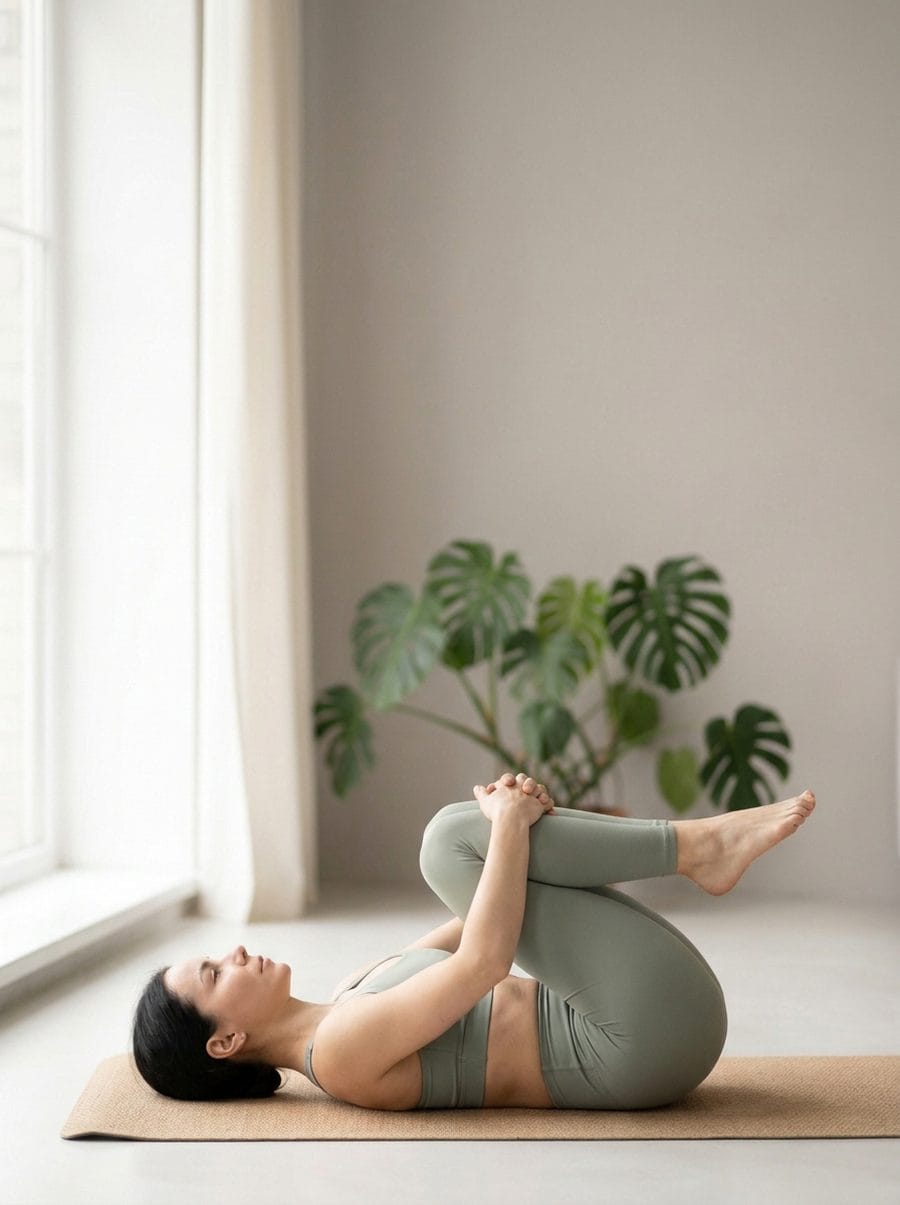
Don't spring out of bed. On your back, draw both knees in and sway gently left and right. Then lower the knees to the right, turn your head left, and switch. A few calm breaths in each position will wake up your back. You'll find more moves like these in Bed Yoga.

Step 3. Ten minutes of yoga
The heart of the routine is the 10-Minute Morning sequence. It opens with three Sun Salutations, continues with seven calm beginner poses, and saves the last minutes for Savasana. It's enough to warm up your whole body without tiring you out.
Step 4. Breathing, 3 minutes
Sit up tall and do Full Yogic Breath: inhale for four, exhale for six, filling the abdomen first, then the ribs, then the upper chest. If a demanding day is ahead and you need to focus, try Box Breathing, where all four phases (inhale, pause, exhale, pause) last four seconds each.
Step 5. A quiet minute and an intention, 2 to 3 minutes
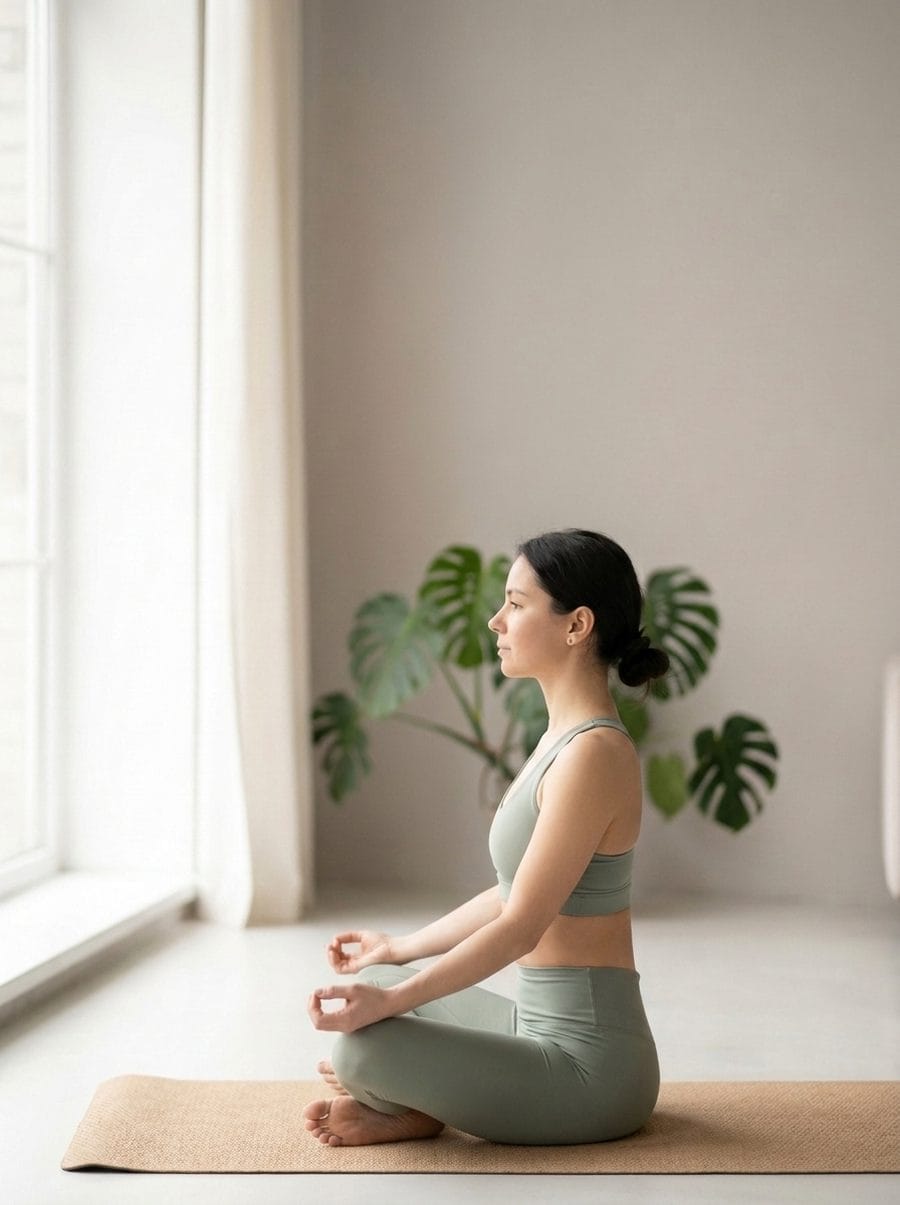
Stay seated cross-legged in Easy Pose. Watch your breath and choose one intention for the day: a short phrase about how you want to spend it. "Calmly," "one thing at a time," "more present with my family." It's not a to-do list; it's a frame of mind.
A 5-minute morning routine
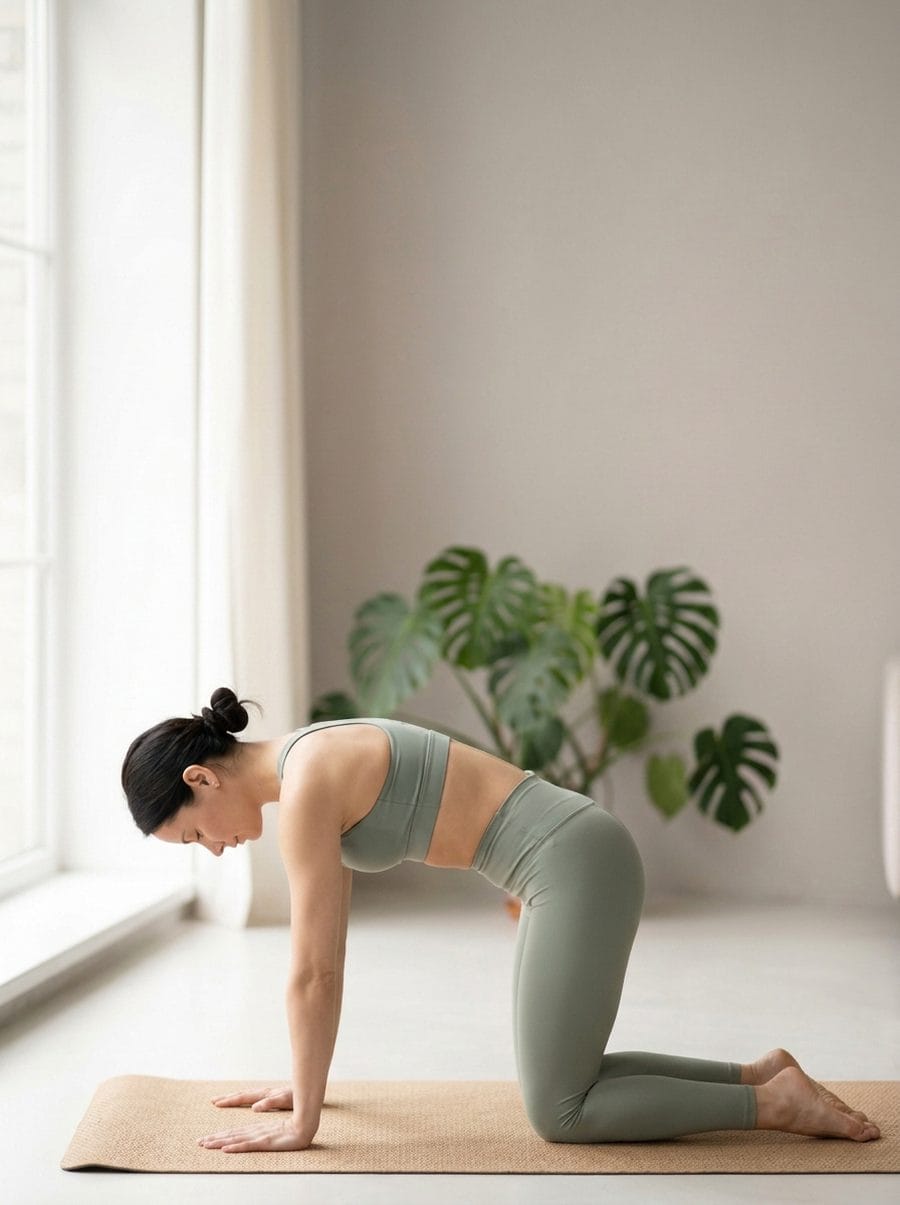
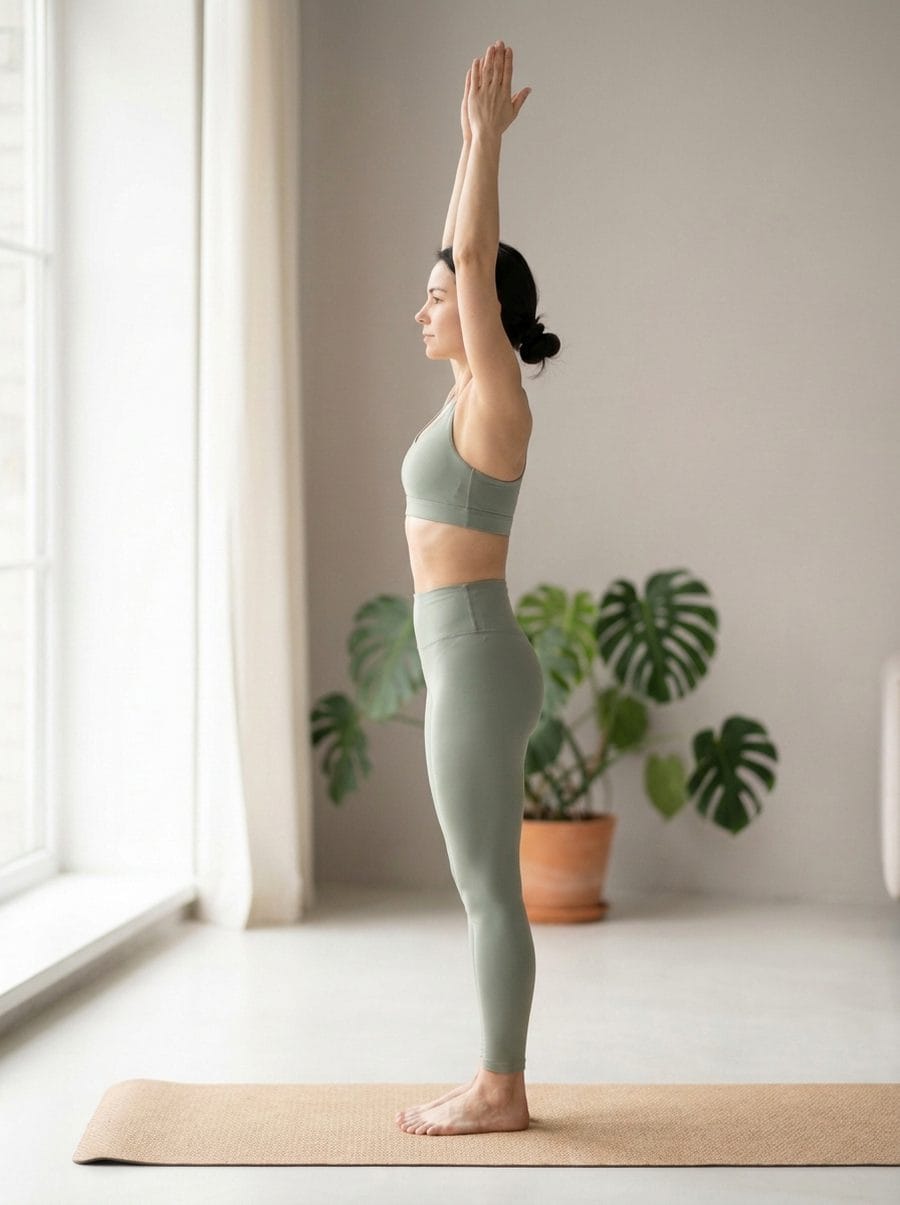
Some mornings you won't have even ten minutes. On those days, keep the backbone: a glass of water, knees to chest in bed, Cat-Cow on the mat, Upward Salute standing, and a minute of steady breathing. Cat-Cow, timed to your breath, wakes up the spine, while Upward Salute opens a chest that's been folded up all night.
The 5-minute Express Warm-Up sequence is another quick option for your joints and spine. And on slower days, when you have more time, you can stretch the routine into the 20-minute Full Morning sequence with standing poses.
What to avoid in the morning
- Your phone in the first half hour. News and messages quickly grab the attention your routine is meant to protect.
- Deep forward folds right after waking. Your back is still stiff, so move gently first and go deeper later.
- A big breakfast before practice. Eat after your session; water is enough beforehand.
- Jumping out of bed. Roll onto your side and push yourself up with your hands, the way you come out of Savasana.
- A plan that's too long. An hour-long routine is easy to skip. Twenty minutes every day beats an hour on weekends.
Safety
For expectant mothers in the second or third trimester, the knees go wide enough for the belly in Knees-to-Chest Pose; otherwise, set that pose aside. If a herniated disc is acutely flaring, skip Supine Twist. Acute back pain rules out Cat-Cow, while an injured wrist simply means making fists to lean on.
An injured shoulder joint means no Upward Salute. In the 10-minute sequence, people with high blood pressure should drop Standing Forward Fold, and Cobra Pose is skipped by anyone pregnant or with a lumbar hernia. Box Breathing loses its holds for anyone pregnant or living with hypertension. The rest of the guidelines are in Safety and Contraindications.
Pose cautions in this article
- Pregnancy from the second trimester onward — take your knees wider than your belly or skip the pose (Knees-to-Chest Pose)
- Disc herniation in the acute phase (Supine Twist)
- Knee discomfort — sit on a prop (Easy Pose)
- Acute back pain (Cat-Cow)
- Wrist injuries — practice on your fists (Cat-Cow)
- Shoulder joint injuries (Upward Salute)
This site is for general information and is not medical advice. If you have pain, an injury, a chronic condition, or are pregnant, check with a qualified professional before practicing.
Questions
How do I build a morning routine? Pick 3 to 5 simple steps and do them in the same order every day: water, movement, breathing, a quiet minute. Start with 5 to 10 minutes and add a little at a time.
What time should I wake up? There's no universal answer. What matters more is getting up at the same hour and sleeping 7 to 9 hours, so your wake-up time decides your bedtime.
Can I do yoga as soon as I wake up? Gentle poses in bed are fine right away. For a sequence on the mat, get up first, splash some water on your face and have a drink.
What if I have no time in the morning? Use the 5-minute version. Even that keeps the habit alive, and the habit matters more than the length.
Sources
- NHS. How to fall asleep faster and sleep better. Every Mind Matters.
- NHS. Insomnia.
- Pose technique and cautions, breathing rhythms, and the sequence's contents: the Hatha Yoga app. How we check our texts is explained on the How We Prepare Our Content page.
Read next
- Yoga for Arthritis and Osteoporosis: How to Protect Your Joints and Bones7 min read
- Ashtanga Yoga Explained: The Series, the Breath and the Difference from Hatha6 min read
- Ayurveda Explained Simply: The Basics and a Daily Routine (Dinacharya)5 min read
- Balance Exercises: 10 Yoga Poses for Balance and Stability7 min read