 Hatha Yoga
Bed Yoga: Morning Stretches in Bed and Gentle Poses Before Sleep
Hatha Yoga editorial team · Updated · 6 min read
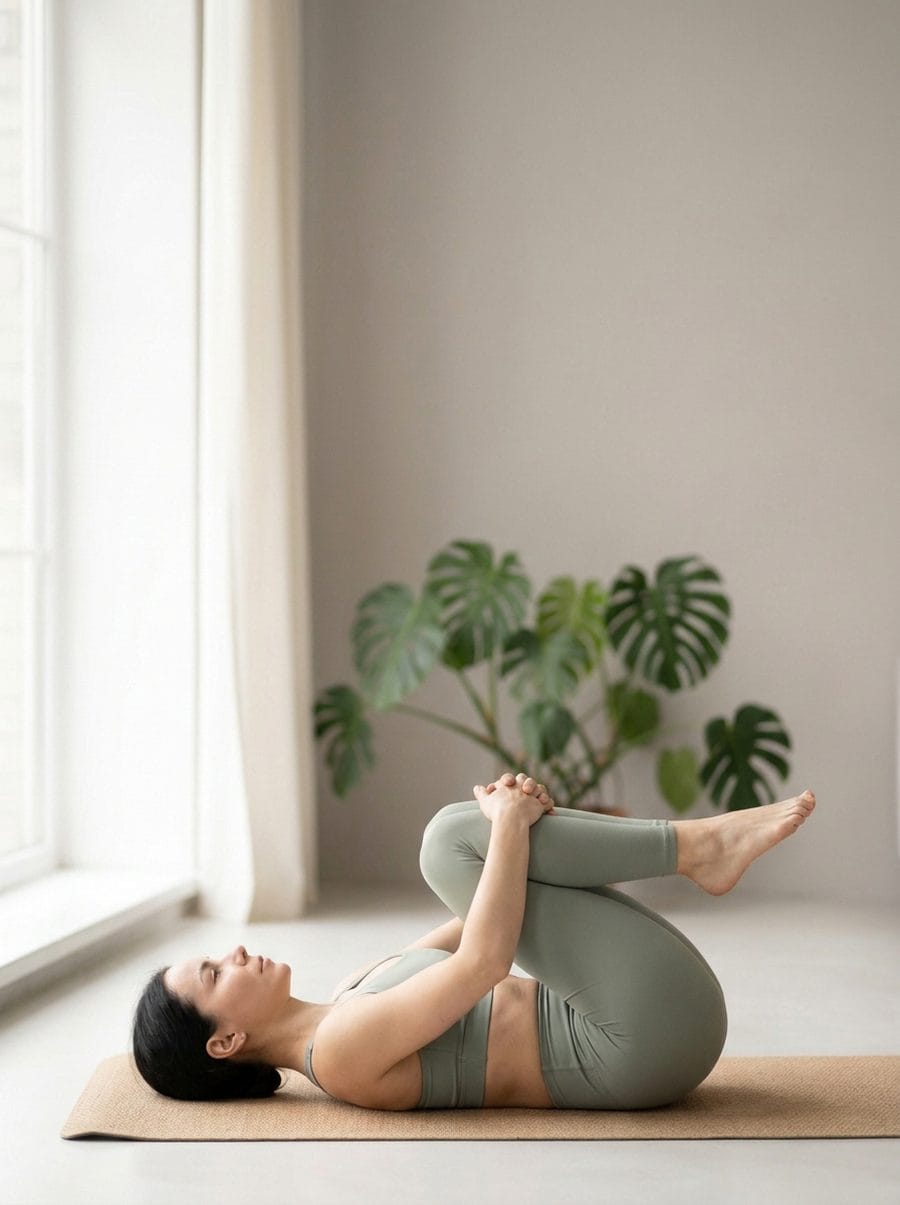
Some days the mat feels miles away: in the morning your body is still asleep, and at night you barely have the energy to reach your pillow. That's where bed yoga comes in. Plenty of lying and seated poses work beautifully on a mattress: they wake up your back in the morning and help you unwind before sleep.
Below we explain what you can do in bed and what's better left for the floor, and we share two short sequences, one for the morning and one for the evening.
Can you do yoga in bed?
Yes, as long as you choose the right poses. A soft mattress sinks under your hands and knees, so standing poses, balances and poses with weight on your palms are awkward in bed and can even be risky. Lying poses, gentle twists and seated positions, on the other hand, are a great fit, and the mattress and pillows double as props.
The firmer your mattress, the more poses open up. On a plush mattress, stick to exercises lying on your back. Pillows come in handy under your knees, chest and head, and a bathrobe belt or scarf can stand in for a yoga strap.
Bed yoga doesn't replace a full practice on the mat, but it makes a fine wake-up routine, a calming evening ritual and a fallback for people who struggle to get down onto the floor. It's especially welcome if you wake up with a stiff back, toss and turn for a long time at night, or are an older adult.
For more on gentle practice later in life, see Yoga for Seniors.
Morning stretches in bed: a 5 to 7 minute wake-up
Start right under the covers. First stretch your whole body long, arms overhead and heels reaching away, for a few slow breaths. Then, in order:
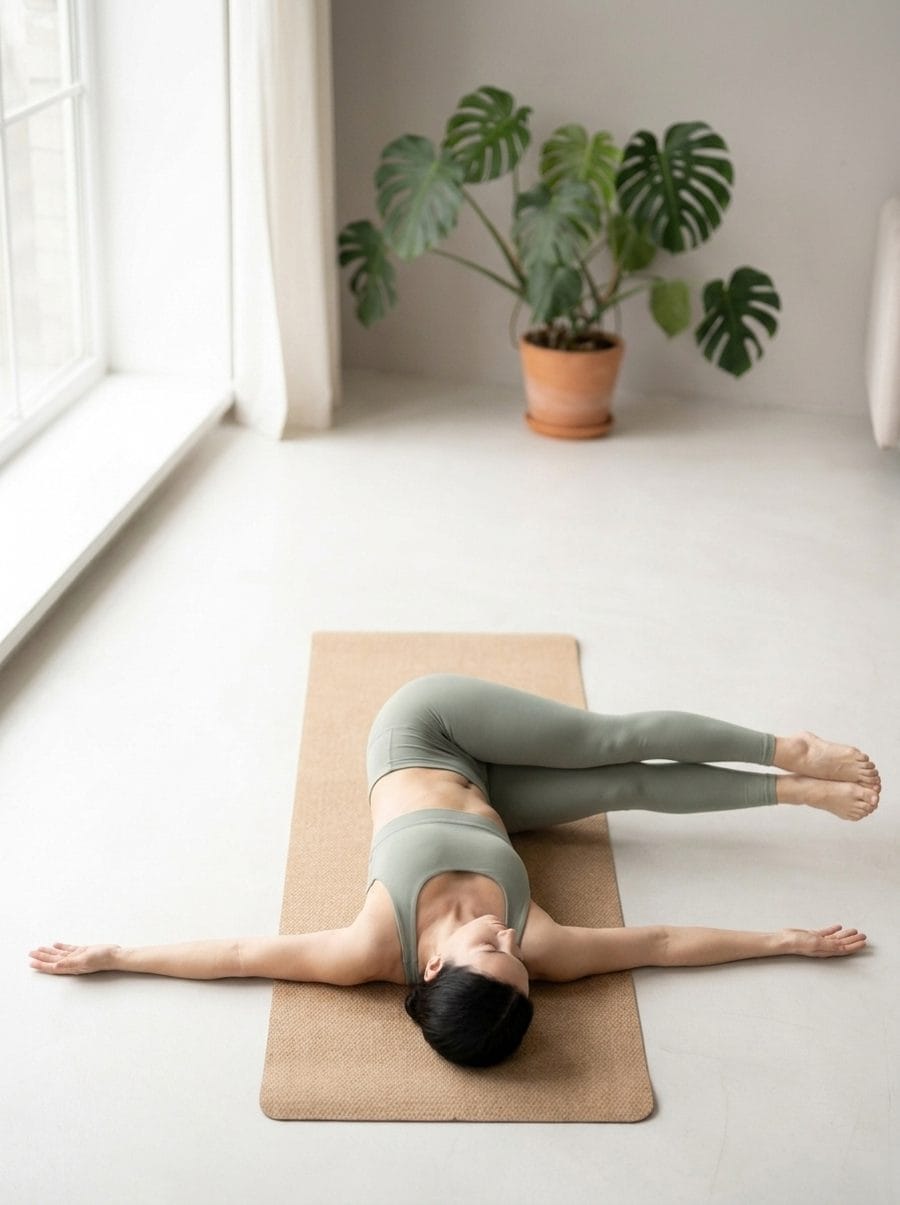
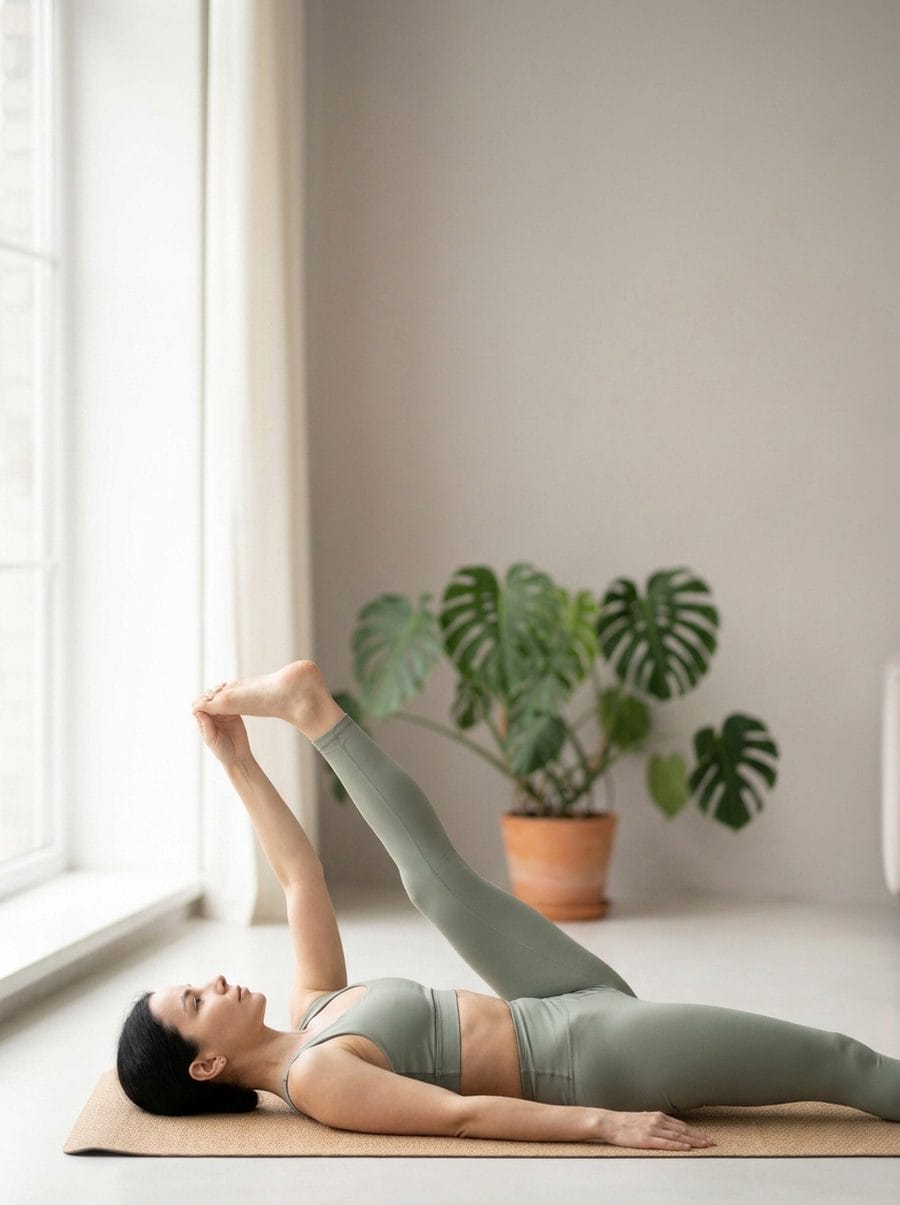
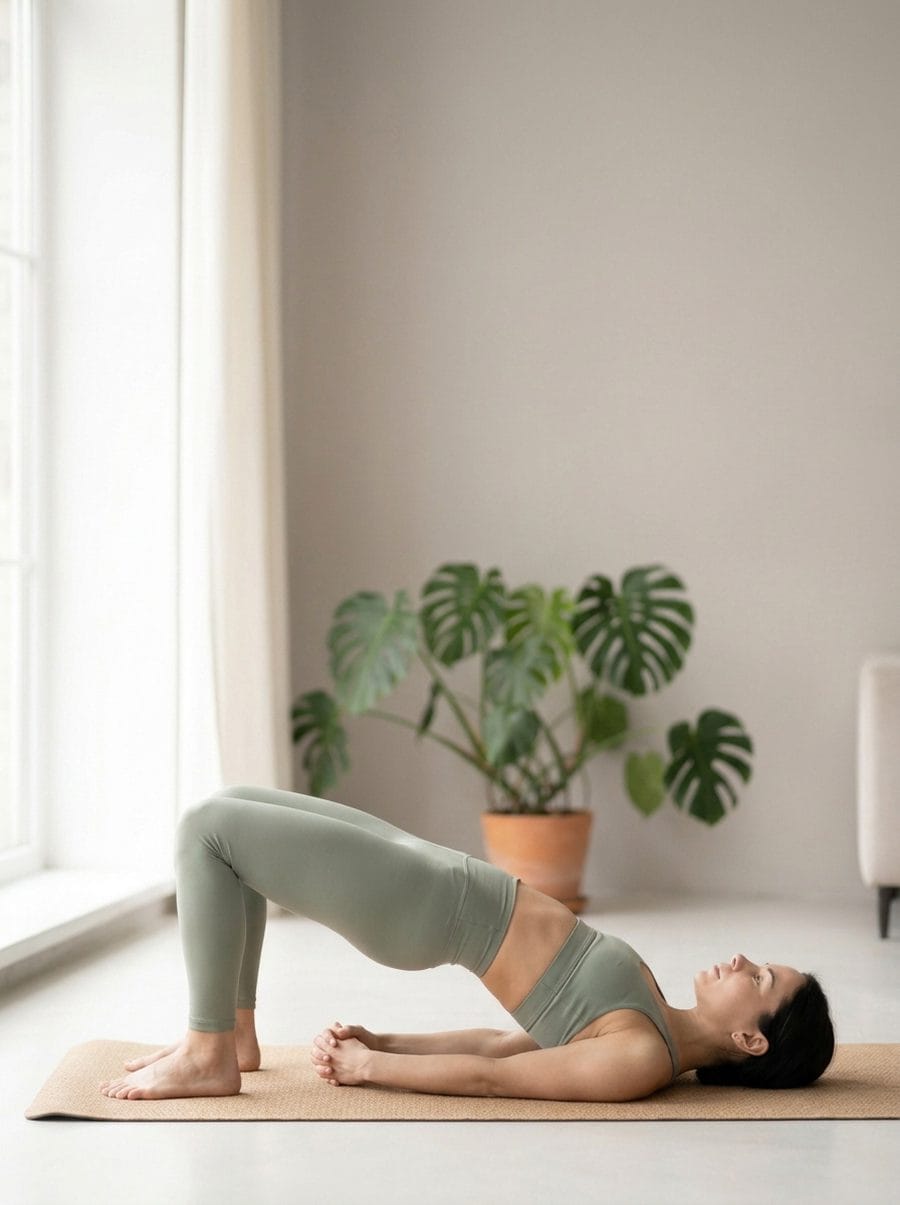
1. Knees-to-Chest Pose. Draw your legs into your belly, wrap your arms around them and rock side to side, massaging your lower back against the mattress. 2. Supine Twist Flow. Arms out wide, exhale your bent knees over toward the mattress on one side, inhale them back to center, 6 to 8 times. 3. Reclining Hand-to-Big-Toe Pose. One leg up with a belt or scarf around the foot, the other resting on the bed, 30 seconds per leg. 4. Bridge Flow. Only on a firm mattress: each inhale lifts your hips, each exhale sets them back down.
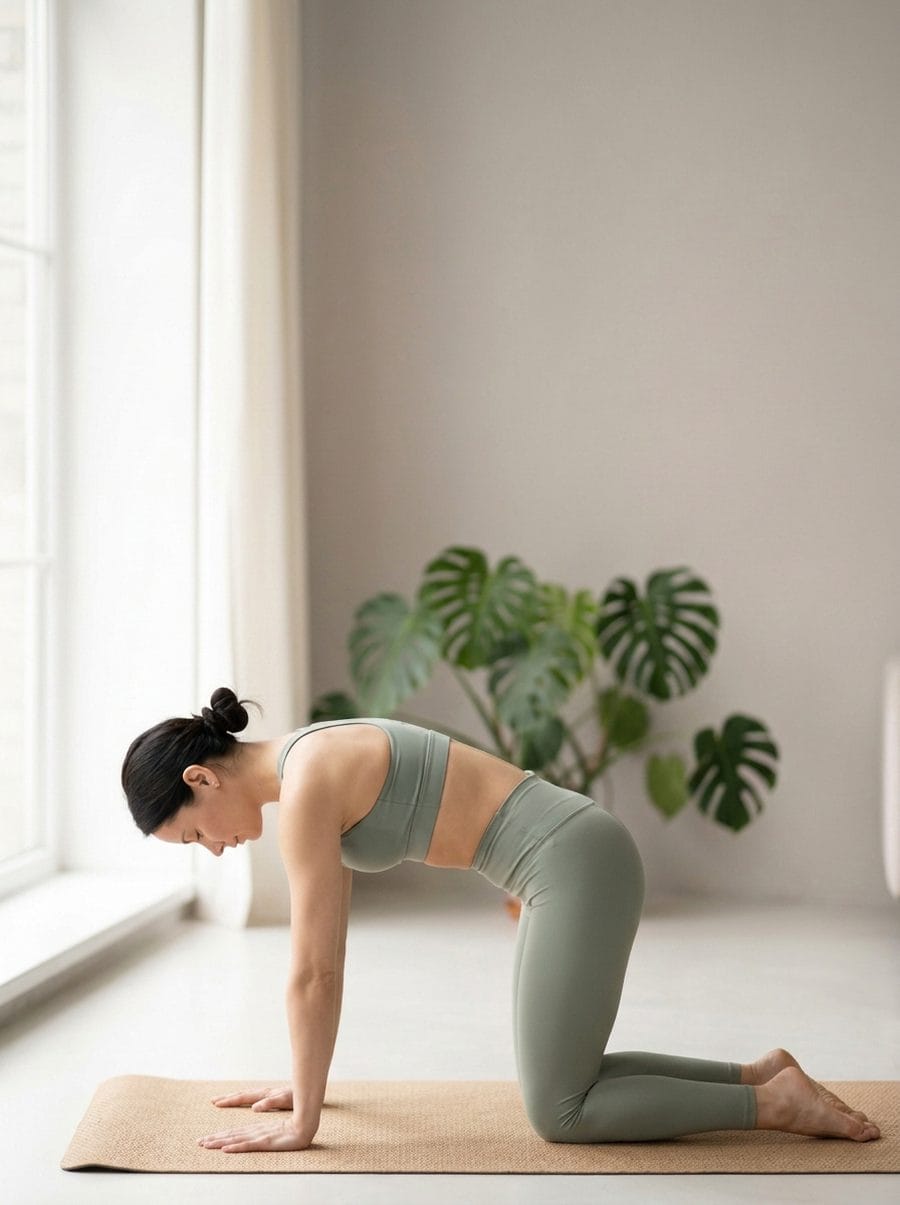
Next, roll onto your side and sit up. On a firm mattress, come onto all fours for a few rounds of Cat-Cow; on a soft one, perch at the bedside and arch and round your spine with your hands on your knees. Get up without rushing: feet on the floor first, then stand.
Bed yoga before sleep
The evening sequence is calmer: no bridges and no repetitions, just long holds and slow breathing.
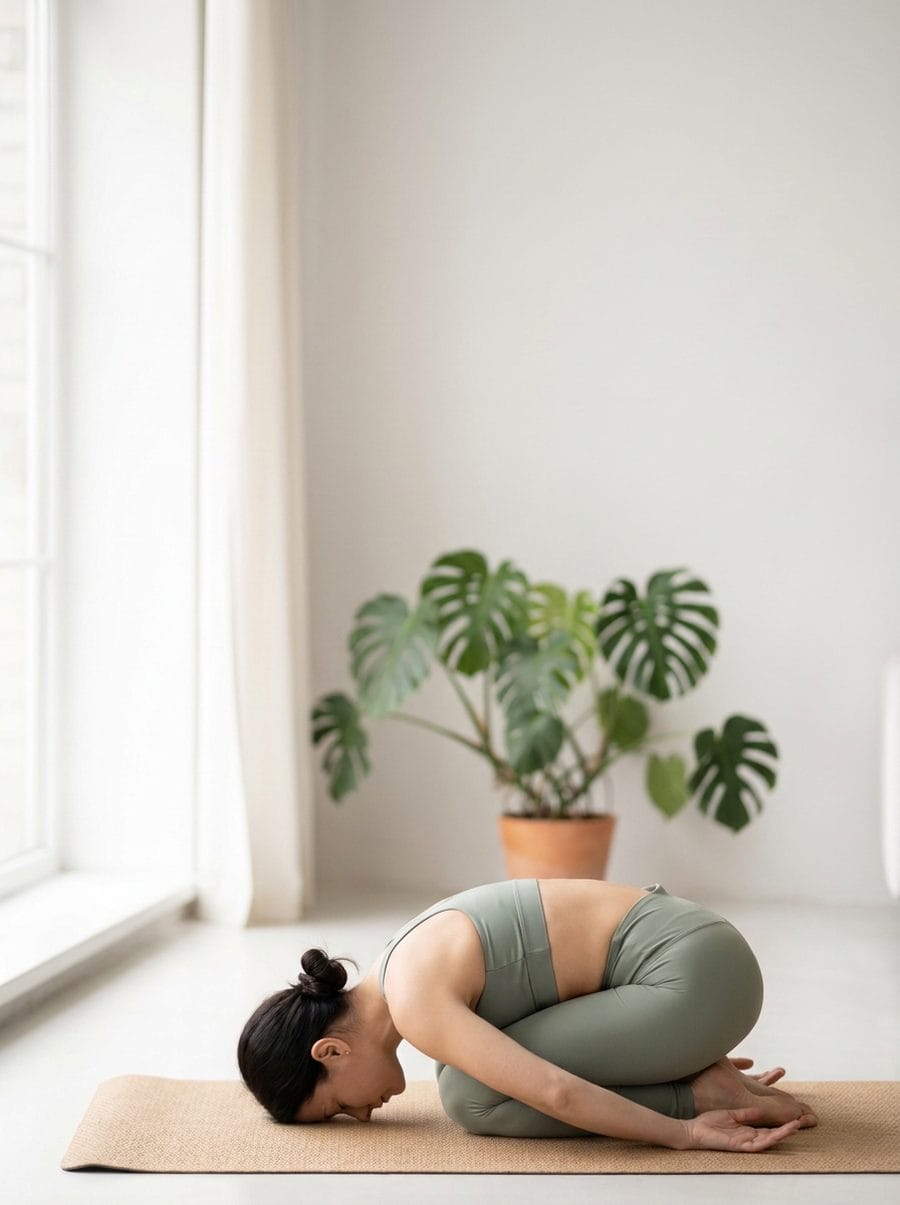
- Child's Pose. Slide a pillow under your chest and rest your forehead on the mattress. Breathe into your back.
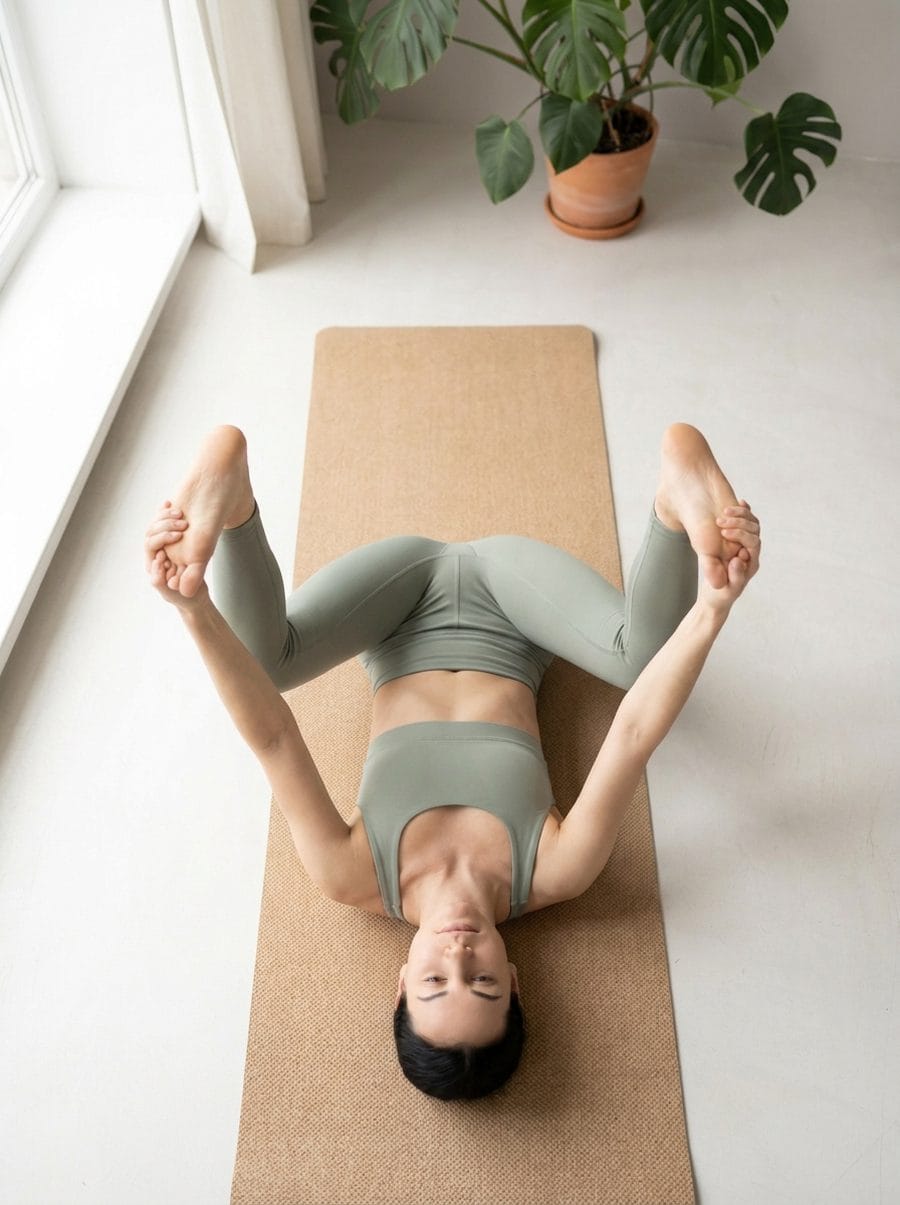
- Happy Baby Pose. Lying on your back, hold your feet from the inside and rock gently.
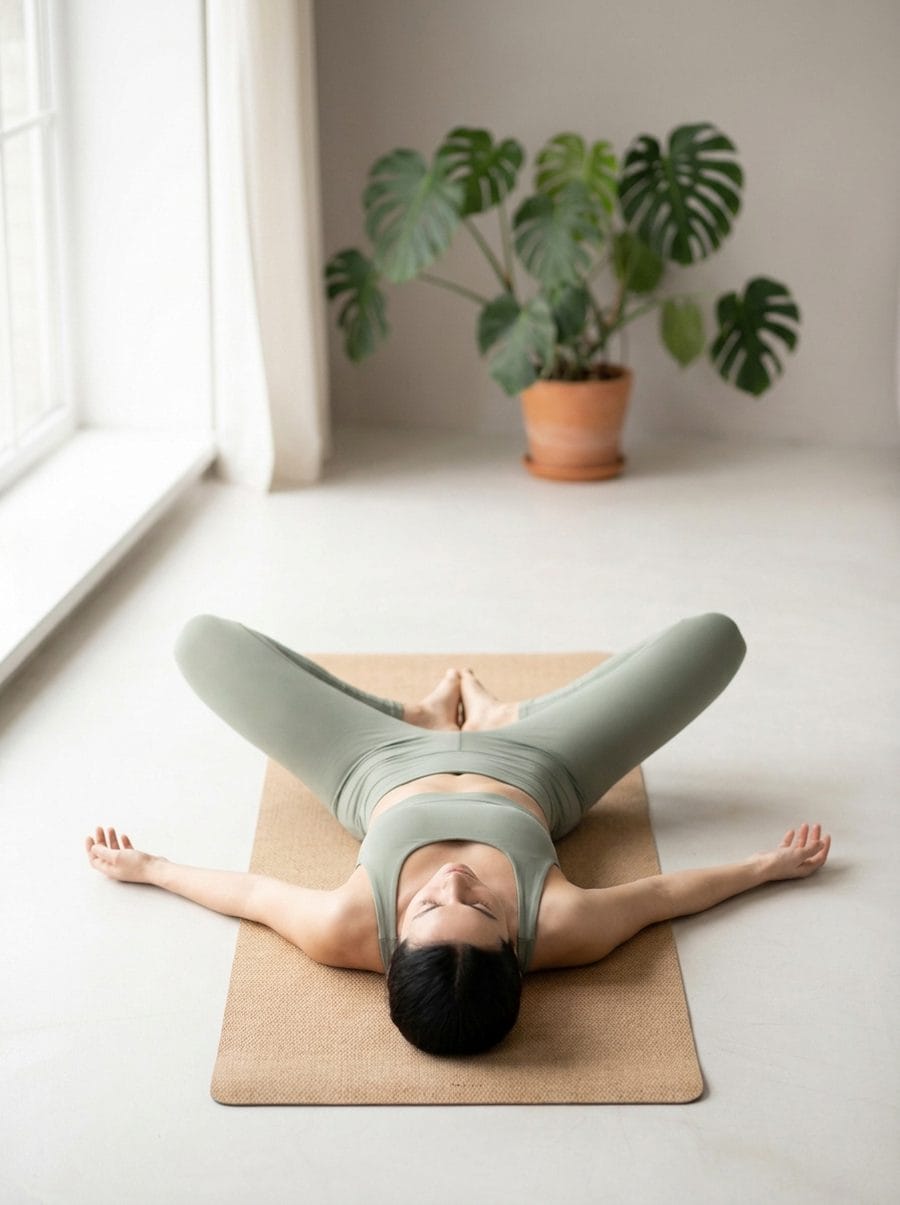
- Reclining Butterfly Pose. Soles together, knees open, a pillow under each knee. One palm on your belly, the other on your chest.
- Supine Twist. Knees fall to one side, gaze goes the other way. A pillow between your knees makes it cozier.
- Legs-Up-the-Wall Pose. Lie across the bed so your legs can rest on the headboard or the wall beside you.
- Relaxation Pose. Stretch out, pull up the blanket and let the practice drift into sleep.
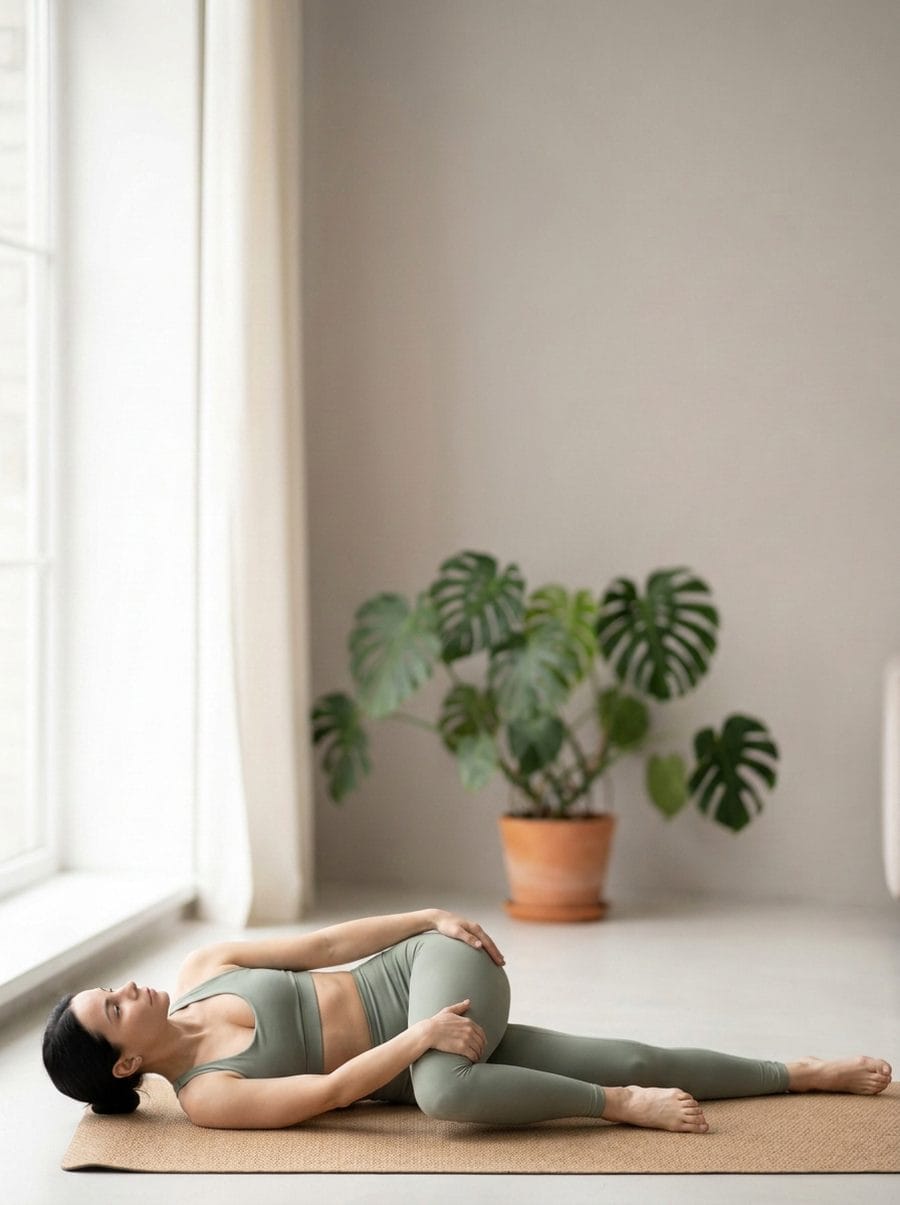
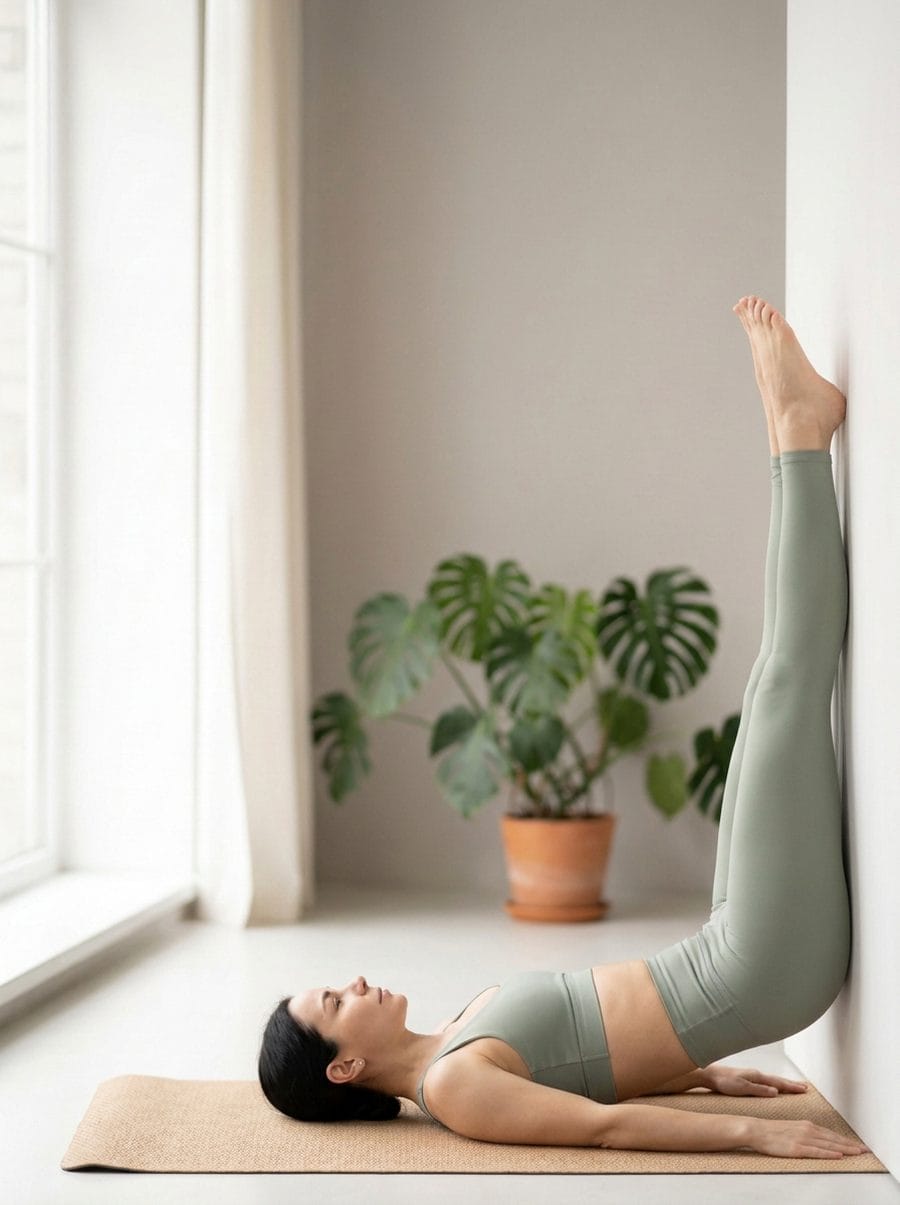

Before Bed: the app's routine, done in bed
Every pose in the app's Before Bed routine is done without standing up, so it moves from the floor to your bed with no trouble. It's 10 minutes at a beginner level: Child's Pose, Reclining Butterfly Pose, Knees-to-Chest Pose, Supine Twist, Legs-Up-the-Wall Pose and, to close, close to three minutes of Relaxation Pose.
The only prep is a wall or headboard for your legs. Our article Yoga for Sleep is devoted entirely to evening practice.
When the day has worn you out
Low-Energy Day also skips standing poses entirely. It's 14 minutes and 12 poses in which you sit, kneel on all fours or lie down. On a firm mattress you can do it in bed; on a soft one, roll out a mat beside the bed instead.
During pregnancy, remove Cobra Flow and Thread the Needle from this routine, and from the second trimester also Crocodile Pose, since it's a belly-down pose.
Two more exclusions: the Neck Warm-Up during dizziness or acute neck pain, and Hare Pose for injured knees.
Breathing while lying down
Belly breathing is simplest to learn on your back. Rest a hand over your navel: as you inhale your palm rises, as you exhale it sinks, while your chest stays nearly still. After a few minutes your breathing slows down on its own.
In the morning this helps you wake up without jolting upright; at night it helps you switch from the day's to-do list to sleep. For more on the technique, see the Full Yogic Breath.
Safety
- Bridge Flow. Not with an injured neck, and not in the middle of a lumbar flare.
- Twists. Supine Twist Flow is not for pregnancy or a lumbar disc herniation. The regular Supine Twist also pauses while a herniated disc is acute.
- Legs-Up-the-Wall Pose. Leave it out of your bedtime routine with glaucoma, with hypertension that's not controlled, and while menstruating.
- Knees and back. With injured knees, don't do Child's Pose; skip Cat-Cow if your back hurts acutely.
- Pregnancy. Late in pregnancy, go without Happy Baby Pose. From the second trimester on, pull your legs in with your knees wide on either side of your belly, or skip Knees-to-Chest Pose.
Back pain that greets you every morning, day after day, deserves a doctor's visit. All the general rules are in Safety and Contraindications.
Pose cautions in this article
- Pregnancy from the second trimester onward — take your knees wider than your belly or skip the pose (Knees-to-Chest Pose)
- Lumbar disc herniation (Supine Twist Flow)
- Pregnancy (Supine Twist Flow)
- Use a strap if your back lifts off the floor (Reclining Hand-to-Big-Toe Pose)
- Neck injuries (Bridge Flow)
- Flare-up of lower back pain (Bridge Flow)
- Acute back pain (Cat-Cow)
- Wrist injuries — practice on your fists (Cat-Cow)
- Pregnancy — widen your knees (Child's Pose)
- Knee injuries (Child's Pose)
- Late pregnancy (Happy Baby Pose)
- Groin discomfort — place supports under your knees (Reclining Butterfly Pose)
- Disc herniation in the acute phase (Supine Twist)
- Menstruation (Legs-Up-the-Wall Pose)
- Glaucoma (Legs-Up-the-Wall Pose)
- Uncontrolled hypertension (Legs-Up-the-Wall Pose)
This site is for general information and is not medical advice. If you have pain, an injury, a chronic condition, or are pregnant, check with a qualified professional before practicing.
Questions
Is it good to stretch in bed in the morning? Yes, as long as you move gently. A few minutes of stretching lying down lets your spine and joints wake up before they carry your weight.
Can I stretch right after waking up? You can, just without sudden movements. Muscles are stiffer in the morning, so start with a small range and widen it gradually.
Does bed yoga help you fall asleep? Calm poses lying down and slow breathing help you relax and tune in to sleep. If insomnia lasts for weeks, talk it through with a doctor.
What kind of mattress works for bed yoga? The firmer, the better. On a soft mattress, stick to poses lying on your back.
Sources
- Pose technique and cautions, and the contents of the routines: the Hatha Yoga app. More about how we check our texts on the How We Prepare Our Content page.
Read next
- Yoga for Arthritis and Osteoporosis: How to Protect Your Joints and Bones7 min read
- Ashtanga Yoga Explained: The Series, the Breath and the Difference from Hatha6 min read
- Ayurveda Explained Simply: The Basics and a Daily Routine (Dinacharya)5 min read
- Balance Exercises: 10 Yoga Poses for Balance and Stability7 min read