 Hatha Yoga
How to Fall Asleep Fast: Breathing, Bed Poses and an Evening Routine
Hatha Yoga editorial team · Updated · 6 min read

Lying in the dark counting the hours until your alarm is something almost everyone knows. The good news: most of the time, habits are what keep you awake, and habits can change. Below you'll find a breathing technique that slows your body down, poses you can do right in bed, a routine for the last hour before sleep, and sleep hygiene tips based on NHS advice.
But first, when it's no longer about habits and you need a doctor.
When insomnia needs a doctor
The most important part comes first. If poor sleep goes on for weeks, makes your days harder at work and at home, or doesn't improve after you change your habits, see a doctor. Britain's NHS describes insomnia as short-term when it lasts less than three months and long-term when it lasts longer.
Some signs are a reason not to wait: snoring with pauses in breathing that a partner notices, suddenly falling asleep during the day, or uncomfortable sensations in your legs that won't let you lie still.
For long-term insomnia, experts most strongly recommend CBT-I, a cognitive behavioral program designed around sleep. NCCIH, a U.S. federal research center, says relaxing methods used alone have only weak evidence behind them, but they fit well into a broader sleep routine.
Yoga looks similar: in a review of 19 studies with 1,832 women who had sleep problems, yoga improved sleep quality, but the three trials that measured insomnia severity found no difference from the control group. So everything below helps you relax and build a routine; it doesn't replace professional help.
Breathing to fall asleep fast
Nothing shifts your state faster than breathing with a long exhale. Lie on your back, place one palm on your stomach and breathe through your nose.
- Full Yogic Breath. Breathe in for 4 seconds, letting the air reach the abdomen first and rise into the ribs and upper chest; breathe out for 6 seconds in reverse order. Take 5 to 8 calm rounds.
- Bee Breath (Bhramari). Inhale for 4, then exhale for 8 with your lips closed, humming softly like a bee. It's easiest sitting on the edge of the bed before the lights go out.
- 4-7-8 breathing. A well-known technique with a seven-count hold. How to do it and who should skip it is covered in 4-7-8 Breathing.
Don't force yourself to breathe "correctly" at any cost. If counting starts to feel like work, just lengthen the exhale without numbers. See the Full Yogic Breath and Bee Breath pages for more detail.
The best position to fall asleep
You don't need a complicated stretch to drift off. One or two gentle poses right in bed are enough, followed by Savasana with a body scan.
Poses in bed
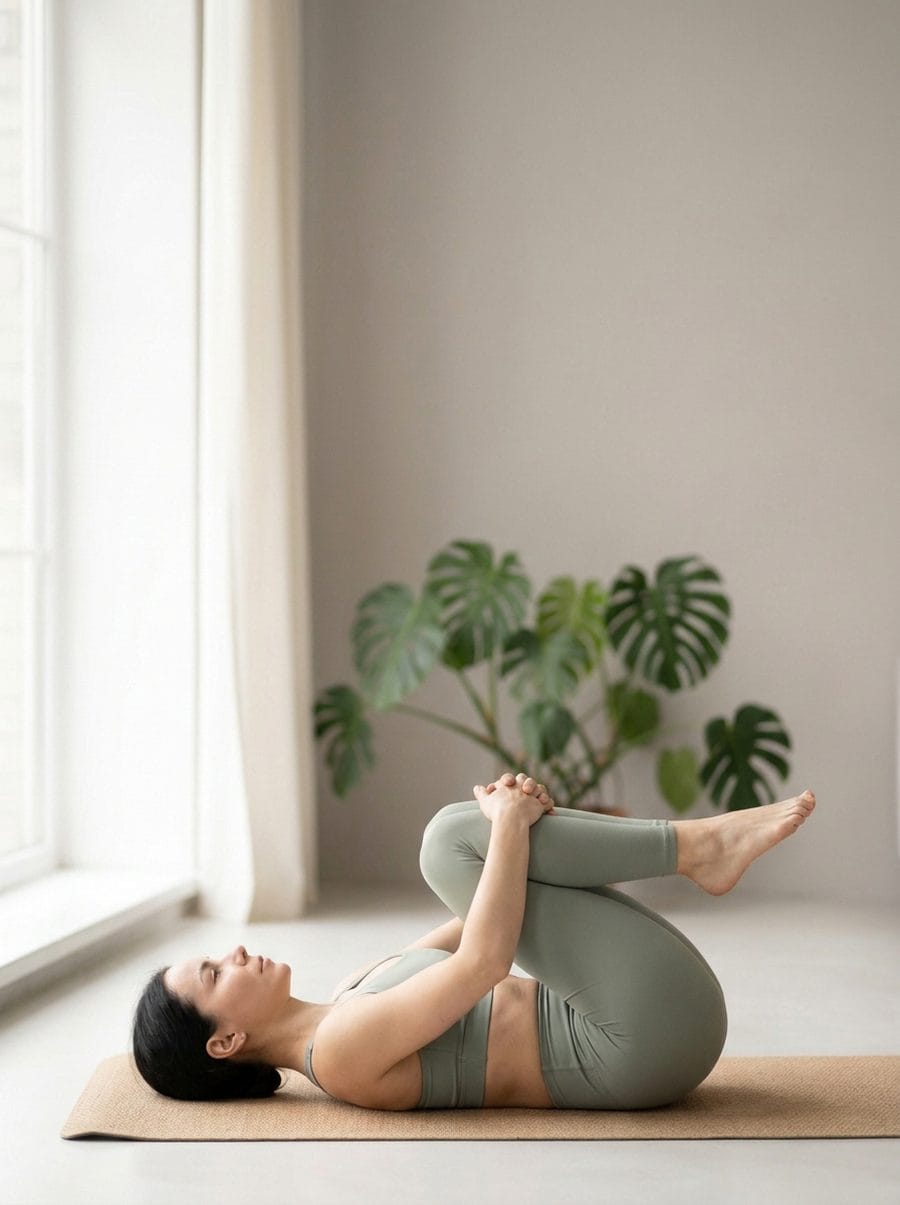
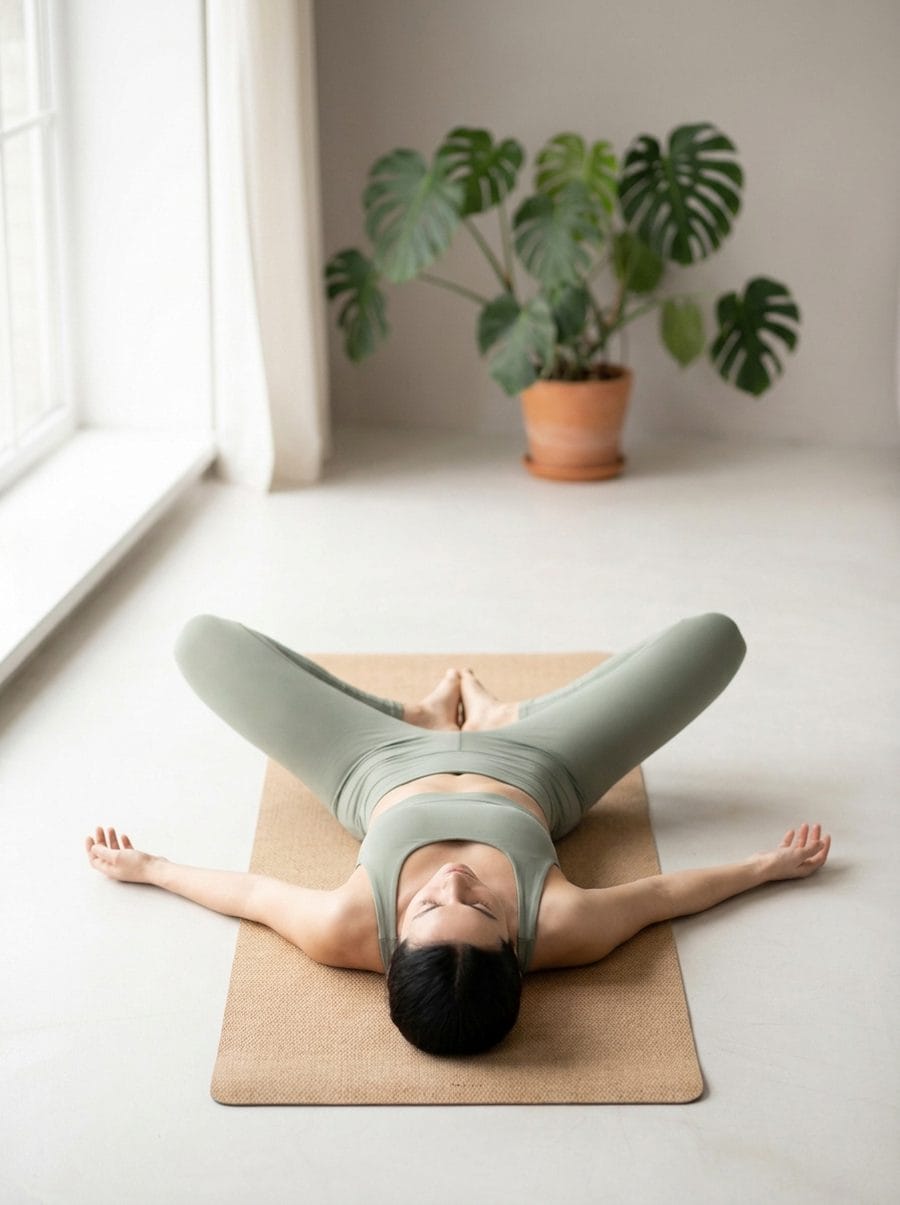
After a long day, the lumbar muscles soften when you draw both thighs toward your ribs in Knees-to-Chest Pose. Reclining Butterfly Pose opens the hips with no effort: soles together, knees falling apart, with pillows under them if you like.
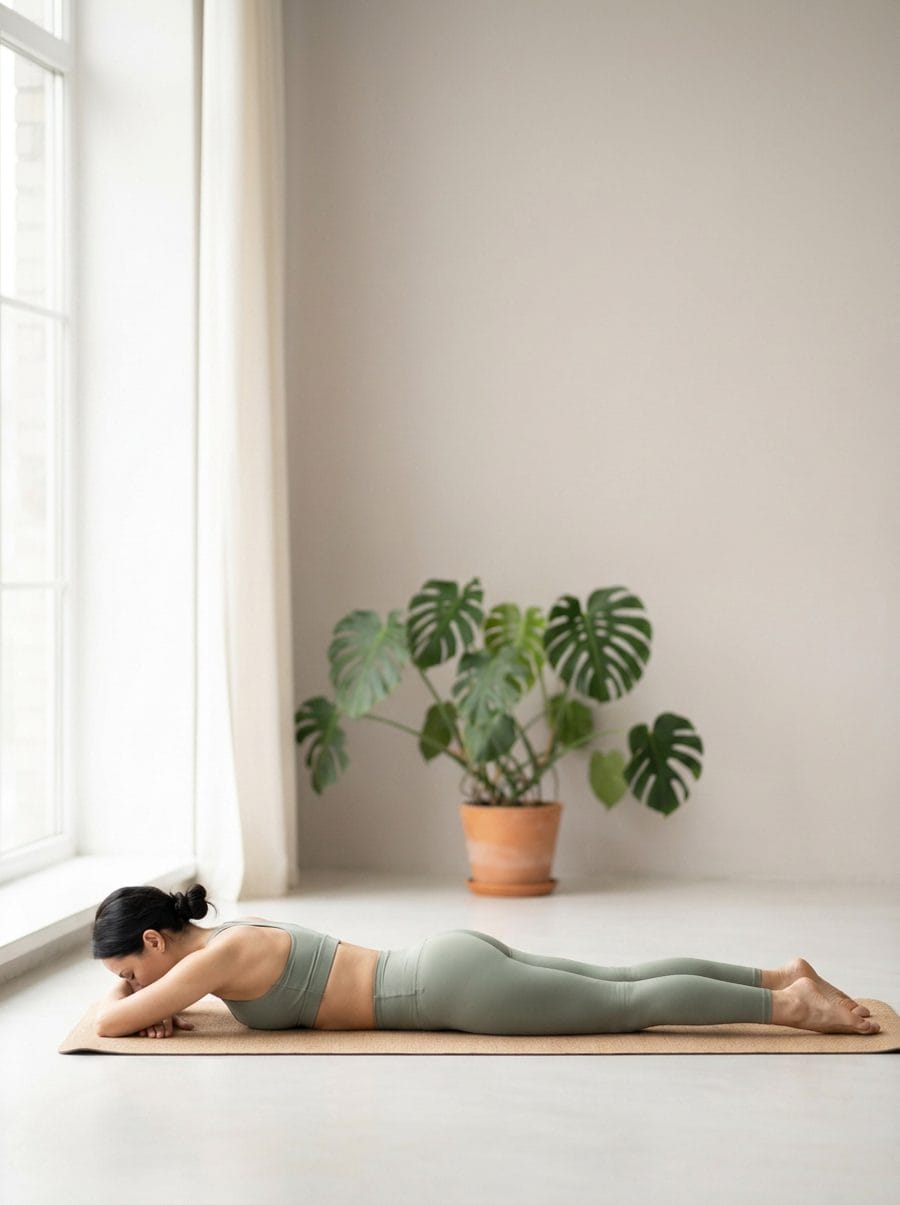
If you prefer sleeping on your stomach, try Crocodile Pose: forehead resting on your stacked forearms, back completely loose.
Savasana with a body scan
Lie on your back with your arms by your sides, palms up. Move your attention from the bottom up: feet, shins, thighs, pelvis, belly, chest, arms, shoulders, neck, face. Notice each area and let it go. Give extra attention to your jaw, tongue and eyes.
Stray thoughts are normal: notice them and return to the heaviness of your body.
A bedtime routine for the last hour
A routine works as a signal to your body that the day is over. Repeat the same steps at roughly the same time.
- One hour before bed. Put your phone and laptop away and dim the lights. The NHS suggests a screen-free hour before bed, since screen light makes it harder to fall asleep.
- Write down your worries. If tasks keep circling in your head, jot a short list for tomorrow. What's on paper is easier to let go of.
- 15 minutes of gentle yoga. The Evening Unwind sequence fits well: eight floor poses with no strength work, from Cat-Cow to a long Savasana.
- Five minutes of breathing with a long exhale.
- Go to bed when you're sleepy, not because the clock says so.
On very short evenings, the 10-minute Before Bed sequence never takes you off the mat or up to standing. For every evening pose step by step, read Yoga for Sleep, and for how to switch to an energized start the next day, see Morning Routine.
If you can't fall asleep after 20 minutes
Don't wrestle with sleep. If you've been lying awake for about 20 minutes, the NHS advises getting up, moving somewhere comfortable and doing something calm: gentle yoga, reading, quiet music. Go back to bed once you feel sleepy again. Turn clocks away from view, too, because counting the hours you have left only adds to the worry.
Sleep hygiene tips
- One schedule. Keep bedtime and wake-up time steady, weekends included.
- A dark, quiet, cool bedroom. Blackout curtains, an eye mask or earplugs if needed.
- Coffee and strong tea no later than six hours before bed, and no alcohol or smoking in the evening.
- No heavy dinner late at night.
- Finish intense workouts at least four hours before bed. Gentle stretching and breathing don't count.
- Skip daytime naps if you're sleeping badly at night.
- More movement and daylight during the day, which helps your body tell day from night.
Safety
Expecting a baby and past your first trimester? Spread your knees apart around the belly when hugging them in, or leave Knees-to-Chest Pose out. Crocodile Pose isn't done from the second trimester on, because you lie on your stomach. If Reclining Butterfly Pose pulls at your groin, slide a pillow under each knee.
With an ear inflammation, skip Bee Breath. In the Evening Unwind sequence, Legs-Up-the-Wall Pose waits for another evening if you're menstruating, have glaucoma, or have high blood pressure that's poorly managed; Child's Pose is skipped with injured knees. More in Safety and Contraindications.
Pose cautions in this article
- Pregnancy from the second trimester onward — take your knees wider than your belly or skip the pose (Knees-to-Chest Pose)
- Groin discomfort — place supports under your knees (Reclining Butterfly Pose)
- Pregnancy from the second trimester onward — the pose is done lying on the belly (Crocodile Pose)
This site is for general information and is not medical advice. If you have pain, an injury, a chronic condition, or are pregnant, check with a qualified professional before practicing.
Questions
How can I fall asleep in 5 minutes? There's no guaranteed trick. What works best is a combination: screens put away ahead of time, then 5 to 8 rounds of long-exhale breathing in bed, followed by Savasana with a body scan.
What should I do if I can't sleep at night? Don't lie there for hours. After about 20 minutes, get up, do something calm in dim light, and go back to bed when you feel drowsy.
Will yoga before bed keep me awake? Gentle poses lying down or seated and breathing with a long exhale prepare you for rest. Strength poses, backbends and dynamic flows are better earlier in the day.
When should I see a doctor about insomnia? If sleep problems last for weeks, affect your day, or don't improve after changing your habits. Go right away if you snore with pauses in breathing or fall asleep suddenly during the day.
Sources
- NHS. Insomnia.
- NHS. How to fall asleep faster and sleep better. Every Mind Matters.
- NCCIH. Sleep Disorders and Complementary Health Approaches.
- Wang WL, et al. The effect of yoga on sleep quality and insomnia in women with sleep problems: a systematic review and meta-analysis. BMC Psychiatry, 2020.
- Pose technique and cautions, breathing rhythms, and sequence contents: the Hatha Yoga app. How we check our texts is explained on the How We Prepare Our Content page.
Read next
- Yoga for Arthritis and Osteoporosis: How to Protect Your Joints and Bones7 min read
- Ashtanga Yoga Explained: The Series, the Breath and the Difference from Hatha6 min read
- Ayurveda Explained Simply: The Basics and a Daily Routine (Dinacharya)5 min read
- Balance Exercises: 10 Yoga Poses for Balance and Stability7 min read