 Hatha Yoga
Fasting and Yoga: Can You Combine Them, and How to Practice Safely
Hatha Yoga editorial team · Updated · 6 min read

The short answer: for a healthy adult, moderate intermittent fasting and a gentle yoga practice can usually go together, with some caveats. Any fasting plan deserves a conversation with your doctor before day one, all the more so if you take medication, manage a long-term illness, or are expecting a baby.
Below we cover what the research shows, who shouldn't fast, what to practice on fasting days, and the signs that mean you should stop right away.
Talk to your doctor first
Fasting changes more than your eating pattern. It can also change how some medications act, so it needs a doctor's sign-off first if you have:
- diabetes, especially if you use insulin or glucose-lowering pills. In a 2018 randomized trial, fasting raised the rate of hypoglycemia, a dangerous drop in blood sugar, in people with type 2 diabetes on these drugs, even when their doses were reduced;
- an eating disorder, now or in the past. The authors of a 2023 commentary urge doctors to weigh this risk before recommending fasting;
- a pregnancy or a baby you're breastfeeding; the same goes for teenagers;
- heart or kidney disease, or medications that must be taken with food.
The authors of a 2021 Cochrane review also note that the safety of fasting for people with diabetes or eating disorders still needs study.
What is intermittent fasting?
It's an umbrella term for eating patterns that alternate periods of eating with periods of no food or very few calories. The best-studied versions are:
- time-restricted eating, such as 16:8, where all your meals fit into an 8-hour window and the other 16 hours are food-free;
- the 5:2 pattern: two days a week of sharply reduced intake, five normal days;
- alternate-day fasting, either complete or with a small amount of food.
Yoga doesn't prescribe any of these. They're modern dietary approaches, not part of the tradition.
What the research says
The evidence is thinner than the hype suggests.
- A 2021 Cochrane review pooled 18 studies with 1,125 participants lasting from 4 weeks to 6 months. None of them reported data on deaths, heart attacks or strokes. Compared with regular eating, the changes in body weight and blood sugar were not judged clinically significant. Some participants reported mild headaches.
- A 2021 umbrella review in JAMA Network Open examined 11 meta-analyses covering 130 randomized trials. Most of the links it found rested on low or very low quality evidence. Fasting was also associated with a loss of fat-free mass, which includes muscle.
- A 2024 meta-analysis (15 trials, 1,365 adults with overweight or obesity) did not find fatigue or headache to be more common with fasting than without it. Dizziness was reported slightly more often in one subgroup, but the difference wasn't statistically significant.
The takeaway: intermittent fasting is not a magic method, and little is known about its long-term effects on health.
What yoga tradition says
Historically, hatha yoga values moderation over hunger. In its first chapter, the Hatha Yoga Pradipika advises beginners to avoid fasting and anything that wears the body down, and to follow mitahara, moderate eating, instead. The Bhagavad Gita (chapter 6) warns against both extremes: overeating and giving up food altogether. There's more on this in the sattvic diet.
How to combine fasting and yoga
If your doctor has given fasting the green light and you want to try it, fit your practice to the schedule, not the other way around.
- Go gentle. On fasting days, choose floor poses, unhurried stretches and relaxation. Save strength routines, long Sun Salutation sequences and hot yoga for days when you eat normally.
- Keep the breath calm. Hold off on long breath retentions and intense techniques until regular eating days; on a fasting day there's no need to add extra strain.
- Get up slowly. From lying down, roll to your side, then sit, and only then stand.
- Keep water nearby, if your fasting plan allows it.
- Listen to your body, not the clock. If you feel weak on the mat, you can shift or end the fasting window: yoga is no reason to grit your teeth.
- Put strength work inside your eating window and make sure you get enough protein, since fasting is linked with a loss of fat-free mass.
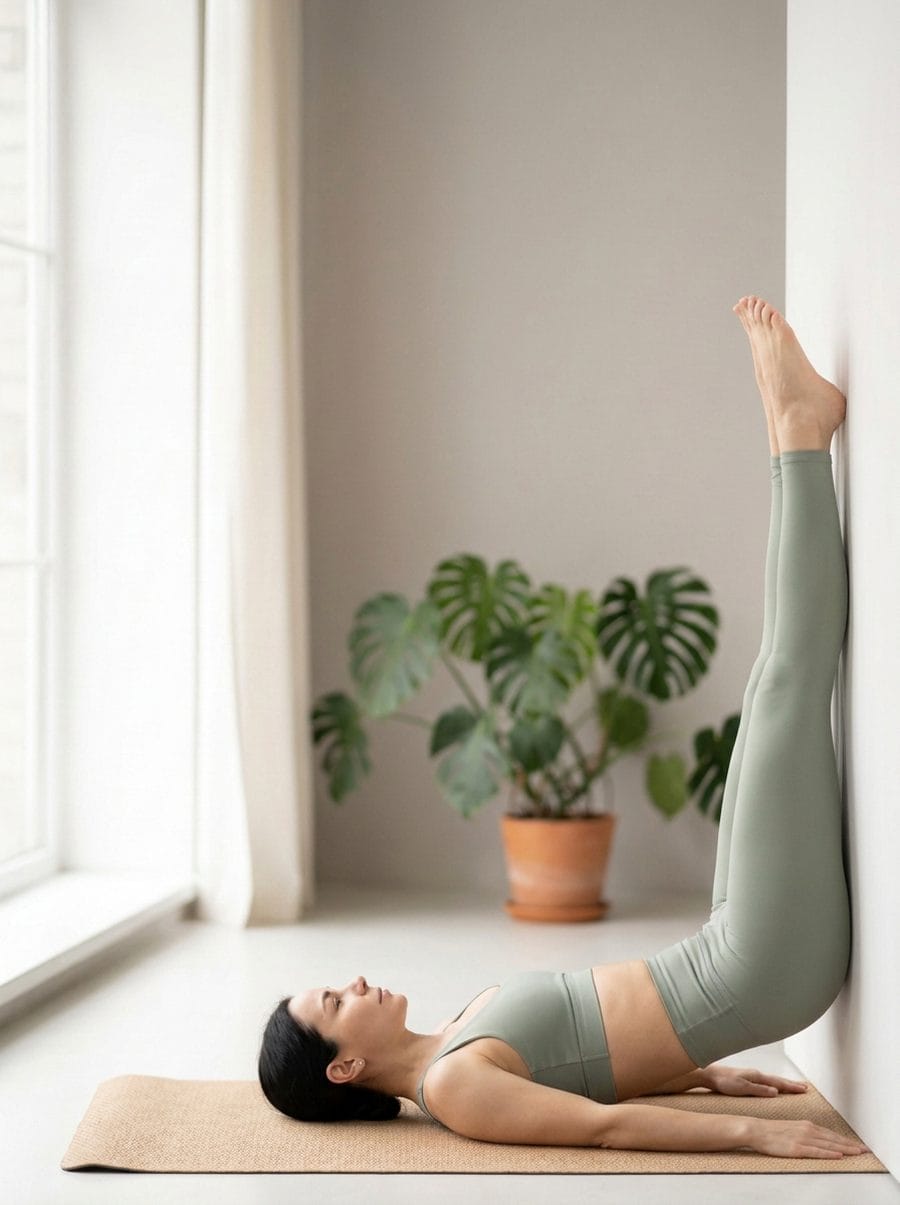
On fasting days, the 14-minute Low-Energy Day practice is a good match. Every pose happens on the floor, from Easy Pose and a neck warm-up to Legs-Up-the-Wall Pose and a final relaxation.

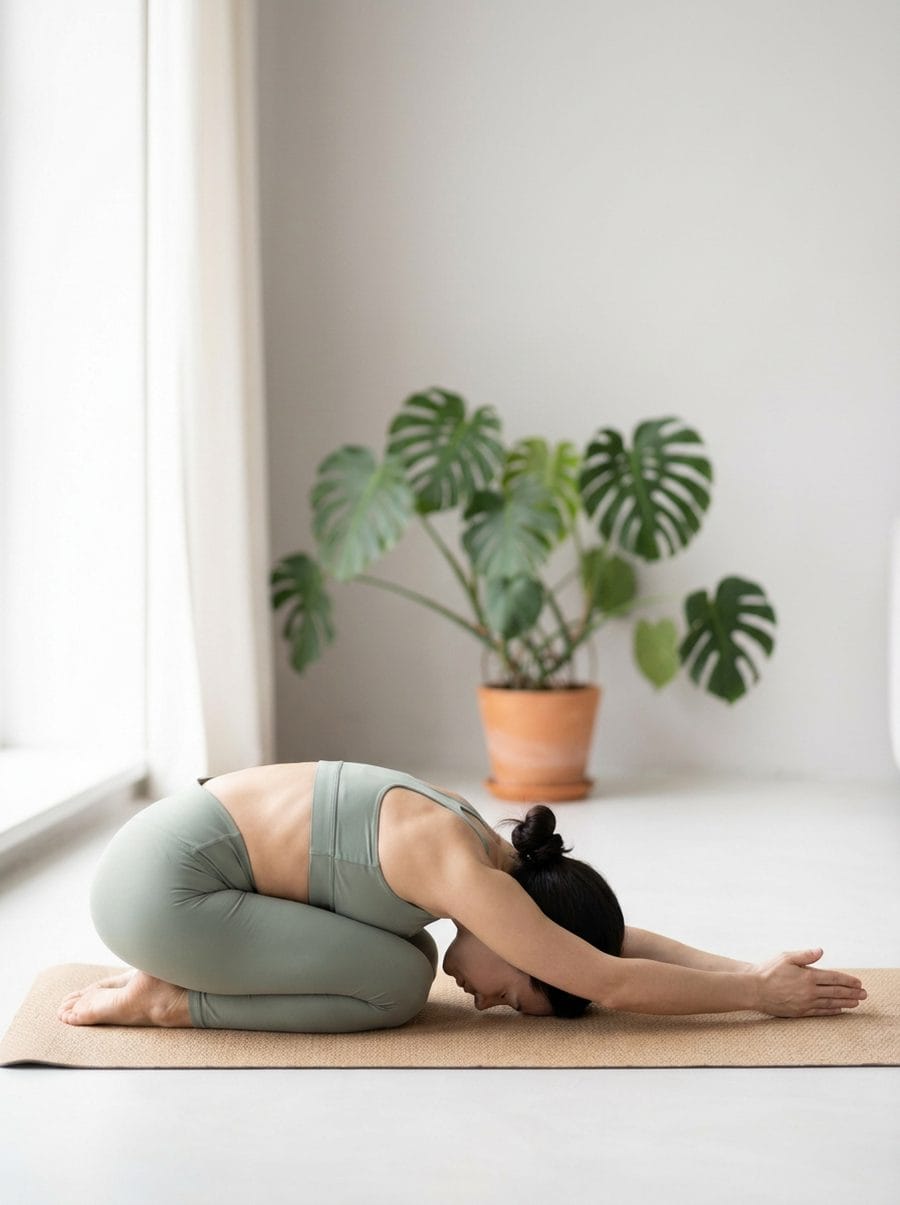
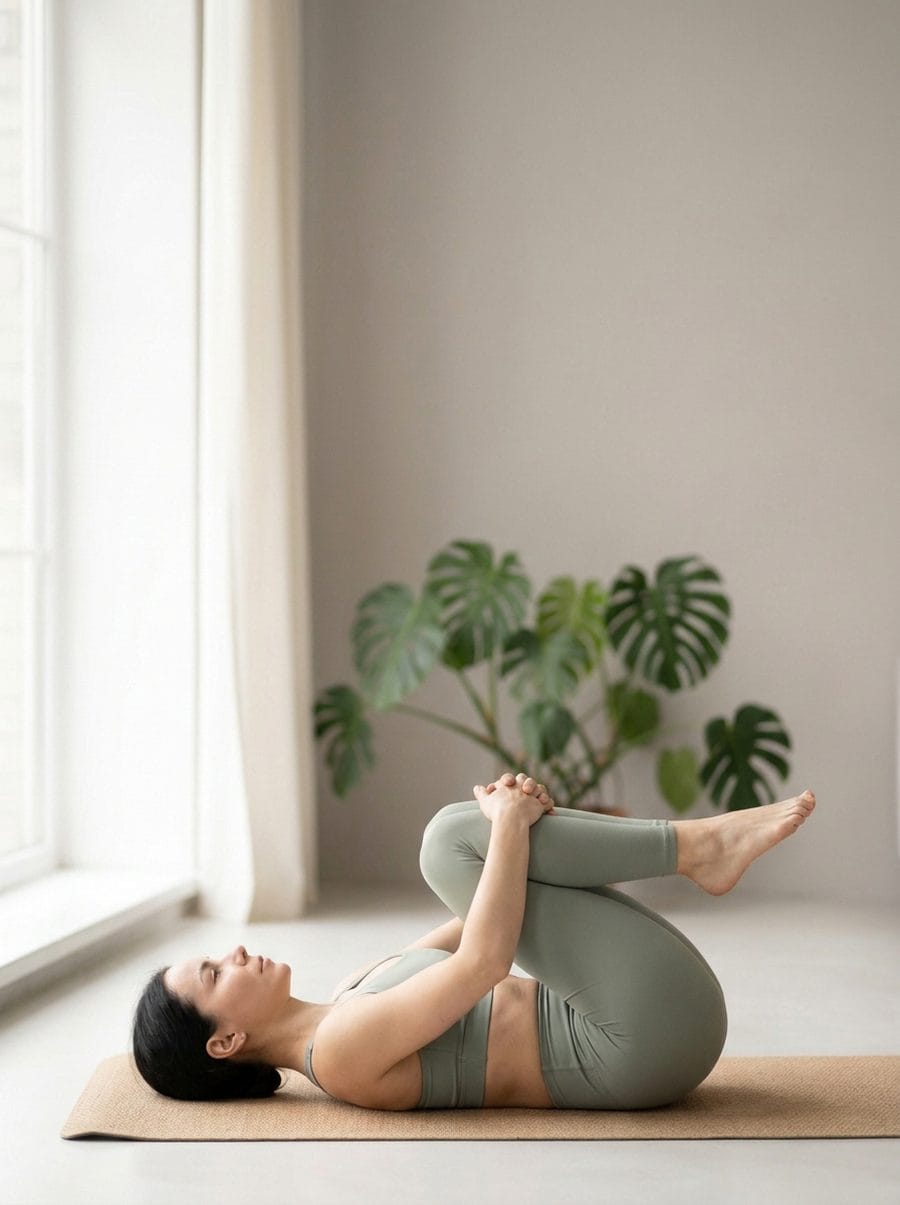
In the evening, while your eating window is open or after a light dinner, the 15-minute Evening Unwind works well.

Warning signs: when to stop right away
Stop practicing, sit or lie down, and break your fast if you notice:
- severe dizziness, your vision going dark, or a feeling that you're about to faint;
- shaking, a cold sweat, or confused thinking;
- a pounding heartbeat or an irregular pulse.
If symptoms don't settle after rest and food, or if you have chest pain or faint, call emergency services. People with diabetes should follow the plan their doctor gave them. If fasting turns into constant thoughts about food, bingeing or guilt, reach out to a professional.
Safety
Two poses here need a cautions check. Hare Pose isn't done with injured knees. As for Legs-Up-the-Wall, glaucoma or hard-to-control blood pressure rules it out, and it's set aside during menstruation. General rules are in Safety and Contraindications.
Pose cautions in this article
- Pregnancy from the second trimester onward — the pose is done lying on the belly (Crocodile Pose)
- Knee discomfort — sit on a prop (Easy Pose)
- Knee injuries (Hare Pose)
- Pregnancy — widen your knees (Hare Pose)
- Pregnancy from the second trimester onward — take your knees wider than your belly or skip the pose (Knees-to-Chest Pose)
- Menstruation (Legs-Up-the-Wall Pose)
- Glaucoma (Legs-Up-the-Wall Pose)
- Uncontrolled hypertension (Legs-Up-the-Wall Pose)
This site is for general information and is not medical advice. If you have pain, an injury, a chronic condition, or are pregnant, check with a qualified professional before practicing.
Questions
Can you do yoga while intermittent fasting? A healthy adult usually can, as long as the practice is gentle and you pay attention to how you feel. With diabetes, heart disease, pregnancy or an eating disorder, talk to your doctor first.
When should I practice on a 16:8 schedule? Gentle practice can happen in the morning before your first meal. Strength work fits better inside your eating window, once a light snack has had 30 to 60 minutes to settle.
Can I drink water while fasting and practicing? Most intermittent fasting plans allow water. We don't recommend combining yoga with fasting that excludes water.
Should I do power yoga while fasting? Better not: the risk of dizziness is higher, and your muscles need fuel. Move strength routines to a time after you've eaten.
Sources
- Allaf M, et al. Intermittent fasting for the prevention of cardiovascular disease. Cochrane Database of Systematic Reviews, 2021.
- Patikorn C, et al. Intermittent Fasting and Obesity-Related Health Outcomes: An Umbrella Review of Meta-analyses of Randomized Clinical Trials. JAMA Network Open, 2021.
- Zhong F, et al. Adverse events profile associated with intermittent fasting in adults with overweight or obesity: a systematic review and meta-analysis of randomized controlled trials. Nutrition Journal, 2024.
- Corley BT, et al. Intermittent fasting in Type 2 diabetes mellitus and the risk of hypoglycaemia: a randomized controlled trial. Diabetic Medicine, 2018.
- Blumberg J, et al. Intermittent fasting: consider the risks of disordered eating for your patient. Clinical Diabetes and Endocrinology, 2023.
- Hatha Yoga Pradipika, chapter 1; Bhagavad Gita, chapter 6. The classic texts are paraphrased.
- Pose cautions and routine contents: the Hatha Yoga app. More on the How We Prepare Our Content page.
Read next
- Yoga for Arthritis and Osteoporosis: How to Protect Your Joints and Bones7 min read
- Ashtanga Yoga Explained: The Series, the Breath and the Difference from Hatha6 min read
- Ayurveda Explained Simply: The Basics and a Daily Routine (Dinacharya)5 min read
- Balance Exercises: 10 Yoga Poses for Balance and Stability7 min read