 Hatha Yoga
How to Choose a Yoga Mat and Which Props Are Worth Having at Home
Hatha Yoga editorial team · Updated · 7 min read
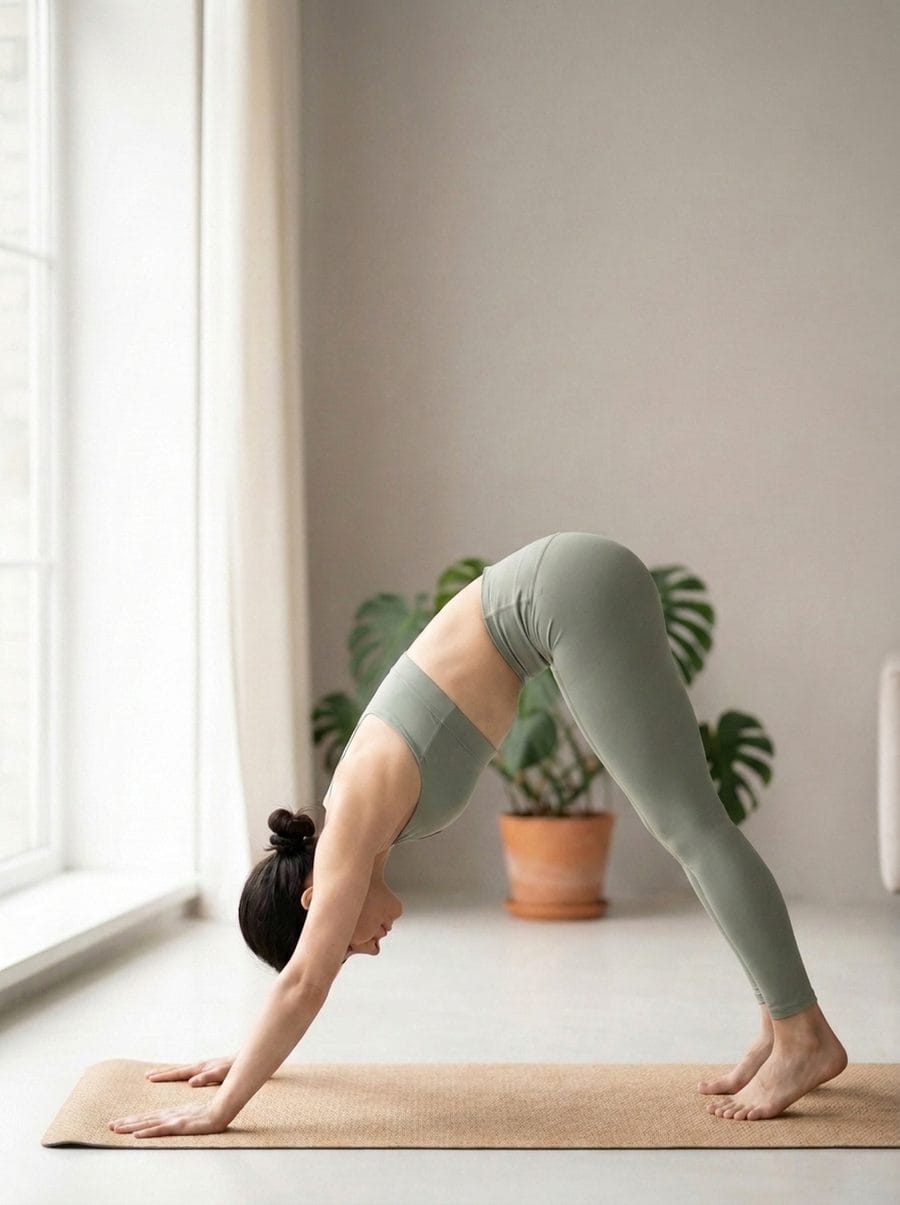
A yoga mat isn't decoration. It keeps your hands and feet in place in Downward-Facing Dog or a lunge, softens the floor under your knees and spine, and marks out the space where you practice. Below we walk through how to choose a yoga mat by material, thickness, grip and length, how to care for it, and what blocks, straps, bolsters and blankets actually do. No brands or stores here, just what to look for.
Why you need a yoga mat and what to use instead
A mat's main job is grip. When your palms or feet slide, your whole body tenses to hold on, the pose loses its point, and in standing poses the risk of a fall goes up. Its second job is cushioning: on a bare floor, your knees, tailbone and shoulder blades start to complain fast.
For a first try, you can do without a mat, but not on just any surface. A rug or carpet is soft and unstable, which makes balance poses hard. A towel on a smooth floor slips. Your best bet is to practice barefoot on a floor that isn't slippery and cushion your knees and hips with a blanket folded in several layers.
If yoga becomes a habit, a mat should be your first purchase.
Yoga mat materials
- PVC. Dense and durable, with good grip for dry hands. It can get slippery if you sweat a lot.
- TPE (thermoplastic elastomer). Light and springy, handy if you carry your mat around. It usually doesn't last as long as PVC or rubber.
- Natural rubber. The grippiest option, with good shock absorption, but heavier than the rest and it smells like rubber at first. If you have a latex allergy, choose a different material.
- Cork. A cork surface on a rubber base grips better when your palms are damp. A good fit if you sweat a lot.
- Cotton and jute. Natural, but rougher to the touch, and they slide on smooth floors unless they have a non-slip backing. A cotton mat works well for seated breathing practice and meditation.
Mats with a microfiber top layer are a special case. They grip best when slightly damp, which is why people like them for faster, sweatier styles.
Thickness, grip and size
Yoga mat thickness: comfort versus stability
- 1 to 2 mm (about 1/16 inch). A travel mat: it folds into a bag but barely softens the floor. People lay it over a borrowed mat or take it on trips.
- 3 to 4 mm (about 1/8 inch). The sweet spot for Hatha yoga: soft enough for your knees and still steady in Tree Pose and other balances.
- 5 to 6 mm (about 1/4 inch). Kinder to sensitive knees and backs, and comfortable for floor work, stretching and relaxation. In balances your foot sinks in a little.
- 8 mm and thicker. More of a fitness mat. Standing balance poses feel wobbly on it.
Sensitive knees don't automatically call for a thick mat. You can pick a 3 to 4 mm mat and pad your knees with a doubled-over blanket whenever they rest on the floor.
Grip, length and width
Testing grip is easy: come into Downward-Facing Dog. If your hands slowly creep forward, the mat is too slippery for you.
Your mat should be long enough for your head and heels to stay on it in Savasana. The standard length is about 68 to 72 inches (173 to 183 cm), and the standard width is about 24 inches (61 cm).
Tall people are better off with a long mat, and broad-shouldered people with a wide one, so their hands don't slip off the edges in arm support poses.
Weight counts too. A rubber mat is noticeably heavier than a light TPE one, and you'll feel it if you carry it to class.
How to clean and care for your mat
- After each practice, wipe the surface with a damp cloth. For a deeper clean, use water with a drop of mild soap.
- Dry it unrolled, away from heaters and direct sun: natural rubber ages faster in sunlight.
- The washing machine isn't safe for every mat. Check the care instructions on the label.
- A brand-new mat is sometimes slippery because of a factory coating. That usually wears off after a few wipe-downs and sessions.
Yoga blocks, straps, bolsters and blankets: what props are for
Props don't make your practice a "lighter" version. They let you hold good form while your flexibility catches up, and they come up again and again in the app's pose instructions.
Yoga blocks
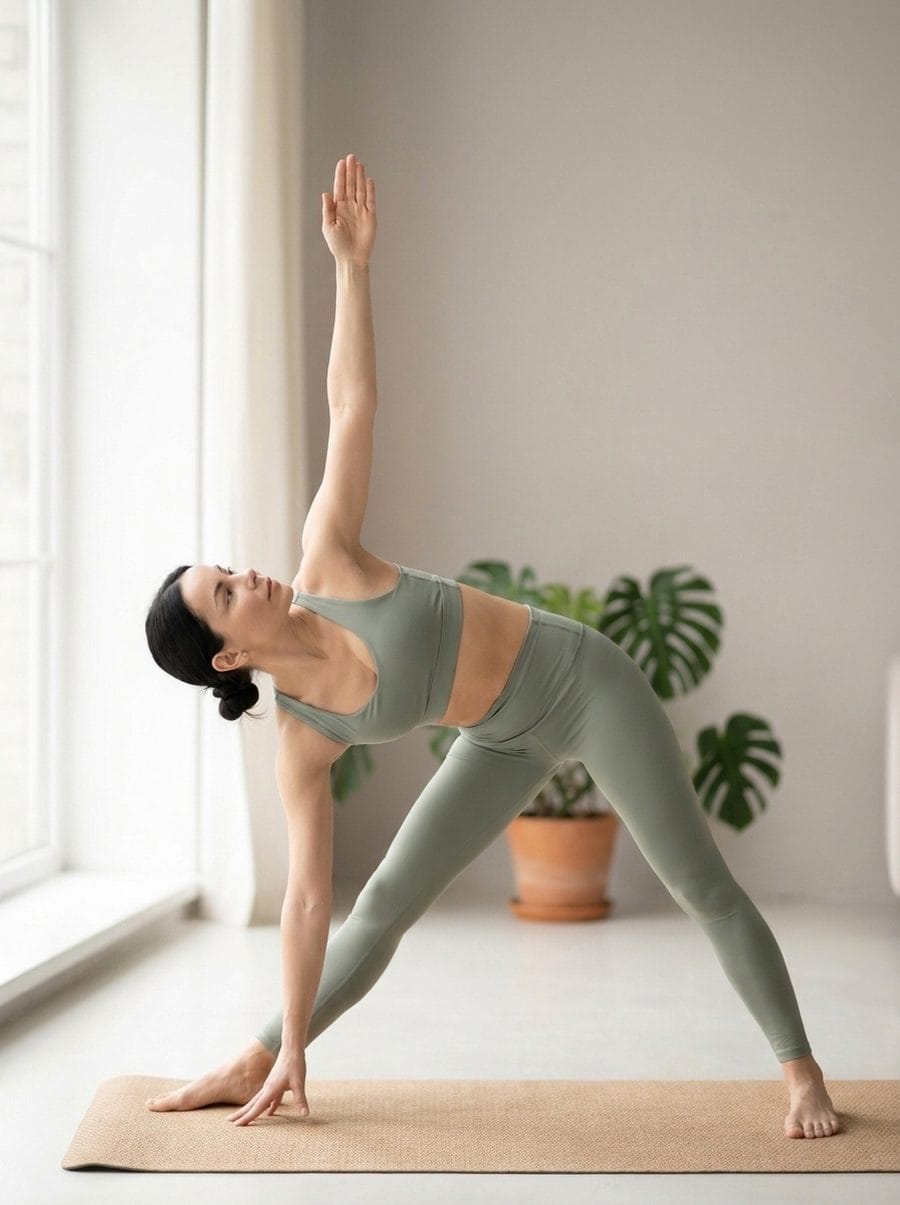
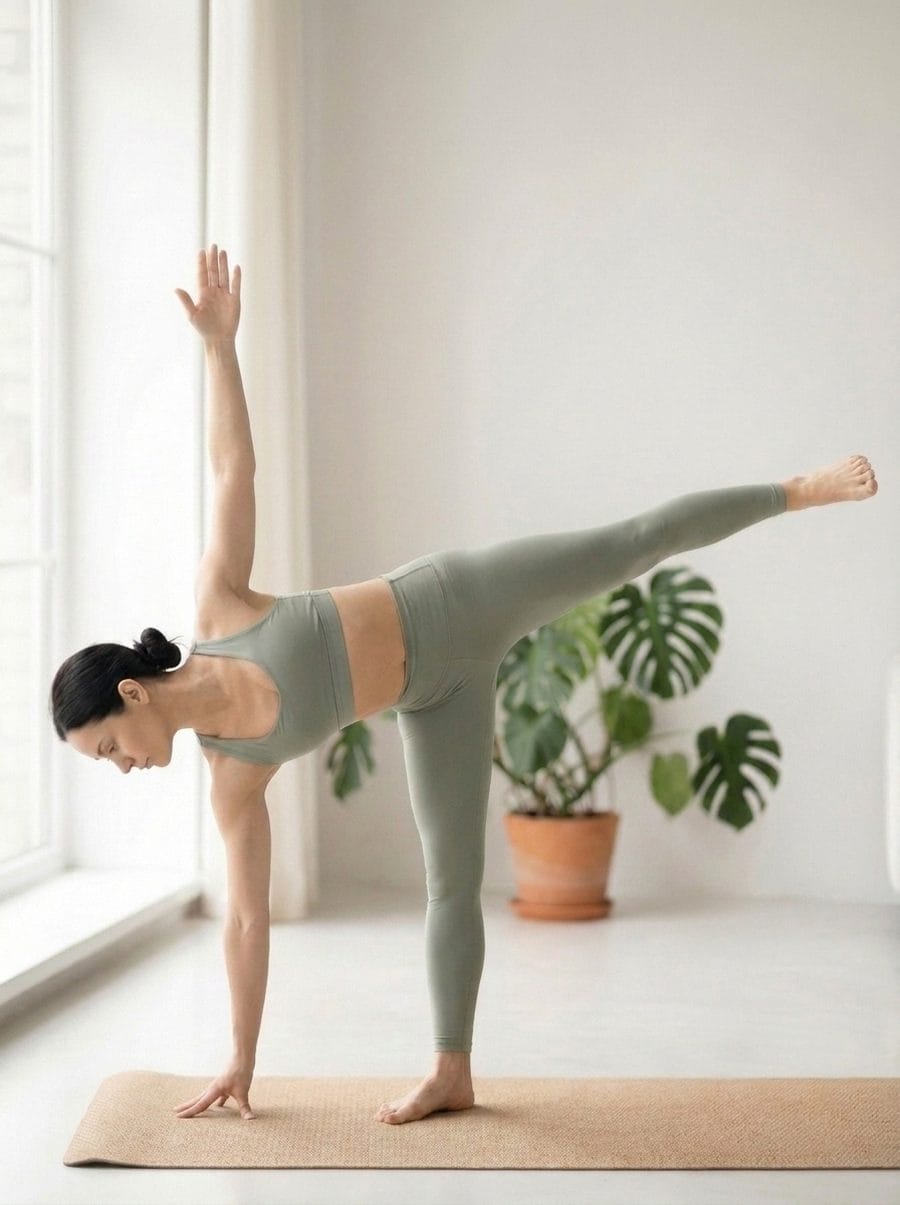
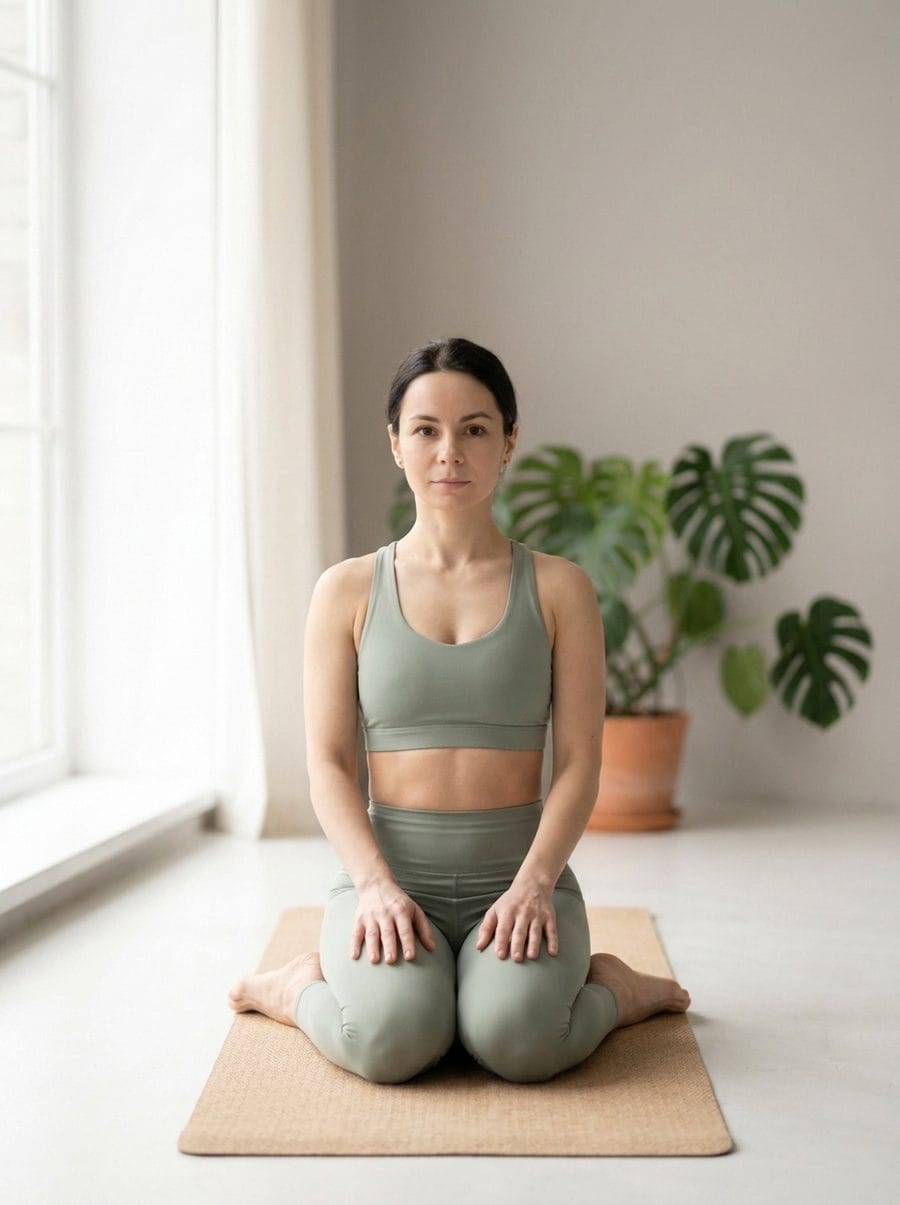
A block "lengthens" your arm or brings the floor closer. In Triangle Pose your hand rests on your shin or a block, in Half Moon Pose your fingertips touch the floor or a block in front of your foot, and in Hero Pose you sit on a block if your knees need more height.
Blocks come in dense foam, cork and wood. Foam ones are light and soft, while cork and wood are heavier and more stable. A typical size is about 9 by 6 inches and 3 to 4 inches thick. A matching pair is handy.
Yoga strap
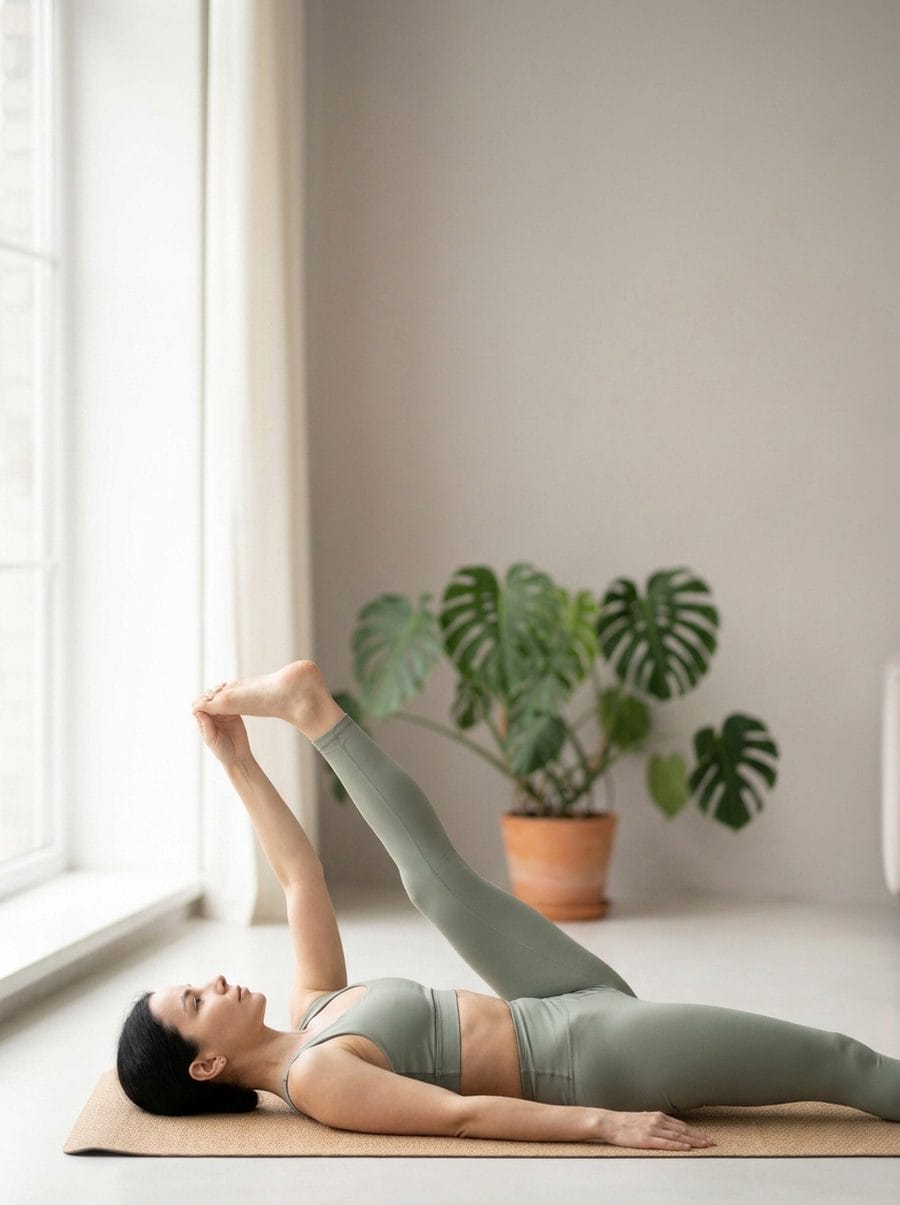
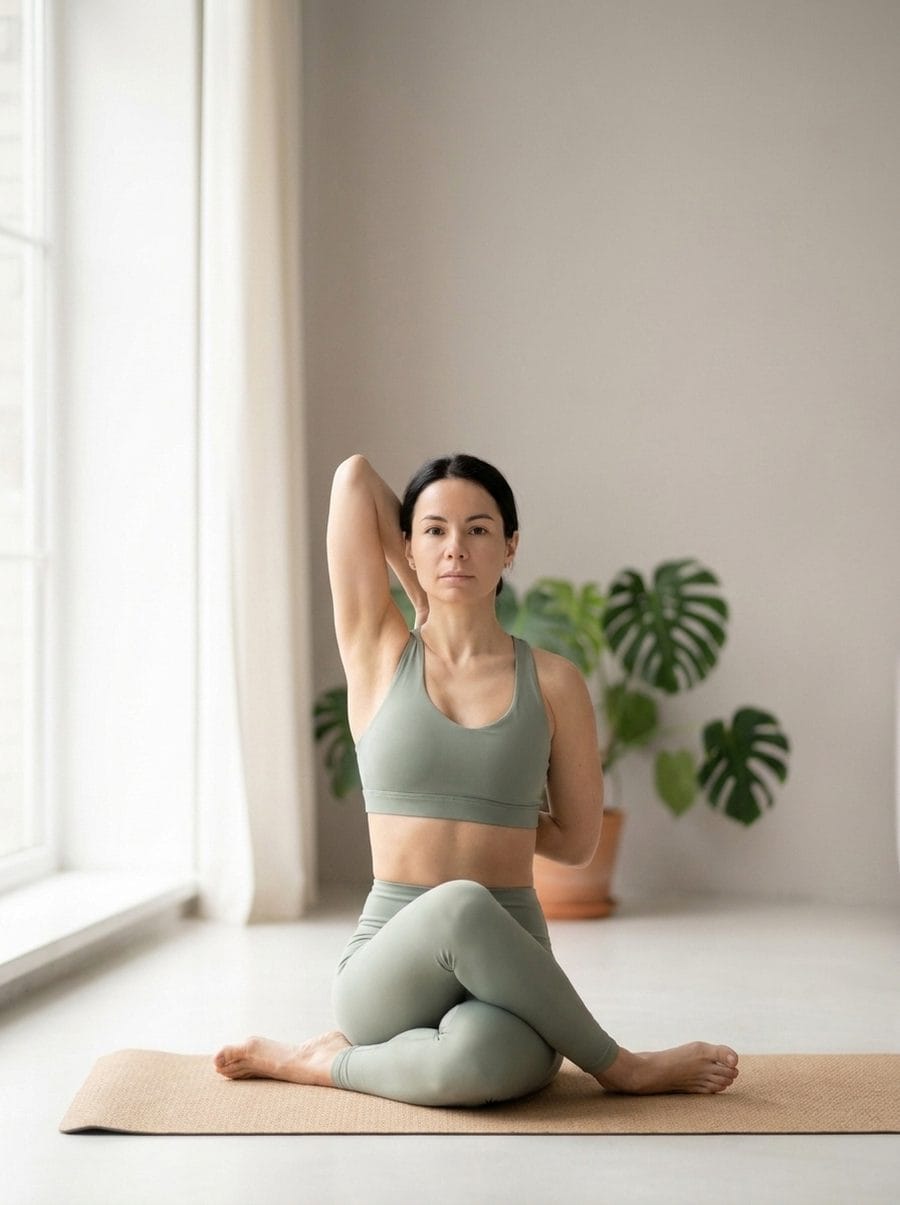
A strap helps when your hands can't reach your foot or can't clasp behind your back. In Reclining Hand-to-Big-Toe Pose the strap goes around the sole so your lower back can stay grounded, and in Cow Face Pose it links your hands.
A strap of 6 feet (1.8 m) or longer works for most people. At home, a bathrobe belt or a towel will do.
Bolster and blanket
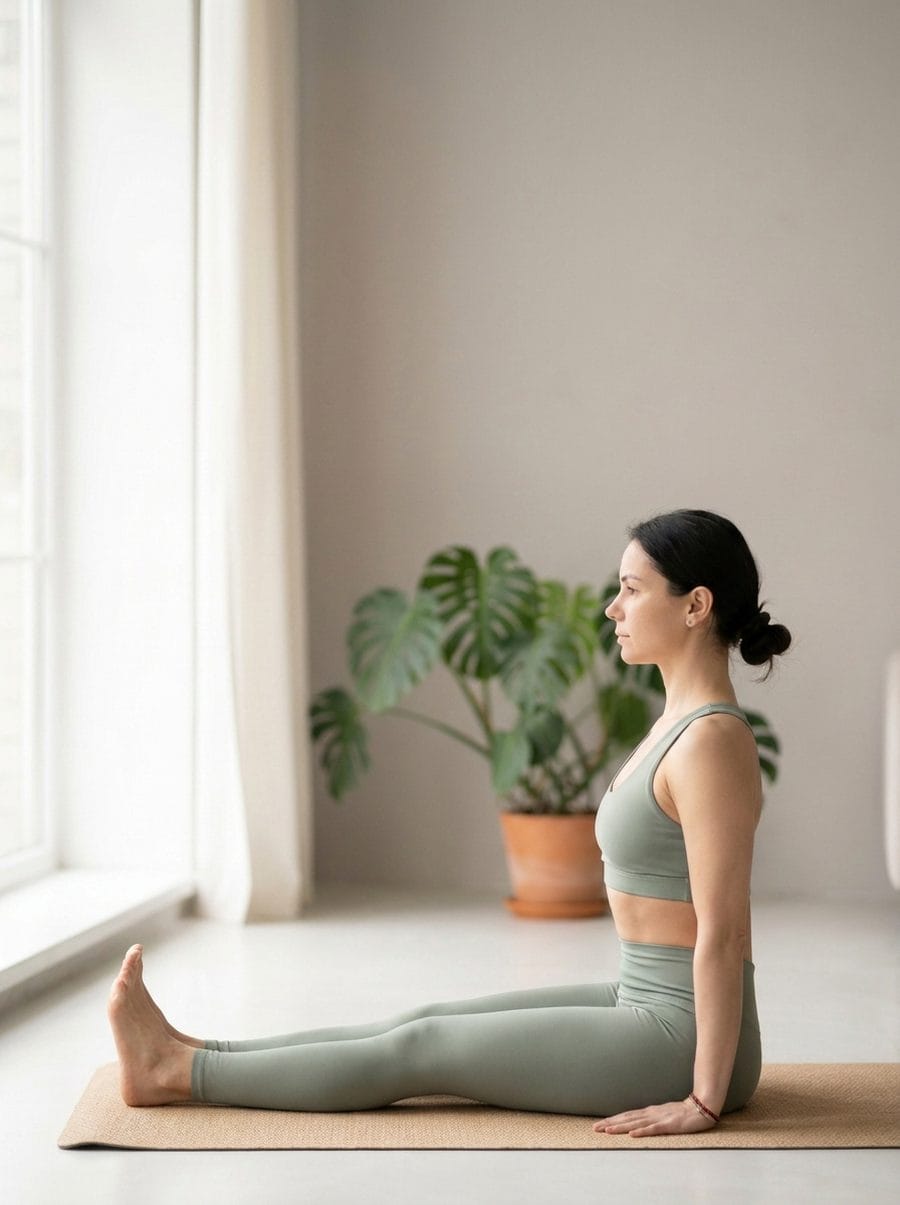
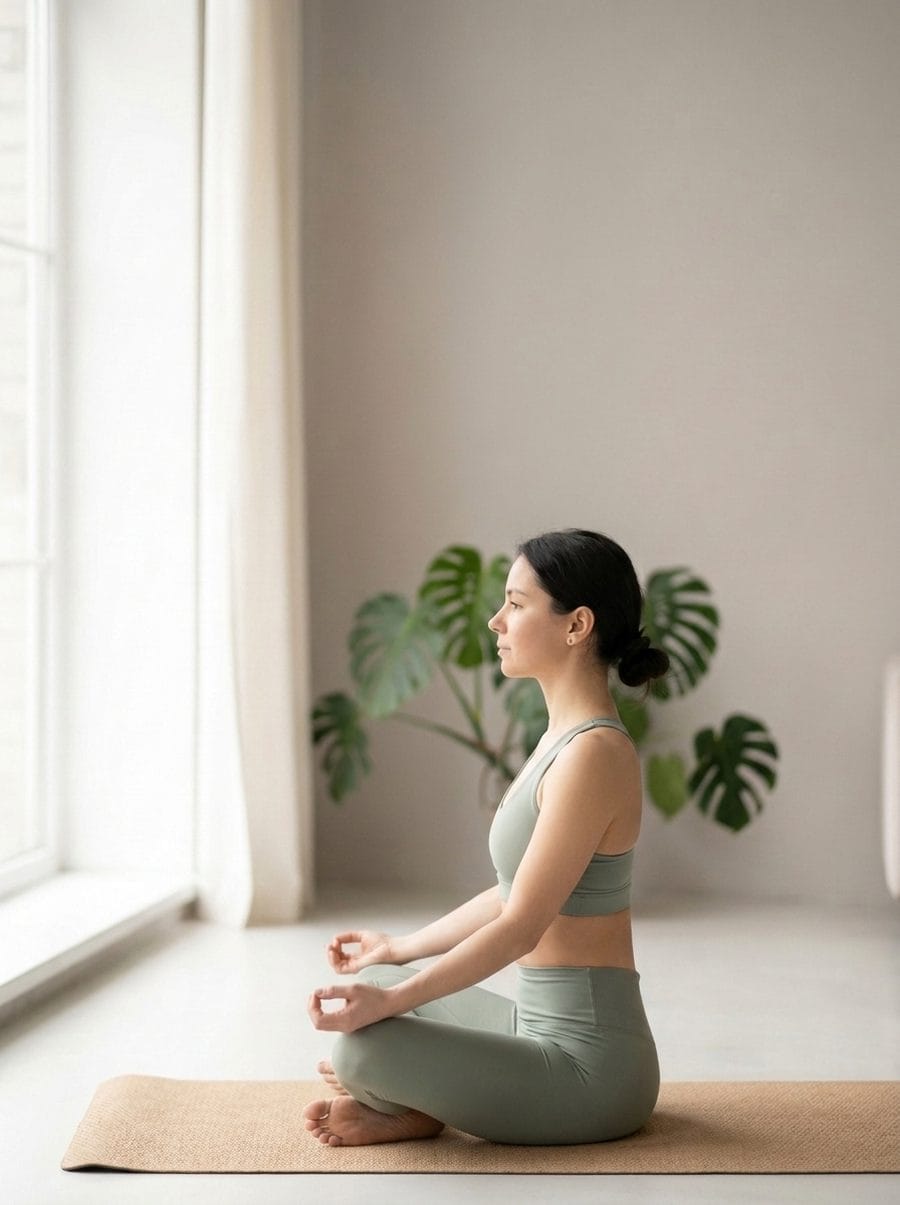
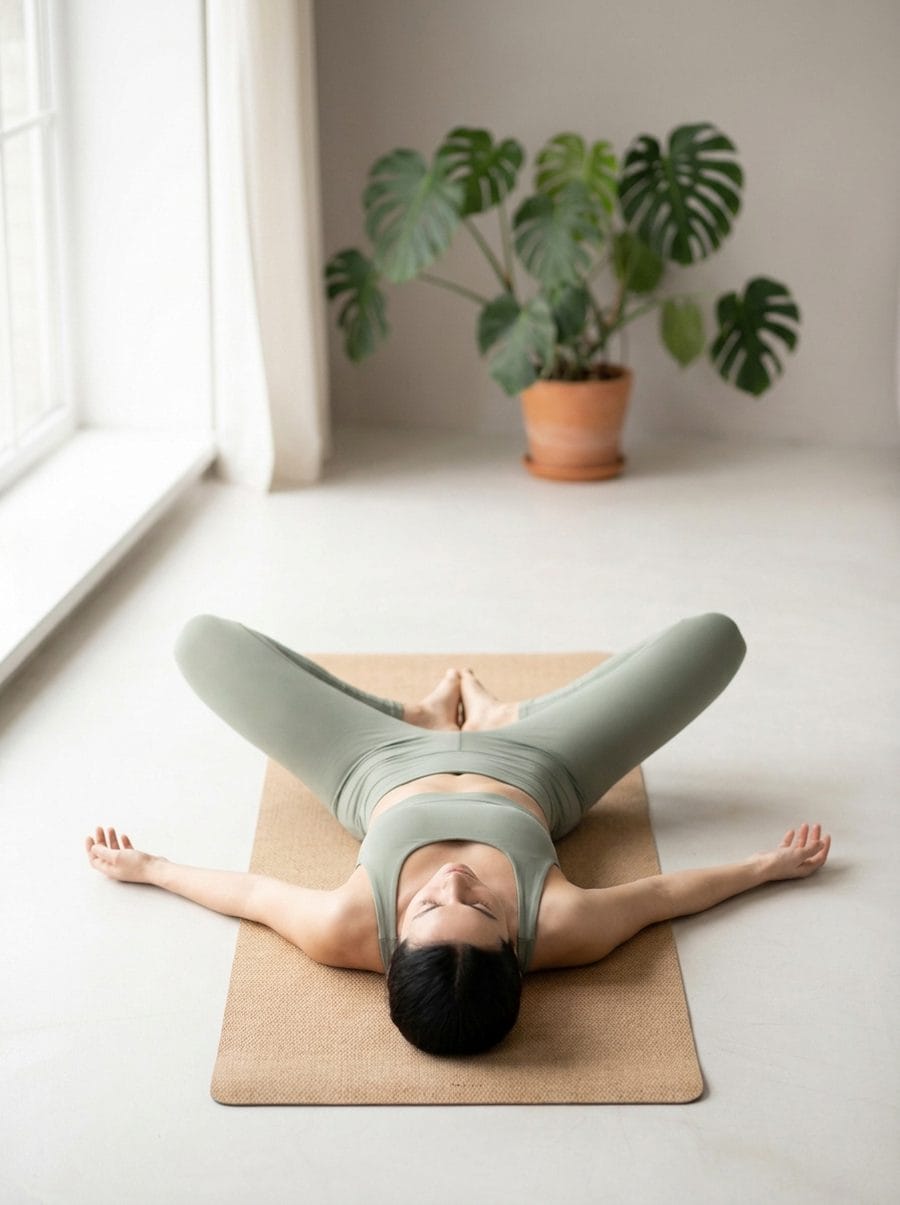
A bolster looks like a firm, long pillow. It's comfortable to lie on in restorative poses, and in Reclining Butterfly Pose you can tuck it, or a few folded blankets, under your knees. A blanket is the prop you'll reach for most: in Staff Pose you sit on it if your back rounds, in Easy Pose it lifts your hips whenever the knees end up above hip level, and in poses on all fours it cushions your knees.
The wall
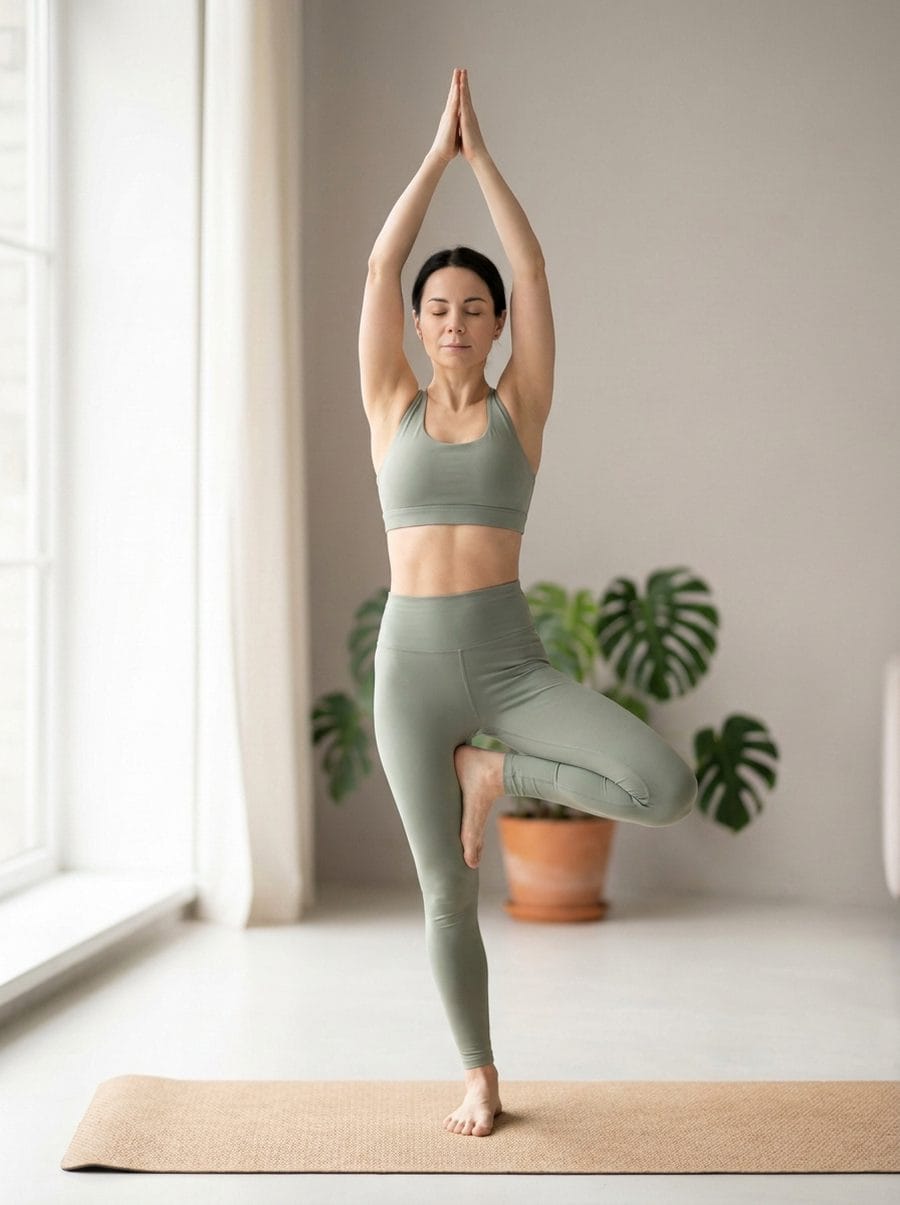
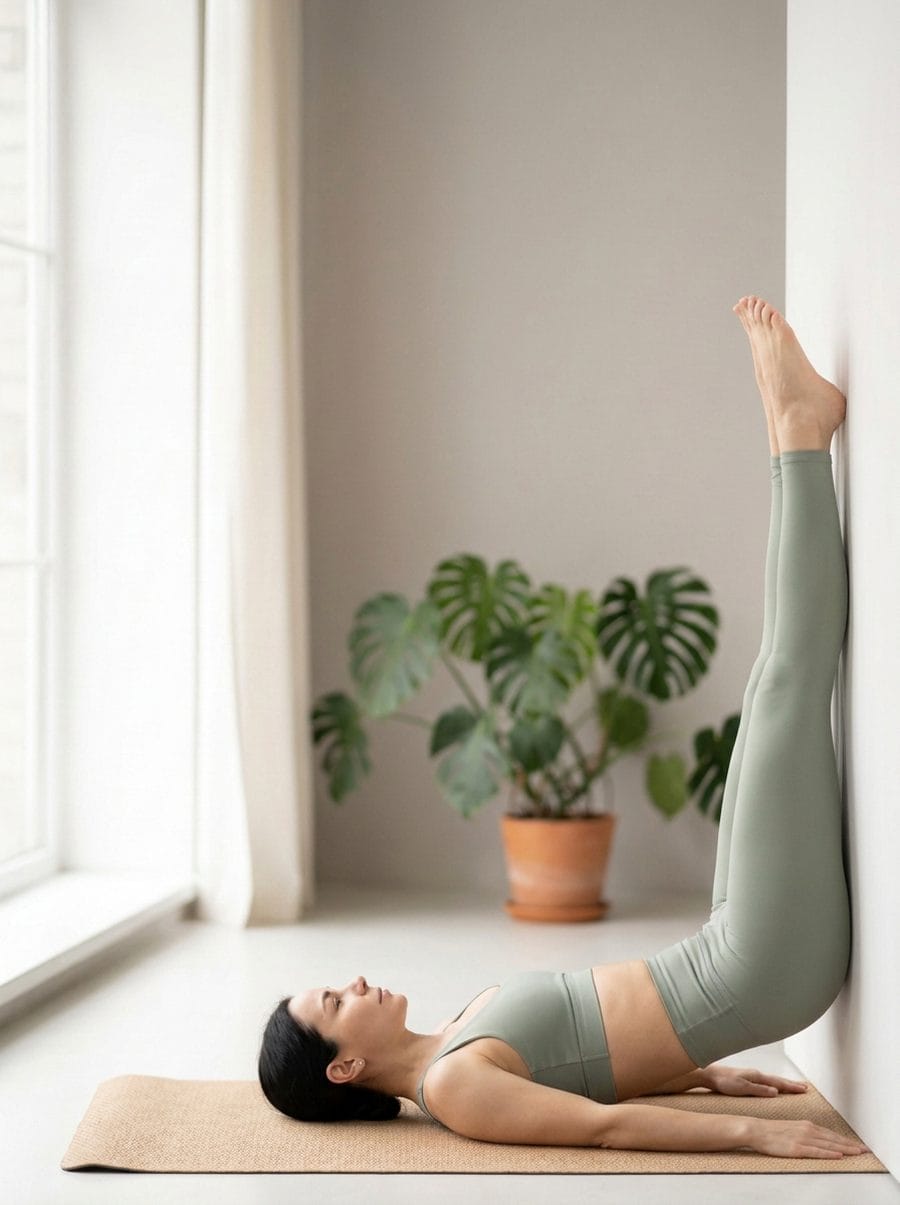
The most accessible prop is already in your home. If Tree Pose makes you dizzy, practice it beside a wall, and the wall holds your legs in Legs-Up-the-Wall Pose.
What you need to get started at home
To begin, a mat and a blanket are enough. A belt works as a strap, and early on two sturdy books of equal thickness do the job of blocks. The app's very first routine, First Practice, barely needs props: you only use a blanket under your hips in Staff Pose if your back rounds.
For evenings, try Evening Unwind. There you'll want blankets under your knees in Reclining Butterfly Pose and an empty section of wall for your legs.
For more on your first sessions, read Yoga for Beginners.
Safety
A prop makes a pose more accessible, but it doesn't cancel the pose's contraindications. If your knees still hurt in Hero Pose even on a block, let the pose go: that's what the app advises with knee and ankle injuries.
Half Moon Pose is not for you with dizziness or low blood pressure. With menstruation, glaucoma or uncontrolled hypertension, the gentle inversion called Legs-Up-the-Wall Pose should wait. A slippery mat is a hazard in standing poses: if your hands or feet start to slide, stop and wipe the surface.
If you're allergic to latex, avoid mats and blocks made of natural rubber.
Pose cautions in this article
- Wrist and shoulder injuries (Downward-Facing Dog)
- High blood pressure — don't stay in the pose long (Downward-Facing Dog)
- Glaucoma (Downward-Facing Dog, Legs-Up-the-Wall Pose)
- Flare-up of lower back pain (Triangle Pose)
- Low blood pressure — come out slowly (Triangle Pose)
- Dizziness (Half Moon Pose)
- Low blood pressure (Half Moon Pose)
- Knee and ankle injuries — sit on a block or skip the pose (Hero Pose)
- Use a strap if your back lifts off the floor (Reclining Hand-to-Big-Toe Pose)
- Shoulder injuries — use a strap (Cow Face Pose)
- Knee injuries — sit on a prop (Cow Face Pose)
- Knee discomfort — sit on a prop (Easy Pose)
- Groin discomfort — place supports under your knees (Reclining Butterfly Pose)
- Dizziness — practice near a wall (Tree Pose)
- Menstruation (Legs-Up-the-Wall Pose)
- Uncontrolled hypertension (Legs-Up-the-Wall Pose)
This site is for general information and is not medical advice. If you have pain, an injury, a chronic condition, or are pregnant, check with a qualified professional before practicing.
Questions
What thickness yoga mat is best? For Hatha yoga, 3 to 4 mm (about 1/8 inch) is the most comfortable choice: soft for the knees and steady in balances. A thin 1 to 2 mm mat suits travel, and 5 to 6 mm suits practice that happens mostly on the floor.
What is the best material for a yoga mat? Natural rubber grips best, but it's heavy. PVC lasts a long time, TPE is light, and cork is good for damp hands. Choose based on where and how often you practice.
What can I use instead of a yoga mat or blocks? For your first sessions, a non-slip floor plus a blanket doubled under your knees will work. A pair of thick hardcover books replaces blocks, and a belt or towel replaces a strap.
Are yoga blocks worth it? They bring the floor closer when your flexibility runs out: in Triangle Pose your hand rests on the block instead of straining toward the floor. That keeps your back long and the pose well aligned.
Sources
- Pose and prop descriptions, sequence contents: the Hatha Yoga app. More on the How We Prepare Our Content page.
Read next
- Yoga for Arthritis and Osteoporosis: How to Protect Your Joints and Bones7 min read
- Ashtanga Yoga Explained: The Series, the Breath and the Difference from Hatha6 min read
- Ayurveda Explained Simply: The Basics and a Daily Routine (Dinacharya)5 min read
- Balance Exercises: 10 Yoga Poses for Balance and Stability7 min read