 Hatha Yoga
What Is Yoga Good For? Benefits and Limits According to Research
Hatha Yoga editorial team · Updated · 7 min read
Yoga often gets sold as a fix for almost everything. Research reviews paint a more modest but more honest picture: regular practice may lower stress, improve balance and support well-being, while for back pain it works about as well as other exercise.
Below you'll find what studies say about the benefits of yoga, where those benefits run out, what the risks are, and how to start so the upside outweighs them.
What is yoga, in plain words?
Yoga began in India as a spiritual practice and a school of philosophy. Today the word usually means a mix of three things: postures (asanas), breathing exercises (pranayama) and focused attention or meditation. The classical tradition has more parts than that. Patanjali described eight limbs of yoga, and postures are only the third of them.
Yoga grew up inside Indian culture, and its ideas appear in Hinduism, Buddhism and Jainism. Still, the poses, the breathing and the relaxation ask for no belief at all. It isn't a sport in the usual sense either: nobody keeps score, and your own body sets the pace.
Hatha yoga, the focus of this site, centers on calm holds and steady breathing; read more in What Is Hatha Yoga. For how the practice changed from ancient texts to modern studios, see our history of yoga.
Benefits of yoga: what studies show
NCCIH, the U.S. government agency that studies complementary health approaches, keeps a running summary of yoga research. Nearly every conclusion there comes with a "may": many studies are small, and the styles of yoga they test vary a lot.
Stress and mental health
A 2020 systematic review pulled together 12 studies of yoga in healthy adults. The programs lasted anywhere from 4 to 28 weeks and covered styles from hatha to kundalini. Most of them lowered stress as measured by questionnaires. According to NCCIH, similar results show up for overall mental well-being.
Balance
A 2014 review included 15 studies with 688 healthy people aged 10 to 93. In 11 of those studies, yoga improved at least one measure of balance. The authors are upfront that study quality varied widely.
Sleep
NCCIH reports that yoga helped people sleep better in several specific groups: older adults, women with sleep problems, and people living with cancer. These are findings in particular groups, not a promise for everyone.
Neck and back
For neck pain the results look encouraging, though there aren't many studies yet. Low back pain has the most research behind it, and that's where the conclusions are the most cautious.
Where the benefits are smaller than you might think
- Low back. In a 2022 Cochrane review (21 trials, 2,223 participants), yoga did only slightly better than doing no exercise at all. The gap was smaller than what a person would actually notice. Compared with other back exercises, it made almost no difference. More in Yoga for Back Pain.
- Anxiety. Yoga eased anxiety symptoms in many different groups of people. For diagnosed anxiety disorders, there still isn't enough solid evidence.
- Depression. Yoga can be a useful addition to the care you already get, not a replacement for it.
- Body weight. The programs with the best results had sessions of 75 to 90 minutes, three or more times weekly, ran for three months or longer, and often included advice on eating.
These studies share a common weakness: participants know they're doing yoga, and they rate the results themselves. That's why the conclusions stay careful, and why the effect often looks similar to any other regular physical activity.
Yoga benefits and risks: how safe is it?
A 2015 meta-analysis looked at 94 randomized trials with 8,430 participants. Adverse events with yoga were no more frequent than with usual care or with other exercise. In other words, yoga is about as safe as physical activity in general, but not safer.
According to NCCIH, the most common yoga injuries are sprains and strains, most often around the knee or lower leg. Serious injuries are rare. People over 65 get hurt more often, and practicing alone without guidance has been linked to higher risk.
Beginners are advised to hold off on headstands, shoulder stands, Lotus Pose and forceful breathing. In the Cochrane review, people with low back pain reported more flare-ups of pain after yoga than with no exercise, but about as many as with other exercise.
How to start feeling the benefits
Every review above describes programs lasting several weeks, not one-off sessions. So the main condition is simple: consistency. Fifteen to twenty minutes a few times a week is more realistic than hour-long classes that are hard to fit into your life. For frequency and timelines, read How Often Should You Do Yoga.
A good first step is the First Practice routine. Built for beginners, it runs a quarter of an hour across 13 steps, from a neck warm-up to Savasana.
Poses for posture, balance and mobility
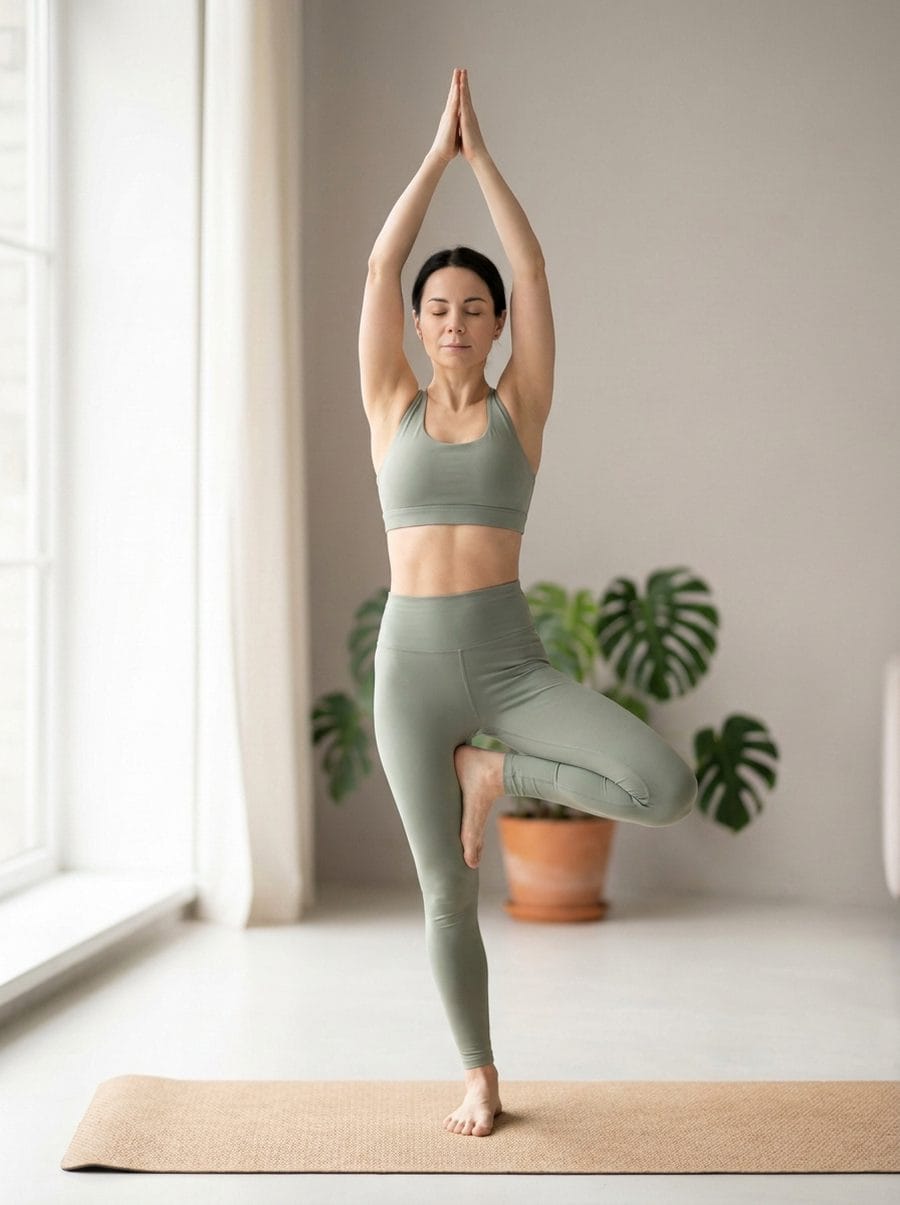
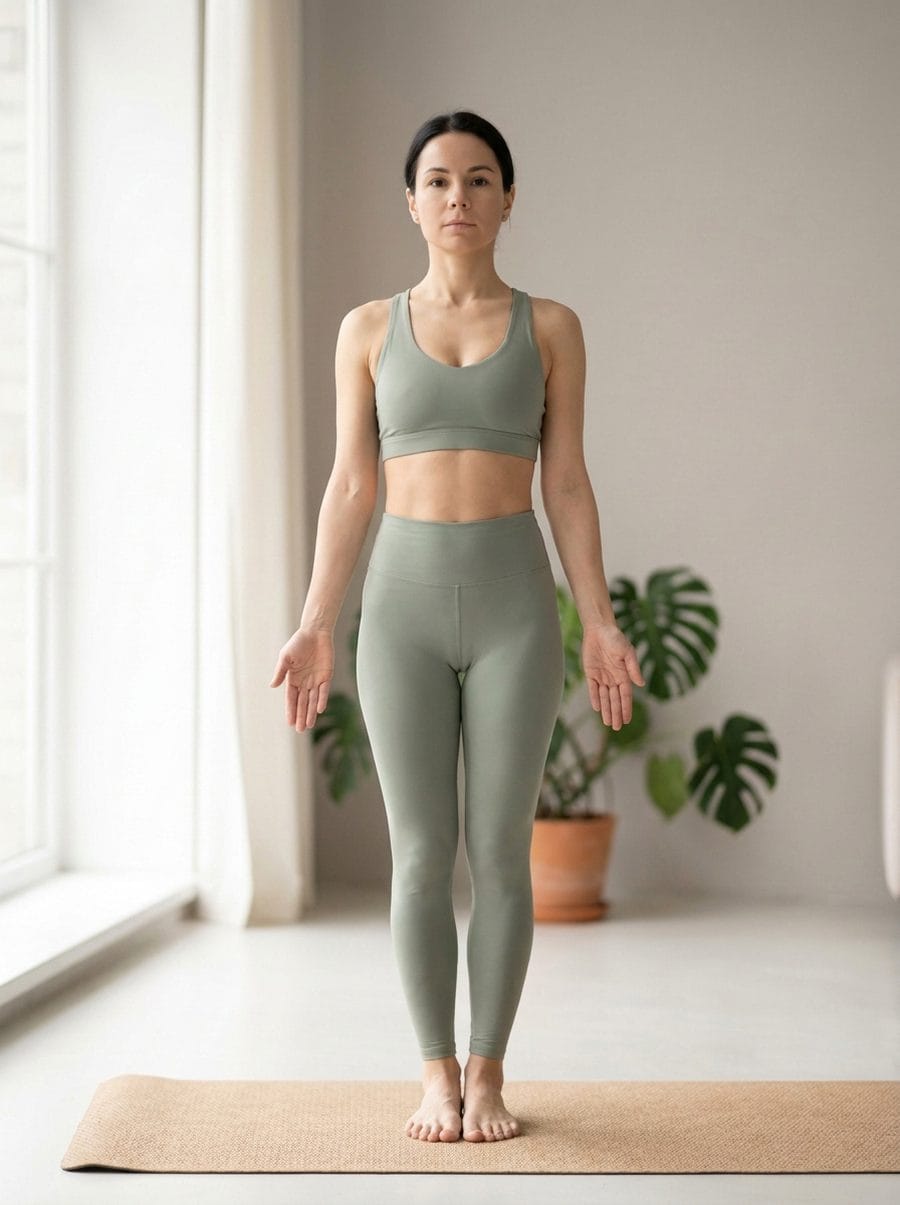
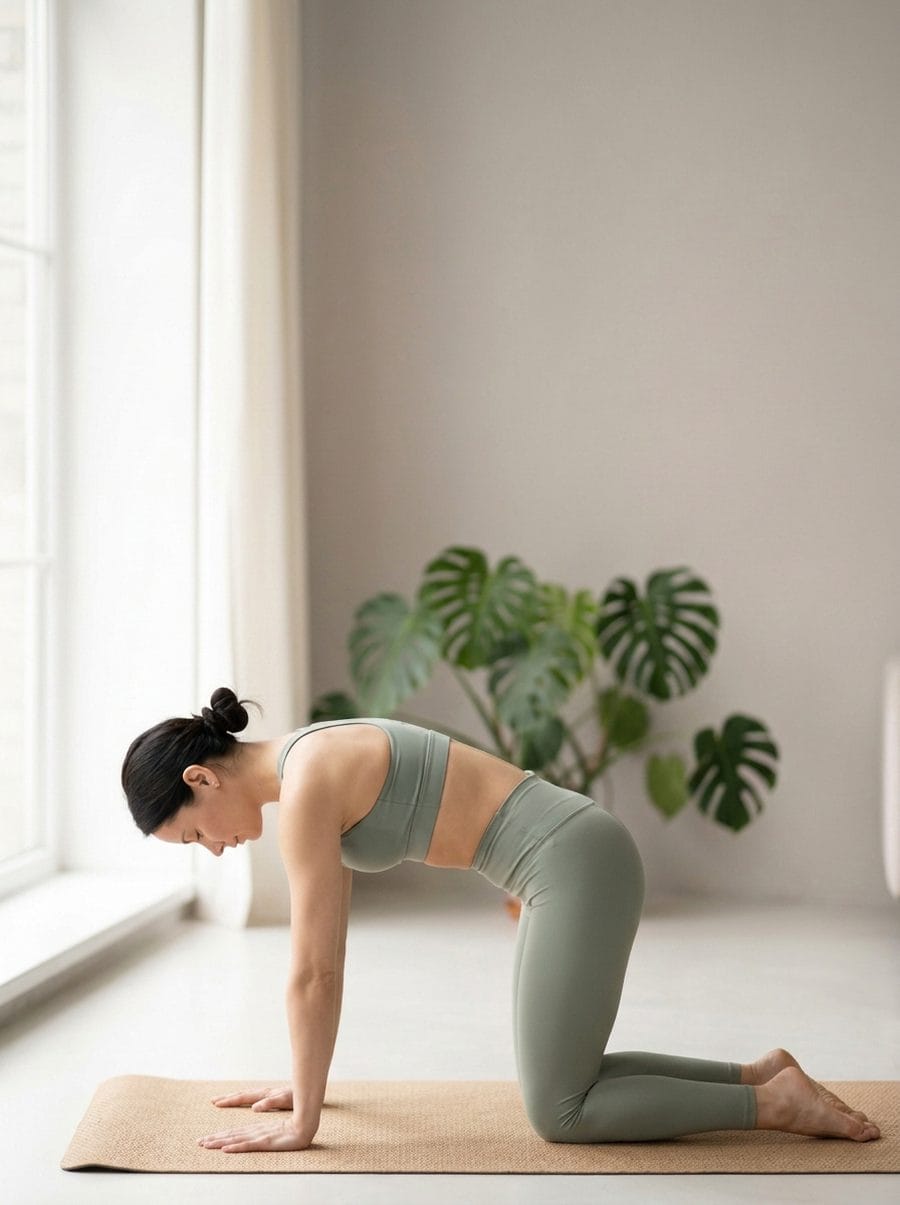
In Mountain Pose you practice standing tall, with your weight shared evenly between both feet. Tree Pose builds balance and focus. Cat-Cow, moving with your breath, gets a stiff spine moving again after hours of sitting.
Breathing and relaxation
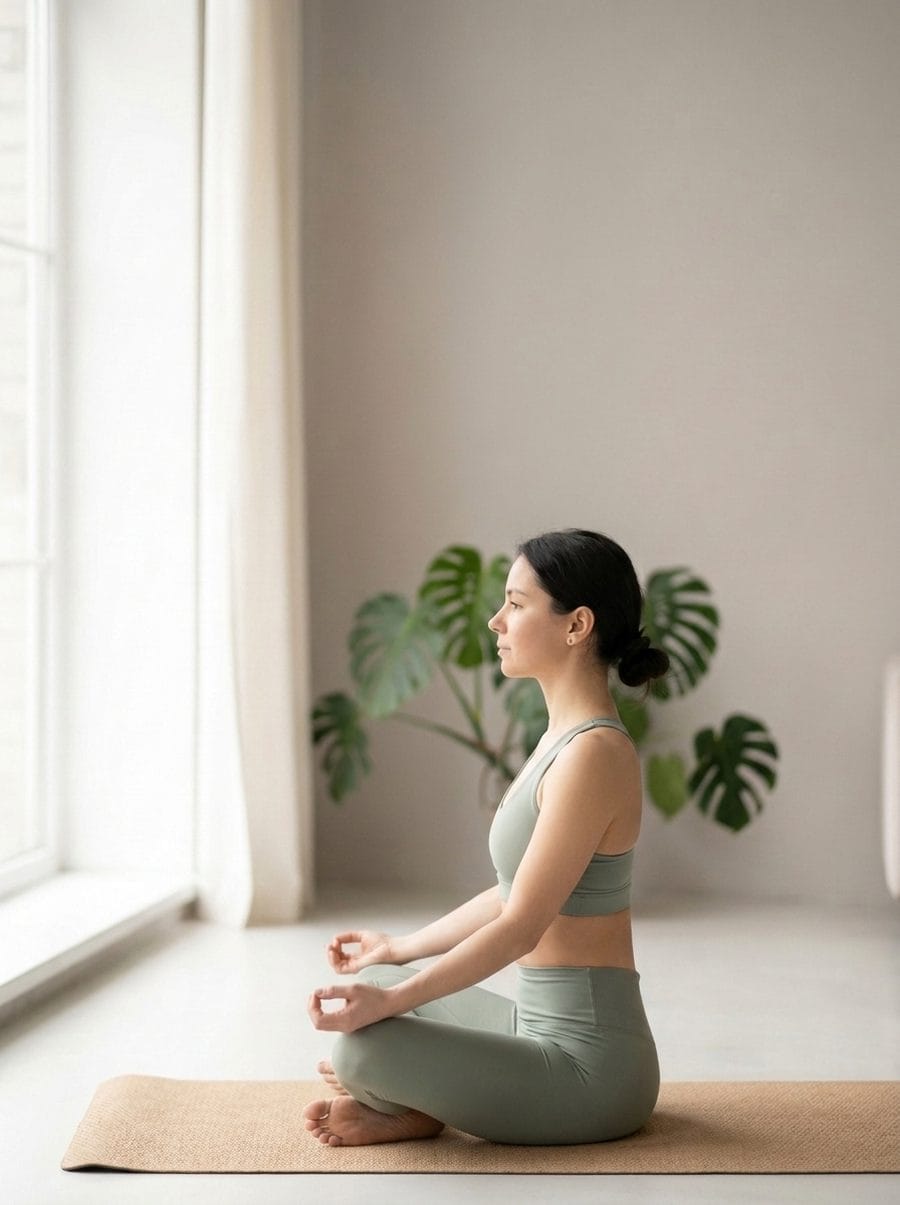
Easy Pose, sitting cross-legged, is a comfortable seat for breathing exercises, and Savasana as the final pose teaches you to let go of tension. Start with Full Yogic Breath: breathe in for four counts and out for six.

Benefits of yoga for women and men
Most findings apply to everyone. Menopause symptoms have been studied separately: in NCCIH's summary of 13 studies with more than 1,300 women, yoga reduced hot flashes, anxiety and low mood at least as well as other exercise. During pregnancy, yoga is possible once your doctor gives the go-ahead, and in an adapted form: no hot yoga, no long periods of stillness and no long stretches lying on your back. Learn more in Yoga for Women and Yoga for Men.
Safety
- Pain is a stop sign. A stretching sensation in the muscles is fine, but sharp or shooting pain tells you to stop and come back to a neutral position.
- Follow pose cautions strictly. Leave out Cat-Cow during acute back pain; with a wrist injury, rest on your fists instead of your palms. If you get dizzy, keep a wall within reach in Tree Pose. If Easy Pose bothers your knees, sit on a folded blanket.
- Check with a doctor first if you have a chronic condition that is flaring up, a recent injury or surgery, high blood pressure, glaucoma, or if you're pregnant.
The full set of rules for practicing safely is in Safety and Contraindications.
Pose cautions in this article
- Dizziness — practice near a wall (Tree Pose)
- Acute back pain (Cat-Cow)
- Wrist injuries — practice on your fists (Cat-Cow)
- Knee discomfort — sit on a prop (Easy Pose)
This site is for general information and is not medical advice. If you have pain, an injury, a chronic condition, or are pregnant, check with a qualified professional before practicing.
Questions
Is yoga good for you? For most healthy people, yes. Reviews link regular practice with lower stress, better balance and better well-being, with a level of risk similar to other exercise.
Is yoga a workout or not? Yoga involves real physical effort, but it isn't a competitive sport. Breath and attention matter as much as the movement, and you choose the intensity.
When will I notice the benefits of yoga? In studies, programs lasted four weeks or longer. Many people feel lighter and calmer right after a session, while changes in balance and flexibility take several weeks of regular practice.
Can yoga be harmful? Yes, like any physical activity. Reviews put its risk at about the same level as other exercise. Most problems are sprains and strains; serious injuries are rare.
Sources
- NCCIH. Yoga: Effectiveness and Safety. National Center for Complementary and Integrative Health.
- Wang F, Szabo A. Effects of Yoga on Stress Among Healthy Adults: A Systematic Review. Alternative Therapies in Health and Medicine, 2020.
- Jeter PE, et al. A systematic review of yoga for balance in a healthy population. Journal of Alternative and Complementary Medicine, 2014.
- Wieland LS, et al. Yoga for chronic non-specific low back pain. Cochrane Database of Systematic Reviews, 2022.
- Cramer H, et al. The Safety of Yoga: A Systematic Review and Meta-Analysis of Randomized Controlled Trials. American Journal of Epidemiology, 2015.
- Pose technique and cautions, and the routine's contents: the Hatha Yoga app. How we check our texts is explained on the How We Prepare Our Content page.
Read next
- Yoga for Arthritis and Osteoporosis: How to Protect Your Joints and Bones7 min read
- Ashtanga Yoga Explained: The Series, the Breath and the Difference from Hatha6 min read
- Ayurveda Explained Simply: The Basics and a Daily Routine (Dinacharya)5 min read
- Balance Exercises: 10 Yoga Poses for Balance and Stability7 min read