 Hatha Yoga
How Often Should You Do Yoga, and When Will You See Results?
Hatha Yoga editorial team · Updated · 6 min read

The question beginners ask most is how many times a week they need to practice for it to pay off, and whether doing yoga every day is too much. The short answer: consistency beats duration. Below you'll find how many minutes are enough, when to expect the first changes, what time of day works best, what to do if you're sore or dizzy, how yoga compares with the gym, and a ready-made 30-day plan.
Is yoga every day good for you, and how many minutes?
It is, provided the load changes from day to day. Gentle practice of 10 to 20 minutes is fine daily. Intense days with strength poses and backbends are best mixed with calm ones, and after an unusually hard session you can give your body a day off or stick to breathing.
For adults, NHS guidelines offer a useful frame: move a little every day, spreading activity over 4 to 5 days a week or all seven. Muscle-strengthening work for all major muscle groups is needed twice a week or more, and the NHS lists yoga among those activities.
It isn't aerobic exercise, though, so the weekly cardio target (the WHO's minimum is 150 minutes a week of moderate effort) is better met by walking, cycling or swimming.
To start, a quarter of an hour on 3–4 days each week does the job. Once it becomes a habit, move to 10 to 20 minutes most days. Fifteen minutes five times a week does more for you than a single class of an hour or more that's easy to skip.
When will you see results from yoga?
- After your first session. Many people feel calmer and lighter. It's subjective, but that feeling is what brings you back to the mat.
- After 2 to 4 weeks. Familiar poses come more easily, morning stiffness eases and your breathing is steadier.
- After 1 to 3 months. In yoga research, programs ran from four weeks to half a year, and changes in stress and balance were measured over spans like these. More in Benefits of Yoga.
Flexibility grows the slowest and varies the most from person to person. If you have a specific goal such as the splits, think in months rather than weeks; see How to Do the Splits.
Best time to do yoga: morning or night?
The best time is the one you can stick with. Morning practice energizes you and shakes off post-sleep stiffness: Upward Salute and Cat-Cow wake up the spine nicely. Evening practice calms you down: gentle reclining poses such as Reclining Butterfly Pose set you up for sleep.
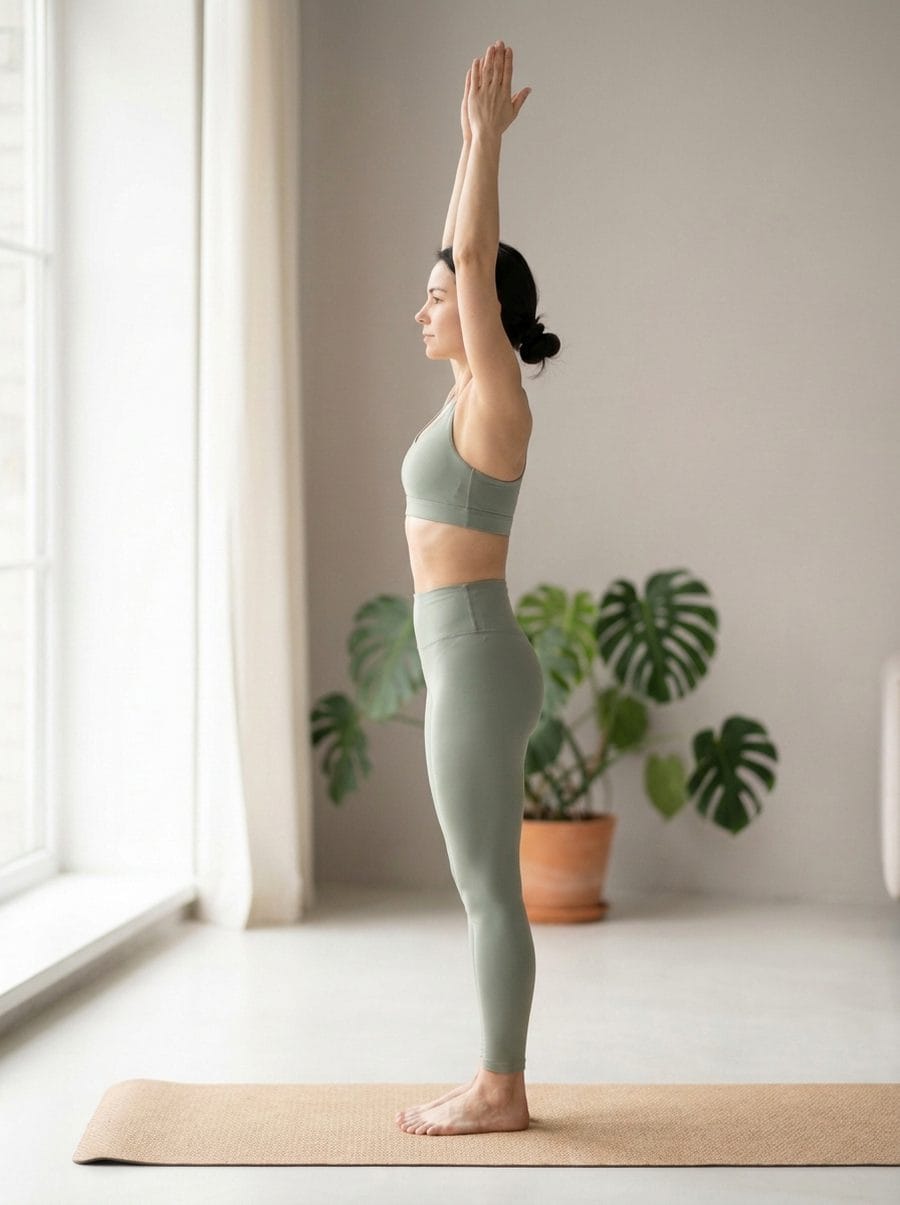
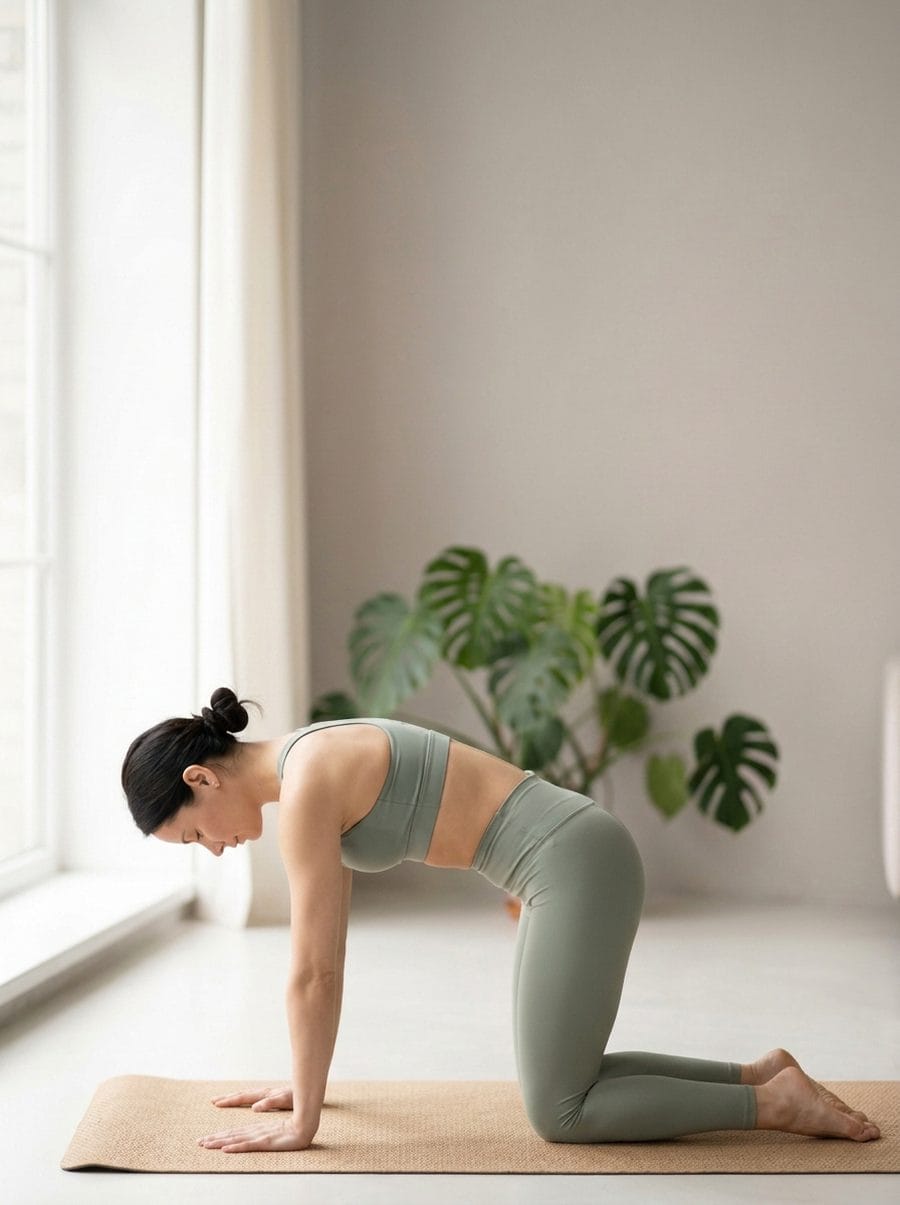
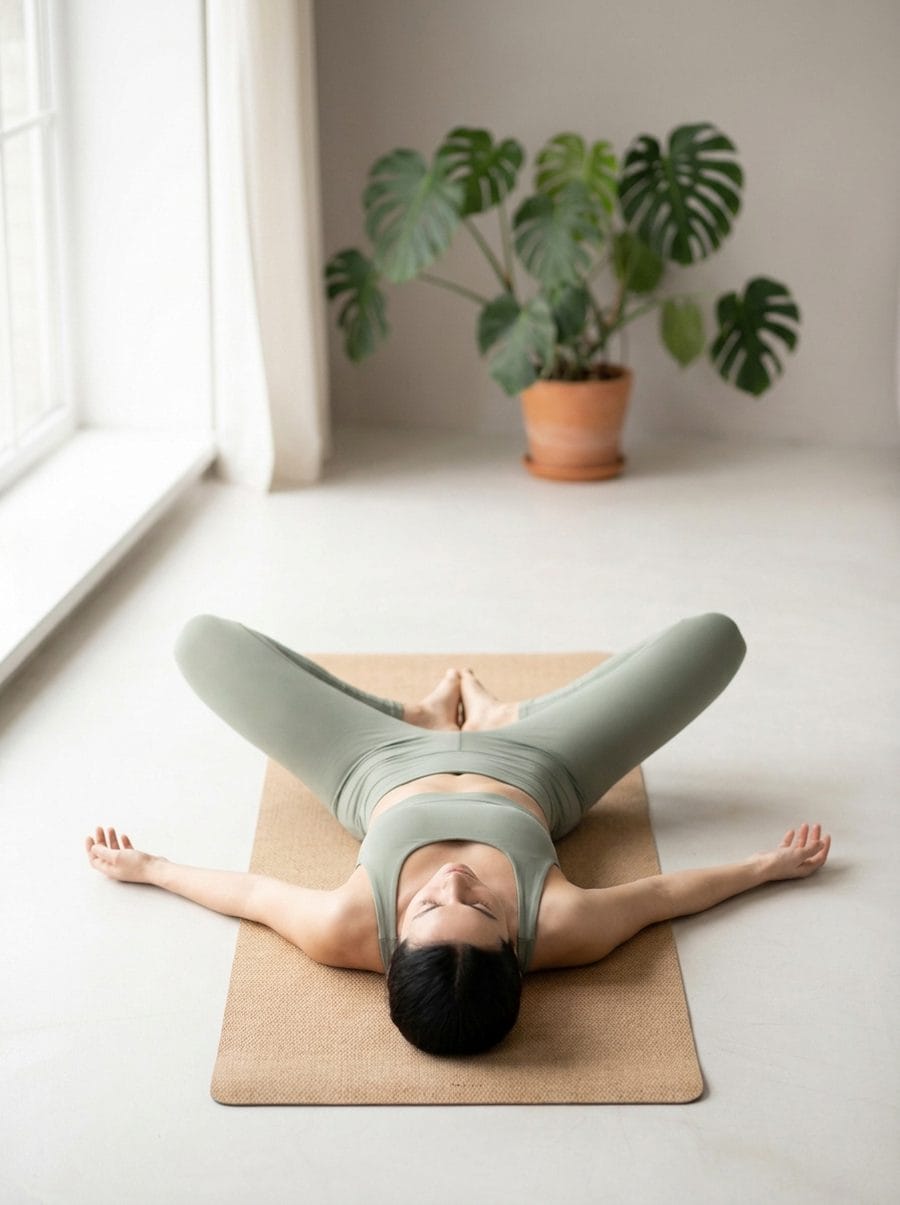
Mind your meals: allow a couple of hours or a bit more following a big lunch, and roughly one following a snack, as explained in What to Eat Before Yoga. Per NHS advice, hard training belongs no closer than four hours to bedtime, while calm stretching and breathing are fine in the evening.
You'll find ready-made options in Morning Routine and How to Fall Asleep Fast.
Sore or dizzy after yoga: what's normal
Sore after yoga
Delayed muscle soreness after a new kind of effort usually shows up a day or two later and fades on its own within a few days. Don't cancel practice on those days; make it softer instead. Child's Pose, Knees-to-Chest Pose and a long Savasana let you move without strain.
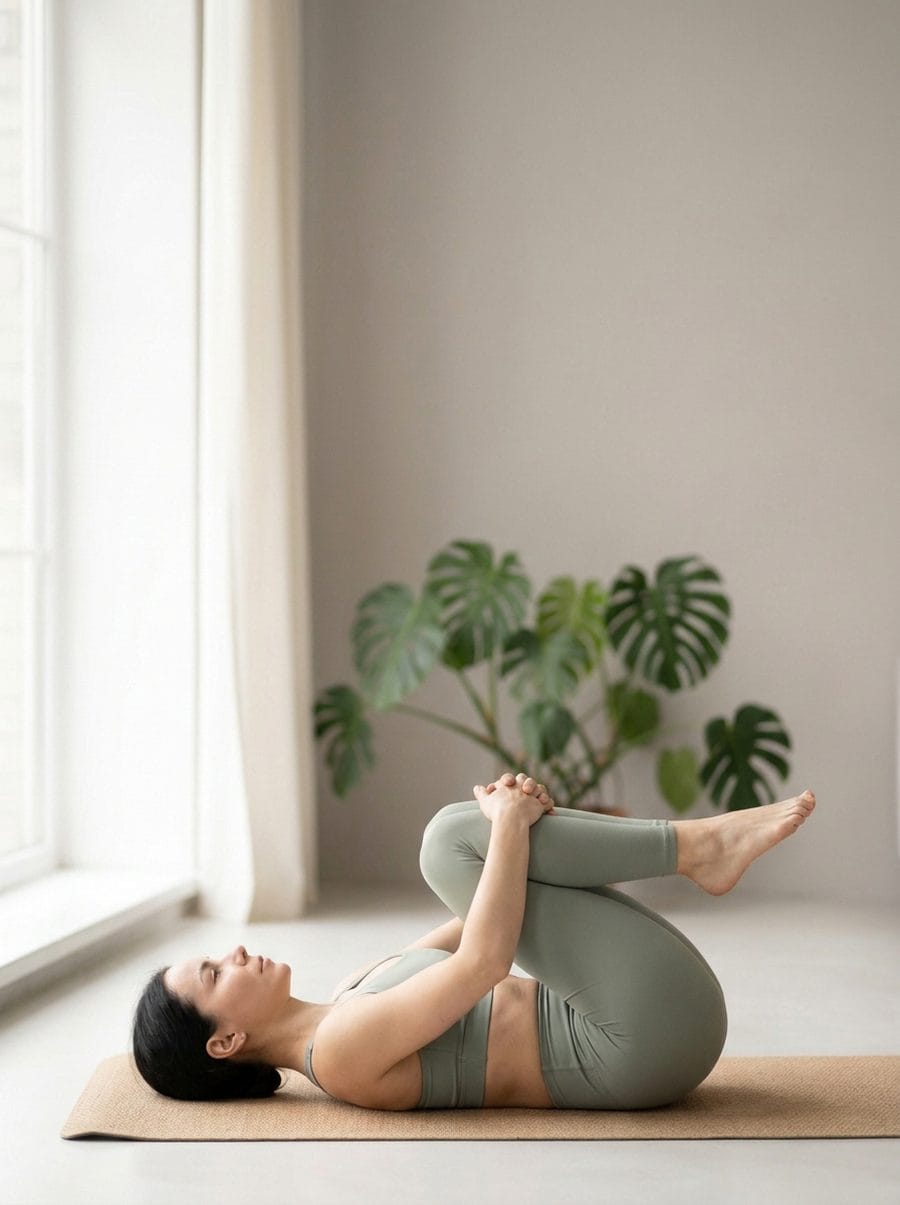

It's not normal if the pain sits in a joint rather than a muscle, if there's swelling, sharp pain during a movement, or pain that lasts a week. In those cases, see a doctor.
Dizzy during yoga
Dizziness most often comes from standing up quickly out of a forward fold, holding your breath, or practicing hungry. Lower yourself to the floor, sitting or lying, and let your breath settle. Come out of head-down poses slowly, through a squat or with a rounded back.
If the dizziness keeps returning, leads to fainting, or comes with chest pain or a racing heart, see a doctor.
Nauseous after yoga
The usual cause is practicing too soon after eating, especially with twists, forward folds and vigorous breathing techniques. Move your session later or make it gentler.
Yoga vs gym
They're different tools. The gym gives you progressive strength and endurance; yoga works on mobility, balance and breathing, and it strengthens muscles too. For most people, the best answer is both. Gentle yoga fits on rest days or as a cooldown after a workout.
If you want yoga itself to bring the strength work, try the Strength & Tone routine, an intermediate 25-minute session built on four Sun Salutation rounds, warrior poses, planks, Boat Pose and backbends.
For more comparisons, read Yoga for Strength and Yoga vs Pilates.
30-day yoga challenge for beginners
A month is enough for practice to become a habit. This plan is built for beginners and uses beginner-level routines, with one step up to intermediate at the end.
- Week 1. First Practice every other day, 3 or 4 times. On the other days, five minutes of breathing.
- Week 2. Five days a week, 10 to 15 minutes: alternate First Practice with 10-Minute Morning.
- Week 3. Add evenings: Evening Unwind twice, 15 minutes each, with morning sessions on the remaining days.
- Week 4. Try the 20-minute intermediate Full Morning once or twice. Keep one rest day a week.
Safety
Check every pose against your own limits. Skip Upward Salute if you have a shoulder joint injury. Hold off on Cat-Cow while your back hurts acutely; if your wrists are injured, place your hands as fists. Injured knees and Child's Pose don't mix, so leave it out, and if you're pregnant, take your knees wider in it.
Starting in the second trimester, the belly goes between the thighs when you draw your knees in for Knees-to-Chest Pose, or the pose is skipped. If Reclining Butterfly Pose bothers your groin, tuck rolled towels under your knees. Strength & Tone isn't suitable during pregnancy: it includes Boat Pose, Locust Pose and Bow Pose.
Those three are also off-limits for anyone whose lumbar disc is herniated; with high blood pressure, Locust Pose, Bow Pose and Warrior III come out of the routine. Diastasis recti means no Plank Pose and no Boat Pose, and a knee injury rules out Chair Pose, Warrior I and Warrior II. The general rules are in Safety and Contraindications.
Pose cautions in this article
- Shoulder joint injuries (Upward Salute)
- Acute back pain (Cat-Cow)
- Wrist injuries — practice on your fists (Cat-Cow)
- Groin discomfort — place supports under your knees (Reclining Butterfly Pose)
- Pregnancy — widen your knees (Child's Pose)
- Knee injuries (Child's Pose)
- Pregnancy from the second trimester onward — take your knees wider than your belly or skip the pose (Knees-to-Chest Pose)
This site is for general information and is not medical advice. If you have pain, an injury, a chronic condition, or are pregnant, check with a qualified professional before practicing.
Questions
Should I practice yoga daily? You can, provided you alternate intense and easy days. A gentle 10 to 20 minutes daily suits most healthy people.
How often should beginners do yoga? Start with three or four 15-minute sessions. Two weeks in, you can make practice almost daily.
What happens if you do yoga for 30 days? Usually poses start to feel easier, mornings feel less stiff, and practice turns into a habit. Results depend on your starting point and how consistent you are.
Can I do yoga after a workout? Yes, gentle poses and stretching make a good cooldown. Skip strength-focused yoga routines on the same day.
Sources
- NHS. Physical activity guidelines for adults aged 19 to 64.
- WHO. Physical activity. Fact sheet.
- NHS. Insomnia.
- NCCIH. Yoga: Effectiveness and Safety.
- Pose technique and cautions, and routine contents: the Hatha Yoga app. How we check our texts is explained on the How We Prepare Our Content page.
Read next
- Yoga for Arthritis and Osteoporosis: How to Protect Your Joints and Bones7 min read
- Ashtanga Yoga Explained: The Series, the Breath and the Difference from Hatha6 min read
- Ayurveda Explained Simply: The Basics and a Daily Routine (Dinacharya)5 min read
- Balance Exercises: 10 Yoga Poses for Balance and Stability7 min read