 Hatha Yoga
What to Eat Before and After Yoga, and Should You Practice on an Empty Stomach?
Hatha Yoga editorial team · Updated · 6 min read
Almost every yoga tradition says to practice on an empty stomach, but that doesn't mean you should step on the mat starving. The real rule is simpler: your stomach shouldn't be full. This guide covers how long to wait after eating, what to eat before yoga when you're running on empty, what to eat afterward, and the one pose that's traditionally done right after a meal. No diets, no food rules, just eating around your practice.
Why yoga is done on an empty stomach
In yoga poses you fold forward, twist, draw your thighs into your belly, lie face down and lift your legs above your head. On a full stomach all of that feels awkward: you get a heavy, sloshing feeling, you may feel a bit queasy, and each inhale stays shallow because your belly has no room to expand.
Tradition agrees. The app notes that the best time for pranayama is the morning before breakfast or the evening before bed, and the cleansing techniques Kapalabhati and Agnisara Kriya are done only on an empty stomach. For more on breathing on the mat, see Breath in Practice.
"Empty stomach" here means your last meal has had time to settle, not that you've skipped food since last night. If hunger leaves you light-headed and shaky, the practice will only tire you out.
How long to wait after eating before yoga
There's no single number for everyone, because digestion runs at a different pace for each of us. These are the rough guidelines most teachers go by:
- After a big lunch or dinner: 2 to 3 hours.
- After a light meal such as oatmeal, soup or a salad: about 1.5 to 2 hours.
- After a snack (a piece of fruit, yogurt, a handful of nuts): 30 to 60 minutes.
- Water won't get in the way. A few sips are fine anytime, but drink a full glass 20 to 30 minutes before you start.
If you still feel heavy on the mat, wait longer next time or choose a calm practice done seated and lying on your back.
What to eat before yoga if you're hungry
A snack makes sense when you practice in the evening after work and lunch was hours ago, or when practicing on an empty stomach makes you feel unwell. Pick something small and familiar 30 to 60 minutes before class:
- a banana, an apple or another piece of fruit;
- a small cup of yogurt or a glass of kefir;
- a handful of nuts or dried fruit;
- a slice of toast or a couple of crackers.
Before practice, skip greasy and fried food, big portions, spicy dishes and fizzy drinks. They aren't "bad foods." They just make folding forward and breathing deeply harder.
Morning yoga on an empty stomach
Morning is the easiest time to practice before eating. Last night's dinner is long gone, and breakfast can wait half an hour. Drink some water, give your body a couple of minutes to wake up, and begin.
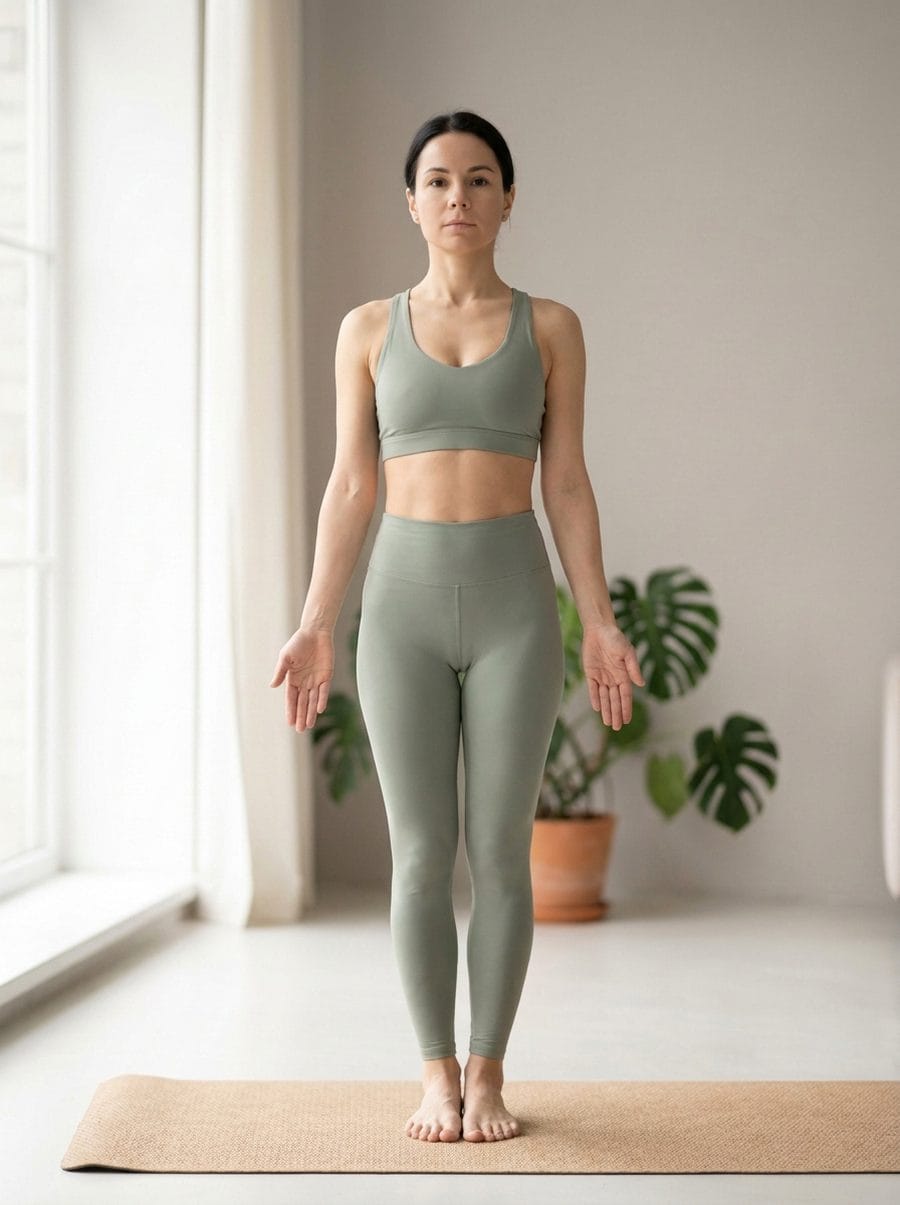
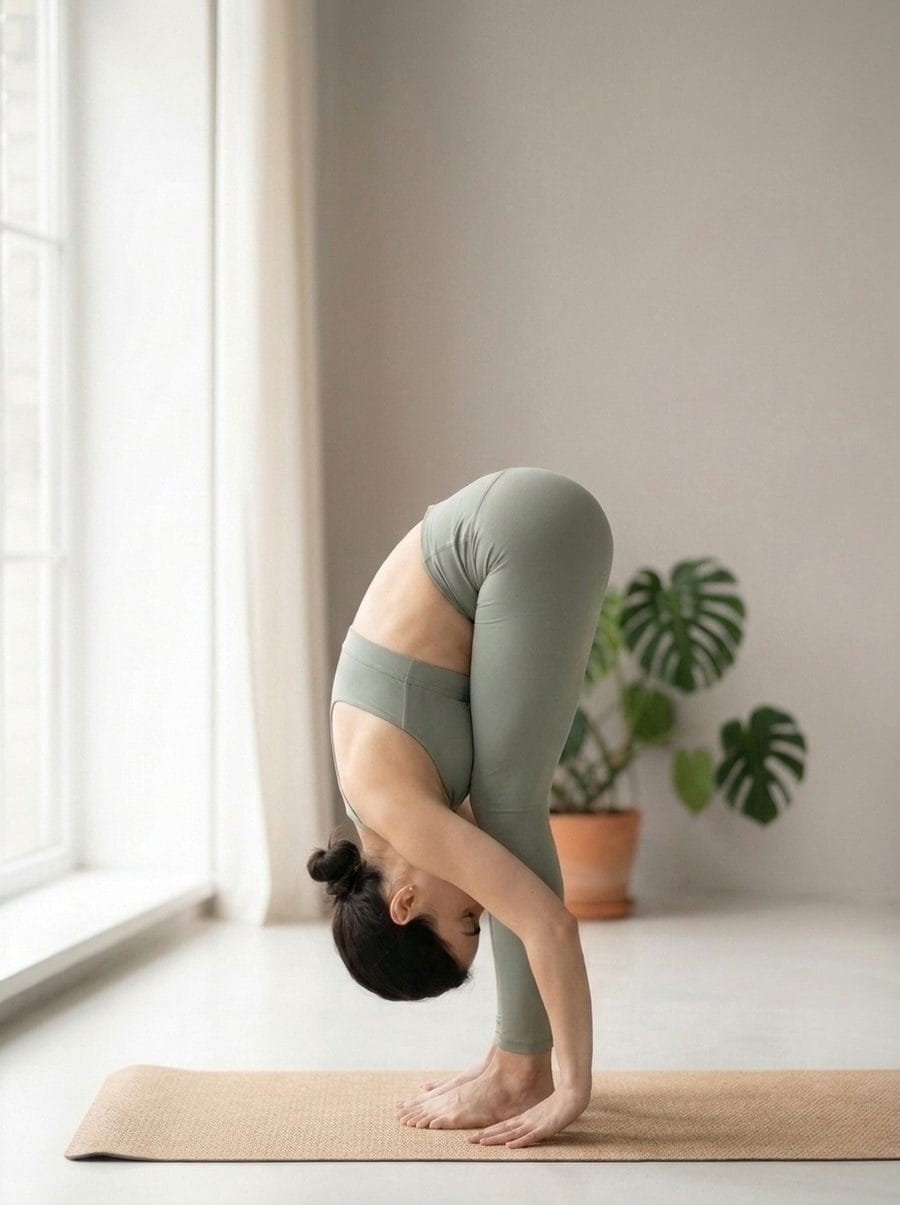
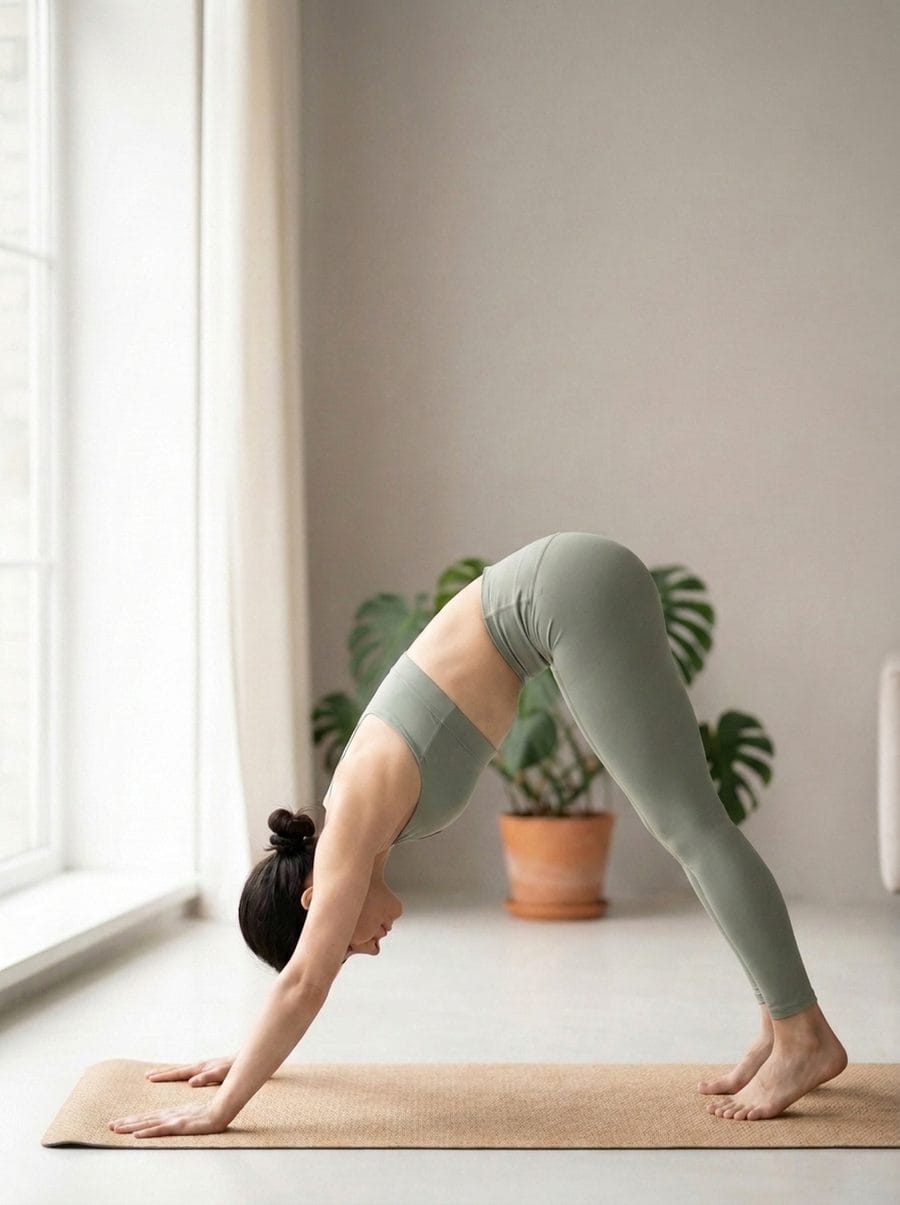
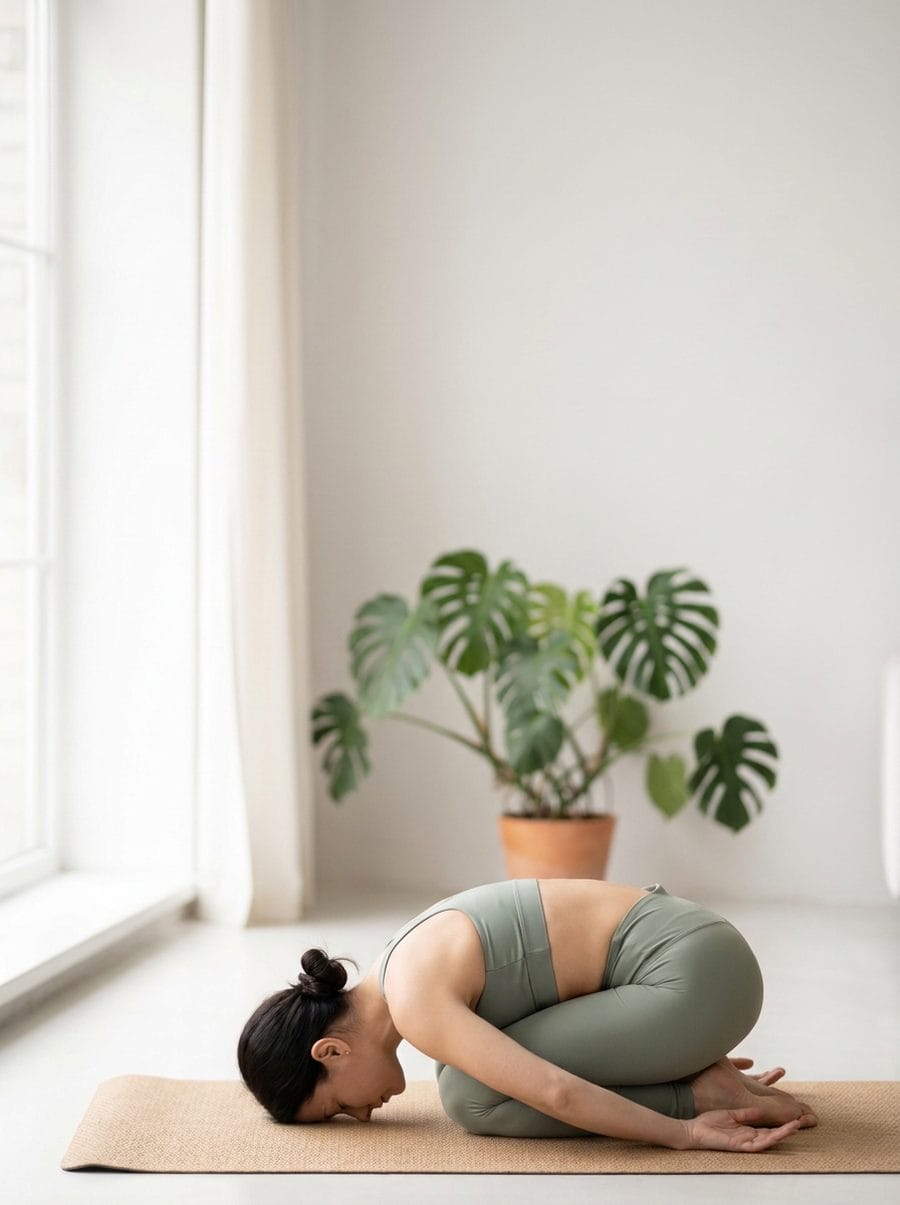
For a first try, the 10-Minute Morning routine works well: Sun Salutation, repeated three times, leads into seven beginner-friendly poses, from Mountain Pose to Relaxation Pose. Ten minutes is enough to wake up before hunger has a chance to distract you.
You'll find more options in our morning yoga guide.
The one pose you can do right after a meal
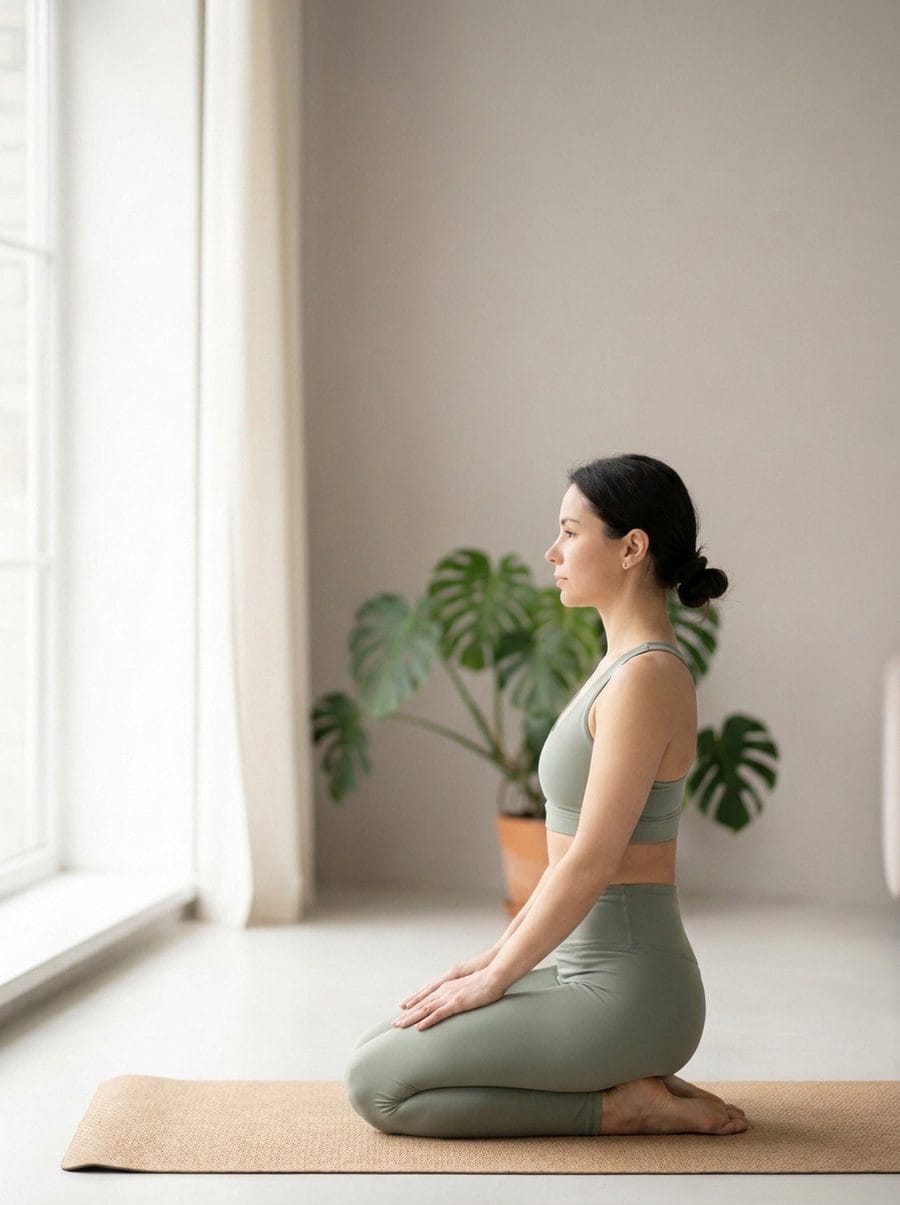
Thunderbolt Pose, or Vajrasana, is traditionally the only classic pose you can practice right after eating. You sit on your heels with a straight back and soft shoulders. The app describes it as a pose that helps digestion and gives the tops of your feet a gentle stretch.
Start with one minute, as the app suggests, and stay longer as long as your knees and feet are comfortable.
Thunderbolt Pose isn't for injured knees or ankles. After a meal, take an easy walk or sit tall on a chair instead.
On a full stomach, avoid inversions, deep forward folds and twists, backbends lying on your belly, ab work, and breathing techniques that pump the belly, such as Kapalabhati.
Yoga after work: timing your evening practice
Evenings are trickier: lunch was a while ago, and dinner is still ahead. Two approaches work. One: a light snack an hour before class and your usual dinner afterward. Two: dinner first, then a calm practice 90 minutes to 2 hours later.
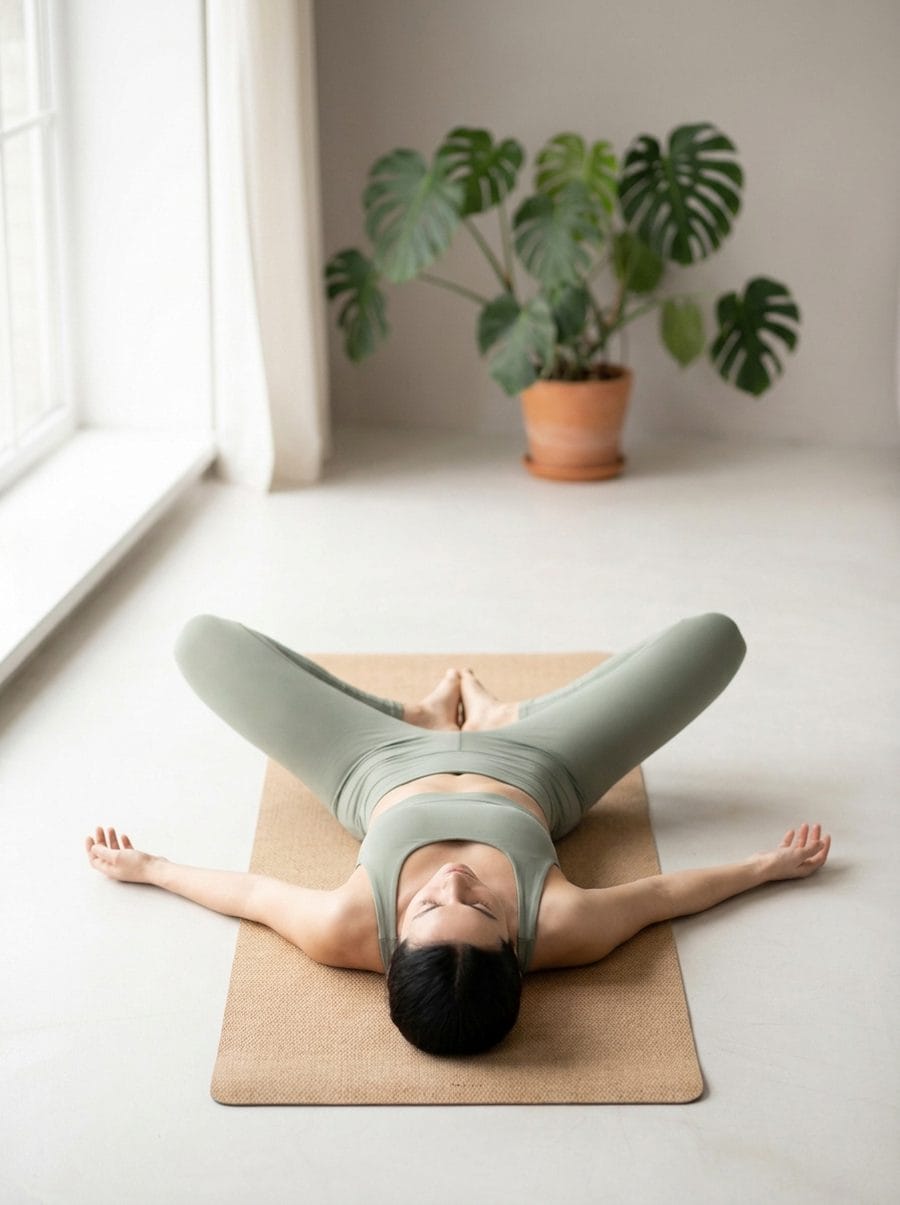
For the second approach, try Evening Unwind, a 15-minute routine: Cat-Cow, Child's Pose, seated folds, Reclining Butterfly Pose, Legs-Up-the-Wall Pose and a long final relaxation.
If dinner was more recent, keep only the poses on your back: Reclining Butterfly Pose and Relaxation Pose. Read more about evening practice in yoga for sleep.

What to eat after yoga
You don't have to eat the moment you roll up your mat. Give yourself 15 to 30 minutes and drink some water first. If you've been sweating, drink more than usual, which is also what the NHS advises.
There's no special post-yoga menu. After a morning session, have your usual breakfast. After an evening one, keep dinner light so you don't go to bed feeling stuffed. If you often do strength-focused routines, make sure you're getting enough protein. Our article on vegetarian protein for yoga covers plant sources.
Safety
If you feel dizzy, your vision dims, or you get weak or nauseous while practicing on an empty stomach, stop, sit or lie down, and eat something light. If it keeps happening, mention it to your doctor. If you have diabetes, a stomach condition, or you're pregnant, work out the timing of meals and practice with your doctor: the empty-stomach rule isn't for everyone.
With knee or ankle injuries, don't do Thunderbolt Pose. Standing Forward Fold is skipped while your blood pressure is high. With glaucoma or poorly controlled blood pressure, Legs-Up-the-Wall Pose stays off your mat, and it's also set aside during your period. The general rules are in Safety and Contraindications.
Pose cautions in this article
- Knee and ankle injuries (Thunderbolt Pose)
- High blood pressure (Standing Forward Fold)
- Lumbar disc herniation — bend your knees (Standing Forward Fold)
- Wrist and shoulder injuries (Downward-Facing Dog)
- High blood pressure — don't stay in the pose long (Downward-Facing Dog)
- Glaucoma (Downward-Facing Dog)
- Pregnancy — widen your knees (Child's Pose)
- Knee injuries (Child's Pose)
- Groin discomfort — place supports under your knees (Reclining Butterfly Pose)
This site is for general information and is not medical advice. If you have pain, an injury, a chronic condition, or are pregnant, check with a qualified professional before practicing.
Questions
Can you do yoga right after eating? Of the classic poses, only Thunderbolt Pose. For the rest of your practice, wait 2 to 3 hours after a full meal and 30 to 60 minutes after a snack.
Can I drink lemon water before yoga? Yes, if you like the taste. A glass of water, with or without lemon, 20 to 30 minutes before class won't get in the way. The NHS even suggests a slice of lemon or lime for people who don't enjoy plain water. If your stomach is sensitive, stick to plain water.
Should I do yoga before breakfast or after? Before breakfast is easier: your stomach is empty, and you can eat calmly afterward. If skipping breakfast makes you feel unwell, have something light and wait 30 to 60 minutes.
Can I drink water during yoga? A few sips between poses are fine. Gulping a lot of water mid-practice gets in the way just like food does.
Sources
- Best times for pranayama and cleansing techniques, Thunderbolt Pose after meals, pose cautions and routine contents: the Hatha Yoga app. More on the How We Prepare Our Content page.
- NHS. Water, drinks and hydration.
Read next
- Yoga for Arthritis and Osteoporosis: How to Protect Your Joints and Bones7 min read
- Ashtanga Yoga Explained: The Series, the Breath and the Difference from Hatha6 min read
- Ayurveda Explained Simply: The Basics and a Daily Routine (Dinacharya)5 min read
- Balance Exercises: 10 Yoga Poses for Balance and Stability7 min read