 Hatha Yoga
Breath of Fire in Kundalini Yoga: Technique, Cautions and Kapalabhati vs. Breath of Fire
Hatha Yoga editorial team · Updated · 7 min read

Breath of fire is a kundalini yoga technique built on quick, short exhales out through the nose, with your belly working like a pump and the inhale arriving on its own. This guide covers the steps, every caution, how it differs from kapalabhati and from the fast breathing of the Wim Hof method, and what is actually known about it.
The key point first: dizziness, pregnancy or high blood pressure mean calm, even breathing instead.
How to do breath of fire
1. Sit tall, for example in Easy Pose. If your knees complain, put support under your hips. Keep your shoulders and face relaxed. 2. Breathe through your nose. 3. Make quick, short exhales. With each one, your belly draws in. 4.
Leave the inhale alone. As your belly releases, air enters by itself. 5. Keep your own rhythm. Start with one minute. Speed may come later or never, and either is fine. 6. Finish with a deep inhale and a long exhale, then breathe calmly.
Common mistakes include lifting your shoulders, tensing your face, rocking your torso and chasing speed. If you lose the rhythm, pause, breathe calmly a few times and begin again.
Breath of fire cautions
The app gives one rule: breathe calmly and evenly whenever you feel dizzy, while pregnant, or with raised blood pressure. Don't soften it. The app's write-up of the style adds heart disease to that list.
- Dizziness. If it shows up during the technique, return to calm breathing right away and don't speed up again that day.
- Pregnancy. Breathe evenly and calmly instead.
- High blood pressure. The same applies.
- Heart disease. The same applies.
- Abdominal hernias, menstruation, recent abdominal surgery. The app lists these for kapalabhati. Breath of fire has no such entry in the data, yet the belly does similar work, so we'd breathe calmly here too.
- Where not to do it. Only sitting on the floor. Never in water, while driving or standing up: dizziness is dangerous in those settings.
The US center NCCIH tells newcomers to stay away from forceful breathing, so you can spend your first sessions on deep, even breaths. That doesn't make the sequence wrong. If you have epilepsy, panic attacks, a mental health condition or lung disease, ask your doctor first. Read more in Is Kundalini Yoga Safe?.
Kapalabhati vs. breath of fire
The line between them is thin. In the app, both use a short belly-driven exhale and a passive inhale, and scientific papers often blur the names by calling kapalabhati "breath of fire." Here's what differs according to the app, where kapalabhati has its own page: Skull Shining Breath.
- Origin. Formally, kapalabhati counts as a shatkarma, one of the cleansing techniques. Breath of fire comes from kundalini yoga.
- Exhale. In kapalabhati it's sharp and forceful. In breath of fire it's just quick and short.
- Pace. Kapalabhati follows a metronome at about one exhale per second. Breath of fire follows your own rhythm.
- Format. Kapalabhati runs 3 rounds of 30 exhales with rest between them. Breath of fire is one continuous stretch inside a sequence.
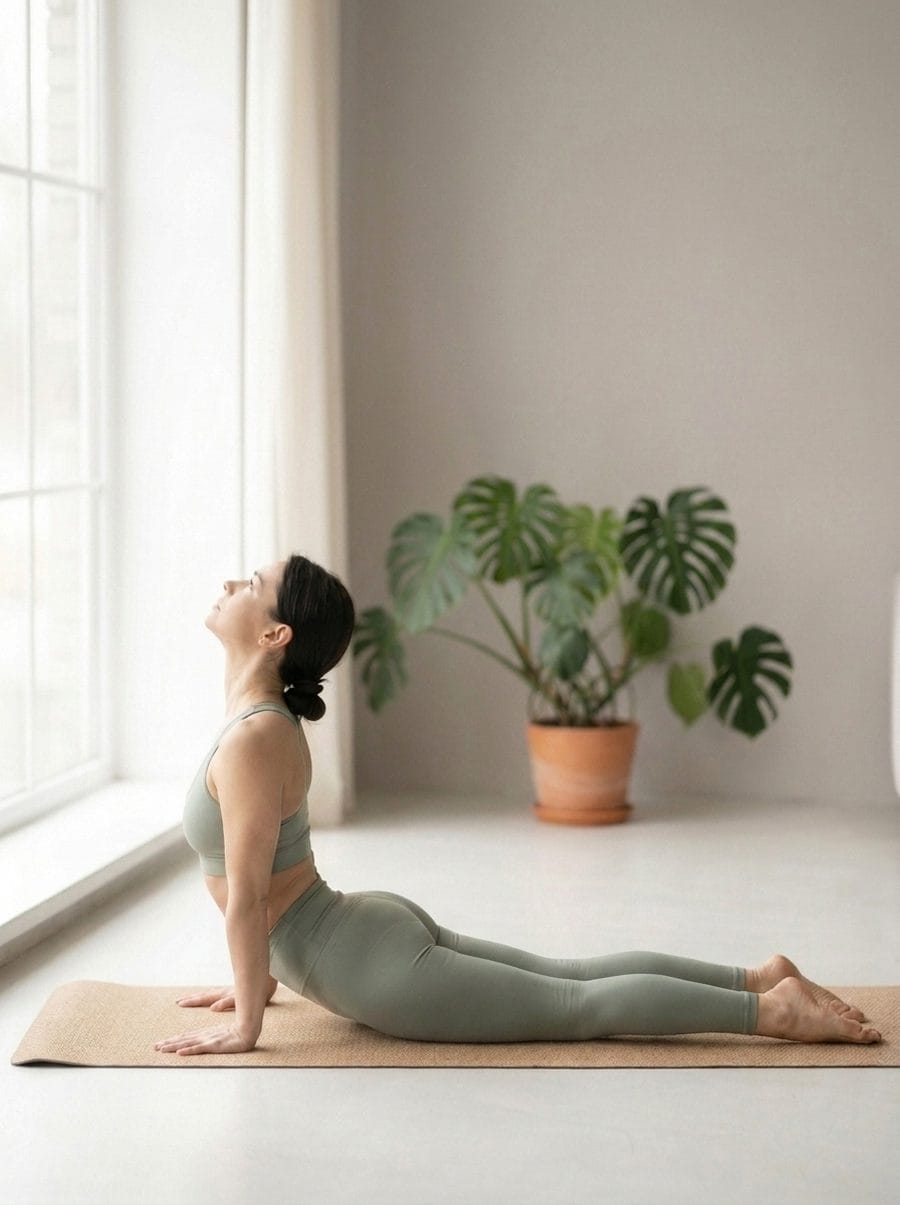
- Position. Kapalabhati is done sitting with palms on your knees. Breath of fire can also happen with arms raised, in a fold over one leg or in Cobra.
- Level. Kapalabhati is intermediate. Breath of fire appears in sequences at all three levels.
- Limits. For kapalabhati: hypertension, pregnancy, abdominal hernias, menstruation, heart disease and recent abdominal surgery.
You'll see breath of fire described differently in many other sources, with the inhale and exhale equal in strength and length, and that's often named as the main difference. We follow the app's description. If your teacher instructs it another way, that isn't a mistake, just a different approach. Just don't mix it with the cues in a sequence.
Breath of fire vs. Wim Hof breathing
- Depth. The Wim Hof method uses a series of deep, rapid inhales. Breath of fire uses short movements of the belly.
- Holds. In Hof's method a long hold on empty lungs follows each series. Breath of fire has no long hold: a deep inhale, a long exhale, then calm breathing.
- Design. The Hof method deliberately provokes a stress response with a surge of adrenaline. In a sequence, breath of fire sits between movement and motionless stillness.
- What they share. Both can make you dizzy, and neither is for the pool or the car.
What research shows
We found no PubMed papers on breath of fire as a kundalini yoga technique. There are data on kapalabhati and on breathing practices generally, and not many.
- Pulse and pressure. In a 1991 study, 17 experienced practitioners did kapalabhati at about two breaths per second. Their pulse climbed 9 beats per minute, with systolic pressure up 15 mmHg and diastolic up 6. The sample is tiny, but it shows where caution around hypertension comes from.
- A rare complication. In 2004, doctors reported a spontaneous collapsed lung in a healthy woman of 29 following this technique. It's a single case, and the authors note no other such report existed at the time.
- Breathwork in general. A 2023 meta-analysis found a small-to-medium effect on stress, anxiety and depressive symptoms, but the authors themselves warn against inflated expectations. It doesn't look at breath of fire separately.
Bottom line: many people describe feeling more awake, but we can't point to proven benefits from this particular technique.
How to try breath of fire in the app
Twelve of the 22 kundalini yoga sequences use it, and the rest don't. The easiest starting points are those where you simply sit, with no raised arms: Kundalini in 10 Minutes and Kundalini: Stillness. Each has one stretch. Later you'll meet harder positions: Arms in a V, Head-to-Knee Pose, Cobra Pose.
Those have limits of their own. Cobra, for example, is skipped with lumbar hernias and during pregnancy, and arms in a V with a shoulder injury. The classic set Kriya for Elevation has three such stretches, as explained in Kundalini Kriya: What It Is.
Other movements of the style are in Kundalini Yoga Poses and Exercises, and our overview explains the style itself.



Pose cautions in this article
- Knee discomfort — sit on a prop (Easy Pose)
- High blood pressure and pregnancy — breathe calmly, without breath of fire (Arms in a V)
- Shoulder injuries (Arms in a V)
- Knee injuries — place a support under your bent knee (Head-to-Knee Pose)
- Lumbar disc herniation (Cobra Pose)
- Pregnancy (Cobra Pose)
- Flare-up of peptic ulcer disease (Cobra Pose)
This site is for general information and is not medical advice. If you have pain, an injury, a chronic condition, or are pregnant, check with a qualified professional before practicing.
Questions
What are the benefits of breath of fire? Many people feel more alert, and it's wise to stop your expectations there. We found no studies of this exact technique, and promises to "burn fat" or "detox your body" have nothing behind them.
Can I do breath of fire before bed? Better not, since fast breathing tends to wake you up. In the evening, a slow technique such as Bee Breath is a better fit.
Does breath of fire help with anxiety? There are no data on that. Fast breathing can itself bring on sensations that feel like anxiety, so at those moments it's better to breathe slowly and calmly.
Can I do breath of fire on my period? Menstruation appears among the app's limits for kapalabhati but not separately for breath of fire. The mechanics are similar, so we suggest calm breathing on those days.
Sources
- Stancák A, et al. Kapalabhati--yogic cleansing exercise. I. Cardiovascular and respiratory changes. Homeostasis in Health and Disease, 1991.
- Johnson DB, et al. Kapalabhati pranayama: breath of fire or cause of pneumothorax? A case report. Chest, 2004.
- Chetry D, et al. A Comparison of Practice Guidelines for Yoga Breathing from the Traditional Texts and PubMed-Indexed Research. International Journal of Yoga Therapy, 2022.
- Kox M, et al. Voluntary activation of the sympathetic nervous system and attenuation of the innate immune response in humans. PNAS, 2014.
- Fincham GW, et al. Effect of breathwork on stress and mental health: A meta-analysis of randomised-controlled trials. Scientific Reports, 2023.
- NCCIH. Yoga: Effectiveness and Safety.
- Breath of fire technique and cautions, kapalabhati rhythm and contraindications, sequence contents: the Hatha Yoga app. More on the How We Prepare Our Content page.
Read next
- Yoga for Arthritis and Osteoporosis: How to Protect Your Joints and Bones7 min read
- Ashtanga Yoga Explained: The Series, the Breath and the Difference from Hatha6 min read
- Ayurveda Explained Simply: The Basics and a Daily Routine (Dinacharya)5 min read
- Balance Exercises: 10 Yoga Poses for Balance and Stability7 min read