 Hatha Yoga
Kundalini Yoga Explained: Practice, Breathwork and How It Differs from Hatha
Hatha Yoga editorial team · Updated · 7 min read

You can spot kundalini yoga by its fast breathing, its repeated movements and its quiet sitting with closed eyes. Pose photos hide how far it is from a typical hatha class. Here is the plain version: what the word kundalini means, how a session is built, what a kriya and breath of fire are, what research has actually found, and what you can try at home.
What does kundalini mean?
The Sanskrit word is usually translated as "coiled." In Indian tradition it names an energy said to lie dormant at the base of the spine, like a sleeping snake. Practices in this system are described as waking that energy and drawing it up the spine through the chakras to the crown of the head.
Take that as an image from the tradition, not a medical fact. You don't have to believe in it to practice. You can simply move, breathe and notice what you feel.
The idea doesn't belong to one style either. Classical hatha yoga mentions kundalini too: the Hatha Yoga Pradipika ties its awakening to pranayama, bandhas and mudras. Modern kundalini yoga moved that idea to the center and built its own sets around it.
How a kundalini yoga session works
The basic unit of the style is the kriya: a fixed sequence of repeated movement, breathwork, a short hold, sometimes a mantra, and rest. We go deeper in Kundalini Kriya: What It Is.
A sequence in the app usually runs like this:
- Quiet start. You sit with your eyes closed and watch your breath.
- Warm-up. Neck, shoulders, pelvis and simple spine waves.
- Movement on the breath. One simple action repeats for a minute or two in time with each inhale and exhale.
- Breath of fire. Not always there: you'll find it in 12 of the 22 sequences.
- Stillness. You sit motionless again and notice what's going on in your body.
- Lying rest. The session ends in Relaxation Pose.
Group classes often add chanting. The app has a single mantra, Sat Nam, and you repeat it only in the exercise called Sat Kriya.
The movements themselves can look unusual if you only know hatha. Three typical examples:
- Seated Spine Wave: you press your pelvis and chest forward while inhaling, and your spine rounds on the exhale.
- Frog Flow: starting low on your toes, your hips rise and your legs extend as you inhale, then you sink back down as you exhale.
- Arms in a V: straight arms lifted up and out, eyes closed, attention on the point between your eyebrows.
Breath of fire
This is the technique most people associate with the style. You exhale quickly and briefly through your nose while the belly pumps, and the inhale arrives on its own. From the outside it looks a lot like kapalabhati from hatha yoga. For the differences and a step-by-step guide, see Breath of Fire.
If you get lightheaded, or you're pregnant, hypertensive or living with heart disease, use calm, even breathing instead. Most of a session runs on deep, even breathing anyway, and Full Yogic Breath is a good foundation for it.
Kundalini yoga vs. hatha yoga
- Rhythm. In hatha you settle into a pose and hold it while refining your alignment. Here one easy movement comes back again and again with the breath.
- Form. Hatha cares about the precise position of the body. In kundalini, a steady rhythm and your attention come ahead of how deep you go.
- Breath. Hatha draws on many pranayamas. Here the breath is tied to every repetition, and one fast technique stands out.
- Stillness. Alternating movement with motionless sitting is the backbone of the session, not an add-on.
- Order. Classic sets come with their sequence and timing decided in advance.
- Purpose. Hatha uses body and breath as support for meditation. Kundalini speaks openly about the spiritual side of practice.
For more on hatha, read What Is Hatha Yoga. All the main styles are compared in Types of Yoga. A short primer on the style sits in our basics section: how a kundalini session works.
Kundalini yoga benefits: what the research shows
There aren't many studies, and an instructor usually led the classes, so be careful about applying the results to practice at home.
- Anxiety. In the largest trial (2021), 226 adults with generalized anxiety disorder spent 12 weeks in kundalini yoga, cognitive behavioral therapy or a stress education class. Independent raters saw improvement in 54% of the yoga group, 33% of the education group and 71% of the therapy group. The authors concluded that yoga beat the class, while therapy remains the first choice.
- Memory in older adults. A 2017 trial assigned 81 people aged 55 and up with mild cognitive impairment to yoga or memory training. Memory improved in both groups, executive function only with yoga. The authors ask for confirmation in further trials.
- The big picture. A 2026 review of 15 randomized trials calls the results encouraging and also calls for larger studies with active comparison groups.
None of this supports claims that the style will "reset your hormones" or change your life. For anxiety and other conditions, see a doctor or therapist: yoga doesn't stand in for them.
What you can try
Kundalini is now in the app: 22 sequences from 10 to 55 minutes and 17 movements, all with voice guidance and a timer. Eleven sequences are beginner level, 8 intermediate and 3 advanced. Ten have no breath of fire at all.
You'll find them on the kundalini yoga page, and every movement has a photo and technique notes in the movement catalog.

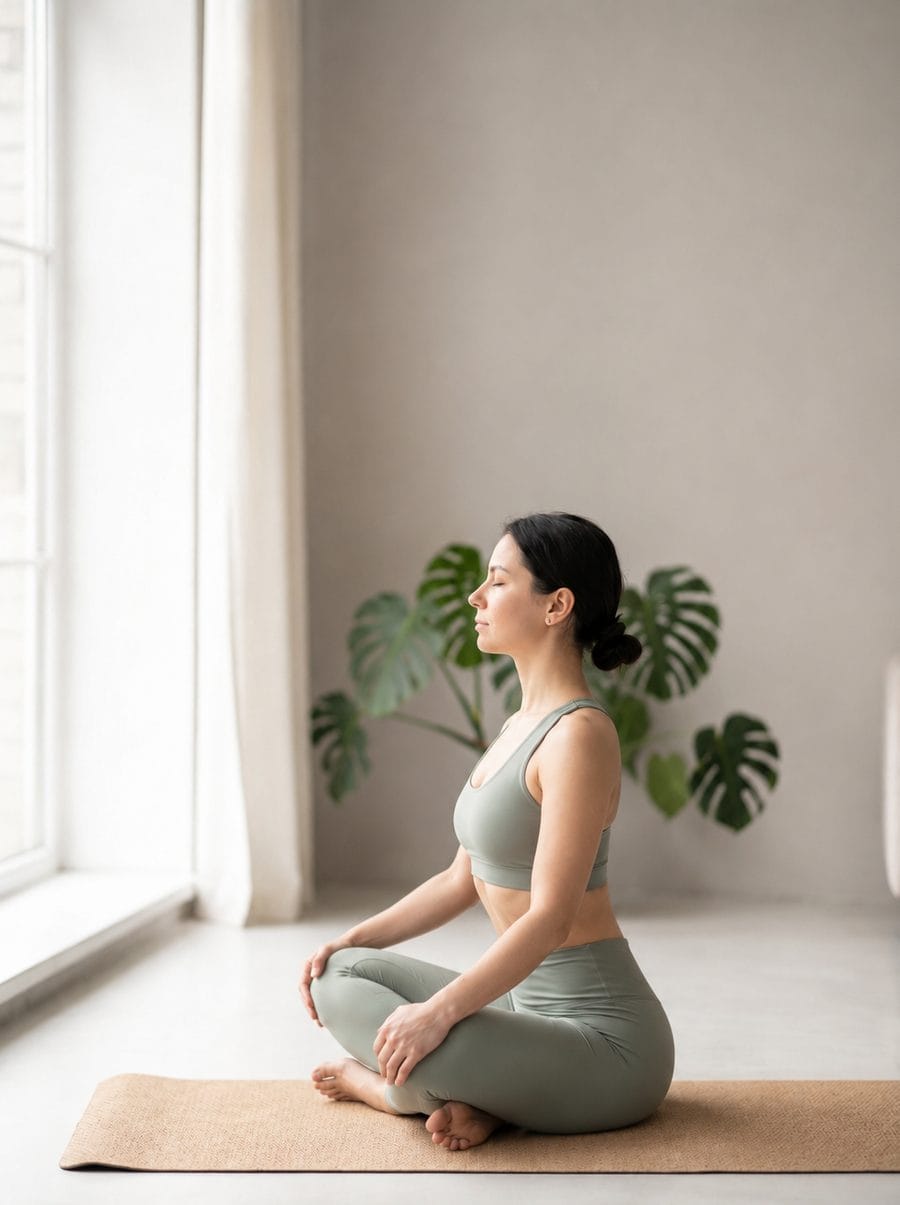
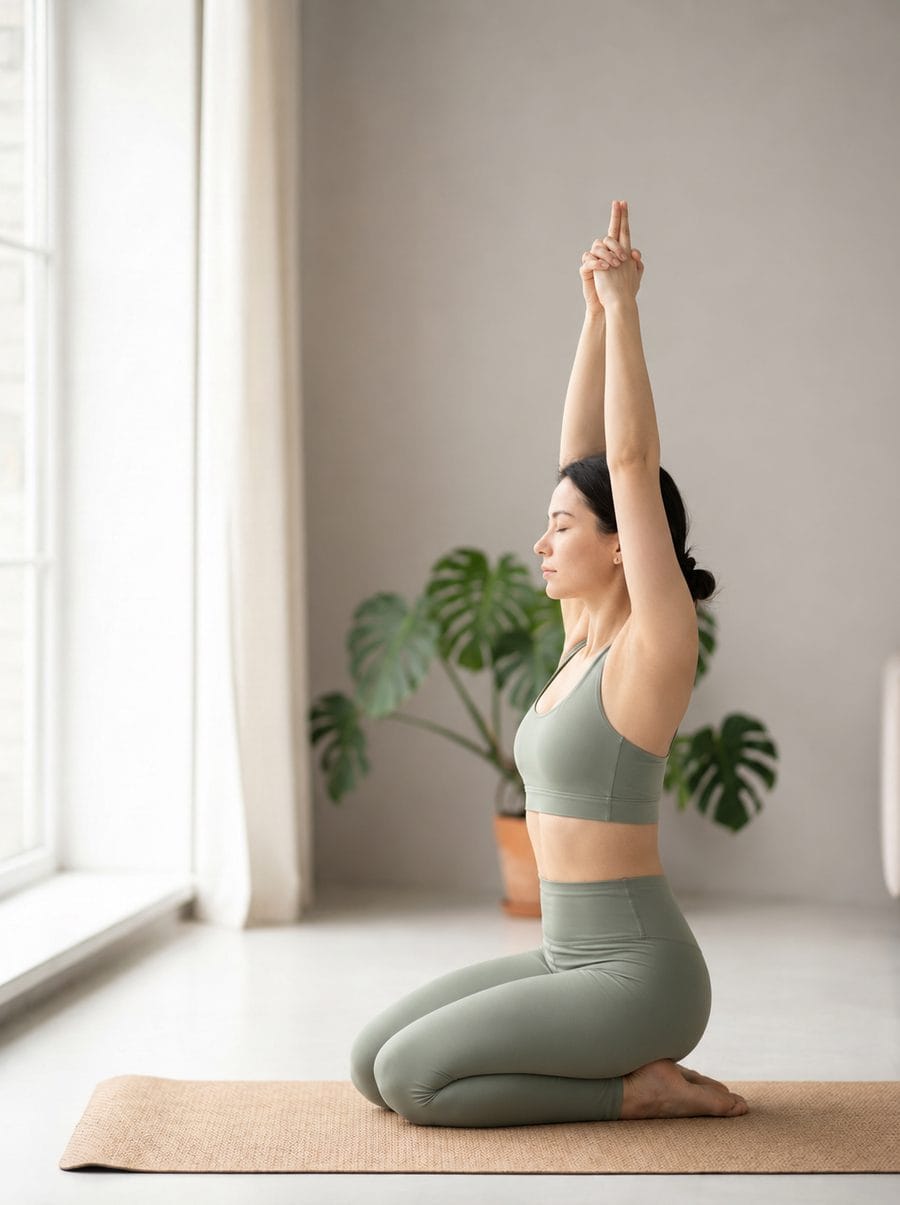


The easiest place to start is Kundalini: First Steps: 15 minutes, beginner level. It opens with quiet sitting, then moves through neck, shoulders, a spine wave and hip circles, one stretch of breath of fire with your arms in a V, a seated fold, more stillness and rest on your back.
In your first sessions, you can swap breath of fire for deep, even breathing.
Short on time? Try Kundalini in 10 Minutes. To see which exercises suit a first session and which can wait, read Kundalini Yoga Poses and Exercises for Beginners.
Safety
Fast breathing and long repetitions don't suit everyone. The essentials:
- Breath of fire. The cautions above aren't optional.
- Sat Kriya. Not practiced during pregnancy.
- Frog Flow. Knee or ankle injuries mean skipping it.
- Arms in a V. Leave it out with a shoulder injury.
What's known about the risks, who should see a doctor first and how to handle dizziness or anxiety are all covered in Is Kundalini Yoga Safe?. General rules are in Safety and Contraindications.
Pose cautions in this article
- Knee discomfort — sit on a prop (Easy Pose)
- Acute lower back pain — reduce the range of motion (Seated Spine Wave)
- High blood pressure and pregnancy — breathe calmly, without breath of fire (Arms in a V)
- Shoulder injuries (Arms in a V)
- Pregnancy — skip this pose (Sat Kriya)
- Knee injuries — sit on a block (Sat Kriya)
- High blood pressure — contract your belly more gently (Sat Kriya)
- Knee and ankle injuries (Frog Flow)
- High blood pressure — don't lower your head too far (Frog Flow)
This site is for general information and is not medical advice. If you have pain, an injury, a chronic condition, or are pregnant, check with a qualified professional before practicing.
Questions
What is kundalini yoga in simple terms? A practice built from movements repeated in time with the breath, breath of fire and quiet sitting. The tradition connects it with energy said to rest at the bottom of the spine, though you needn't believe that to practice.
How is kundalini yoga different from hatha yoga? Hatha centers on settling into a pose and refining it. Kundalini is about rhythm: a movement repeats with the breath, and motionless stillness follows.
Is kundalini yoga dangerous? Severe problems rarely turn up in the literature, though quality research is thin and rapid breathing doesn't suit everyone. The details are in our article on the risks.
Can beginners do kundalini yoga at home? Yes, if you start with short beginner sequences and breathe evenly in place of breath of fire at first. If you can, have a teacher check your breathing technique.
Sources
- Simon NM, et al. Efficacy of Yoga vs Cognitive Behavioral Therapy vs Stress Education for the Treatment of Generalized Anxiety Disorder: A Randomized Clinical Trial. JAMA Psychiatry, 2021.
- Eyre HA, et al. A randomized controlled trial of Kundalini yoga in mild cognitive impairment. International Psychogeriatrics, 2017.
- Roy S, et al. Evidence-Based Clinical Effectiveness of Kundalini Yoga: Systematic Review of RCTs Across Multiple Health Conditions. Alternative Therapies in Health and Medicine, 2026.
- Technique and cautions, sequence contents and the description of the style: the Hatha Yoga app. More on the How We Prepare Our Content page.
Read next
- Yoga for Arthritis and Osteoporosis: How to Protect Your Joints and Bones7 min read
- Ashtanga Yoga Explained: The Series, the Breath and the Difference from Hatha6 min read
- Ayurveda Explained Simply: The Basics and a Daily Routine (Dinacharya)5 min read
- Balance Exercises: 10 Yoga Poses for Balance and Stability7 min read