 Hatha Yoga
Yoga for Anxiety and Stress Relief: Poses, Breathing and an Evening Routine
Hatha Yoga editorial team · Updated · 6 min read
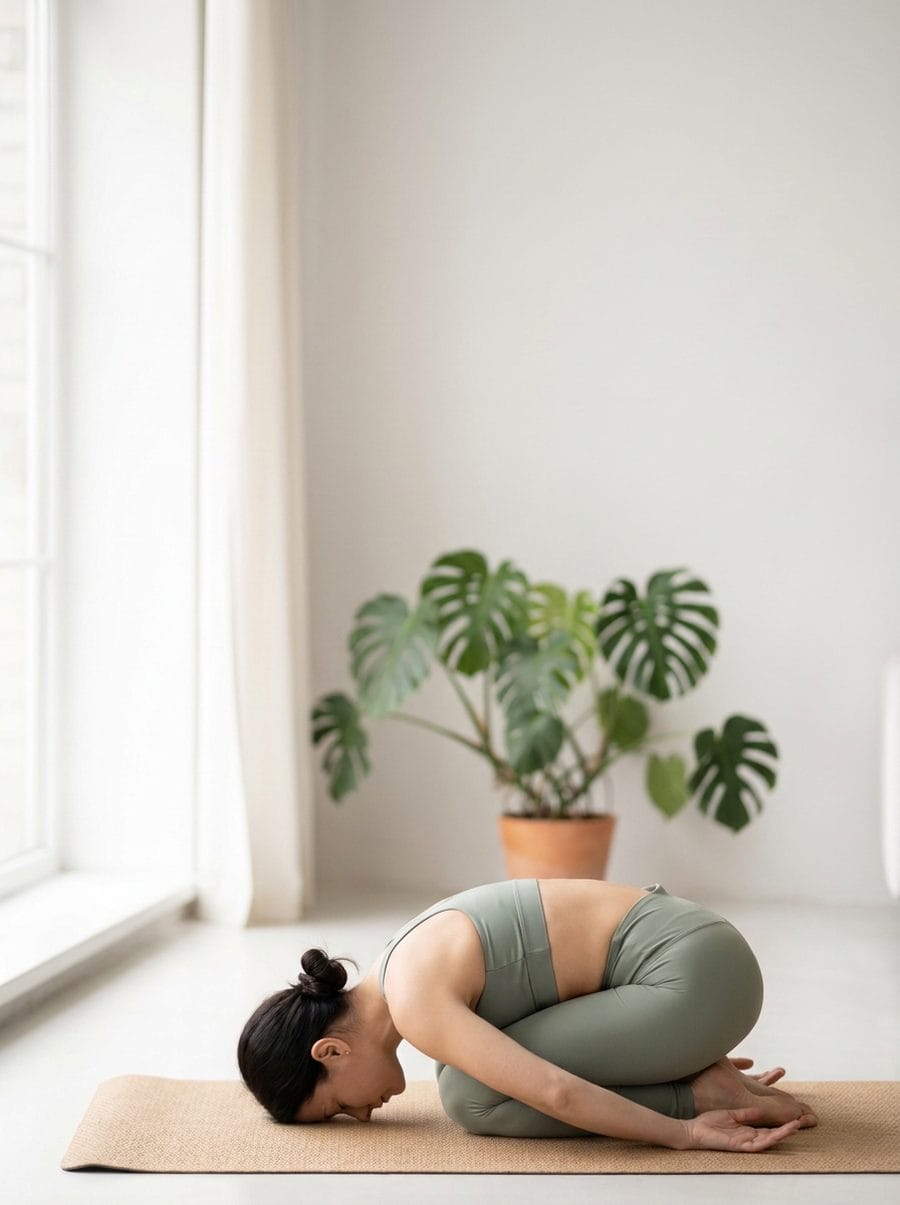
Slow poses and calm breathing help many people cope with everyday stress. First, though: If your anxiety is intense, gets in the way of work or sleep, comes as panic attacks, or if low mood has lasted for weeks, start with a doctor or therapist.
Yoga can add to their support but can't replace it. Below: what research shows, calming breathwork, 6 poses, a 15-minute evening routine and a short meditation.
Is yoga good for anxiety and stress?
Stress is a normal response to pressure; anxiety becomes a problem when it lingers without a clear reason and gets in the way of your life. Yoga has mostly been studied as a way to support yourself through ordinary stress and elevated anxiety.
A 2018 meta-analysis combined 8 randomized trials with 319 participants. In people with elevated anxiety, yoga had a small short-term effect compared with no intervention. In people with a formally diagnosed anxiety disorder, no clear effect was found. Yoga didn't increase injuries in these trials, though safety data were limited.
The takeaway: yoga can be a helpful habit, while an anxiety disorder calls for full professional care.
When to see a doctor right away
- Sudden bouts of intense fear with a racing heart, shortness of breath, chest pain or dizziness. These symptoms can also come from other conditions, so a doctor should check them the first time; chest pain is a reason to call emergency services.
- Worry or anxiety on most days that disrupts your work, studies or sleep.
- Sadness, emptiness or loss of interest in things you used to enjoy that has lasted for weeks.
- Thoughts of harming yourself. In that case, seek emergency help immediately.
Breathing for anxiety and stress
Your most accessible tool is slow breathing through the nose, with exhales no shorter than inhales. When anxiety is just starting to rise, begin with simple counting. Learn the techniques below at calm times so they kick in faster when you need them.
- Full Yogic Breath. Inhale over 4 counts, exhale over 6, letting the air reach belly, rib cage and chest one after another. A solid foundation.
- Bee Breath. A 4-count inhale, then an 8-count humming exhale. The app recommends it for moments when you need to calm down and shake off irritation. Not to be done while an ear is inflamed.
- Coherent Breathing. Five seconds in, five seconds out, exactly 6 breaths a minute.
- Box Breathing. Four phases of 4 counts each. Pregnancy and hypertension mean no holds. If the holds stir up unease, simply drop them.
Don't breathe too deeply or too fast: that can bring on dizziness and tingling, which an anxious mind easily reads as danger. More on technique in Breathing Exercises for Beginners.
For how slow breathing relates to the nervous system, see our article on the vagus nerve.
Calming yoga poses for anxiety
These poses share one thing: they turn your attention inward and give your body support. Forward folds with the forehead resting on something and passive reclining poses invite calm. Hold each for 1 to 2 minutes and breathe slowly.
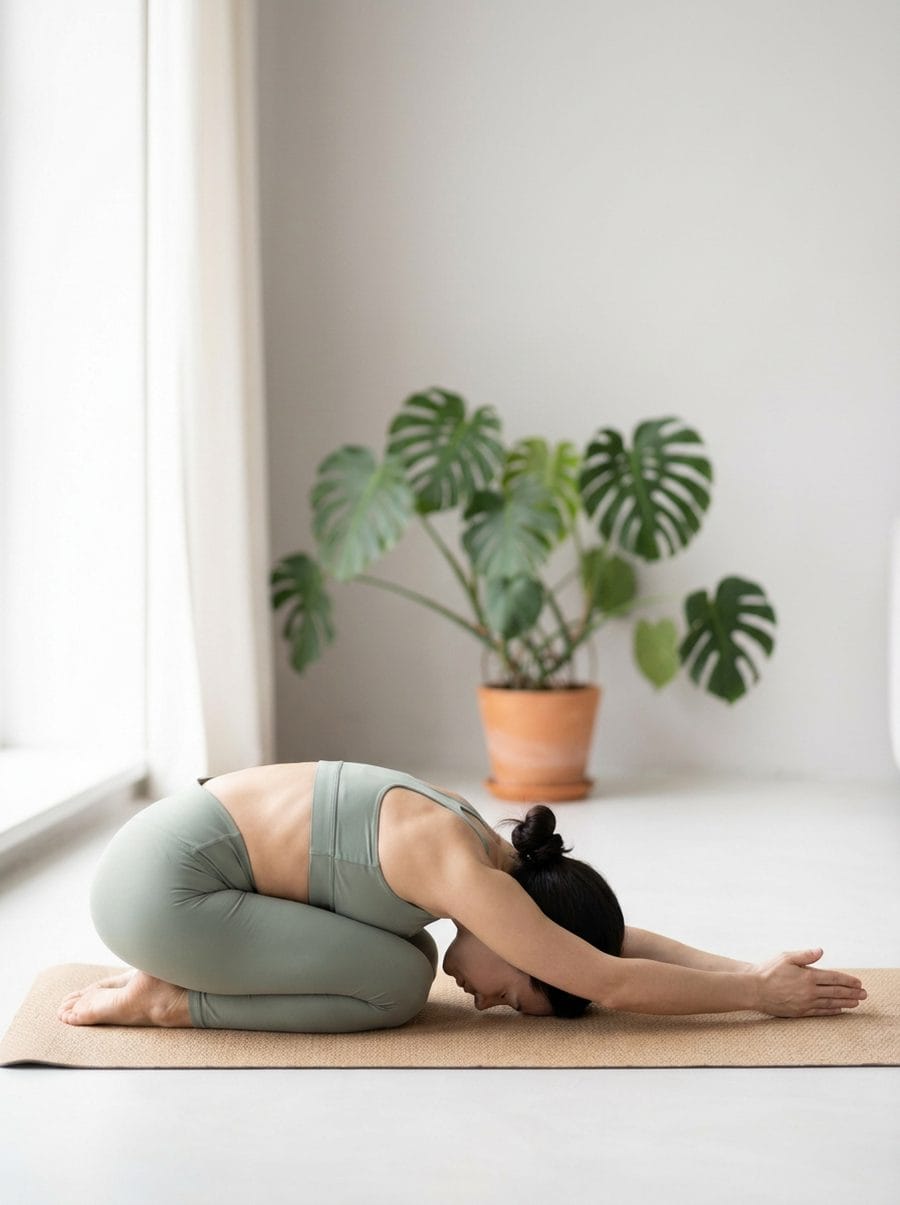
- Child's Pose and Hare Pose: forehead on the floor, back rounded, breath moving into the back.
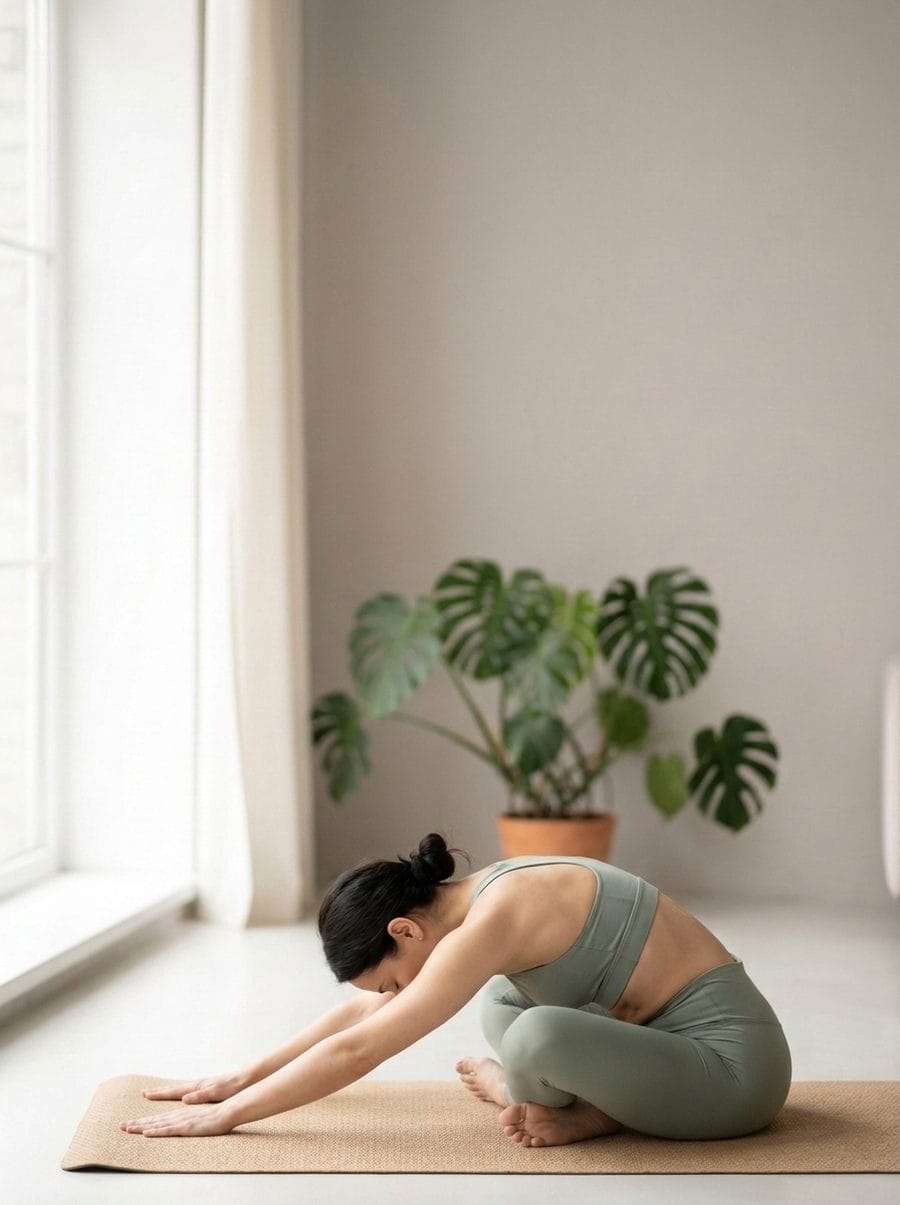
- Cross-Legged Forward Fold: a gentle seated fold; you can rest your forehead on a pillow or a block.
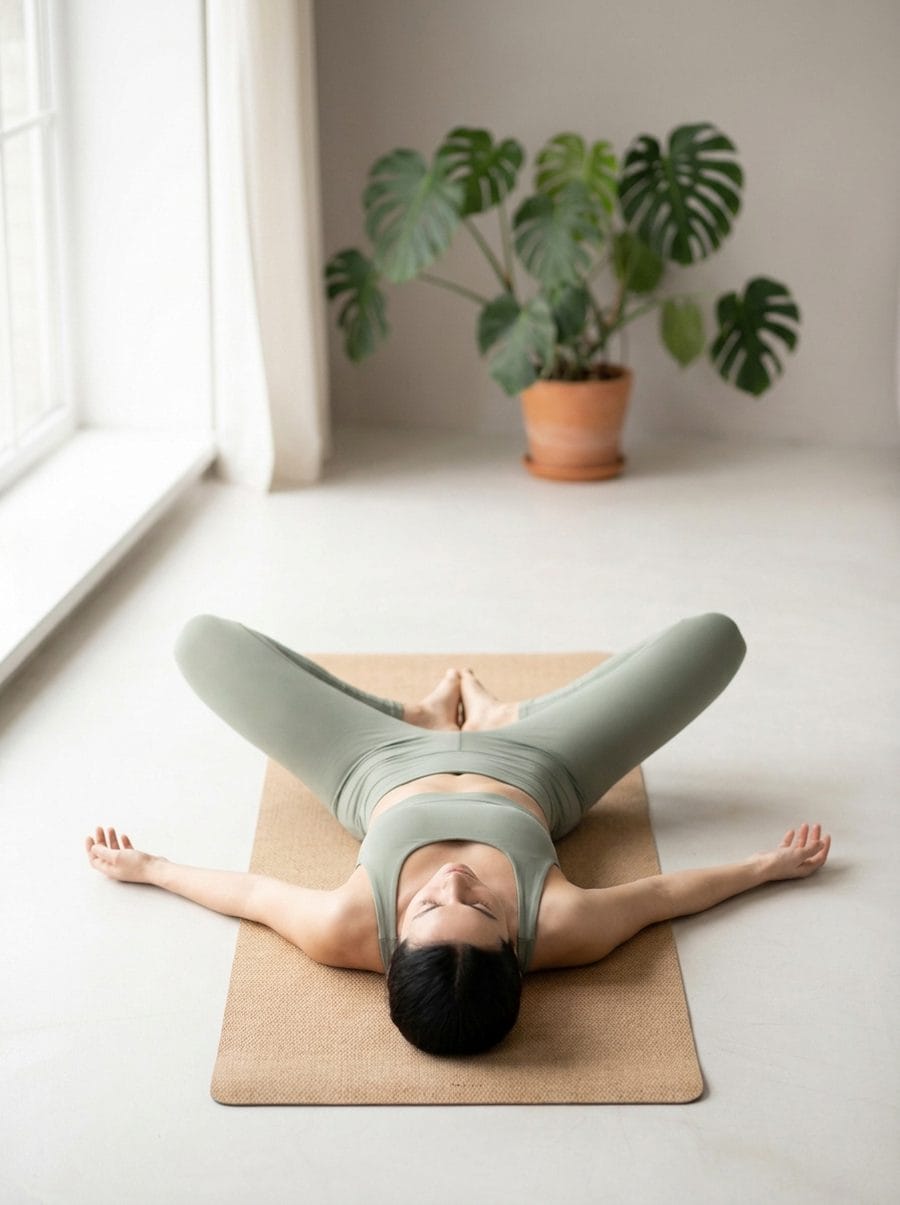
- Reclining Butterfly Pose: your hips open with no muscular effort. If your groin feels uncomfortable, support your knees with props.
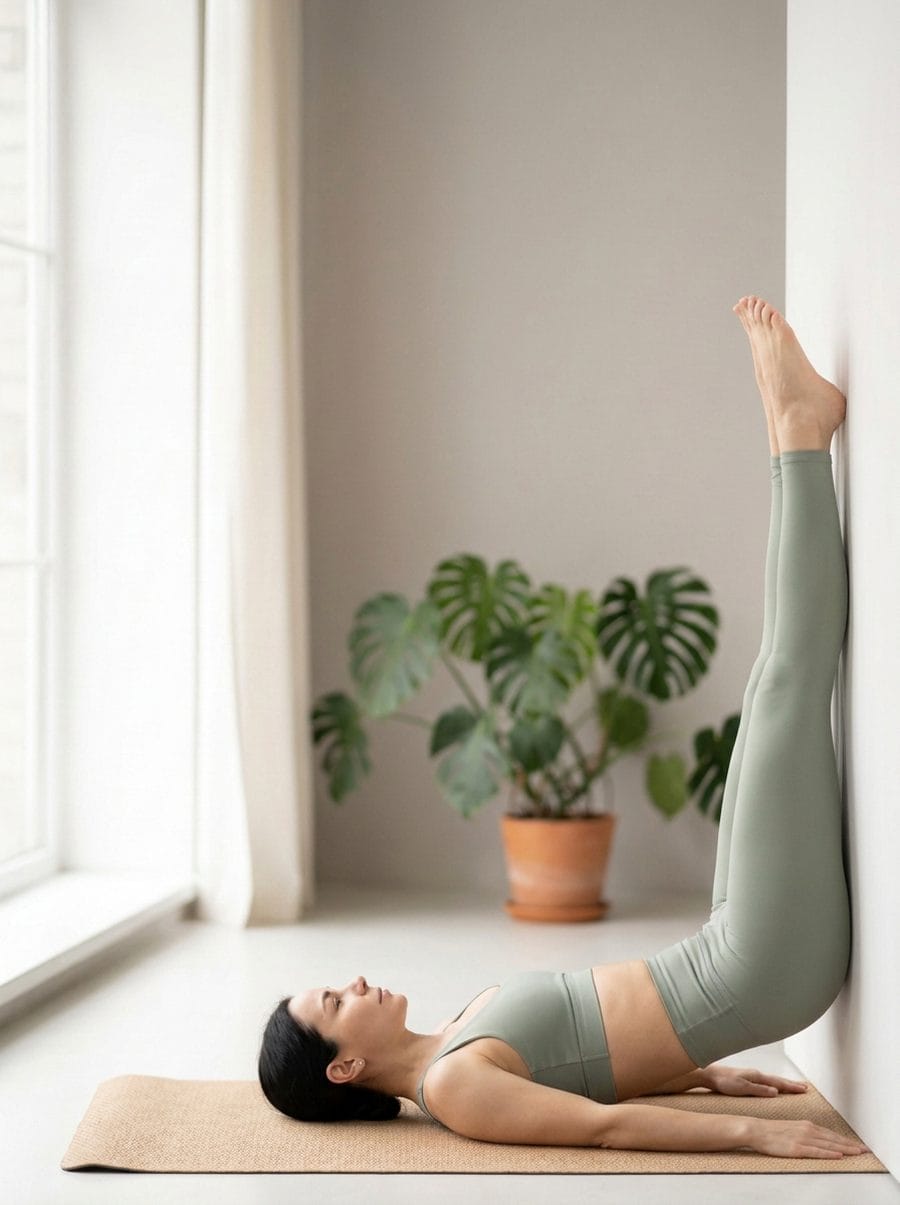
- Legs-Up-the-Wall Pose: legs resting on the wall, hips down on the floor or raised on a pillow.
- Relaxation Pose: the finale of any practice, 3 to 5 minutes.

A 15-minute evening yoga routine for stress
If you'd like a ready-made sequence, try Evening Unwind from the app. Beginner level, 8 poses, 15 minutes in total. It opens with Cat-Cow and Child's Pose to ease the stiffness of the day, followed by Head-to-Knee Pose and Butterfly Pose.
The second half happens lying down: Reclining Butterfly Pose, Legs-Up-the-Wall Pose and Supine Twist. The closing savasana takes up more than four minutes. Do it about an hour before bed, and from there you can move on to sleep meditation.
Meditation for anxiety
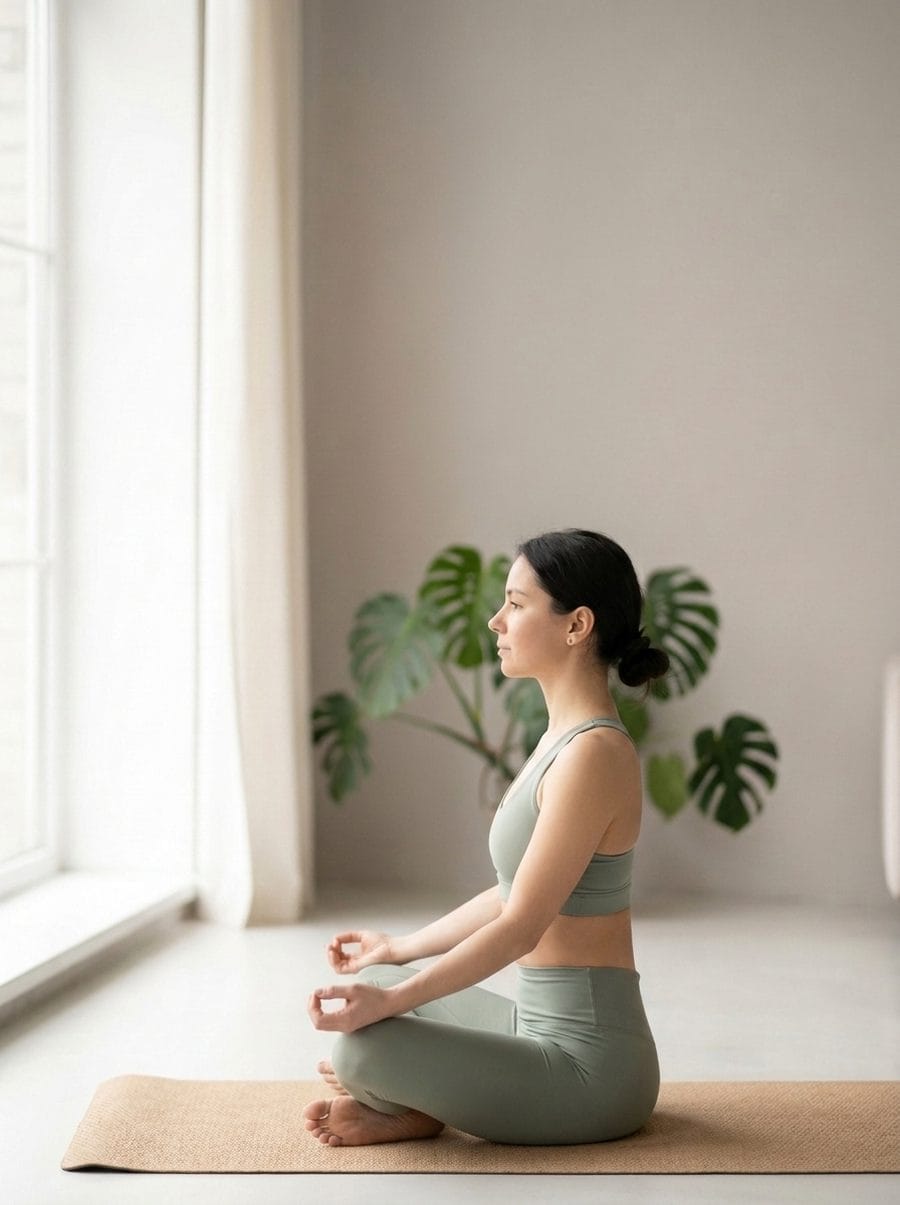
A short meditation helps you stop running from anxiety and instead notice it and let it pass. Try this 5-minute outline. Get comfortable on a cushion in Easy Pose or on a chair, eyes open or half closed.
1. Silently name what you feel: "This is anxiety." 2. Find where it lives in your body: a tight chest, a lump in the throat, a clenched belly. 3. Place your palm on that spot and breathe slowly, lengthening the exhale. 4.
When your attention slides into "what if" scenarios, bring it back to your palm and your breath.
In a 2014 review, mindfulness meditation programs moderately reduced anxiety but did not outperform other approaches, psychotherapy included. If anxiety grows in the silence, open your eyes and switch to movement, such as slow walking. A step-by-step practice for newcomers is in Meditation for Beginners.
Yoga for focus
Stress often scatters attention. Balance poses pull it back together: in Tree Pose, the moment your mind wanders, you start to sway. Begin with 30 seconds per leg, your gaze on one fixed point. If you get dizzy spells, practice by a wall. Before a task that needs a clear head, try Box Breathing.
If you already have some experience, the 20-minute Balance & Focus program is a good fit: Mountain Pose, Tree Pose, Eagle Pose, Warrior III and other standing balances, closing with nearly five minutes of savasana. It's intermediate level, so beginners are better off getting steady in Tree Pose first.
Safety
Legs-Up-the-Wall Pose comes with three app warnings, and each one means skipping it: menstruation, glaucoma, and hypertension that is not under control. With a knee injury, Child's Pose and Hare Pose are off limits; during pregnancy, open your knees wider in both. If your knees complain in Cross-Legged Forward Fold, sit on a prop.
If anxiety rises during practice, or you feel unreal or short of breath, stop, open your eyes, put your feet flat on the floor and breathe normally. General rules are gathered in Safety and Contraindications.
Pose cautions in this article
- Pregnancy — widen your knees (Child's Pose, Hare Pose)
- Knee injuries (Child's Pose, Hare Pose)
- Knee discomfort — sit on a prop (Cross-Legged Forward Fold, Easy Pose)
- Groin discomfort — place supports under your knees (Reclining Butterfly Pose)
- Menstruation (Legs-Up-the-Wall Pose)
- Glaucoma (Legs-Up-the-Wall Pose)
- Uncontrolled hypertension (Legs-Up-the-Wall Pose)
- Dizziness — practice near a wall (Tree Pose)
This site is for general information and is not medical advice. If you have pain, an injury, a chronic condition, or are pregnant, check with a qualified professional before practicing.
Questions
Can yoga help with anxiety? In people with elevated anxiety, studies show a small short-term effect. With a diagnosed anxiety disorder, yoga can complement professional care, not stand in for it.
What is the best breathing technique for anxiety? Slow breathing where the exhale outlasts the inhale, for example 4 counts in and 6 out. In anxious moments, it's better to avoid breath holds.
Is yoga good for panic attacks? It can be, as an addition to work with a doctor or therapist. Choose calm poses and breathing without holds. If attacks keep coming back, see a professional first.
How much yoga do I need for stress relief? 10 to 15 minutes a day is enough, for example an evening routine before bed. Short, regular sessions do more than occasional long ones.
Sources
- Cramer H, et al. Yoga for anxiety: A systematic review and meta-analysis of randomized controlled trials. Depression and Anxiety, 2018.
- Goyal M, et al. Meditation programs for psychological stress and well-being: a systematic review and meta-analysis. JAMA Internal Medicine, 2014.
- NHS. Panic disorder.
- NHS. Depression in adults.
- Pose technique and cautions, pranayama rhythms, program contents: the Hatha Yoga app. How we verify our texts is explained on the How We Prepare Our Content page.
Read next
- Yoga for Arthritis and Osteoporosis: How to Protect Your Joints and Bones7 min read
- Ashtanga Yoga Explained: The Series, the Breath and the Difference from Hatha6 min read
- Ayurveda Explained Simply: The Basics and a Daily Routine (Dinacharya)5 min read
- Balance Exercises: 10 Yoga Poses for Balance and Stability7 min read