 Hatha Yoga
Vagus Nerve Exercises: Slow Breathing and Calming Yoga Practices
Hatha Yoga editorial team · Updated · 6 min read

Vagus nerve exercises are trending, often sold as a way to "reset" your nervous system in a couple of minutes. This article skips the hype and looks at what the nerve actually is, how slow breathing connects to it, what research reviews have really shown, and which tools from the Hatha Yoga app help you calm down.
There are no medical promises here: with an anxiety disorder or a heart or sleep problem, these practices add to a doctor's care rather than replace it.
What is the vagus nerve?
The vagus nerve is the tenth cranial nerve. It starts in the brainstem and travels down to the heart, lungs and digestive organs, which is where its name, Latin for "wandering," comes from. It's the main pathway of the parasympathetic nervous system, the branch in charge of rest, recovery and digestion. Its counterpart, the sympathetic system, drives the fight-or-flight response.
When people talk about "vagal tone," they usually mean how strongly the parasympathetic system influences the heart. You can't measure that directly at home. Researchers use an indirect marker instead: heart rate variability, or how much the time between heartbeats varies.
How breathing connects to the vagus nerve
Your heart speeds up slightly as you inhale and slows down as you exhale. Slow breathing makes these swings bigger. Three reviews sum up what's known today.
- A 2022 meta-analysis (Laborde et al.). 223 studies of voluntary slow breathing. Vagally mediated heart rate variability rose during the breathing session, right after a single session and after a multi-session program. The authors see slow breathing as a simple, low-cost technique with few expected side effects.
- A 2018 systematic review (Zaccaro et al.). 15 studies of healthy people breathing fewer than 10 times a minute. It describes higher heart rate variability, changes in brain activity and, in self-reports, more relaxation and alertness with less anxiety and anger.
- A 2018 theoretical model (Gerritsen, Band). Two Dutch psychologists proposed that much of the benefit of meditation and yoga comes from breathing that stimulates the vagus nerve. They stress themselves that it's a model: research on the underlying mechanisms is still scarce.
One telling detail: all the app's paced breathing techniques stay under 10 breaths a minute. Full Yogic Breath and Coherent Breathing come out at exactly 6, Bee Breath and Alternate Nostril Breathing at 5, and Box Breathing at fewer than 4.
Breathing exercises for the vagus nerve
The core principle from the app's theory section: an exhale longer than the inhale calms you down. Start there.
- Coherent Breathing. Inhale 5, exhale 5, no pauses, 5 minutes. The easiest way into a rhythm of six breaths a minute.
- Full Yogic Breath. Inhale 4, exhale 6, with each inhale rising from belly to chest. For more on the belly's role, see Diaphragmatic Breathing.
- Bee Breath. You breathe in for 4, then a quiet "mmm" sounds through an 8-count exhale. The long exhale and the sound keep your attention anchored.
- Ujjayi Breath. The 4/6 rhythm again, now accompanied by a soft rushing sound in the throat. It's easy to keep going inside poses too.
We don't cover popular tips like gargling or splashing ice water on your face "for the vagus nerve": they aren't in the app, and this article sticks to what the app's data and the reviews support.
Calming yoga poses for the nervous system
The poses below don't "stimulate the nerve" on their own. They simply create conditions in which your breathing slows without effort. The app describes Child's Pose and Hare Pose as calming the nervous system, and Legs-Up-the-Wall Pose as rest for the legs, heart and nervous system.
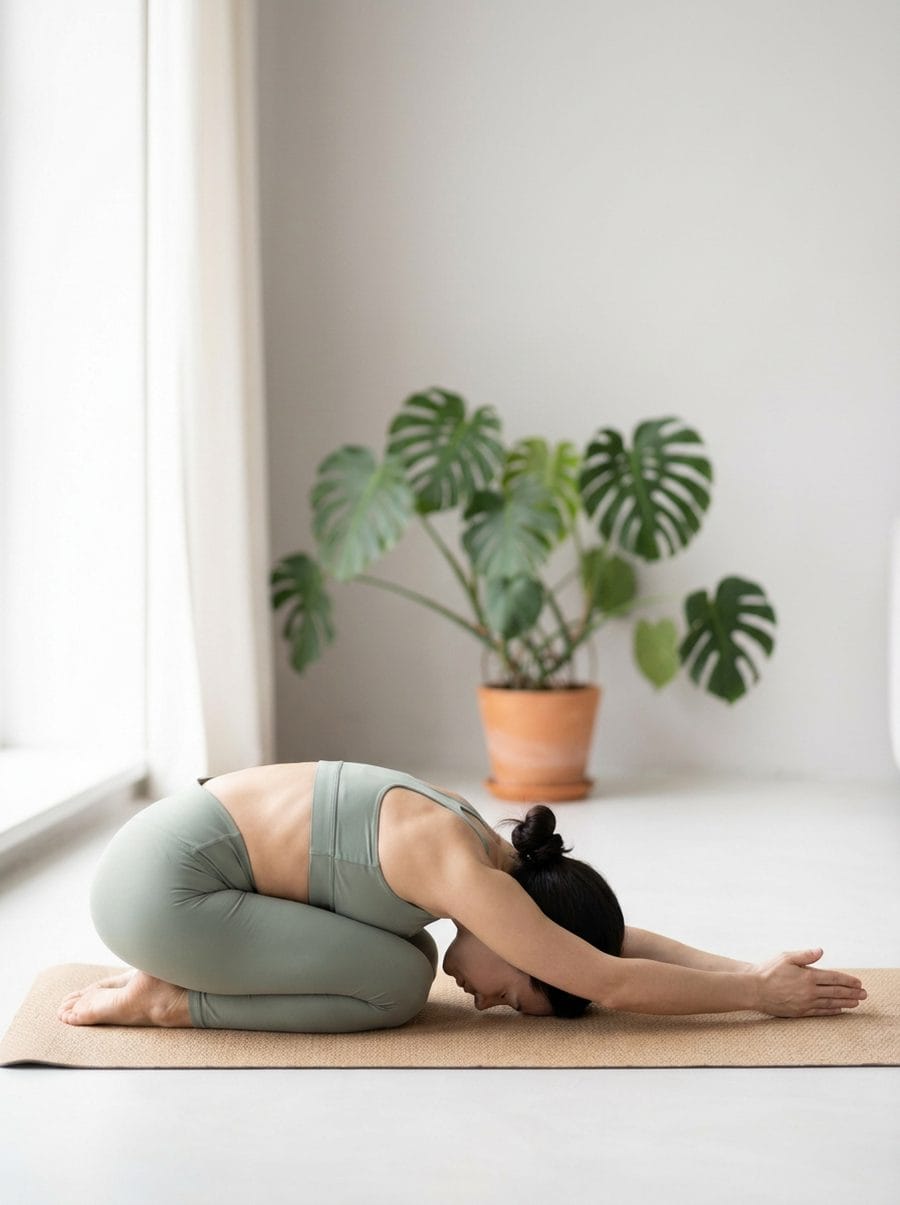
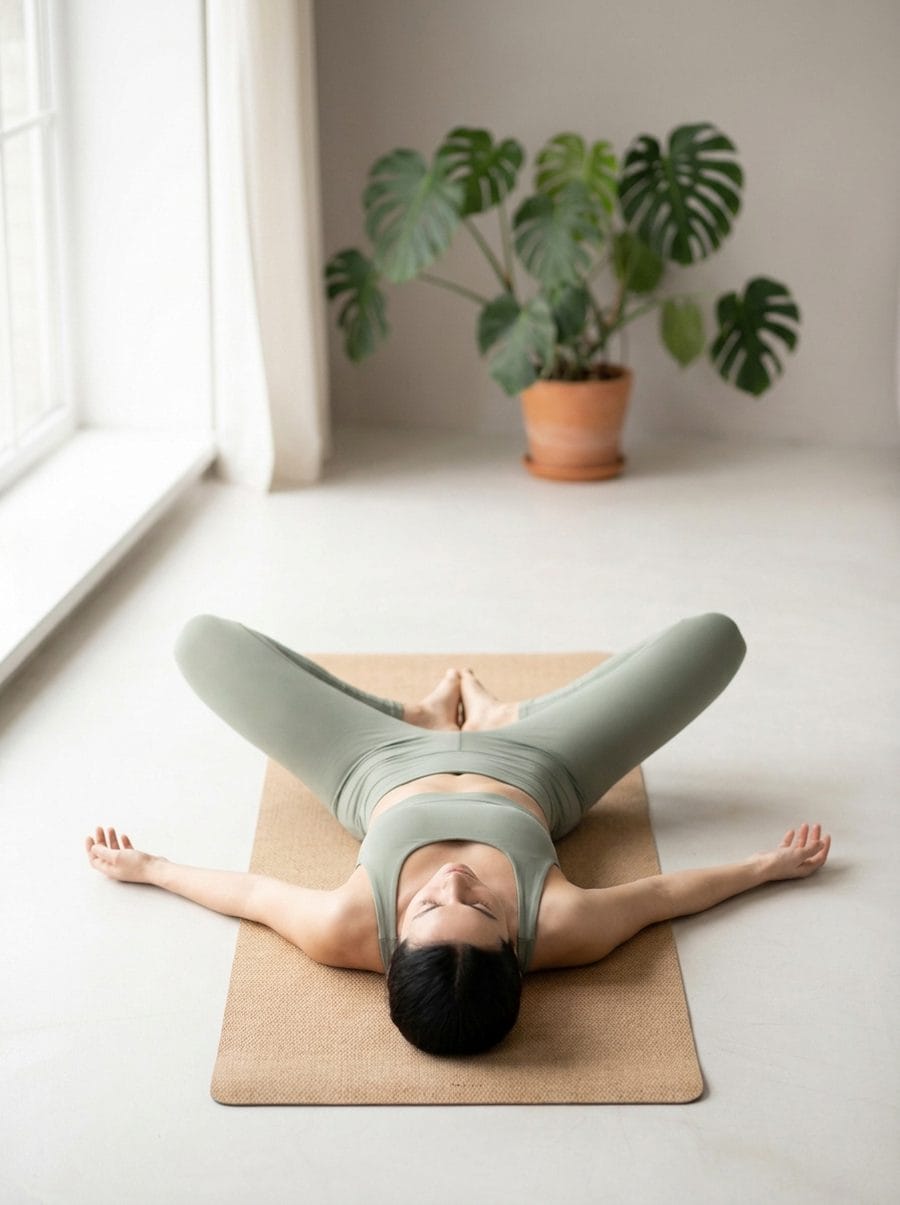
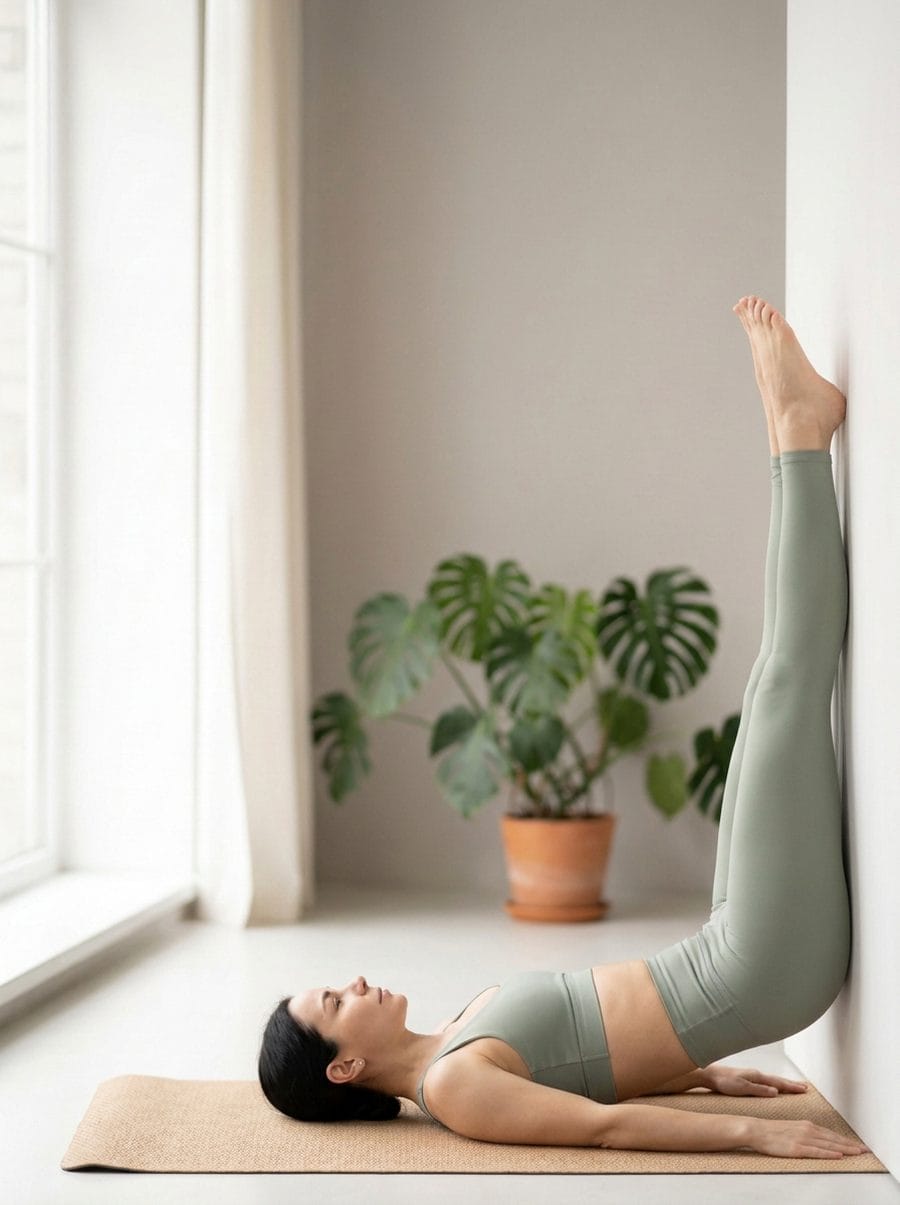

Stay in each pose for one to three minutes and let each out-breath run slightly longer than the in-breath. In Relaxation Pose, let go of breath control completely.
A 15-minute practice
The ready-made option in the app is the Evening Unwind program: 15 minutes, beginner level, 8 poses from Cat-Cow to Reclining Butterfly Pose and Legs-Up-the-Wall Pose, closing with roughly four and a half minutes of stillness on your back.
If you'd rather build your own:
- 1 minute: sit quietly and simply watch your breath.
- 5 minutes: Coherent Breathing or Full Yogic Breath.
- 5 minutes: two or three poses from the list above.
- 3 to 4 minutes: Relaxation Pose.
For longer evenings there's the 35-minute Yin Practice with long holds. Consistency beats length here: a short daily session of 10 to 15 minutes outweighs one long weekly marathon. Evenings work well, or any moment after a tense day. If you practice during the day, sit for a minute after Relaxation Pose before going back to your tasks.
Safety
- Put Legs-Up-the-Wall Pose aside on period days, and drop it completely with glaucoma or poorly controlled hypertension.
- A hurt knee means no Child's Pose and no Hare Pose; if you're pregnant, spread the knees apart to make room.
- If an ear is inflamed, save Bee Breath for after you've recovered.
- Feeling dizzy? Break off the technique and breathe at your own pace.
See a doctor if anxiety or panic keeps disrupting your days, or if you have fainting spells, an irregular heartbeat or long-lasting insomnia. Breathing practices are a good companion to professional care, not a replacement.
Pose cautions in this article
- Pregnancy — widen your knees (Child's Pose, Hare Pose)
- Knee injuries (Child's Pose, Hare Pose)
- Menstruation (Legs-Up-the-Wall Pose)
- Glaucoma (Legs-Up-the-Wall Pose)
- Uncontrolled hypertension (Legs-Up-the-Wall Pose)
- Groin discomfort — place supports under your knees (Reclining Butterfly Pose)
This site is for general information and is not medical advice. If you have pain, an injury, a chronic condition, or are pregnant, check with a qualified professional before practicing.
Questions
What are the simplest vagus nerve exercises? Unhurried breathing with a lengthened exhale. Begin with Full Yogic Breath: five minutes, inhaling for 4 counts and exhaling for 6.
Can you "reset" your vagus nerve? Science has no such concept. Slow breathing temporarily shifts the balance toward the parasympathetic system, and regular practice, according to the meta-analysis, is linked to higher heart rate variability.
Does yoga stimulate the vagus nerve? Studies like these rarely measure the nerve directly. What exists is data on rising heart rate variability with slow breathing, plus a model that explains yoga's effects through the breath.
How do you know your nervous system has calmed down? Your breathing gets slower and smoother, your shoulders and jaw soften, and your thoughts jump around less. For home practice, those cues are enough.
Sources
- Laborde S, et al. Effects of voluntary slow breathing on heart rate and heart rate variability: A systematic review and a meta-analysis. Neuroscience and Biobehavioral Reviews, 2022.
- Zaccaro A, et al. How Breath-Control Can Change Your Life: A Systematic Review on Psycho-Physiological Correlates of Slow Breathing. Frontiers in Human Neuroscience, 2018.
- Gerritsen RJS, Band GPH. Breath of Life: The Respiratory Vagal Stimulation Model of Contemplative Activity. Frontiers in Human Neuroscience, 2018.
- National Center for Complementary and Integrative Health. Relaxation Techniques: What You Need To Know.
- Pranayama rhythms and cautions, poses and program contents: the Hatha Yoga app. How we verify our texts is explained on the How We Prepare Our Content page.
Read next
- Yoga for Arthritis and Osteoporosis: How to Protect Your Joints and Bones7 min read
- Ashtanga Yoga Explained: The Series, the Breath and the Difference from Hatha6 min read
- Ayurveda Explained Simply: The Basics and a Daily Routine (Dinacharya)5 min read
- Balance Exercises: 10 Yoga Poses for Balance and Stability7 min read