 Hatha Yoga
Bow Pose with Toe Hold
Pādāṅguṣṭha Dhanurāsana
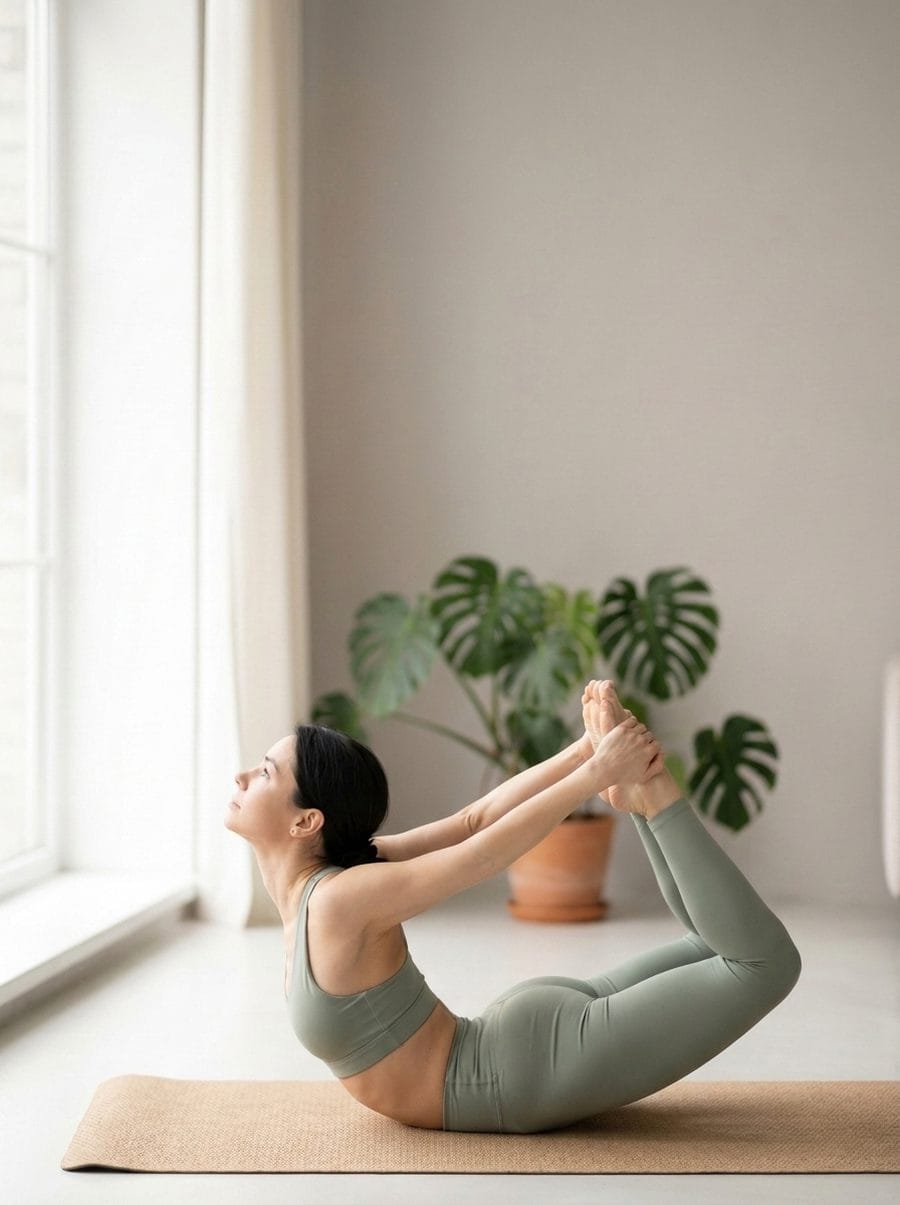
Padangustha Dhanurasana, or Bow Pose with Toe Hold, is the deepest version of Bow Pose. Lying on your belly, you take hold of the toes of both feet, swivel your elbows skyward and pull your feet in toward your head.
Chest and knees leave the floor and the body closes into a ring. Level: advanced. Deep Backbend holds it 25 seconds, between One-Legged Bow Pose and One-Legged Bow with Toe Hold.
A variation of: Bow Pose
How to do it
- EnterLying on your belly, take hold of your toes with your elbows pointing up, and draw your feet toward your head.
- HoldLift your chest and knees as your body forms a deep ring. Keep your breath free.
- ExitCarefully release your feet and lie down.
More detail
The shoulders are the key. For the elbows to point up, the shoulder joint has to rotate freely, so first get comfortable with regular Bow and One-Legged Bow Pose, where one arm's mobility is enough. Grip the big toes or the whole front edge of each foot, fingers turning to point forward.
Lift on an inhale: the shins travel up and back while your arms rotate and carry the elbows toward the ceiling. The knees stay within hip width. If your feet won't come near your head, stop at the height where breathing is still free.
Exit calmly: release the feet with care and lower onto your belly.
Benefits
A full ring — the deepest version of Bow Pose.
Bow with Toe Hold stretches the body's entire front, thighs to shoulders, while your back works in a deep bend. Among belly-down backbends, it asks for the greatest range in the shoulder joints. It's one of the peaks of the deep backbend sequence, and it calls for a pause afterward: the app names Child's Pose as the counterpose.
Cautions
- Lower back problems
- Shoulder joint injuries
- Neck problems
- Pregnancy
This site is for general information and is not medical advice. If you have pain, an injury, a chronic condition, or are pregnant, check with a qualified professional before practicing.
Common mistakes
- Yanking the feet with your hands. The shins and back create the lift; the arms just steer.
- Throwing the head back. The neck continues the arc without crunching.
- Letting the knees splay. Wide knees squeeze the lower back harder.
- Holding your breath. Even in the ring, inhales and exhales keep flowing.
Counterpose

Where it appears
- Deep Backbend 35 min · Advanced
Similar poses
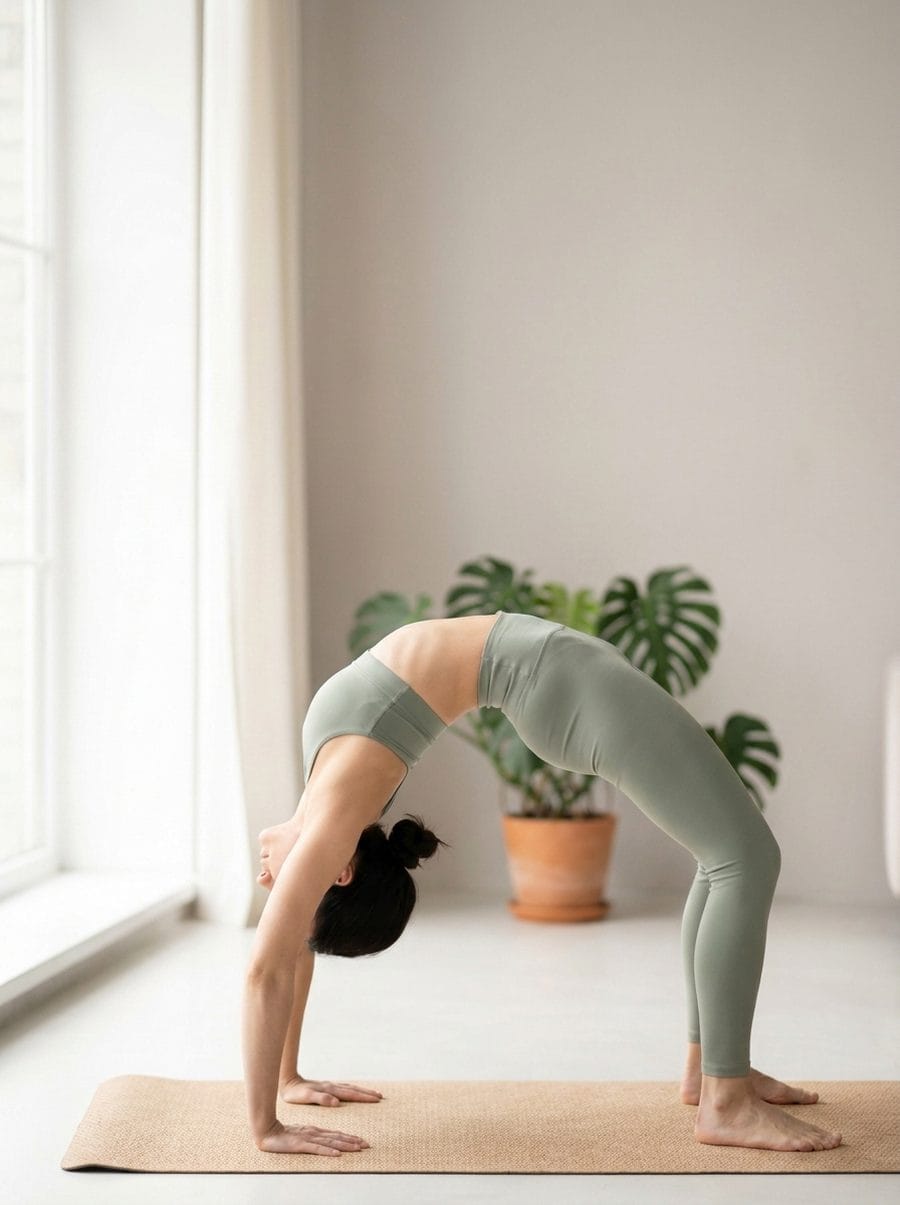
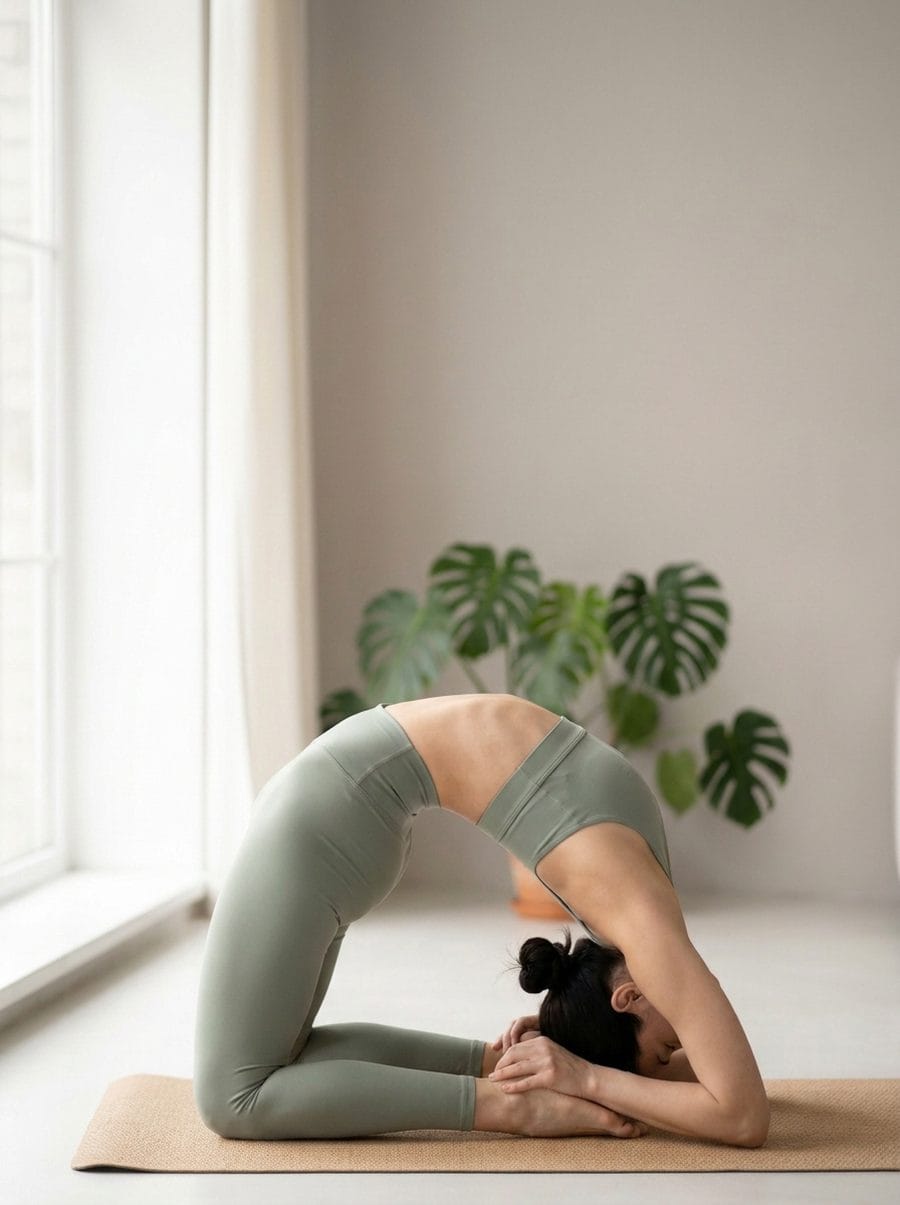
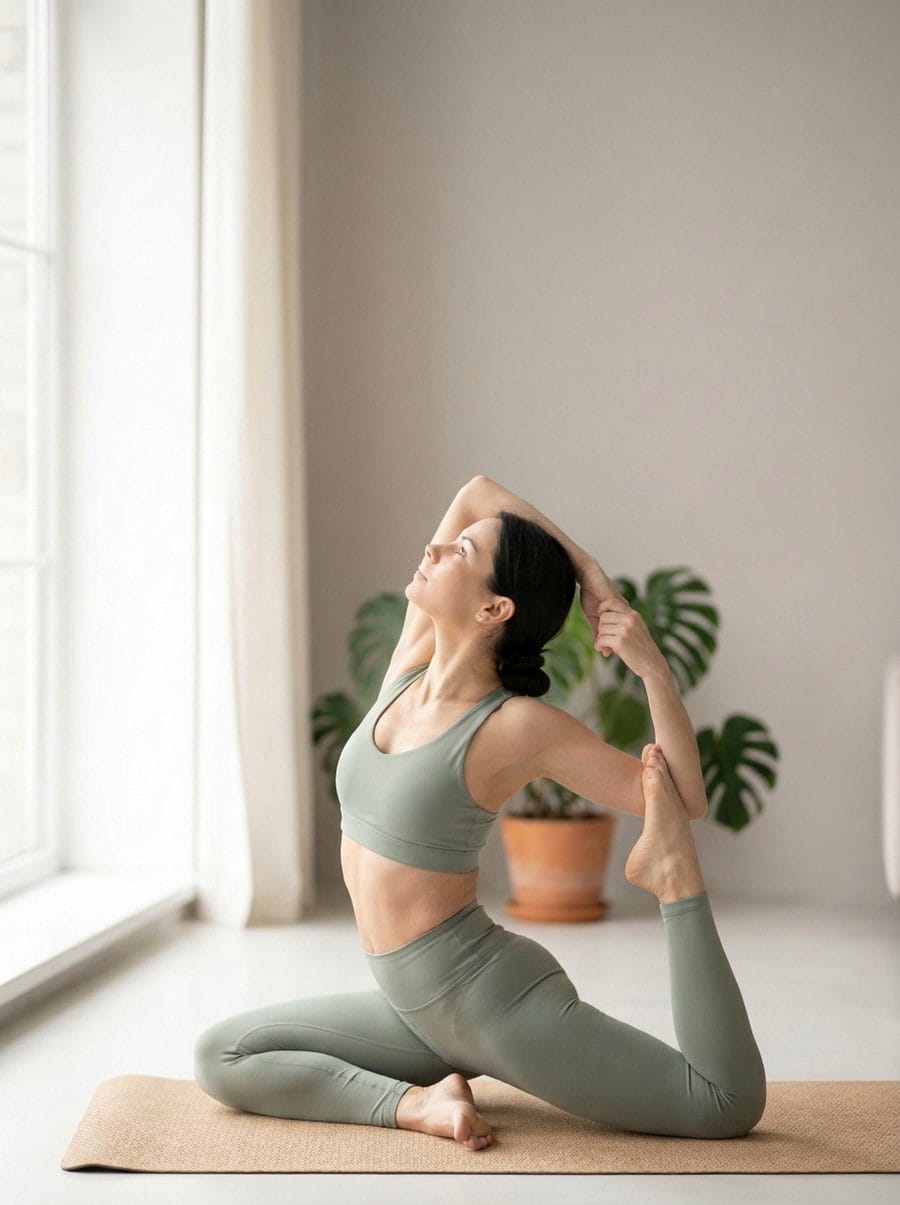
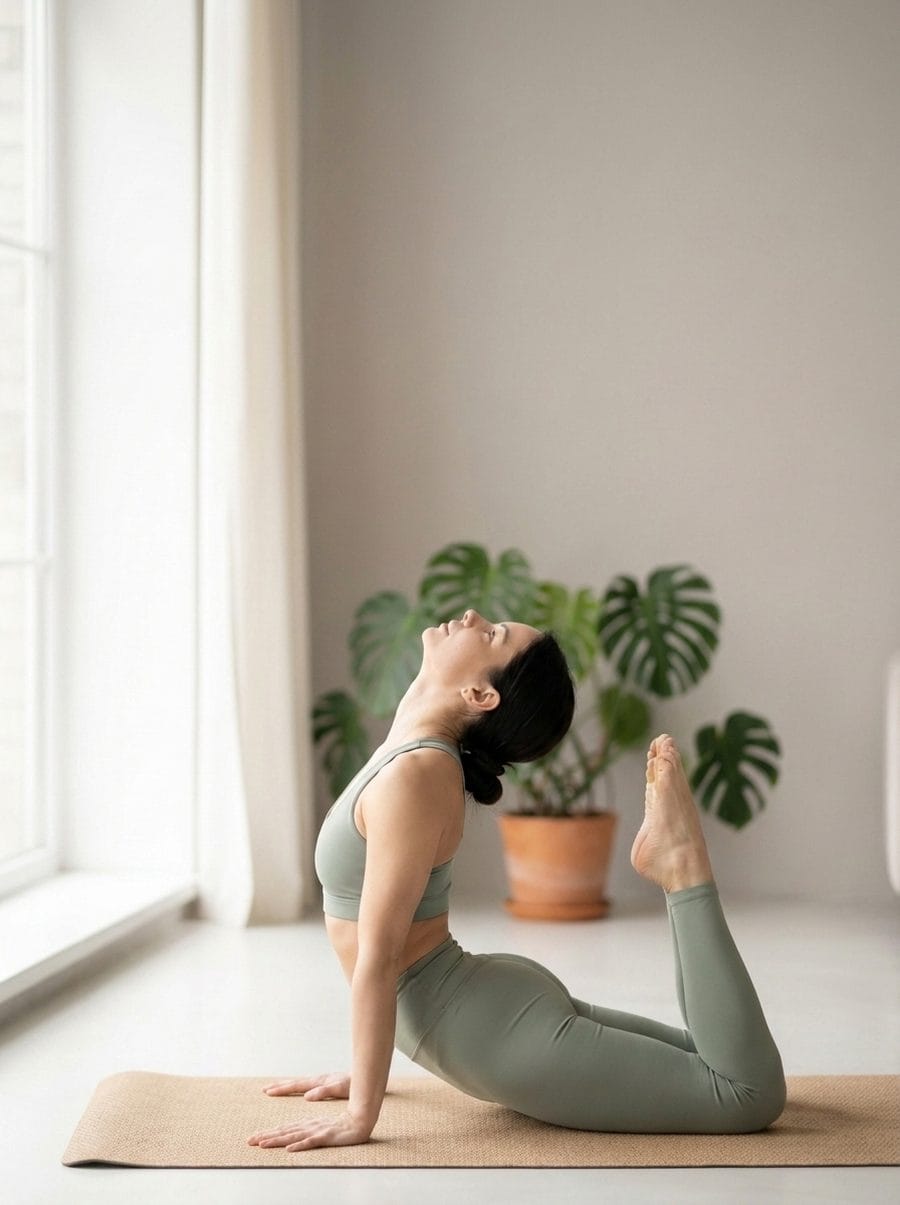
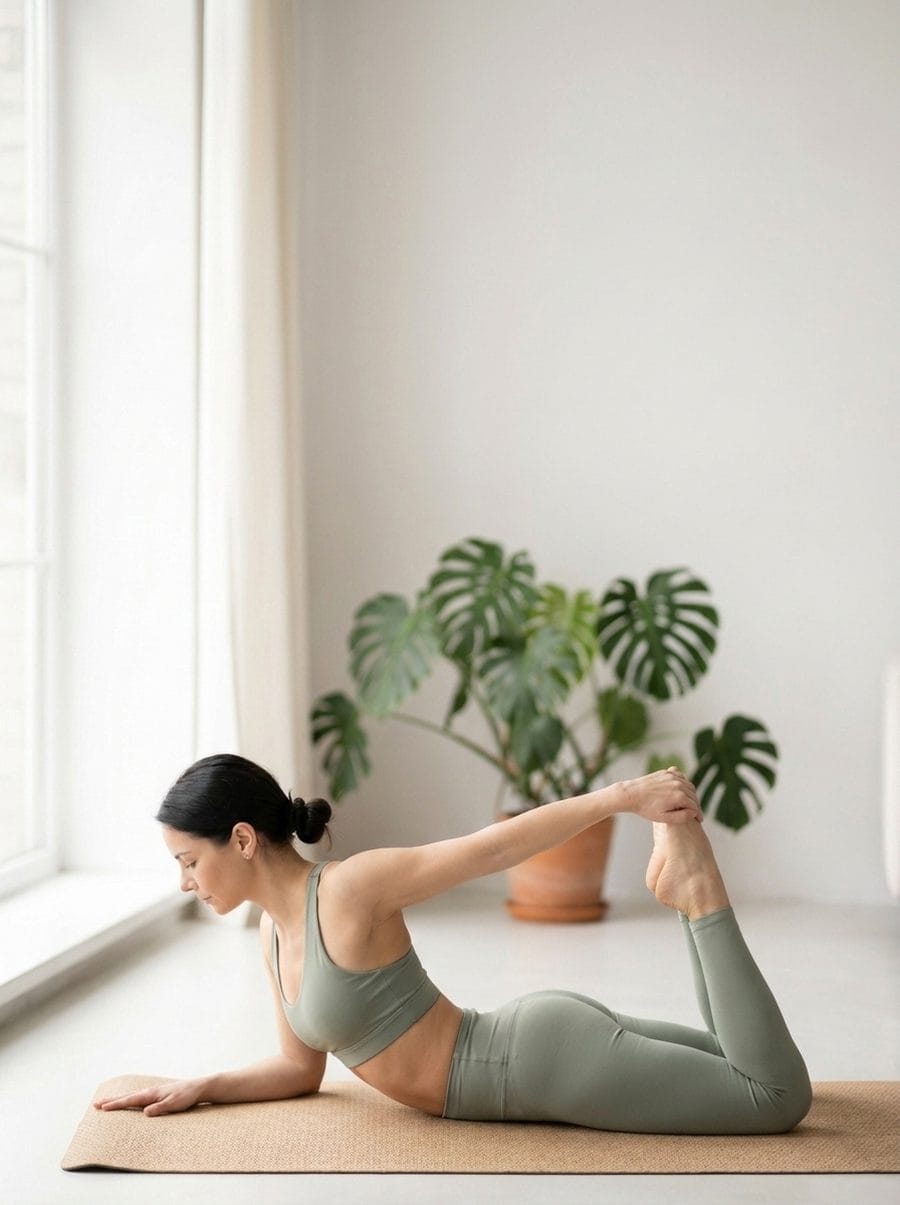
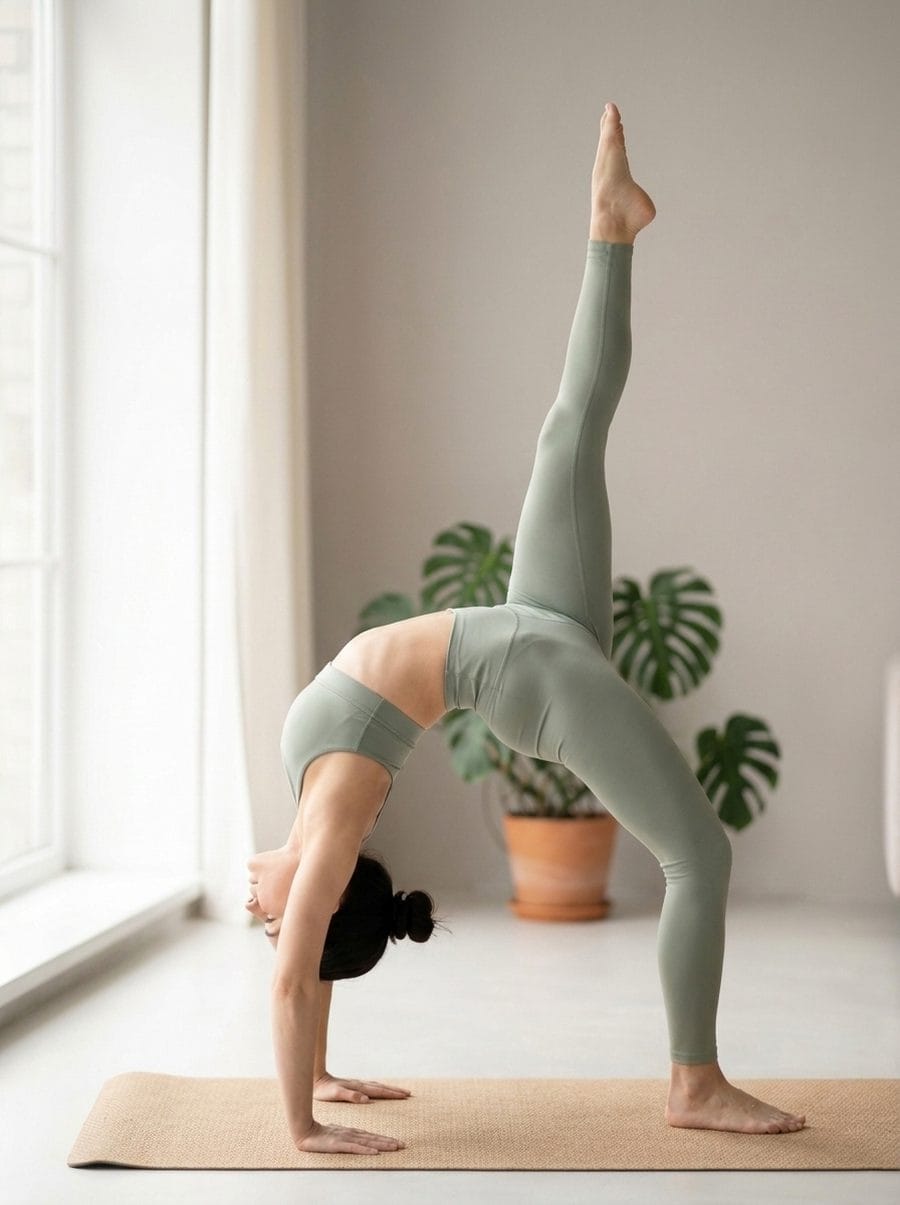
Questions
What does Padangustha Dhanurasana mean? In Sanskrit, "padangustha" is the big toe and "dhanura" is a bow. It's a bow in which the hands hold the toes rather than the ankles.
Who should avoid Bow Pose with Toe Hold? Four reasons to leave it out: a troubled lower back, neck problems, injured shoulder joints, pregnancy.
Bow with Toe Hold vs. regular Bow: what changes? In regular Bow your hands hold the ankles and your arms stay straight. Here the hands take the toes, the elbows rotate upward and the feet travel toward the head, making the arch much steeper, and the shoulders need special mobility.
Updated: