 Hatha Yoga
Pigeon Pose (Backbend)
Kapotāsana

Kapotasana, or Pigeon Pose (Backbend), is the deepest kneeling backbend in the app. From a kneeling position you arch back, your palms and then your elbows land on the floor behind your feet, and your head drops toward your heels.
It's an advanced pose. You'll meet it in the Deep Backbend sequence: 26 poses lead up to it, from Cat-Cow to King Pigeon, and Kapotasana itself is held for 25 seconds.
How to do it
- EnterKneeling, place your palms on your sacrum and gently arch back. When you're ready, lower your palms to your heels, then to the floor behind your feet, bringing your elbows down.
- HoldSpread the backbend from your chest to your thighs, and keep your hips reaching over your knees. Breathe wide, letting your chest open with every inhale.
- ExitShift your weight into your thighs, push off with your hands, and rise with a strong core. Be sure to rest in Child's Pose.
More detail
The app is blunt about it: Kapotasana comes only after a thorough backbend warm-up. Work through Camel Pose and backbends that open the fronts of the thighs first. Kneel with the knees one pelvis-width apart on a folded blanket. Begin by resting both hands on the sacrum: press the hips forward, lift the chest, and only then lean back.
Reach for your heels, and later for the floor behind your feet, once the chest is already open. Palms still hovering above the floor? Stop where your breathing is still free. Exit as mindfully as you entered: weight into the thighs, push with your hands, rise with your belly engaged.
Benefits
The deepest kneeling backbend: a full opening of the front of the body.
Kapotasana stretches everything along the front of you, thighs, belly, chest and shoulders, while the bend spreads along the entire spine. For backbend practice it's the summit, and it shows clearly how mobile your upper back and shoulder girdle really are.
Afterward the app calls for a rest in Child's Pose, which is exactly what follows Kapotasana in the sequence.
Cautions
- Spinal disc herniation
- Hypertension
- Only after a thorough backbend warm-up
This site is for general information and is not medical advice. If you have pain, an injury, a chronic condition, or are pregnant, check with a qualified professional before practicing.
Common mistakes
- Skipping the warm-up. Without a series of backbends first, the load falls on your lower back.
- Hinging sharply at the lower back. Keep the pelvis over the knees and start the bend from the chest.
- Splaying your elbows. Shoulder-width elbows give the shoulders a base.
- Holding your breath. Breathe wide into the chest; each inhale opens it a little more.
Counterpose

Where it appears
- Deep Backbend 35 min · Advanced
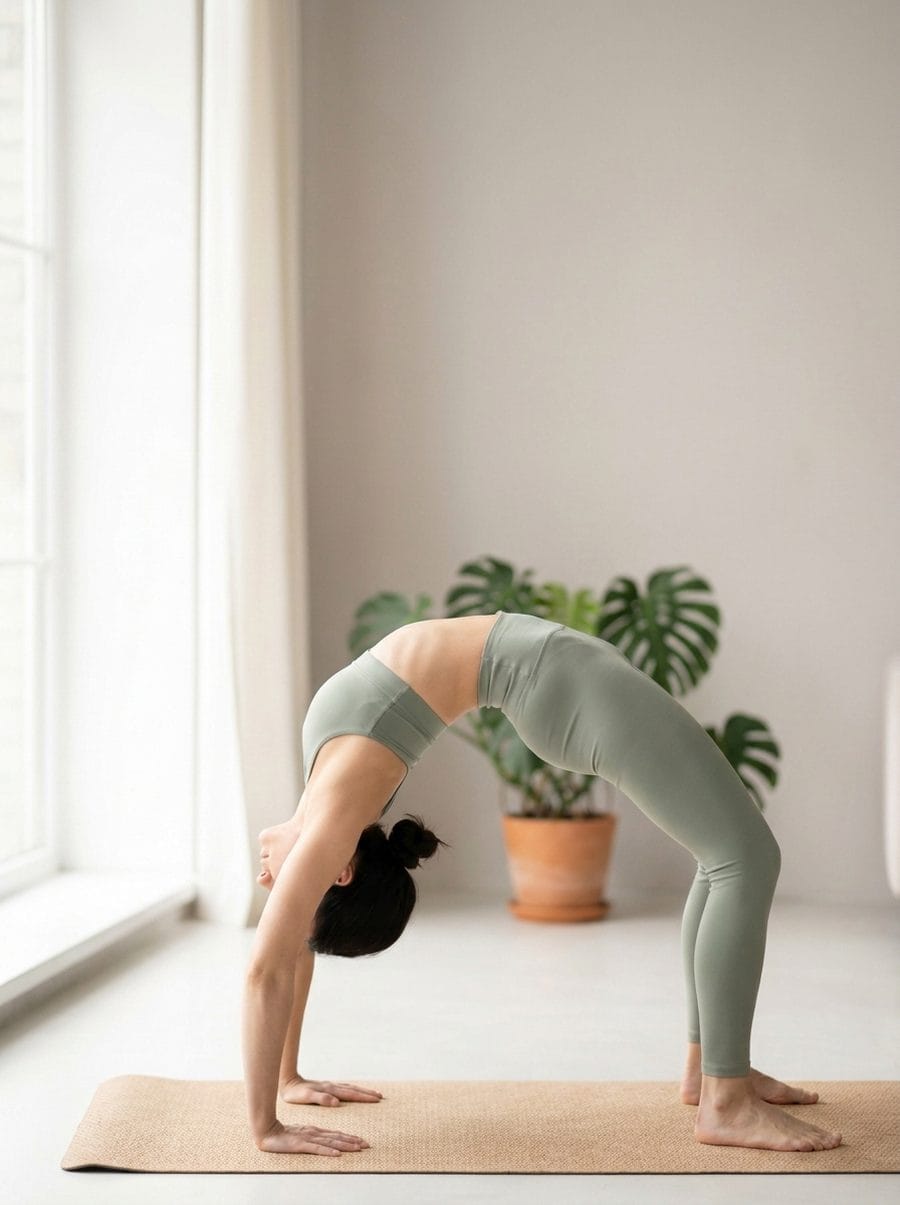
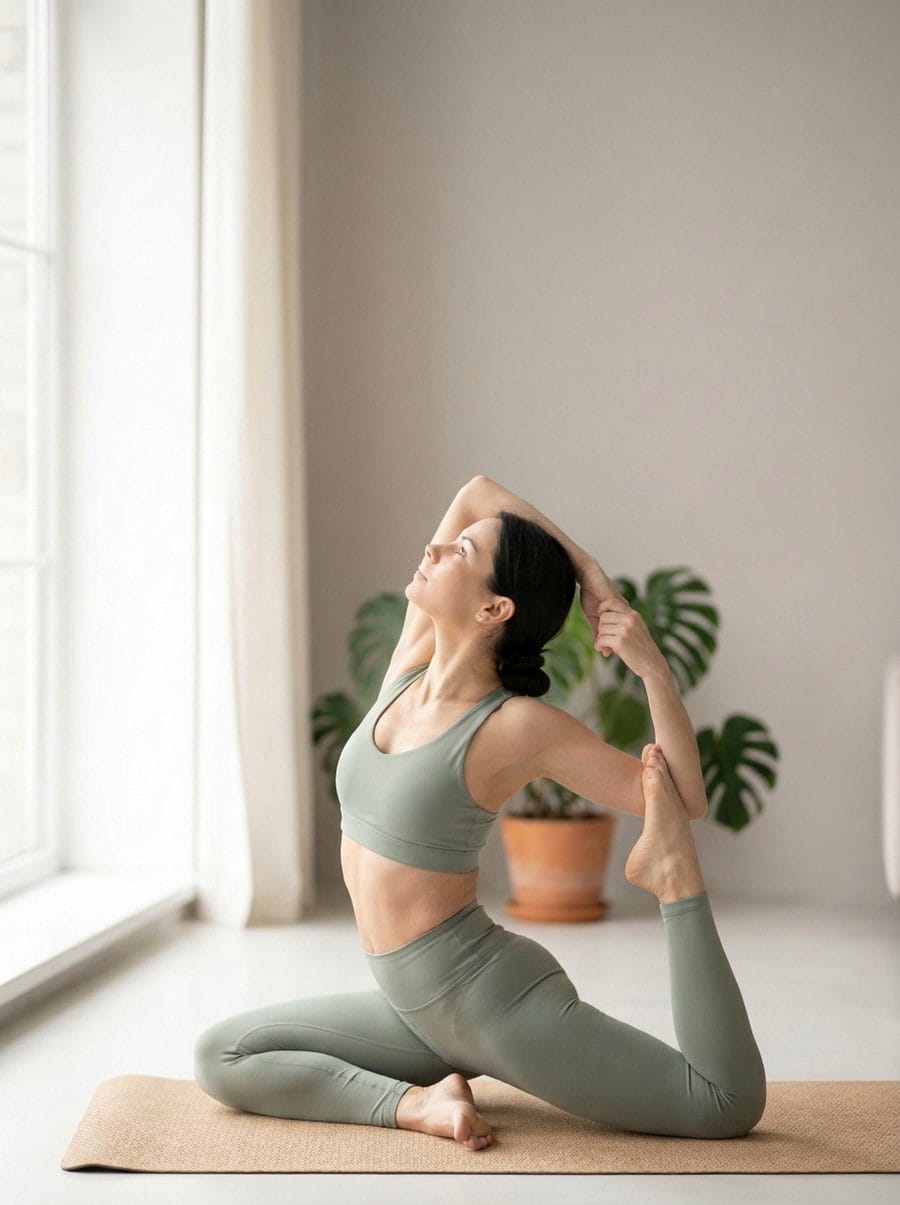
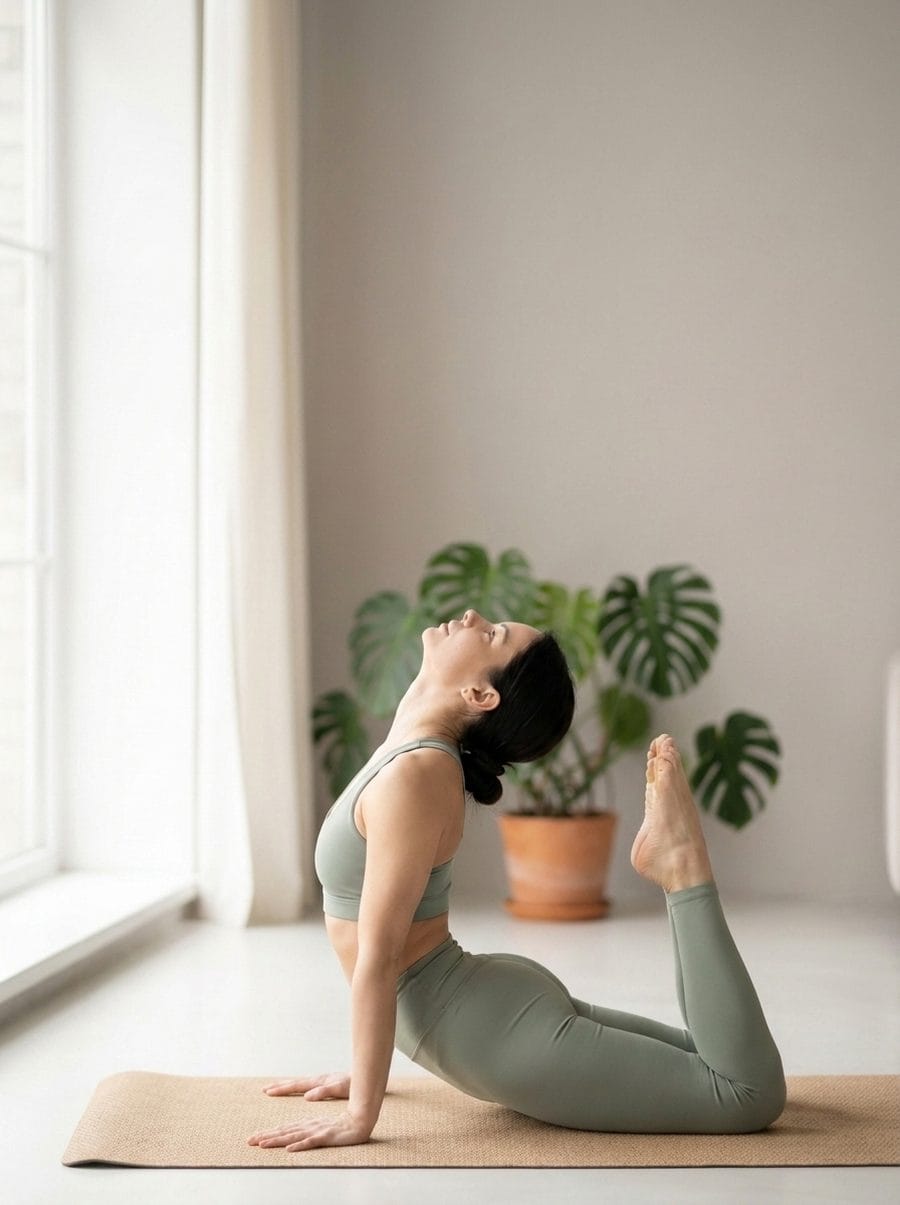
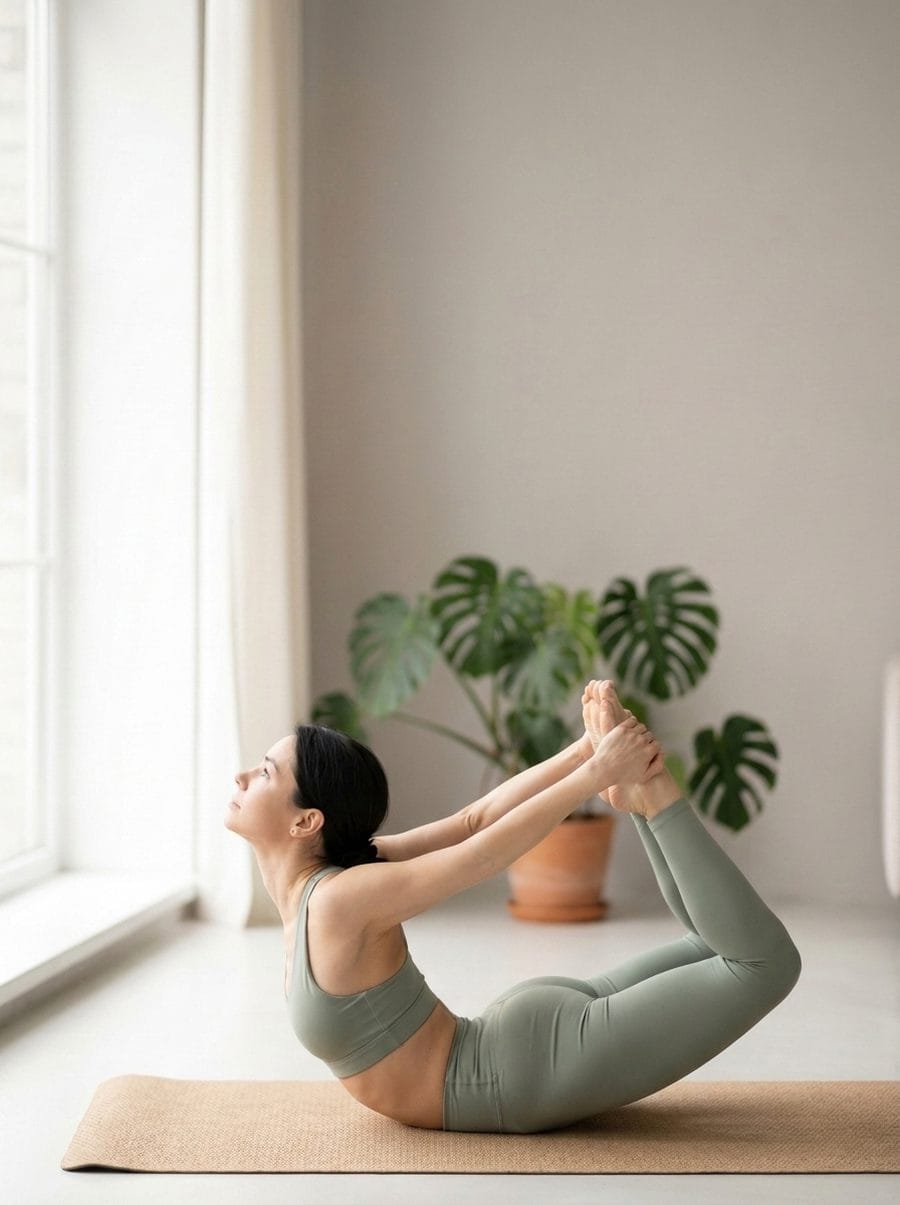
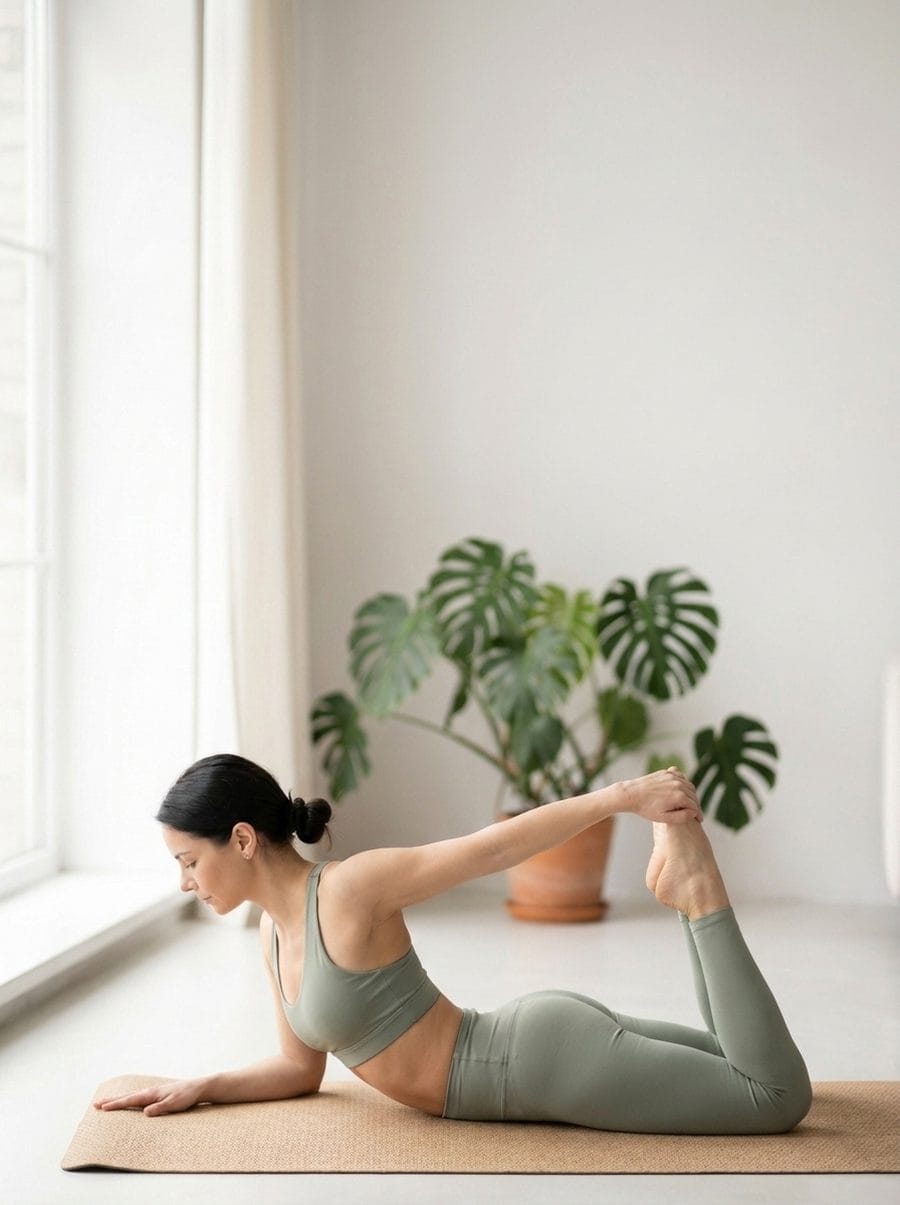
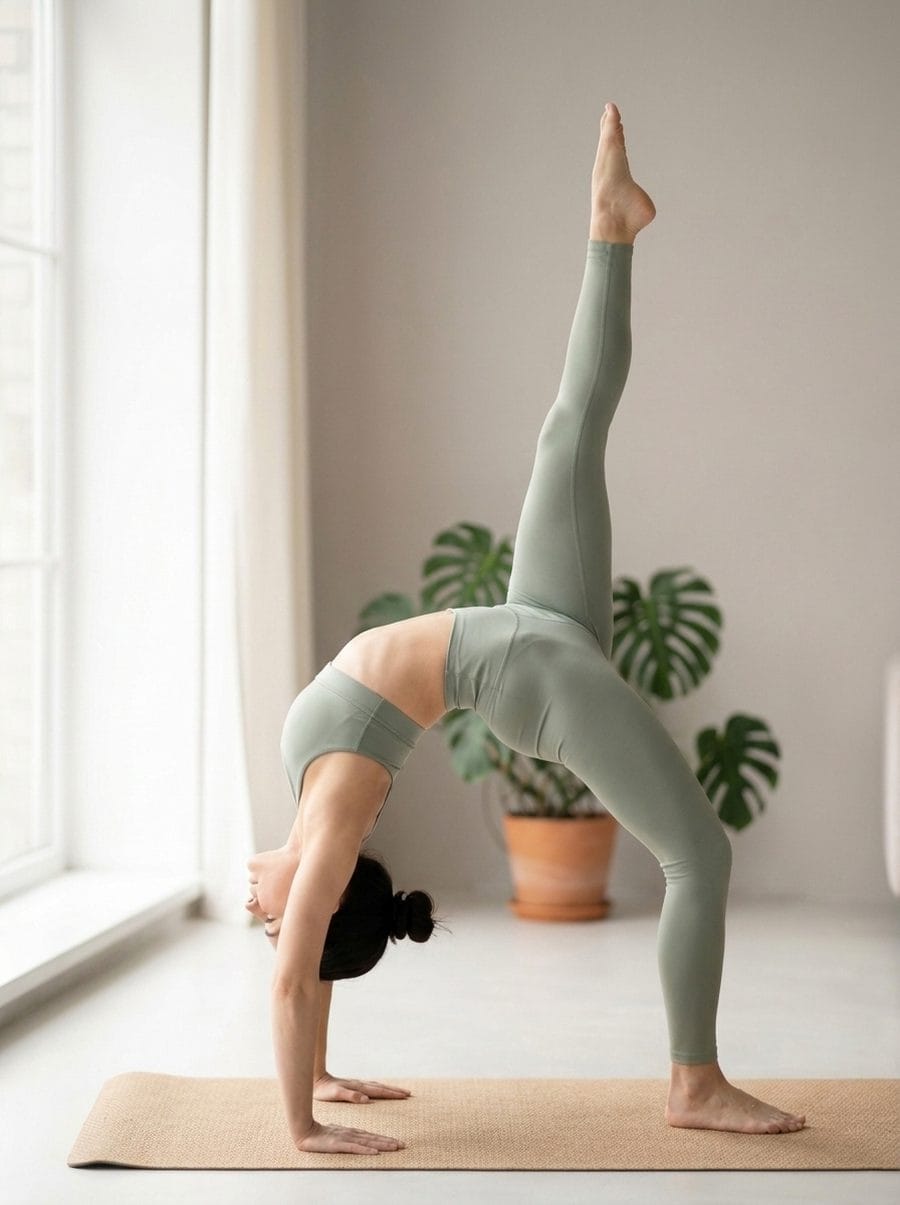
Similar poses
Questions
What does Kapotasana mean? "Kapota" is Sanskrit for pigeon: the chest arching forward recalls a pigeon's puffed-out breast. Don't confuse it with Pigeon Pose (Prep), a hip opener done seated on the floor with one leg in front.
Who should avoid Kapotasana? Skip it with a spinal disc herniation or hypertension. A deep backbend warm-up beforehand is non-negotiable.
How is Kapotasana different from King Pigeon? In One-Legged King Pigeon Pose one leg stretches back and the backbend starts from a lunge-like position. In Kapotasana you kneel on both knees, and the arch brings the crown of your head close to your feet. Inside Deep Backbend, King Pigeon is the step right before Kapotasana.
Updated: