 Hatha Yoga
Lotus with Side Bend
Pārśva Padmāsana
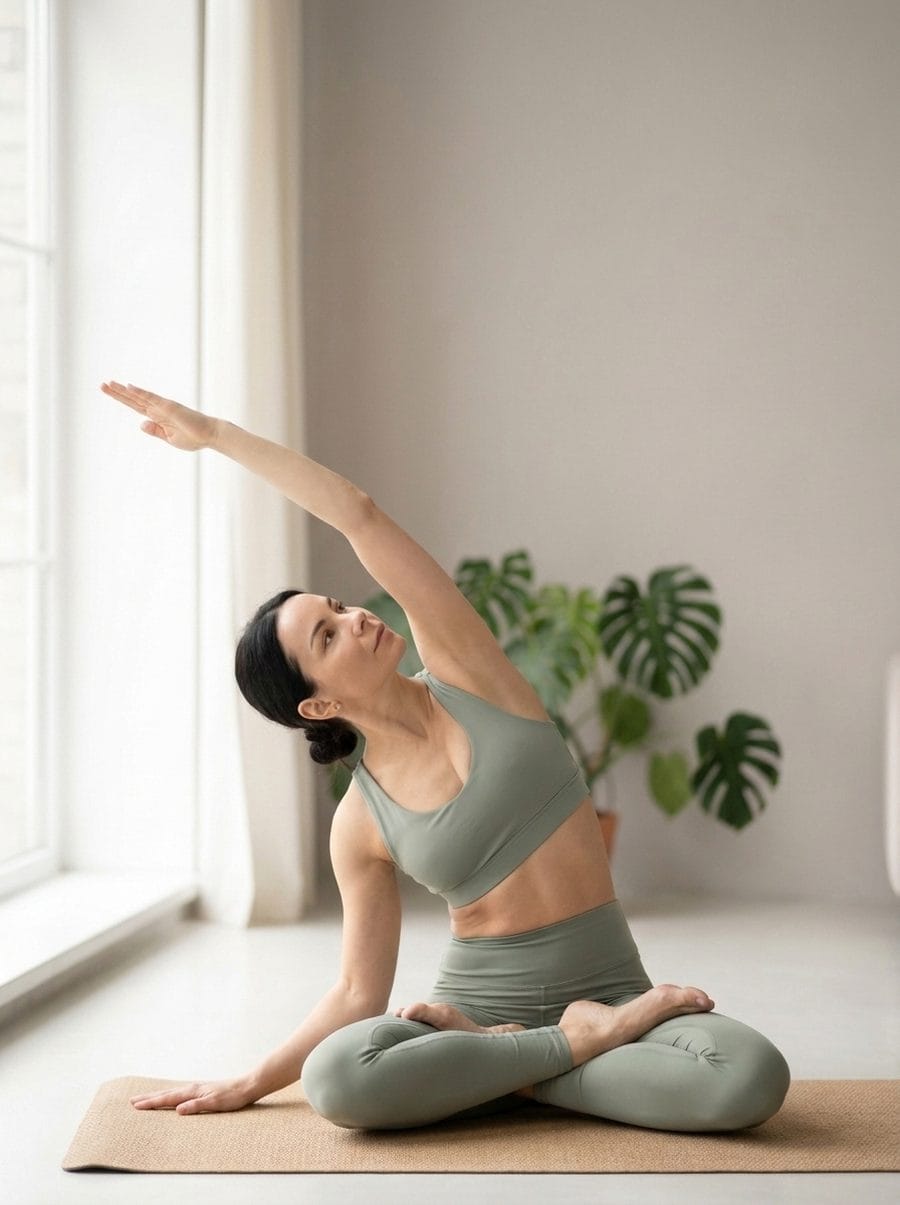
Lotus with Side Bend, or Parsva Padmasana, combines seated Lotus Pose with a lateral bend: one forearm settles on the floor beside your hips and the other arm sweeps up in a wide curve. Your crossed legs anchor the pelvis firmly.
Expect an advanced challenge, performed to the left and right. In the app it lives only as an individual pose card, timed at 30 seconds.
A variation of: Lotus Pose
How to do it
- EnterSitting in Lotus Pose, lower one forearm to the floor beside your hip. Sweep the other arm out to the side and overhead.
- HoldKeep both sit bones heavy. Breathe into your upper side and let it open from your hip to your fingertips.
- ExitInhale to come up, then bend to the other side.
More detail
Here Lotus is the foundation, not the goal. If sitting in it is uncomfortable, build a calm Lotus first, or practice the same bend in Cross-Legged Side Bend. Sit tall and feel both sitting bones. On an inhale, raise your arm and lengthen up through the crown; on an exhale, move your torso sideways until the forearm meets the mat.
The opposite buttock stays grounded, and the moment it lifts, stop bending. Your head stays in line with your spine, and the top shoulder doesn't roll forward. Linger for a few breaths: each inhale spreads the ribs, each exhale deepens the bend a little.
Rise on an inhale and repeat to the other side. On your next round, put the other leg on top.
Benefits
Stretches the side body and deepens the breath.
The bend stretches the side line of your torso: the intercostals, the lats and the obliques. Lotus locks the pelvis in place, so the stretch stays in your side instead of leaking into your legs. Breathing into the open side gets deeper, which makes this a good fit for the quieter part of a practice.
Cautions
- Knee injuries
This site is for general information and is not medical advice. If you have pain, an injury, a chronic condition, or are pregnant, check with a qualified professional before practicing.
Common mistakes
- Lifting the opposite buttock off the floor.
- Leaning forward and closing your chest.
- Collapsing onto the forearm and crushing the lower side.
- Craning your neck after your arm.
- Sitting in Lotus while your knees hurt.
Similar poses
Questions
No Lotus yet. Where do I start? Practice the same bend sitting with your shins crossed. Once Lotus comes easily, move on to Parsva Padmasana. Lotus itself comes with an important rule in the app: never strong-arm your knees into it.
Who should skip Lotus with Side Bend? Anyone with an injured knee should leave it out.
Why practice Parsva Padmasana? It lengthens your side from hip to wrist and teaches you to breathe into the open side. Your pelvis stays still, so the bend is precise.
Updated: