 Hatha Yoga
Foam Rolling and Yoga: Self-Massage Before and After Your Practice
Hatha Yoga editorial team · Updated · 6 min read
Myofascial release sounds like a clinical procedure, but at the gym or at home it's simple self-massage: you roll your muscles over a foam roller or a ball using your own body weight. Foam rolling pairs well with yoga. The roller warms up an area and eases that stiff feeling, and the poses then stretch the same area.
Below: what's actually known about foam rolling benefits, how to choose a roller, what to roll before and after practice, and when to skip it.
What myofascial release means in plain terms
Fascia is connective tissue that wraps your muscles and links them to each other and to other structures in the body. That's where the name comes from: "myo" means muscle and "release" means letting go. In fitness, myofascial release boils down to pressure and slow rolling of a muscle over a firm cylinder.
Researchers are still debating what exactly happens to the tissue. So it's more honest to call it self-massage than to claim a roller "breaks up knots" or "frees your fascia." The feeling afterward is familiar to many people: the muscle seems warmer and softer, and the joint moves more freely.
What the research says
A 2020 meta-analysis pooled 26 studies in healthy adults. Foam rolling increased a joint's range of motion right after the session considerably compared with doing nothing, but no more than regular stretching did.
Another meta-analysis, from 2019, pooled 21 studies. Rolling before exercise brought a small gain in flexibility, about 4%, and slightly better sprint results, with almost no effect on jumping or strength. Rolling after exercise slightly reduced how sore the muscles felt.
The authors judged the effects modest overall and better suited to a warm-up than to recovery.
The takeaway is simple: a foam roller helps prepare your muscles to move and makes a pleasant partner for stretching, but it doesn't replace stretching or work miracles.
How to choose a foam roller
- Firmness. Beginners do better with a soft or medium roller. A firm one presses hard and suits people who are used to it.
- Surface. A smooth roller presses evenly. A textured one with ridges works more locally and feels more intense.
- Size. A short roller, about 12 inches (30 cm), is handy for legs and glutes. A long one, about 36 inches (90 cm), lets you lie on it along your spine.
- Ball. A massage ball gets into your feet, glutes and the space beside your shoulder blades, spots a roller can't reach.
How to combine foam rolling and yoga
There are three approaches that work.
- Before practice. Spend 3 to 5 minutes on whatever feels stiff today: calves, thighs, upper back. Then go straight into poses that stretch the same muscles.
- After running or a leg-heavy workout. Roll your legs gently, then do a calm stretch. The 20-minute Post-Workout Legs routine at an intermediate level fits this well.
- On a rest day. A short session of self-massage, followed by long, quiet holds.
There's one rule: roll an area first, then stretch it in a pose. That way you can feel right away whether it moves more freely.
Foam rolling technique
- Go slowly. Roll at an unhurried pace, without quick back-and-forth movements.
- 30 to 60 seconds per area. There's no need to stay longer in one spot.
- Moderate pressure at most. Strong pressure is fine, sharp pain is not. If a spot is very tender, pause on it for a few calm exhales and then move on.
- Adjust your weight. Leaning on your hands or your other leg takes some weight off the roller.
- Steer around bones and joints. Don't roll over knees, ankles, elbows or bony points. Keep the roller off your lower back and neck as well.
What to roll and which poses to do afterward
Calves and hamstrings
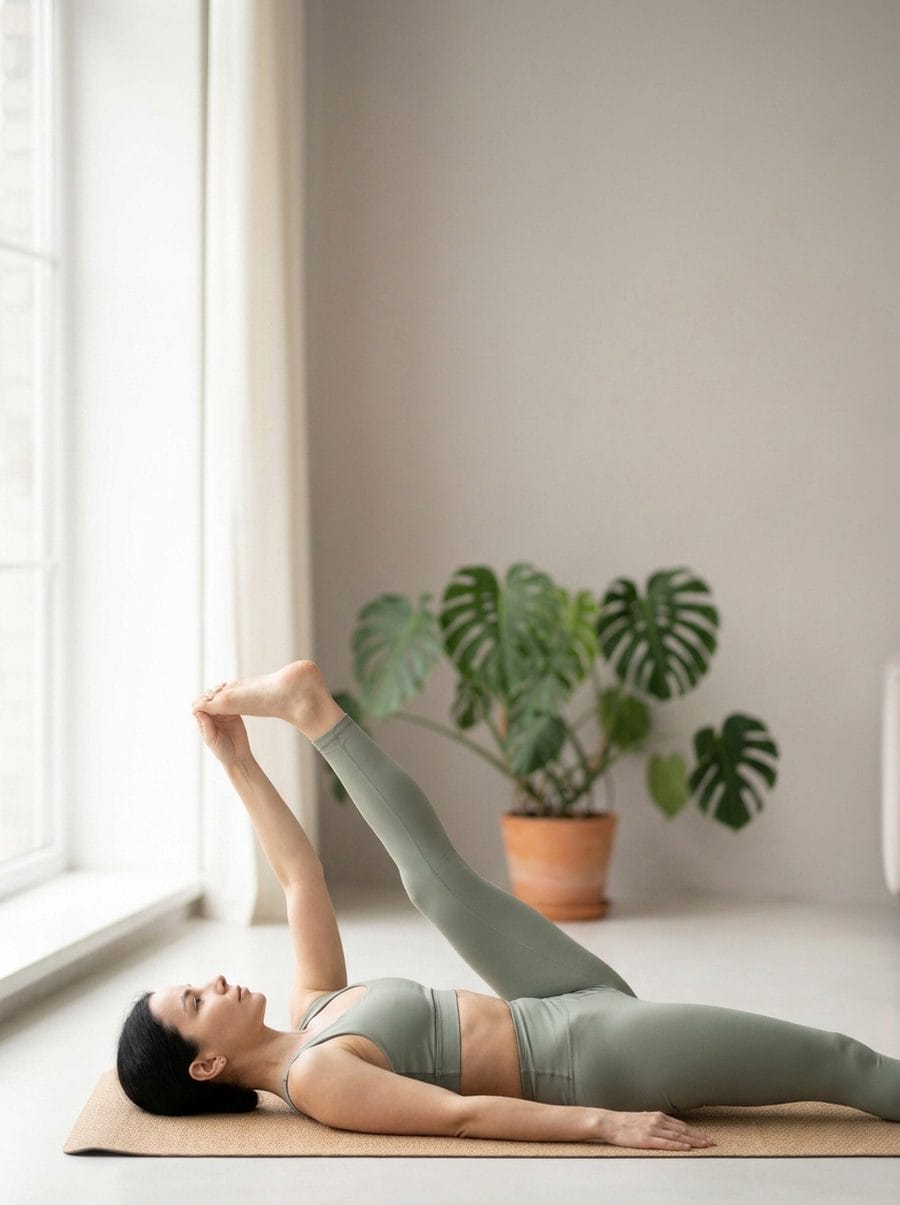
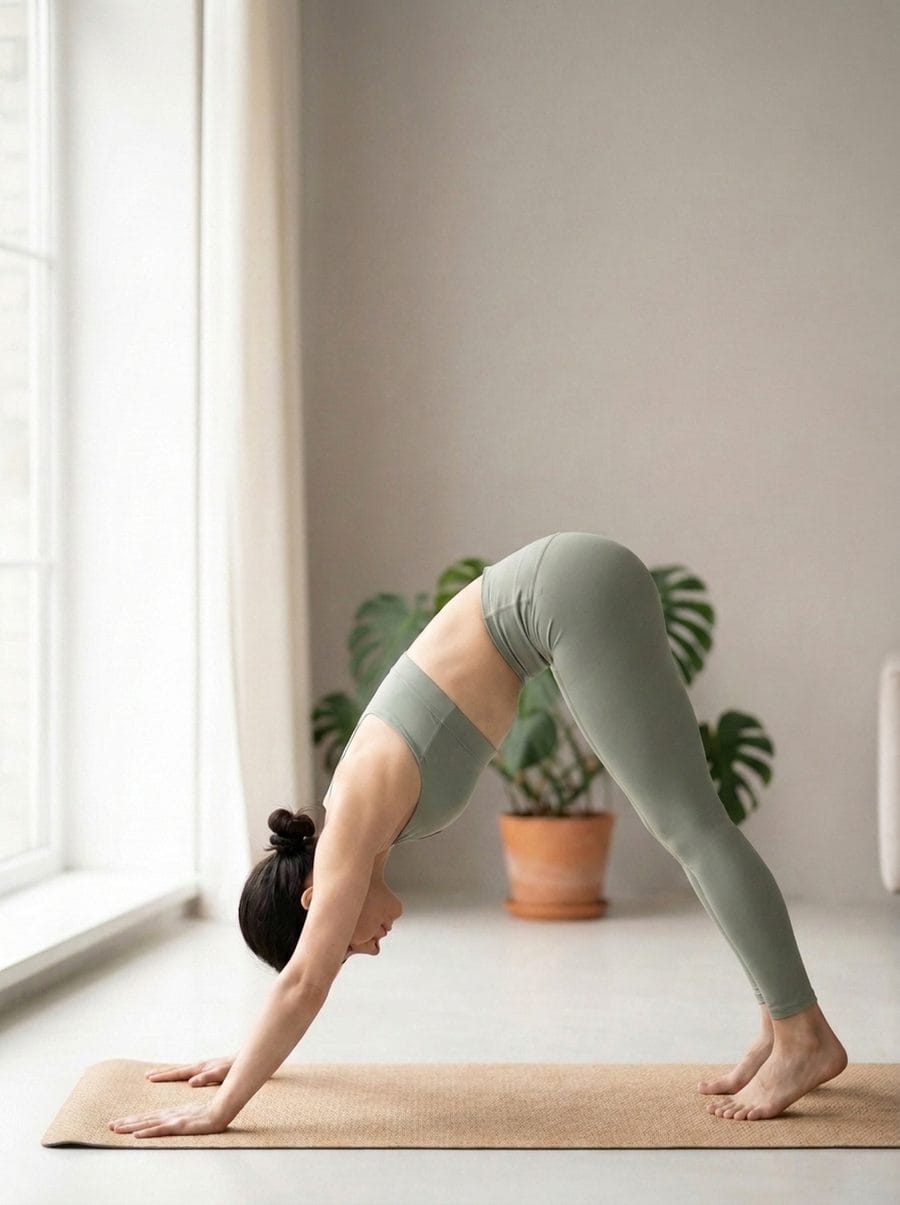
Sit on the floor and place the roller under your calves, then under the backs of your thighs. Afterward, Downward-Facing Dog lengthens the calves, and in Reclining Hand-to-Big-Toe Pose the hamstrings lengthen while your back stays on the floor.
Front of the thighs
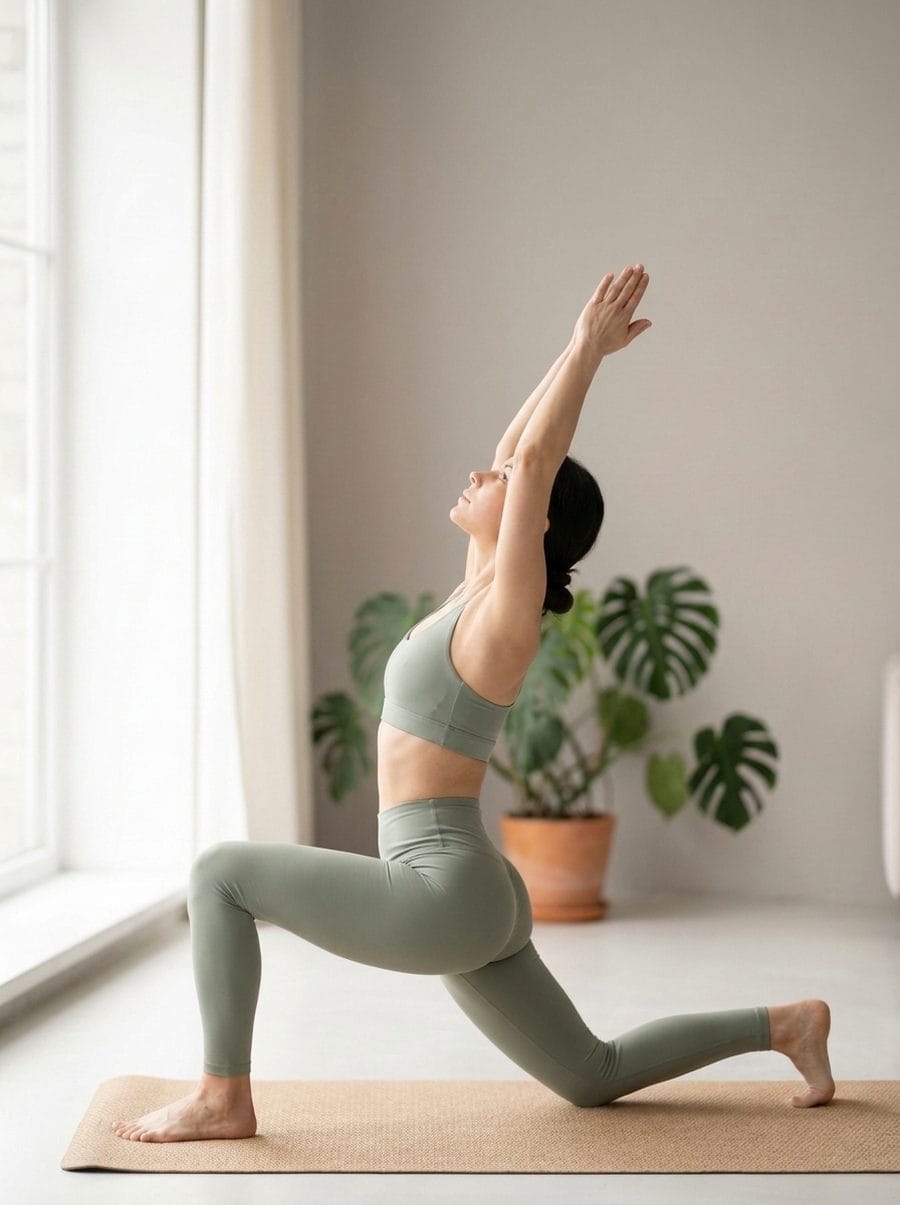
Lie face down with the roller under your thighs, propped on your forearms. Then move into Low Lunge to stretch the front of the hip. If your knee is sensitive, put a blanket under it, and with lower back pain keep your torso upright and don't deepen the backbend.
Glutes
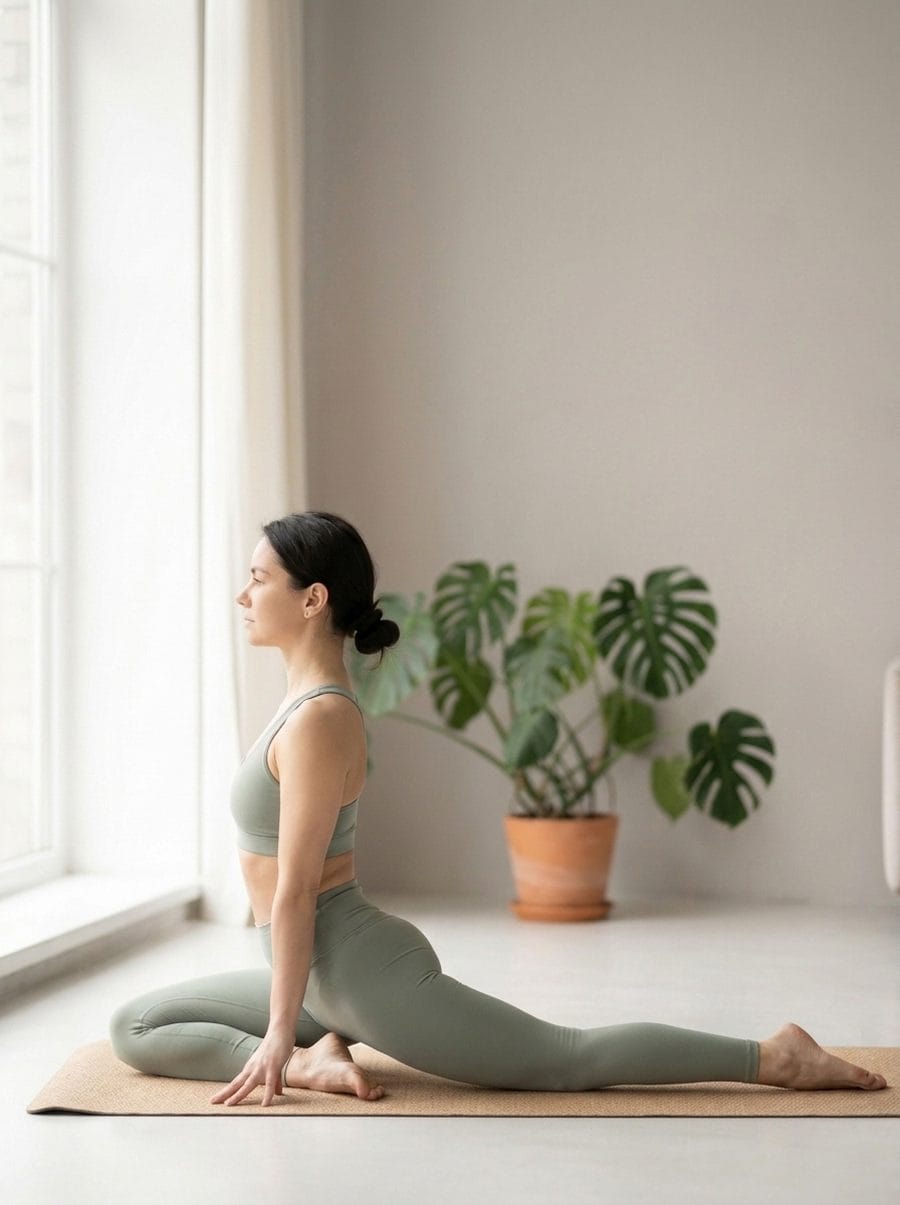
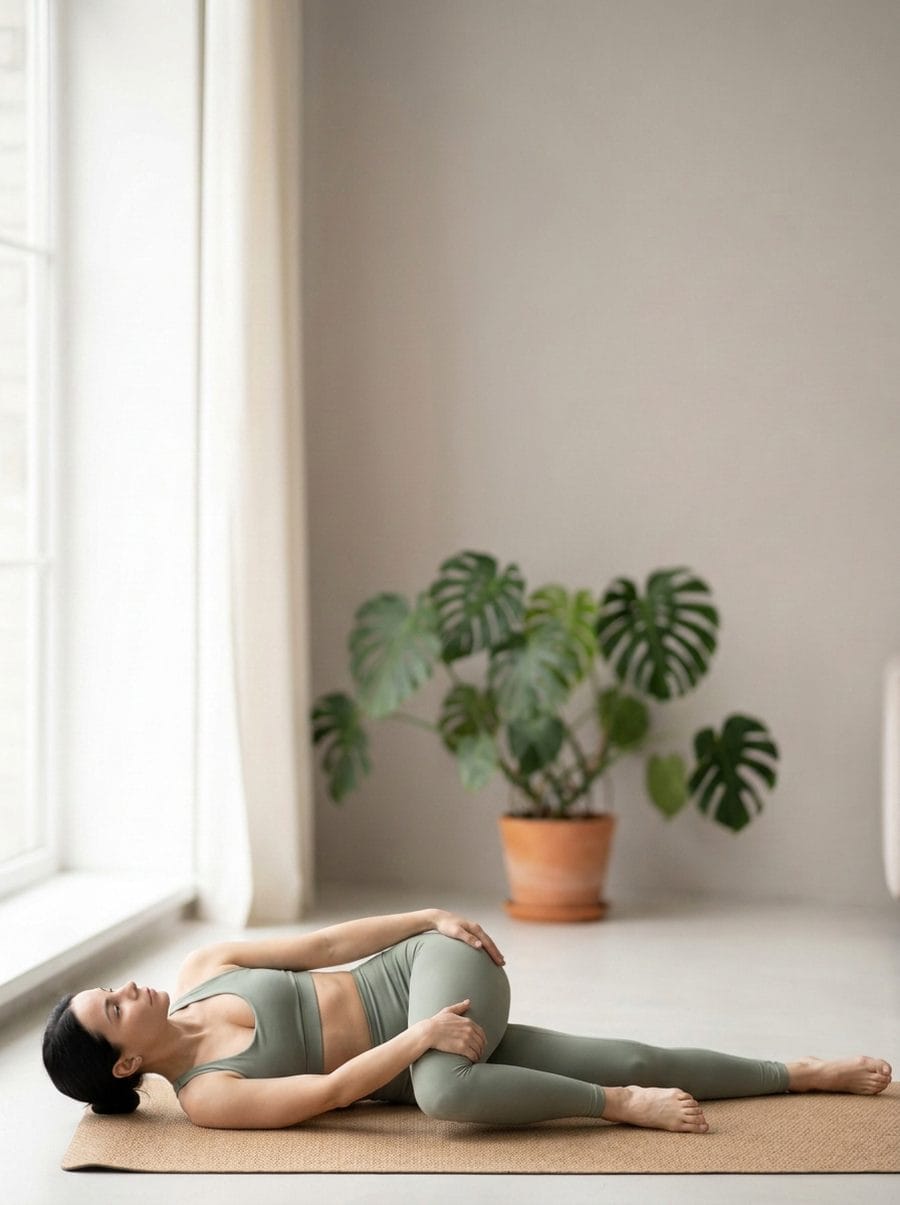
Sit on the roller or a ball, cross one leg over the other and lean slightly to one side. Pigeon Pose (Prep) opens the hip joint deeply, while Supine Twist relaxes the glutes and lower back more gently.
Upper back
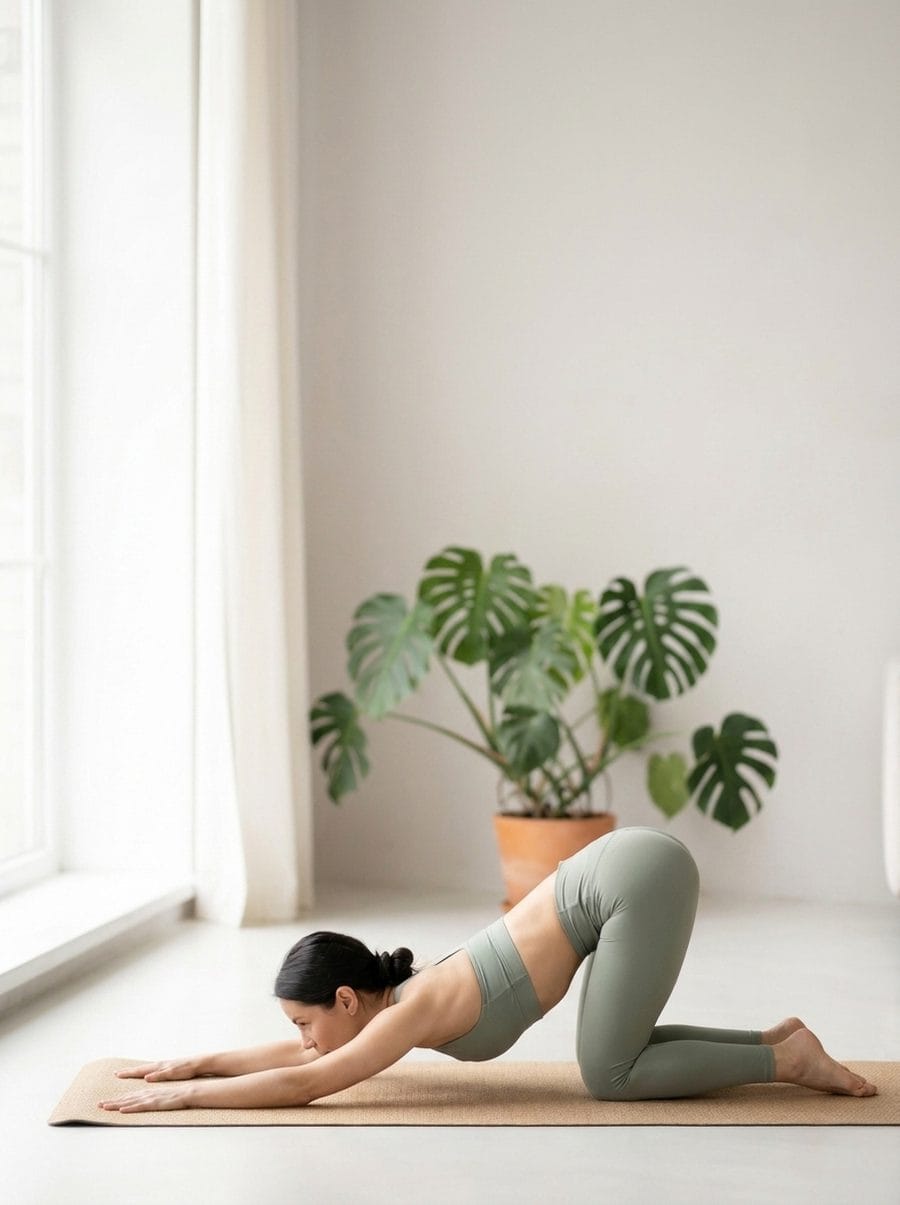
Lay the roller across your back under your shoulder blades, hands behind your head, hips on the floor or slightly lifted. Roll only between your shoulder blades and lower ribs. Then Puppy Pose lengthens the shoulders and upper back, and Child's Pose gives the spine a break.

Yoga for fascia: long holds
If you want slow, deep work without a roller, try Yin Practice. It's 35 minutes of calm floor poses, each one kept for two to four minutes, at a beginner level. A long, passive hold feels very different from active stretching, and it fits nicely into an evening. For a full-body stretching routine, see Stretching for Beginners.
Safety
Foam rolling isn't for fresh injuries, bruises, swelling, or inflamed or broken skin. Don't roll over varicose veins. If you have a blood clot or suspect one, have osteoporosis, take blood thinners or are pregnant, check with your doctor first. Stop if you notice numbness, tingling or pain that lingers after the session.
The poses have their own limits. With a knee injury, the app replaces Pigeon Pose (Prep) with a reclining twist that hugs one knee toward the chest. Child's Pose isn't suitable with knee injuries, Puppy Pose with shoulder injuries, and Downward-Facing Dog is contraindicated with injured wrists or shoulders and with glaucoma. Avoid Supine Twist with a disc herniation in the acute phase.
Pose cautions in this article
- Wrist and shoulder injuries (Downward-Facing Dog)
- High blood pressure — don't stay in the pose long (Downward-Facing Dog)
- Glaucoma (Downward-Facing Dog)
- Use a strap if your back lifts off the floor (Reclining Hand-to-Big-Toe Pose)
- Knee injuries — place a blanket under your back knee (Low Lunge)
- Lower back pain — don't deepen the backbend; keep your torso upright (Low Lunge)
- Knee injuries — do a Supine Twist with your knee to your chest instead (Pigeon Pose (Prep))
- Disc herniation in the acute phase (Supine Twist)
- Shoulder injuries (Puppy Pose)
- Pregnancy — widen your knees (Child's Pose)
- Knee injuries (Child's Pose)
This site is for general information and is not medical advice. If you have pain, an injury, a chronic condition, or are pregnant, check with a qualified professional before practicing.
Questions
What is myofascial release in simple terms? It's self-massage: you roll your muscles over a foam roller or ball with your own body weight. It warms the muscles and briefly increases how freely a joint moves.
Should you foam roll before or after yoga? Before practice, rolling works as part of a 3 to 5 minute warm-up. After exercise, people use it gently so their muscles feel lighter. Research backs the first option more strongly.
Is it OK to foam roll your lower back? Better not: the lower back has no ribs, so the roller presses on the spine without their protection. Work on your glutes and upper back instead, and relax the lower back in Supine Twist or Child's Pose.
How often should you foam roll? Short sessions of 5 to 10 minutes several times a week are fine. If you get bruises or lasting soreness from rolling, ease the pressure or take a break.
Sources
- Wilke J, et al. Acute Effects of Foam Rolling on Range of Motion in Healthy Adults: A Systematic Review with Multilevel Meta-analysis. Sports Medicine, 2020.
- Wiewelhove T, et al. A Meta-Analysis of the Effects of Foam Rolling on Performance and Recovery. Frontiers in Physiology, 2019.
- Pose technique and cautions, and sequence contents: the Hatha Yoga app. More on the How We Prepare Our Content page.
Read next
- Yoga for Arthritis and Osteoporosis: How to Protect Your Joints and Bones7 min read
- Ashtanga Yoga Explained: The Series, the Breath and the Difference from Hatha6 min read
- Ayurveda Explained Simply: The Basics and a Daily Routine (Dinacharya)5 min read
- Balance Exercises: 10 Yoga Poses for Balance and Stability7 min read