 Hatha Yoga
What Is Yoga Nidra? A Beginner's Guide to Non-Sleep Deep Rest
Hatha Yoga editorial team · Updated · 6 min read

Yoga nidra looks like the easiest practice in the world: you lie down and listen to a voice. Behind that simplicity, though, is a clear structure that guides your attention through the body, the breath and sensations, and gives you deep rest without sleep.
This guide covers what yoga nidra and NSDR are, how they differ from savasana, the stages of a session, how to do a 20-minute practice at home, and what research shows so far.
What is yoga nidra?
"Nidra" is the Sanskrit word for sleep, which is why yoga nidra is often called yogic sleep. You lie still while your attention moves from one part of the body to the next, then to the breath, to sensations and to images.
Your body relaxes almost as if you were drifting off, but your awareness stays switched on: you hear the instructions and follow them.
Yoga nidra requires no poses, flexibility or experience. It's usually guided by a teacher's voice or a recording, so it suits people who have never done yoga. In the English-speaking world, a similar format without the philosophical background goes by NSDR, short for non-sleep deep rest.
Yoga nidra vs. savasana vs. sleep
- Savasana closes a yoga class. In the app's programs it takes between 1 and 5 minutes, and you relax without a set script. Read more in Savasana: The Art of Relaxation.
- Yoga nidra is a standalone practice of 15 to 45 minutes with stages that repeat each time. You can do it with no poses before or after.
- Sleep switches awareness off. In yoga nidra, the aim is to stay on the edge: the body rests while attention follows the instructions. Falling asleep during an evening session is no problem, but during the day try to stay awake.
The stages of a yoga nidra session
Scripts vary between schools, but the backbone is usually the same.
1. Settling in. Lie down comfortably, cover yourself, take a few slow exhales. 2. Sankalpa. A short intention phrased in the present tense, such as "I am calm." You repeat it silently three times. 3. Rotation of awareness. Attention moves quickly through the body: fingers of the right hand, palm, wrist and onward around the body. No need to linger; simply register each area. 4. Breath. Watching your natural breathing, sometimes counting exhales backward, for example from 27 down to 1. 5. Opposite sensations. Heaviness and lightness, warmth and coolness, one after the other. 6. Images. Brief pictures: the sea, a forest, a candle flame.
You can skip this stage. 7. Coming back. The sankalpa again, then awareness of the whole body and the sounds around you, and a slow return.
A 20-minute yoga nidra practice at home
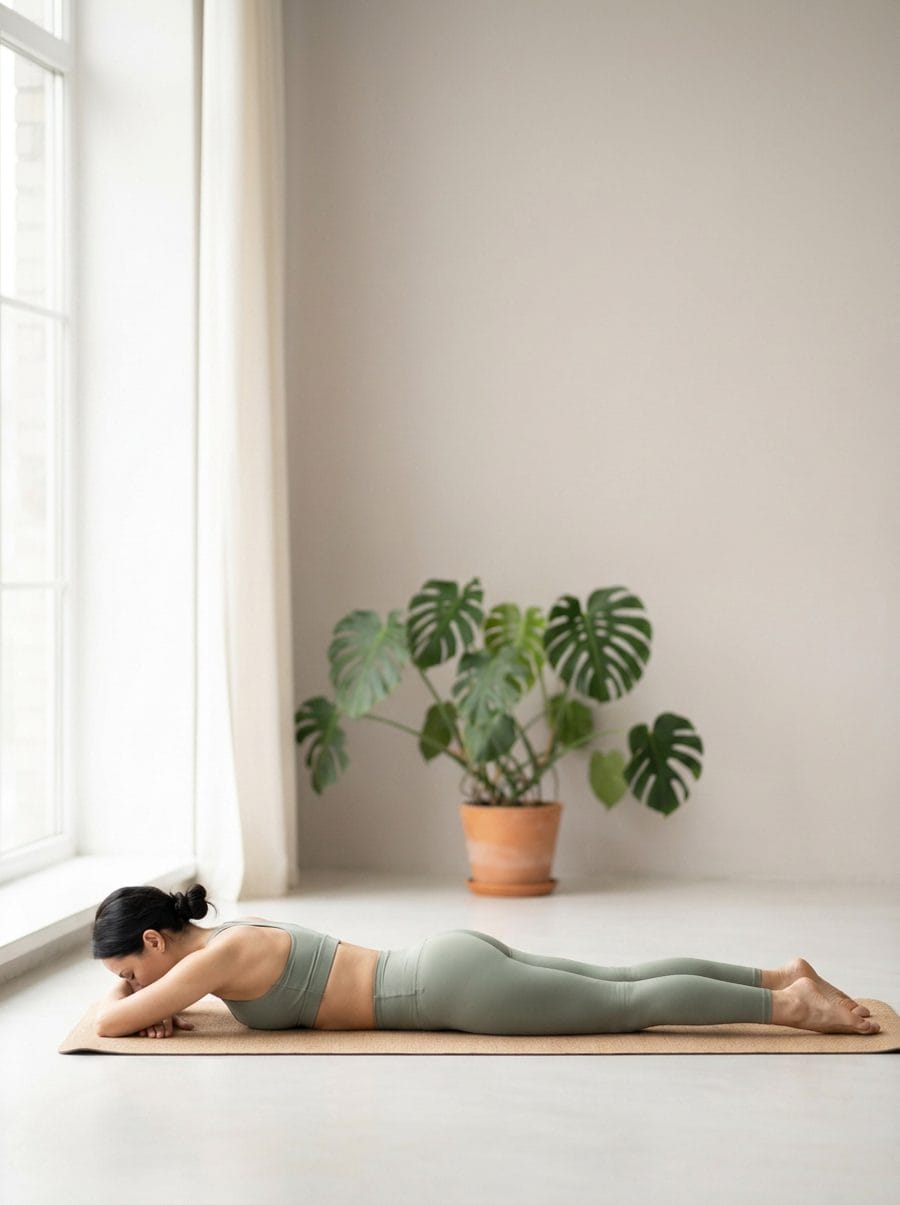
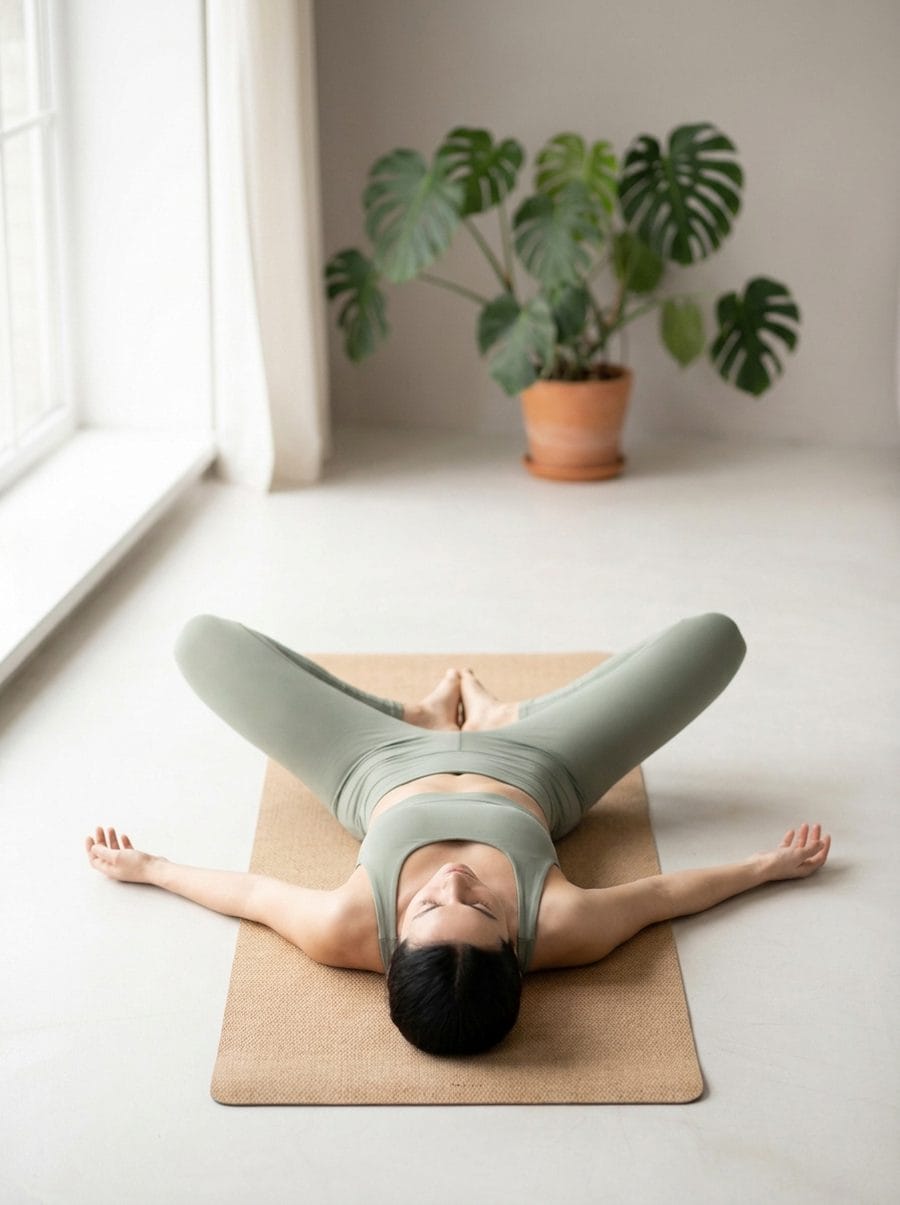
Settle into Relaxation Pose. Slide a bolster beneath the knees, rest your head on something low and soft, and pull a blanket over you: lying still, the body cools down quickly. If staying on your back for long is hard, roll onto your belly in Crocodile Pose or choose Reclining Butterfly Pose with props under your knees.
A rough timeline:
- Minutes 0 to 2. Settle in, breathe out slowly 3 to 5 times, letting each exhale run long, and silently say your sankalpa.
- Minutes 2 to 9. Rotation of awareness: right arm, left arm, right leg, left leg, back, front of the body, head.
- Minutes 9 to 13. Breath and a backward count of exhales. Lost count? Start over.
- Minutes 13 to 17. Opposite sensations and, if you like, one calm image.
- Minutes 17 to 20. Repeat your sankalpa, sense your whole body, wiggle your fingers, roll onto your side, stay there for a couple of breaths, then sit up.
Reading a script while trying to relax is tough, so record it in your own voice or play a recording. What matters is a calm voice and long pauses.
Getting ready: a gentle practice before yoga nidra
It's easier to relax deeply once your body has moved a little. In the app, Low-Energy Day makes a natural lead-in: 14 minutes, beginner level, all on the floor. Near the end you spend about two minutes with your legs on the wall, then come nearly four minutes of savasana, and from there you can slide straight into nidra without getting up.
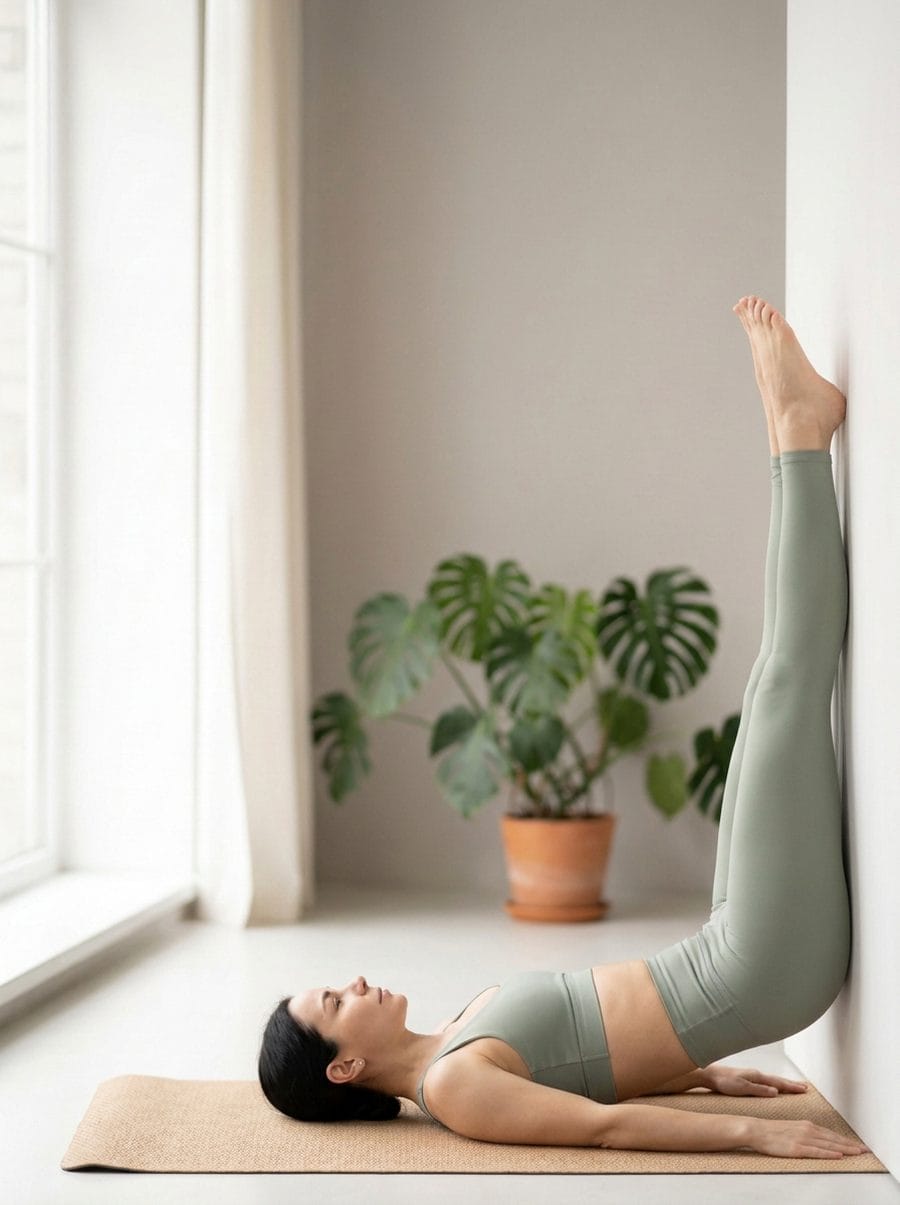
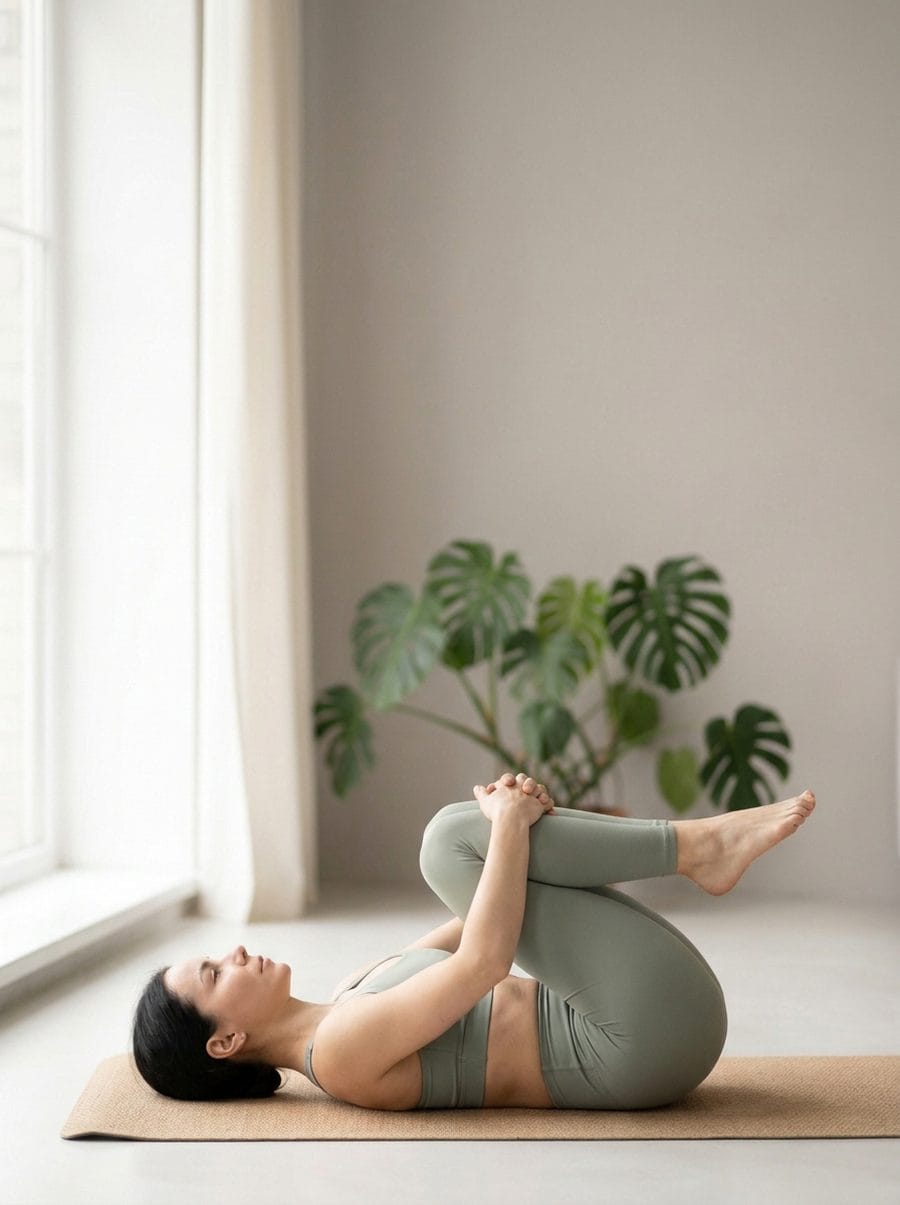
Short on time? Two poses are enough: Legs-Up-the-Wall Pose and Knees-to-Chest Pose, 1 to 2 minutes each.
What research says about yoga nidra benefits
Research on yoga nidra is growing, but much of it is of modest quality. A 2023 integrative review looked at 29 studies; most found the practice helpful for stress, mood, well-being and sleep. However, the groups, session lengths and schedules varied widely, and the authors call for more rigorous trials.
A 2026 meta-analysis pooled 73 studies with 5,201 participants. Yoga nidra noticeably reduced stress, anxiety and depressive symptoms compared with control groups. The authors themselves warn that, given the weak methods, these effects are probably overestimated. The careful conclusion: yoga nidra is a good way to rest and unwind, but it doesn't replace sleep or professional care.
Is yoga nidra safe?
For most people, yes. According to NCCIH, though, deep relaxation techniques now and then stir up worry, unwanted thoughts, or a sense of losing your grip. If you have a history of trauma, epilepsy or a mental health condition, practice with a professional.
You can skip any image that stirs up unpleasant feelings, and open your eyes whenever you want.
As for the poses, the app data name three situations in which Legs-Up-the-Wall Pose has to be skipped: glaucoma, menstruation and hypertension that isn't controlled. After the first trimester, Crocodile Pose isn't suitable because lying on the belly is off the table; in Knees-to-Chest Pose, open the knees wider than the belly, and if that doesn't work, skip the pose.
Never practice yoga nidra while driving or right before you get behind the wheel.
Pose cautions in this article
- Pregnancy from the second trimester onward — the pose is done lying on the belly (Crocodile Pose)
- Groin discomfort — place supports under your knees (Reclining Butterfly Pose)
- Menstruation (Legs-Up-the-Wall Pose)
- Glaucoma (Legs-Up-the-Wall Pose)
- Uncontrolled hypertension (Legs-Up-the-Wall Pose)
- Pregnancy from the second trimester onward — take your knees wider than your belly or skip the pose (Knees-to-Chest Pose)
This site is for general information and is not medical advice. If you have pain, an injury, a chronic condition, or are pregnant, check with a qualified professional before practicing.
Questions
What's the difference between yoga nidra and meditation? In meditation you usually sit and hold your attention yourself. In yoga nidra you lie down, and a voice leads your attention through a set script.
What if I fall asleep during yoga nidra? That's fine, especially in the evening. If you're using it to rest during the day, use fewer props and keep your eyes slightly open so you don't drift off.
How long is a yoga nidra session? Usually 15 to 45 minutes. Beginners do well starting with 15 to 20.
Can yoga nidra replace sleep? No. It's a way to rest during the day or unwind before bed, but a full night of sleep is still something you need.
Sources
- Musto S, Hazard Vallerand A. Exploring the uses of yoga nidra: An integrative review. Journal of Nursing Scholarship, 2023.
- Ghai S, et al. Effects of Yoga Nidra on Stress, Anxiety, and Depression: A Systematic Review and Meta-Analysis. Annals of the New York Academy of Sciences, 2026.
- NCCIH. Relaxation Techniques: What You Need To Know.
- Pose technique and cautions, program contents, savasana length in the programs: the Hatha Yoga app. How we verify our texts is explained on the How We Prepare Our Content page.
Read next
- Yoga for Arthritis and Osteoporosis: How to Protect Your Joints and Bones7 min read
- Ashtanga Yoga Explained: The Series, the Breath and the Difference from Hatha6 min read
- Ayurveda Explained Simply: The Basics and a Daily Routine (Dinacharya)5 min read
- Balance Exercises: 10 Yoga Poses for Balance and Stability7 min read