 Hatha Yoga
Bridge Pose with Ankle Hold
Dvipāda Pīṭhāsana
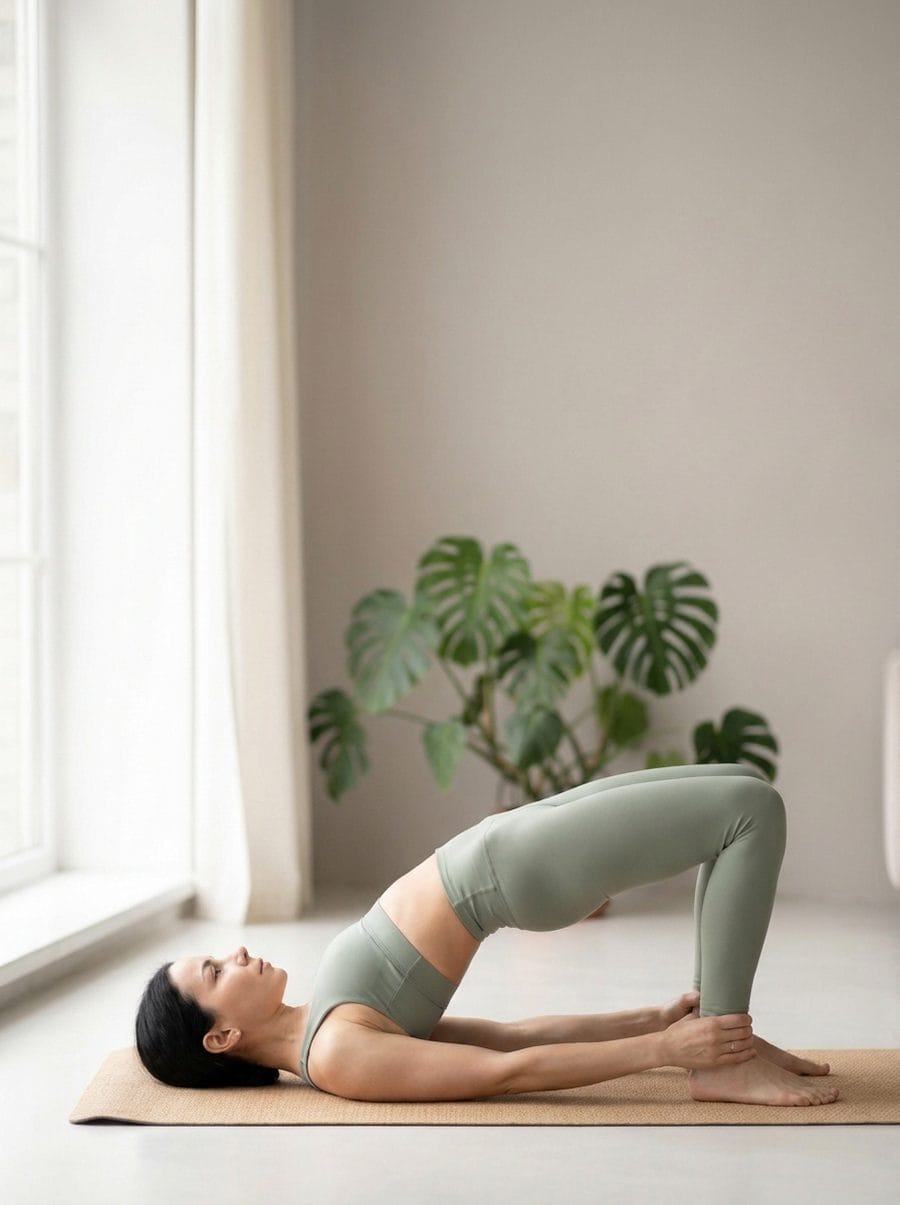
Dvipada Pithasana, or Bridge Pose with Ankle Hold, is a bridge in which your hands hold on to your ankles. The grip stops your feet from sliding away and helps you lift your hips higher, while your shoulders draw together underneath you and open the chest.
It's rated intermediate, with a 30-second hold on the pose card. Of the app's programs, Spine Wave uses it, with One-Legged Bridge following straight after.
A variation of: Bridge Pose
How to do it
- EnterLie on your back, bend your knees, and place your feet close to your hips. Take hold of your ankles, and inhale as you lift your hips.
- HoldKeep your knees over your heels, pointing forward. Lift your hips higher and bring your chest toward your chin. Your shoulders and feet carry your weight. Don't turn your head.
- ExitExhale, release your ankles, and roll your spine down to the mat one vertebra at a time.
More detail
Set your feet closer to your hips than for a basic bridge, so your fingertips can reach your ankles before you lift. If they can't, wrap a strap around both ankles and hold its ends. Before rising, squeeze your shoulder blades together and tuck your shoulders slightly under you, so the weight lands on their outer edges instead of your neck.
The lift starts from your feet: heels press down, knees travel forward over your toes. Keep your thighs parallel, no wider than your hips. If the hold feels like too much, lower your pelvis for a couple of breaths and come up again.
Benefits
Strengthens the glutes and back, and opens the chest and shoulders.
Here the glutes, the backs of the thighs and the spinal extensors all switch on. Holding the ankles also stretches the chest and shoulders across the front far more than a bridge with hands flat on the mat. That makes the pose a stepping stone from a simple bridge toward deeper backbends lying on your back.
Cautions
- Neck and shoulder injuries
- High blood pressure
- Late pregnancy
This site is for general information and is not medical advice. If you have pain, an injury, a chronic condition, or are pregnant, check with a qualified professional before practicing.
Common mistakes
- Letting the knees fall open. They point straight ahead and stay over your heels.
- Shifting weight into the neck. Your shoulders carry you, with a small gap under the back of the neck.
- Hauling yourself up by the ankles. The hands just hold on; your legs and glutes do the lifting.
- Looking side to side at the top. Your neck needs stillness here, so gaze straight up.
Counterpose
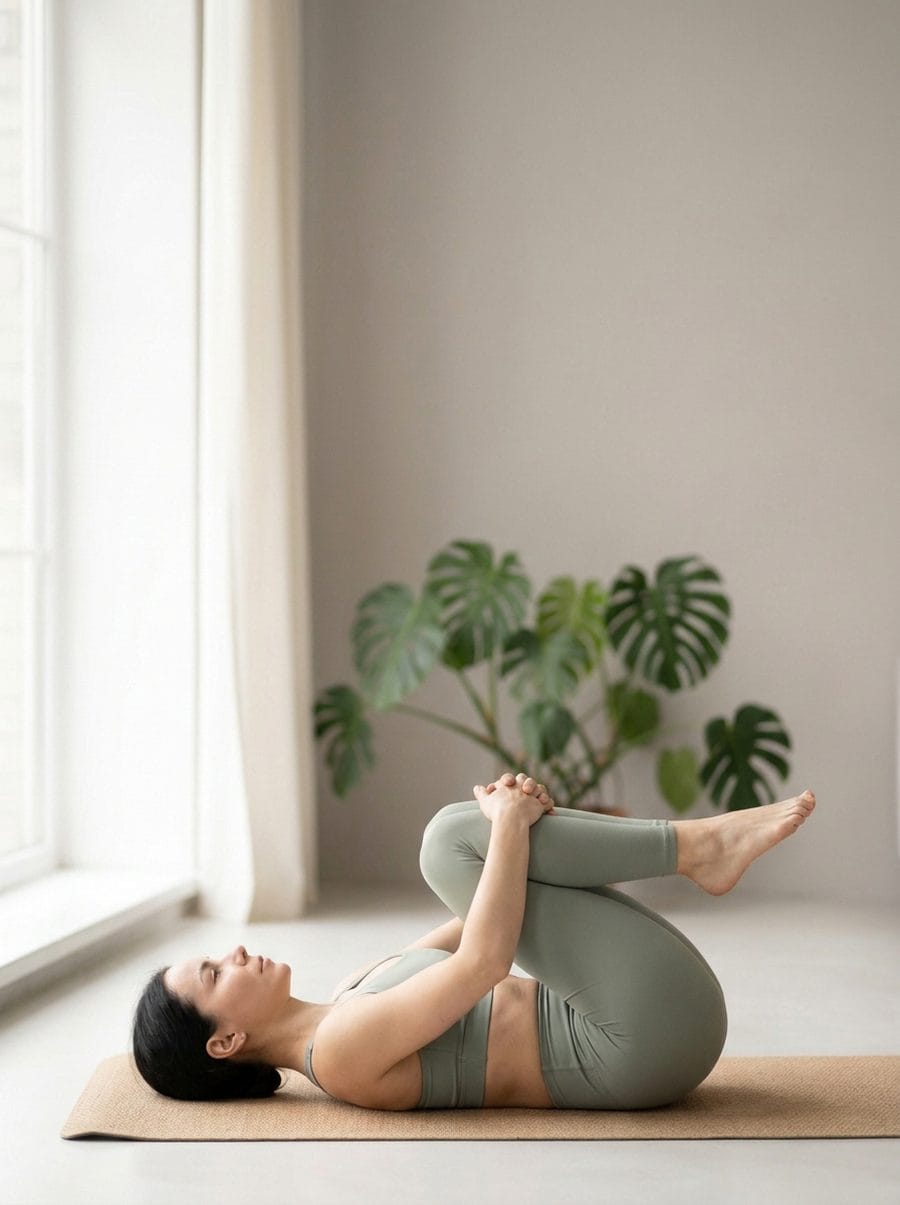
Where it appears
- Spine Wave 13 min · Intermediate
Similar poses
Questions
What does Dvipada Pithasana mean? In Sanskrit, "dvi" is two, "pada" is foot, and "pitha" is a seat or stand. The name stresses support on both feet, unlike Ekapada Pithasana, which balances on one.
Who should avoid Bridge Pose with Ankle Hold? Three reasons to skip it: an injured neck or shoulders, high blood pressure, late pregnancy.
How can I make it harder? Shift your weight into one foot and extend the other leg toward the ceiling: that's One-Legged Bridge Pose. In Spine Wave the two poses come back to back, with Knees-to-Chest Pose closing the pair.
Updated: