 Hatha Yoga
Gate Pose
Parighāsana
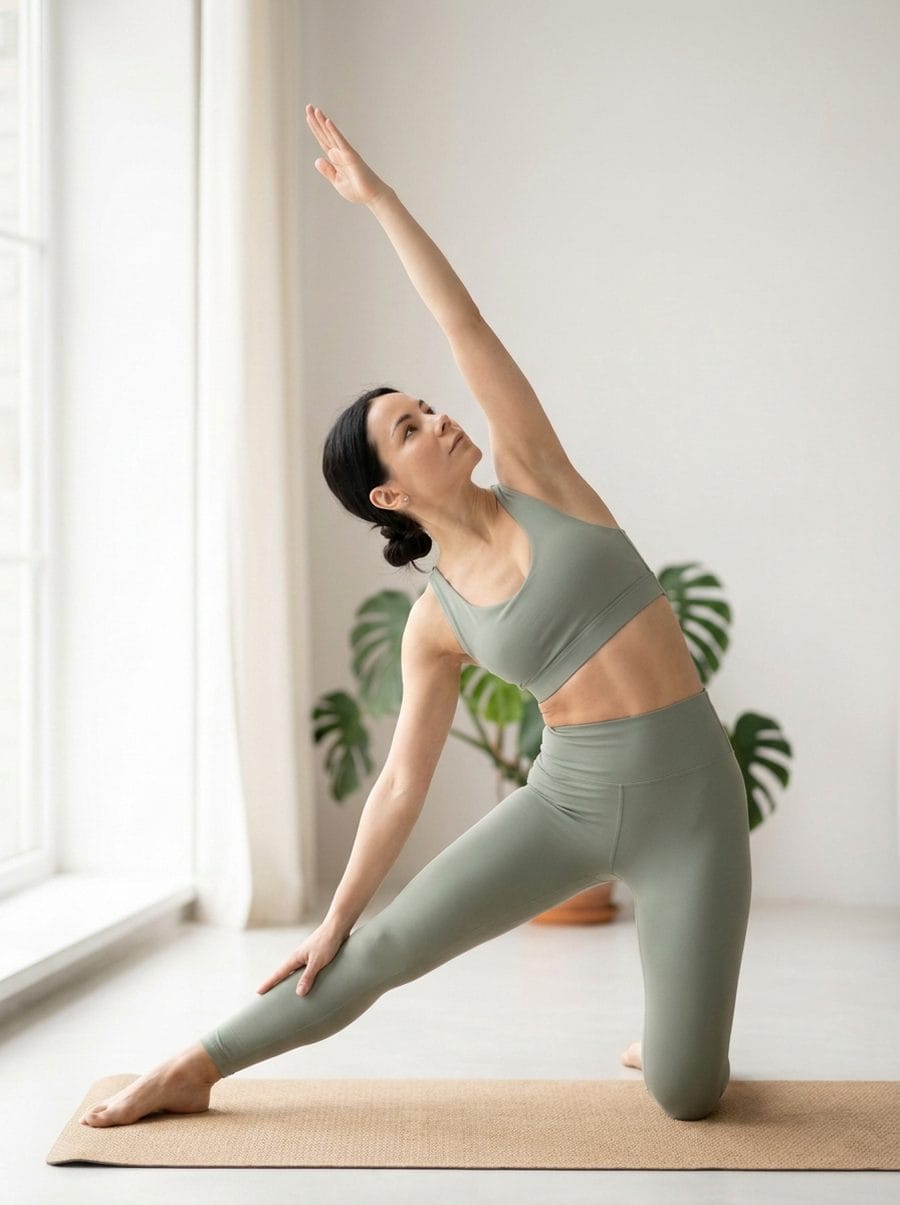
Gate Pose, or Parighasana, is a side bend from a kneel, with one leg stretched out to the side. The Sanskrit "parigha" refers to the crossbar that locks a gate shut: the straight leg and the torso reaching over it echo that bar.
It's intermediate, held 30 seconds per side. The app uses it in two sequences: Path to Lotus keeps it for 30 seconds and Splits: Advanced Path for 35.
How to do it
- EnterKneel and extend one leg out to the side, foot on the floor. Inhale, raise the opposite arm, and bend toward the extended leg, resting your lower palm on your shin.
- HoldKeep your torso in one plane with your legs, top arm reaching over your ear. Open the side of your body with every inhale.
- ExitInhale, lift your torso, bring your leg back, and switch sides.
More detail
Fold a blanket under your kneeling knee right away, because bare floor gets uncomfortable fast. Your kneeling-side thigh stays vertical with your hip right above the knee. Send the extended leg straight out to the side, in line with the kneeling knee; the foot can be flat or resting on its heel if that's steadier.
Lift your arm and grow tall first, and only then lean toward the leg. Your lower hand glides along the thigh or shin and barely touches it, so don't shift weight onto it. If the bend feels like a struggle, stop higher with your palm on your thigh and your torso even.
Aim your breath into the upper side of your ribs and feel them spread a little wider on every inhale.
Benefits
A deep side stretch for the rarely stretched muscles between the ribs.
Parighasana lengthens the side of your torso and the muscles between your ribs, which everyday movement hardly ever stretches. The outstretched leg gets work along the inner thigh at the same time. That makes the pose a fit both for splits preparation and for a sequence that opens the hips for Lotus.
Cautions
- Knee injuries — place a blanket under your knees
This site is for general information and is not medical advice. If you have pain, an injury, a chronic condition, or are pregnant, check with a qualified professional before practicing.
Common mistakes
- Letting your hips drift back behind the kneeling knee. Keep that thigh upright.
- Dropping your chest toward the floor. Keep your torso in the same plane as your legs.
- Leaning on the knee of the straight leg. Rest your hand on the shin or thigh without pressing.
- Letting your head hang toward your shoulder. Lengthen your neck and frame your head with your arms.
Where it appears
- Path to Lotus 30 min · Advanced
- Splits: Advanced Path 35 min · Advanced
Similar poses
Questions
What does Parighasana mean? In Sanskrit, "parigha" is a crossbar or beam used to bar a gate. That's where the English name, Gate Pose, comes from.
What if kneeling hurts my knees? Pad the knee with a blanket, as the app advises. If your knee still hurts on the padding, skip the pose.
Why is Gate Pose in sequences for splits and Lotus? It opens the side line of your body and the inner thigh of the extended leg. Both sequences are advanced, and Gate serves them as a preparatory stretch.
Updated: