 Hatha Yoga
Face Yoga: An Honest Look at the Evidence and What Helps Instead
Hatha Yoga editorial team · Updated · 6 min read
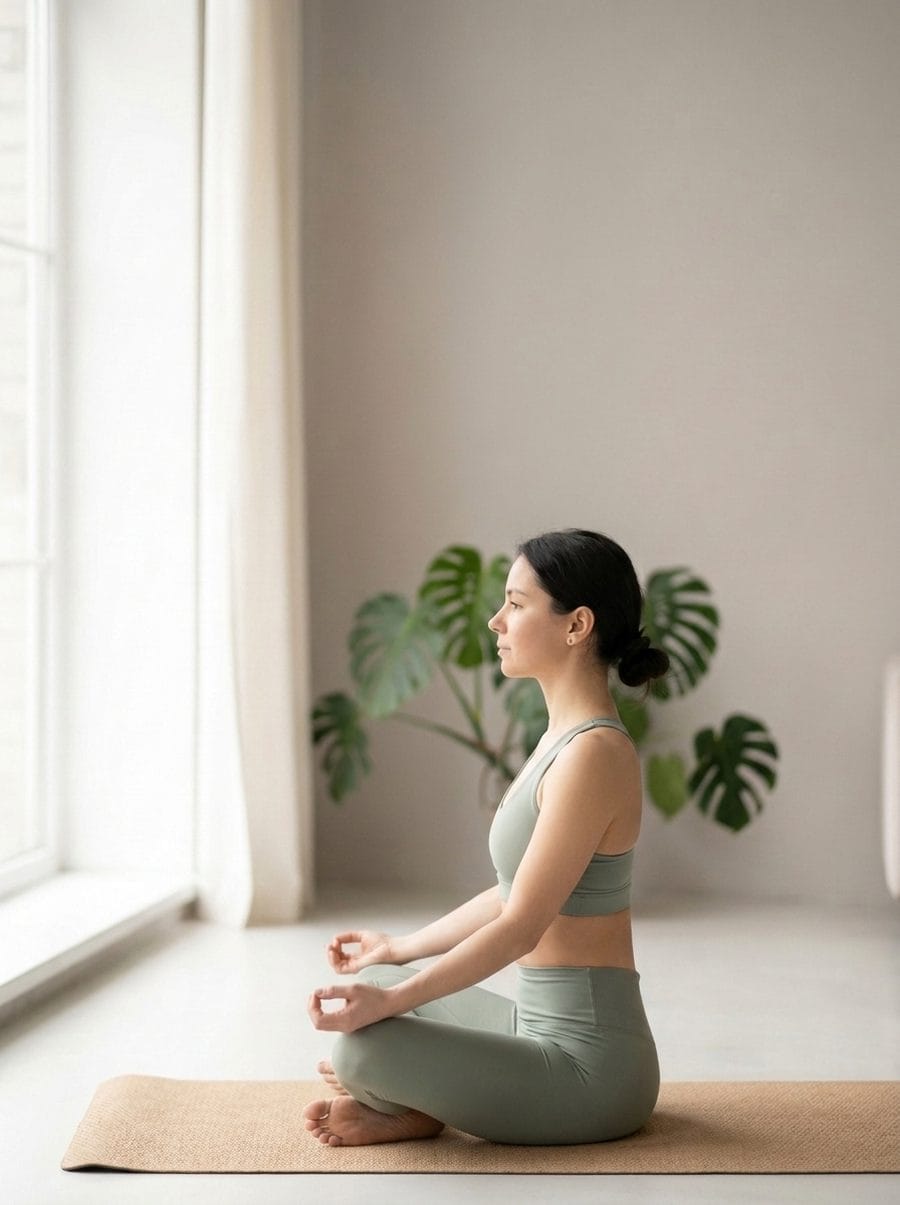
Face yoga promises to lift your jawline, get rid of a double chin and smooth out wrinkles with exercises for your facial muscles. Let's be upfront: our app doesn't include these exercises, and there's little scientific evidence behind them. Below we look at what research has found, which promises have nothing to back them up, and what hatha yoga can genuinely offer a tired-looking face: a relaxed jaw, a loose neck and decent sleep.
What is face yoga?
It's a set of exercises for the muscles of facial expression: making faces, tensing and holding, self-massage, sometimes a gua sha tool. Many methods carry their creator's name and are sold as courses. The main thing face yoga shares with classical poses is the word "yoga." Hatha yoga programs, our app included, have no separate face exercises.
What they do offer is neck and shoulder work, breathing and relaxation.
Does face yoga work? What studies show
A 2014 systematic review found nine studies on exercises for facial rejuvenation. All of them reported good results, but none had a control group or randomly assigned participants. They were single case reports and small case series, and results were judged by the authors or the participants themselves, without blinding. The review's verdict: there isn't enough evidence to say whether these exercises work.
A 2013 study with a control group enrolled 18 people, half of whom did four exercises against wrinkles and sagging skin every day for seven weeks. Untrained raters then scored photos of five areas of the face. A meaningful difference turned up in only one area, above the upper lip. The authors concluded that the exercises could not be shown to be effective.
A 2018 pilot study in JAMA Dermatology looked at a 20-week exercise program in middle-aged women. It was a pilot, and the founder of the method being tested was one of the coauthors, so larger independent studies are needed.
Face yoga before and after photos in ads aren't proof either: lighting, camera angle, makeup and expression all change how a face looks. None of this means the exercises are definitely useless. It means nobody can honestly promise you a result today.
Claims without evidence
- Losing a double chin or "burning" cheek fat. For the body, we know that exercising one area doesn't remove fat from that area specifically. For the face, there's no data at all.
- Reshaping your nose or cheekbones. We haven't found any research showing this.
- Replacing a dermatologist. None of the studies above compared exercises with cosmetic procedures.
There's also almost no data on harm. If an exercise causes jaw pain, clicking or a headache, stop doing it.
Your jaw: where the face stores tension
The app's guide Savasana: The Art of Relaxation notes that the jaw, tongue and eyes hide the most tension. You can check this right now: are your teeth pressed together, is your tongue pushing up?
A useful habit: a few times a day, say in traffic or in front of a screen, check three spots. Teeth apart, tongue not pressing on the roof of your mouth, brows not furrowed. If you catch some tension, breathe out slowly a couple of times and let it go.
There's a bit of support for this in research too. In a 2024 randomized trial, 90 people with temporomandibular joint dysfunction were split into three groups: dry needling, face yoga exercises, and a control group. After six weeks, the first two groups had less pain and could open their jaws more freely.
The authors call for further research. If you have jaw pain, clicking or trouble opening your mouth, see a dentist first.
Neck and shoulders: the frame around your face
When you hunch toward a screen with raised shoulders, tension gathers in your neck and under your chin. Neck and shoulder poses won't change your features, but they help you release that tension.
Half circles of the head and Shoulder Rolls shake off stiffness in about a minute. In Puppy Pose your chest sinks toward the floor and your upper back lengthens. Fish Pose does the opposite: your chest rises toward the ceiling and your throat and the front of your neck open up.
Save Fish Pose for last, and check its cautions before you try it.
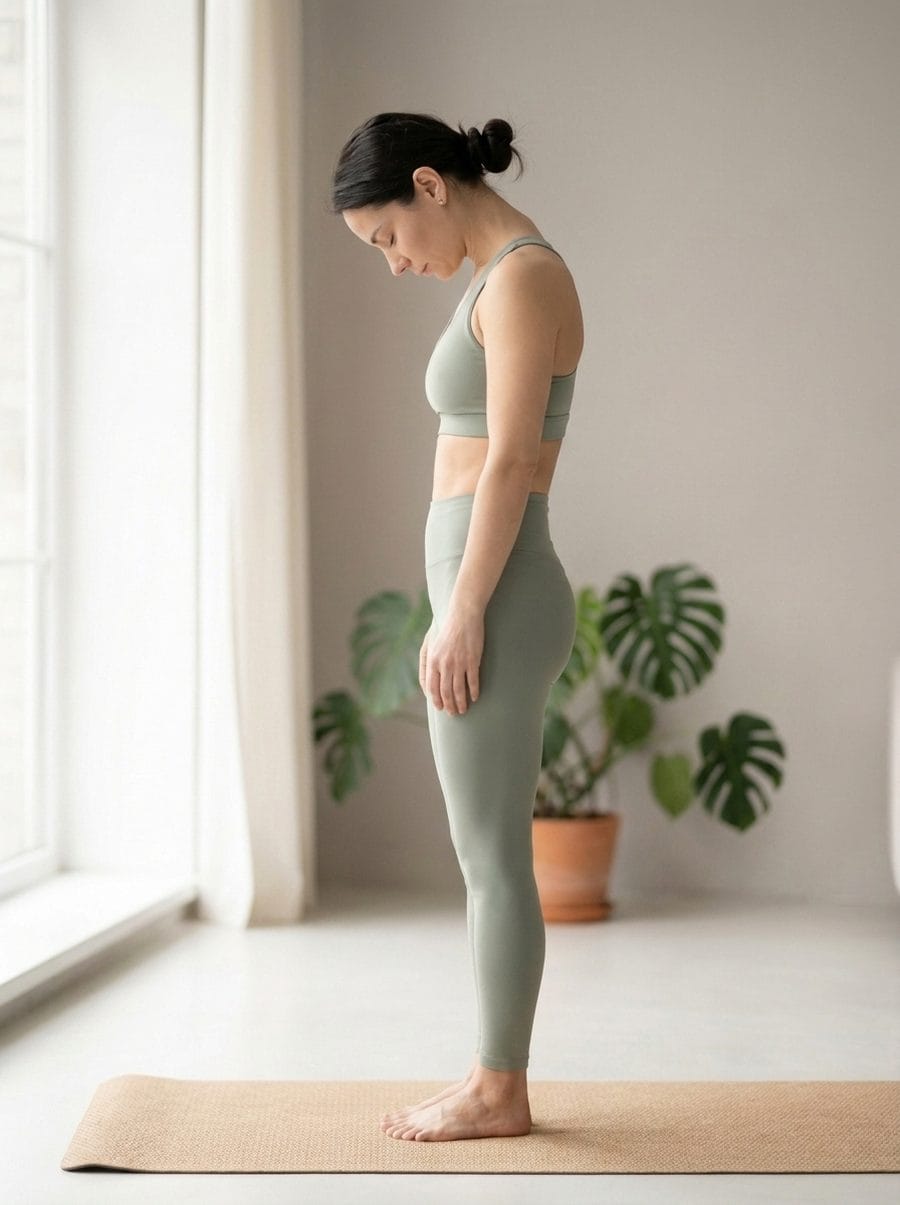
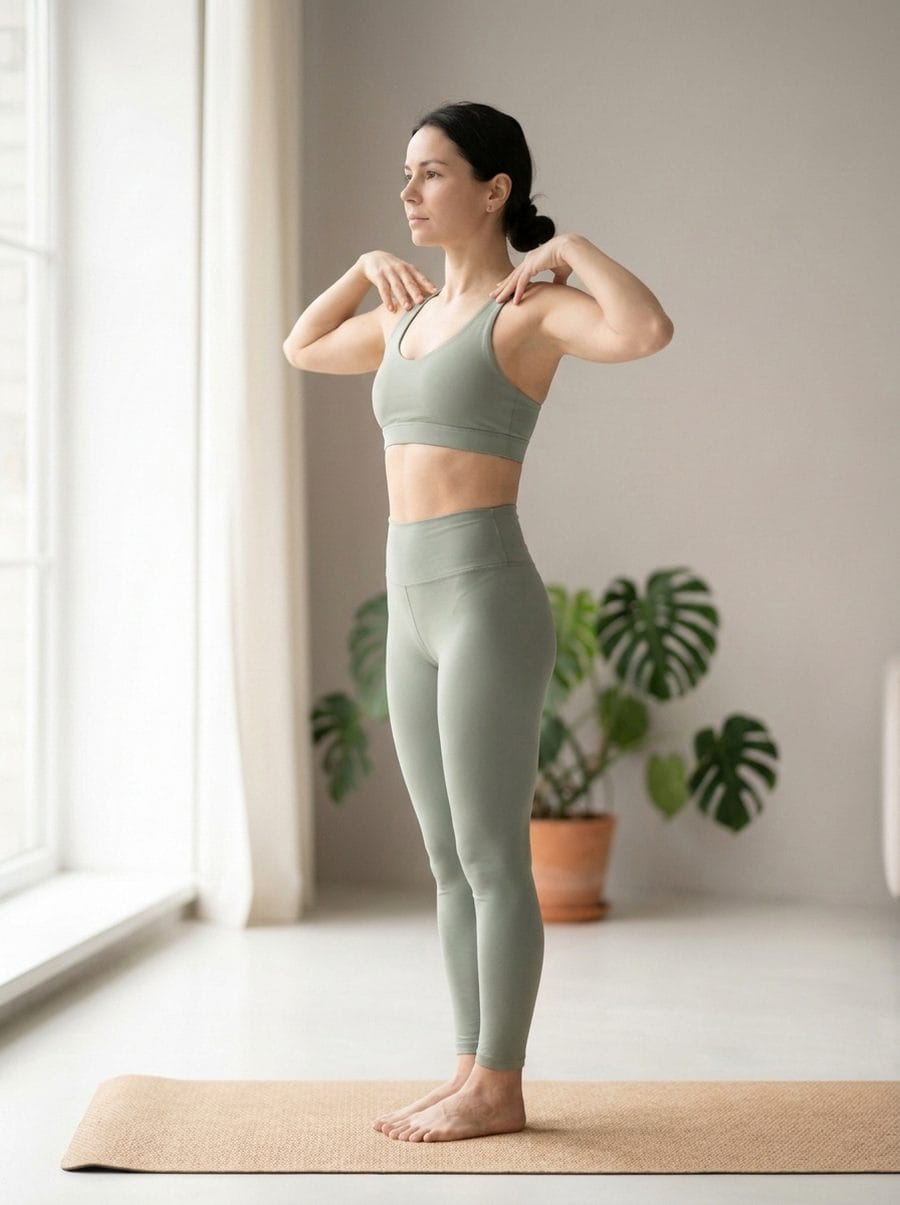
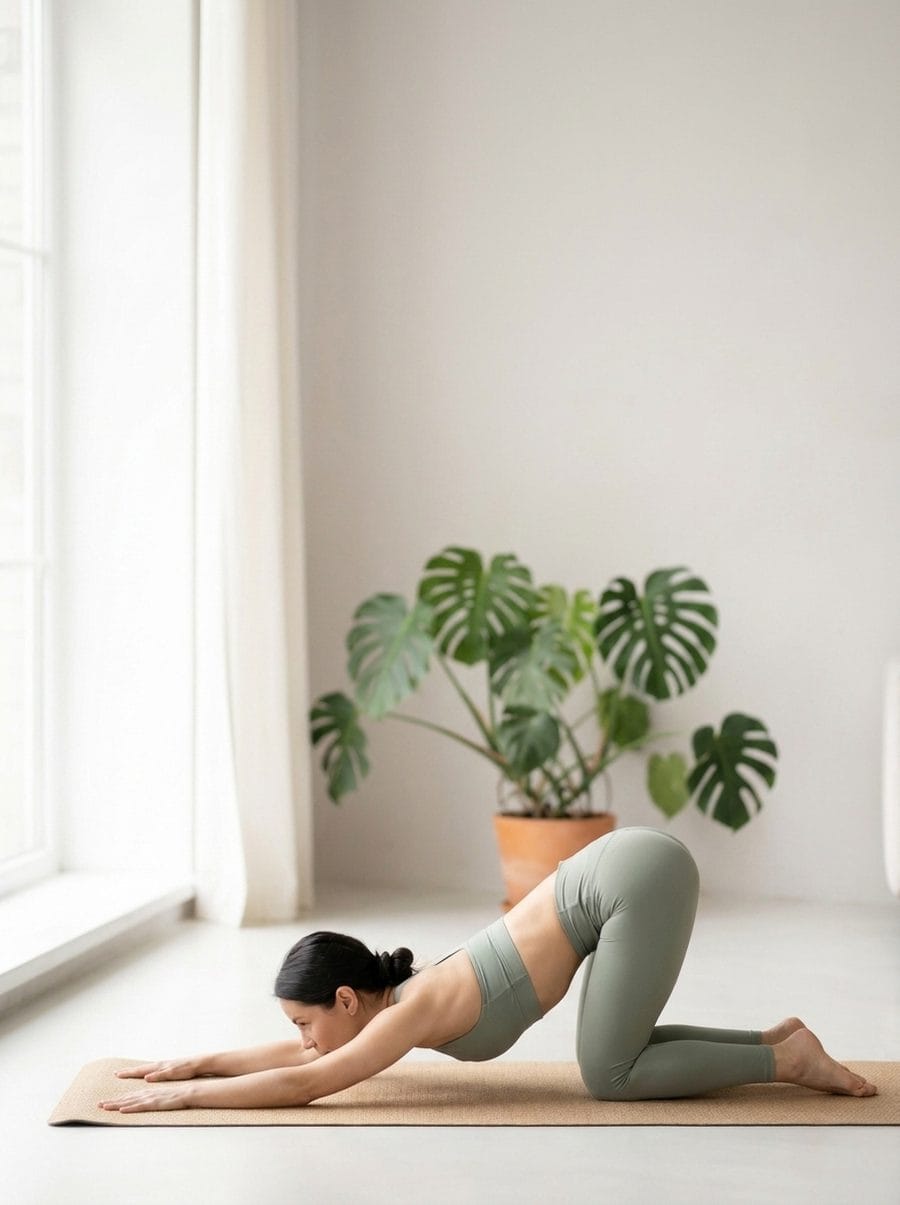
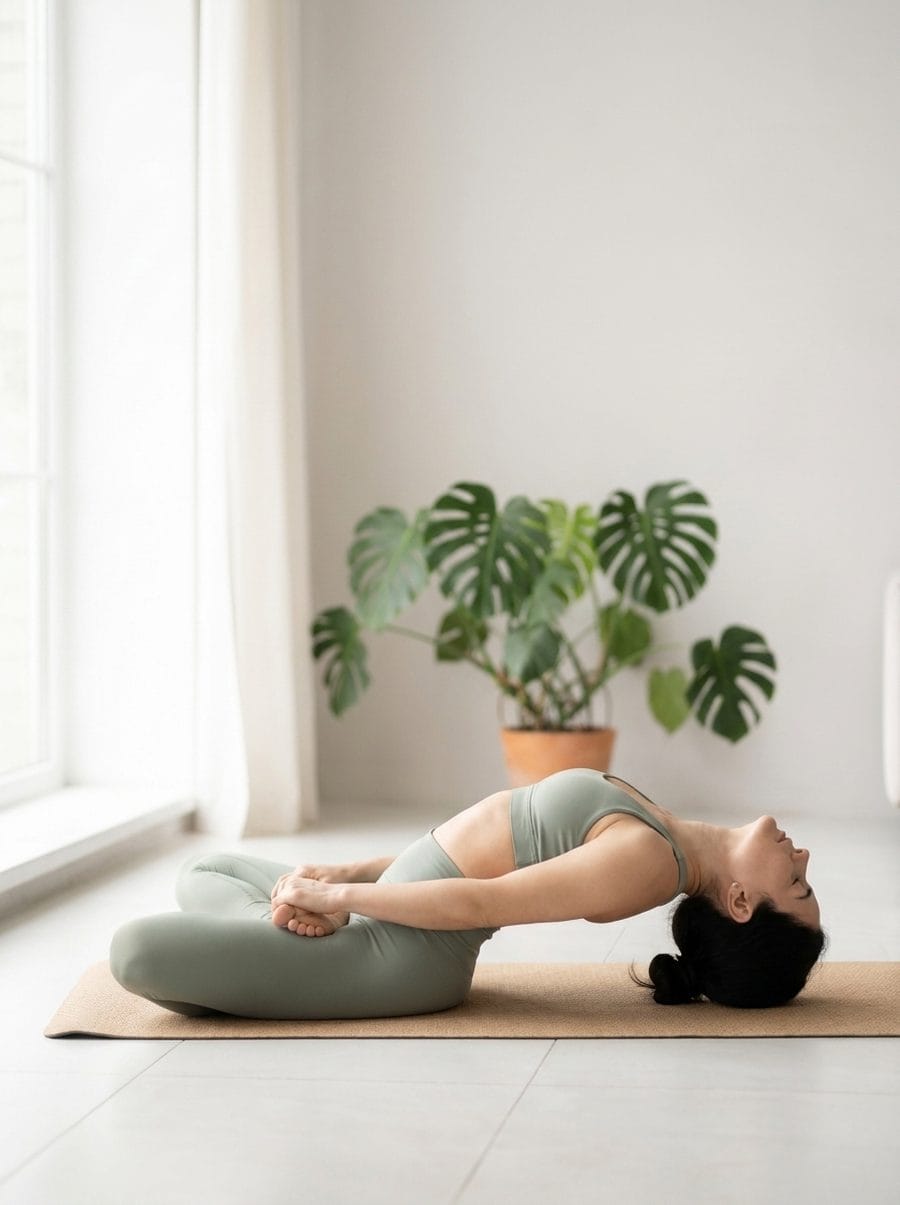
All four poses are part of Office Reset, a 10-minute beginner routine for a work break. For more exercises, see Yoga for Neck and Shoulders.
Sleep shows on your face
Here the evidence is more convincing. In a 2010 experiment, 23 adults were photographed after a normal night's sleep and after a sleepless night. A panel of 65 observers rated them as less healthy, more tired and less attractive when they were sleep deprived.
So an evening practice that gets you to bed on time may do more for your face than making faces in the mirror.
That's what the Before Bed routine is for: 10 minutes of gentle reclining poses and Relaxation Pose. Read more in Yoga for Sleep.
A 5-minute face relaxation routine
1. Lie down in Relaxation Pose or sit up tall. 2. Move your attention up through your body and pause on your face: forehead, brows, eyes, cheeks. 3. Let your teeth part, keep your lips softly closed and let your tongue rest loosely. 4.
Do a few rounds of Bee Breath: a four-count inhale, then an eight-count exhale with a quiet hum. You'll feel the vibration in your head. 5. Finish with Full Yogic Breath at a four-to-six rhythm.

Safety
- Neck Warm-Up. A sudden sharp neck pain or dizziness means no neck circles today.
- Fish Pose. Neck injuries, hypertension and migraines all rule it out.
- Puppy Pose. Skip it with a shoulder injury.
- Bee Breath. Wait until any ear inflammation has cleared.
Call emergency services if one side of your face suddenly droops, goes numb or feels weak: this can be a sign of a stroke.
Pose cautions in this article
- Acute neck pain (Neck Warm-Up)
- Dizziness (Neck Warm-Up)
- Shoulder injuries (Puppy Pose)
- Neck injuries (Fish Pose)
- Hypertension (Fish Pose)
- Migraines (Fish Pose)
This site is for general information and is not medical advice. If you have pain, an injury, a chronic condition, or are pregnant, check with a qualified professional before practicing.
Questions
Does face yoga actually work? There's no solid proof yet. The studies are small and lack independent checks, and in the only one with a control group, a difference appeared in just one area of the face.
How long does face yoga take to show results? In studies, programs ran from seven to twenty weeks, and the conclusions remain uncertain. Promises of visible change within a week have nothing behind them.
Is it safe to do face yoga every day? There's almost no data on harm. If you develop jaw pain, clicking or headaches, stop and see a doctor.
Does the app have face exercises? No. The app has routines for the neck and shoulders, breathing practices and relaxation, which help release tension in the jaw and neck.
Sources
- Van Borsel J, et al. The effectiveness of facial exercises for facial rejuvenation: a systematic review. Aesthetic Surgery Journal, 2014.
- De Vos MC, et al. Facial exercises for facial rejuvenation: a control group study. Folia Phoniatrica et Logopaedica, 2013.
- Alam M, et al. Association of Facial Exercise With the Appearance of Aging. JAMA Dermatology, 2018.
- Ozmen EE, Unuvar BS. The effects of dry needling and face yoga on pain, depression, function, and sleep quality in patients with temporomandibular dysfunction. Explore (NY), 2024.
- Axelsson J, et al. Beauty sleep: experimental study on the perceived health and attractiveness of sleep deprived people. BMJ, 2010.
- Vispute SS, et al. The effect of abdominal exercise on abdominal fat. Journal of Strength and Conditioning Research, 2011.
- Pose technique and cautions, breathing rhythms and routine contents: the Hatha Yoga app. More on how we review our texts on the How We Prepare Our Content page.
Read next
- Yoga for Arthritis and Osteoporosis: How to Protect Your Joints and Bones7 min read
- Ashtanga Yoga Explained: The Series, the Breath and the Difference from Hatha6 min read
- Ayurveda Explained Simply: The Basics and a Daily Routine (Dinacharya)5 min read
- Balance Exercises: 10 Yoga Poses for Balance and Stability7 min read