 Hatha Yoga
Restorative Yoga Poses with Props: A Gentle Practice for Deep Rest
Hatha Yoga editorial team · Updated · 6 min read
Restorative yoga is the most passive style of all: your whole body rests on pillows, bolsters and blankets, your muscles have nothing to hold, and there's almost no stretch. The goal is simple: deep rest. Below we cover what the style is and how it differs from yin yoga, what to use at home instead of a bolster, six restorative yoga poses with props, two gentle routines from the app, and who needs to take extra care.
What is restorative yoga?
It's a practice in which every pose is fully supported by props. A bolster, a firm yoga cushion, goes under your back; rolled blankets go under your knees and head; blocks or pillows go under your arms. Your legs can rest up a wall or on a chair seat.
Nothing in the body is left "hanging," so you can stay in a pose for five minutes or longer.
A typical class covers only a handful of poses. The room is warm, the lights are low, and sometimes an eye pillow or a folded towel rests over your eyes. Restorative yoga grew out of the prop work that Iyengar yoga is known for, but the aim is different: not precise alignment, just rest.
This isn't a workout. You don't stretch and you don't build strength. A good session ends with the feeling that you've slept, even though you haven't.
Restorative yoga vs. yin yoga
Both styles are slow, both use props, and people mix them up all the time. The difference is in what you feel. In yin yoga you find a mild stretch and stay with it; props just soften the pose. In restorative yoga, props are arranged so there's no stretch at all: if something pulls, you add another pillow.
Restorative yoga also differs from calm hatha in that your muscles do no work at all. In hatha, even a gentle pose asks you to hold its shape.
Props: what to use at home instead of a bolster
You don't need to buy everything at once. Almost every prop can be swapped for something you already own.
- Bolster. Two or three sofa cushions stacked up, or a tightly rolled blanket.
- Blankets. Two or three folded ones: for your head, under your pelvis, and to cover yourself.
- Blocks. Thick hardcover books.
- Strap. A bathrobe belt, to keep your feet together in the butterfly shape.
- Wall and chair. Handy places to rest your legs.
- Warmth. Socks and a sweater, because a few still minutes cool the body down.
Restorative yoga poses with props
Lying on your back
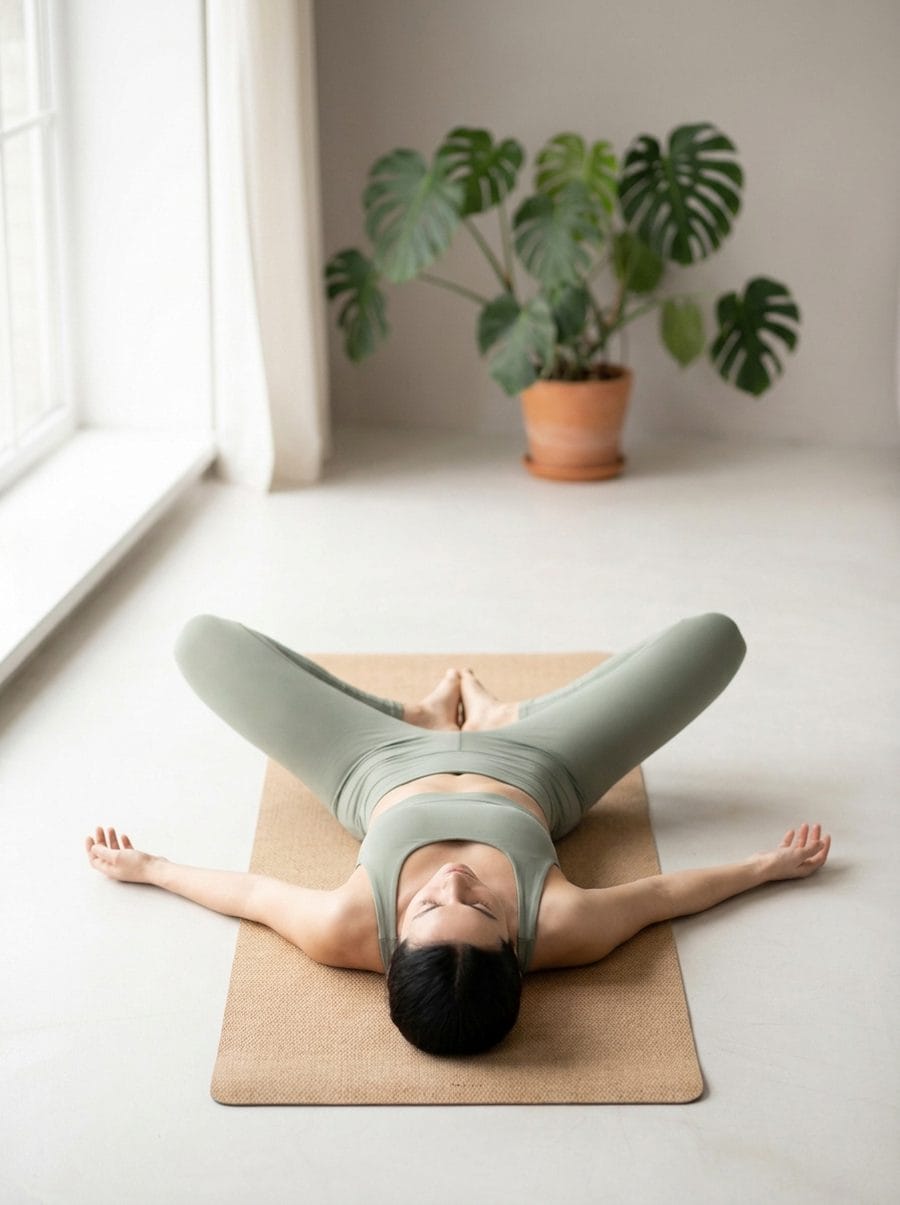
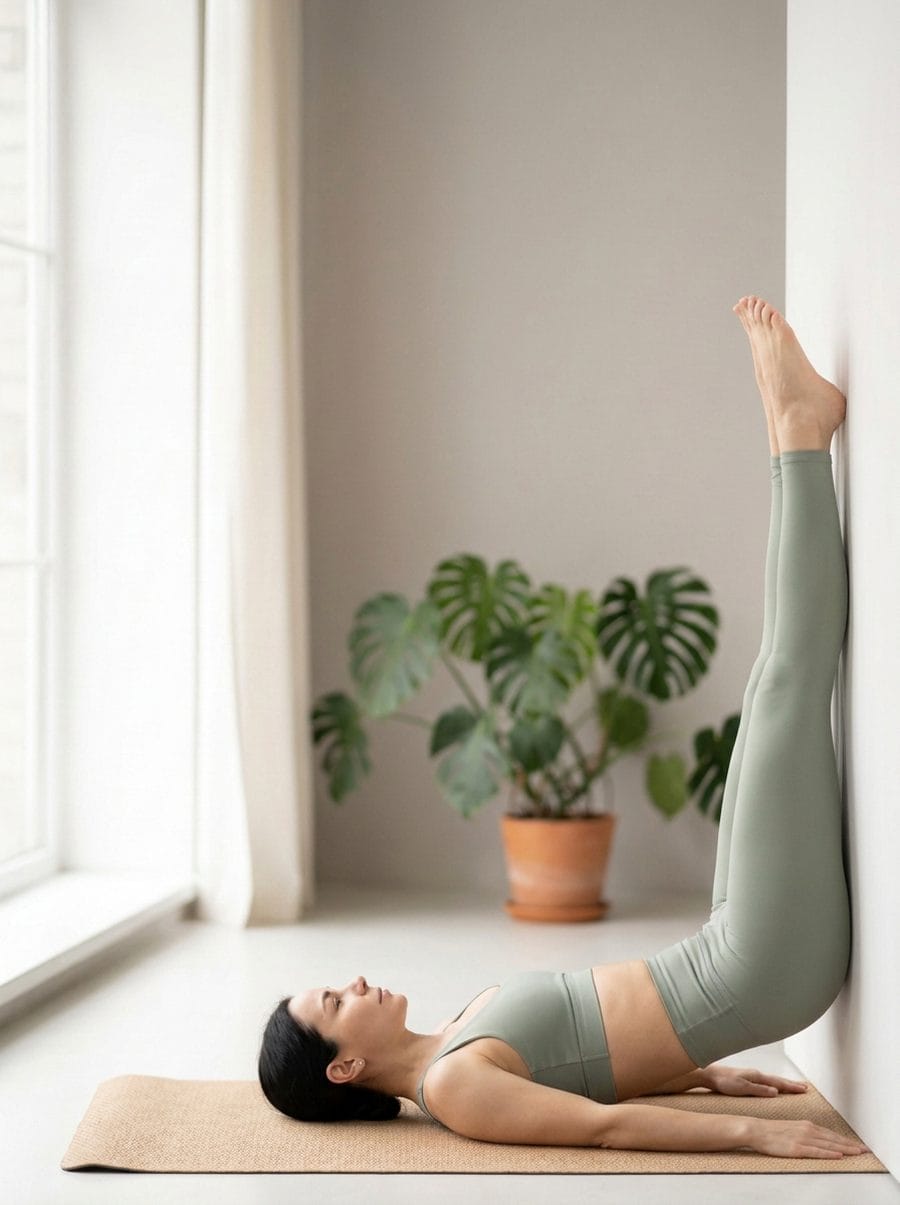
Reclining Butterfly Pose. A bolster along your spine, a blanket folded into a pad beneath the head, and a pillow under each knee so the inner thighs don't pull. Legs-Up-the-Wall Pose. Legs up the wall, pelvis raised slightly on a folded blanket; if you can't get close to a wall, rest your shins on a chair seat. Savasana. A roll under the knees takes tension off the lower back, with a thin blanket under the back of your head.

Face down and seated
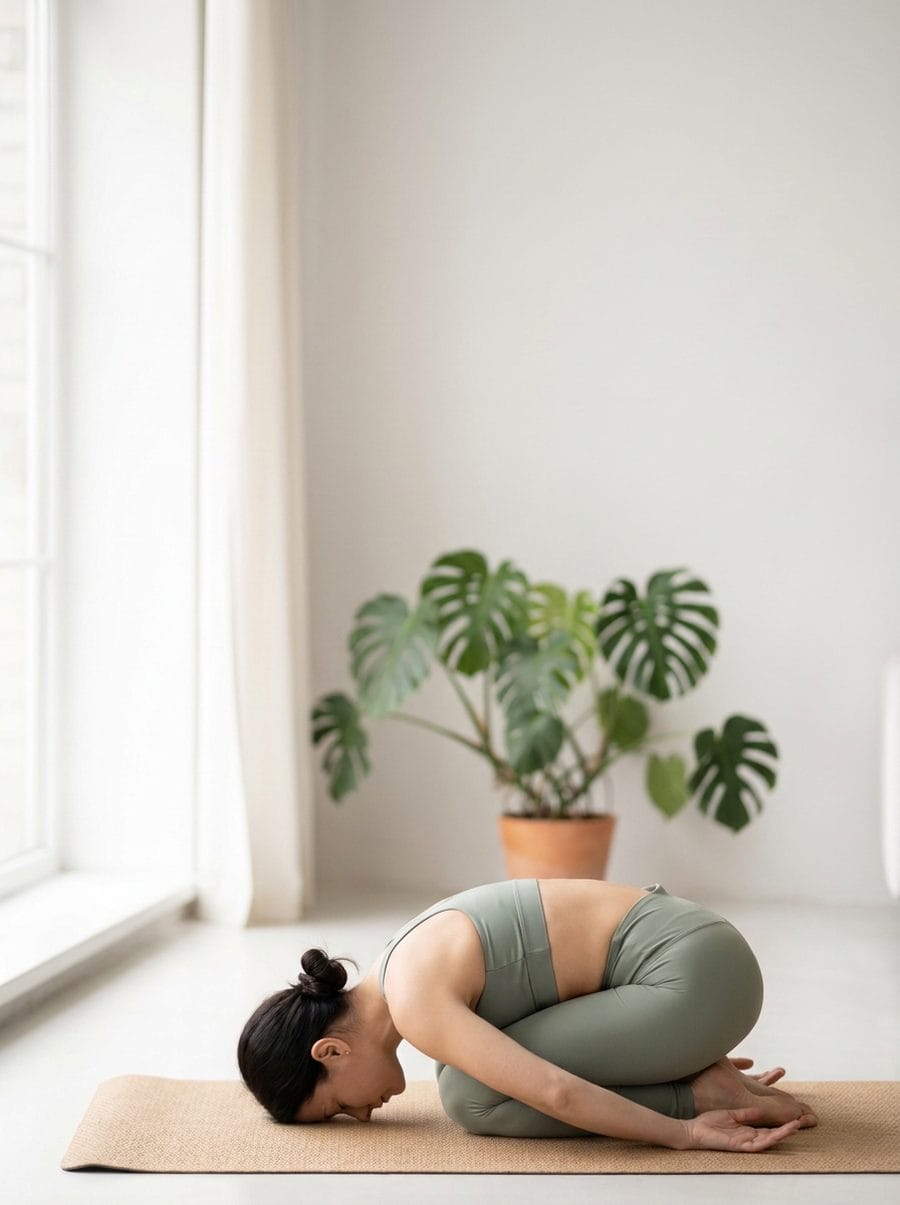
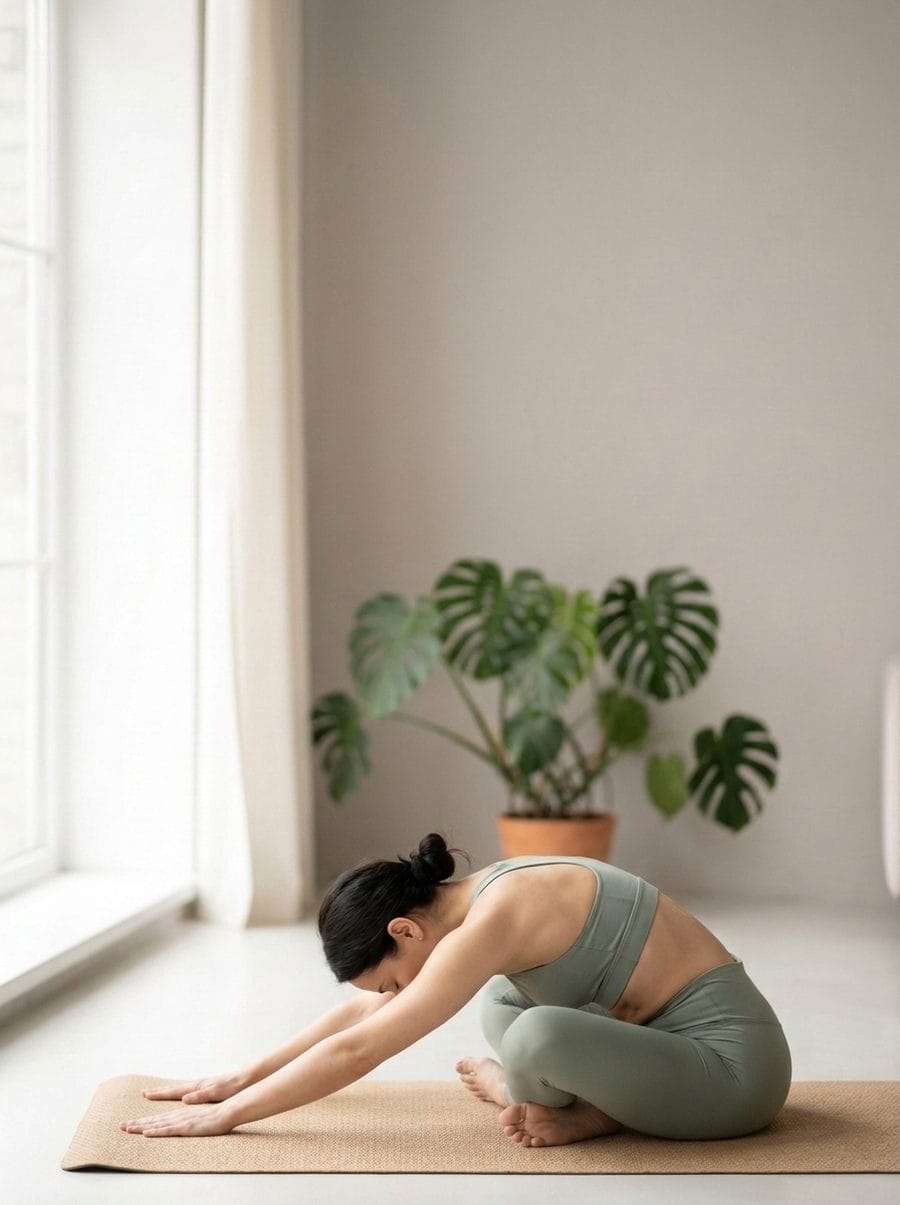
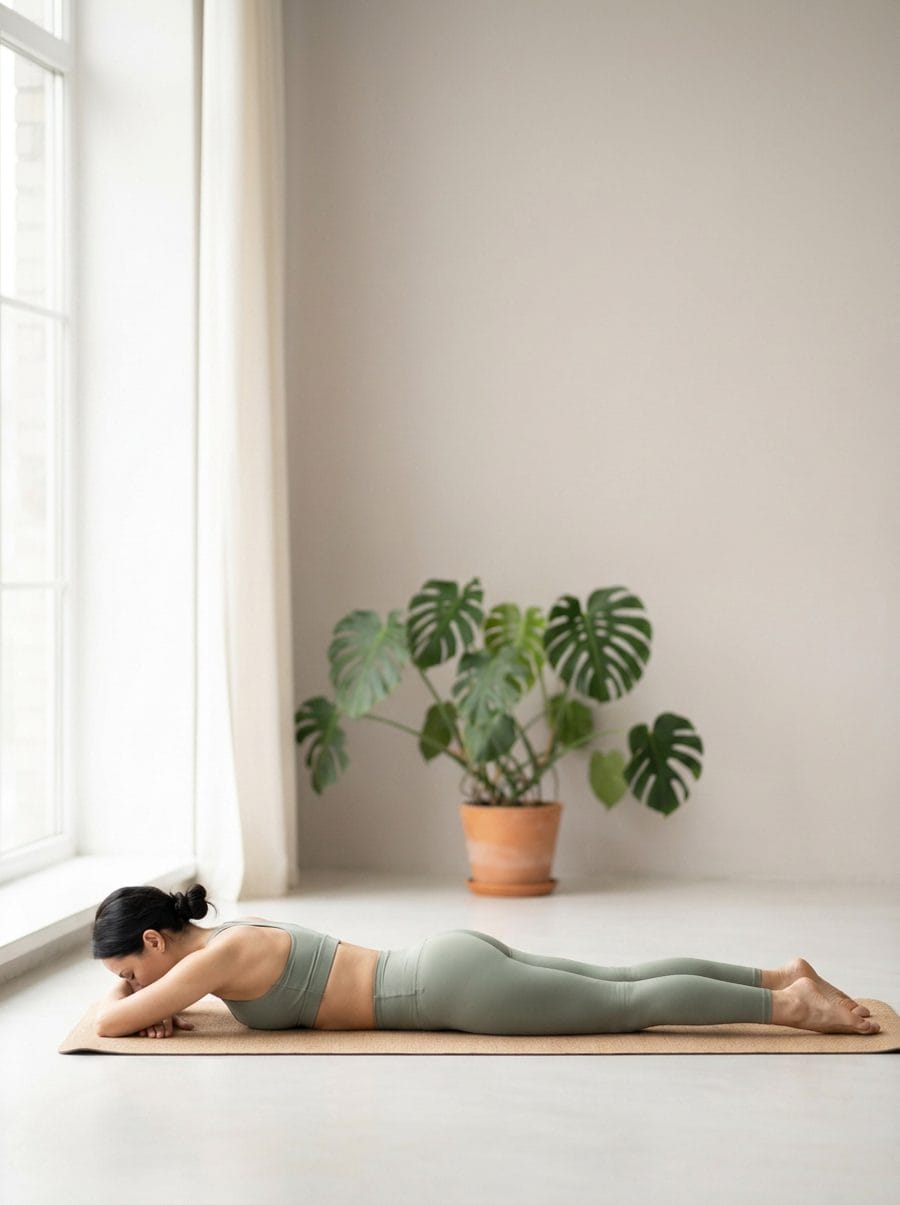
Child's Pose. Knees wide, a bolster or stack of pillows between your thighs, chest and cheek resting on the support. Cross-Legged Forward Fold. Forehead on a chair seat or on pillows stacked on your thighs. Crocodile Pose. Lying on your belly with your forehead on your crossed forearms or a rolled towel.
How to put together a restorative yoga sequence
To begin, three or four poses of three to five minutes apiece are plenty. Feeling stiff? Open with two minutes of loose neck and shoulder movement. Then two or three supported poses, and savasana to finish. Get up slowly, rolling onto your side first, so you don't feel dizzy.
A 20-minute example: two minutes of warm-up, five minutes of Reclining Butterfly on a bolster, five minutes of Legs-Up-the-Wall, three minutes of Child's Pose with pillows under your chest, and five minutes of savasana under a blanket. Set a timer beforehand so you don't check the clock.
Breathe calmly and let each breath out last a bit longer than the breath in. To learn the technique step by step, begin with the Full Yogic Breath. Thoughts will drift in, and that's fine: notice them, then come back to the sense of your body's weight sinking into the props.
Gentle routines from the app
There's no program labeled restorative yoga in the app. It does have two gentle practices close to it in spirit, and with the pillows and blankets described above they become even calmer.
Low-Energy Day takes 14 minutes without a single standing pose: 12 poses seated, on all fours and lying down. The longest holds are Legs-Up-the-Wall Pose, about two minutes, and savasana, close to four.
Evening Unwind lasts 15 minutes and has eight poses, with around four and a half minutes set aside for the final savasana. It works well about half an hour before bed.
Who it's for, and safety
Restorative yoga is a good fit after a hard day, during tired stretches, between intense workouts and in the evening. Older adults often choose it too: if getting up from the floor is hard, keep a chair nearby to lean on.
Reach for it on the evenings when even gentle stretching feels like too much and scrolling on the couch is the only thing you want. Twenty minutes on props gives your body rest away from screens and news.
- Legs-Up-the-Wall Pose. It's not done during menstruation, with glaucoma, or with high blood pressure that isn't controlled.
- Child's Pose. Leave it out if your knees are injured.
- Pregnancy. Lying on your back for long stretches isn't recommended in pregnancy, and Crocodile Pose, done on the belly, is out from the second trimester. Go over your practice with your doctor.
- Falling asleep. Dozing off isn't a mistake, but get up especially slowly afterward.
The general rules are in Safety and Contraindications.
Pose cautions in this article
- Groin discomfort — place supports under your knees (Reclining Butterfly Pose)
- Menstruation (Legs-Up-the-Wall Pose)
- Glaucoma (Legs-Up-the-Wall Pose)
- Uncontrolled hypertension (Legs-Up-the-Wall Pose)
- Pregnancy — widen your knees (Child's Pose)
- Knee injuries (Child's Pose)
- Knee discomfort — sit on a prop (Cross-Legged Forward Fold)
- Pregnancy from the second trimester onward — the pose is done lying on the belly (Crocodile Pose)
This site is for general information and is not medical advice. If you have pain, an injury, a chronic condition, or are pregnant, check with a qualified professional before practicing.
Questions
What's the difference between restorative yoga and yin yoga? In yin yoga you hold a pose in a mild stretch. In restorative yoga the props are placed so there's barely any stretch, and the only task is rest.
Can you do restorative yoga without a bolster? Yes. Sofa cushions or a tightly rolled blanket will do the job. What matters is that the support is firm and doesn't sink under your weight.
Is restorative yoga good for beginners and older adults? Yes, it's hard to find a more accessible style: no strength, flexibility or balance required. If getting down to the floor and back up is difficult, keep a sturdy chair within reach.
How long should you hold restorative yoga poses? Beginners usually start with three to five minutes. With experience, poses are held longer, as long as the body stays fully relaxed with nothing pulling.
Sources
- National Center for Complementary and Integrative Health. Yoga: Effectiveness and Safety. NCCIH.
- Pose technique and cautions, contents of the Low-Energy Day and Evening Unwind programs: the Hatha Yoga app. More on the How We Prepare Our Content page.
Read next
- Yoga for Arthritis and Osteoporosis: How to Protect Your Joints and Bones7 min read
- Ashtanga Yoga Explained: The Series, the Breath and the Difference from Hatha6 min read
- Ayurveda Explained Simply: The Basics and a Daily Routine (Dinacharya)5 min read
- Balance Exercises: 10 Yoga Poses for Balance and Stability7 min read