 Hatha Yoga
What Is Yin Yoga? Long Holds Without Effort, Explained
Hatha Yoga editorial team · Updated · 7 min read
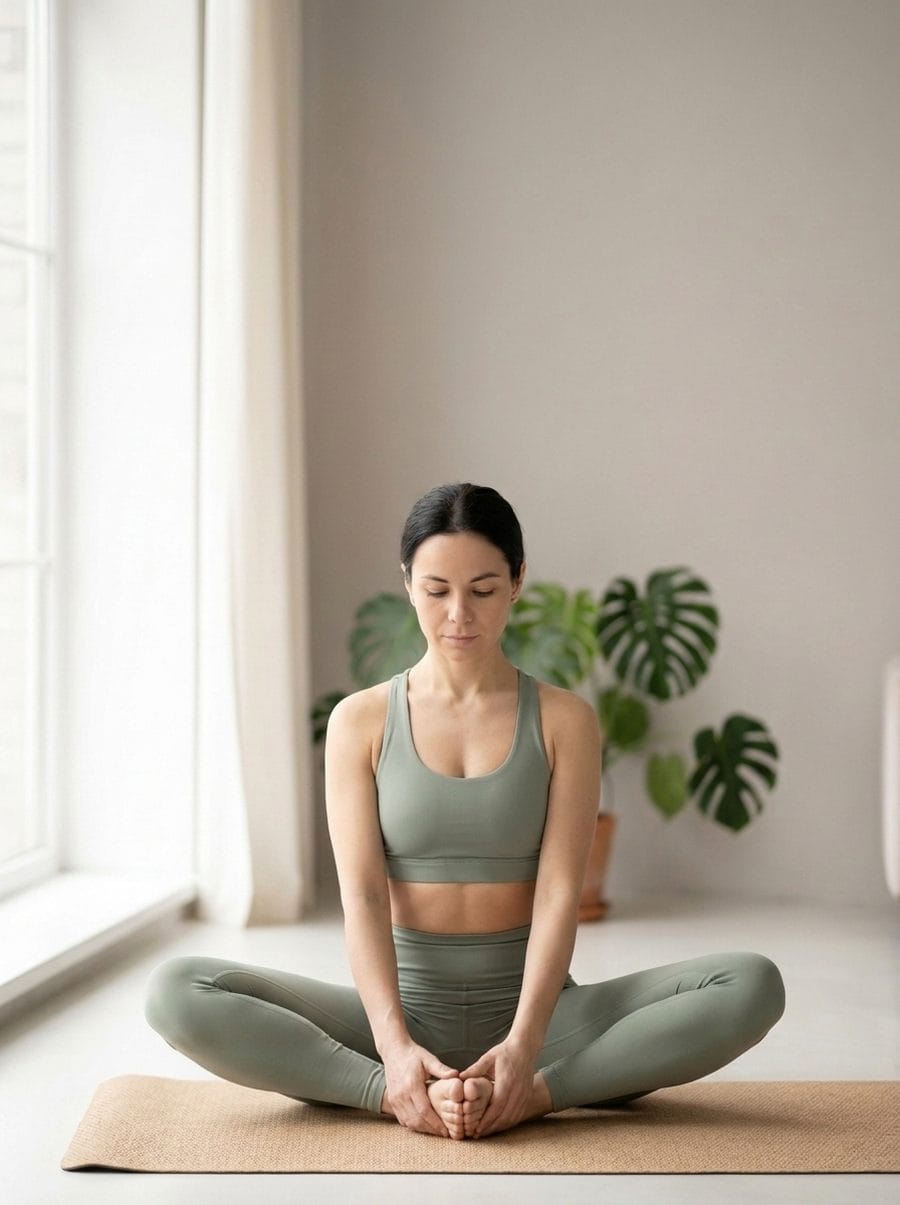
Yin yoga looks deceptively simple: you sit or lie down, settle into a pose and stay there a long time without tensing your muscles. The hard part is something else entirely: tolerating stillness and not sinking deeper than you should.
This guide explains what yin yoga is in plain terms, how it differs from hatha, what research actually shows and who needs to be careful.
What is yin yoga? The meaning in plain words
The name comes from the Chinese pair of ideas, yin and yang. Yang stands for what is active, warm and moving; yin for what is passive, cool and still. By that logic, dynamic yoga styles count as yang. Yin yoga balances them: poses are almost always done seated or lying down, the muscles stay soft, and time and body weight do the work.
It's a modern style that took shape in the West in the late 20th century. Its teachers explain that long, passive holds load the ligaments and other connective tissue around the joints more than the muscles. That's why most of the work targets the hips, thighs and lower back.
Studios often hold poses for three to five minutes. The app's programs range wider, from around a minute and a half to five minutes: the shorter the session, the shorter the holds. You'll find them all on the yin yoga page.
The three rules of yin practice
- Go to the first sensation. Ease into the pose until you feel a mild stretch, then stop. Maximum range is not the goal.
- Stay still. Don't readjust without a reason, and don't keep your muscles engaged.
- Give it time. Breathe however your breath wants to go. Come out slowly, and after a long pose rest on your back for about half a minute: your body responds gradually.
Yin Yoga for Beginners shows how to apply these rules the first time.
Yin yoga vs. hatha: what's the difference?
In hatha yoga your muscles work: you hold the pose, lengthen and keep your alignment. Holds usually last from a few breaths to a minute. In yin, the muscles let go, your spine may round in forward folds, and the poses last longer.
The pose list is shorter too: hardly any standing poses, balances or arm-support poses.
Yin is most often confused with restorative yoga. The difference is the goal. Restorative yoga aims for complete rest on props, with almost no stretch. In yin, a mild stretch is present the whole time, and patience becomes part of the practice.
Yin doesn't replace a dynamic practice, it complements one. If you run, lift weights or do vinyasa, one or two yin sessions a week give your body a counterweight to that load.
Yin yoga benefits: what the research shows
There isn't much data yet. As of November 2026, an exact PubMed search for "yin yoga" returns eight papers, and yin yoga is the main subject of only five. Those five look at stress, anxiety and well-being.
- Stress. In a 2018 randomized trial, 105 adults with moderate to high stress spent five weeks doing yin yoga, yin yoga plus psychoeducation and mindfulness, or nothing new (the control group). Both yoga groups had greater drops in anxiety and sleep problems than controls. Stress and depression fell significantly only in the combined program. A 2017 paper on that same program also reported less stress and worry, based on self-report.
- Anxiety. A 2024 study included 48 women, some of whom practiced yin yoga online for ten weeks during the pandemic. State anxiety fell compared with the control group, while trait anxiety did not differ between groups.
We found no clinical studies of yin yoga and ligaments or connective tissue, so consider that idea a teaching explanation, not a proven mechanism. We found none on back pain either; more in Yin Yoga for Hips and Lower Back. Practice doesn't replace care from a doctor or therapist.
How yin yoga works in the app
The app has 20 yin programs lasting 10 to 60 minutes: 12 Beginner, 5 Intermediate and 3 Advanced. The voice speaks rarely and doesn't count your breath. The core program is Yin Practice: eight steps in 35 minutes.
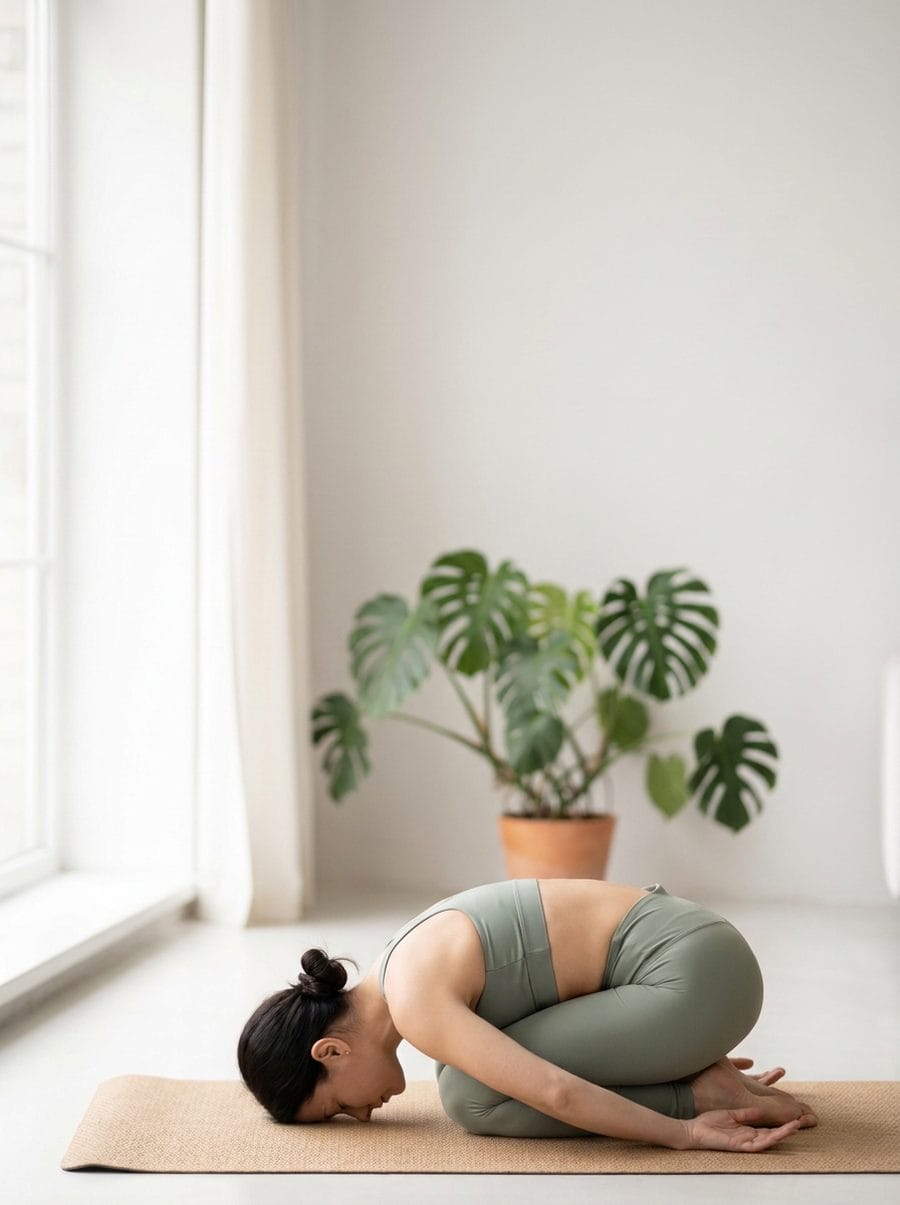
- Arriving. Child's Pose slows your breath and turns your attention inward.
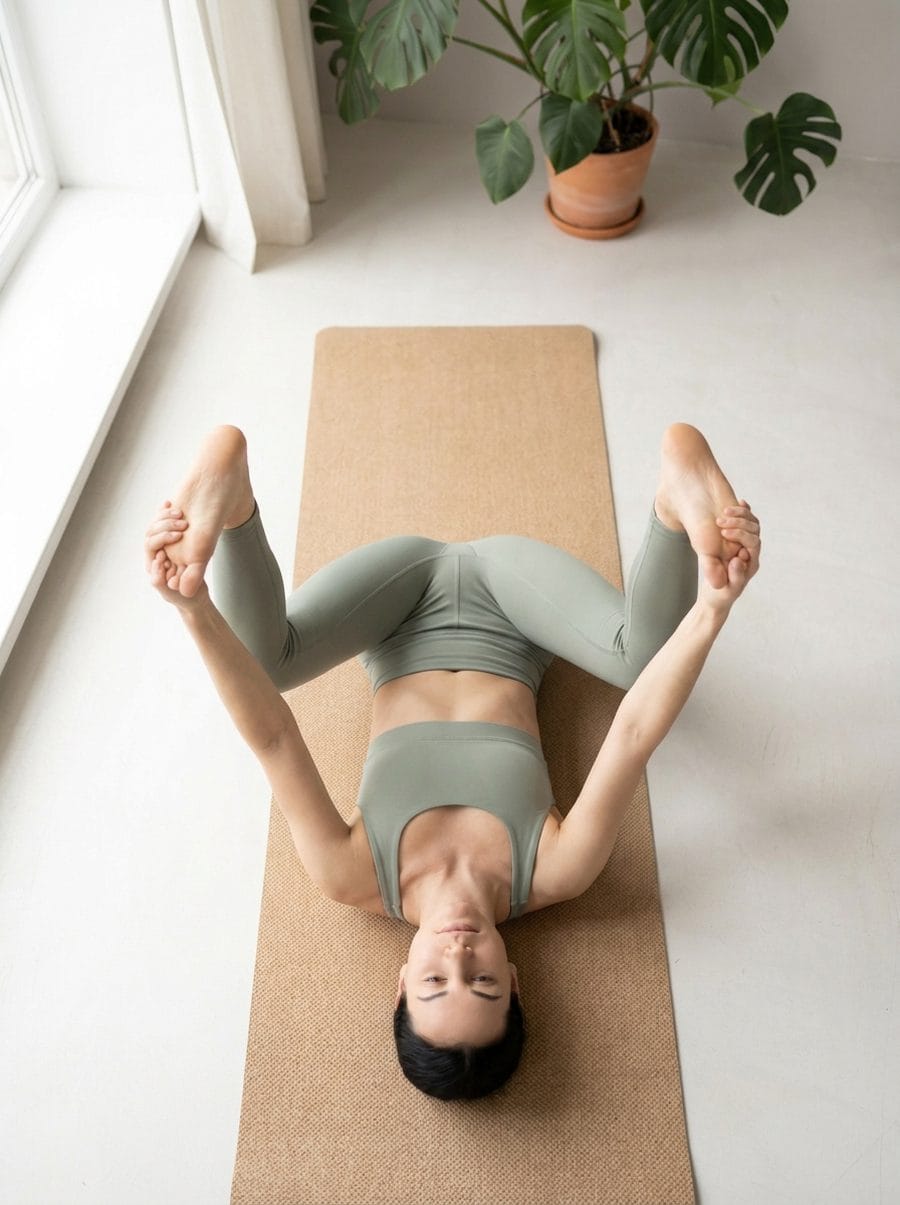
- Hips. Butterfly Pose and Pigeon Pose (Prep) give the hip joints a long, gentle stretch.
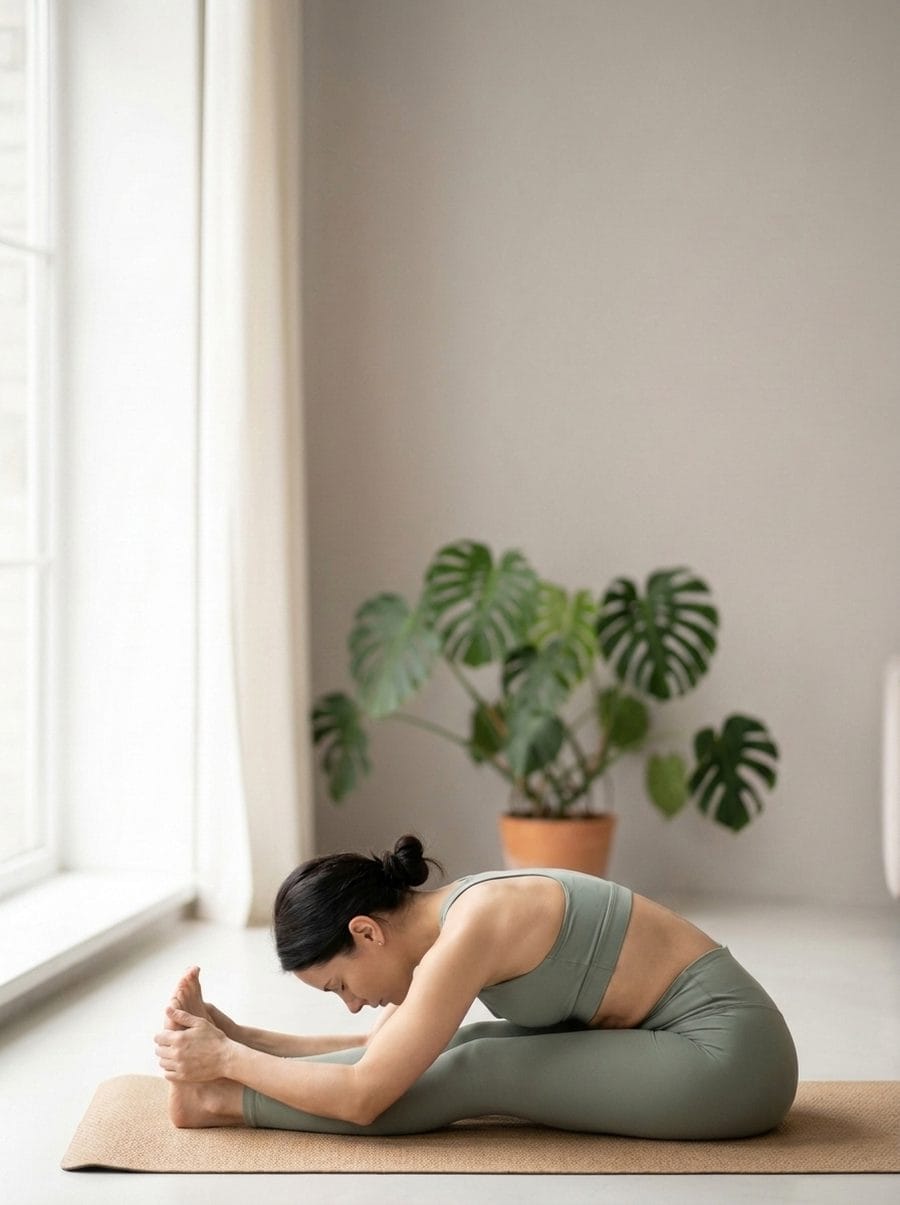
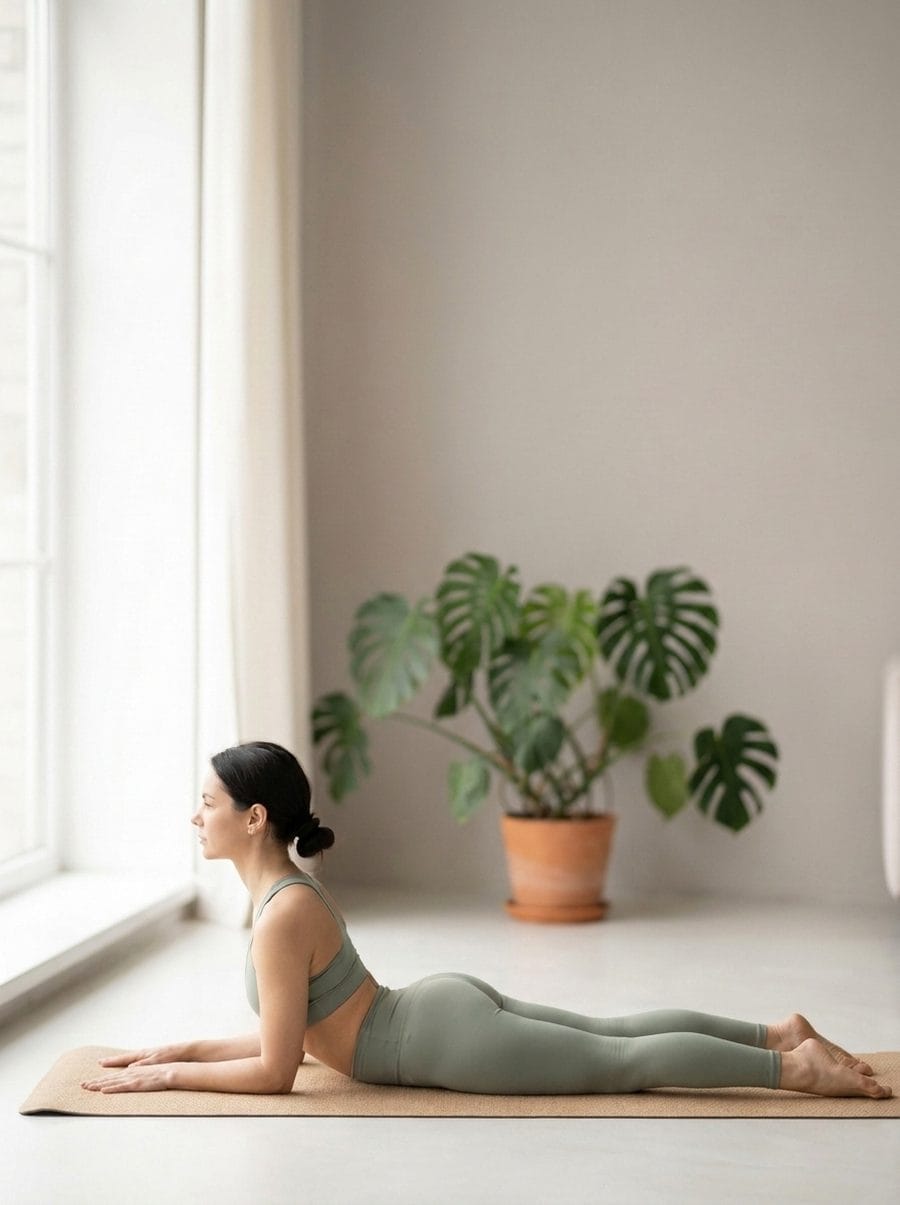
- Fold and backbend. Seated Forward Fold, then Sphinx Pose to move the other way.
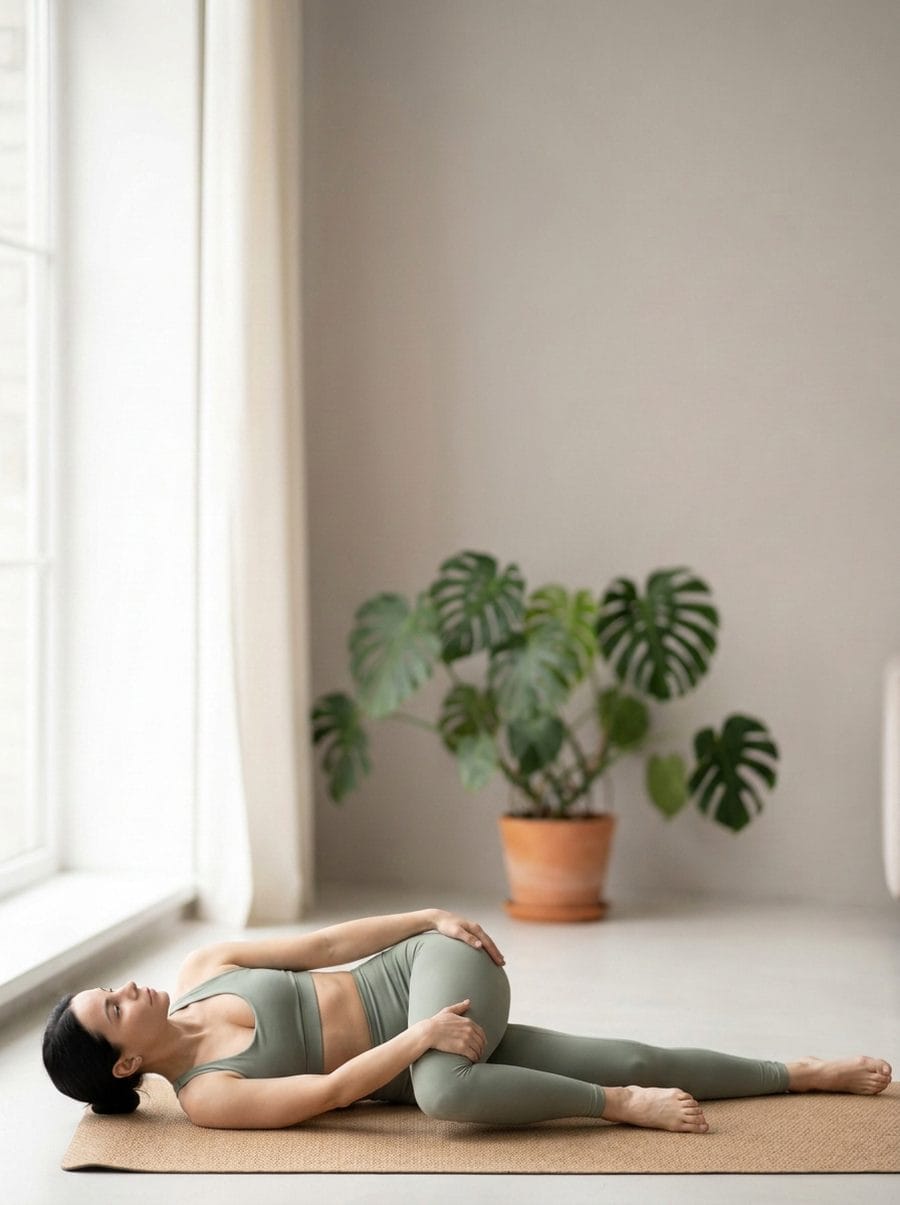
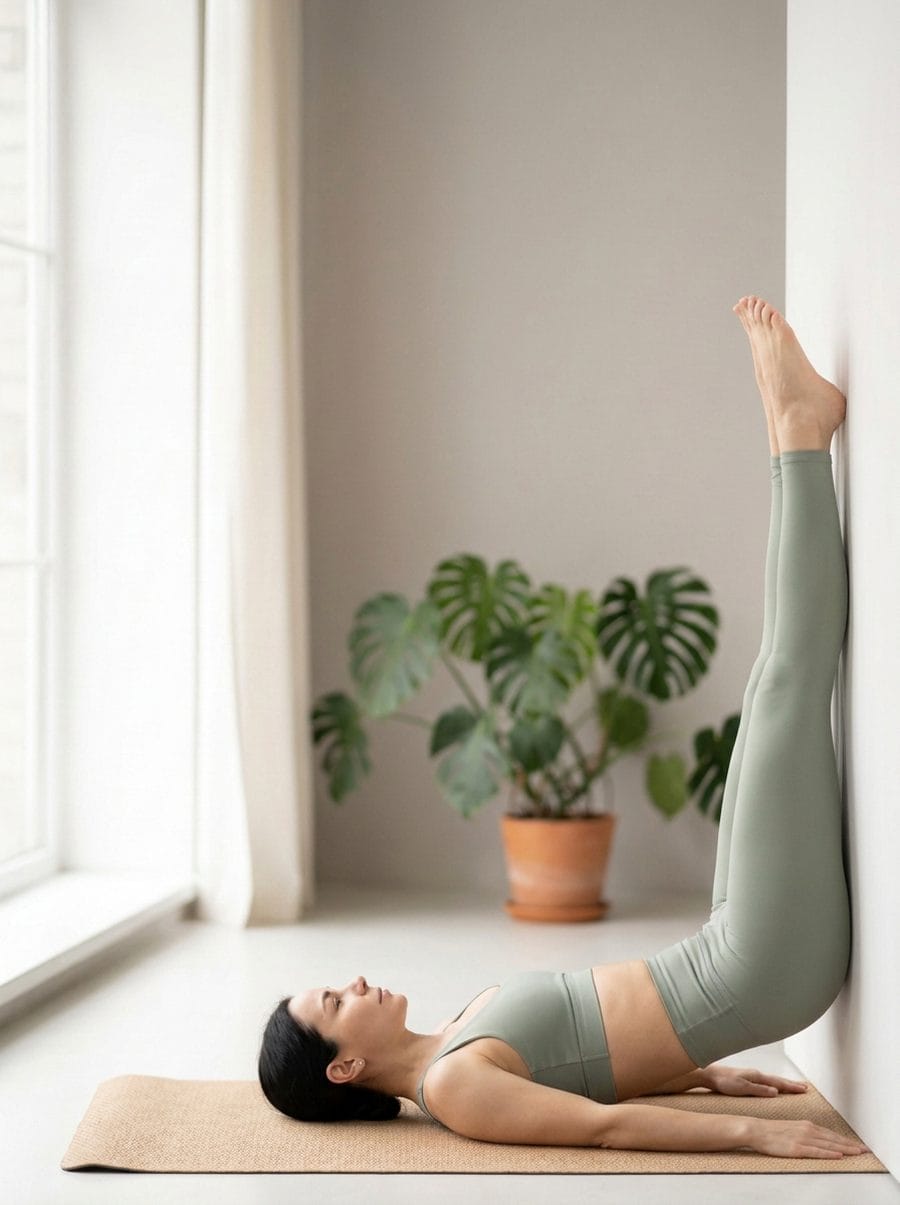
- Lying down and rest. Supine Twist, Legs-Up-the-Wall Pose and Relaxation Pose.
If you're trying the style for the first time, pick a simpler program:
The others are built around a goal:
- Short on time: Yin in 10 Minutes, Yin After Sitting.
- Evening and sleep: Yin Before Bed, Evening Yin, Yin: Let the Day Go.
- Morning: Morning Yin.
- Hips and back: Yin: Hips, Yin: Lower Back, Yin: Spine.
- Neck, shoulders, sides: Yin: Neck and Shoulders, Yin: Side Body, Yin: Twists.
- Legs: Yin: Legs, Yin: Toward the Splits.
- Long sessions: Full-Body Yin, Deep Yin, Deep Yin: Hips, Deep Yin: Spine.
Which poses does yin yoga use?
There are almost no standing poses. The programs most often include Child's Pose, Supine Twist, Butterfly Pose, Legs-Up-the-Wall Pose and Sphinx Pose, and Relaxation Pose closes every session. Many poses also go by studio names such as Caterpillar, Swan and Dragonfly. For props and details, see Yin Yoga Poses.

Who is yin yoga good for?
- People who sit a lot. The hips and hamstrings get a long, gentle stretch.
- People who train hard. A calm session balances running, lifting and dynamic yoga.
- Anyone who finds it hard to relax. Long holds teach you to notice tension and let it go.
- Evenings. Try this 25-minute program with seated and reclining poses.
People with very mobile joints should go easy with yin: it's easy for them to "hang" on their ligaments, so stop short of your end range. For hypermobility, the NHS advises against overextending your joints just because you can. Hypermobility, a past injury or surgery, and pregnancy are all reasons to see your doctor first.
NCCIH also points out that pregnant women should avoid poses with long periods of stillness or lying on the back, and that describes most of yin yoga.
Safety
A tolerable pulling feeling in the muscles and around the joints is expected. Sharp, burning or shooting pain, numbness or tingling means you leave the pose immediately.
Got a lumbar disc herniation? Leave Seated Forward Fold out, and leave out Supine Twist as well while it's acute. Sphinx Pose is off the list during acute lower back pain. With knee injuries, skip Child's Pose, and instead of Pigeon Pose (Prep), do a Supine Twist that brings your knee to your chest.
Hold off on Legs-Up-the-Wall Pose during your period, and with glaucoma or uncontrolled hypertension. Each pose's cautions are listed further down this page; for the general rules, see Safety and Contraindications.
Pose cautions in this article
- Pregnancy — widen your knees (Child's Pose)
- Knee injuries (Child's Pose)
- Groin and knee injuries — place supports under your thighs (Butterfly Pose)
- Knee injuries — do a Supine Twist with your knee to your chest instead (Pigeon Pose (Prep))
- Lumbar disc herniation (Seated Forward Fold)
- Flare-up of back pain — bend your knees (Seated Forward Fold)
- Acute lower back pain (Sphinx Pose)
- Disc herniation in the acute phase (Supine Twist)
- Late pregnancy (Happy Baby Pose)
- Menstruation (Legs-Up-the-Wall Pose)
- Glaucoma (Legs-Up-the-Wall Pose)
- Uncontrolled hypertension (Legs-Up-the-Wall Pose)
This site is for general information and is not medical advice. If you have pain, an injury, a chronic condition, or are pregnant, check with a qualified professional before practicing.
Questions
How long should you hold yin yoga poses? Studios usually hold them for three to five minutes. In the app, it ranges from around a minute and a half in short sessions to five minutes in long ones. What matters is that the sensation stays bearable the whole time.
What is yin yoga good for? Small studies link it with less anxiety and stress. It's also a calm stretch for people who sit or train a lot. Large trials don't exist yet.
Can yin yoga make you sore? Mild tenderness the next day can happen if you went too deep. Hold the poses more gently next time. Joint pain after practice means the range was too much.
Can you do yin yoga every day? You can, if the sessions are short and gentle. Many people settle on a couple of sessions a week, alternating yin with more active practice.
Sources
- Daukantaitė D et al. Five-week yin yoga-based interventions decreased plasma adrenomedullin and increased psychological health in stressed adults: A randomized controlled trial. PLoS One, 2018.
- Hylander F et al. Yin yoga and mindfulness: a five week randomized controlled study evaluating the effects of the YOMI program on stress and worry. Anxiety, Stress, & Coping, 2017.
- Somere K et al. The effect of yin yoga intervention on state and trait anxiety during the COVID-19 pandemic. Frontiers in Psychiatry, 2024.
- NHS. Joint hypermobility syndrome. National Health Service.
- National Center for Complementary and Integrative Health. Yoga: Effectiveness and Safety. NCCIH.
- Pose technique and cautions, contents of the yin programs: the Hatha Yoga app. More on the How We Prepare Our Content page.
Read next
- Yoga for Arthritis and Osteoporosis: How to Protect Your Joints and Bones7 min read
- Ashtanga Yoga Explained: The Series, the Breath and the Difference from Hatha6 min read
- Ayurveda Explained Simply: The Basics and a Daily Routine (Dinacharya)5 min read
- Balance Exercises: 10 Yoga Poses for Balance and Stability7 min read