 Hatha Yoga
Yin Yoga for Beginners: Your First Routine at Home
Hatha Yoga editorial team · Updated · 6 min read
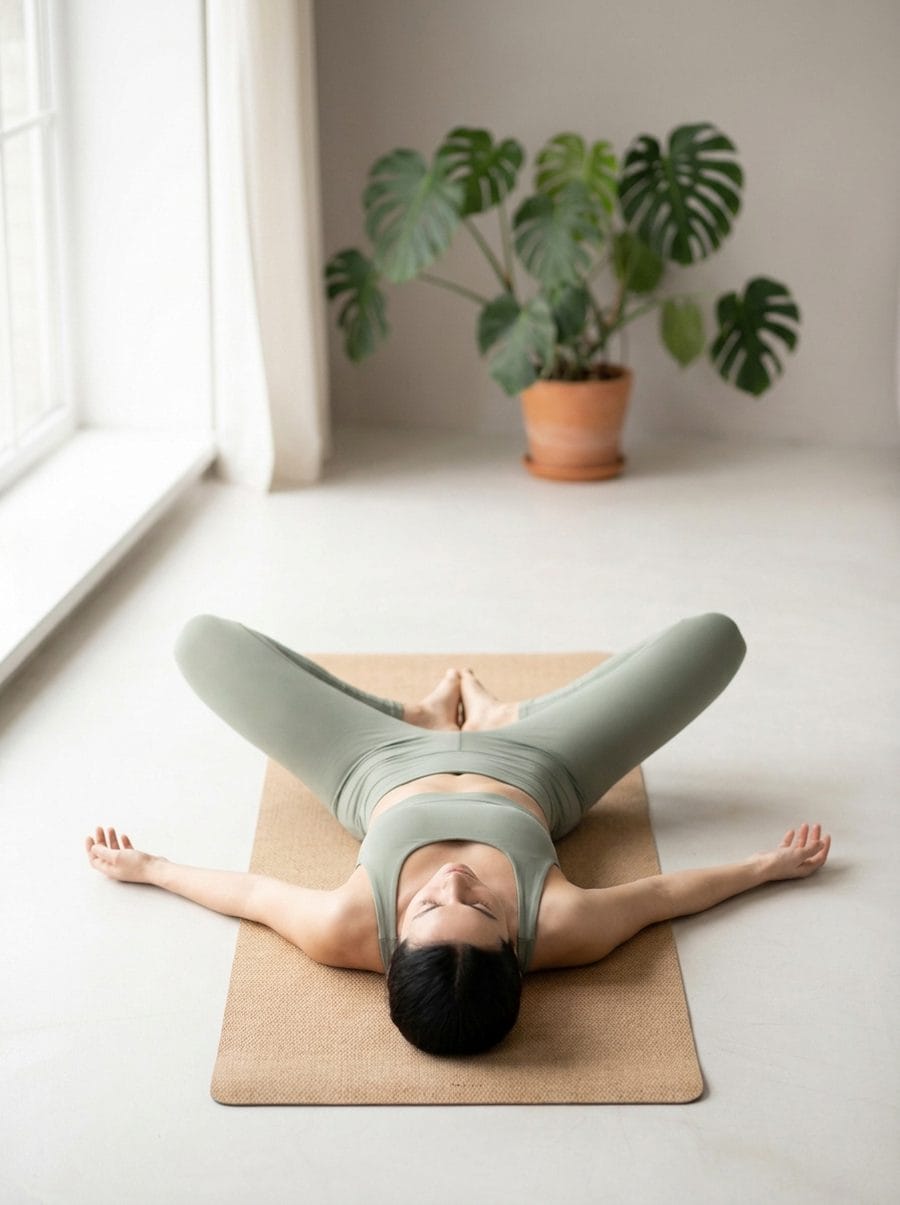
Your first yin session takes neither flexibility nor strength: body weight holds the pose, and your job is to stay out of its way. The harder part is staying still for several minutes without pulling yourself deeper. Below you'll find the three-step rule, what to set up at home, how a first session goes and which sequence to pick: 10, 20 or 30 minutes.
The three-step rule
Every yin pose follows the same pattern. Learn it once and the rest gets easier.
- Step one: go to the first sensation. Enter the pose slowly and stop where a mild stretch appears. That's often not very deep, and that's enough.
- Step two: let your muscles go and stay still. Soften your jaw, face and shoulders, and let your breath look after itself. Move only for a good reason: sharp pain, numbness or a prop that has slipped.
- Step three: give the pose time. Over a few minutes the sensation changes: one spot lets go, another becomes clearer. Just watch it. If your mind wanders, come back to your breath.
Coming out counts as well. Leave the pose without jerking, then lie flat for a short while as your body responds.
How a first yin session goes
A yin program in the app feels nothing like a regular workout. You'll hear the voice only now and then, and it never counts your breath. It guides you into the pose, occasionally reminds you to check your shoulders or breath, warns you about a minute before the end and asks you to come out slowly. The rest is silence.
The order is simple: a gentle start, then folds and hip openers, a twist, and rest with your legs up. All 20 programs end in Relaxation Pose.
Stillness takes getting used to. The first few times you'll notice boredom, itches and the urge to move. That's ordinary, and it's no sign of a mistake.
Which yin yoga sequence to choose
Your first full routine: 30 minutes
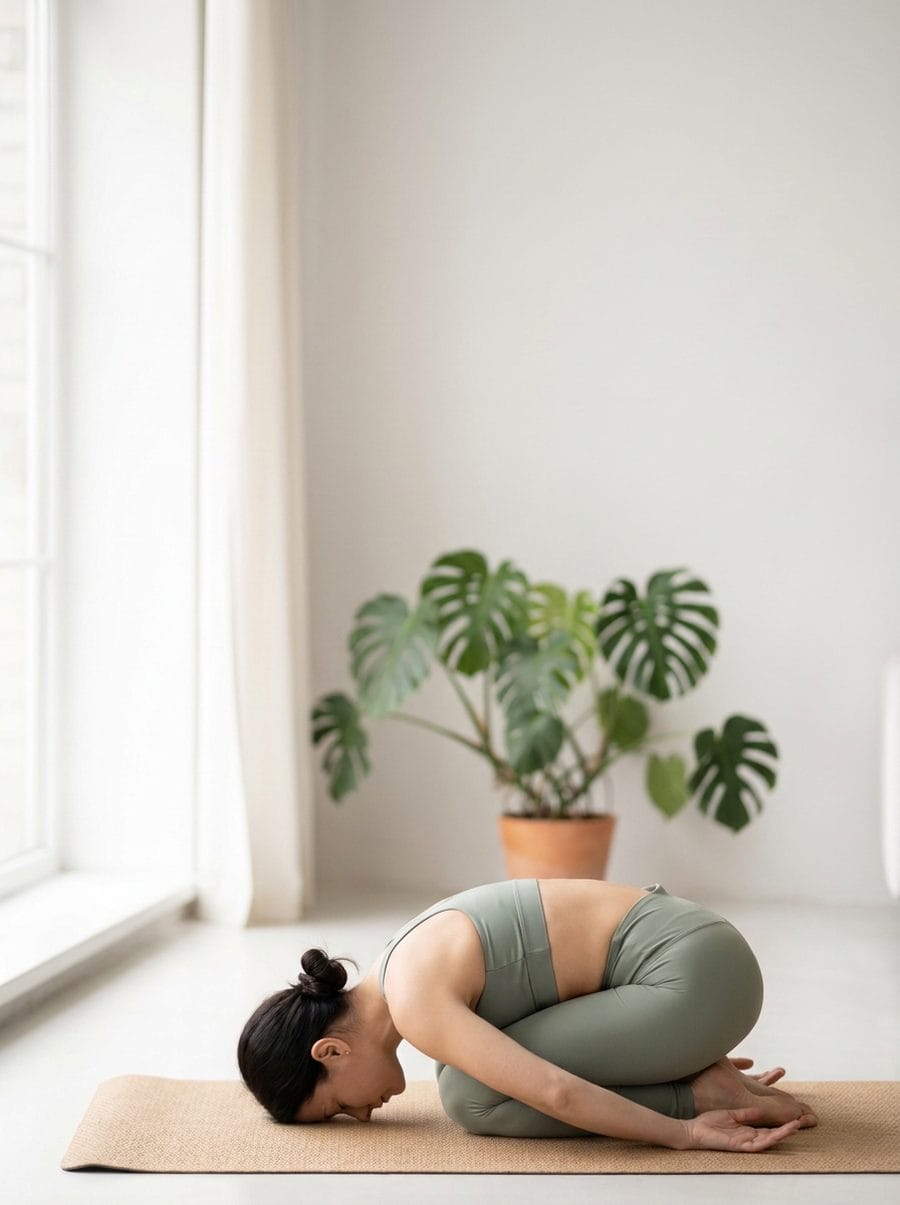
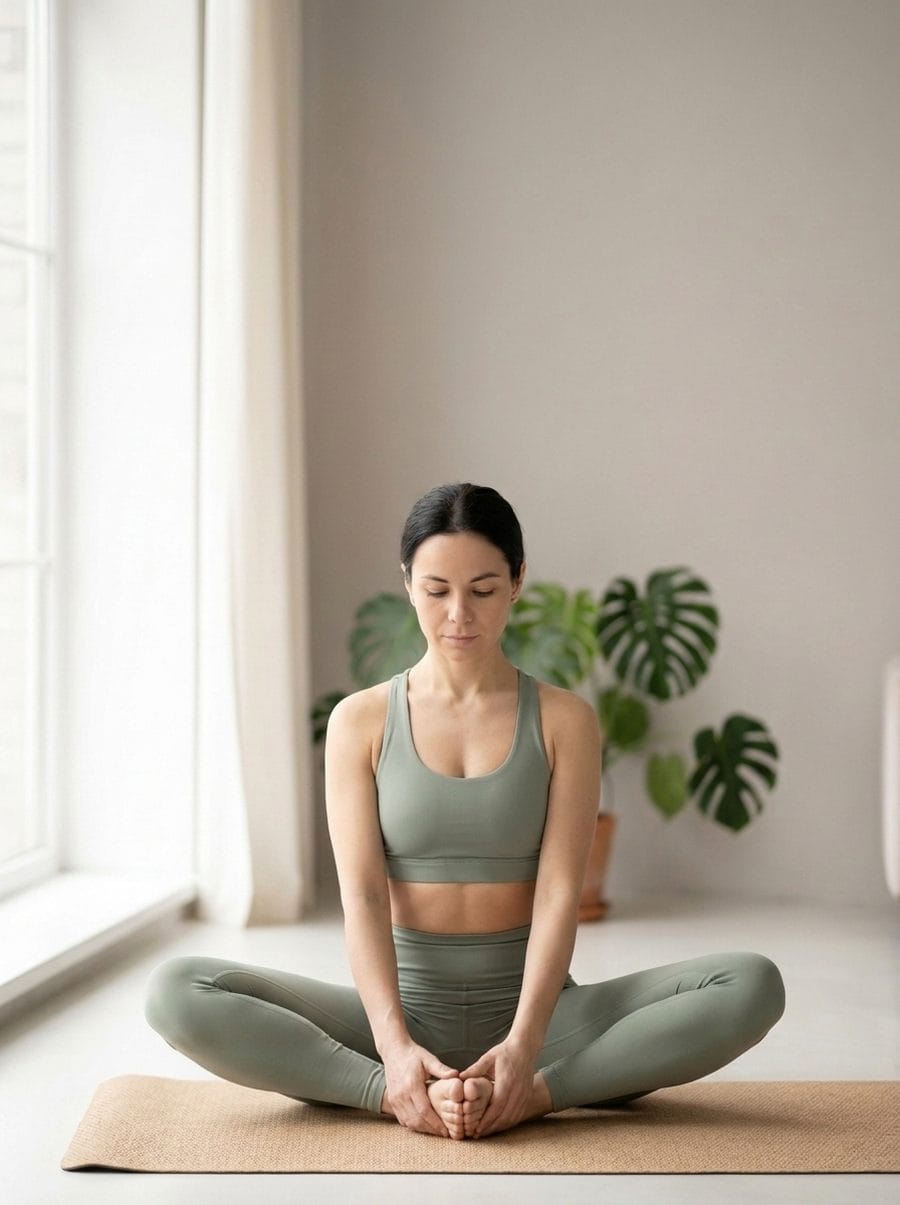
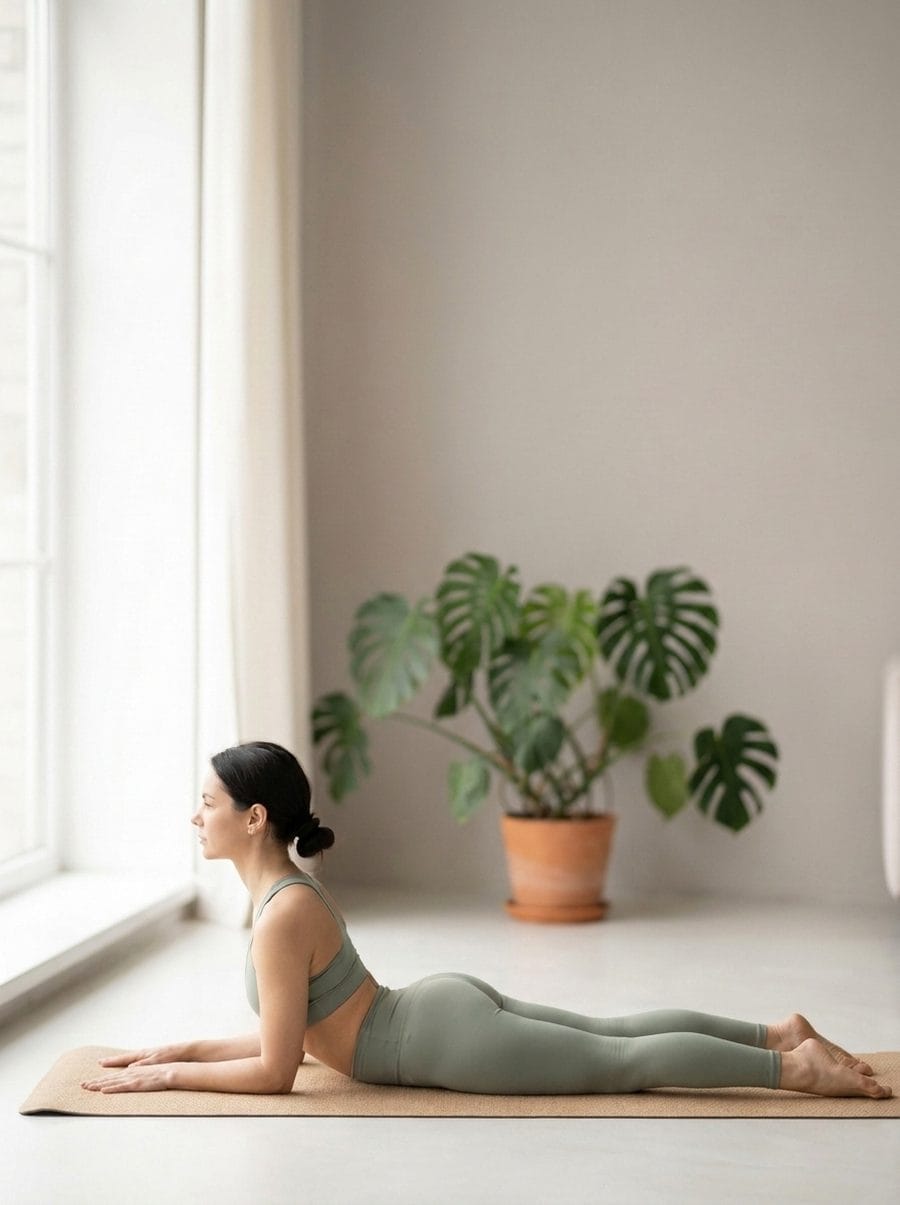
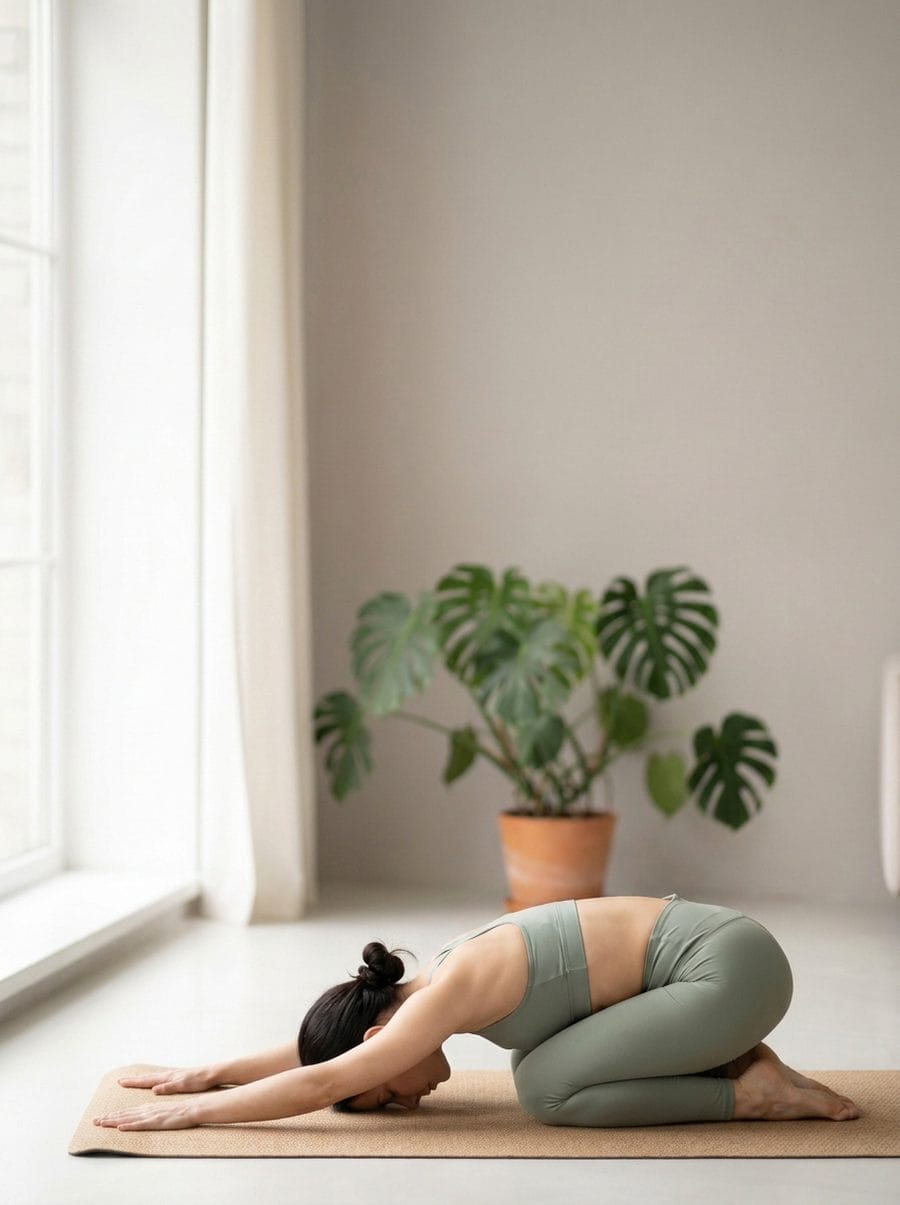
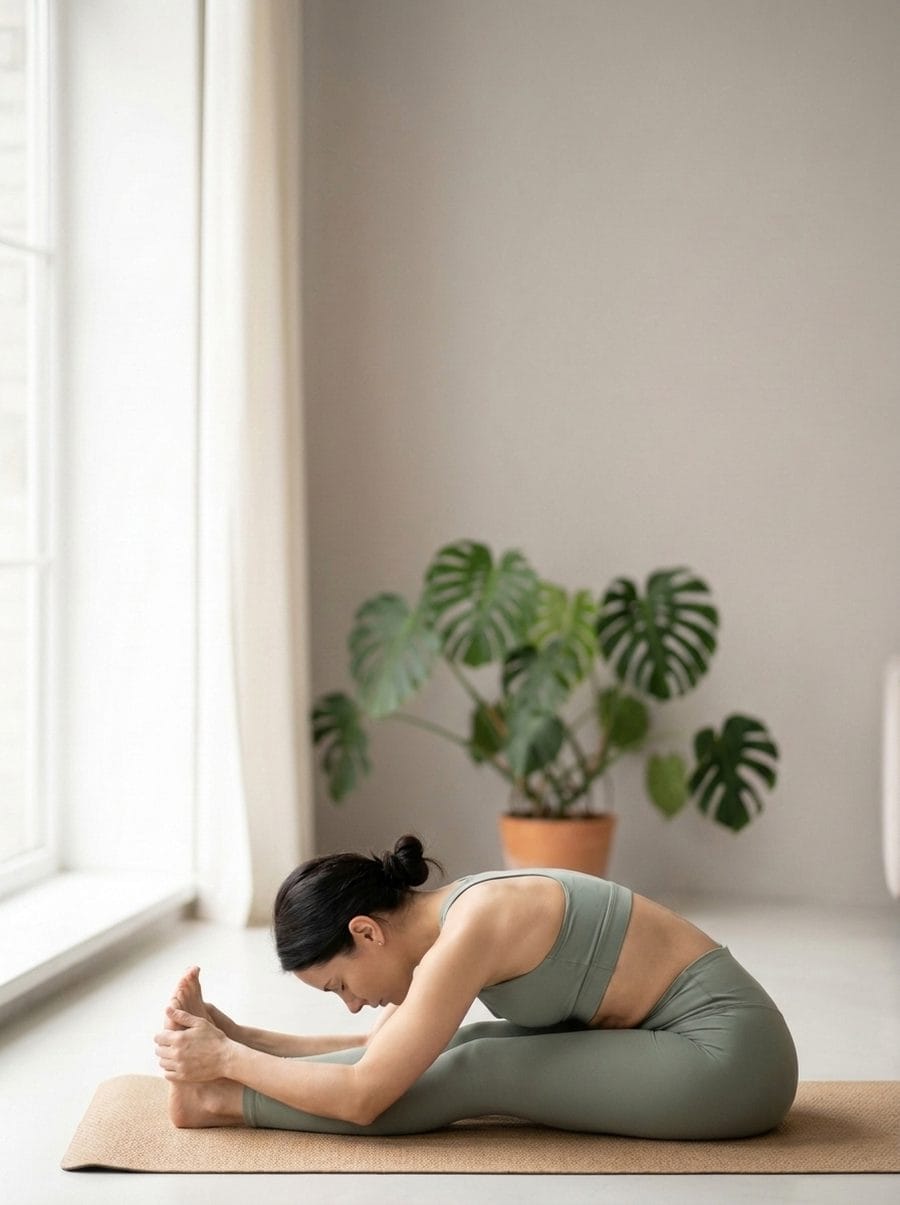
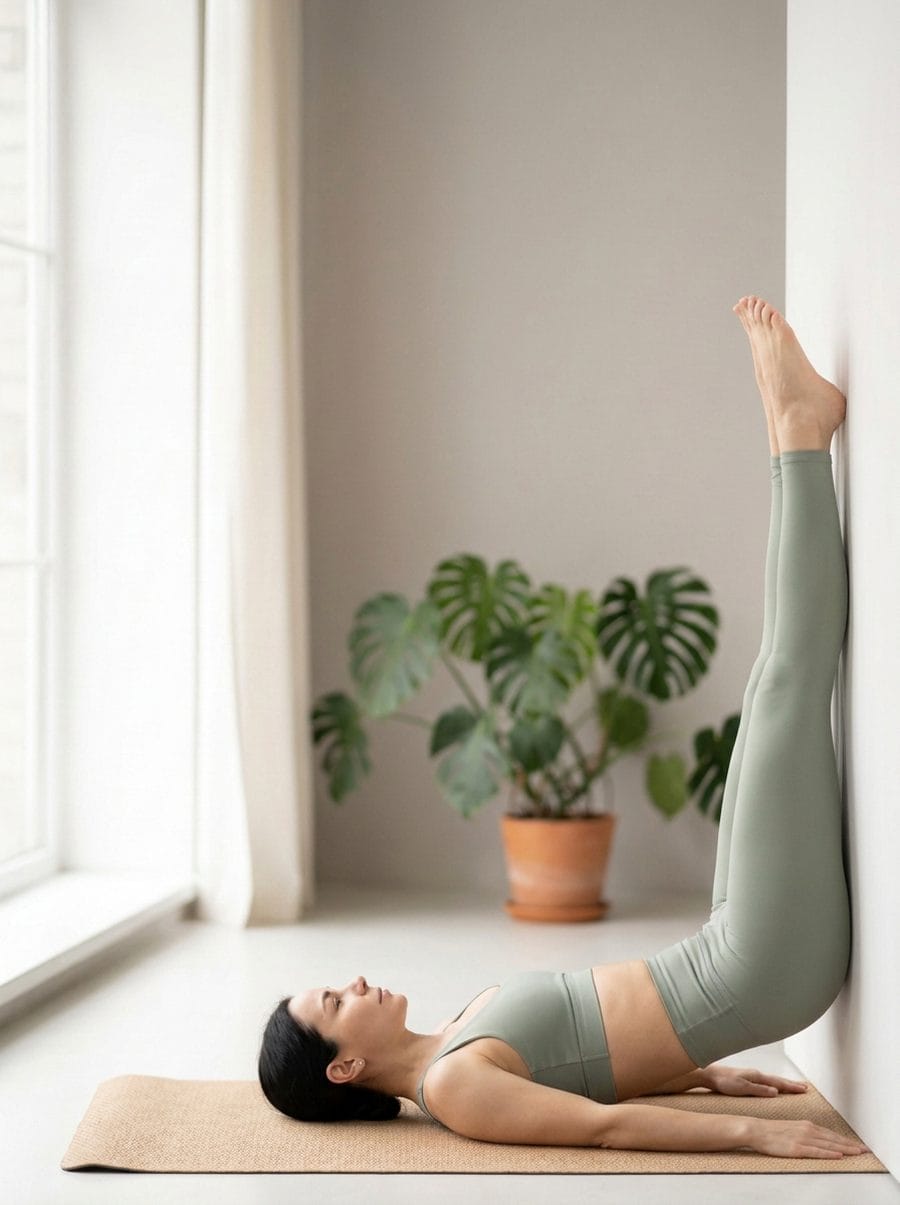
First Yin is built as an introduction to the style. It has nine steps: Child's Pose, Butterfly Pose, Sphinx Pose, Wide-Knee Child's Pose, Seated Forward Fold, Supine Twist, Reclining Butterfly Pose, Legs-Up-the-Wall Pose and Relaxation Pose. Folds and hip openers last up to three minutes; Legs-Up-the-Wall Pose and the final relaxation run longer.
Short on time: 10 minutes
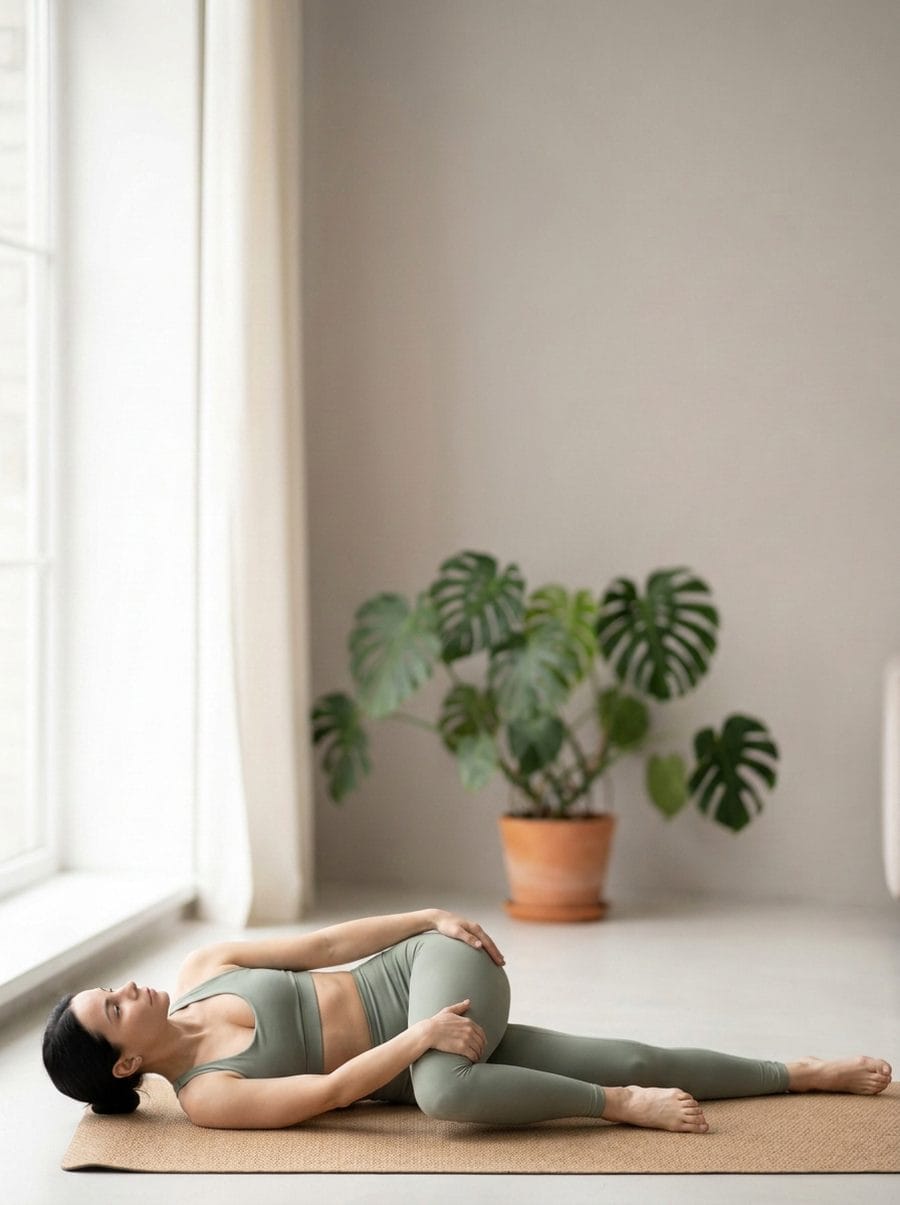
Yin in 10 Minutes is three reclining poses and a brief rest: Reclining Butterfly Pose, Supine Twist and Legs-Up-the-Wall Pose. The holds are short. It lets you see whether you like the pace before you set aside half an hour.
In the evening: 20 minutes
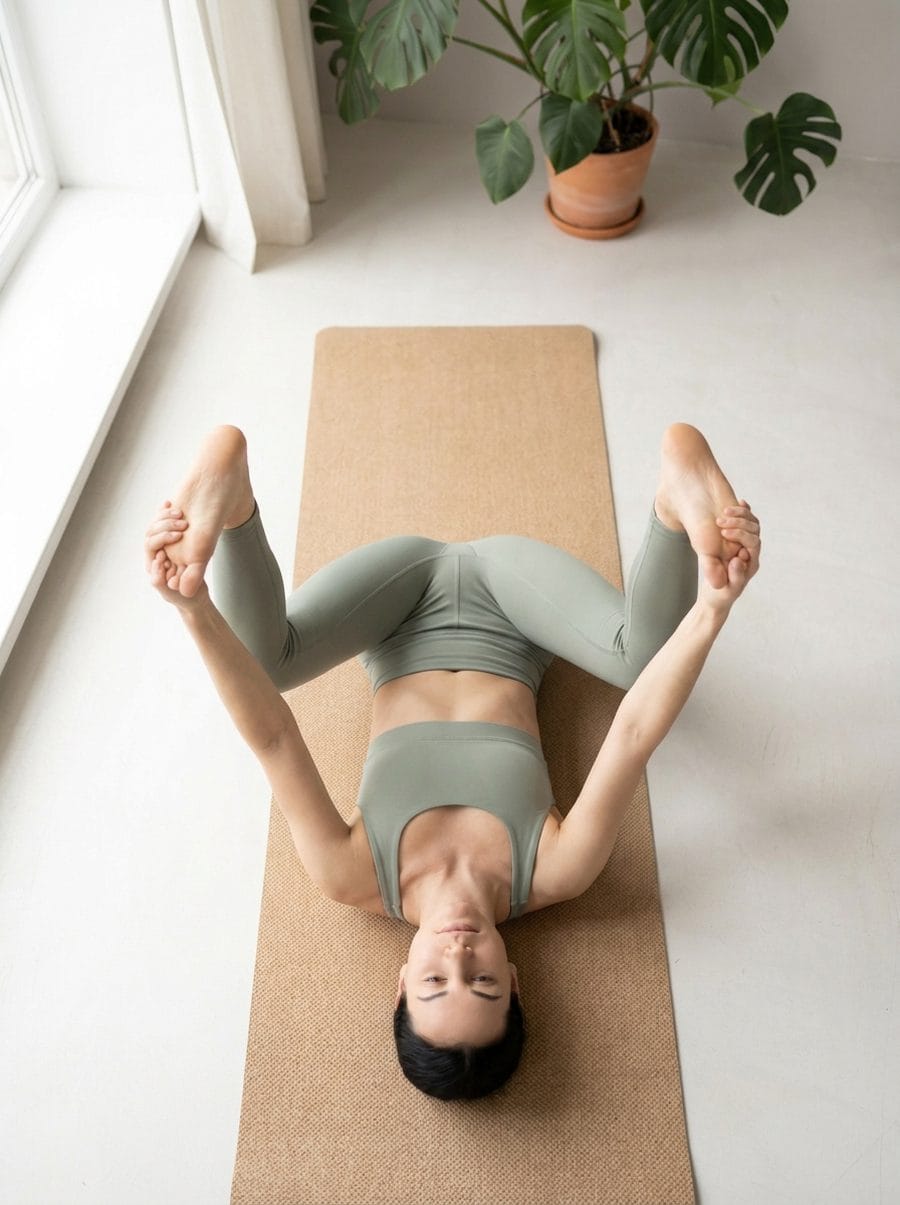
Yin Before Bed is done lying down all the way through: Reclining Butterfly Pose, Supine Twist, Happy Baby Pose, Legs-Up-the-Wall Pose and rest. It fits the end of the day well. We won't promise deep sleep: in one randomized trial, stressed adults reported fewer sleep problems after five weeks of yin yoga, but that's a single study.

Once you feel at home, the yin yoga page has nine more Beginner programs. Individual poses and props are covered in Yin Yoga Poses, hips and lower back in Yin Yoga for Hips and Lower Back. For what this style is and where it came from, read What Is Yin Yoga?
What you need for yin yoga at home
A mat, a blanket and two or three pillows are plenty. A clear stretch of wall helps with Legs-Up-the-Wall Pose. Long holds cool your body down, so put on socks and long sleeves. Dim the lights and silence your phone.
In the morning, take two minutes of easy movement before you fold, so you don't drop in completely cold.
Common beginner mistakes
- Going deeper "so it works." Depth isn't the measure in yin. If your breath is steady and the sensation bearable, the pose is already doing its job.
- Holding your muscles. Raised shoulders and a clenched jaw mean you're still using effort. Add a prop.
- Pushing through pain. A stretch can pull; it shouldn't hurt.
- Jumping up right after a pose. Come out of long folds and twists slowly, then rest for a moment.
- Starting with hour-long programs. Deep Yin is for Advanced practitioners and includes Plow Pose and Reclining Hero Pose.
Safety
A pose works as long as the feeling stays bearable. Burning or shooting pain or numbness means back out right away. NCCIH warns that learning yoga on your own without supervision carries more risk, so show your poses to a teacher when you get the chance.
If you're hypermobile, recently hurt or post-surgery, or pregnant, speak with your doctor beforehand.
What to leave out of these three programs:
- Knees. With injuries, leave out Child's Pose and cushion your knees with a blanket in Wide-Knee Child's Pose.
- Lower back. With a herniated lumbar disc, drop Seated Forward Fold, and while it's acute drop Supine Twist too. Sphinx Pose is out during acute lower back pain.
- Legs-Up-the-Wall Pose. Not if you're menstruating or have glaucoma or uncontrolled hypertension.
- Pregnancy. In late pregnancy, leave out Happy Baby Pose, and go over the whole practice with your doctor.
You'll find the remaining cautions further down; for the general rules, read Safety and Contraindications.
Pose cautions in this article
- Pregnancy — widen your knees (Child's Pose)
- Knee injuries (Child's Pose)
- Groin and knee injuries — place supports under your thighs (Butterfly Pose)
- Acute lower back pain (Sphinx Pose)
- Knee injuries — place a blanket under your knees (Wide-Knee Child's Pose)
- Lumbar disc herniation (Seated Forward Fold)
- Flare-up of back pain — bend your knees (Seated Forward Fold)
- Disc herniation in the acute phase (Supine Twist)
- Groin discomfort — place supports under your knees (Reclining Butterfly Pose)
- Late pregnancy (Happy Baby Pose)
- Menstruation (Legs-Up-the-Wall Pose)
- Glaucoma (Legs-Up-the-Wall Pose)
- Uncontrolled hypertension (Legs-Up-the-Wall Pose)
This site is for general information and is not medical advice. If you have pain, an injury, a chronic condition, or are pregnant, check with a qualified professional before practicing.
Questions
Can you start yoga with yin? Yes. The poses are simple and ask for neither strength nor balance. Yin does little to build strength, though, so add an active practice over time.
How often should a beginner do yin yoga? Many people do well with a few sessions a week, and one is a fine start. In a small study with no control group, 20 people attended a weekly yin yoga class with meditation for six weeks, and their stress and anxiety dropped. It's weak evidence, but starting with one session a week is reasonable.
What if I get bored in a pose? That's a normal part of the practice. Come back to your breath and check your face and shoulders. If boredom never lets up, start with the 10-minute program.
Can you do yin yoga in bed? Poses on your back work on a firm mattress, especially at night. Folds and backbends are easier on the floor. For more ideas, see our guide to bed yoga.
Sources
- Daukantaitė D et al. Five-week yin yoga-based interventions decreased plasma adrenomedullin and increased psychological health in stressed adults: A randomized controlled trial. PLoS One, 2018.
- Lemay V et al. Impact of a Yin Yoga and meditation intervention on pharmacy faculty and student well-being. Journal of the American Pharmacists Association, 2021.
- National Center for Complementary and Integrative Health. Yoga: Effectiveness and Safety. NCCIH.
- Pose technique and cautions, contents of the yin programs, voice cues: the Hatha Yoga app. More on the How We Prepare Our Content page.
Read next
- Yoga for Arthritis and Osteoporosis: How to Protect Your Joints and Bones7 min read
- Ashtanga Yoga Explained: The Series, the Breath and the Difference from Hatha6 min read
- Ayurveda Explained Simply: The Basics and a Daily Routine (Dinacharya)5 min read
- Balance Exercises: 10 Yoga Poses for Balance and Stability7 min read