 Hatha Yoga
Yin Yoga Poses: 15 Key Poses With Props and Cautions
Hatha Yoga editorial team · Updated · 7 min read
Which poses belong in yin yoga? We counted the steps of all 20 yin programs in the app and picked the 15 poses that show up most. For each one, in brief: how to let your muscles go, which prop helps and when to skip it.
This is a pose reference. For the style as a whole, read What Is Yin Yoga?; for where to start, see Yin Yoga for Beginners.
The yin yoga poses used most often
The 20 programs use 27 different poses. Only one is truly a standing pose, Standing Forward Fold, and it appears in just two programs. Everything else happens seated, kneeling, on your belly or on your back.
Relaxation Pose closes all 20 programs. Child's Pose and Supine Twist appear in 15, Butterfly Pose and Legs-Up-the-Wall Pose in 11, Sphinx Pose in 10, Happy Baby Pose in 9, Seated Forward Fold in 7. Less common: Pigeon Pose (Prep) and Reclining Butterfly Pose (6 each), Puppy Pose and Cross-Legged Forward Fold (5 each), Head-to-Knee Pose and Wide-Angle Seated Forward Fold (4 each). Frog Pose (Stretch) appears in three programs.
Holds last one and a half to five minutes. One-sided poses are held on each side, so Pigeon or a twist takes twice the time.
How to let your muscles go
In yin, body weight holds the pose, not effort. There's an easy test: drop the effort and see what happens. If your body stays put, you're fine. If the shape collapses or something keeps gripping, you need a prop, not patience.
A pillow, a block or a folded blanket will do. A bolster is handy but optional.
Then scan your face, jaw and shoulders, since they tense up without you noticing. In folds your spine can round, which is one way yin differs from hatha, and your legs stay soft.
Seated: forward folds and hip openers
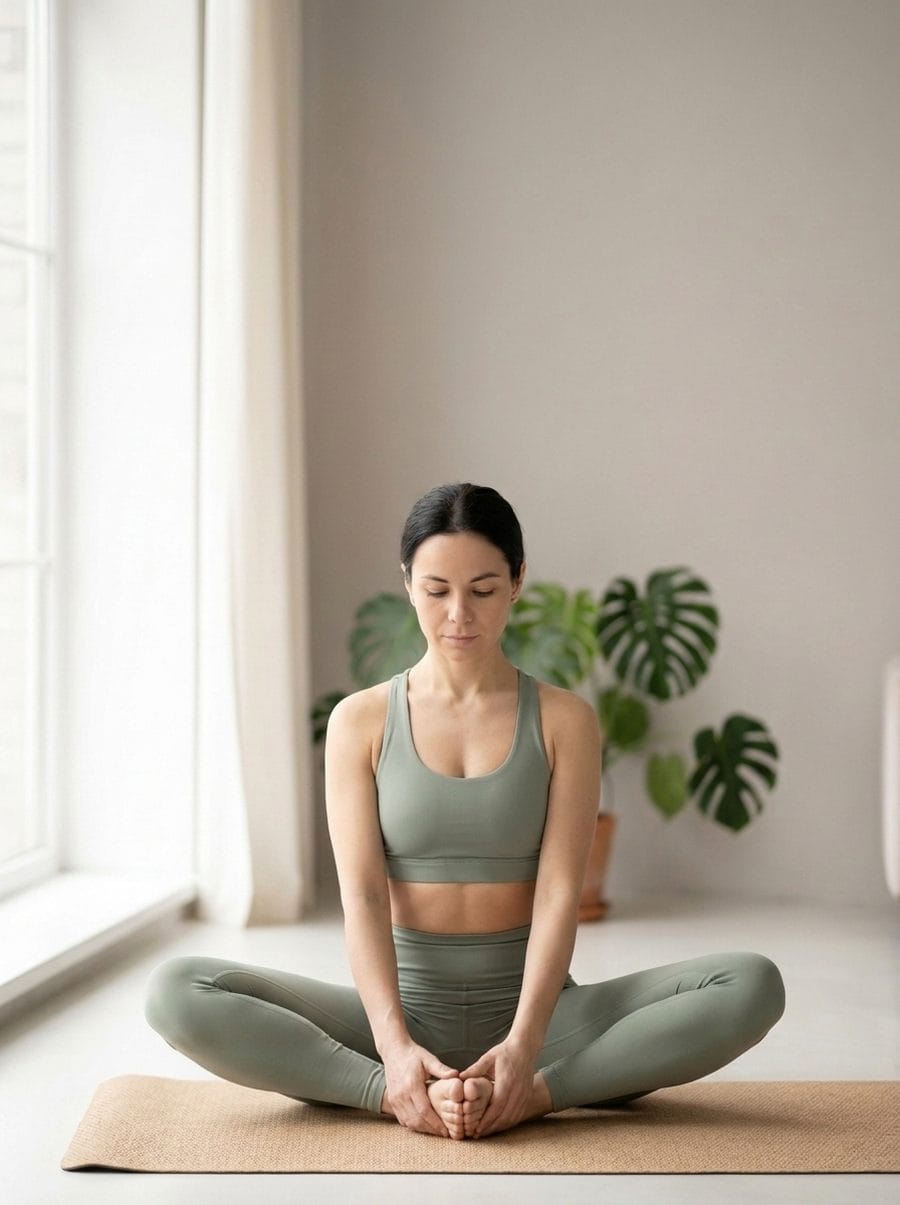
- Butterfly Pose. Bring your soles together, fold forward and let your spine round, head heavy. Don't press on your knees. Prop: pillows under your thighs, which you need with groin or knee injuries.
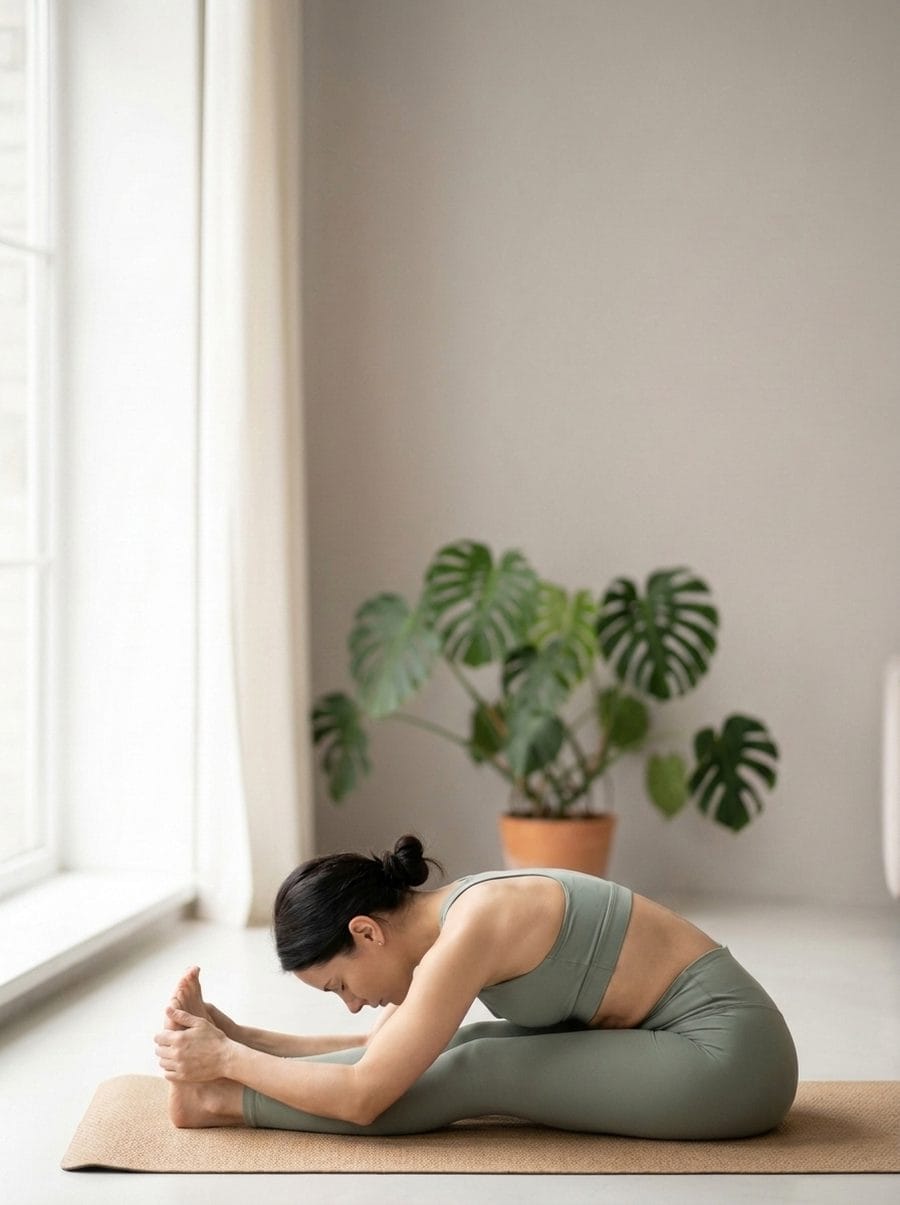
- Seated Forward Fold. Let go with your hands and don't pull yourself toward your feet; legs stay relaxed. Prop: sit on a folded blanket if your pelvis tips back. A lumbar disc herniation rules it out. If back pain flares up, bend your knees.
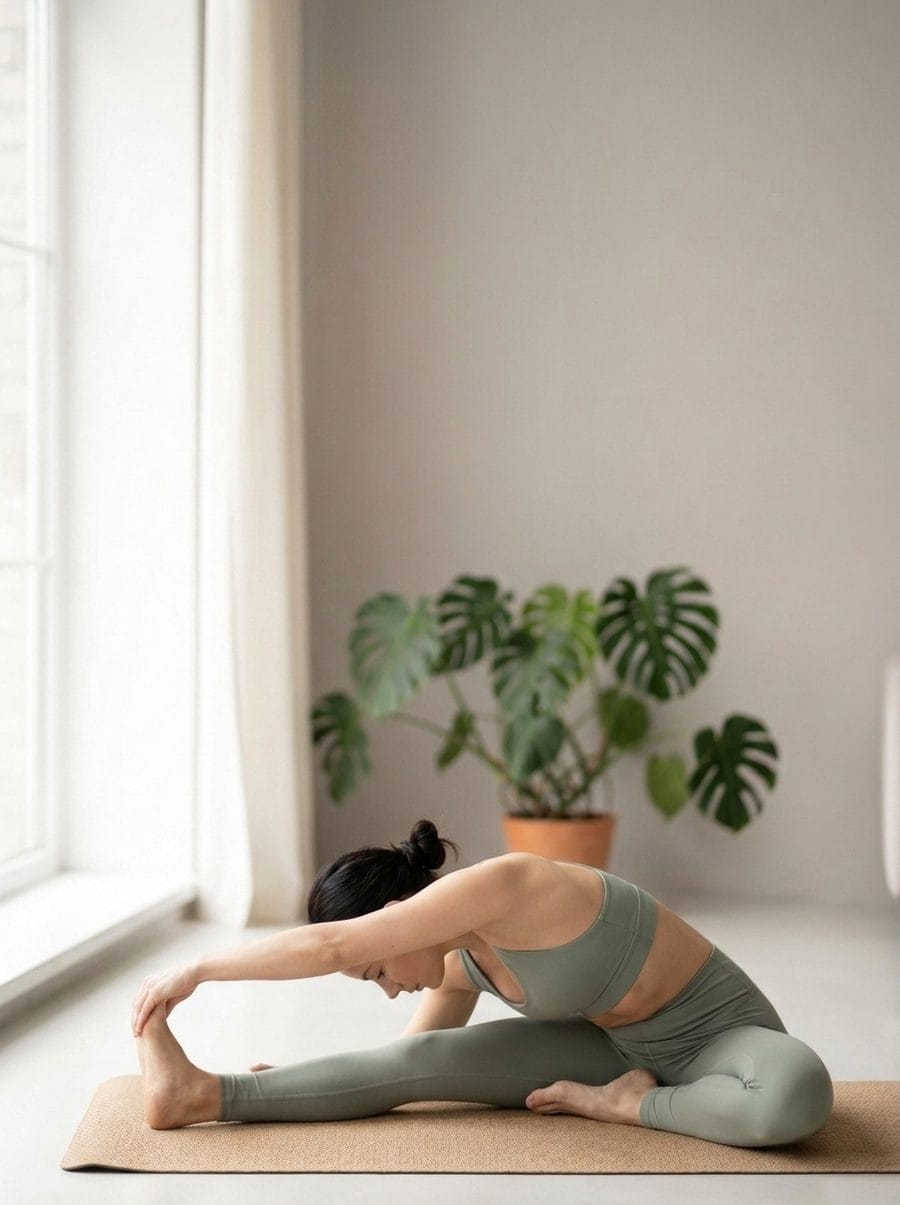
- Head-to-Knee Pose. No need to reach for your foot, just sink over the straight leg. Prop: a pillow under the bent knee, a must with knee injuries.
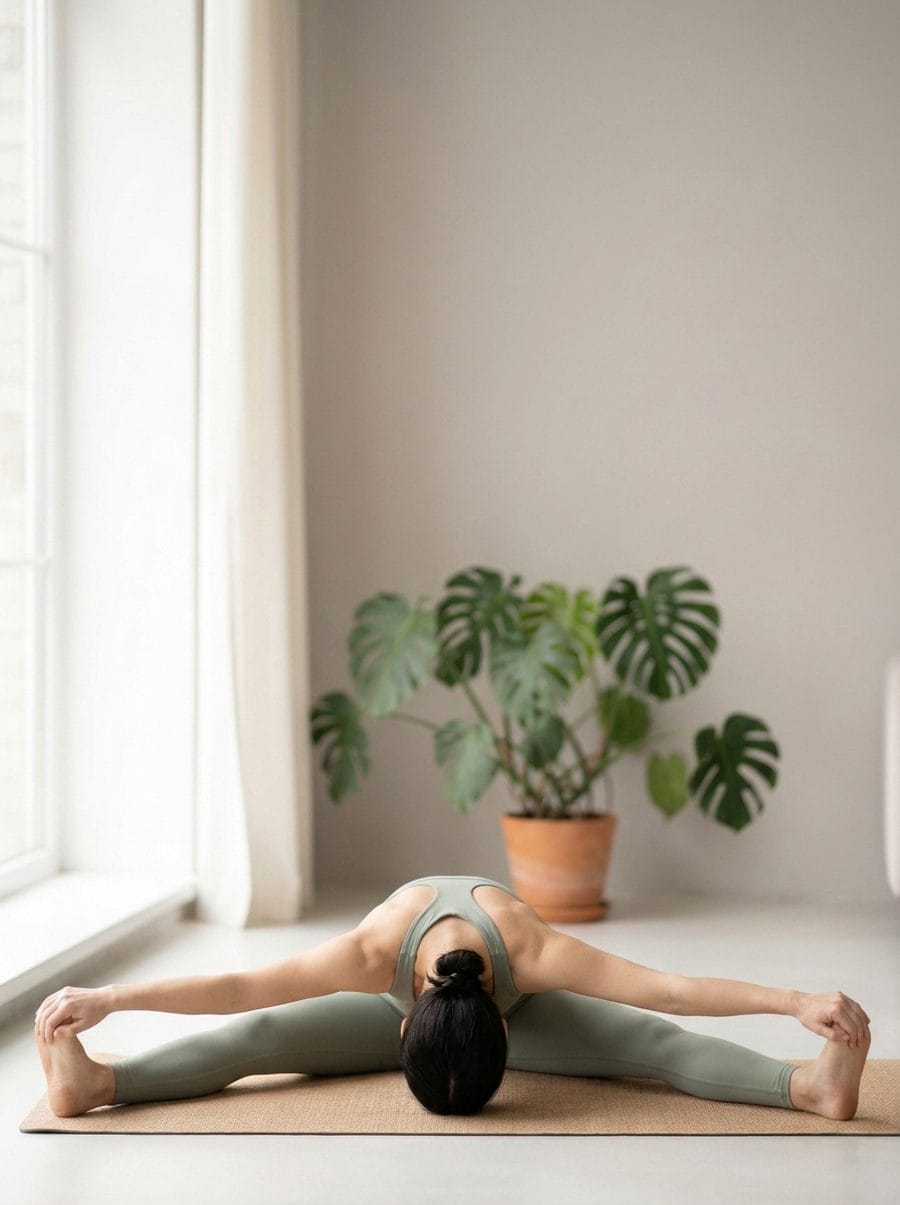
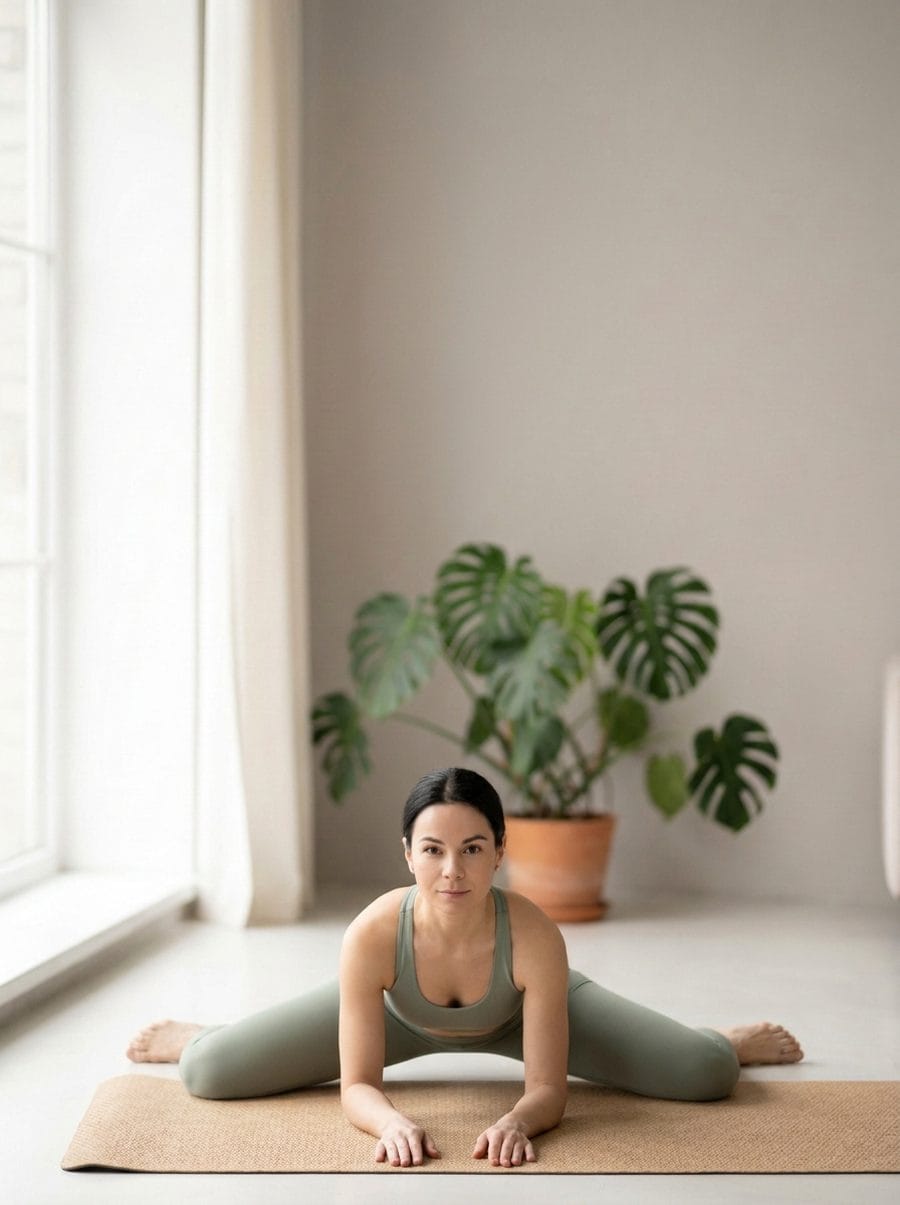
- Wide-Angle Seated Forward Fold. Rest on your forearms, legs soft, and let your spine round by itself. Prop: a blanket under your pelvis, a pillow under your forehead. Not a pose for an injured inner thigh or a lumbar herniated disc.
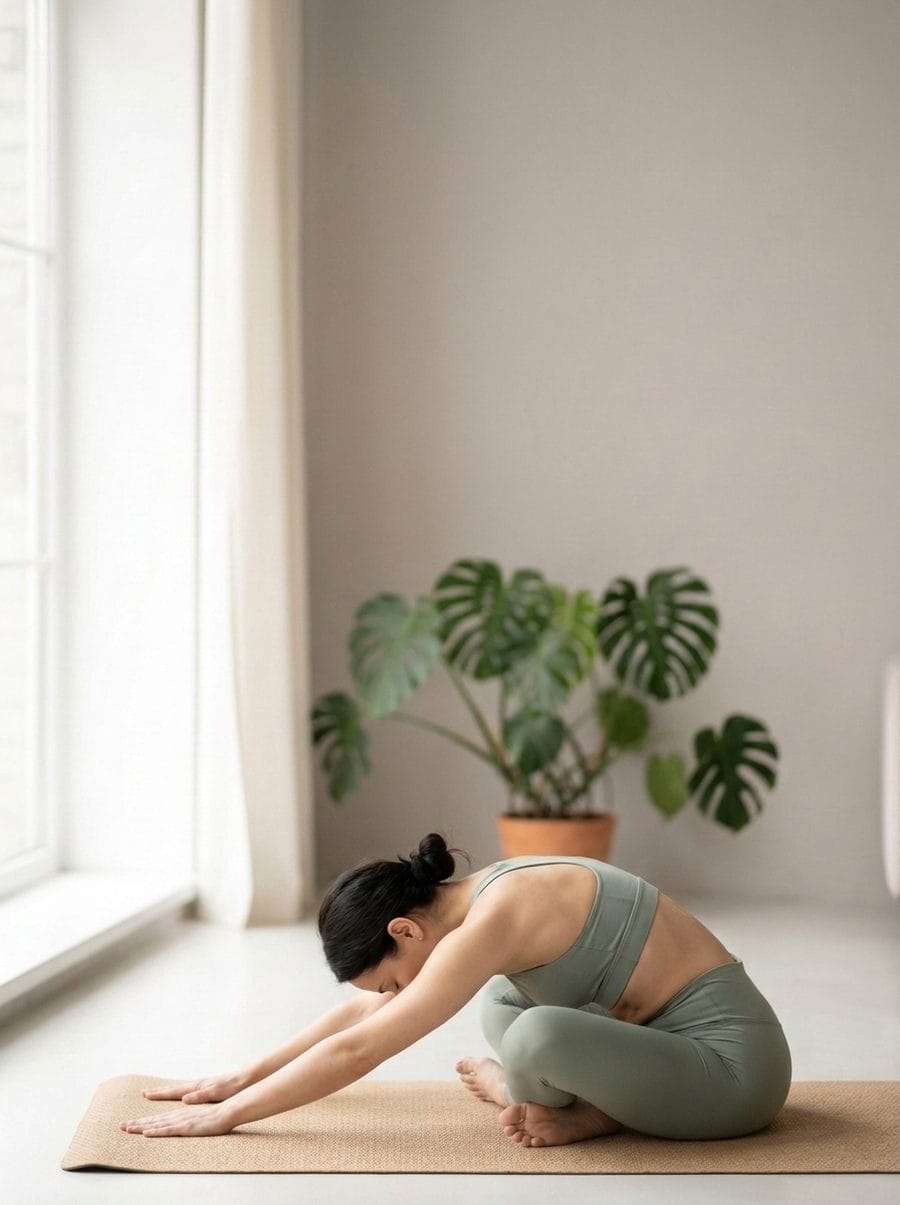
- Cross-Legged Forward Fold. Walk your hands out along the floor and let your shoulders grow heavy. Next time, reverse the cross of your legs. Prop: with knee discomfort, sit on a pillow or blanket.
Kneeling and on your belly
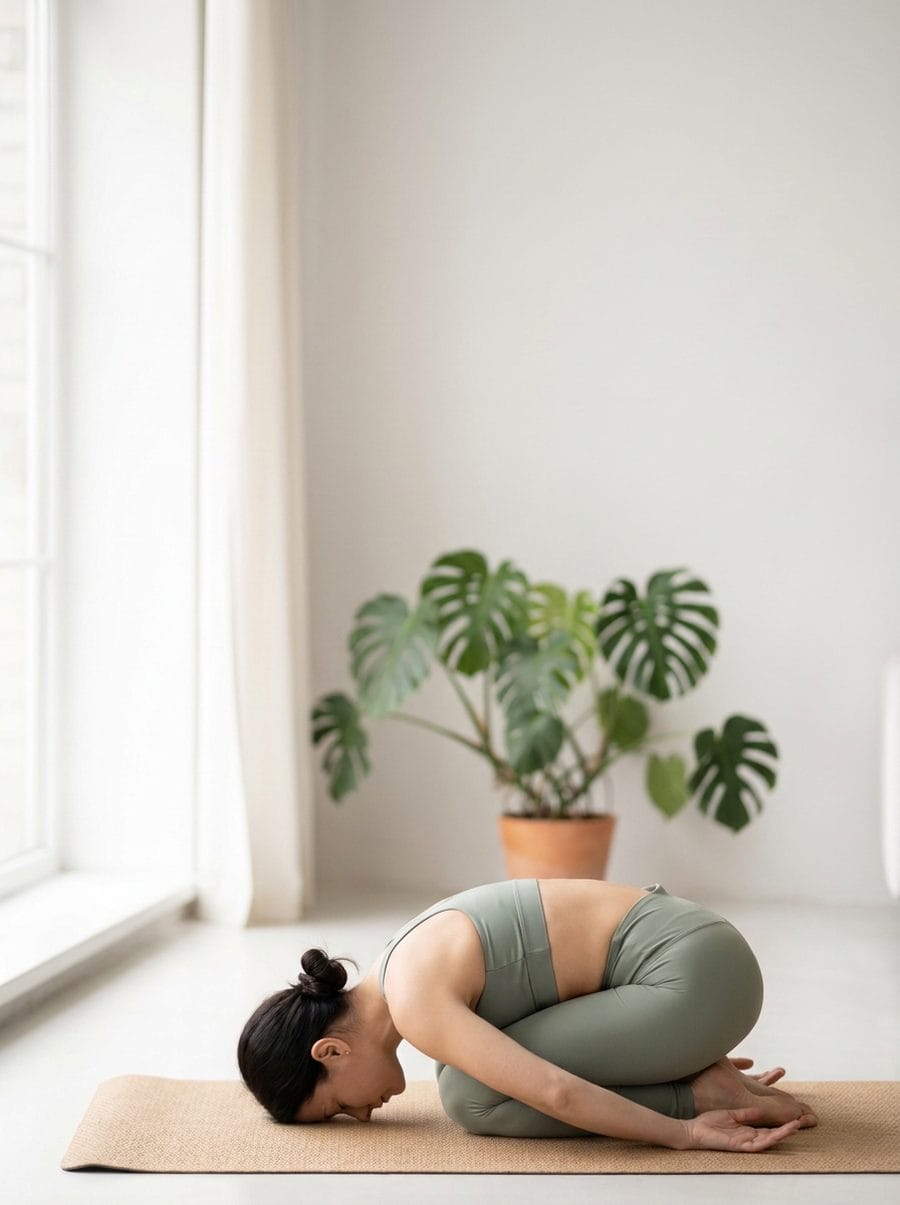
- Child's Pose. Lower your forehead, place your arms wherever feels easy and breathe toward your back ribs. Prop: a pillow under your forehead or chest. Skip it with knee injuries. During pregnancy, set your knees wider.
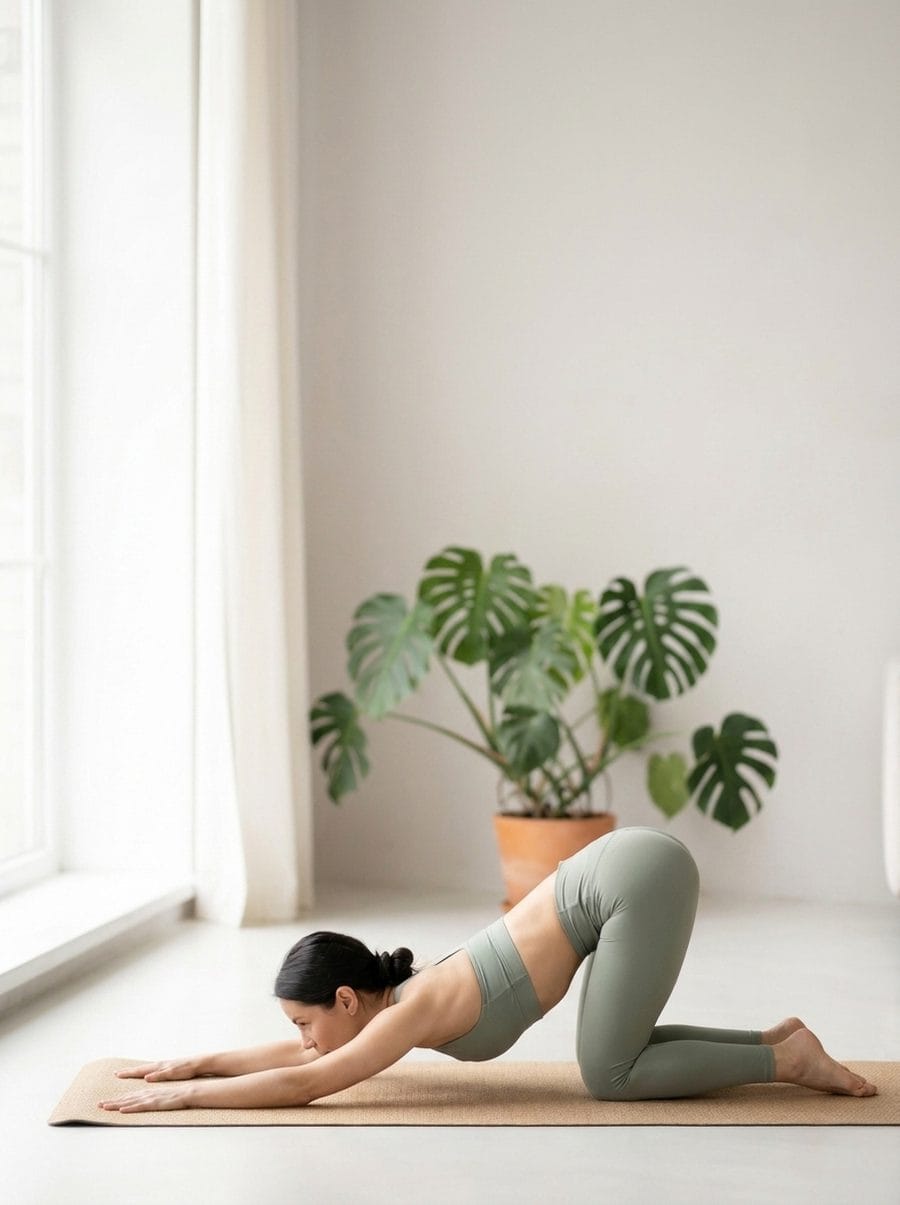
- Puppy Pose. Hips over knees, chest sinking under its own weight, arms easy. Prop: a blanket under your knees. Skip it with shoulder injuries.
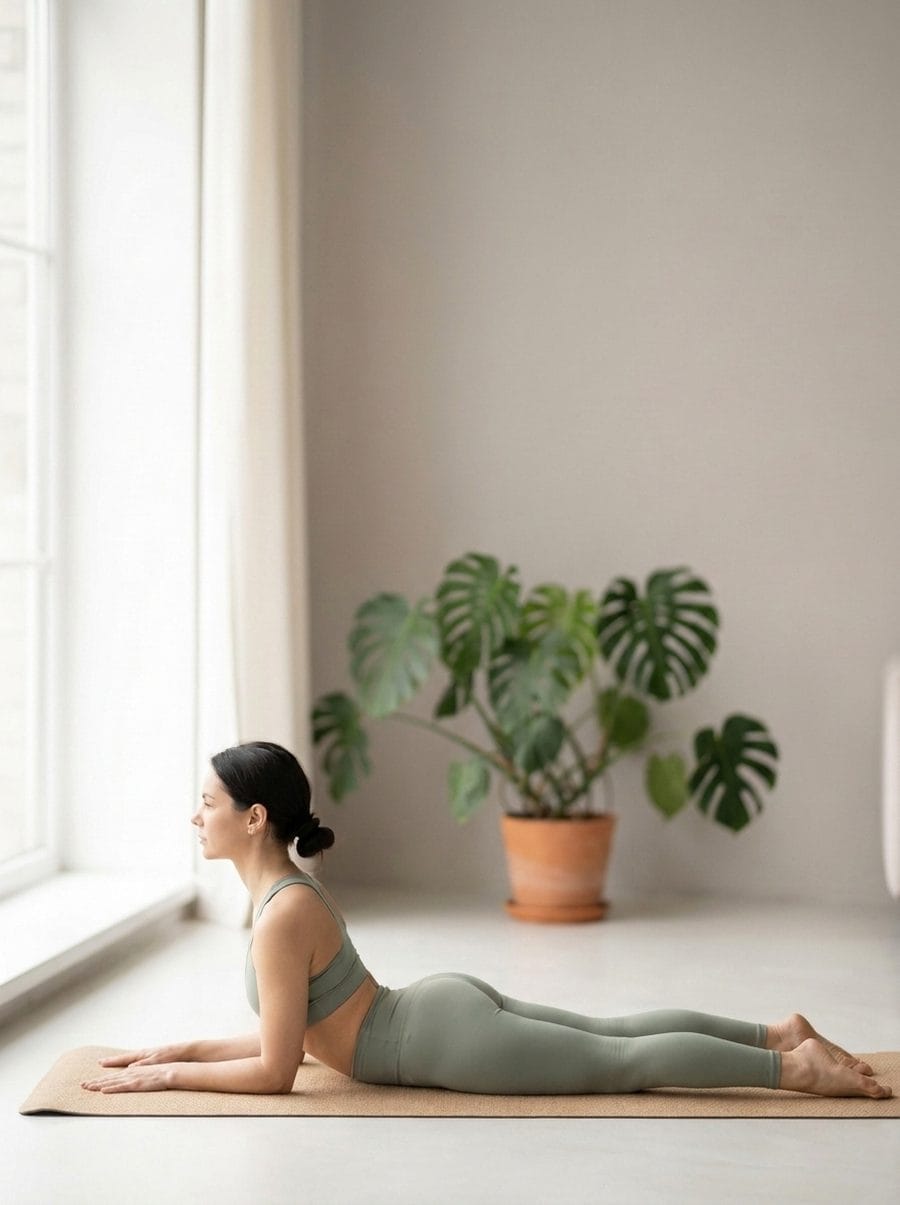
- Sphinx Pose. Elbows under shoulders, chest lifted without effort, glutes and legs soft. Prop: a pillow under your chest makes the backbend shallower. Don't do it while lower back pain is acute.
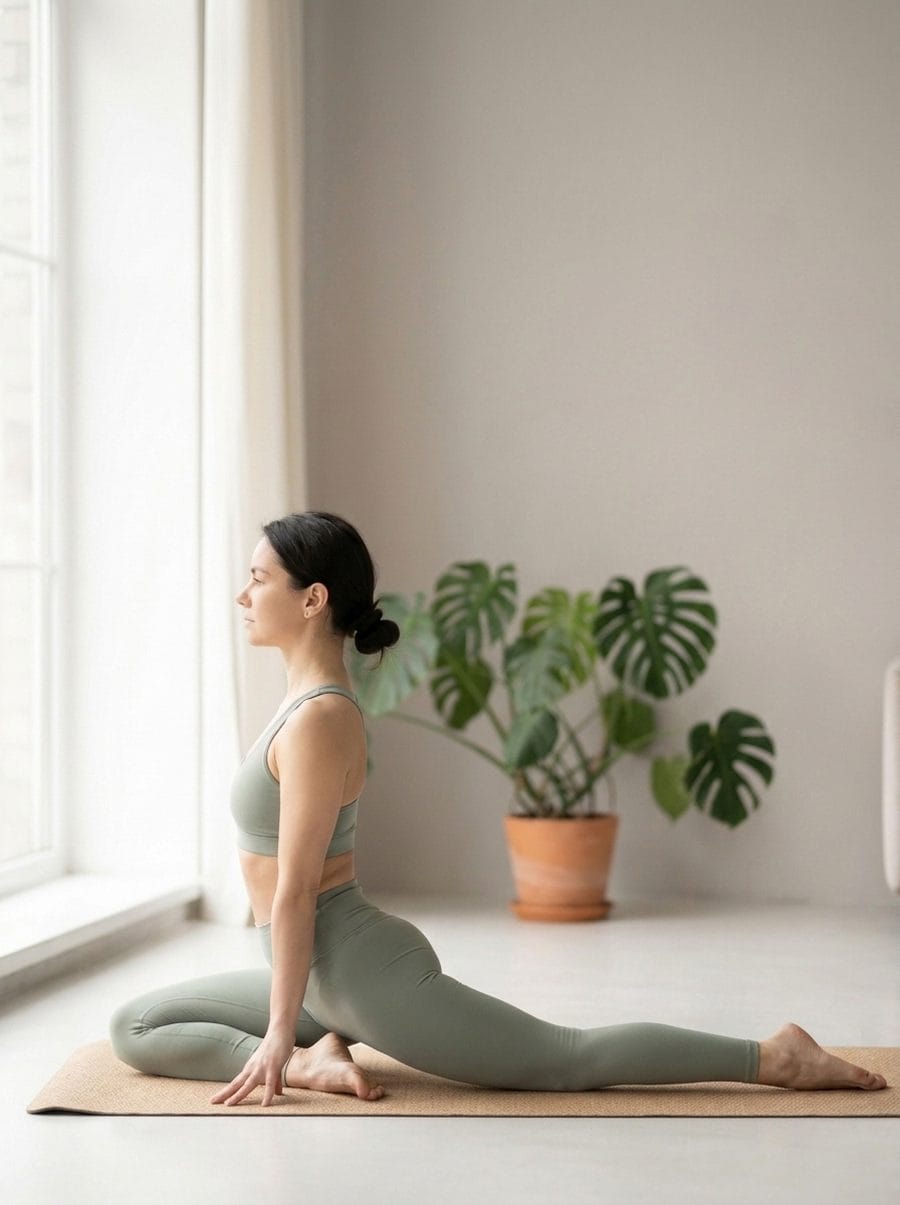
- Pigeon Pose (Prep). Bring one knee forward, stretch the back leg out and lower onto your forearms or forehead. Prop: a pillow under the hip of the bent leg to keep your pelvis from tipping. With knee injuries, replace it with a Supine Twist, knee to your chest.
- Frog Pose (Stretch). Knees wide, shins parallel, weight on your forearms. Move forward by tiny amounts. Prop: blankets under your knees; with knee or groin injuries, don't do the pose without them.
Lying on your back
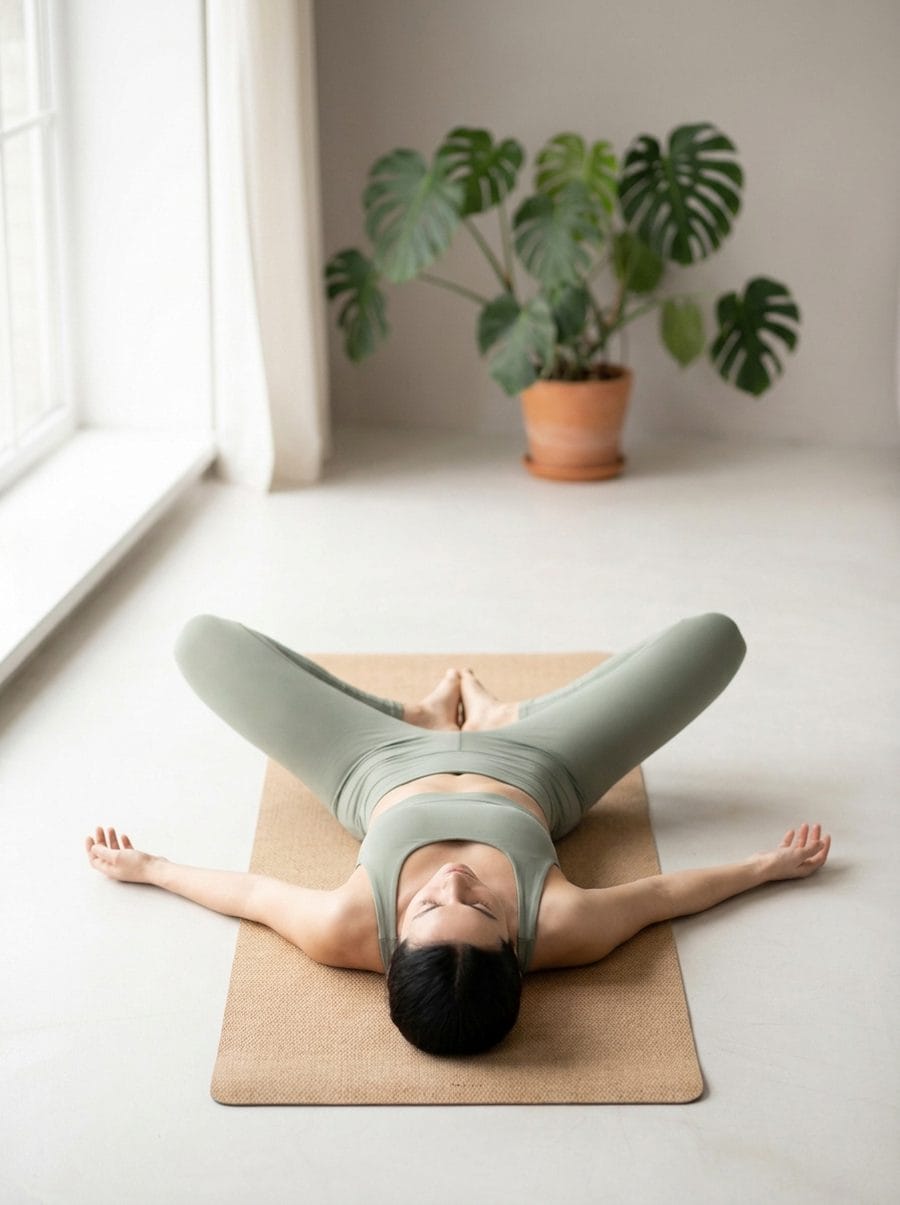
- Reclining Butterfly Pose. Soles together, knees opening on their own, nothing to do. Prop: pillows under your knees, especially with groin discomfort.
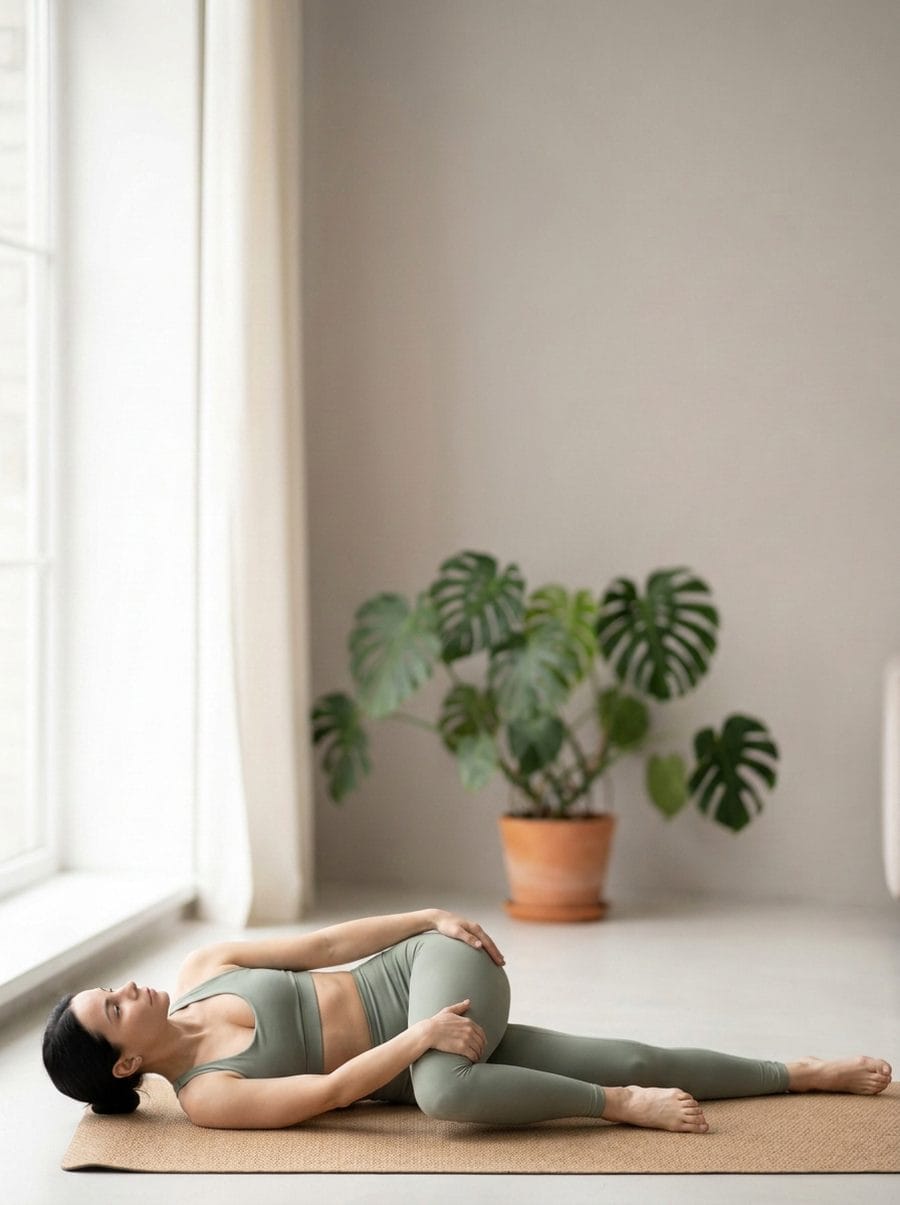
- Supine Twist. Take the bent knee across and leave it there: the weight of your leg does the work, not your hand. Prop: a pillow under the knee if it doesn't reach the floor. Leave it out while a disc herniation is acute.
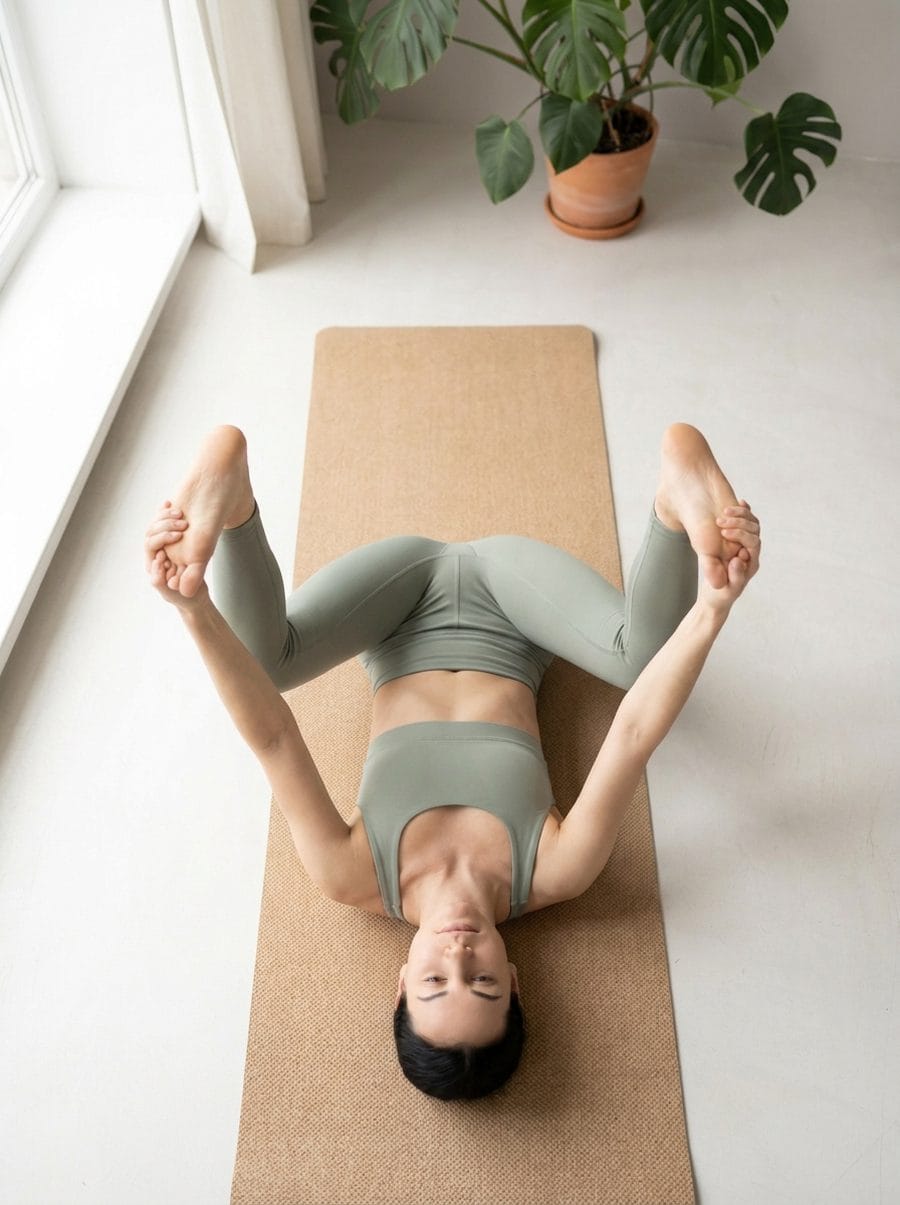
- Happy Baby Pose. Hold your feet or ankles but don't pull: your knees sink on their own and your lower back stays down. Prop: a strap around your feet if you can't reach them. Skip it in late pregnancy.
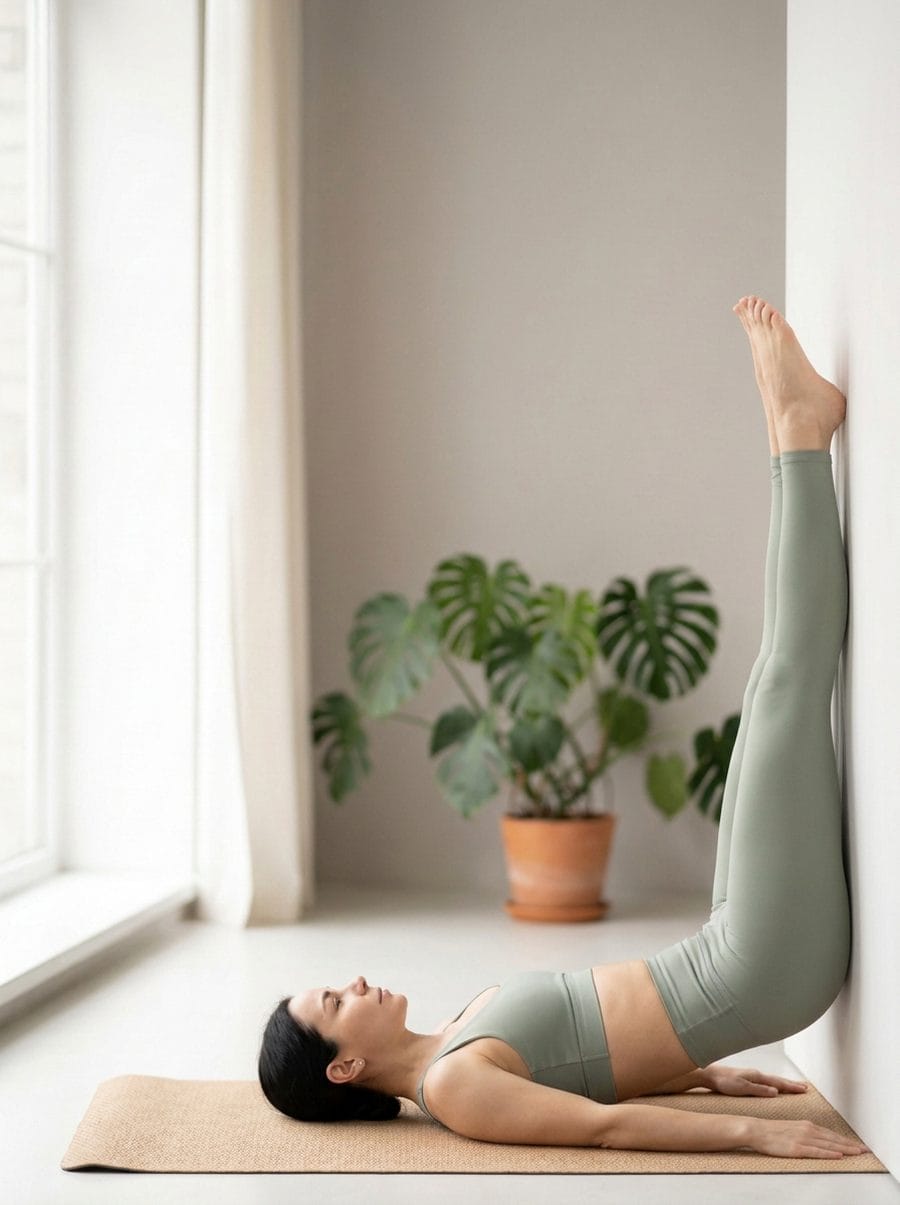
- Legs-Up-the-Wall Pose. Legs on the wall, hips close to it, belly and face soft. Prop: the wall, or without one, palms under your pelvis with elbows on the floor. Skip it during menstruation or with glaucoma or uncontrolled hypertension.
- Relaxation Pose. Feet apart, a bit wider than your hips, palms up, breath left alone. Prop: a pillow under your knees and a blanket on top. The app lists no cautions for this pose.

Other names for yin poses
Yin teachers often use names of their own. Seated Forward Fold is Caterpillar, Head-to-Knee Pose is Half Butterfly, Pigeon Pose (Prep) is Swan, Puppy Pose is Melting Heart, and Dragonfly means Wide-Angle Seated Forward Fold. Dragon pose is a deep lunge, and Banana is a side stretch lying on your back.
Those last two aren't in the app's programs, so we don't cover them here.
Putting the poses into a sequence
You don't have to work out the order yourself. Programs open with gentle poses, move on to hips and folds, and end with a twist and rest on your back. Yin Practice is a good starting point at 35 minutes, and Full-Body Yin covers the whole body in 50.
All 20 programs are on the yin yoga page. If hips and back are your main interest, read Yin Yoga for Hips and Lower Back.
Safety
The props and tips above come from the app's data and common yoga practice: we found no studies of individual yin poses. According to NCCIH, the knee and lower leg are the parts most often hurt in yoga, so take knee props seriously.
NCCIH also lists knee or hip injuries, lumbar spine disease, severe high blood pressure and glaucoma among conditions that may call for changes, so go over them with your doctor.
The pull can be noticeable, but never sharp. If the feeling burns or shoots, or you go numb, come out at once. Every caution is listed at the end of this page; the general rules are in Safety and Contraindications.
Pose cautions in this article
- Groin and knee injuries — place supports under your thighs (Butterfly Pose)
- Lumbar disc herniation (Seated Forward Fold)
- Flare-up of back pain — bend your knees (Seated Forward Fold)
- Knee injuries — place a support under your bent knee (Head-to-Knee Pose)
- Inner thigh injuries (Wide-Angle Seated Forward Fold)
- Herniated discs in the lower back (Wide-Angle Seated Forward Fold)
- Knee discomfort — sit on a prop (Cross-Legged Forward Fold)
- Pregnancy — widen your knees (Child's Pose)
- Knee injuries (Child's Pose)
- Shoulder injuries (Puppy Pose)
- Acute lower back pain (Sphinx Pose)
- Knee injuries — do a Supine Twist with your knee to your chest instead (Pigeon Pose (Prep))
- Knee and groin injuries — put blankets under your knees (Frog Pose (Stretch))
- Groin discomfort — place supports under your knees (Reclining Butterfly Pose)
- Disc herniation in the acute phase (Supine Twist)
- Late pregnancy (Happy Baby Pose)
- Menstruation (Legs-Up-the-Wall Pose)
- Glaucoma (Legs-Up-the-Wall Pose)
- Uncontrolled hypertension (Legs-Up-the-Wall Pose)
This site is for general information and is not medical advice. If you have pain, an injury, a chronic condition, or are pregnant, check with a qualified professional before practicing.
Questions
What are the main yin yoga poses? Going by the programs, Child's Pose, Supine Twist, Butterfly Pose, Legs-Up-the-Wall Pose and Sphinx Pose. They make a handy first introduction to the style.
How is a yin pose different from the same pose in hatha? The shape barely changes; the work does. In hatha your muscles hold the pose, in yin they rest. A rounded spine is fine in folds, and the hold lasts several times longer.
Do you need a bolster for yin yoga? No. Couch pillows and a folded blanket work just as well. All that matters is that the prop lets your muscles release.
How many poses do you need for one session? In the app, a short session has three poses and a one-hour session has up to eleven, not counting the final relaxation.
Sources
- National Center for Complementary and Integrative Health. Yoga: Effectiveness and Safety. NCCIH.
- Pose technique, holds and cautions, contents of the yin programs: the Hatha Yoga app. More on the How We Prepare Our Content page.
Read next
- Yoga for Arthritis and Osteoporosis: How to Protect Your Joints and Bones7 min read
- Ashtanga Yoga Explained: The Series, the Breath and the Difference from Hatha6 min read
- Ayurveda Explained Simply: The Basics and a Daily Routine (Dinacharya)5 min read
- Balance Exercises: 10 Yoga Poses for Balance and Stability7 min read