 Hatha Yoga
Iyengar Yoga: Precision, Props and Long Holds
Hatha Yoga editorial team · Updated · 6 min read
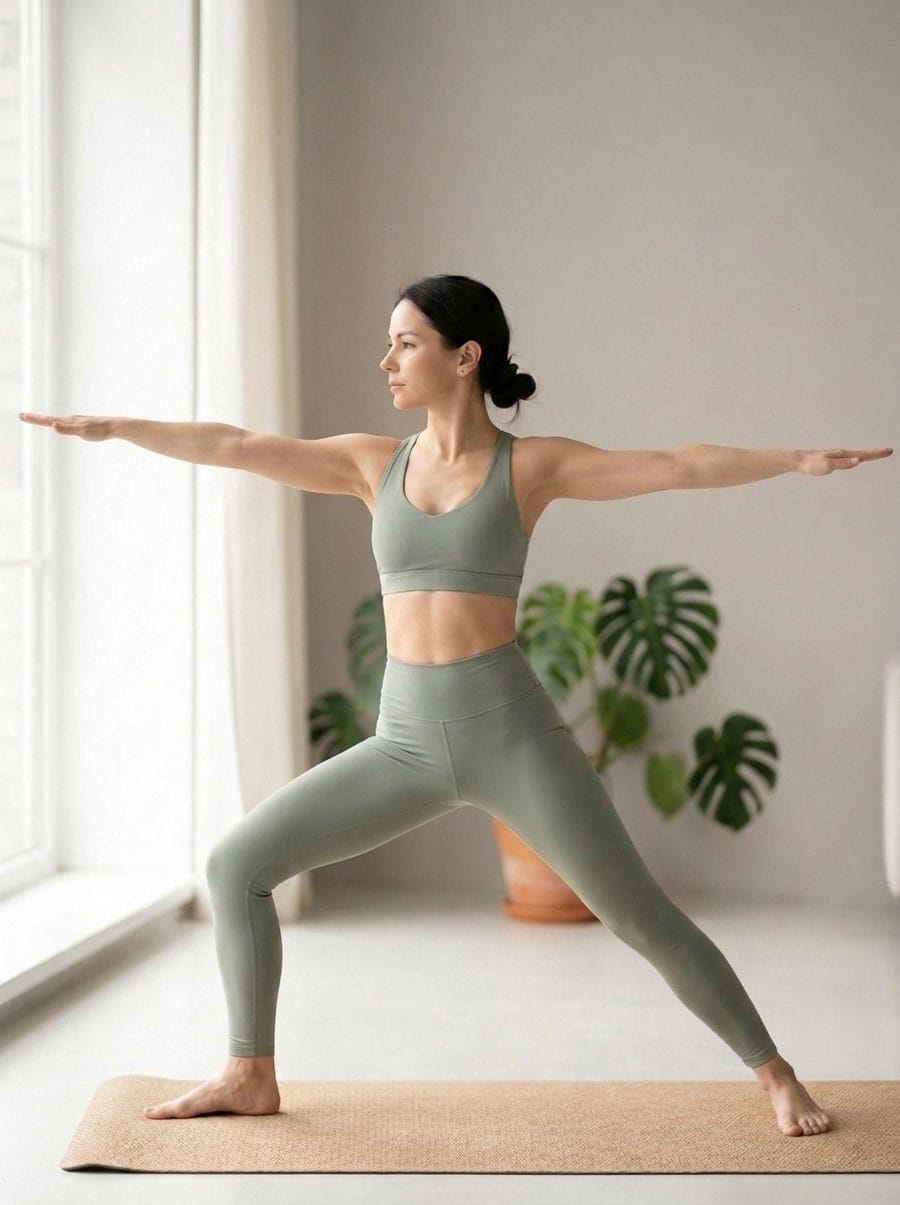
You can recognize Iyengar yoga by the blocks, straps and blankets beside every mat, and by how thoroughly the teacher breaks down a single pose. It's a method of hatha yoga built on precision: feet, knees, pelvis and spine are aligned so the pose does its job without straining the joints.
Below we cover what Iyengar yoga is, why it uses props, which poses come first, and how to try the method at home.
What is Iyengar yoga?
The method is named after the Indian teacher B.K.S. Iyengar. He taught in Pune for decades, and his Light on Yoga (Yoga Dipika in Sanskrit) came out in 1966. It describes hundreds of asanas step by step, with photographs, and remains one of the best-known pose manuals.
At heart it's the same hatha yoga: poses, pranayama, relaxation. The difference lies in the approach, usually summed up as three principles.
- Alignment. Each pose is built from the ground up: first the feet and legs, then the pelvis, spine, shoulders and head.
- Sequencing. The order of poses is chosen for the goal of the class: standing poses prepare you for forward folds, and forward folds for inversions.
- Timing. Poses are held longer than in dynamic styles, sometimes for several minutes, so there's time to build the shape and feel it.
Iyengar yoga props
Here, props aren't crutches for the weak. They're tools. They help someone who lacks flexibility or strength do a pose correctly, and they make it possible to stay in the pose longer. Props are matched to the person: one student needs a block in a fold, another doesn't, and that's fine.
- Block. Under your hand in Triangle Pose, under your pelvis in Hero Pose.
- Strap. For forward folds when your hands don't reach your feet.
- Blankets. Under your pelvis in seated poses and under your shoulders in Shoulder Stand, so your neck stays free.
- Bolster. A firm cushion for reclining poses and gentle backbends.
- Chair and wall. The wall helps with balance and standing poses, the chair with backbends and inversions. Iyengar studios often have ropes fixed to the wall as well.
At home, a few thick hardbacks replace blocks, a bathrobe belt for a strap, and a tightly rolled blanket for a bolster. Prop work later gave rise to restorative yoga, but that style has a different aim: rest, not precise effort.
Iyengar yoga poses for beginners: standing first
Beginners in the Iyengar method usually start with standing poses. They teach you to stand on your feet, straighten your knees without locking them, keep your pelvis level, and they strengthen your legs along the way. Mountain Pose is the base for all the others.
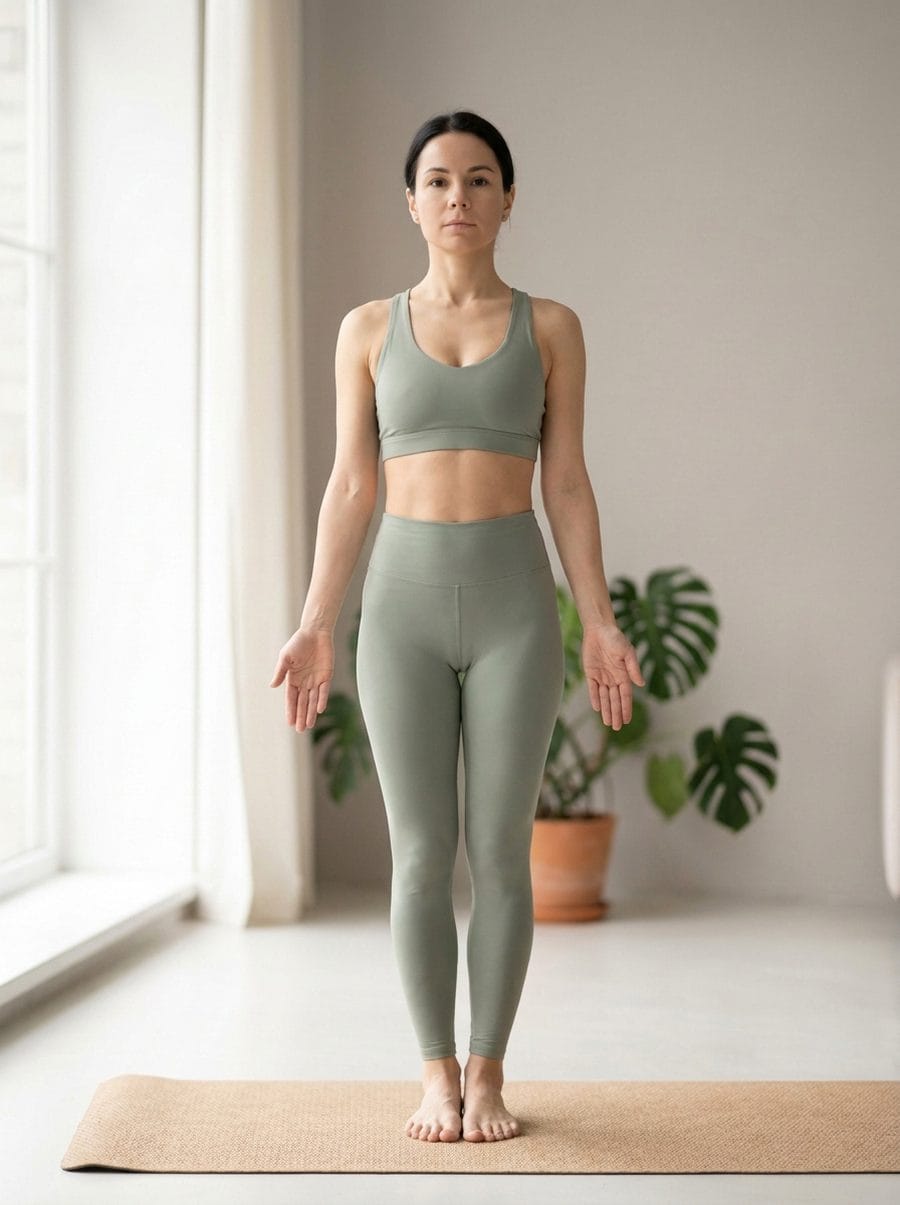
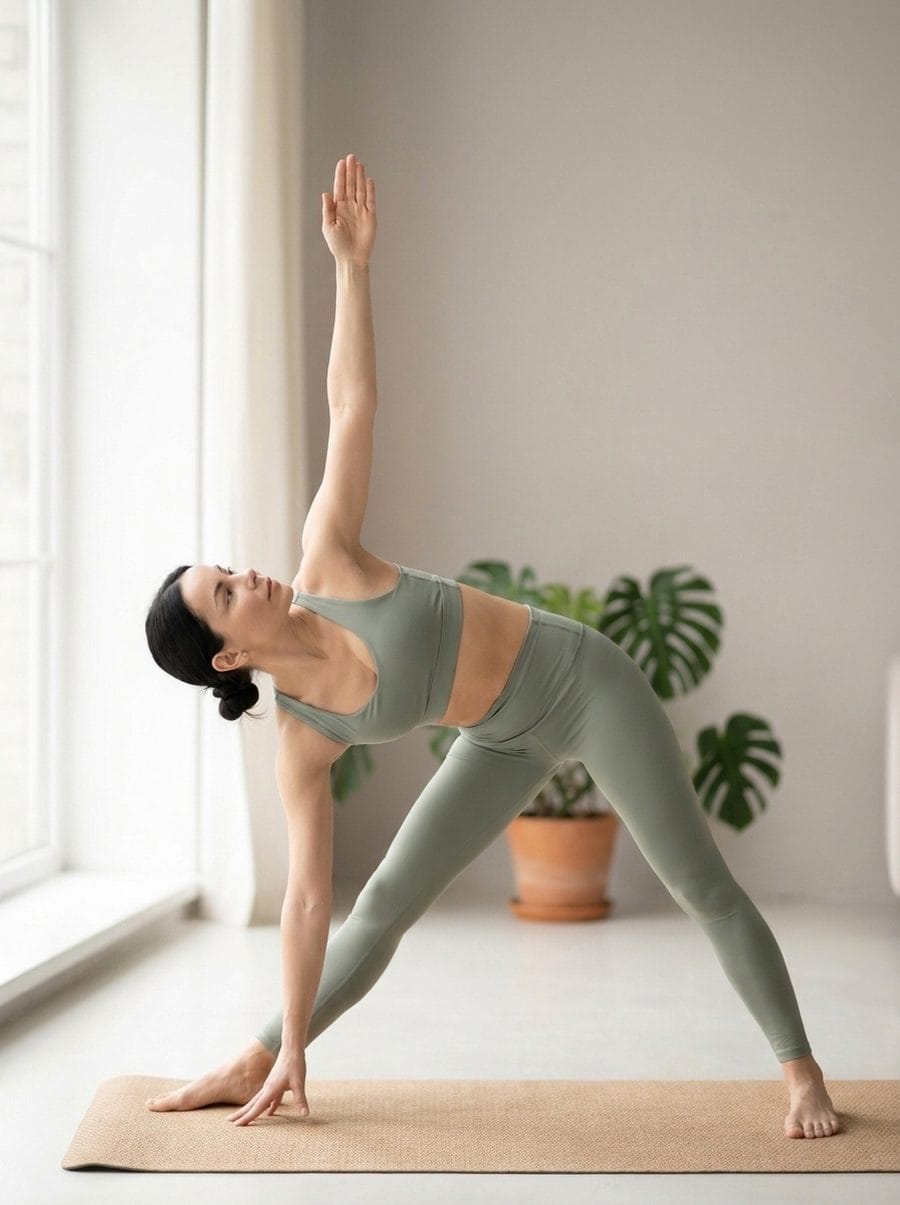
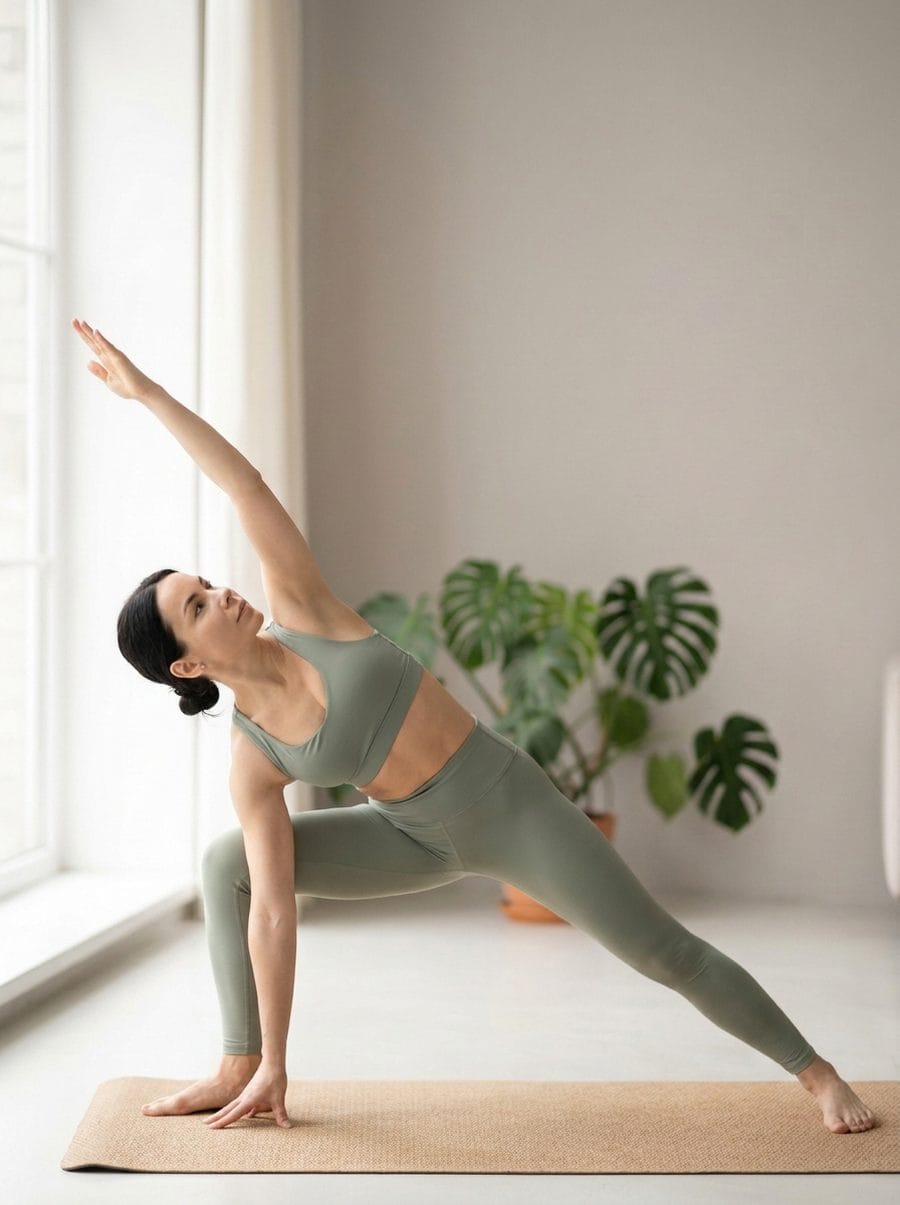
In Triangle Pose, put a block under your lower hand so the side of your body lengthens instead of collapsing downward. You can rest your back against a wall to feel the plane of the pose. In Warrior II, check that your front knee tracks toward your second toe and stays over the heel.
Hold each pose as long as you can keep its shape, and never skip the other side.
Seated poses with props
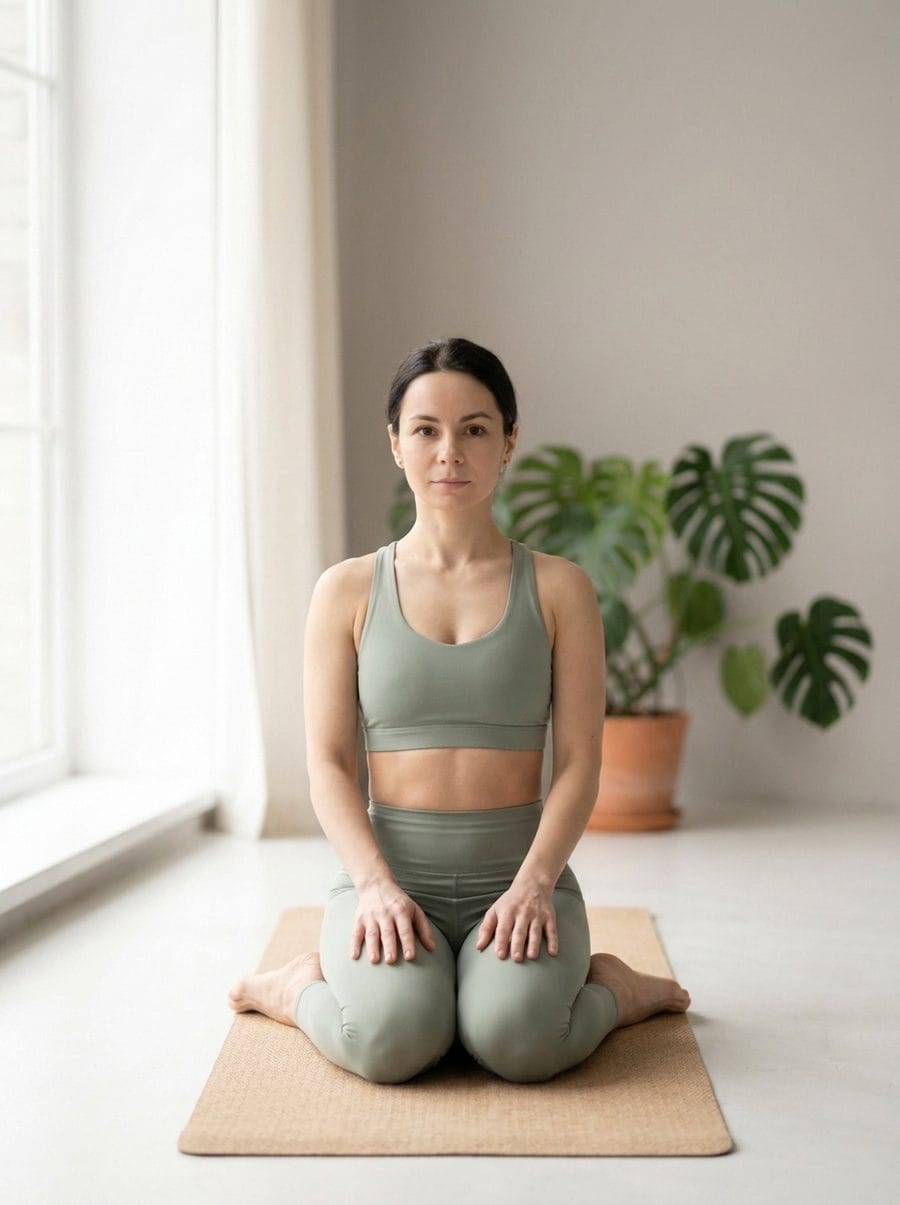
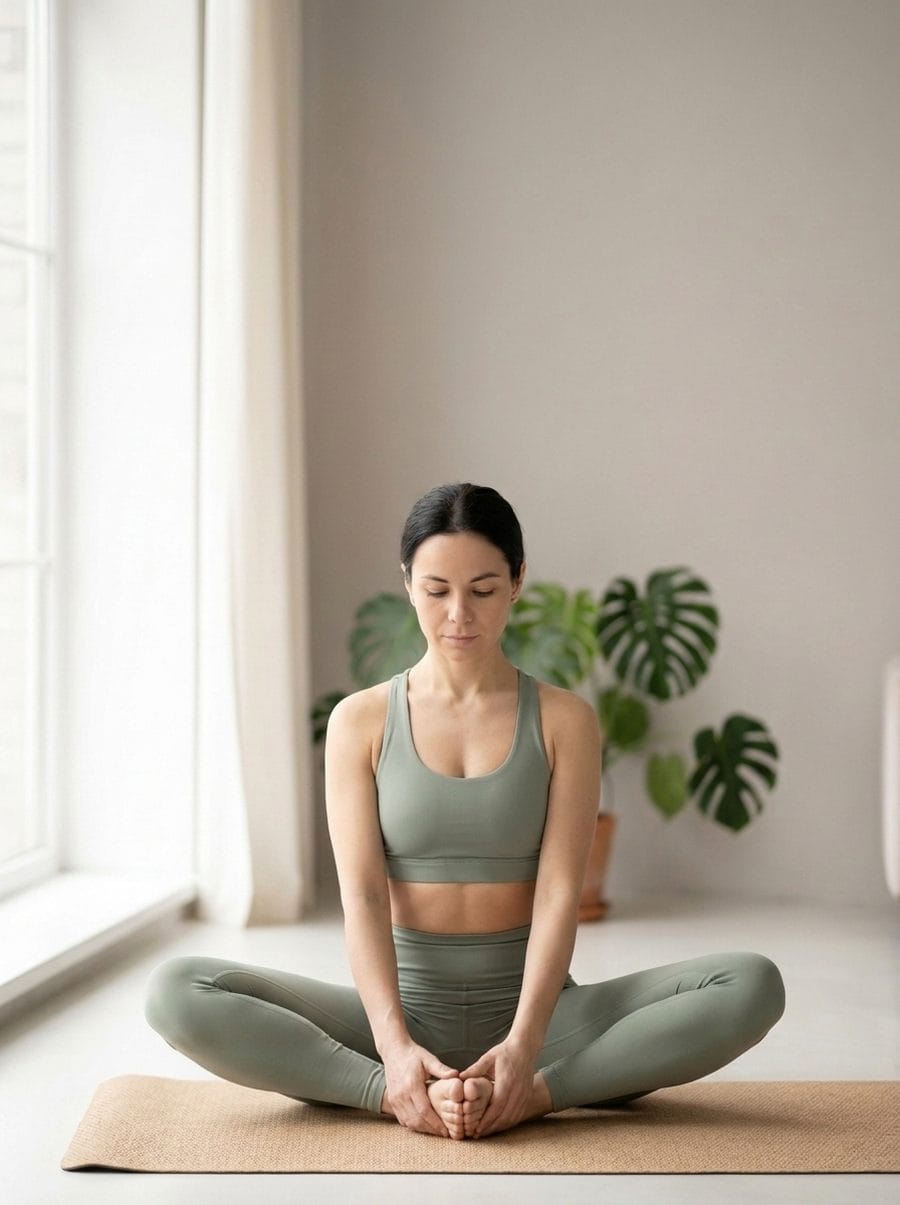
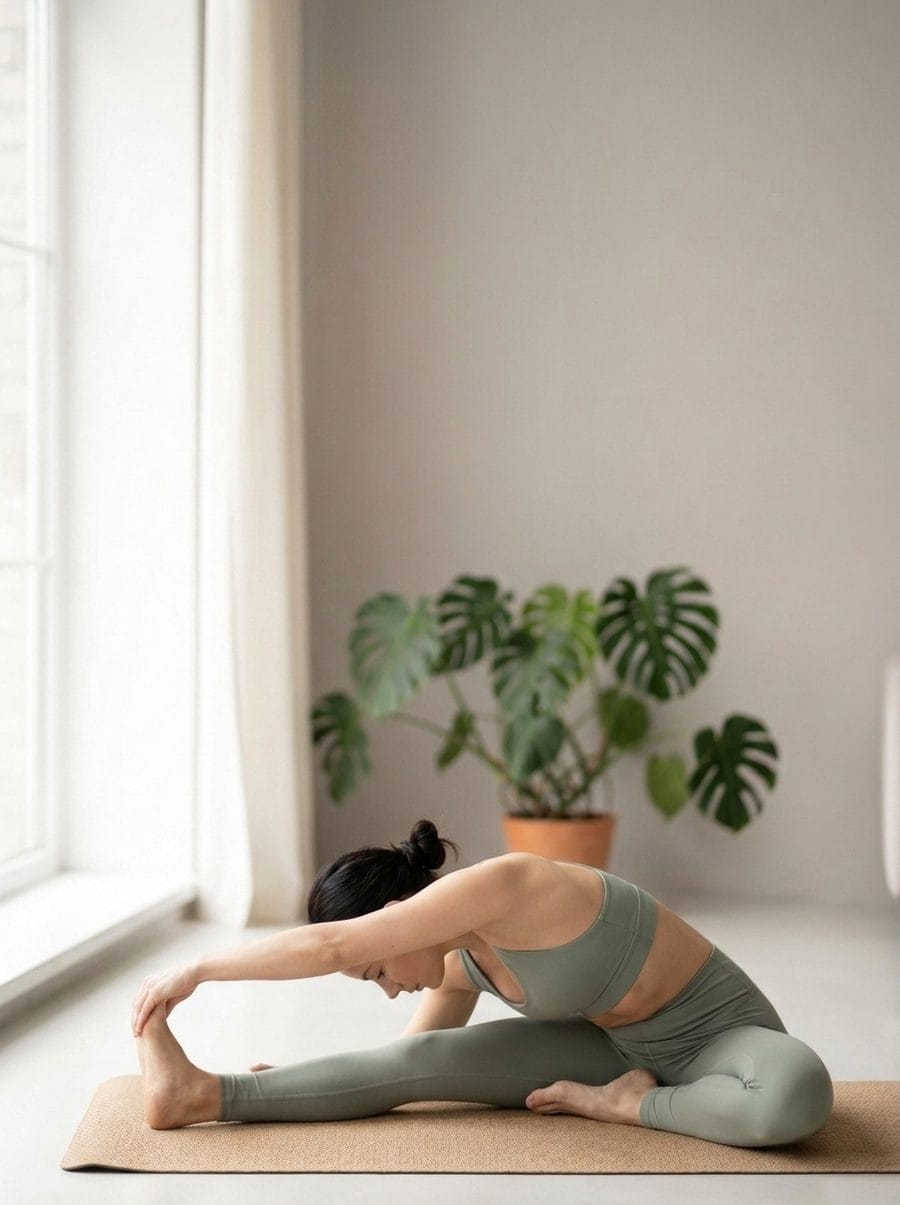
In Hero Pose, sit on a block or a stack of books. In Butterfly Pose, place supports under your thighs; in Head-to-Knee Pose, tuck a rolled blanket under the bent knee. This isn't a shortcut; it's how you keep the spine long.
If your knees still feel an unpleasant pull in Hero Pose on a block, raise the seat higher.
How to try Iyengar yoga at home
There's no Iyengar-method program in the app: it teaches hatha yoga in its own sequences. You can add props to any program, though. A tip for practicing on your own: pick one pose a week and work through it every day, part by part, from your feet up to your head.
Practice in front of a mirror or film yourself on your phone, since alignment mistakes are easier to spot from outside than from inside.
First Practice lasts 15 minutes and makes an easy entry point: warm-up, Mountain Pose, Tree Pose by a wall, Standing Forward Fold, Staff Pose on a folded blanket, Seated Forward Fold with a strap, and Butterfly Pose with supports under the thighs.
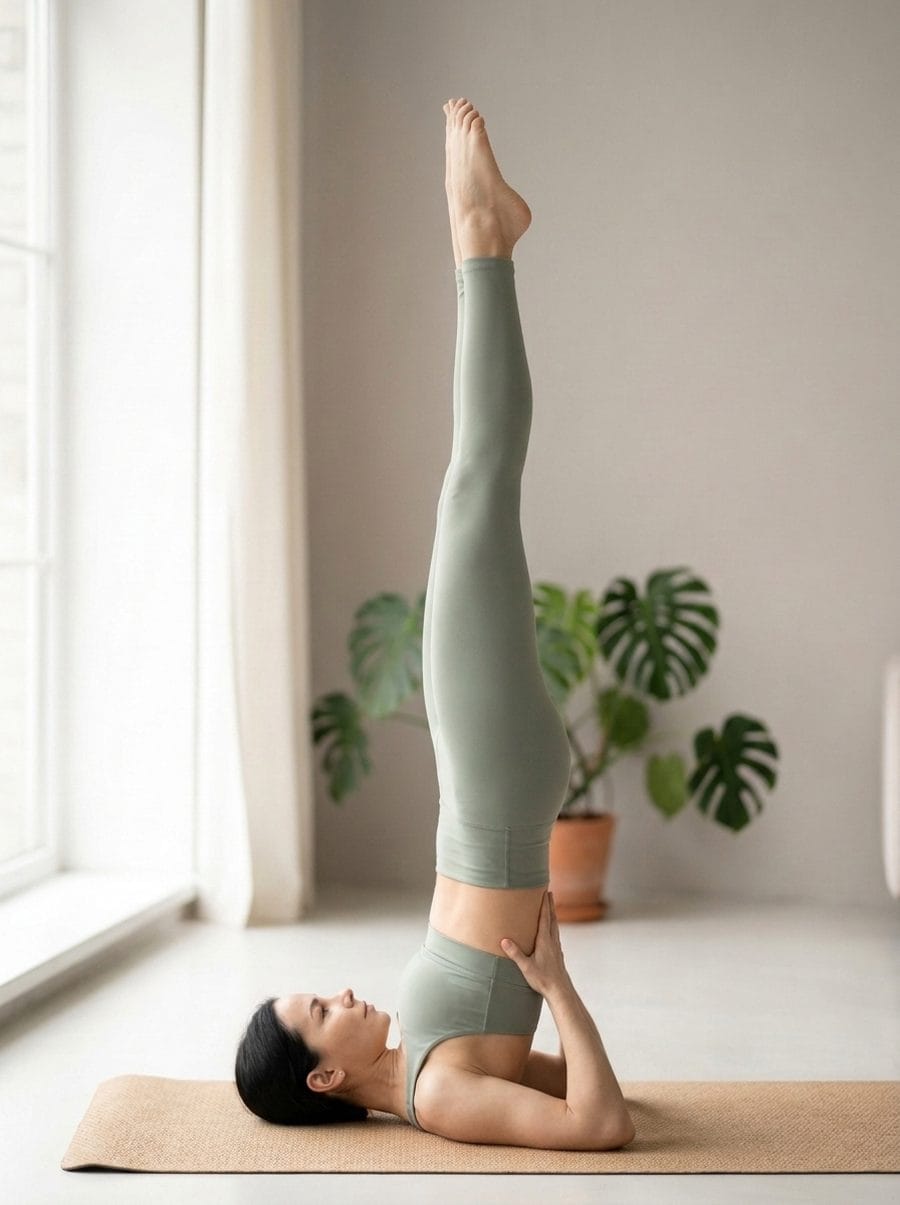
Classic Full Practice runs 50 minutes and is closer to a full class: standing poses, forward folds, backbends and inversions. For Shoulder Stand, fold two or three blankets under your shoulders the way Iyengar studios do; details are on the Shoulder Stand page.
How is Iyengar yoga different?
- From regular hatha. More detail and more props. A single pose can take up half a class.
- From vinyasa and ashtanga. No continuous flow. Holds are long, with room to adjust between poses. More in Hatha vs. Vinyasa.
- From yin yoga. In yin the muscles relax, while Iyengar poses are active: the legs work and the spine stays long.
Safety
Precise alignment by itself reduces strain on the joints, but cautions still apply.
- Hero Pose. With knee or ankle injuries, sit on a block or leave the pose out.
- Warrior II and Side Angle Pose. Injured knees rule out both.
- Triangle Pose. While low back pain is flaring, go without it. Low blood pressure means leaving the pose gradually.
- Shoulder Stand. A neck injury, hypertension, glaucoma, pregnancy, menstruation: under any of these conditions, the pose is skipped. The Iyengar tradition also leaves out inversions during menstruation.
With back pain, a herniated disc or sciatica, see a doctor first, then begin with an experienced teacher. The general rules are in Safety and Contraindications.
Pose cautions in this article
- Flare-up of lower back pain (Triangle Pose)
- Low blood pressure — come out slowly (Triangle Pose)
- Knee injuries (Warrior II, Side Angle Pose)
- Knee and ankle injuries — sit on a block or skip the pose (Hero Pose)
- Groin and knee injuries — place supports under your thighs (Butterfly Pose)
- Knee injuries — place a support under your bent knee (Head-to-Knee Pose)
- Neck injuries (Shoulder Stand)
- Hypertension (Shoulder Stand)
- Glaucoma (Shoulder Stand)
- Menstruation (Shoulder Stand)
- Pregnancy (Shoulder Stand)
This site is for general information and is not medical advice. If you have pain, an injury, a chronic condition, or are pregnant, check with a qualified professional before practicing.
Questions
Is Iyengar yoga suitable for beginners? Yes. Few styles are as clear for a first step. The pace is slow, the teacher explains a lot, and props let you do the pose without flexibility or strength.
How is Iyengar yoga different from hatha yoga? It's a method of hatha yoga. What sets it apart from a typical class is its attention to precise form, carefully planned sequences, long holds and props.
Do I need to buy blocks and a bolster? No. To start, thick books, a bathrobe belt, a couple of blankets and a wall are enough. Buy props once you know the method suits you.
Is Iyengar yoga hard? It's less strenuous than it is attentive. Long holds in standing poses work the legs, but the pace is calm and the level is easy to adjust.
Sources
- Pose technique and cautions, program contents: the Hatha Yoga app. More on the How We Prepare Our Content page.
Read next
- Yoga for Arthritis and Osteoporosis: How to Protect Your Joints and Bones7 min read
- Ashtanga Yoga Explained: The Series, the Breath and the Difference from Hatha6 min read
- Ayurveda Explained Simply: The Basics and a Daily Routine (Dinacharya)5 min read
- Balance Exercises: 10 Yoga Poses for Balance and Stability7 min read