 Hatha Yoga
Side Angle Pose
Utthita Pārśvakoṇāsana
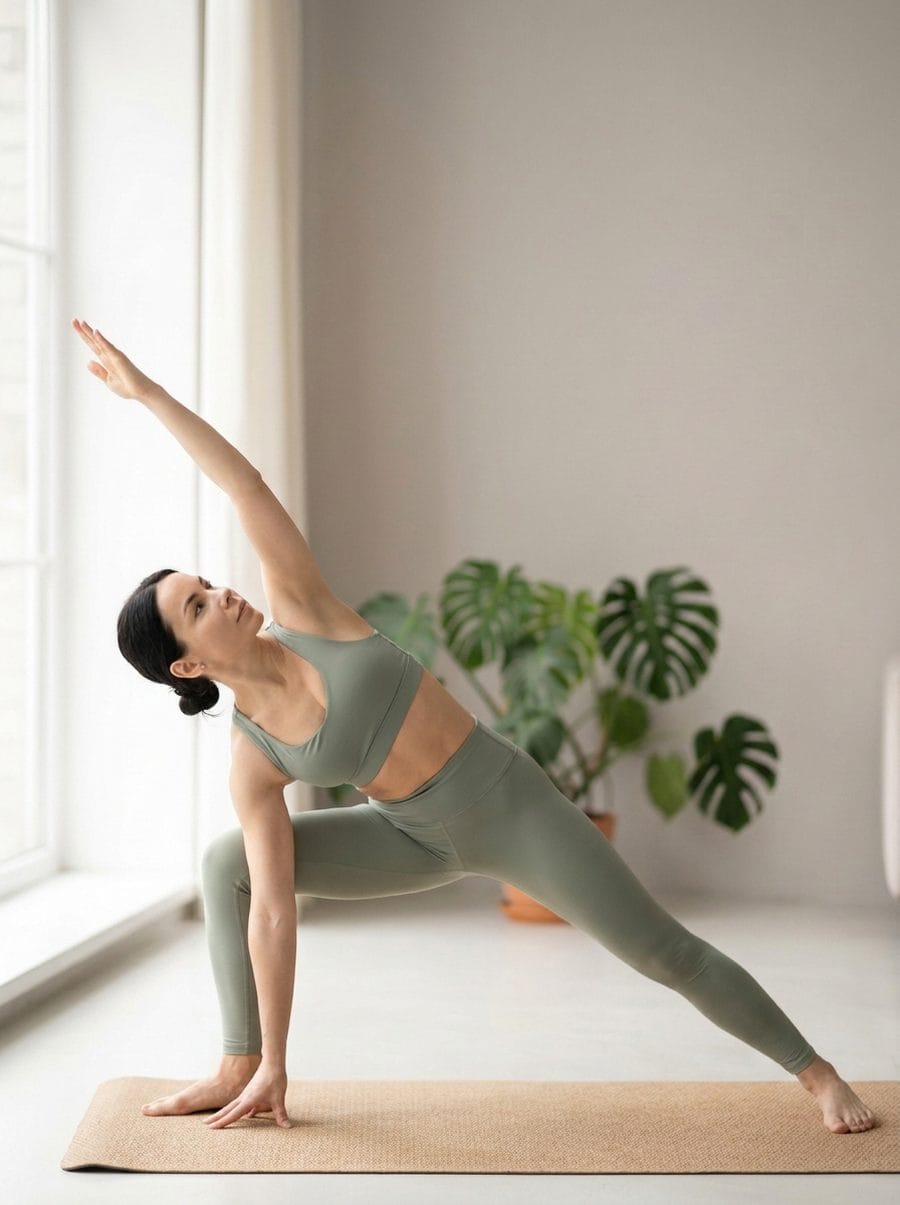
Side Angle Pose, or Utthita Parsvakonasana, grows out of Warrior II: your front knee is bent, your torso leans over that thigh, and your top arm continues the diagonal of your back leg. Rated intermediate, it belongs to 4 sequences in the app and to the Warrior's Path flow.
Its card lists 30 seconds, while sequences stay 35 to 55 seconds on each side, longest of all in Classic Full Practice.
How to do it
- EnterFrom Warrior Two, rest your forearm on the thigh of your bent leg, or your palm on the floor behind your front foot. Extend your top arm diagonally over your ear.
- HoldCreate one line from the outer edge of your back foot to the fingertips of your top hand. Open your chest upward, and don't sink into your lower arm.
- ExitInhale, press through your front leg and lift your torso.
More detail
The easiest way in is straight from Warrior II without moving your feet. Your front thigh is close to parallel with the floor, and the knee stays stacked over your heel, tracking toward your little toe. Tilt sideways from the hip crease so that both sides of your waist stay long, not just the top one.
If you're new, rest your forearm on your thigh, which makes it easy to turn your chest up. A palm on the floor is the deeper option, and a block under your hand helps if it doesn't reach. Your back leg stays straight, with the outer edge of that foot sealed to the mat.
Reach your top arm diagonally over your ear while that shoulder slides away from your neck.
Benefits
A powerful stretch along the side of the body; strengthens the legs.
The pose stretches the whole side of your body, from your back heel to the fingertips of your raised hand. Your legs split the work: the front thigh carries the load and the back leg acts as a brace. Your core keeps the torso from collapsing onto the lower arm, and turning your chest toward the ceiling opens the shoulders.
Cautions
- Knee injuries
This site is for general information and is not medical advice. If you have pain, an injury, a chronic condition, or are pregnant, check with a qualified professional before practicing.
Common mistakes
- Front knee caving in past the big toe. Point it toward your little toe.
- Hanging on the lower arm. Your forearm just touches the thigh; your legs and abs hold you up.
- Chest facing the floor. Rotate it toward the ceiling and draw your top shoulder back.
- Outer edge of the back foot lifting. Press it down, or the leg loses its anchor.
- Straining your neck to look up. If gazing at your hand feels tight, look straight ahead.
Where it appears
- Hip Opening 20 min · Intermediate
- Classic Full Practice 50 min · Intermediate
- Energy Boost 15 min · Intermediate
- Advanced Intensive 35 min · Advanced
- Warm-up: Warrior's Path Warrior strength across three body levels: the warrior is one step, not the whole round
Similar poses
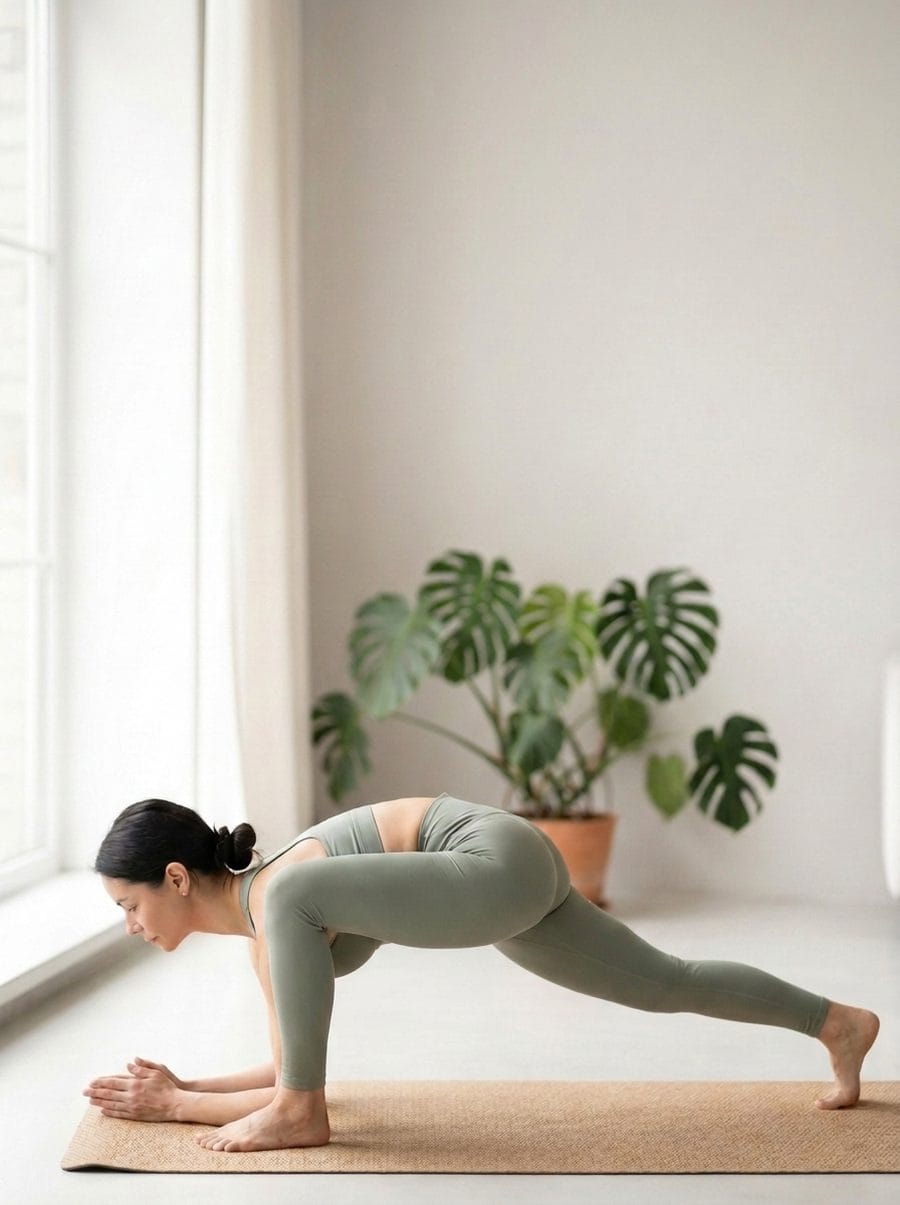
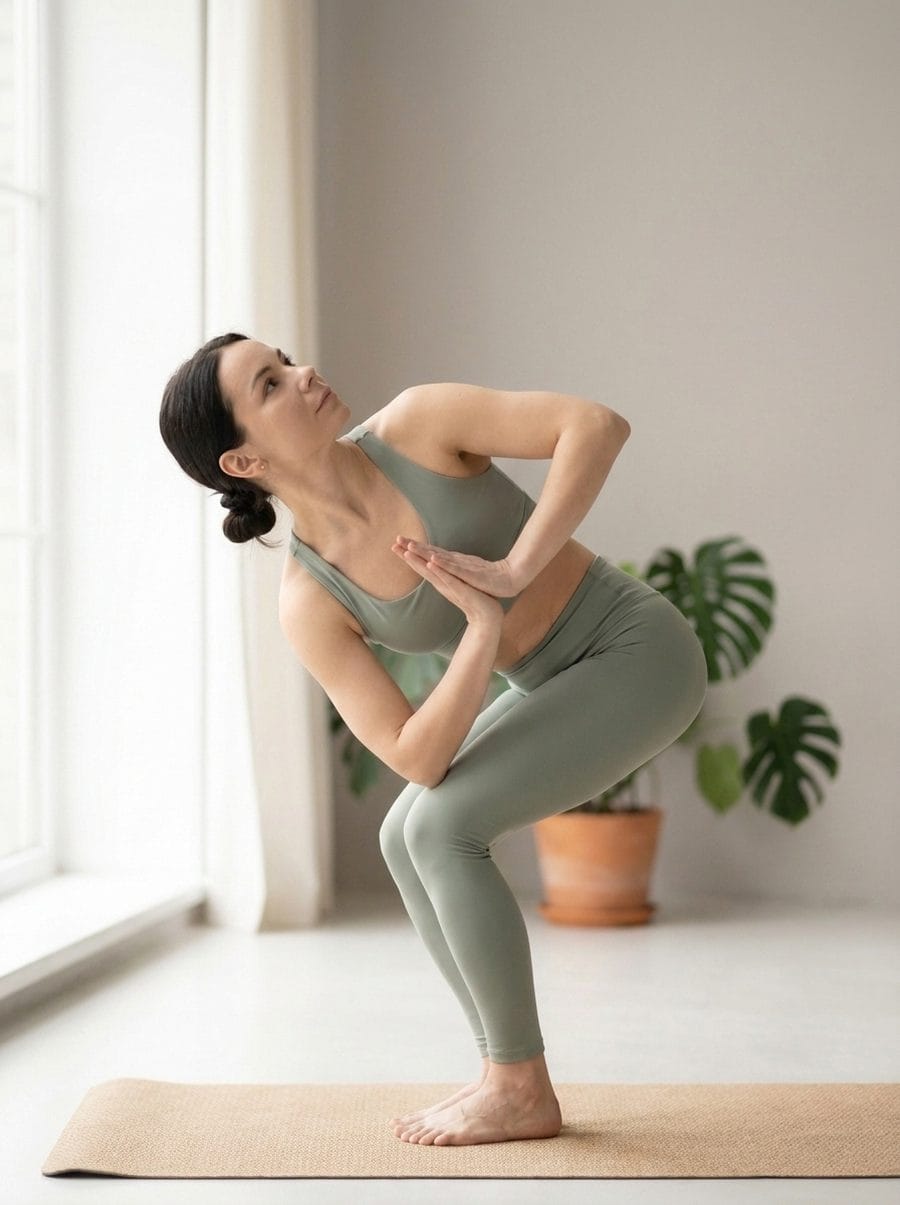
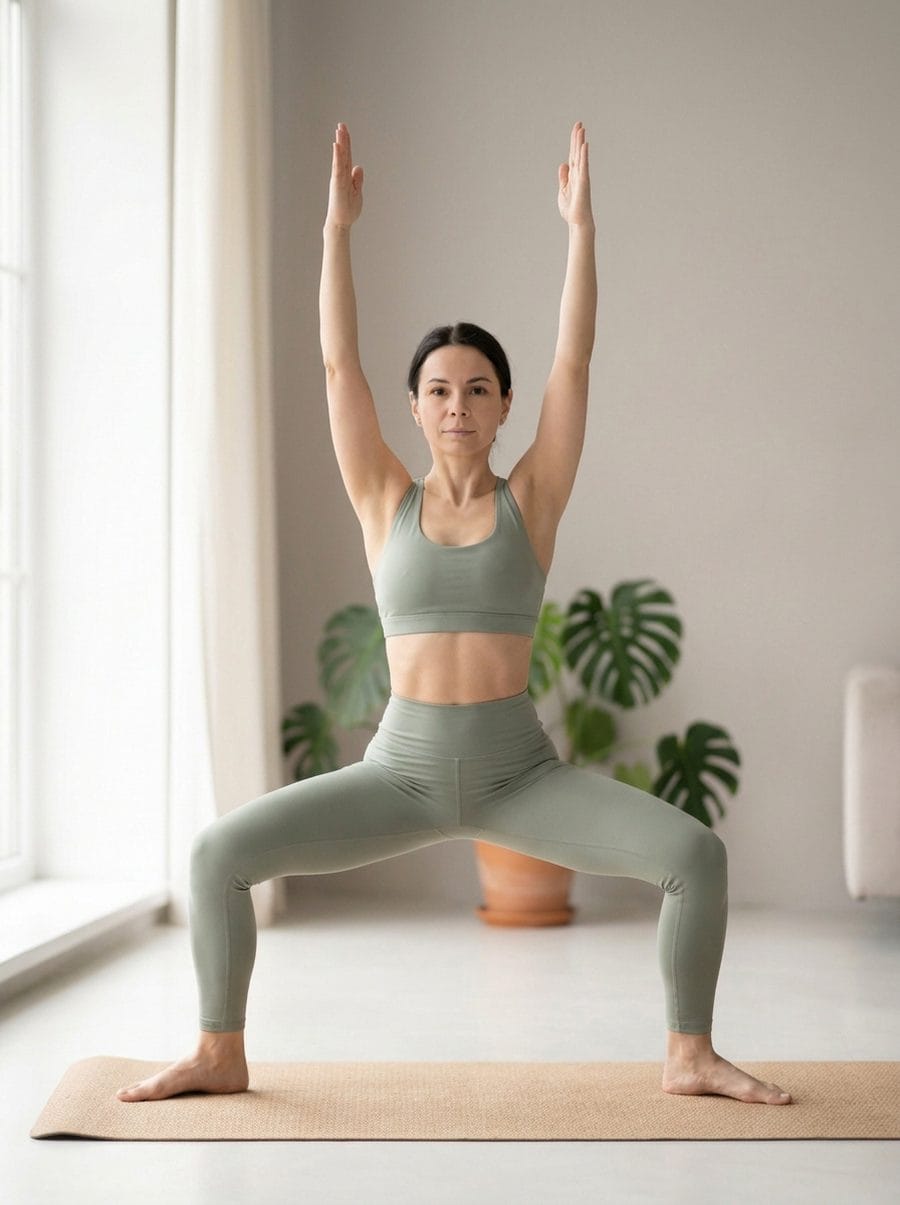
Questions
What does Utthita Parsvakonasana mean? "Utthita" means extended, "parsva" means side and "kona" means angle, so the full name translates as Extended Side Angle Pose.
Can I do Side Angle Pose with bad knees? No. Knee injuries rule this pose out in the app, so leave it out and ask your doctor which standing poses suit you.
How is it different from Revolved Side Angle? In Revolved Side Angle Pose your torso twists toward the front leg and the opposite arm comes down. It's an advanced pose that the app rules out for disc herniation, pregnancy and hypertension.
Featured in
Updated: