 Hatha Yoga
Revolved Triangle Pose
Parivṛtta Trikoṇāsana
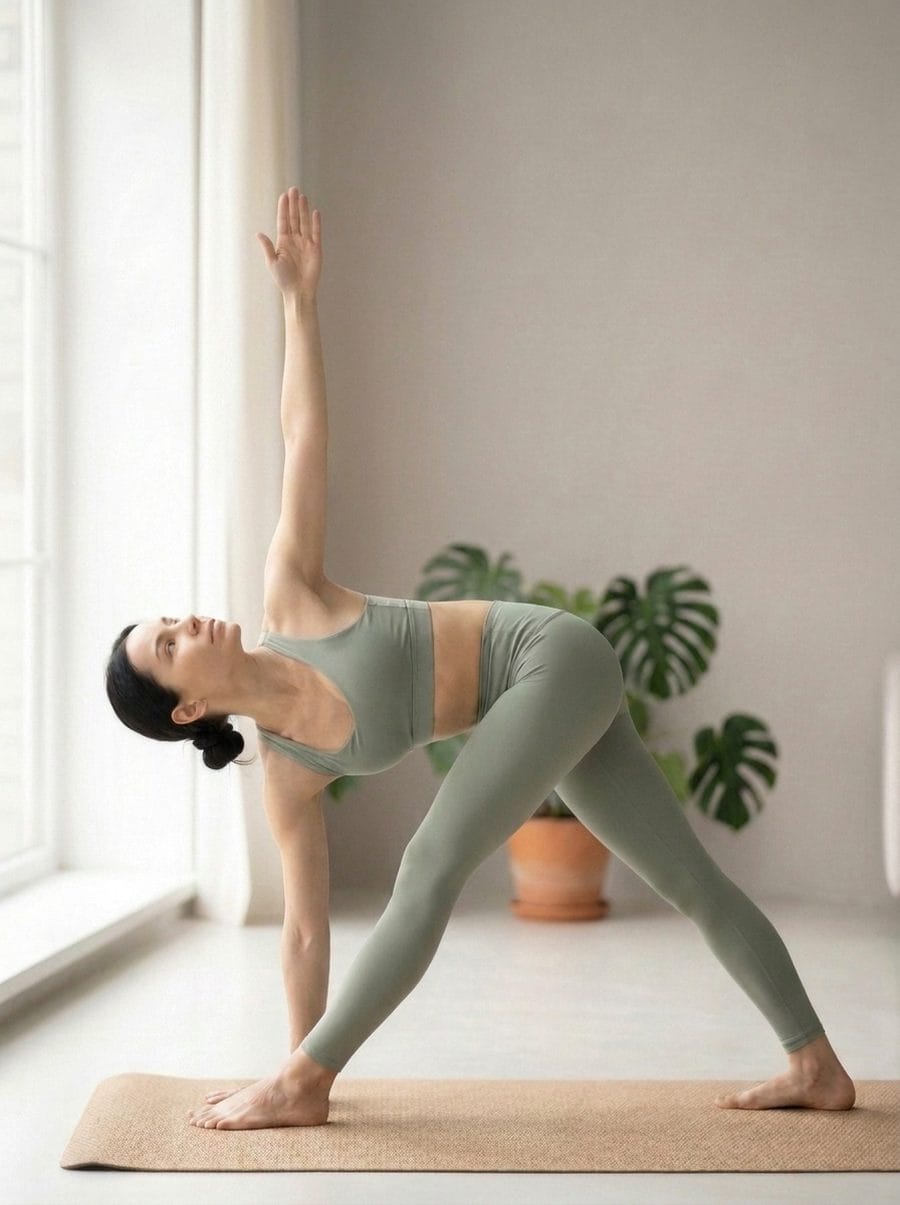
Revolved Triangle Pose, or Parivrtta Trikonasana, is a standing twist on straight legs: your chest rotates over the front leg, the opposite hand reaches down by the foot and the other arm rises. "Parivrtta" means revolved and "trikona" means triangle.
It's intermediate, with 30 seconds per side on the card. In Twists & Lightness it comes right after Revolved Chair, held for 45 seconds.
How to do it
- EnterFrom a Triangle Pose stance, twist your torso toward your front leg and lower the opposite palm to the floor or a block by the outer edge of your foot. Reach your other arm up.
- HoldBoth legs straight, hips squaring, the twist growing from your mid-back. Your chest turns toward the ceiling. Gaze at your top hand, or at the floor if you feel dizzy.
- ExitInhale, unwind, lift your torso, and switch sides.
More detail
Take a shorter, narrower step than for regular Triangle Pose, so your hips can square forward and your legs stay steady. If your pelvis refuses to turn, angle the back foot out a little more. Have a block ready for your lower hand from the start, especially with tight hamstrings; your shin works as a resting spot too.
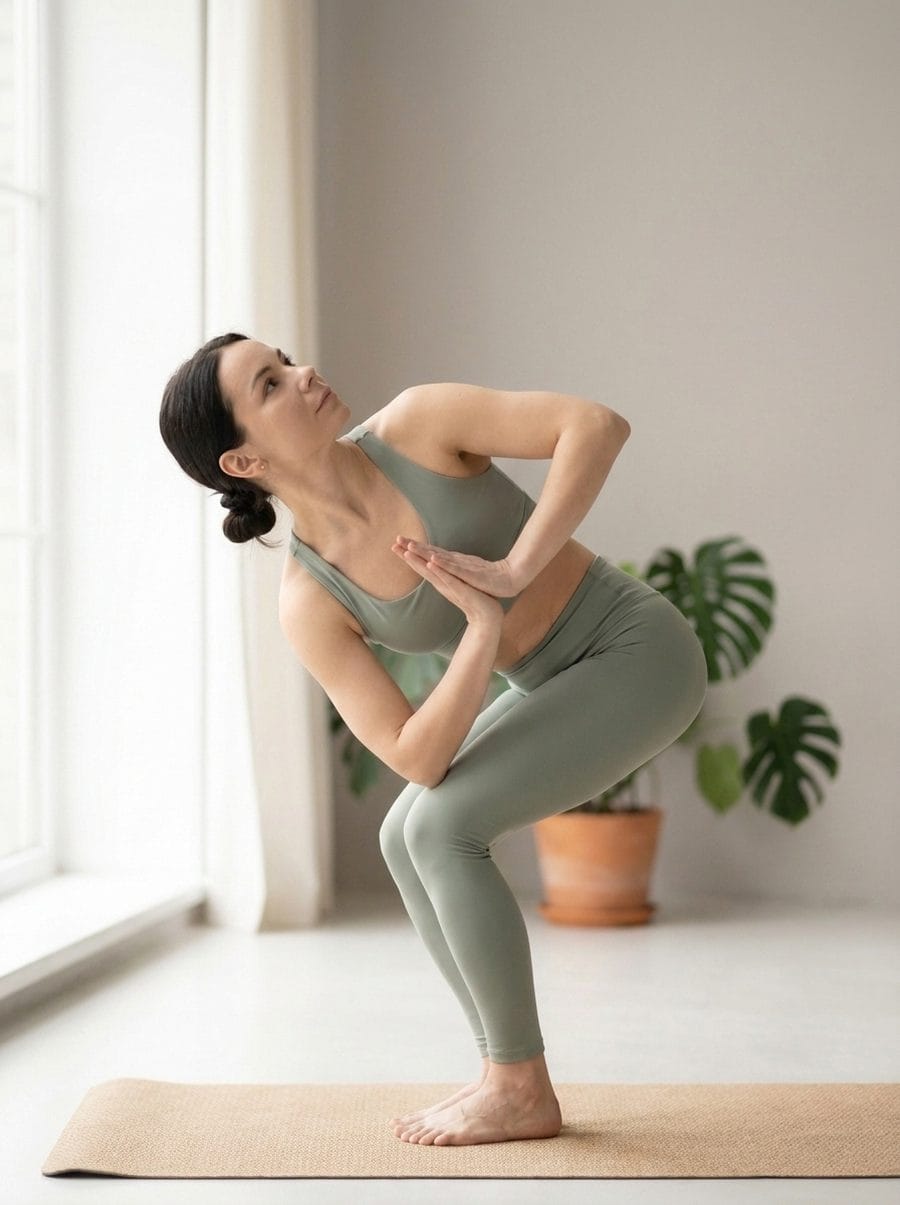
Lengthen your spine as you inhale, then twist as you exhale, letting the turn rise out of the ribcage rather than the shoulders. Turn your head last. If you feel dizzy partway through, drop your gaze to the floor and come out. Good groundwork for this pose: plain Triangle and Revolved Chair Pose.
Benefits
A standing twist on straight legs: balance, stretch, and upper-back mobility.
The pose builds mobility in your upper back, stretches your hamstrings and makes your legs stronger. A narrow base combined with a twist demands precise balance, so your attention stays busy the whole time.
Cautions
- Spinal disc herniation
- Dizziness
- Pregnancy
This site is for general information and is not medical advice. If you have pain, an injury, a chronic condition, or are pregnant, check with a qualified professional before practicing.
Common mistakes
- Bending your front knee to reach the floor. Raise the block instead.
- Twisting from your shoulders and neck. The rotation begins in the upper back.
- A wide stance like in regular Triangle. Your pelvis won't be able to turn.
- Leaning your weight into the lower hand. Your legs carry you; the hand only touches.
Where it appears
- Twists & Lightness 20 min · Intermediate
Similar poses
Questions
Who should avoid Revolved Triangle? The app excludes it for spinal disc herniation, dizziness and pregnancy, so skip it in any of those cases.
What does Parivrtta Trikonasana mean? In Sanskrit, "parivrtta" means turned around or revolved and "trikona" means triangle: a triangle with a twist, which is exactly where the English name comes from.
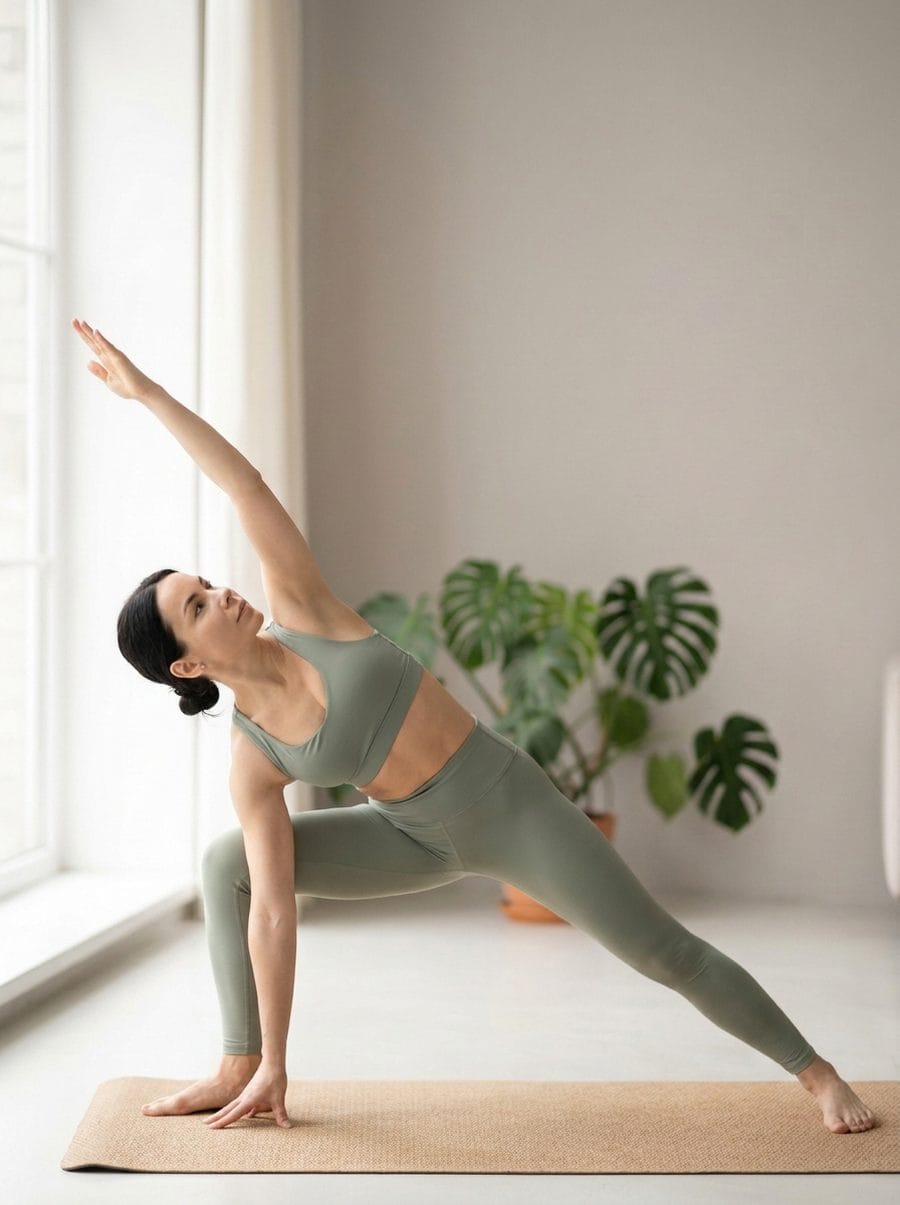
How does it differ from regular Triangle? In regular Triangle your torso tips sideways with the chest opening to the side, and the pose is beginner level. Here your torso rotates toward the front leg, the stance is narrower, balance is harder, and the level is intermediate.
Updated: