 Hatha Yoga
Stupa Pose
Stūpāsana
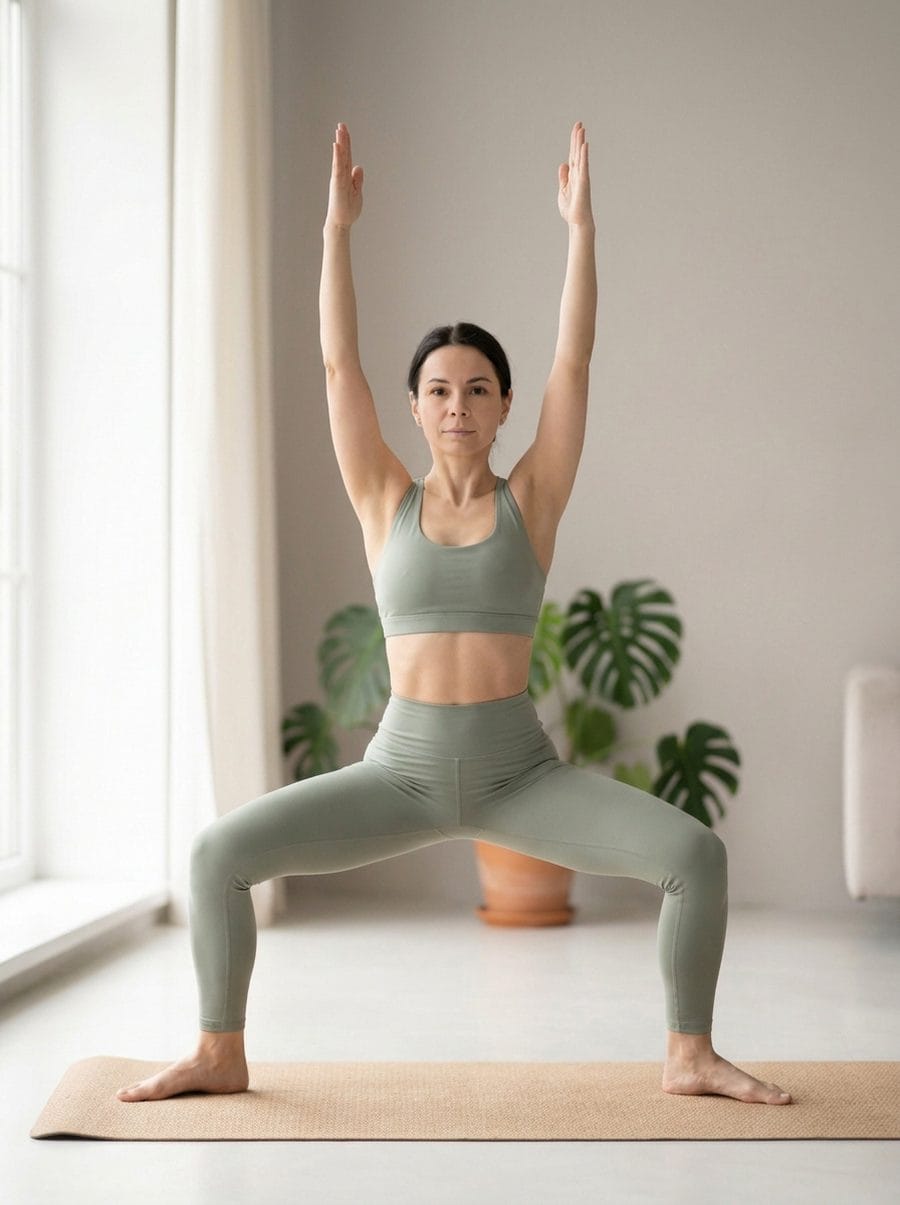
Stupa Pose, or Stupasana, is a deep, wide squat with your arms raised: feet turned out, thighs parallel to the floor and arms stretched overhead. The silhouette resembles a Buddhist stupa, broad at the base with a spire on top.
It's intermediate and symmetrical, done once with no left or right version. None of the app's sequences use it; its card suggests a 30-second hold.
How to do it
- EnterStep your feet wide and turn them out. Sink into a deep squat, thighs parallel to the floor. Raise your arms overhead.
- HoldKnees over your heels, pointing the same way as your toes. Hips at knee height, back straight, shoulders down away from your ears.
- ExitInhale, straighten your legs, lower your arms, and bring your feet together.
More detail
Set your feet about three feet apart and turn your toes out. Before you squat, check the angle: your knees should travel exactly in the direction of your feet, not inward. Lower on an exhale, opening your knees out and keeping your pelvis under your shoulders without leaning forward.
Your thighs set the depth: the goal is parallel to the floor, but if your knees start to cave, stop higher. Lift the arms after the legs have found their footing. Press your palms together or keep them shoulder-width apart, with your shoulders down.
If parallel is still a long way off, start with Goddess Pose, where the squat is shallower and the arms are bent. Come out on an inhale: straighten your legs, lower your arms and bring your feet together.
Benefits
Powerfully strengthens the legs and glutes and opens the hip joints.
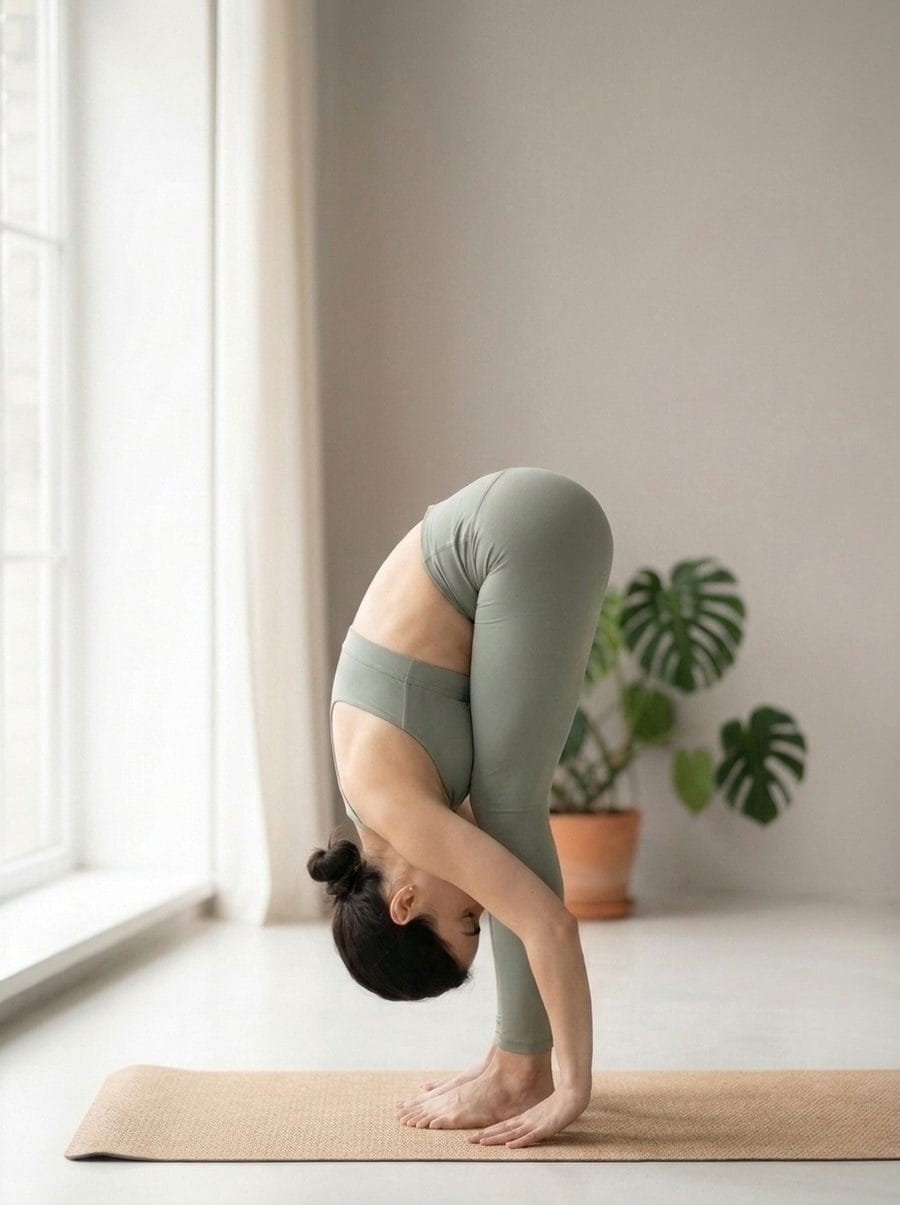
Stupa loads the quads, inner thighs, glutes and calves, while the raised arms recruit the shoulders and the spinal muscles holding you upright. Your hips open here, but through strength rather than a passive stretch. The pose card lists Standing Forward Fold as the counterpose.
Cautions
- Ankle, knee, and hip joint injuries
- Varicose veins — don't stay in the pose for long
This site is for general information and is not medical advice. If you have pain, an injury, a chronic condition, or are pregnant, check with a qualified professional before practicing.
Common mistakes
- Letting your knees drift in toward your big toes.
- Tipping your torso forward and sticking your hips out behind you.
- Lifting your heels off the floor.
- Shrugging your shoulders up with your arms.
- Squatting deeper than your knees allow.
Counterpose
Similar poses
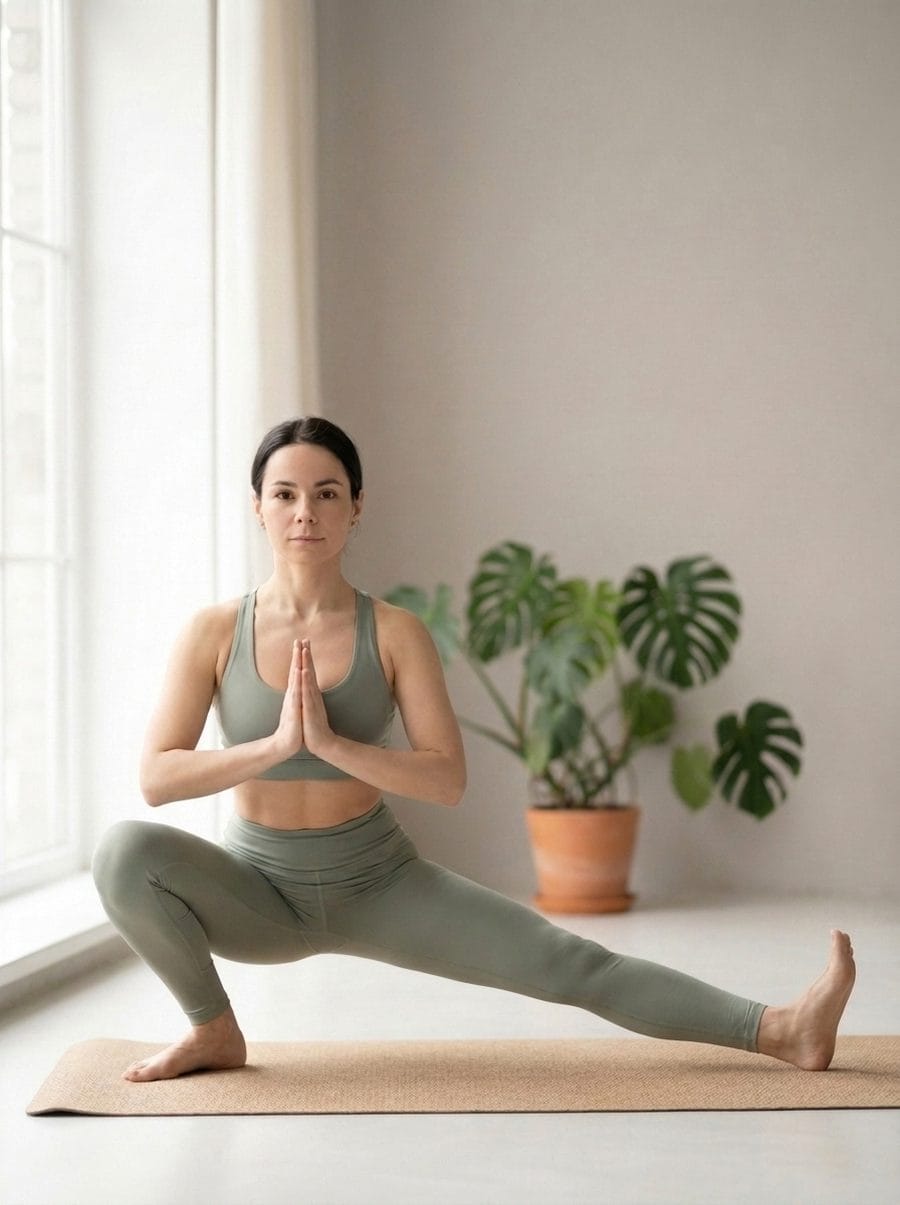
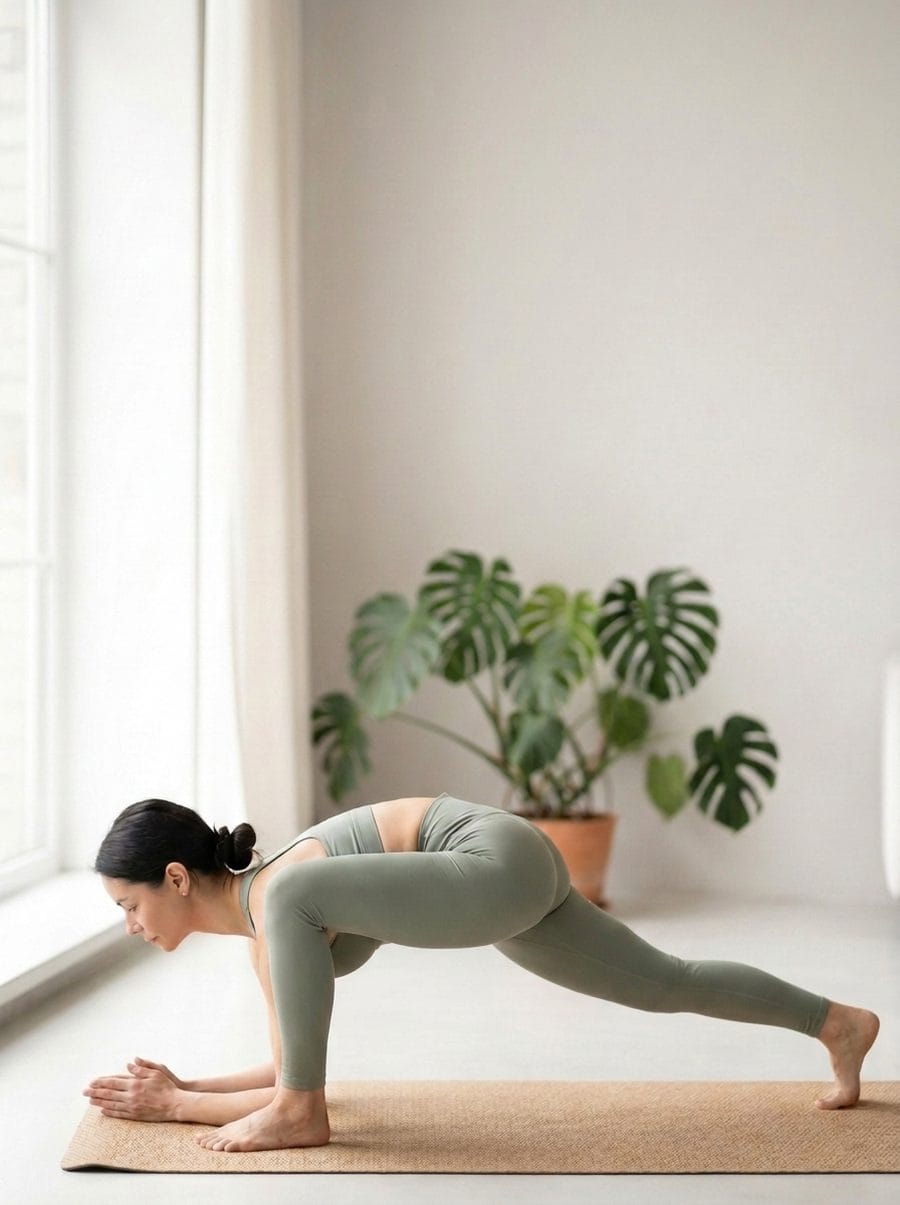
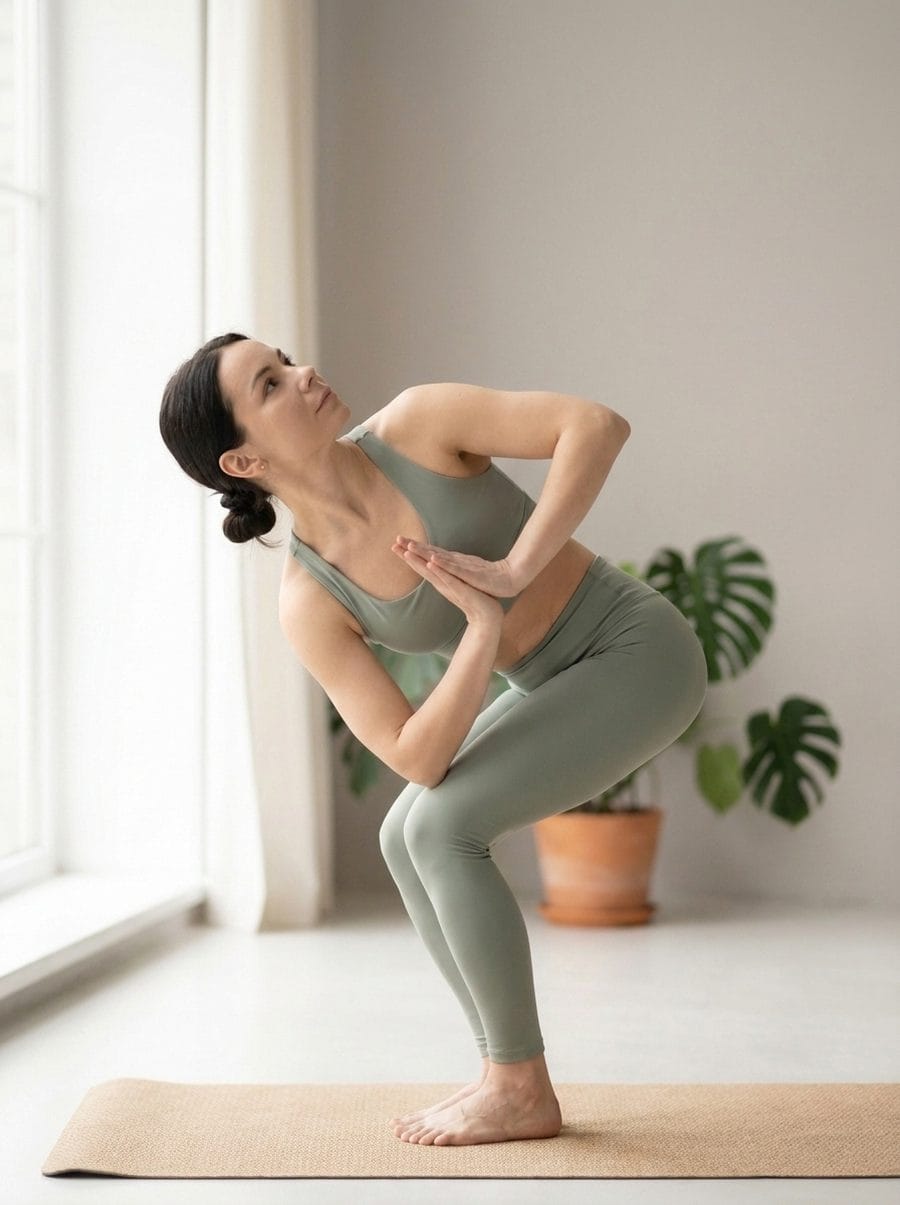
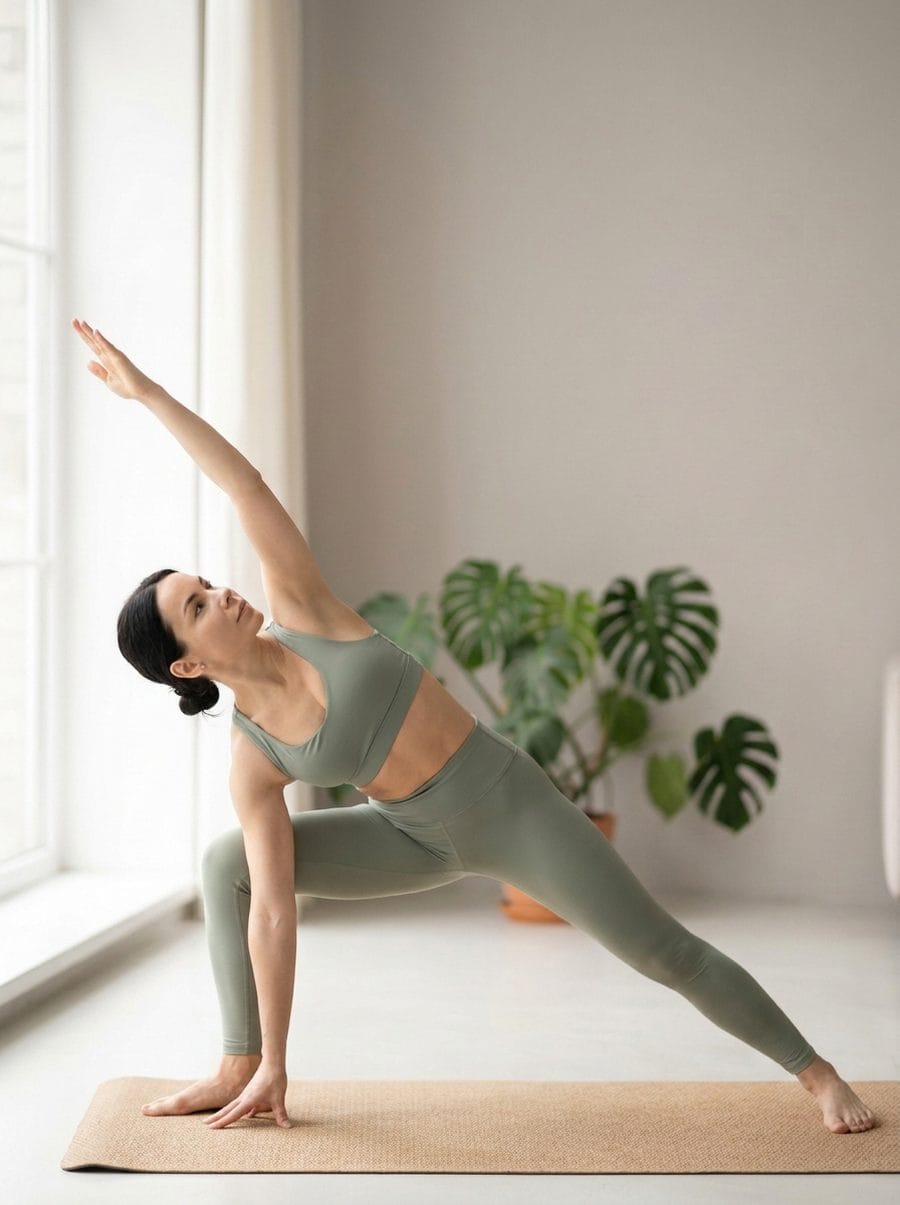
Questions
How is Stupa Pose different from Goddess Pose? In Goddess the squat is shallower, the arms are bent in cactus or held at the chest, and the level is beginner. In Stupa your thighs reach parallel and your arms are raised, so the effort is noticeably higher.
Who shouldn't do Stupa Pose? Skip it if an ankle, knee or hip joint is injured. With varicose veins the app allows it but advises against staying in the pose for long.
How long should I hold Stupasana? The card says 30 seconds. If that feels too heavy, split the time into two shorter rounds.
Updated: