 Hatha Yoga
Pyramid Pose
Pārśvottānāsana
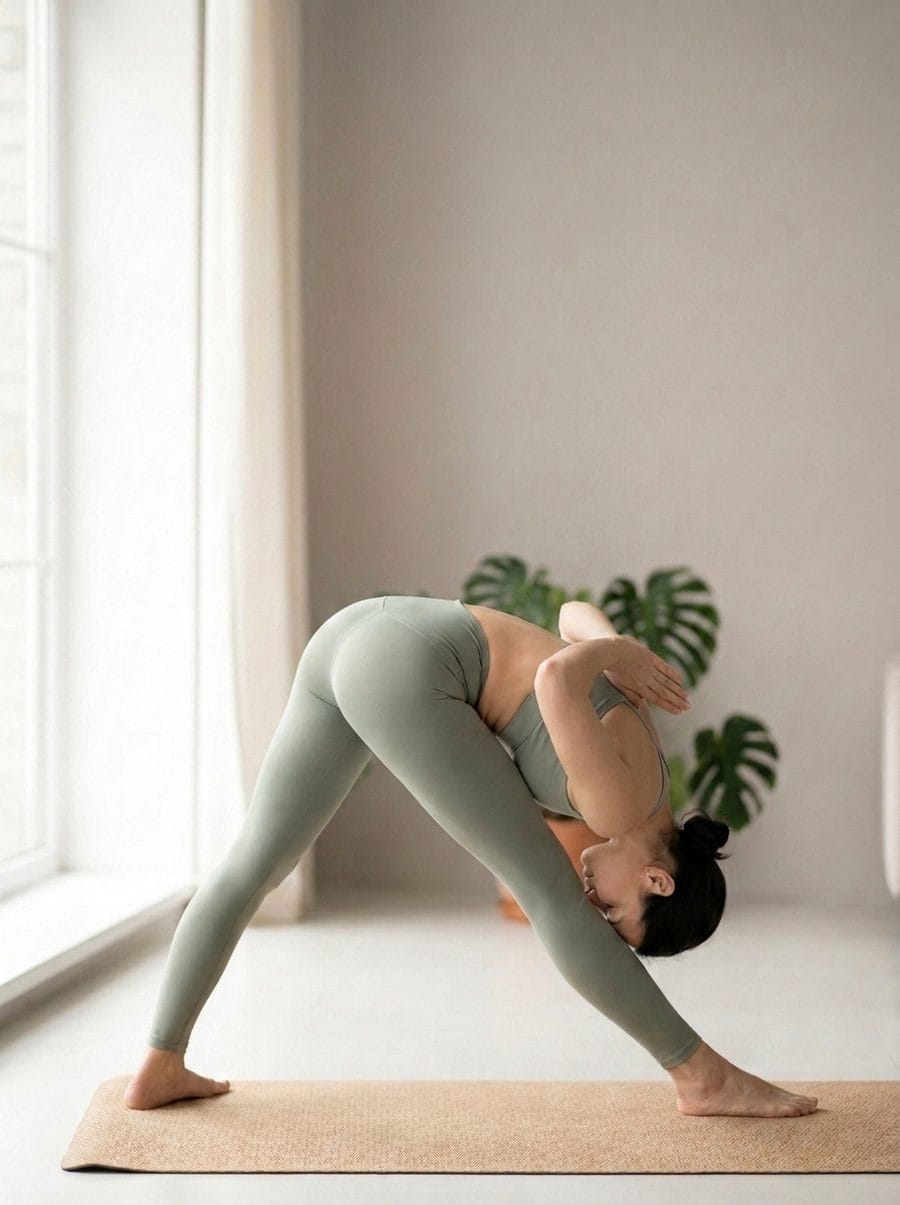
Pyramid Pose, or Parsvottanasana, is a forward fold over one leg from a short stance with both legs straight. The Sanskrit combines "parsva," side, with "uttana," an intense stretch. The app gives it intermediate level and 40 seconds per side. Splits: Advanced Path opens with it and holds the fold for 45 seconds.
How to do it
- EnterStep one foot back, keeping the stance shorter than in a Warrior pose. Both legs straight, hips facing forward. With a straight back, fold over your front leg.
- HoldBoth hips face forward like headlights. Fold from your hips, back long, hands on your shin or the floor. With each exhale, bring your belly closer to your thigh.
- ExitInhale, rise with a straight back, and step your feet together.
More detail
Choose a stride length that lets your back heel stay firmly down and your pelvis face forward. Keep the feet on two separate tracks rather than heel to heel: balance gets much easier. Turn the back foot out slightly. Lengthen your torso first, as if drawing your breastbone forward, then lower it over the front leg with your spine still long.
Floor out of reach? Set two blocks on either side of your front foot. Some schools join the palms behind the back or hold the elbows; that adds shoulder work, but blocks are enough to start. Keep your front knee straight without pressing it back into hyperextension.
Benefits
A targeted hamstring stretch for one leg, with your hips level.
The pose stretches the hamstrings and calf of the front leg, while a square pelvis keeps the stretch from leaking into your lumbar spine. For that reason it opens the splits sequence: it prepares your legs for deeper poses. Along the way your legs get stronger and your balance on a narrow base improves.
Cautions
- Hamstring injuries
- Hypertension — don't lower your head too far
This site is for general information and is not medical advice. If you have pain, an injury, a chronic condition, or are pregnant, check with a qualified professional before practicing.
Common mistakes
- Letting the pelvis rotate so the front hip slides back. Point both hip bones forward.
- Rounding your back to bring your forehead to your knee. A long spine matters more.
- Lining your feet up heel to heel when you wobble. Put them back on two tracks.
- Lifting the back heel. Shorten your stance.
Where it appears
- Splits: Advanced Path 35 min · Advanced
Similar poses
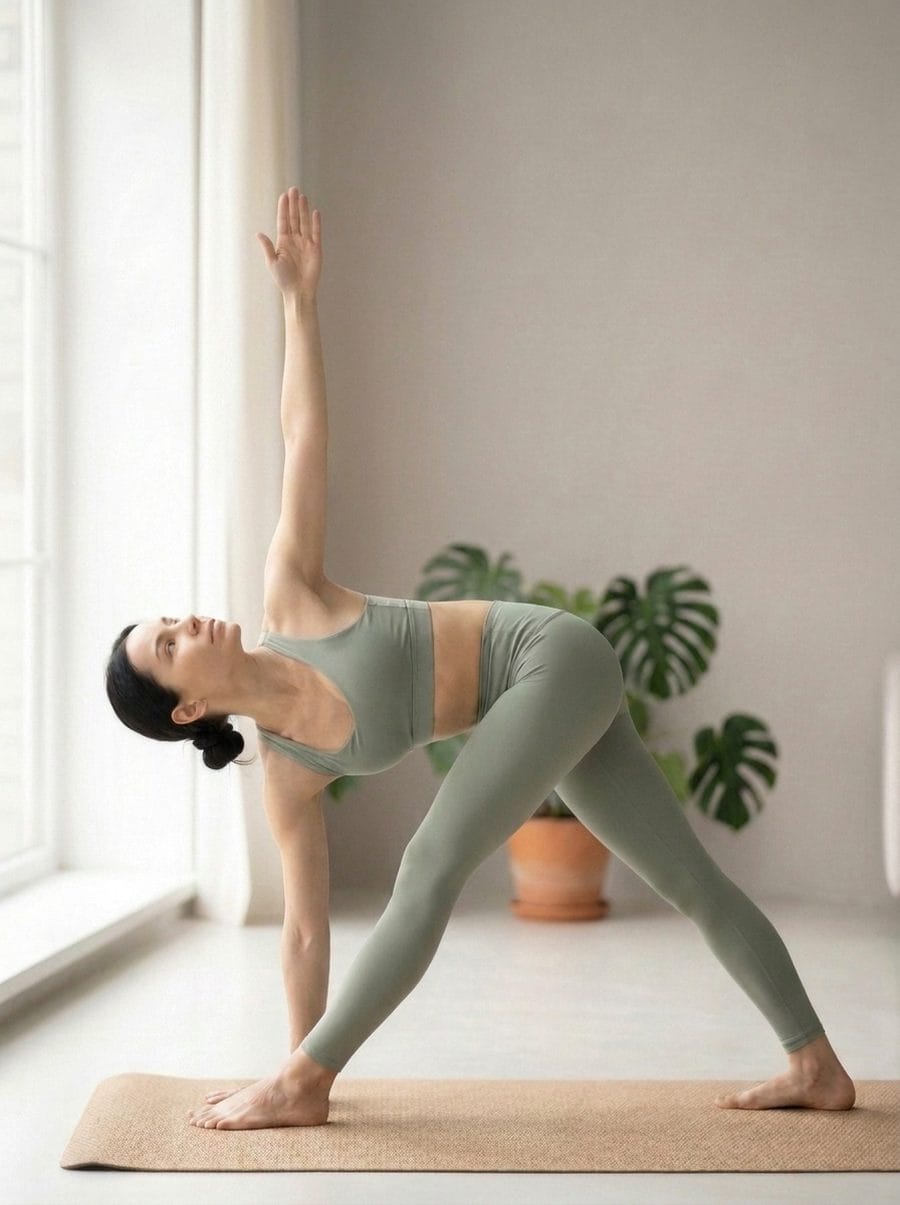
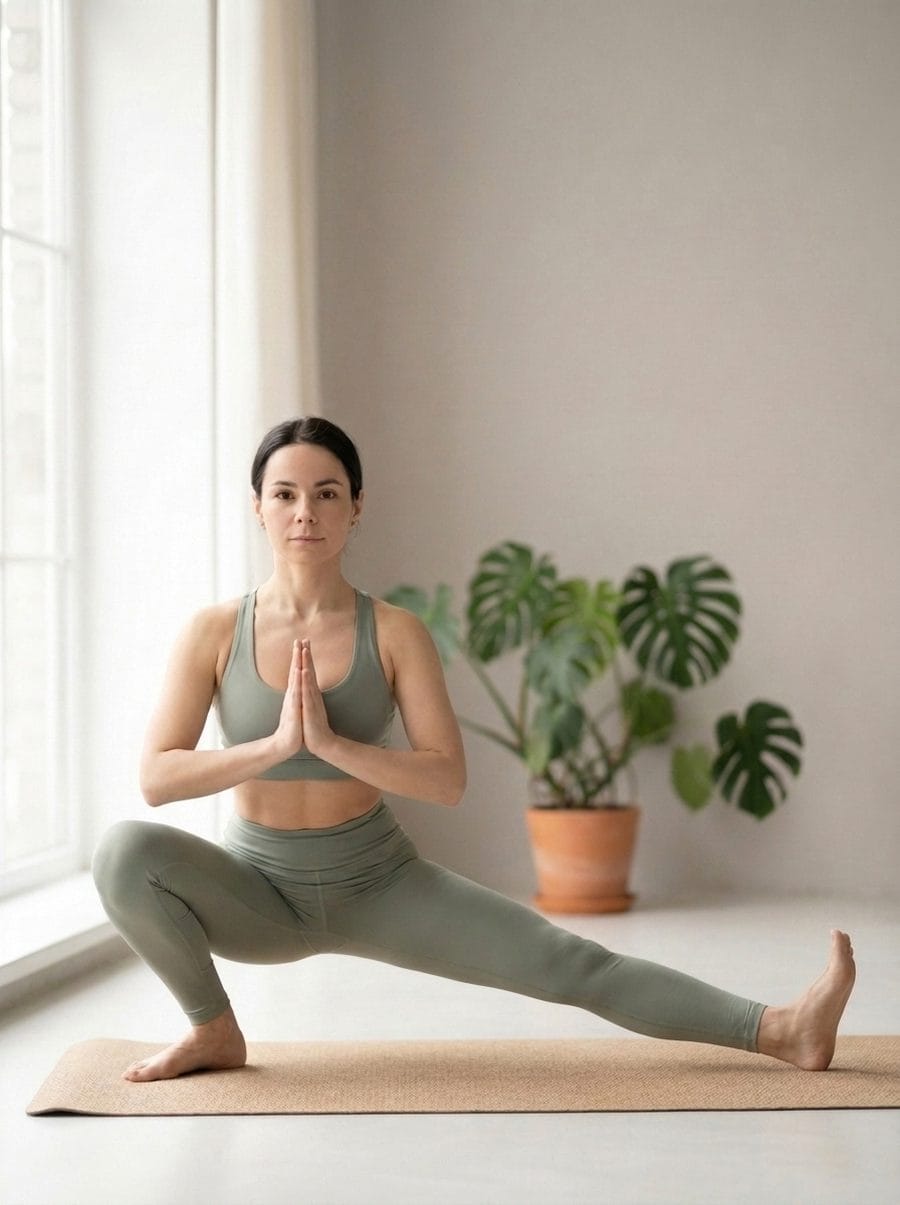
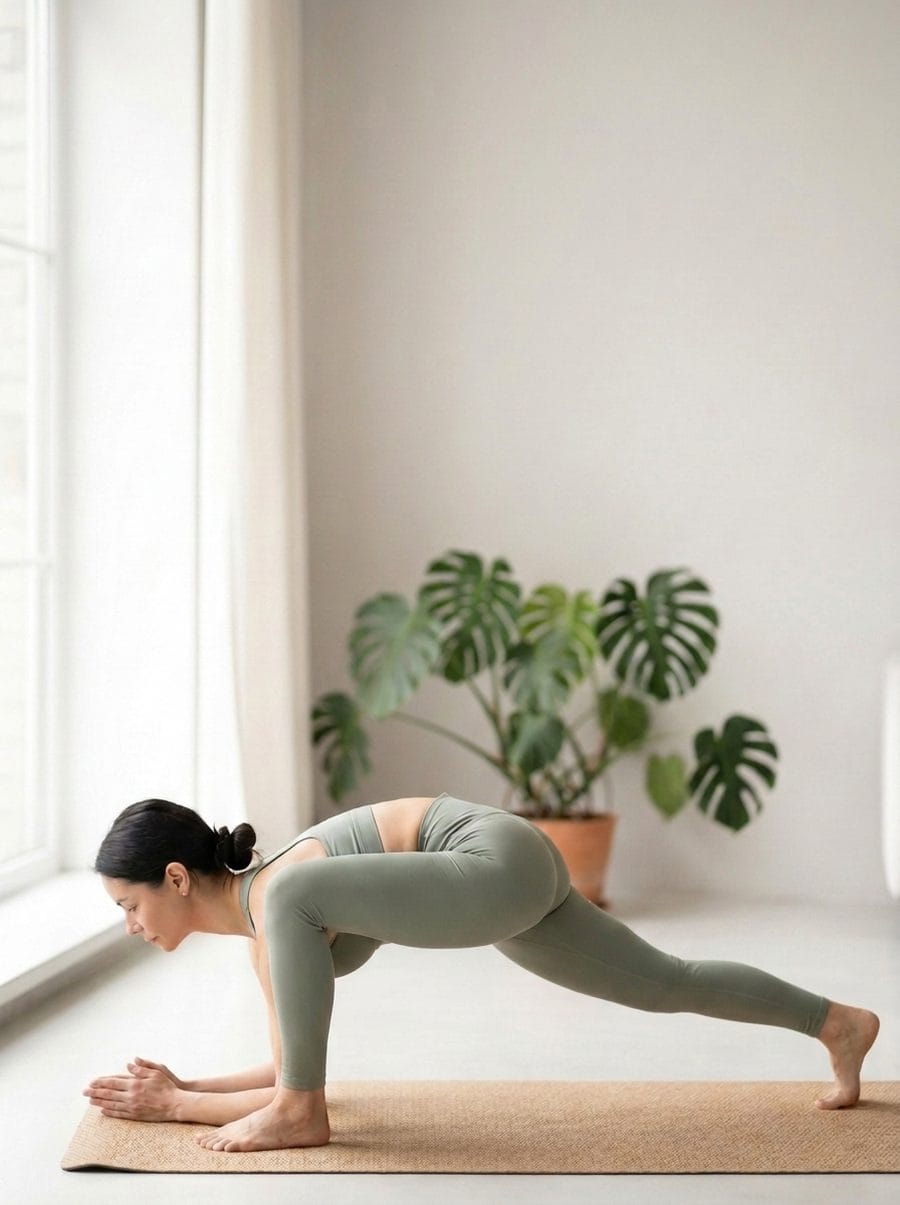
Questions
Who should skip Pyramid Pose? With a hamstring injury the app excludes it, so leave it out. With hypertension the app advises against dropping your head low: stop at a flat-back fold with your hands on blocks.
What does Parsvottanasana mean? "Parsva" translates as flank; "uttana" as an intense extension. The fold itself goes forward, over a leg placed off center, and the English name Pyramid comes from the triangle your legs and torso form.
Pyramid or Uttanasana: what changes? In Standing Forward Fold your feet are side by side and both legs stretch at once. Here the front leg takes the work, so the stretch is more targeted and the balance trickier.
Updated: