 Hatha Yoga
Shoulder-Pressing Pose
Bhujapīḍāsana
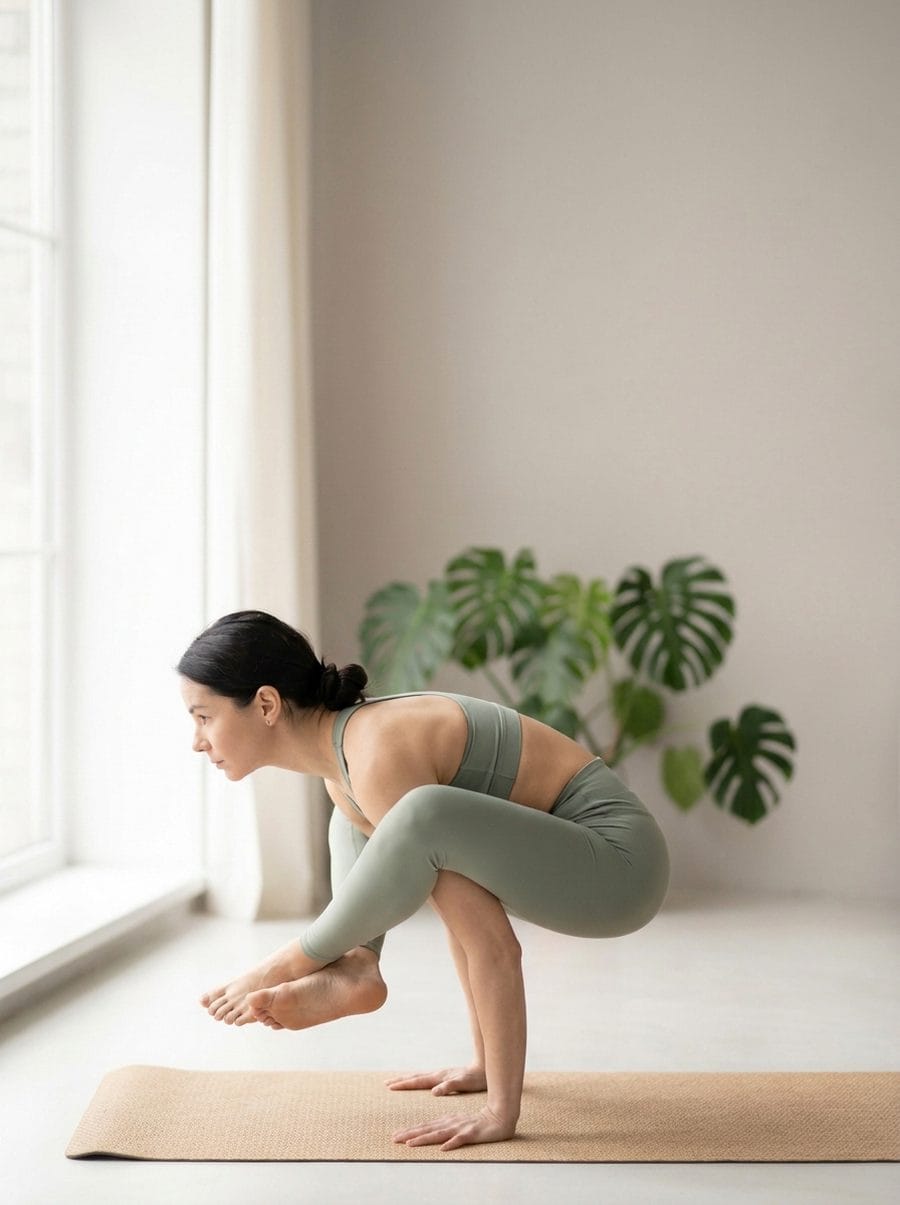
Bhujapidasana, or Shoulder-Pressing Pose, is an arm balance in which the backs of your thighs press onto your shoulders and hug them while your crossed ankles hover in front of your hands. Expect an advanced challenge; the pose card keeps the hold short, at 12 seconds.
In Arm Balances: Path to Crow you hold it for 35 seconds, between Side Crow Pose and Eight-Angle Pose.
How to do it
- EnterFrom a wide squat, tuck your shoulders under your thighs and place your palms behind your feet. Shift your weight onto your hands, lift your feet, and cross your ankles in front of you.
- HoldThighs squeeze your upper arms firmly, hips lifted, gaze forward. Arms stay slightly bent and springy. The higher your hips, the easier the balance.
- ExitUncross your ankles, lower your feet, and ease back into a squat.
More detail
Come into a wide squat, feet a little narrower than the mat. Lean your torso forward and work your shoulders under your knees one at a time, so the backs of your thighs rest as high on your arms as possible.
Plant your palms behind your heels with fingers pointing forward; slightly bent elbows form a shelf for your thighs. Now sit your weight back onto your hands until your feet feel light and lift on their own. Cross your ankles and hug your shoulders more firmly with your thighs.
Keep your hips high, which makes balancing easier. For an easier version, raise the feet one by one without crossing, or keep your toes on a block.
Benefits
An arm balance with a hip opener: compact strength and control.
The pose strengthens your arms, shoulders and core, and it also demands open hips; otherwise your thighs simply won't ride up onto your shoulders. Your whole body gathers into a compact bundle over your palms, so the balance teaches control and precision.
It also prepares you for Eight-Angle Pose, where your legs rest on one arm in a similar way.
Cautions
- Wrist, shoulder, and elbow injuries
This site is for general information and is not medical advice. If you have pain, an injury, a chronic condition, or are pregnant, check with a qualified professional before practicing.
Common mistakes
- Resting your thighs on your elbows. The lower the shelf, the harder the hold.
- Jumping the feet up. They should float as you sit back onto your hands.
- Letting your hips drop. High hips make balancing easier.
- Staring down at your feet. A forward gaze keeps your body from tipping toward the floor.
Counterpose

Where it appears
- Arm Balances: Path to Crow 20 min · Advanced
Similar poses
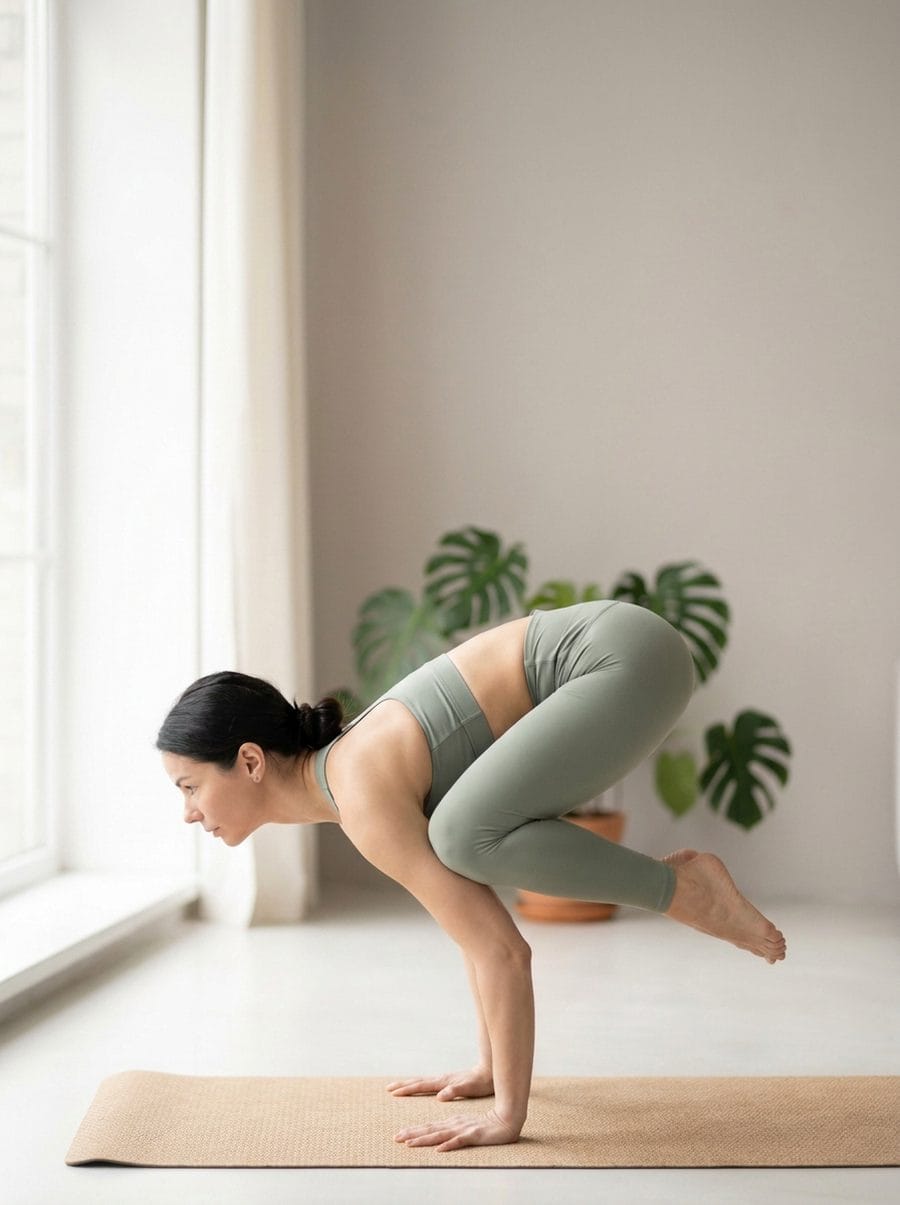
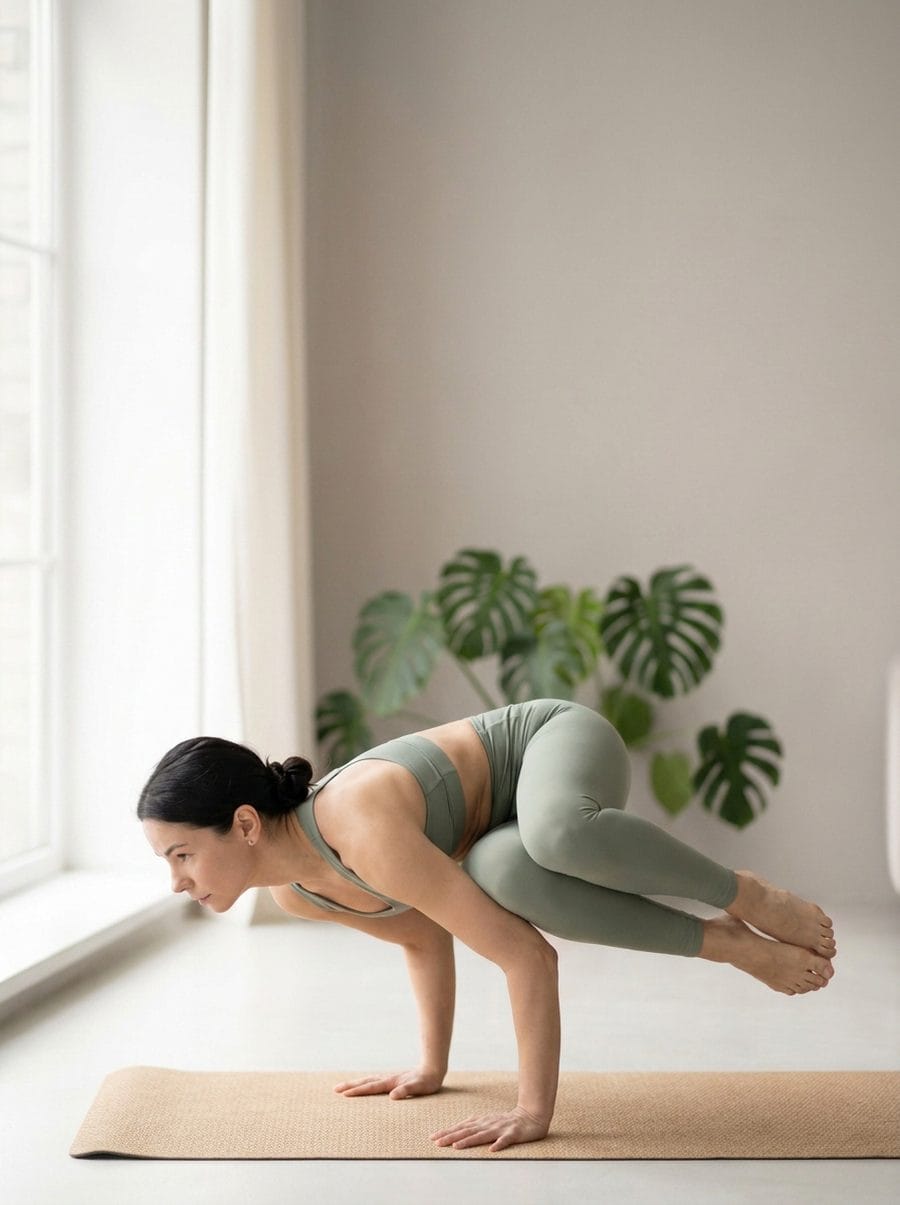
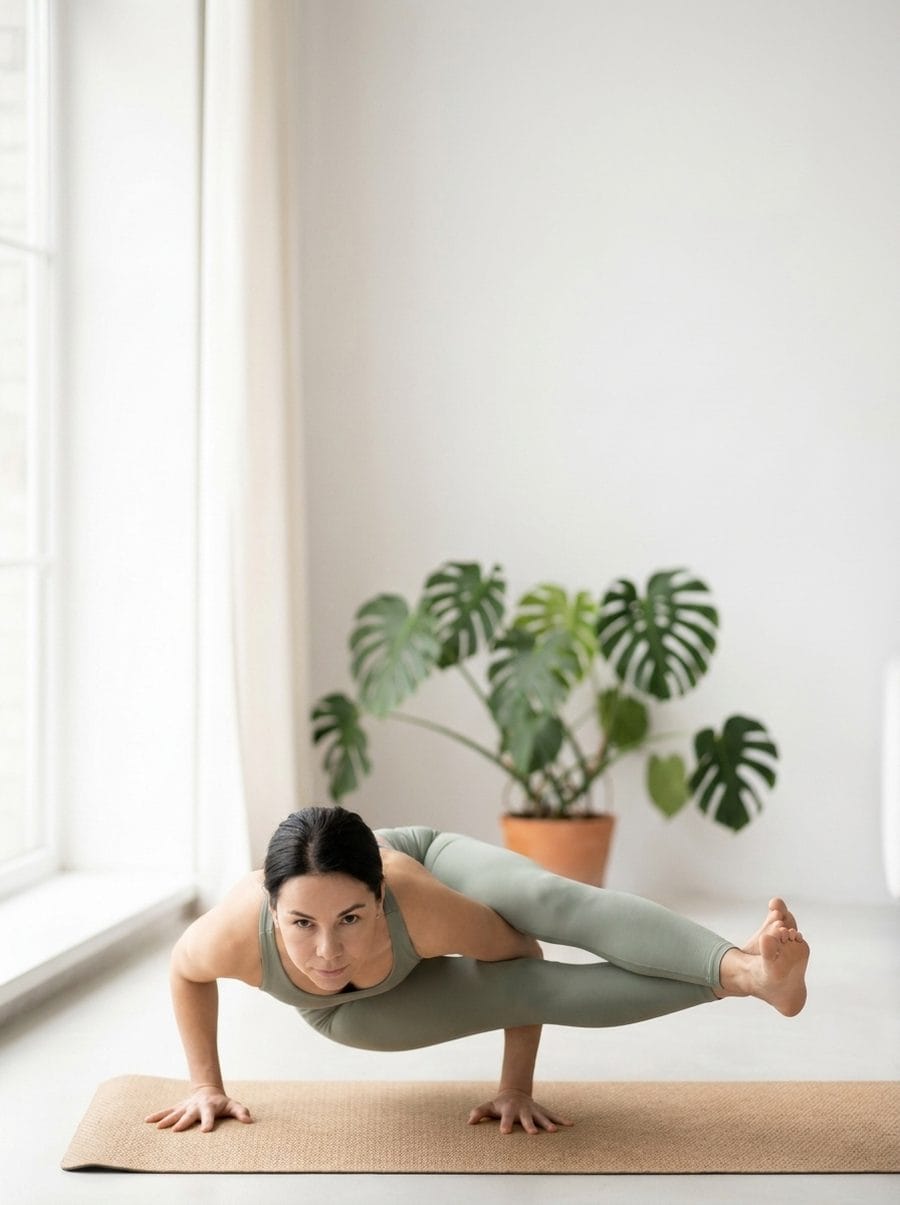
Questions
What does Bhujapidasana mean? "Bhuja" means arm or shoulder and "pida" means pressure. The name literally describes the pose: your thighs press on your shoulders.
Which poses lead up to Bhujapidasana? In the sequence it's preceded by Garland Pose, which gets you used to a deep squat, and Crow Pose, where you first shift your weight onto your hands.
Who should avoid Shoulder-Pressing Pose? The app lists wrist, shoulder and elbow injuries. Any one of these rules the pose out.
Updated: