 Hatha Yoga
Two-Legged Arm Balance
Dvipāda Bhujāsana
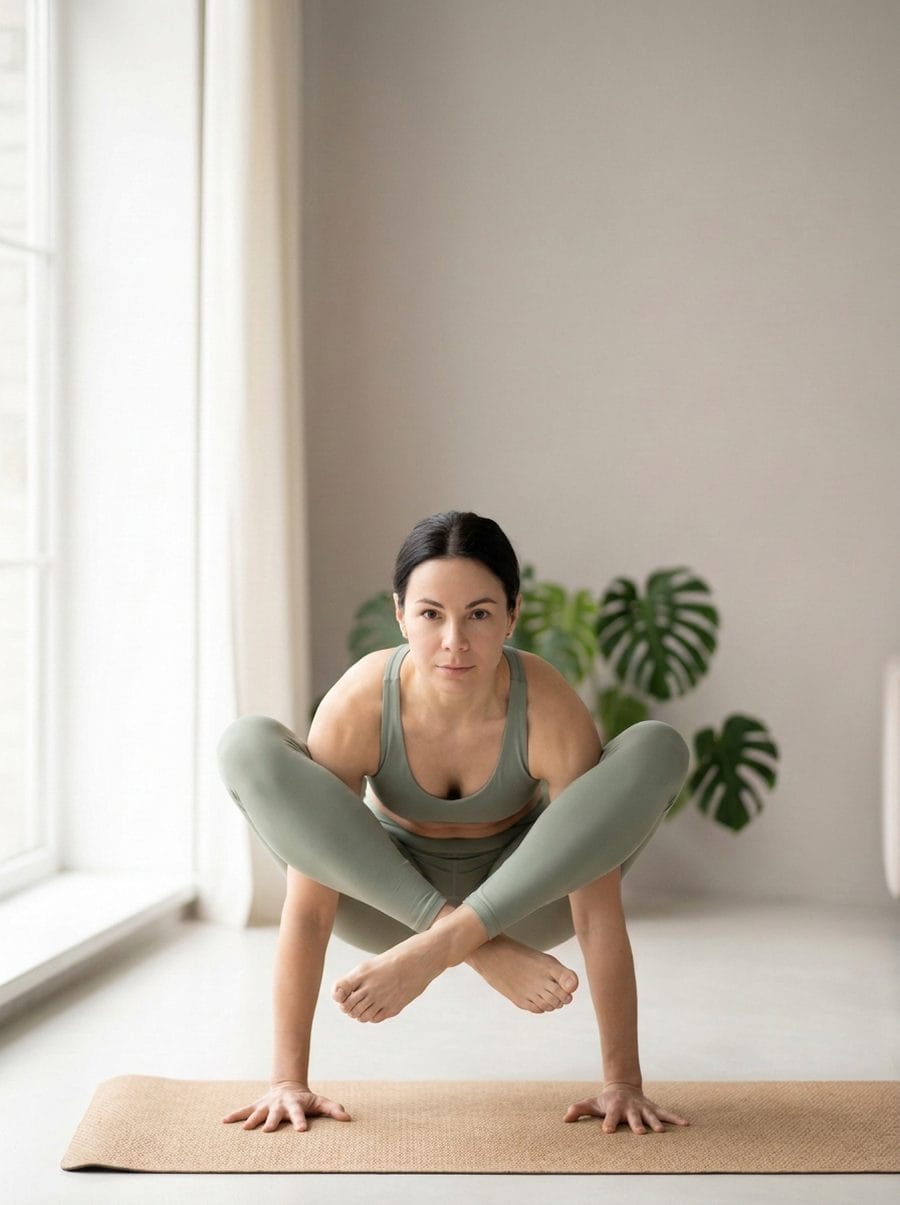
Two-Legged Arm Balance, or Dvipada Bhujasana, is an arm balance that starts from sitting: both thighs rest high on your upper arms, your feet are crossed, and straight arms lift your body off the mat. It's advanced and demands strong arms plus open hips.
The Inversion Prep sequence includes it for 15 seconds, whereas the pose card lists 12.
How to do it
- EnterFrom sitting, bring both thighs high onto your upper arms and cross your feet. Palms under your shoulders. Exhale and push up with your arms.
- HoldArms straight, shoulders down, thighs gripping your upper arms. Chest lifted, belly engaged.
- ExitGently lower onto the mat and release your legs.
More detail
The key condition is getting your thighs as high up your arms as possible, close to the shoulders. So warm up your hips, hamstrings and wrists beforehand. Sit with your feet wide and lean forward. One side at a time, work each shoulder under its knee and hitch the thigh higher up the arm.
Plant your hands next to your pelvis with the fingers fanned out. Cross your ankles, then on an exhale straighten your arms and lift your hips. On early attempts, let your feet stay grounded and lift only the hips; blocks under your hands make your arms longer and the lift easier.
Come down slowly by bending your arms, landing on your sitting bones rather than your back.
Benefits
Deeply opens the hips and powerfully strengthens the arms.
Arms, shoulders and wrists all get stronger here, while your abs help keep your legs off the floor. Your hips and hamstrings get a deep opening along the way. In an inversion-prep sequence it teaches you to carry weight on straight arms with your shoulders down. Child's Pose follows it, since your wrists need a rest.
Cautions
- Wrist, elbow, and shoulder injuries
- Pregnancy
- First days of your period
This site is for general information and is not medical advice. If you have pain, an injury, a chronic condition, or are pregnant, check with a qualified professional before practicing.
Common mistakes
- Resting your thighs low, near the elbows, where they slide off.
- Hunching the shoulders up.
- Bending your arms and sinking between them.
- Rounding your chest and dropping your head.
- Breath-holding as you press up.
Counterpose

Where it appears
- Inversion Prep 25 min · Advanced
Similar poses
Questions
What does Dvipada Bhujasana mean? Dvi means "two," pada means "foot" or "leg," and bhuja translates as "arm" or "shoulder." Hence the English name: a pose with two legs resting on your arms.
How is it different from Shoulder-Pressing Pose? In Shoulder-Pressing Pose you enter from a wide squat and keep your arms slightly bent and springy. In Dvipada Bhujasana you start seated, your arms are fully straight and your chest stays lifted.
Who should avoid Two-Legged Arm Balance? Anyone with an injured wrist, elbow or shoulder should skip it, as should anyone pregnant or at the start of a period.
Updated: