 Hatha Yoga
Vishnu's Couch Pose
Anantāsana
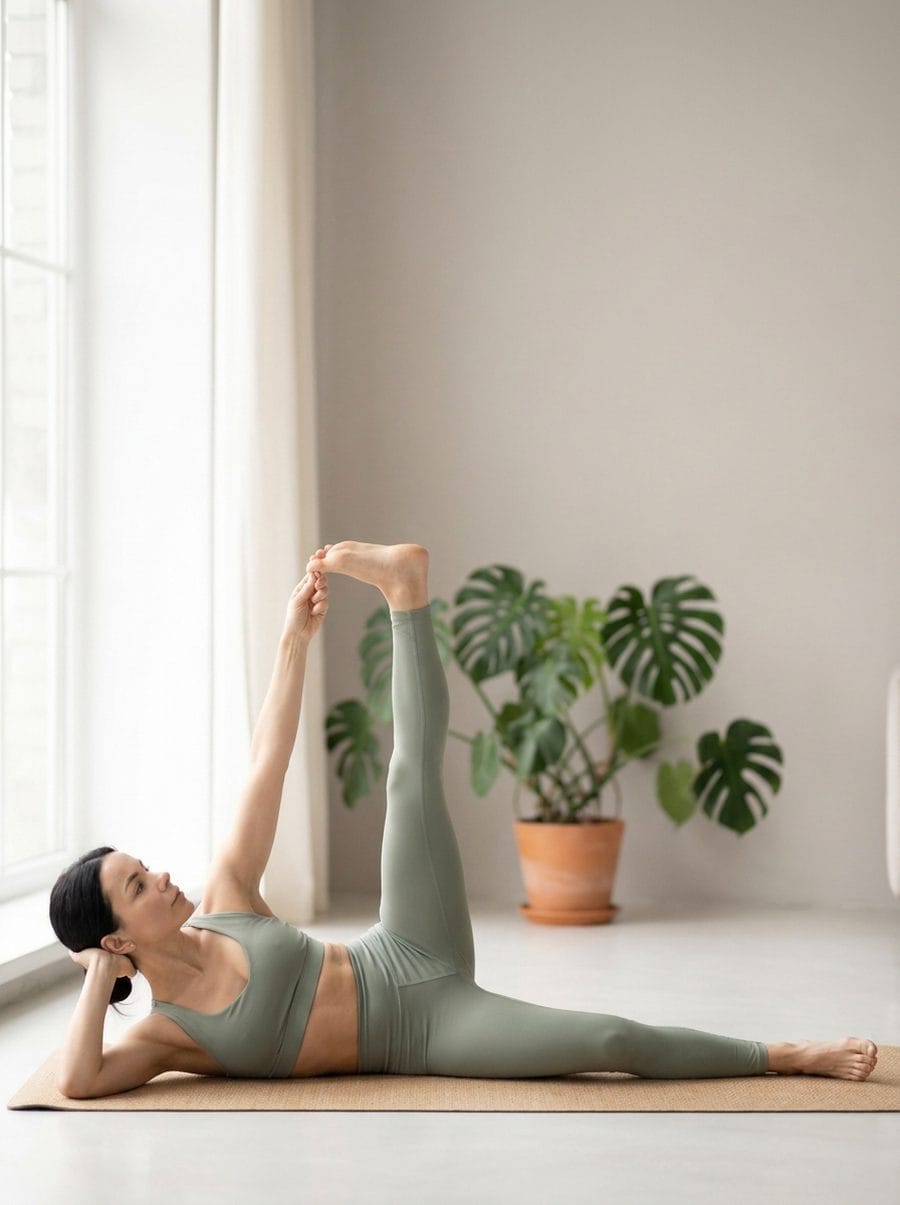
Anantasana, or Vishnu's Couch Pose, is a side-lying stretch: your head rests in your hand while your top leg rises straight up, held by the big toe. It's an intermediate pose. You won't meet Anantasana inside the app's programs; it lives as a standalone card in the pose library, with 30 seconds on each side.
How to do it
- EnterLie on your side in one straight line and rest your head in the hand of your bent arm. With your top hand, take hold of the big toe of your top leg and straighten the leg up.
- HoldKeep your body in one plane, without rolling forward or back. Your top leg stays straight, with the thigh rotating outward.
- ExitRelease your foot, lower your leg, and switch sides.
More detail
The hard part isn't the stretch, it's balancing on such a narrow base. Lie along the long edge of your mat so your heels, hips and head form one straight line; the edge gives you a reference. Flex your bottom foot and let it rest on its outer edge, which keeps you from rolling backward.
Before you lift, bend your top leg, catch the big toe with your index and middle fingers, and only then straighten the knee. If the toe is out of reach, hook a strap over the sole or keep the knee bent.
With an injured neck, don't prop your head on your hand: the app suggests resting it on your arm, stretched out along the floor.
Benefits
Stretches the hamstrings and teaches you to balance on your side.
The pose stretches the back of the lifted thigh, and turning that thigh outward gives the hip joint extra work. Meanwhile your core keeps your body from tipping forward or back, so Anantasana teaches balance close to the floor, with nowhere to fall.
Reclining Hand-to-Big-Toe Pose offers the same stretch on your back and makes an easier first step.
Cautions
- Knee and hip joint injuries
- Neck injuries — rest your head on your extended arm
This site is for general information and is not medical advice. If you have pain, an injury, a chronic condition, or are pregnant, check with a qualified professional before practicing.
Common mistakes
- Rolling forward toward your chest. Stack your shoulders and hips as if your back were against a wall.
- Letting the bottom leg go slack. It stays straight and presses into the floor along its full length.
- Pulling the leg toward your head and rounding your back. Bend the knee or use a strap instead.
- Sinking your head into your hand and crunching your neck. Keep your elbow in line with your body, and if your neck tires, lay your head on your arm.
Modifications & variations
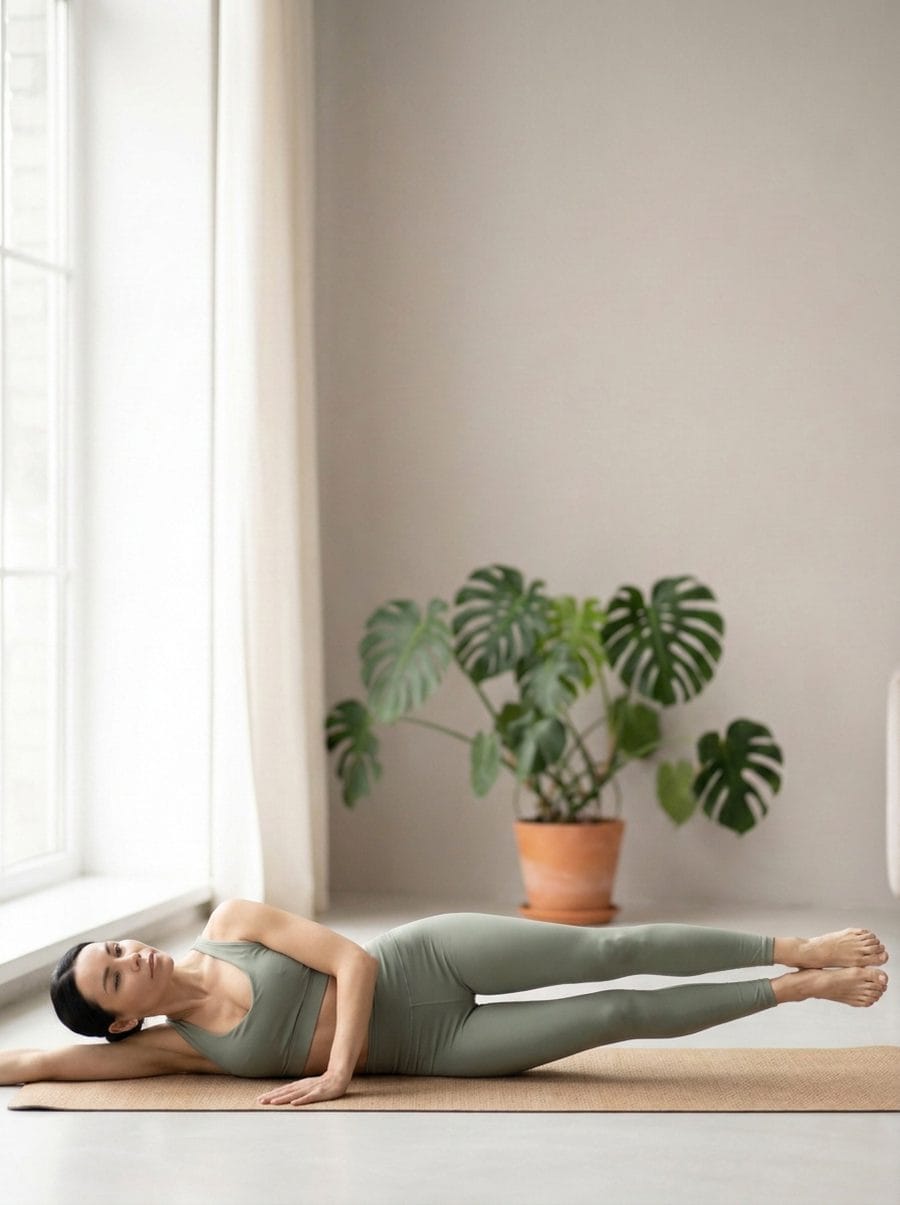
Counterpose
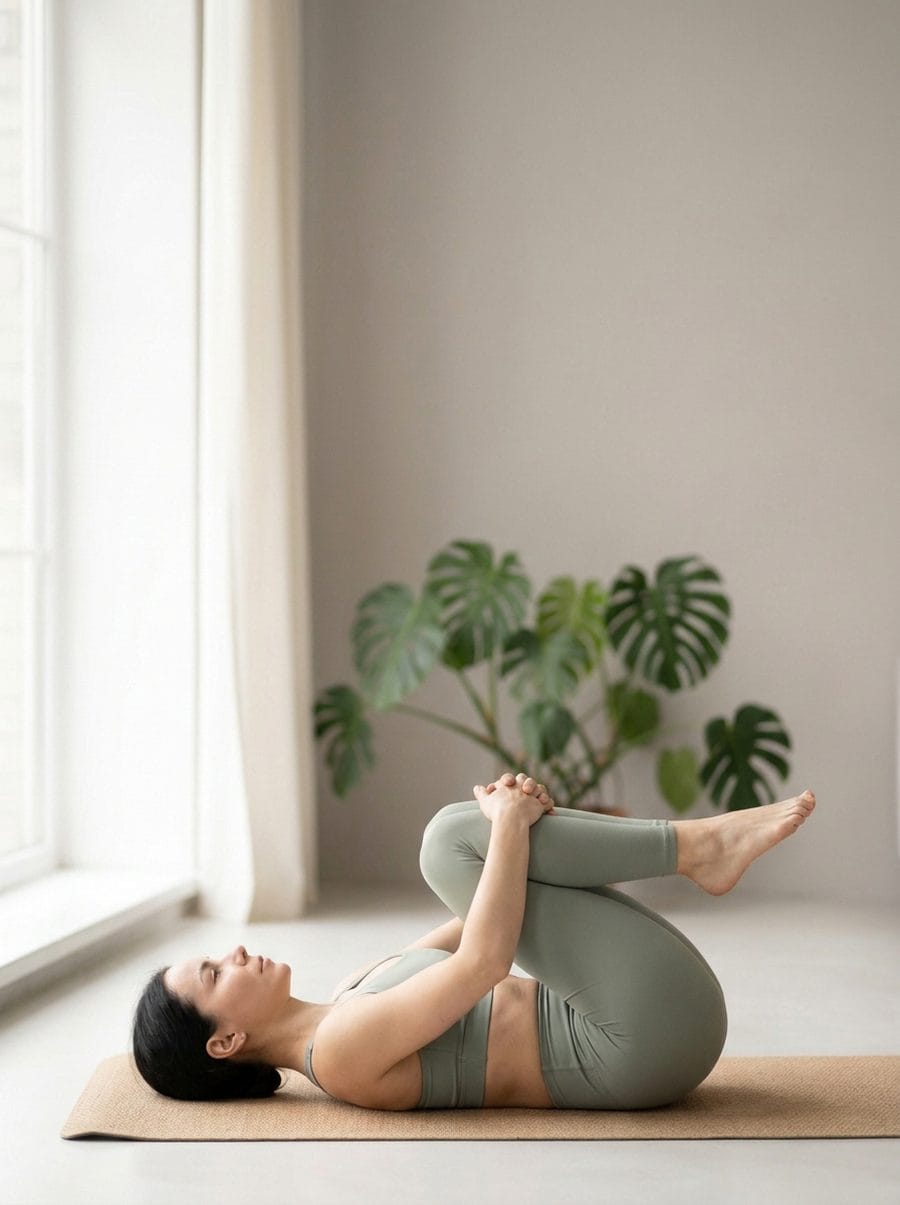
Similar poses
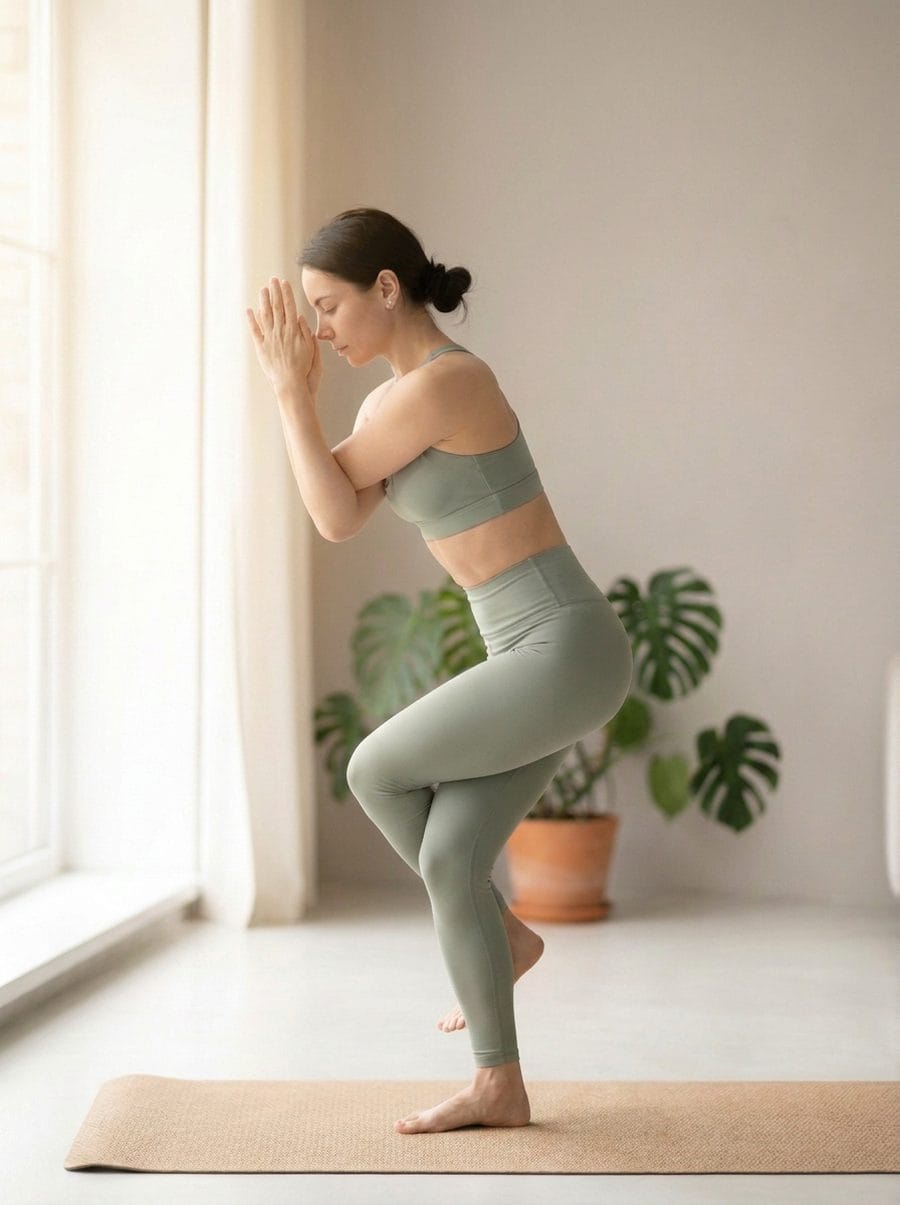
Questions
What does Anantasana mean? In Sanskrit, Ananta means "endless." It's the name of the serpent whose coils serve as Vishnu's resting place in Indian myth, which is why the pose is also called Vishnu's Couch.
Who should avoid Anantasana? Skip the pose if you have knee or hip joint injuries. With a neck injury you can still practice it as long as your head rests on your outstretched arm.
What should I do after the pose? The app pairs it with Knees-to-Chest Pose as a counterpose: hug both knees in toward your belly and let your lower back unwind after working on your side.
Updated: