 Hatha Yoga
Hot (Bikram) Yoga: Benefits, Risks and How to Practice Safely
Hatha Yoga editorial team · Updated · 6 min read
Hot yoga means classes in a heated, often humid room. Pregnancy, heart disease, high blood pressure or another chronic condition: in any of these cases, clear hot yoga with your doctor first. Below we look at how hot the room gets, what research actually shows about the benefits of hot and Bikram yoga, why overheating and dehydration are the main dangers, who shouldn't start, and which warning signs mean you stop right away.
What is hot yoga, and what is Bikram yoga?
Hot yoga is any yoga practiced in a warm or hot room. The authors of a 2025 systematic review count anything from 25 °C (77 °F) upward. In the studies they gathered, rooms ranged from 30 to 52 °C (86 to 126 °F), humidity from 20 to 60%, and sessions from 20 to 90 minutes.
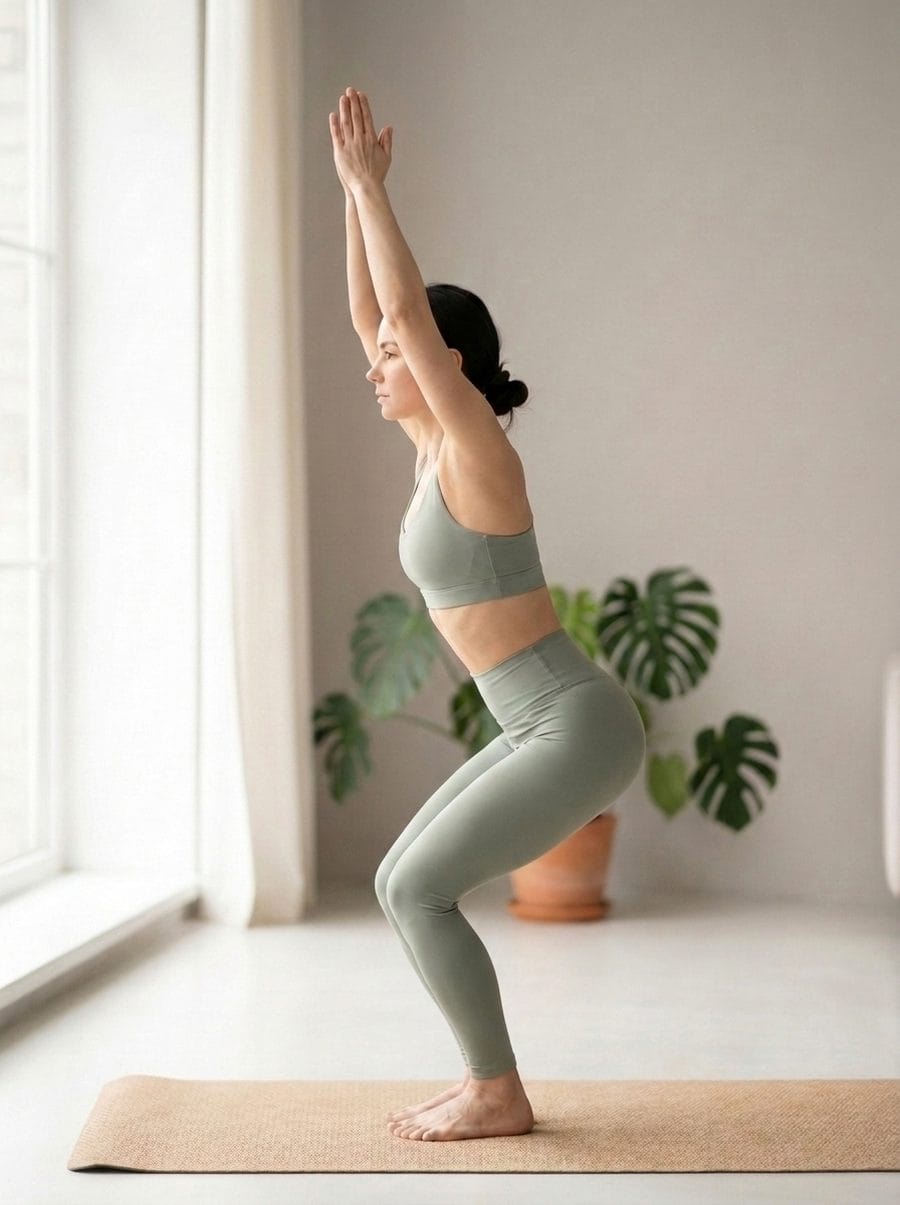
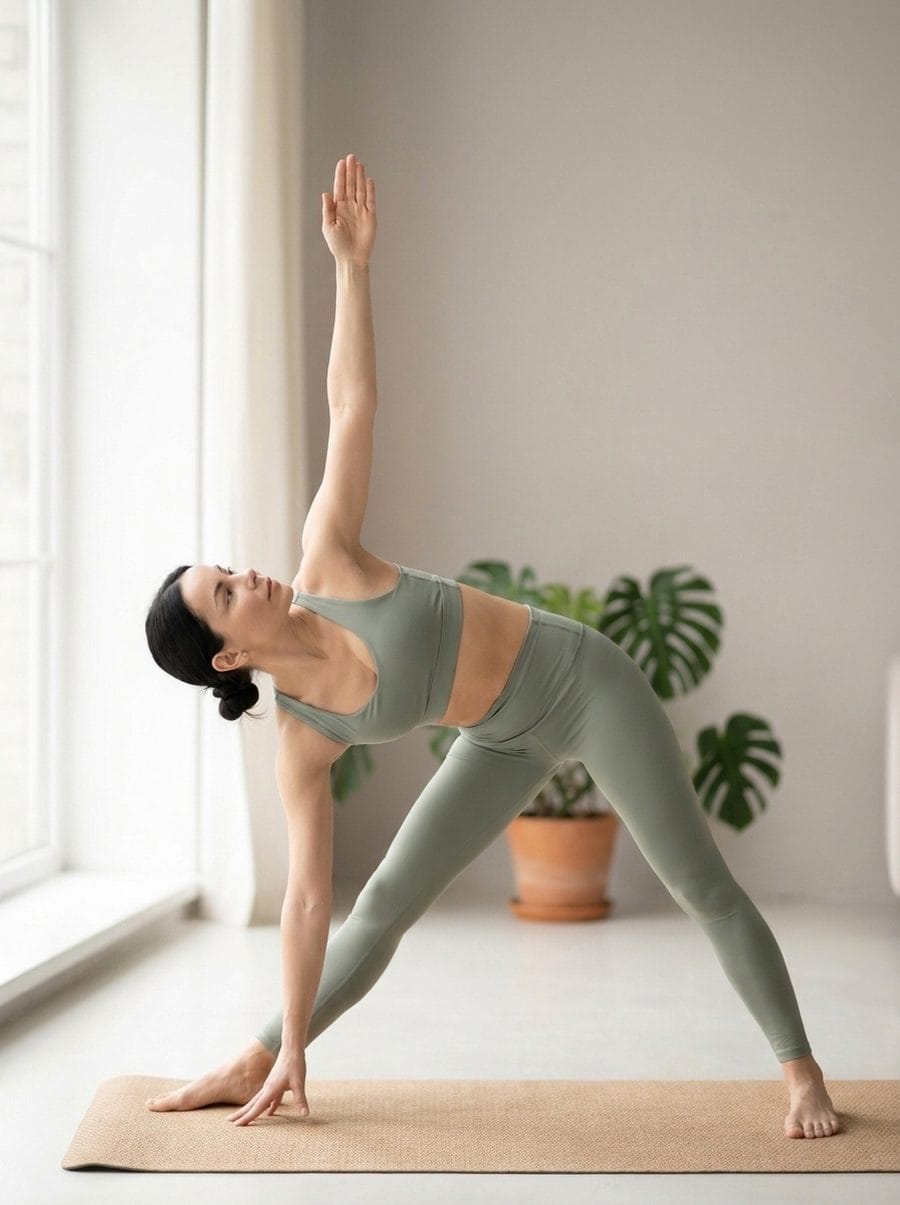
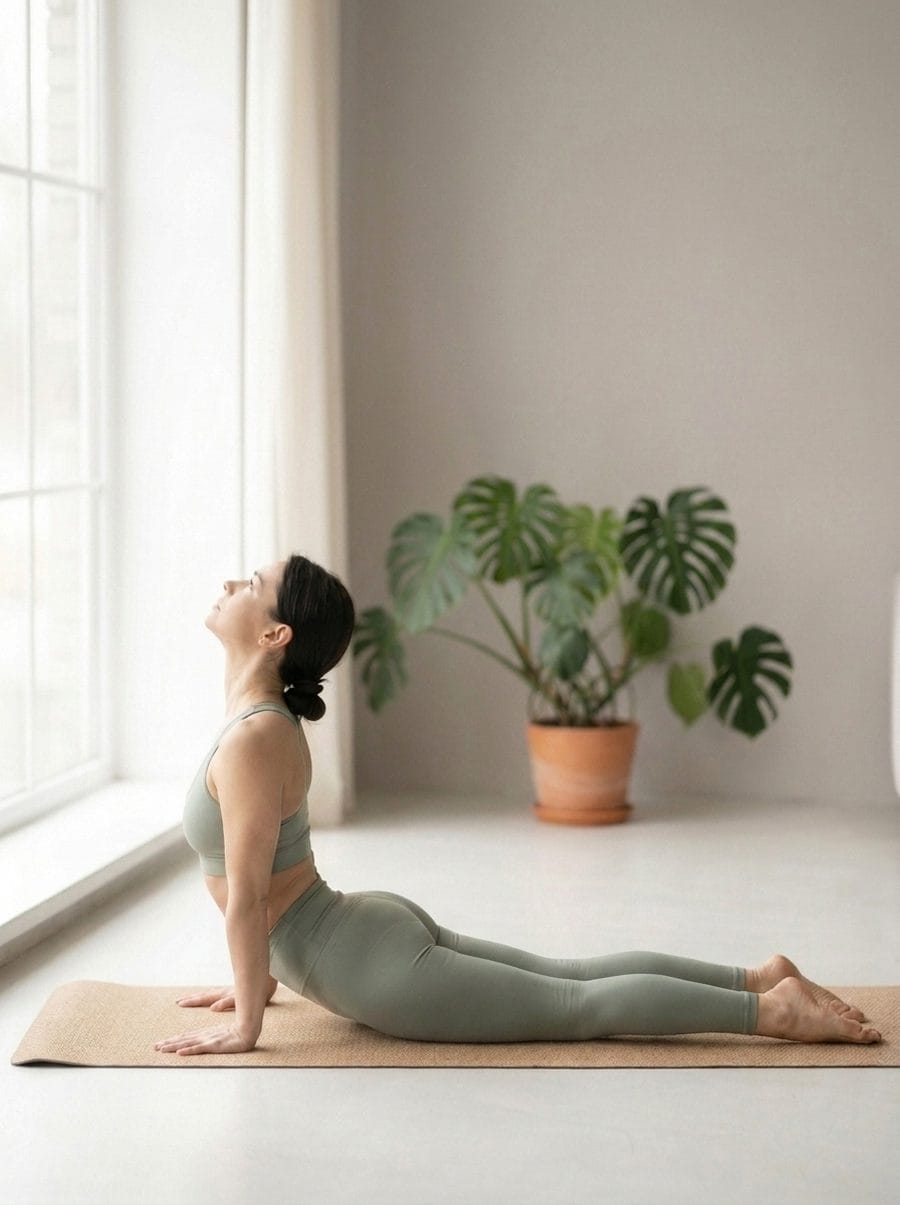
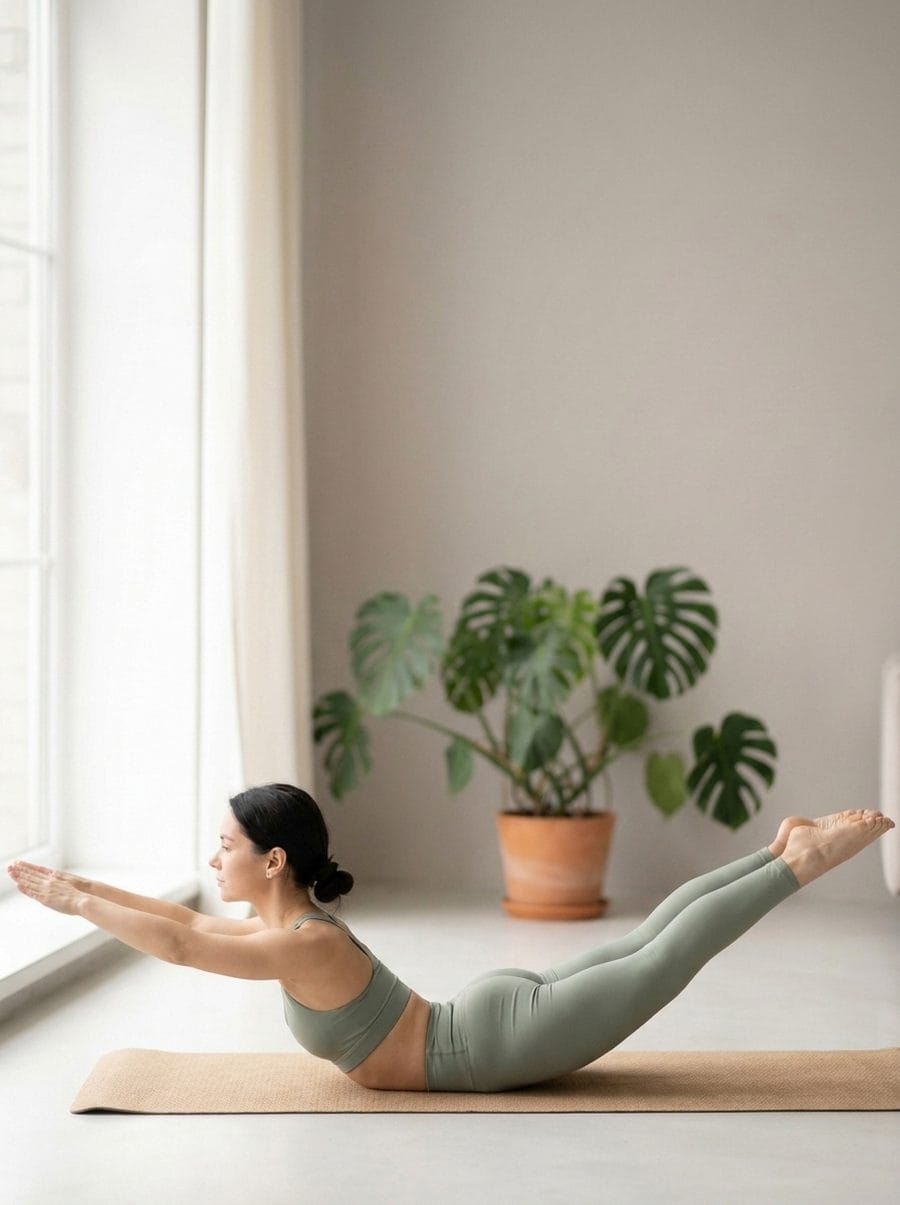
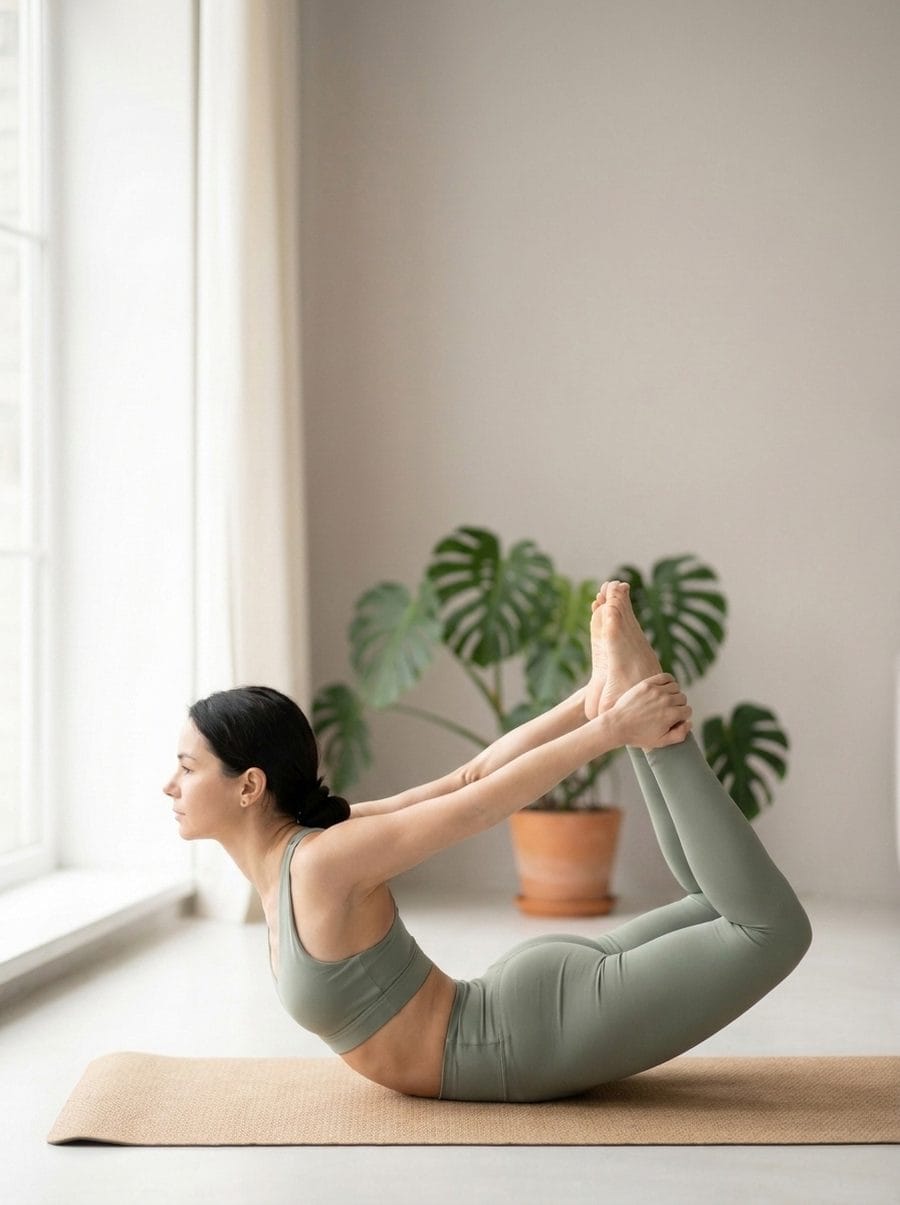
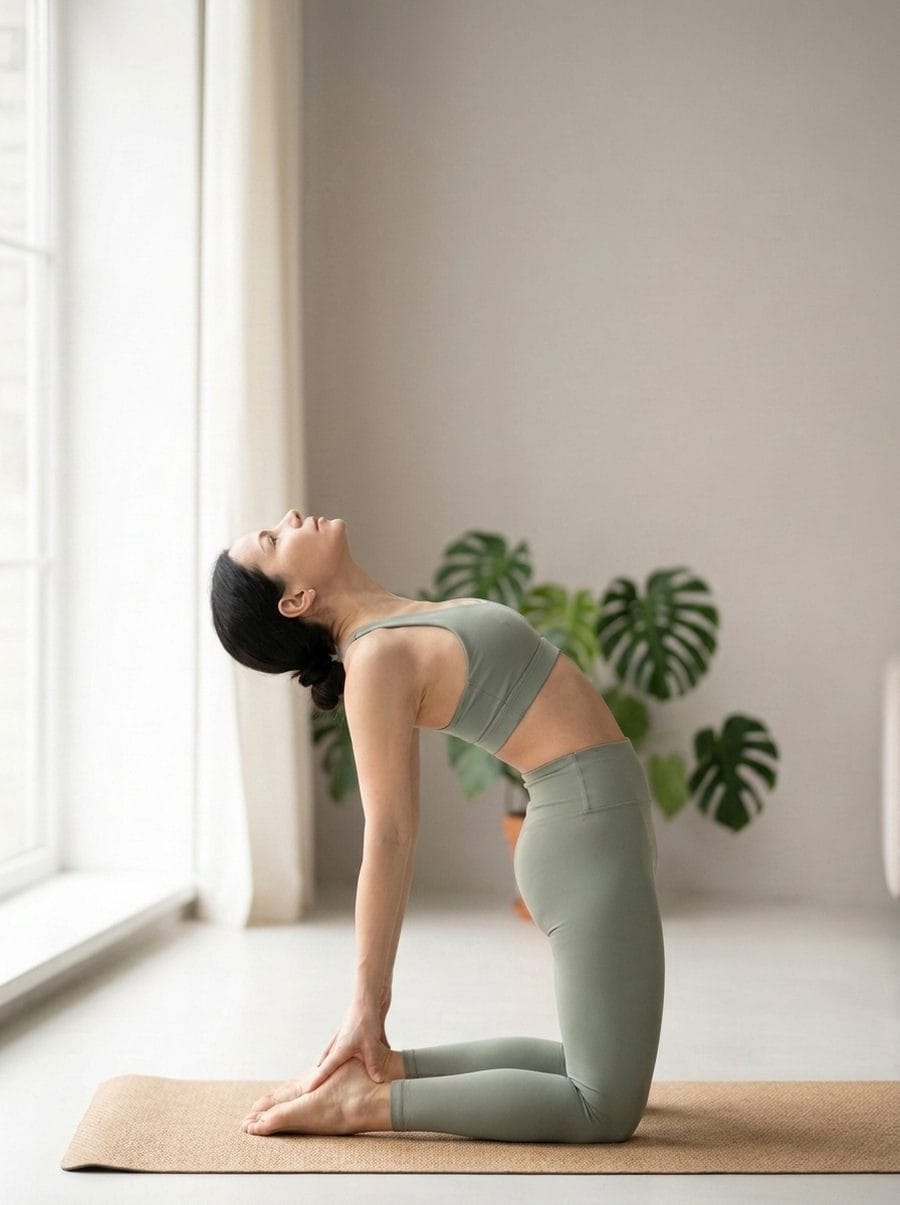
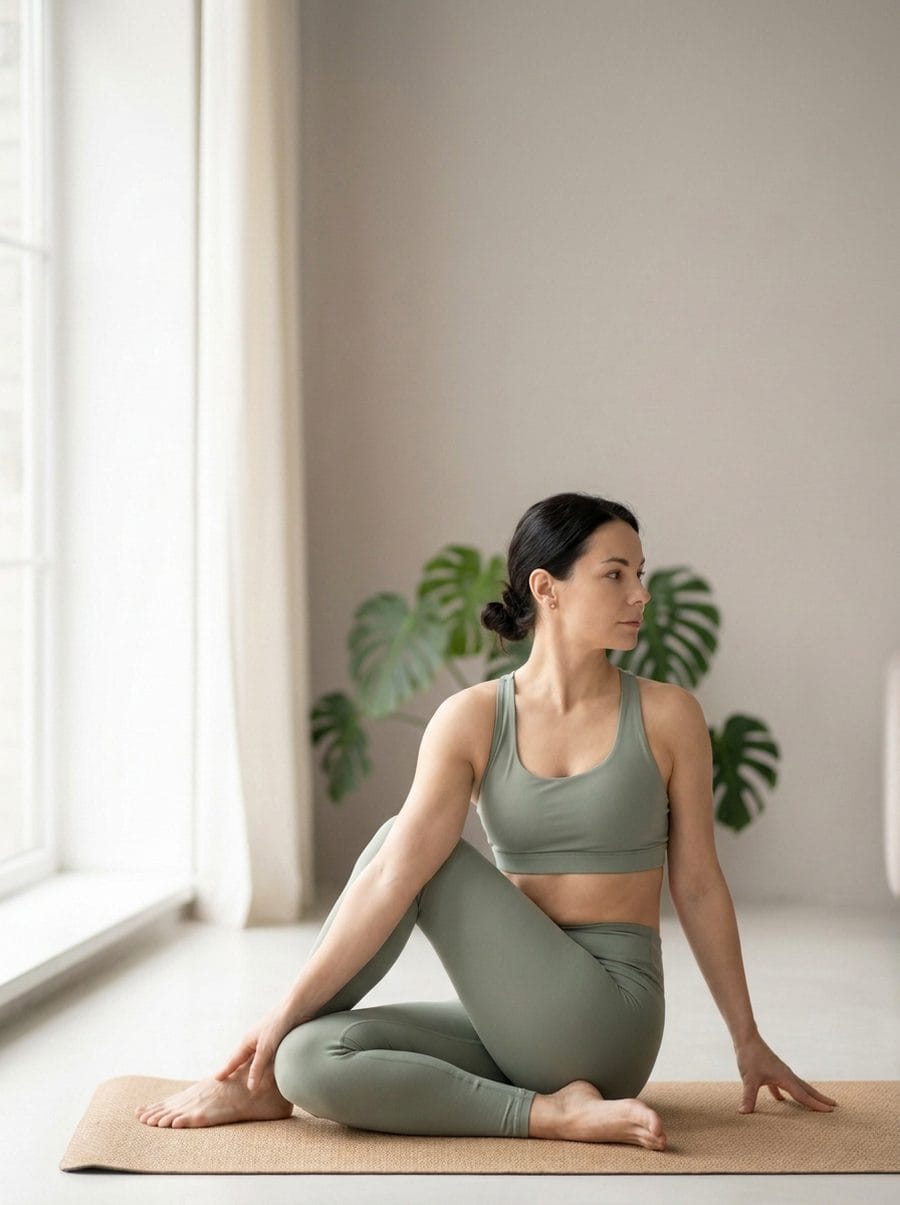
The best-known version is Bikram yoga. A standardized series of poses is performed to a scripted instructor dialogue at about 40.6 °C (105 °F) and 40% humidity, and a class lasts 90 minutes. The series includes, for example, Chair Pose, Eagle Pose, Triangle Pose, Cobra Pose, Locust Pose, Bow Pose, Camel Pose and a seated twist.
You'll also find heated hatha or vinyasa classes with their own sequences.
Hot yoga benefits: what the research shows
The 2025 review included 43 studies with 942 participants, and about three quarters of them looked at Bikram yoga. A single session in the heat raised body temperature and heart rate, but energy use was no higher than in unheated yoga.
With regular practice, the authors note possible improvements in body composition, blood lipids, blood vessel function, bone density, balance and flexibility.
Their conclusion is cautious. Many studies are small and not very rigorous, and claims that hot yoga is better for you than regular yoga or other exercise remain unproven. A 2015 review of Bikram yoga reached a similar verdict: in healthy adults it improved leg strength, range of motion and balance, while other effects have only been shown in non-randomized studies.
The popular promise of "up to 1,000 calories a session" didn't hold up either. In a 2014 study, a standard 90-minute Bikram class cost participants about 290 kcal on average, ranging from 179 to 478. By sports medicine standards, that's light-to-moderate exercise.
Hot yoga dangers: overheating and dehydration
NCCIH, the U.S. government's research center for complementary health approaches, states plainly that hot yoga carries special risks related to overheating and dehydration. The authors of the 2025 review also urge caution, noting case reports of people becoming unwell after a class.
A small 2020 study with five experienced practitioners shows how much fluid is at stake. Over 90 minutes they lost about one and a half liters of sweat and nearly 7 g of salt on average, yet drank only a quarter of what they'd lost.
There's a less obvious risk too. Warmth makes the body feel more flexible, and it's easy to sink deeper into a fold or backbend than you're ready for. Don't use the heat to "reach further."
Who should avoid hot yoga
- Pregnant women. NCCIH advises avoiding hot yoga during pregnancy because of the overheating risk.
- People with heart conditions or high blood pressure. Heat raises your heart rate, so make the decision together with your doctor.
- Older adults and anyone with a chronic condition. NCCIH recommends talking it over with your doctor and the instructor beforehand.
- Anyone who handles heat poorly or has had heatstroke before.
Among the poses in the series, hypertension rules out Locust, Bow and Camel, and herniated discs rule out Cobra, Locust, Bow, Camel and the seated twist. Chair Pose is off with a knee injury. There's no specific research on hot yoga during your period: if you feel weak or lightheaded on those days, choose a class at normal room temperature.
Hot yoga tips for beginners: how to practice safely
- Ease in. If the studio offers shorter classes or cooler rooms, start there and build up gradually.
- Drink. Start hydrating ahead of time, sip during class and replace what you've lost afterward. Sweat carries salt with it, so after a long class, ordinary salted food or a sports drink helps.
- Dress light. Loose, light-colored clothing, and a towel over your mat so your hands and feet don't slip.
- Skip class after drinking alcohol, and on days when you've slept badly or feel unwell.
- Rest as much as you need. In your first classes, take a spot near the door and lie down in savasana as soon as the load feels like too much.
Warning signs: when to stop
Stop, move somewhere cool, lie down, drink water and cool your skin if you notice tiredness, dizziness, a headache, nausea, heavy sweating with pale, clammy skin, cramps in your arms, legs or stomach, or intense thirst. These are signs of heat exhaustion. People usually start to feel better within 30 minutes.
Call 911 if someone still feels unwell after 30 minutes of resting and cooling down, or has a very high temperature, hot dry skin, fast breathing or a racing pulse, confusion, poor coordination, a seizure, or loses consciousness. These are signs of heatstroke, which is a medical emergency.
Yoga without the heat: an app program
The app has no hot yoga: every program is designed for normal room temperature. If what you love about Bikram is the intensity, Strength & Tone gives you a similar workload without the heat: 25 minutes, intermediate level, 4 Sun Salutation rounds plus 13 poses, including Chair Pose, the warriors, Plank, Boat, Locust and Bow.

Pose cautions in this article
- Knee injuries (Chair Pose)
- Flare-up of lower back problems (Chair Pose)
- Flare-up of lower back pain (Triangle Pose)
- Low blood pressure — come out slowly (Triangle Pose)
- Lumbar disc herniation (Cobra Pose, Locust Pose)
- Pregnancy (Cobra Pose, Locust Pose, Bow Pose, Seated Twist)
- Flare-up of peptic ulcer disease (Cobra Pose)
- High blood pressure (Locust Pose)
- Spinal disc herniation (Bow Pose, Camel Pose, Seated Twist)
- Hypertension (Bow Pose, Camel Pose)
- Flare-ups of digestive disorders (Bow Pose, Seated Twist)
- Migraines (Camel Pose)
This site is for general information and is not medical advice. If you have pain, an injury, a chronic condition, or are pregnant, check with a qualified professional before practicing.
Questions
How hot is a hot yoga class? Bikram yoga runs at about 40.6 °C (105 °F) with 40% humidity. Other hot yoga formats in research ranged from 30 to 52 °C (86 to 126 °F).
Can you do hot yoga while pregnant? No. NCCIH advises pregnant women to avoid hot yoga because of the risk of overheating. Work out a suitable level of activity with your doctor.
How many calories does hot yoga burn? In a 2014 study, a 90-minute Bikram class burned about 290 kcal on average, ranging from 179 to 478 depending on the person. That's less than is often promised.
Can you do Bikram yoga at home? Heating a room to those temperatures without supervision isn't safe. At home, practice at normal room temperature: the poses and the pace provide the challenge.
Sources
- Willmott AGB, et al. Hot Yoga: A Systematic Review of the Physiological, Functional and Psychological Responses and Adaptations. Sports Medicine Open, 2025.
- Hewett ZL, et al. The Effects of Bikram Yoga on Health: Critical Review and Clinical Trial Recommendations. Evidence-Based Complementary and Alternative Medicine, 2015.
- Pate JL, Buono MJ. The physiological responses to Bikram yoga in novice and experienced practitioners. Alternative Therapies in Health and Medicine, 2014.
- Alrefai H, et al. Salt and water balance after sweat loss: A study of Bikram yoga. Physiological Reports, 2020.
- National Center for Complementary and Integrative Health. Yoga: Effectiveness and Safety. NCCIH.
- NHS. Heat exhaustion and heatstroke.
- Pose technique and cautions, program contents: the Hatha Yoga app. More on the How We Prepare Our Content page.
Read next
- Yoga for Arthritis and Osteoporosis: How to Protect Your Joints and Bones7 min read
- Ashtanga Yoga Explained: The Series, the Breath and the Difference from Hatha6 min read
- Ayurveda Explained Simply: The Basics and a Daily Routine (Dinacharya)5 min read
- Balance Exercises: 10 Yoga Poses for Balance and Stability7 min read