 Hatha Yoga
Somatic Yoga: What It Is, Exercises for Beginners and What the Research Says
Hatha Yoga editorial team · Updated · 6 min read
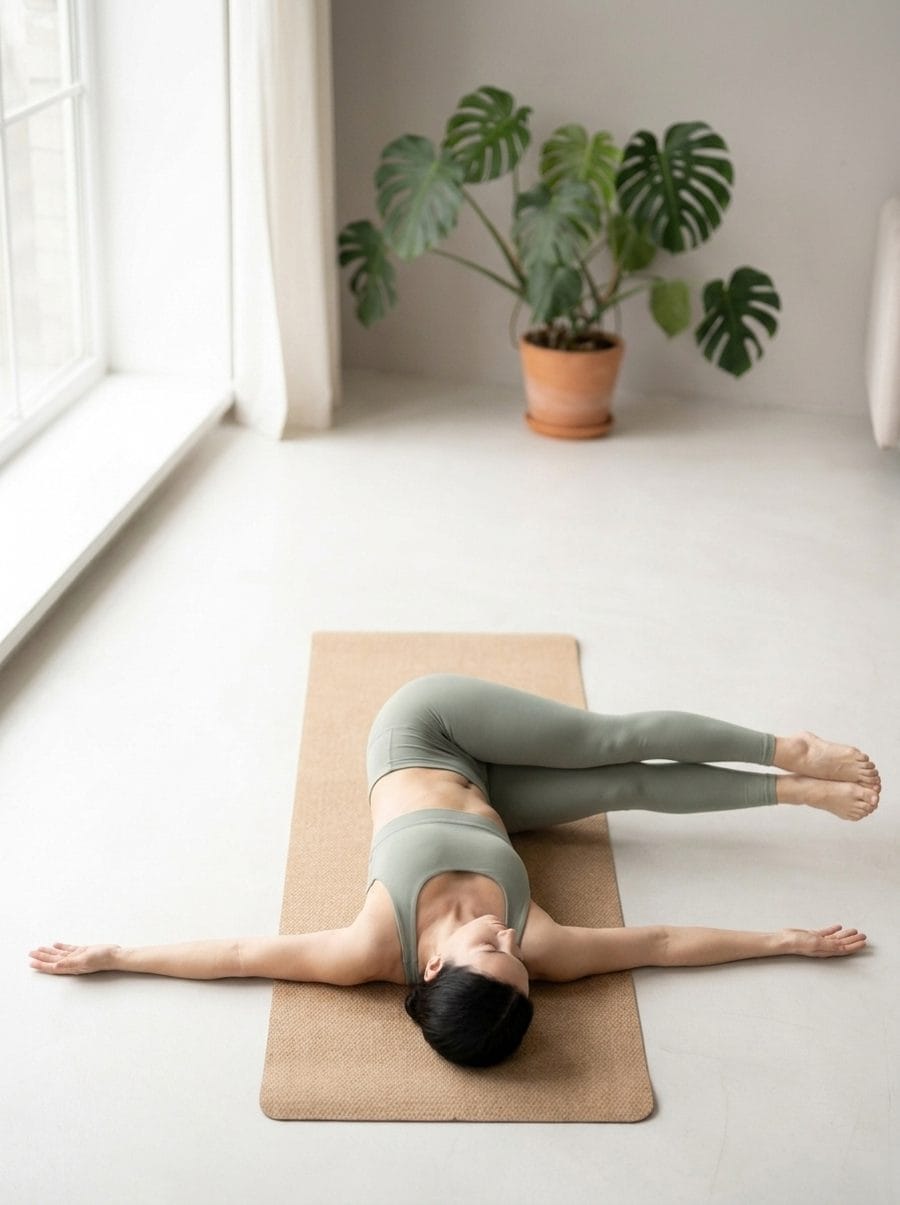
Somatic yoga has become a buzzword, and social media credits it with almost everything. Behind the hype sits a simple principle: move slowly, keep the range small and pay close attention to what you feel from the inside. This guide gives you an honest look at where the approach comes from and what sets it apart from familiar hatha yoga, 10 exercises from the app that are easy to do somatic-style, a 12-minute flow and what's actually known about the benefits.
What is somatic yoga?
"Soma" is Greek for "body." The term "somatics" was coined in the 1970s by the American philosopher and educator Thomas Hanna. He used it for approaches that study the body from the inside, through your own sensations, rather than from the outside like an anatomy chart.
The Feldenkrais Method and Hanna's own somatic education are two well-known examples.
Somatic yoga blends that outlook with yoga poses and breathing. There's no single standard, and different teachers mean different things by the name. The shared idea is this: the shape of the pose matters less than what you notice while you move.
Somatic yoga vs. regular yoga
- Pace. Very slow: a single movement can stretch over several breaths.
- Range. Small, with no hunting for your maximum stretch.
- Attention. Turned inward, to sensation, not to how the pose looks.
- Repetition instead of holding. You repeat one movement many times and notice what changes.
- Position. Usually lying down or on hands and knees, so balance isn't a factor.
Hanna's work includes a technique called pandiculation. You gently contract a muscle, then release it very slowly, the way you stretch when you wake up. Hatha yoga has a similar principle: in flowing sequences, movement follows the inhale and exhale instead of a count.
Do somatic exercises work? What the research says
Research on somatic yoga specifically is still scarce, and every study is small. In a 2019 pilot, 10 people with nerve damage from chemotherapy did somatic yoga and meditation for 8 weeks. Their flexibility, balance and a fall-risk test improved, though the study had no comparison group.
In a 2026 randomized trial with people who have functional neurological disorder, the practice proved feasible and safe, and the authors saw enough signs of benefit to call for a full-scale trial.
There's more data on the related Feldenkrais Method. In a 2022 review of 16 studies, it improved walking, balance and mobility in older adults.
Claims you'll see online that somatic yoga "releases trauma stored in your hips," lowers cortisol or helps you slim down haven't been backed by research. Anxiety, panic attacks and the effects of trauma call for a professional, and gentle movement can only be an add-on.
How to practice somatic yoga
- Slow down. Move slowly enough to notice each part of the movement.
- Shrink the range. Stop well before the edge where effort begins.
- Pause. After a few repetitions, go still and compare right with left, before with after.
- Breathe freely. Keep the breath flowing and let the movement adapt to it.
- Stay out of pain. Any unpleasant sensation means make the movement smaller or stop.
10 somatic yoga exercises for beginners
All of them are in the app. What makes them somatic isn't the shape but the pace and the attention you bring.
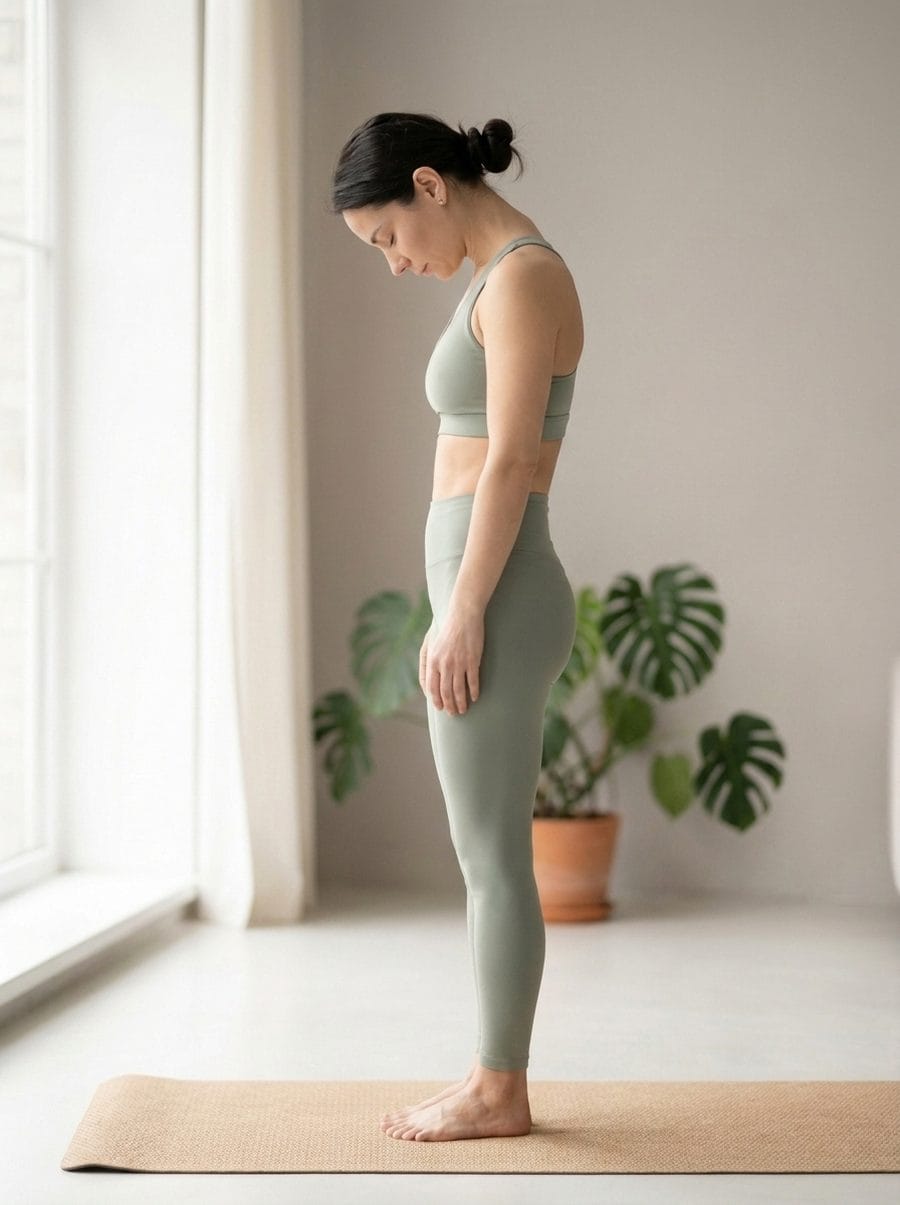
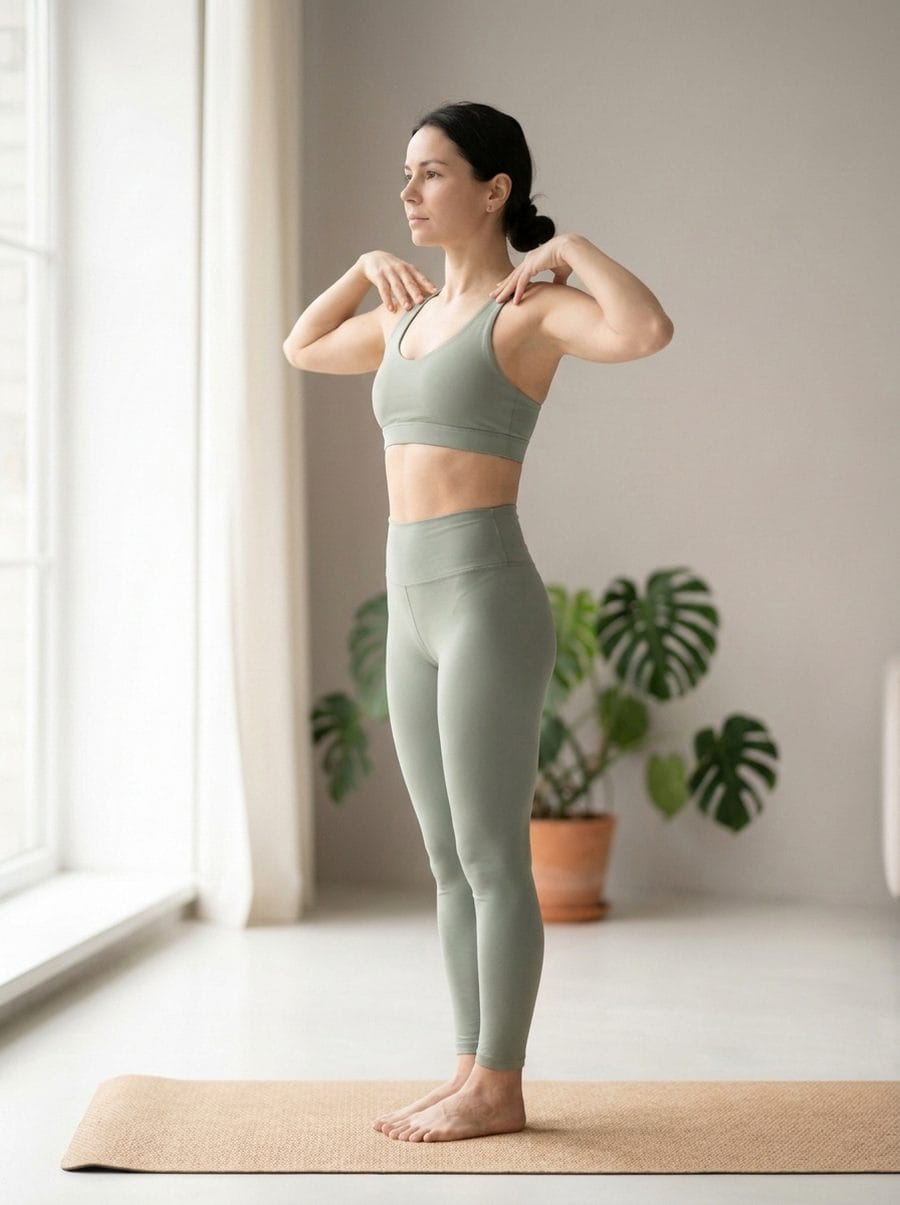
Neck and shoulders
Let your head travel in a slow arc between your shoulders, never tipping it back. Notice where the movement flows and where it snags. Do Shoulder Rolls so slowly that you can feel your shoulder blades glide across your back.
Pelvis and spine
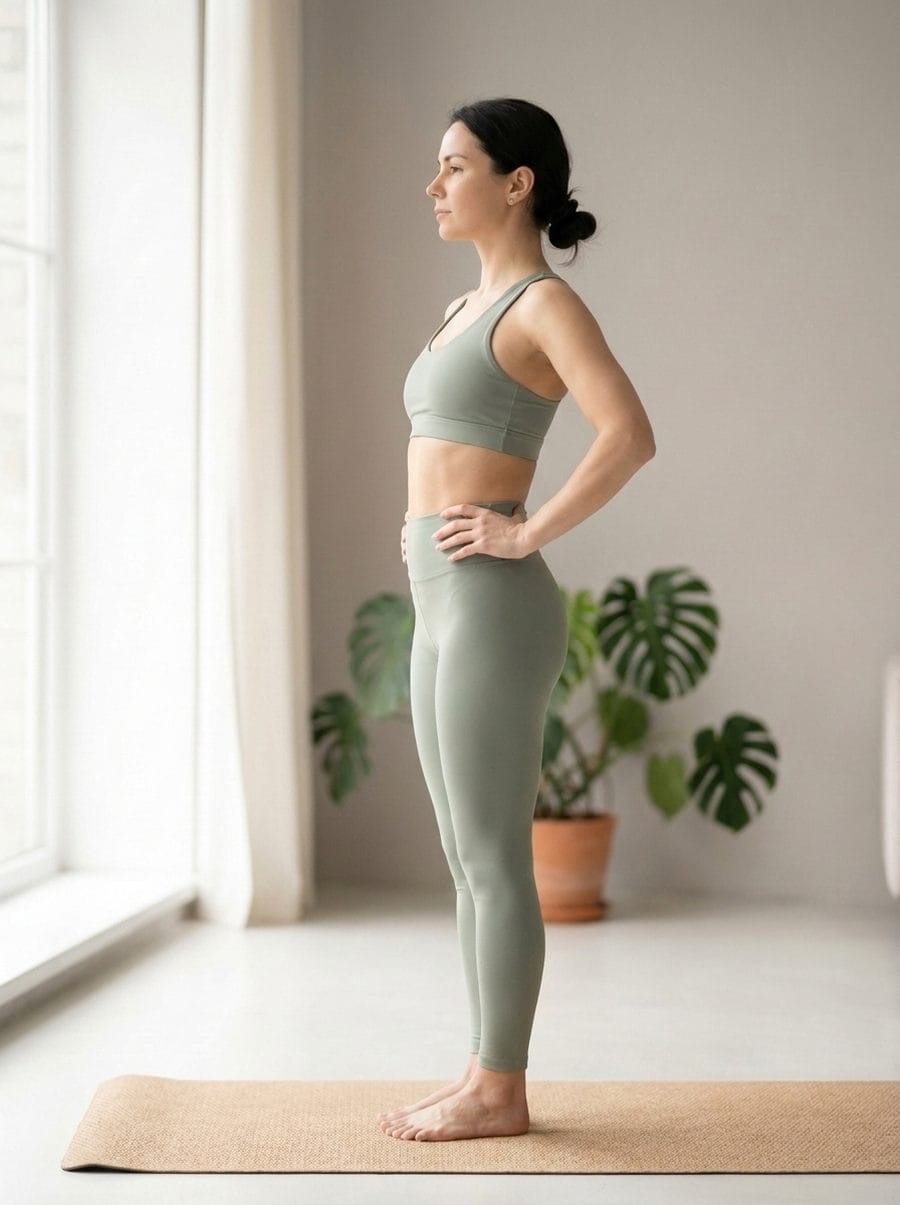
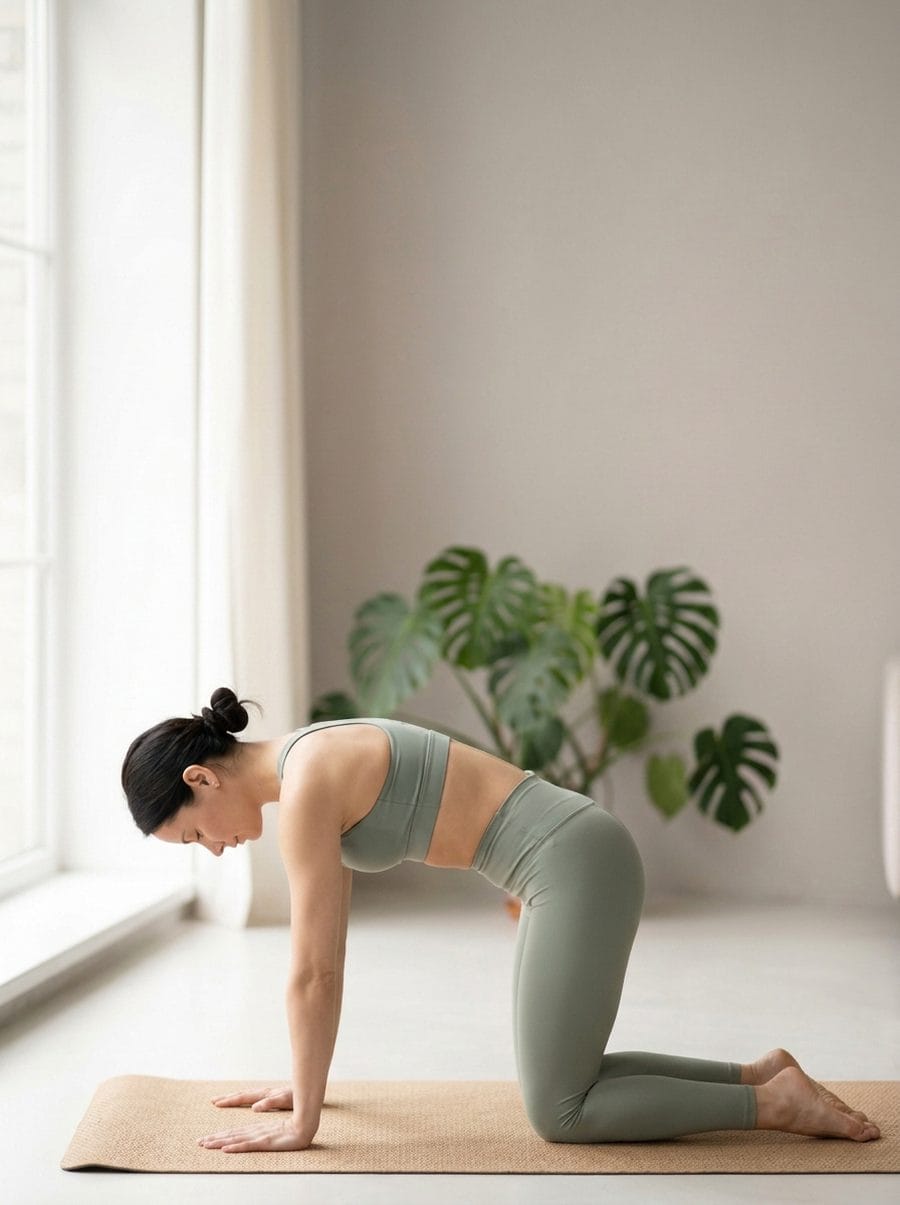
In Hip Circles, trace an imaginary hoop with soft knees. In Cat-Cow, send a wave from your tailbone up to the top of your head, and in the Tabletop to Child's Pose Flow, notice the exact moment your hips meet your heels.

Lying on your back
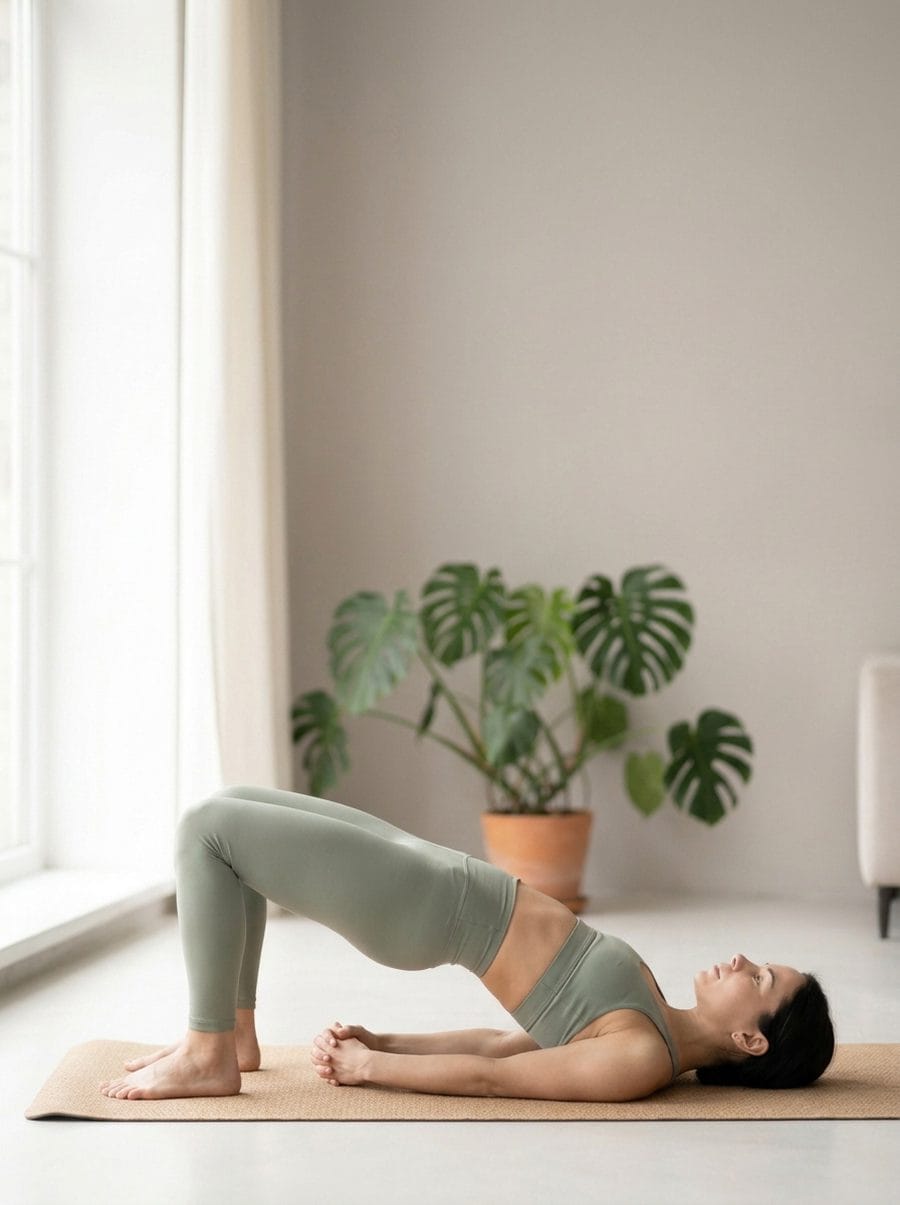
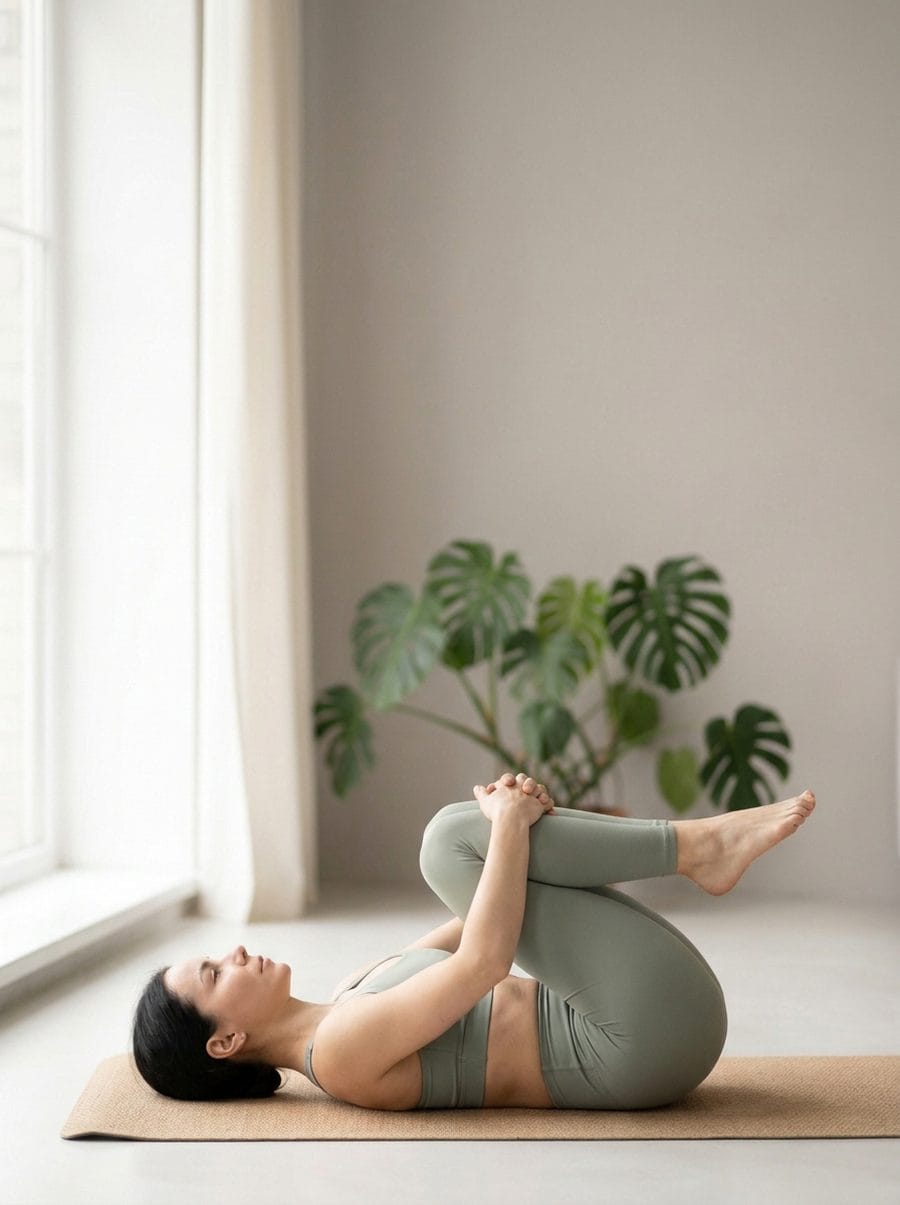
In Bridge Flow, lower your spine bit by bit, as if laying a chain down on the floor, link after link. In Supine Twist Flow, your knees drift to one side as you exhale and return as you inhale. Knees-to-Chest Pose gently rocks the lower back.
These three also work as somatic exercises you can do in bed.
Rest and noticing
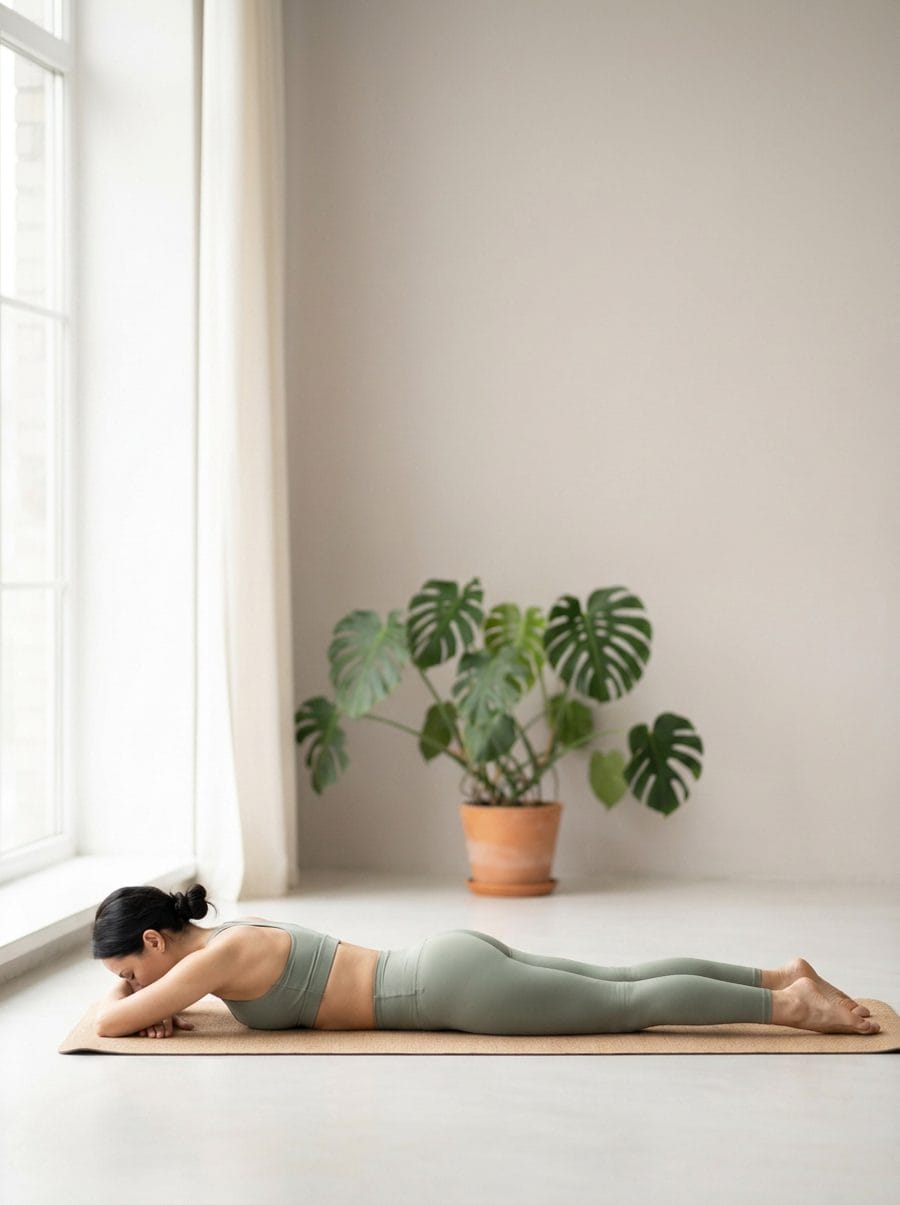
Crocodile Pose lets you feel your breath rocking your lower back. In Savasana, sweep your attention through your body from feet to crown.

Flow with the Breath: a 12-minute somatic-style routine
The app has no program called "somatic yoga." The closest match is Flow with the Breath: 14 exercises in 12 minutes, nearly all of them moving with the inhale and exhale. It starts standing as you wake up the neck, shoulders and hips, moves to the spine on hands and knees, and ends with Bridge and a twist on your back. The program is rated for beginners.
To make it somatic, move more slowly than the pace suggests and shrink the range. The app's voice guidance and timer take care of the clock, so your attention can stay on the inside.
For days when you're running on empty
After an exhausting day, try Low-Energy Day. It has 12 poses in 14 minutes, all seated, on hands and knees or lying down, and it closes with almost four minutes in Savasana. That gives you a calm setting for learning to notice sensations without rushing.
For another slow approach, read Yin Yoga, where you stay in each pose for minutes, passively.
Somatic yoga safety
- Neck Warm-Up. Set it aside if you feel dizzy or have sharp, acute neck pain.
- Cat-Cow. Pass on it during bouts of acute back pain. If a wrist is hurt, make fists and rest on them instead.
- Bridge Flow. Off the list with a neck injury, and on days when an old lower-back problem acts up again.
- Supine Twist Flow. Drop it during pregnancy and with a herniated lumbar disc.
- Crocodile Pose. It's a belly-down position, so leave it out from the second trimester on.
If panic or painful memories surge up during practice, stop, open your eyes and feel the floor holding you up. If that happens often, reach out to a therapist.
Pose cautions in this article
- Acute neck pain (Neck Warm-Up)
- Dizziness (Neck Warm-Up)
- Acute back pain (Cat-Cow)
- Wrist injuries — practice on your fists (Cat-Cow)
- Knee injuries — place a blanket under your knees (Tabletop to Child's Pose Flow)
- Neck injuries (Bridge Flow)
- Flare-up of lower back pain (Bridge Flow)
- Lumbar disc herniation (Supine Twist Flow)
- Pregnancy (Supine Twist Flow)
- Pregnancy from the second trimester onward — take your knees wider than your belly or skip the pose (Knees-to-Chest Pose)
- Pregnancy from the second trimester onward — the pose is done lying on the belly (Crocodile Pose)
This site is for general information and is not medical advice. If you have pain, an injury, a chronic condition, or are pregnant, check with a qualified professional before practicing.
Questions
Somatic yoga or yin yoga: what's the difference? Yin yoga is built on long, passive holds lasting several minutes. In somatic yoga you keep moving, just very slowly and in a small range.
How long should a somatic yoga session be? Ten to fifteen minutes is plenty. The app programs that suit the somatic style last 12 and 14 minutes, and you can do them daily if you like.
Does somatic yoga help you slim down? No study has shown that. It's a gentle practice of attention and mobility, not a workout designed to burn energy.
Can somatic exercises calm the nervous system? As a complement to professional help. Slow movement and attention to the breath help many people settle down, but they don't replace therapy or a doctor's care.
Sources
- Galantino ML, et al. Impact of Somatic Yoga and Meditation on Fall Risk, Function, and Quality of Life for Chemotherapy-Induced Peripheral Neuropathy Syndrome in Cancer Survivors. Integrative Cancer Therapies, 2019.
- Kennedy-Barnes E, et al. Somatic yoga therapy for functional neurological disorder: feasibility randomised controlled trial. BJPsych Open, 2026.
- Berland R, et al. Effects of the Feldenkrais Method as a Physiotherapy Tool: A Systematic Review and Meta-Analysis of Randomized Controlled Trials. International Journal of Environmental Research and Public Health, 2022.
- Exercise technique and cautions, and program contents: the Hatha Yoga app. More on the How We Prepare Our Content page.
Read next
- Yoga for Arthritis and Osteoporosis: How to Protect Your Joints and Bones7 min read
- Ashtanga Yoga Explained: The Series, the Breath and the Difference from Hatha6 min read
- Ayurveda Explained Simply: The Basics and a Daily Routine (Dinacharya)5 min read
- Balance Exercises: 10 Yoga Poses for Balance and Stability7 min read