 Hatha Yoga
Yoga for Digestion: Gentle Poses for Your Belly and What We Actually Know
Hatha Yoga editorial team · Updated · 6 min read
Heaviness after dinner, a bloated belly, the feeling that nothing is moving. Yoga can't switch your gut on command, but gentle movement, slow breathing and a few simple poses for your belly help many people feel lighter. Below you'll find 8 poses, a calm 15-minute evening routine, rules for practicing after a meal, plus the red-flag symptoms where a doctor beats any mat.
If you live with a stomach or bowel condition, clear this with your doctor first.
What yoga can and can't do for digestion
Regular movement is good for digestion. Britain's public health service, the NHS, suggests exercising regularly to help prevent bloating, and for constipation it recommends a daily walk or run. Yoga is movement too, just a gentle kind, with slow breathing that helps you relax added on top.
There's no direct evidence that yoga by itself changes how your gut works. A 2025 meta-analysis pooled 11 trials with 535 people who had irritable bowel syndrome. For symptom severity, anxiety and quality of life, yoga did no better than the control groups, and the quality of the evidence was low. The authors couldn't recommend yoga for that diagnosis.
In the app's pose descriptions, you'll come across phrases like "massages the abdominal organs" for Seated Twist or "aids digestion" for Thunderbolt Pose. That's the language of the Hatha yoga tradition: in a twist, the belly is compressed and then released, which feels like a gentle massage.
We didn't find studies that confirm such an effect directly, so read those words as a description of sensations.
When to practice and how it relates to meals
After a big meal, most poses are uncomfortable: a full stomach gets in the way of forward folds, twists and lying on your belly. Most teachers suggest giving a big meal a couple of hours or more to settle, and a light snack roughly sixty minutes.
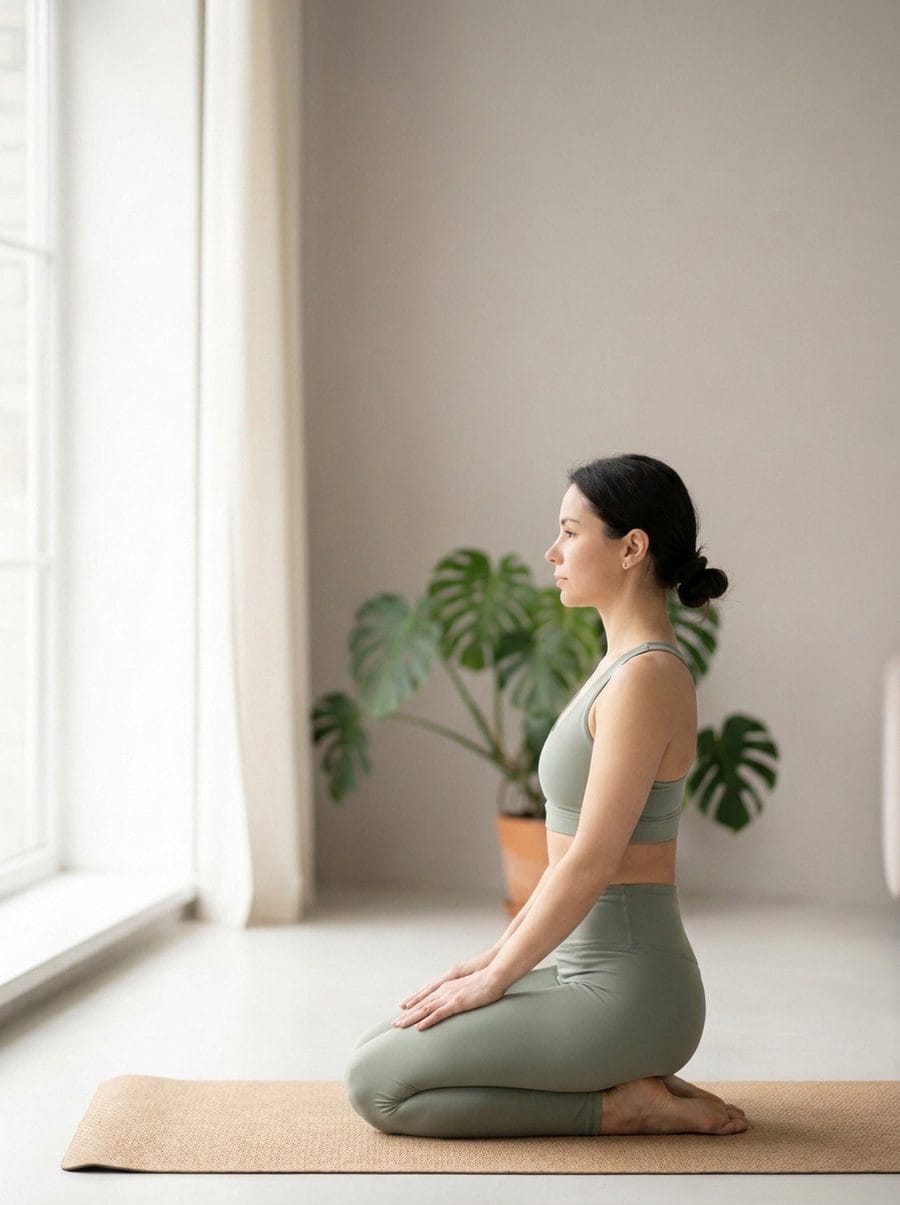
There's one exception: the app calls Thunderbolt Pose the only classic pose suited to practice right after eating.
Cleansing practices called shatkarmas, such as Agnisara Kriya, are done strictly before eating. Agnisara comes with a long list of restrictions in the app, among them hypertension, peptic ulcer disease, heart disease, pregnancy, menstruation and recent surgery. Without experience and a talk with your doctor, don't start with it.
8 gentle yoga poses for your belly
Right after eating
Sit back on your heels, lengthen your spine and rest your palms on your thighs. Breathe slowly and evenly. New to stretching the insteps? Begin with a single minute.
Gentle movement
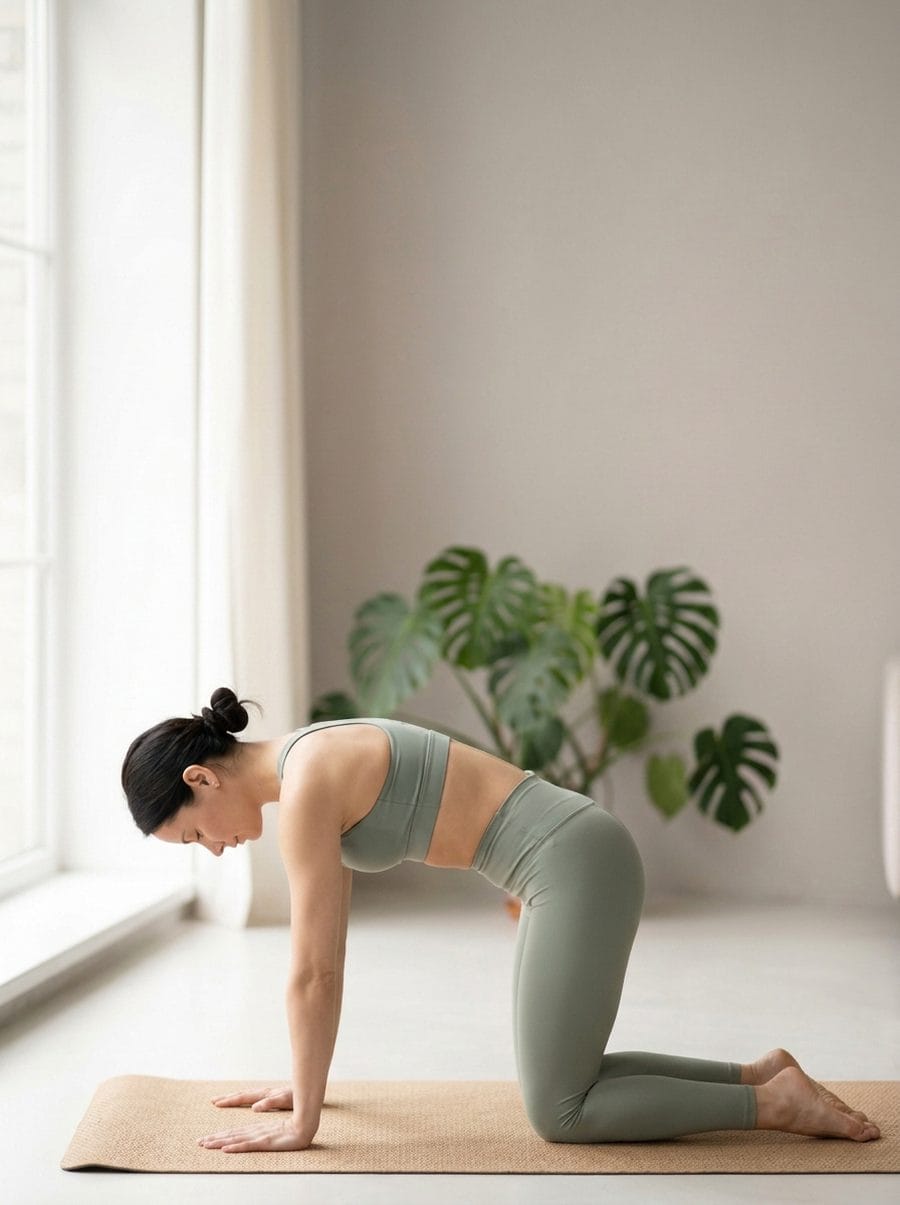
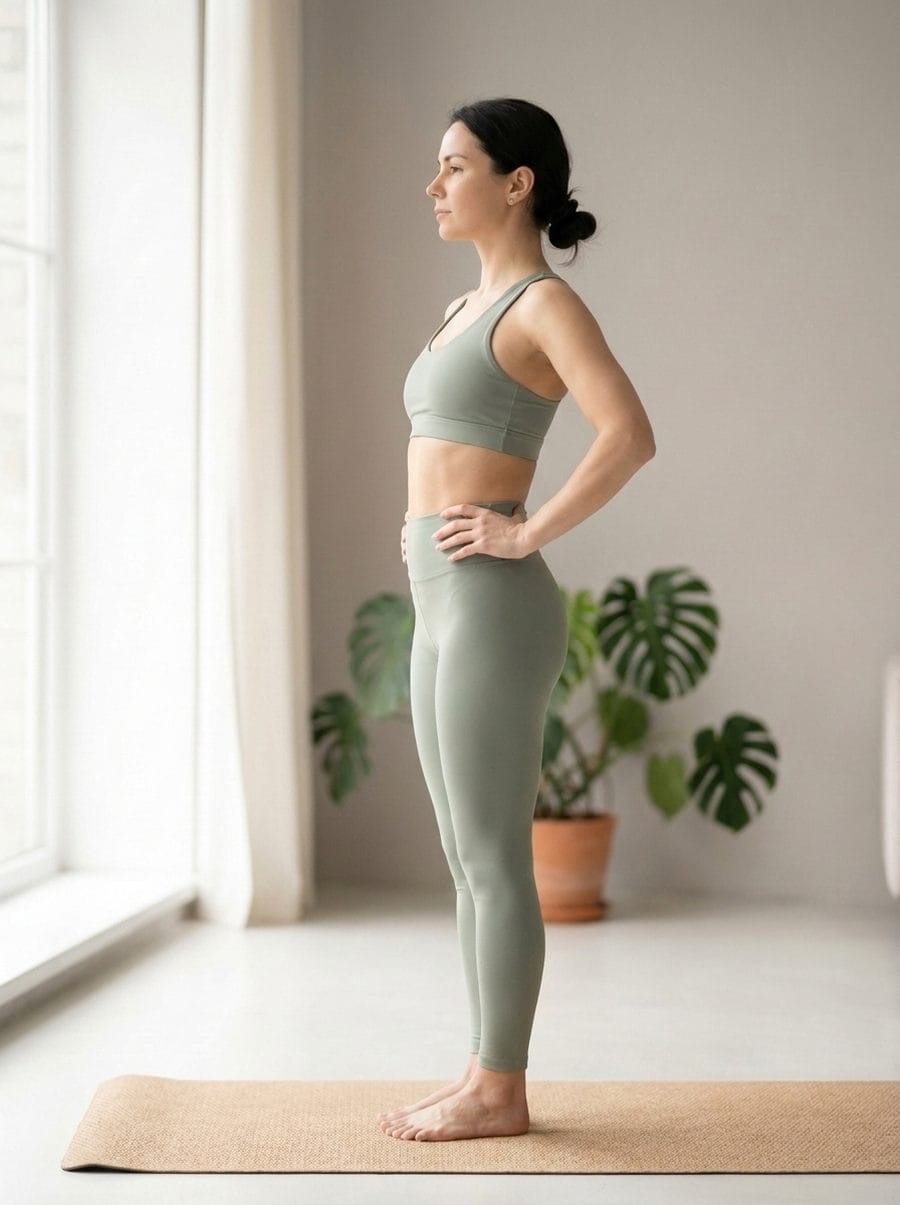
Cat-Cow alternately rounds and arches your back in rhythm with your breath, so your belly draws in and then softens. Standing Hip Circles warm the lower back and lower belly: draw a wide, slow circle with your pelvis.
Lying on your back
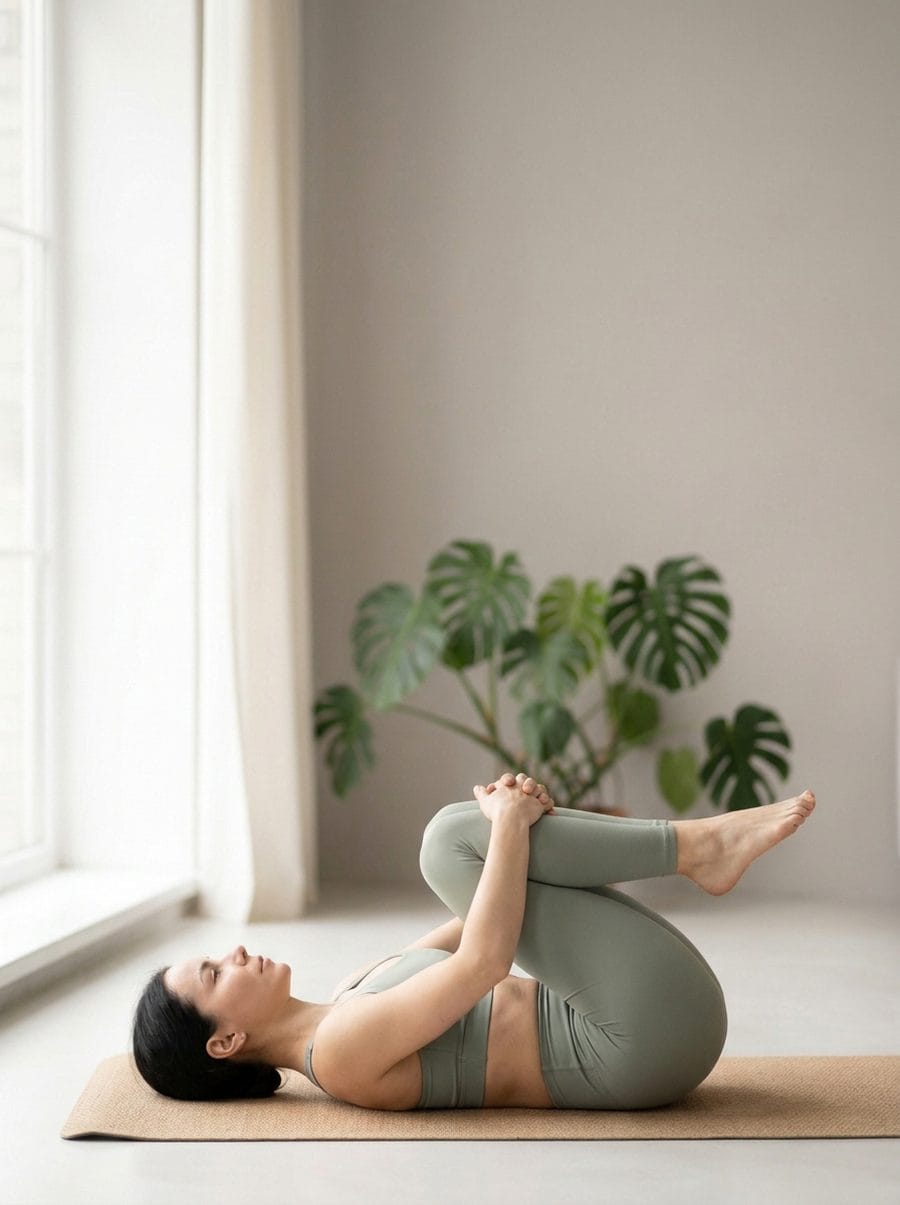
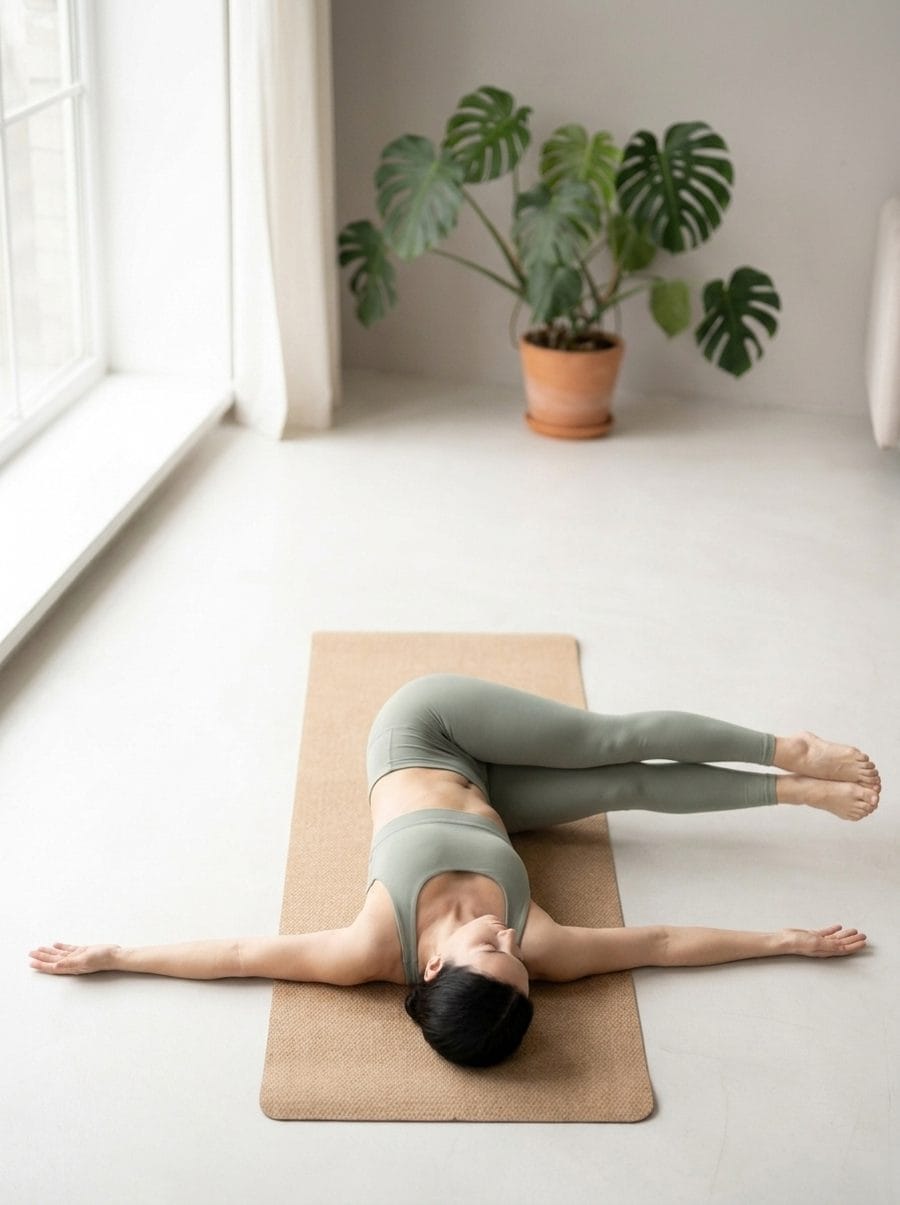
For Knees-to-Chest Pose, wrap your arms around your knees and draw them in softly as you exhale, easing off a little as you inhale. You can rock gently from side to side. In Supine Twist Flow, your bent knees lower to one side on each exhale while your shoulders stay on the floor.
A passive Supine Twist closes this block: the weight of your leg and your breath do the work for you.

Rest
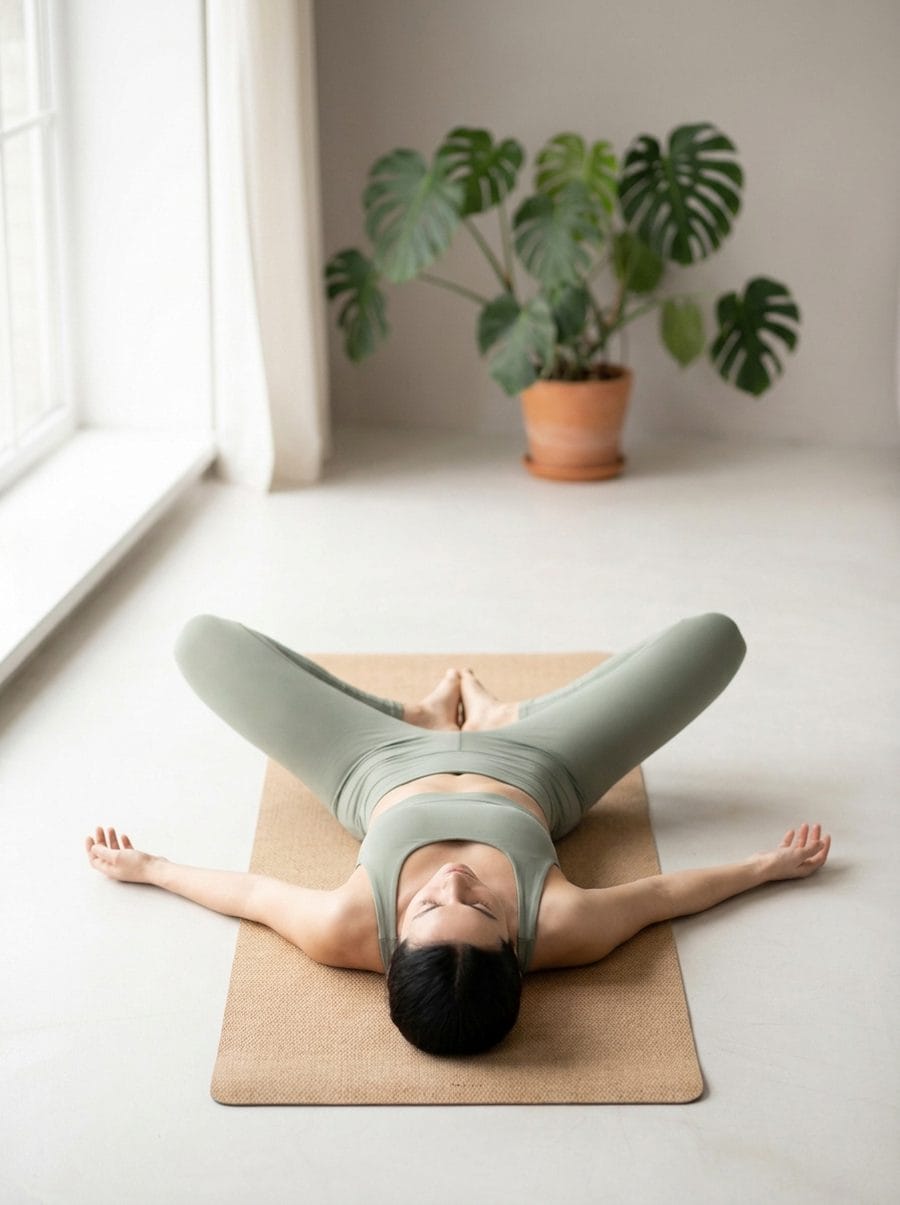
Child's Pose and Reclining Butterfly Pose let your belly relax. In Reclining Butterfly, rest one palm on your belly and feel it drift up with each inhale and down with each exhale. Slow belly breathing is relaxing in itself; there's more about it in Breath in Practice.

Evening Unwind: a 15-minute routine
This one fits an evening when enough time has passed since dinner. It has 8 beginner-level poses, all on the floor. Cat-Cow and Child's Pose open it, two seated forward folds follow, and then comes the reclining part: the butterfly on your back, legs resting on the wall, a twist and a long Savasana at the end.
There are no strength or standing poses, so going to bed afterward is easy.
If all you want in the evening is to wind down for an early night, see Yoga for Sleep.
Twists: only on an empty stomach
Twists are the poses people link with digestion most often. The app has a whole routine built around them, Twists & Lightness: 20 minutes, two rounds of Sun Salutation, then twists standing, seated and lying down, at an intermediate level.
It suits you if you already practice with confidence and your last meal was a while ago.
This routine includes Seated Twist, which the app lists as contraindicated during flare-ups of digestive disorders. Herniated discs and pregnancy are two more reasons to avoid deep twisting. Lengthen your spine first, turn as you exhale, and don't crank the twist deeper with your hands.
Safety and when to see a doctor
While a stomach or bowel condition is flaring up, put your practice on hold and talk to your doctor. The app rules out Seated Twist and Bow Pose during digestive flare-ups, Cobra Pose during a peptic ulcer flare-up, and Snake Pose with acute abdominal conditions.
Supine Twist Flow isn't for lumbar disc herniations or pregnancy. From the second trimester on, Knees-to-Chest Pose needs the knees spread wide enough to make room for the bump, or skip it. Thunderbolt Pose is off-limits for injured knees and ankles, and Child's Pose for injured knees.
See a doctor if:
- bloating or constipation bothers you regularly and doesn't ease after changes to what you eat;
- you see blood in your stool or your weight drops for no clear reason;
- your belly is bloated and painful, with vomiting, fever, diarrhea or constipation;
- you feel a lump or swelling in your belly.
Get emergency help for sudden severe belly pain, or if you vomit blood or something that looks like coffee grounds.
Pose cautions in this article
- Knee and ankle injuries (Thunderbolt Pose)
- Acute back pain (Cat-Cow)
- Wrist injuries — practice on your fists (Cat-Cow)
- Pregnancy from the second trimester onward — take your knees wider than your belly or skip the pose (Knees-to-Chest Pose)
- Lumbar disc herniation (Supine Twist Flow)
- Pregnancy (Supine Twist Flow)
- Disc herniation in the acute phase (Supine Twist)
- Pregnancy — widen your knees (Child's Pose)
- Knee injuries (Child's Pose)
- Groin discomfort — place supports under your knees (Reclining Butterfly Pose)
This site is for general information and is not medical advice. If you have pain, an injury, a chronic condition, or are pregnant, check with a qualified professional before practicing.
Questions
What yoga poses help with digestion? Gentle poses are the usual picks: Knees-to-Chest Pose, Supine Twist, Cat-Cow and Thunderbolt Pose. They're no substitute for seeing a doctor, but they help your belly and back relax.
Can you do yoga after eating? Right after a meal, the app allows only Thunderbolt Pose. Save forward folds, twists and poses on your belly for when your stomach has emptied, usually a couple of hours or more after a full meal.
Does yoga help with constipation? According to the NHS, regular movement helps your bowels work more regularly, and gentle yoga can be part of that movement. If constipation lasts a long time or keeps coming back, you need a doctor.
What can you do when you feel bloated? A relaxed walk, slow belly breathing and poses on your back such as Knees-to-Chest Pose are good places to start. If the bloating is severe, frequent or comes with pain, get checked by a doctor.
Sources
- NHS. Bloating. How to reduce bloating and when to see a doctor.
- NHS. Constipation. Causes, lifestyle advice and warning signs.
- Saab O, et al. Yoga for Irritable Bowel Syndrome: A Systematic Review and Meta-Analysis of Randomized Controlled Trials. The American Journal of Gastroenterology, 2025.
- Pose technique and cautions, and sequence contents: the Hatha Yoga app. More on the How We Prepare Our Content page.
Read next
- Yoga for Arthritis and Osteoporosis: How to Protect Your Joints and Bones7 min read
- Ashtanga Yoga Explained: The Series, the Breath and the Difference from Hatha6 min read
- Ayurveda Explained Simply: The Basics and a Daily Routine (Dinacharya)5 min read
- Balance Exercises: 10 Yoga Poses for Balance and Stability7 min read