 Hatha Yoga
Yoga for Headaches and Migraines: What Helps and What to Avoid
Hatha Yoga editorial team · Updated · 6 min read
Tension headaches and migraines are so common that many people simply carry painkillers everywhere. Yoga can fit into a plan agreed with your doctor, especially if headaches keep coming back, but first you need to know what kind of headache you have.
Inside: the research, neck and shoulder poses, calming breathwork, a pair of app routines, the poses flagged for migraines, and the signs that can't wait.
Can yoga help headaches?
Most headaches go away on their own and aren't a sign of anything serious, the NHS says. Among the common triggers it lists stress, poor posture, long hours at a screen, skipped meals and not drinking enough. Yoga's focus on the neck, shoulders and breath makes it a natural addition.
Still, if your head hurts often, start with your doctor: it matters whether you have tension headaches or migraines, and other causes need to be ruled out.
What the research shows
A 2020 meta-analysis pooled randomized trials of yoga for chronic or episodic headaches. Overall, yoga reduced how often headaches came, how long they lasted and how intense they were, but the effect came mainly from people with tension-type headaches. For migraine on its own, there was no statistically significant difference.
The review team calls the evidence preliminary, since the trials were few and small.
In the CONTAIN trial from India, published in 2020, 160 people with episodic migraine were randomly assigned to one of two arms. One arm took the medication their doctors prescribed; the other also practiced yoga for three months. 114 participants finished the study.
In the yoga group, migraines became less frequent and less intense, and people needed fewer pills than those on medication alone. Yoga was added on top of medical care, not used instead of it. The trial ran at a single hospital and participants knew which group they were in, so the findings still need confirming.
Headache red flags: when to get emergency care
Following NHS advice, call 911 if a headache:
- started suddenly and is extremely painful;
- comes with weakness or numbness in the body or face, or trouble speaking, balancing, walking, remembering or seeing;
- comes with a seizure, confusion or drowsiness;
- began within three months of a head injury;
- comes with a high temperature, a stiff neck, sensitivity to light, or a rash that doesn't fade when you press a glass against it.
Get an urgent appointment if a headache is triggered or made worse by coughing, sneezing, bending down or exercise, or comes with vomiting or vision problems.
How to do yoga for headaches safely
- A bad attack isn't mat time. During a strong migraine, don't push yourself to practice. Regular practice on pain-free days matters more.
- Use bending and effort as a check. If the headache gets worse in a forward bend or during effort, stop. That's a reason to see a doctor.
- No jerking the neck. Roll your head in slow half circles and don't drop it back.
- Shoulders down. With tension headaches, the shoulders tend to creep up toward the ears. Check where they are in every pose.
- Screens and breaks. The NHS advises not straining your eyes at a screen for long, drinking enough water and not skipping meals. A short movement break every hour is an easy reminder.
Yoga poses for tension headaches
Neck and shoulders
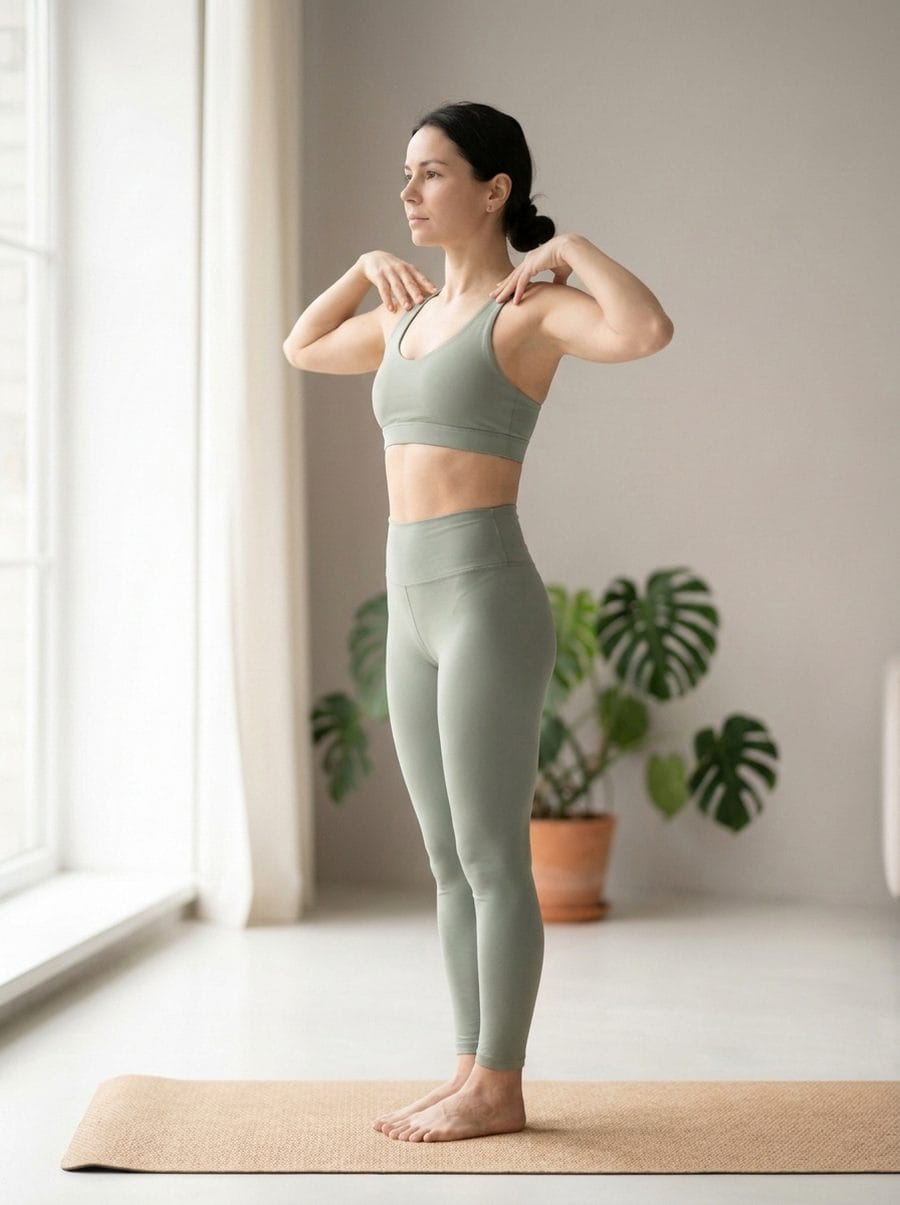
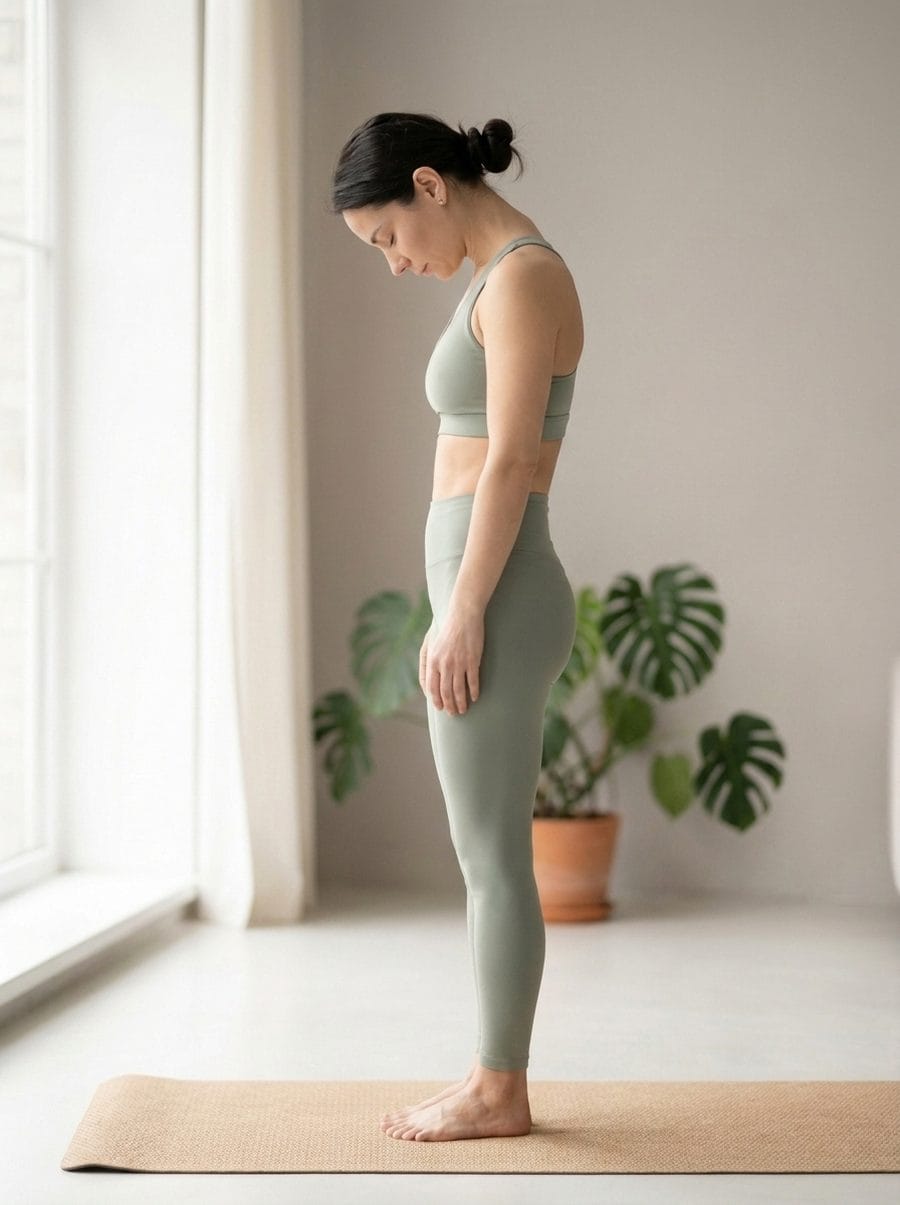
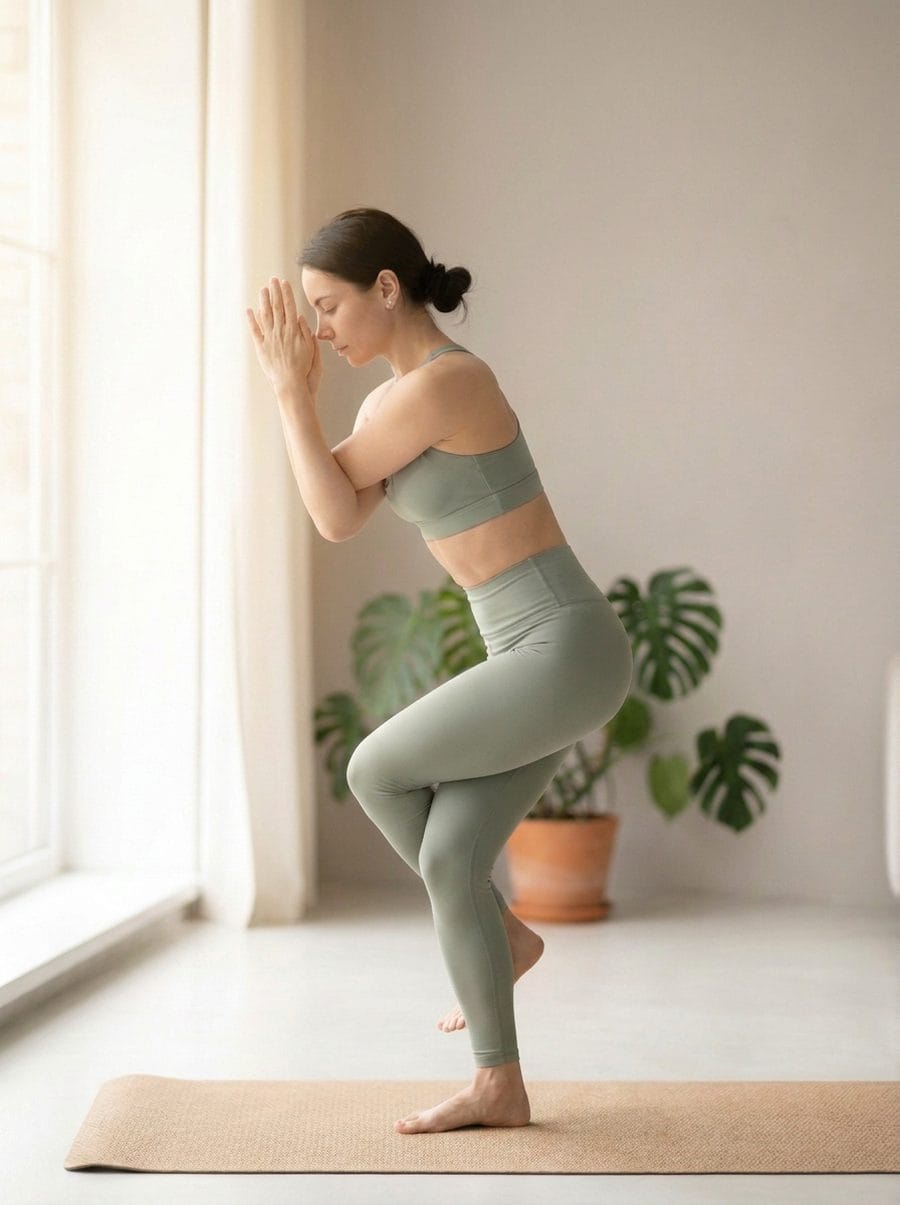
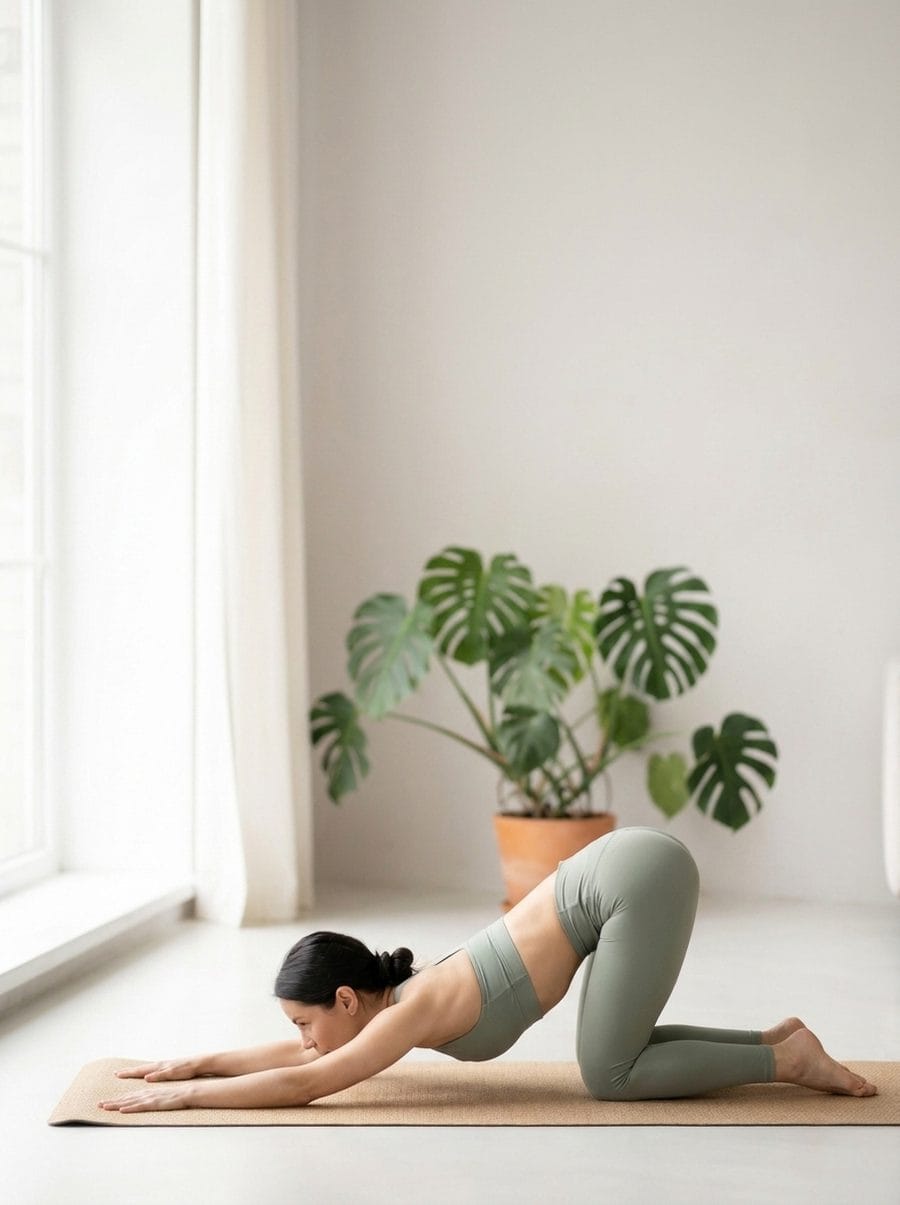
Shoulder Rolls and the Neck Warm-Up ease the tension that builds up over the day. Eagle Pose opens the area between the shoulder blades, and Puppy Pose gently opens the shoulders. Leave the Neck Warm-Up out when you feel dizzy or your neck hurts sharply.
Rest for your head
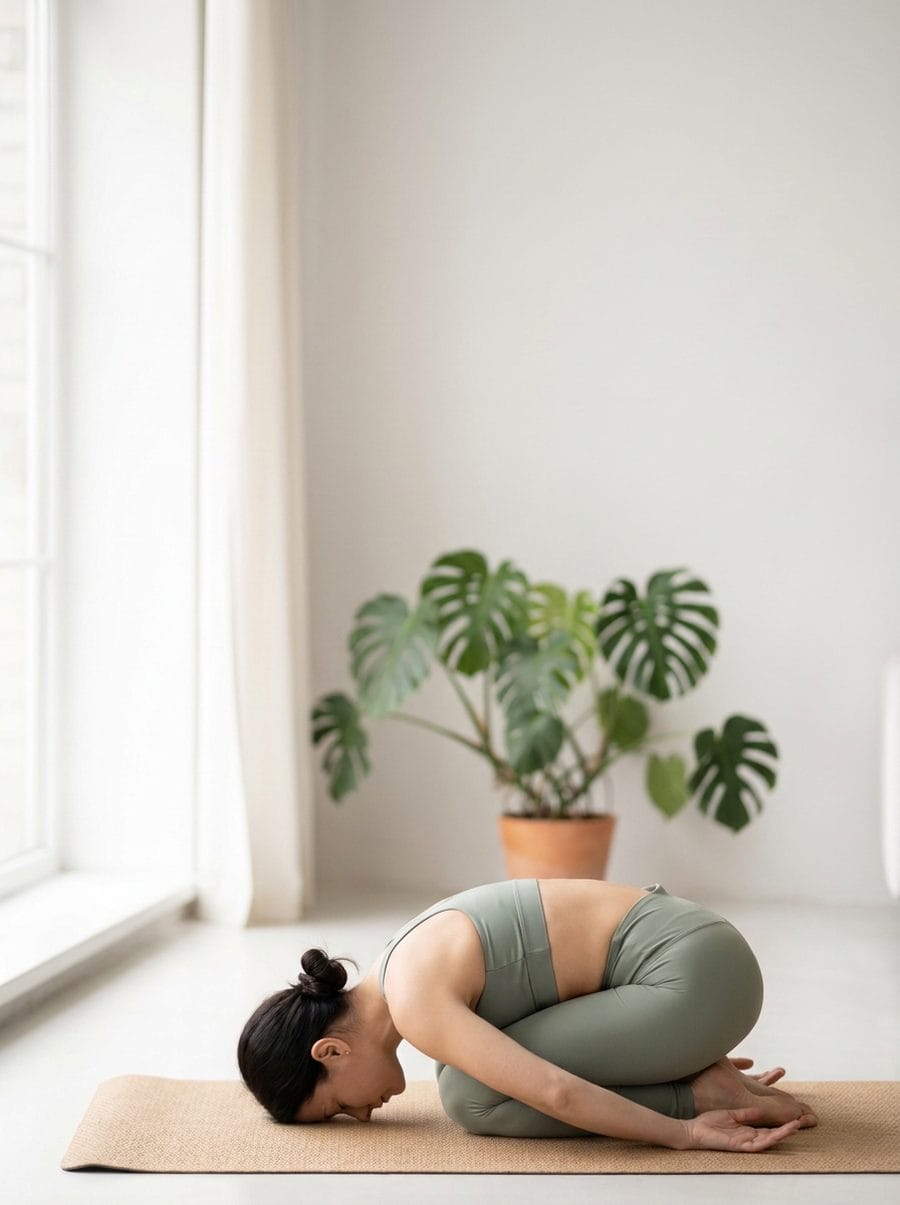
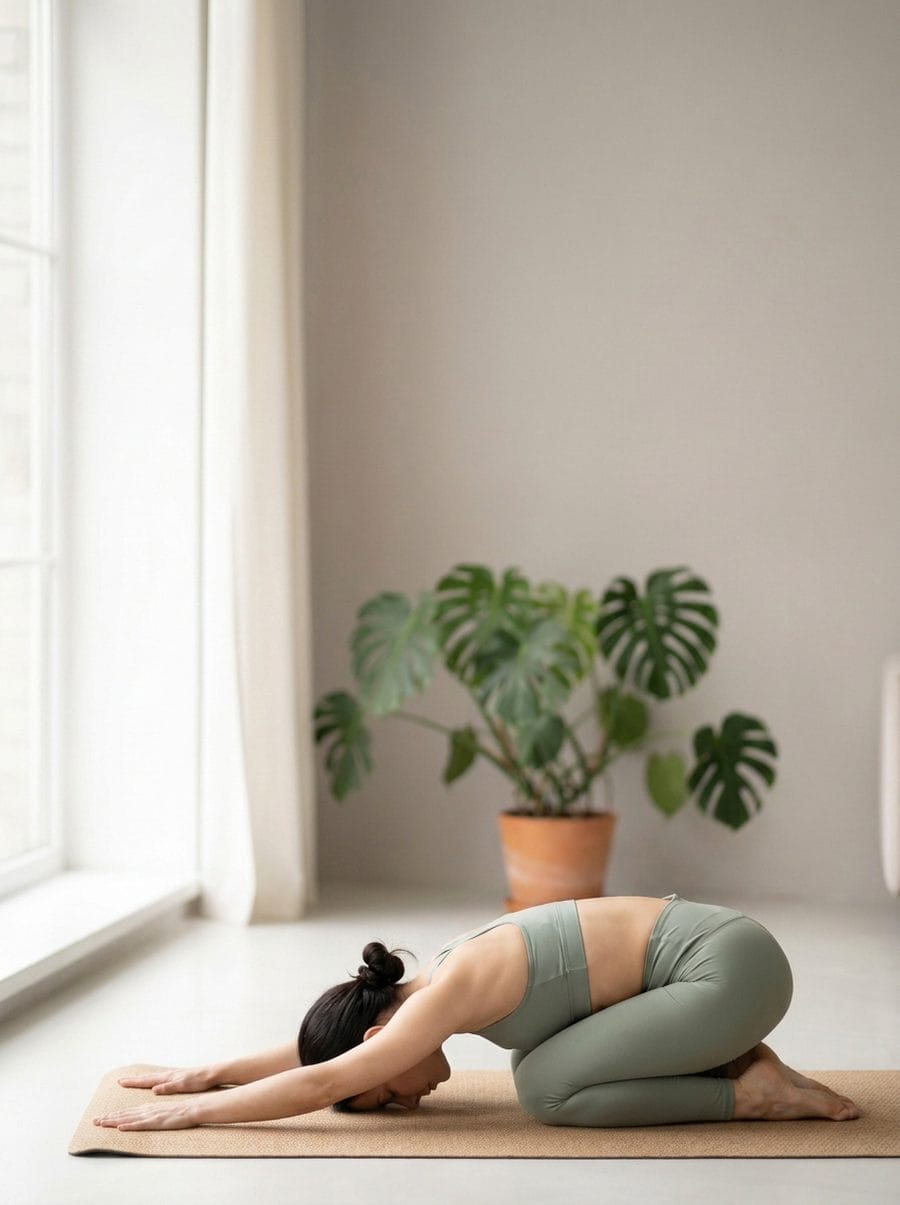
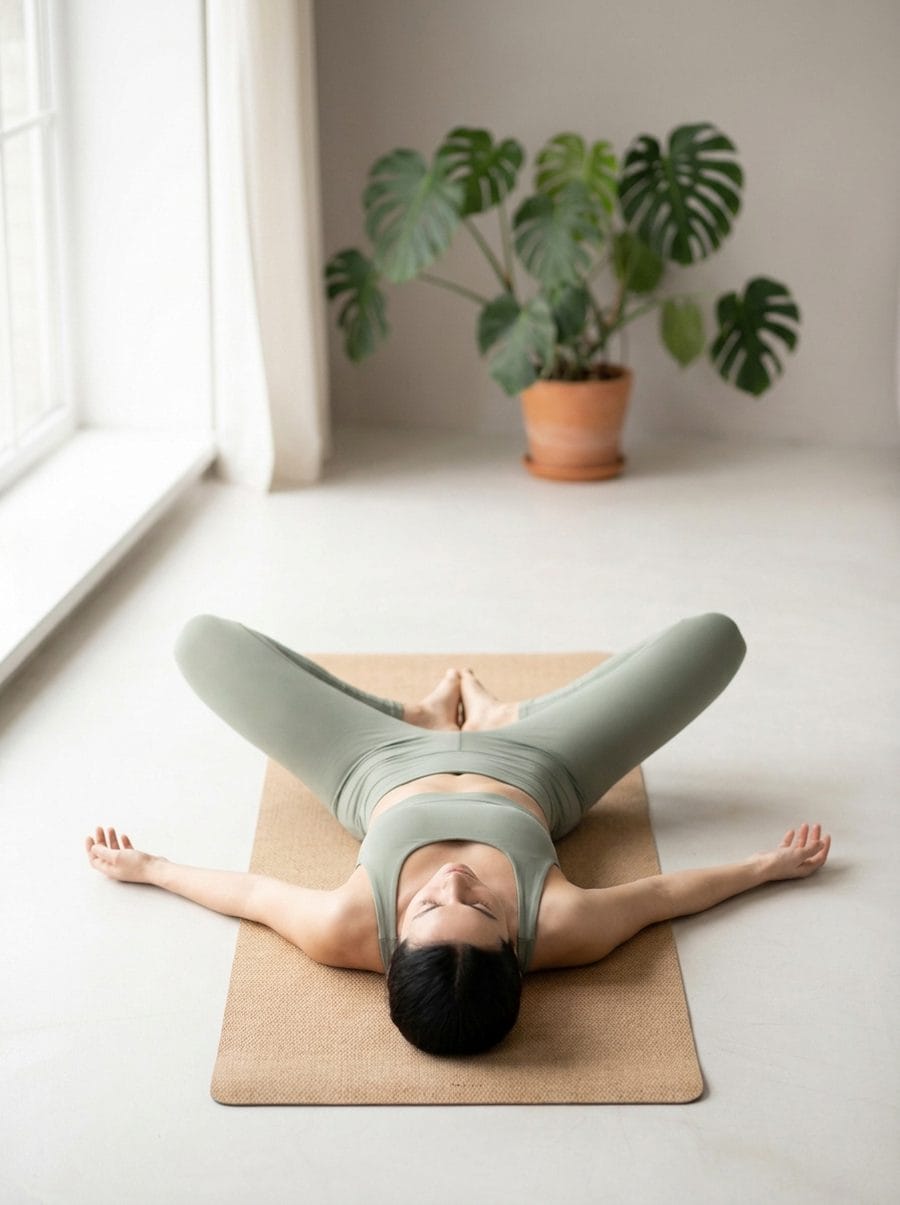
Both Child's Pose and Wide-Knee Child's Pose let the forehead rest on the mat while the back and shoulders let go. With a knee injury, skip Child's Pose and cushion the knees with a blanket for the wide-knee version. Reclining Butterfly Pose and Relaxation Pose help you relax completely.

Breathing exercises for headaches
- Bee Breath: breathe in for four counts, then hum softly through a long exhale of eight. Skip it if your ear is inflamed.
- Full Yogic Breath: a calm count of four in and six out.
- Alternate Nostril Breathing: the app excludes it when the nose is badly congested and asks for no breath holds with hypertension or a heart condition.
Save fast techniques such as Skull Shining Breath for another day. The NCCIH advises beginners to avoid forceful breathing.
Two routines: daytime and evening
If your head starts to ache by late afternoon after hours at a desk, try the 10-minute Office Reset: three short warm-ups (neck, shoulders, wrists), Eagle Pose and Cow Face Pose, a gentle seated backbend, fold and twist, then Puppy Pose, Fish Pose and rest lying down. With migraines, take Fish Pose out of it; if you're dizzy, take out the Neck Warm-Up.
In the evening, try Before Bed: 10 minutes, six calm poses on the mat and a long Relaxation Pose at the end. Its Legs-Up-the-Wall Pose carries three app cautions: menstruation, glaucoma and uncontrolled hypertension.
Safety: yoga poses to avoid with migraines
A full list of cautions for every pose appears lower on this page. The key points for headaches:
- Migraines. Camel Pose and Fish Pose are excluded by the app.
- Dizziness. Skip the Neck Warm-Up, Half Moon Pose, Revolved Triangle Pose, Standing Splits and Standing Knee-to-Chest Balance. Tree Pose is fine with a wall beside you.
- Neck. With acute neck pain, leave out the Neck Warm-Up; with a neck injury, skip Bridge Pose, Fish Pose, Shoulder Stand and Plow Pose.
General rules are on the Safety and Contraindications page. For more neck exercises, see Yoga for Neck and Shoulders.
Pose cautions in this article
- Pregnancy — widen your knees (Child's Pose)
- Knee injuries (Child's Pose)
- Acute neck pain (Neck Warm-Up)
- Dizziness (Neck Warm-Up)
- Knee injuries — don't hook your foot behind your shin (Eagle Pose)
- Shoulder injuries (Puppy Pose)
- Knee injuries — place a blanket under your knees (Wide-Knee Child's Pose)
- Groin discomfort — place supports under your knees (Reclining Butterfly Pose)
This site is for general information and is not medical advice. If you have pain, an injury, a chronic condition, or are pregnant, check with a qualified professional before practicing.
Questions
Does yoga help migraines? In the CONTAIN trial, yoga plus medication made migraines less frequent and less intense than medication alone. A meta-analysis found no significant difference for migraine on its own. Yoga can add to your doctor's plan but not replace it.
What yoga pose is good for a headache? Child's Pose, Wide-Knee Child's Pose and Relaxation Pose are the usual choices. If neck tension is behind the pain, add Shoulder Rolls and Eagle Pose.
Should I do yoga during a migraine attack? During a strong attack, lying down somewhere quiet is usually better. Regular practice on pain-free days does more than trying to push through the pain.
Why do I get a headache after yoga? Sometimes the cause is holding your breath, a tense neck, long head-down folds or a practice done with nothing in your stomach. If it keeps happening, talk to your doctor.
Sources
- NHS. Headaches. National Health Service, page reviewed in 2024.
- Anheyer D, et al. Yoga for Treating Headaches: a Systematic Review and Meta-analysis. Journal of General Internal Medicine, 2020.
- Kumar A, et al. Effect of yoga as add-on therapy in migraine (CONTAIN): A randomized clinical trial. Neurology, 2020.
- NCCIH. Yoga: Effectiveness and Safety. National Center for Complementary and Integrative Health.
- Pose technique and cautions, pranayama rhythms, and sequence contents: the Hatha Yoga app. More on the How We Prepare Our Content page.
Read next
- Yoga for Arthritis and Osteoporosis: How to Protect Your Joints and Bones7 min read
- Ashtanga Yoga Explained: The Series, the Breath and the Difference from Hatha6 min read
- Ayurveda Explained Simply: The Basics and a Daily Routine (Dinacharya)5 min read
- Balance Exercises: 10 Yoga Poses for Balance and Stability7 min read