 Hatha Yoga
Yoga for Menopause: Does It Help With Symptoms, and How to Practice Safely
Hatha Yoga editorial team · Updated · 6 min read
Menopause is no reason to give up yoga, and for many women it's a good moment to start. This article covers what studies show about yoga for hot flashes, poor sleep and mood swings, app poses for leg strength and balance, a breathing practice for hot moments, and a calm routine before bed.
High blood pressure, heart disease or osteoporosis? Check in with your doctor first.
Is yoga good for menopause?
It can be a helpful part of your week. Among the things that support you through perimenopause and menopause, the NHS in the UK lists regular exercise with a focus on weight-bearing and strength work to protect your bones, and relaxing activities such as yoga, tai chi or meditation.
The same advice sheet mentions a regular sleep routine, a balanced diet and not smoking.
Yoga covers several of those needs at once. Standing poses load your legs with your own body weight and train balance, slow breathing calms you down, and the final relaxation helps you wind down before bed. Keep walking, dancing or weight training in your week as well: the NHS recommends those separately for bone health.
With a diagnosis of osteoporosis, hypertension or a heart condition, go over your pose choices with your doctor. Hormone therapy and other options are also a conversation for your doctor, since yoga doesn't replace them.
What the research says
A 2018 meta-analysis pooled 13 randomized trials with 1,306 women. Compared with no intervention, yoga reduced overall menopausal symptoms, including psychological and physical symptoms, hot flashes and urogenital symptoms. Against other forms of exercise, the only difference that remained was for hot flashes, and the authors describe the effects as comparable to regular exercise.
No serious adverse events were reported. The authors also note that some results may be inflated by weaknesses in study design.
A newer review from 2025 combined 24 studies with 2,028 participants. Yoga improved overall menopausal symptoms, sleep quality, anxiety and depressive symptoms. For hot flashes and overall quality of life, however, it found no significant difference from usual care.
So the takeaway is cautious. Yoga may support your sleep and mood, while the evidence on hot flashes is mixed. Don't expect a pose or a breathing technique to switch hot flashes off.
The First Practice routine
For newcomers, this app routine is the natural starting point: 15 minutes, 13 steps, beginner level. It opens by loosening the neck and shoulders, followed by Cat-Cow. Then come Downward-Facing Dog and the standing poses: Mountain Pose, Upward Salute, Tree Pose and Standing Forward Fold.
It closes with Staff Pose, Seated Forward Fold, Butterfly Pose, Supine Twist and Savasana.
What to skip or change, based on the app:
- Standing Forward Fold: drop it if your blood pressure is elevated.
- Downward-Facing Dog: hypertension means a brief hold only. Glaucoma means no Downward-Facing Dog at all.
- Neck Warm-Up: on dizzy days, drop it and begin with Shoulder Rolls instead.
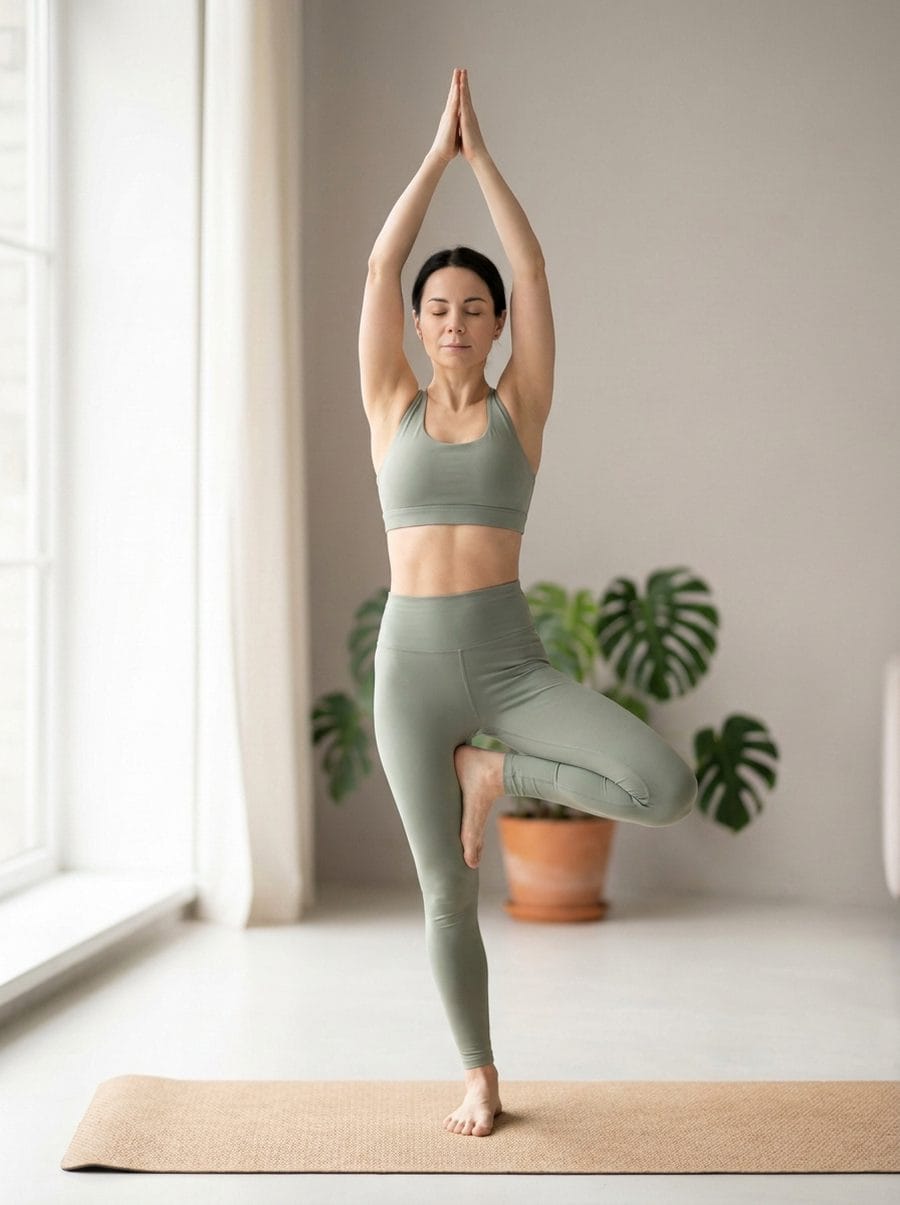
- Tree Pose: if dizzy spells are common for you, practice it next to a wall.
Poses for leg strength and balance
Balance and strong legs serve you at any age, and after menopause they deserve extra attention. Take the standing poses slowly, about 30 seconds each as in the app, and lean on a wall if you wobble.
Standing: legs and balance
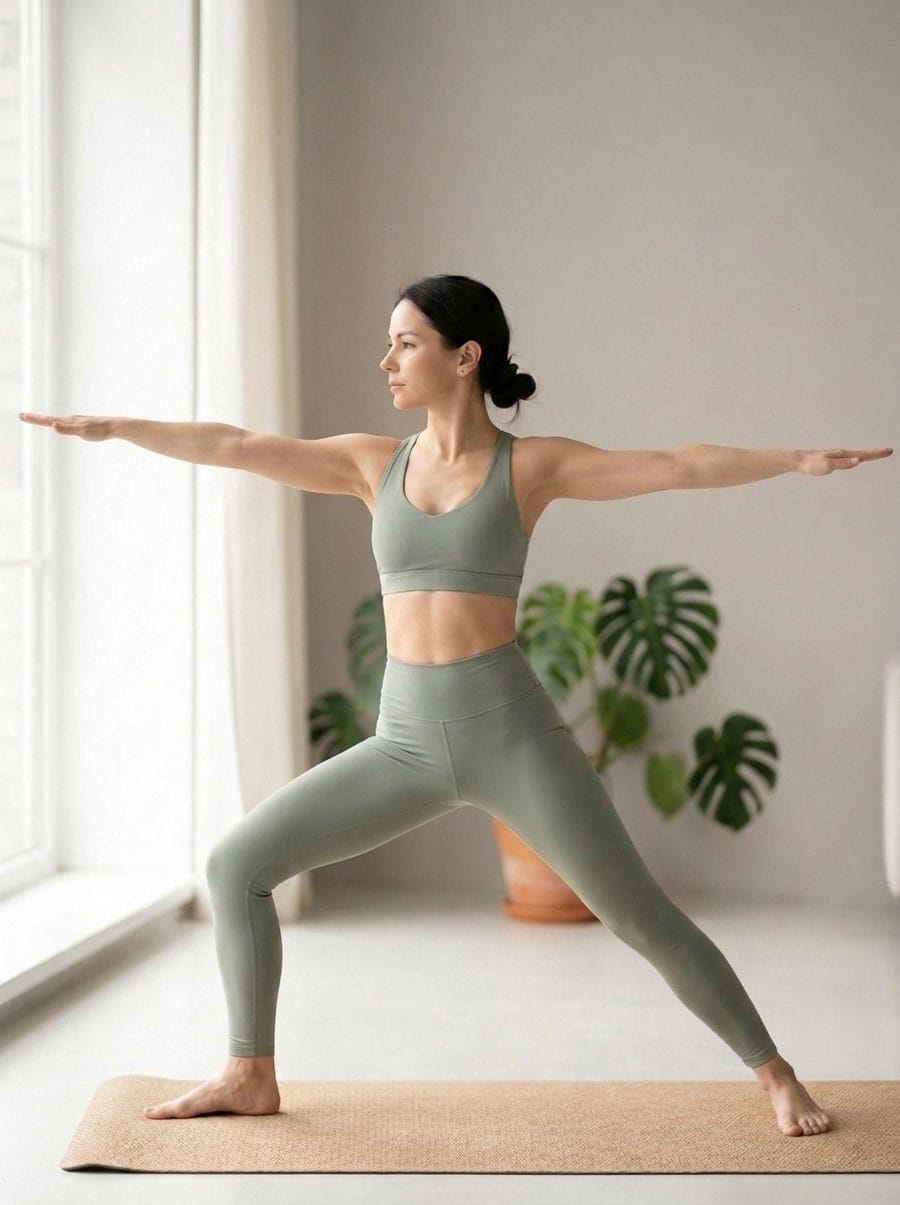
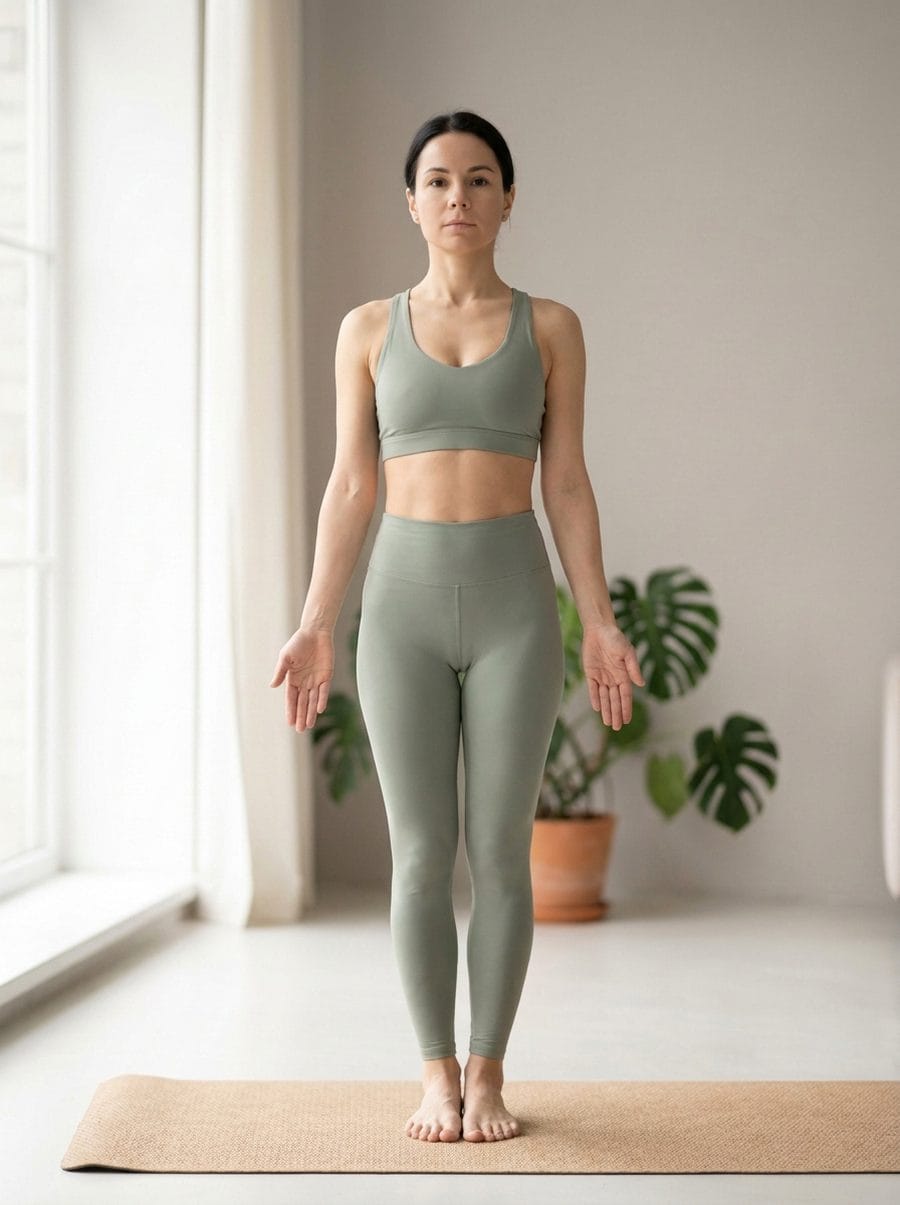
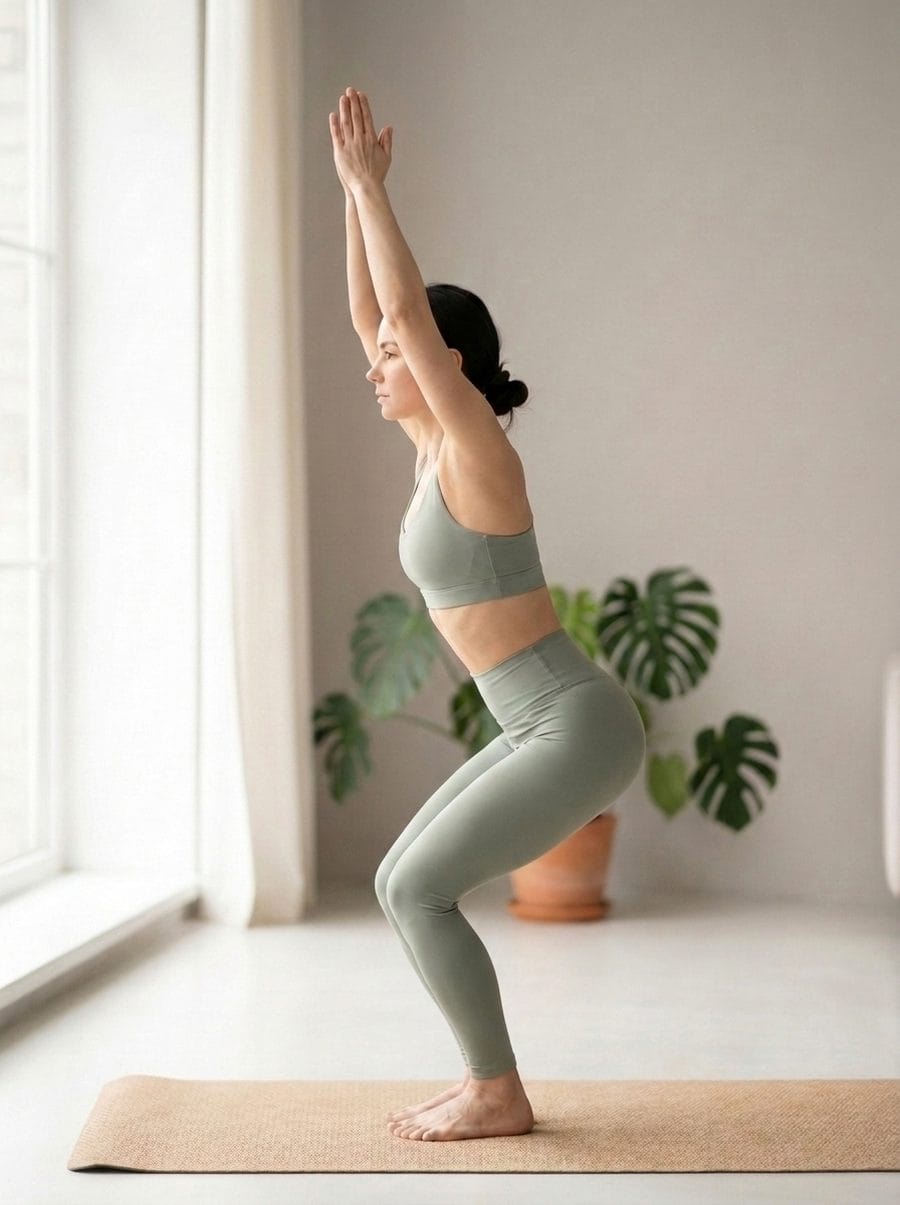
Mountain Pose is a lesson in standing evenly, with your weight spread over both feet. Tree Pose trains balance. Warrior II and Chair Pose work your thighs and glutes using your own body weight. Knee injuries rule out Warrior II and Chair Pose. Chair Pose has one more limit: lower back trouble that's acting up.
Back and pelvis
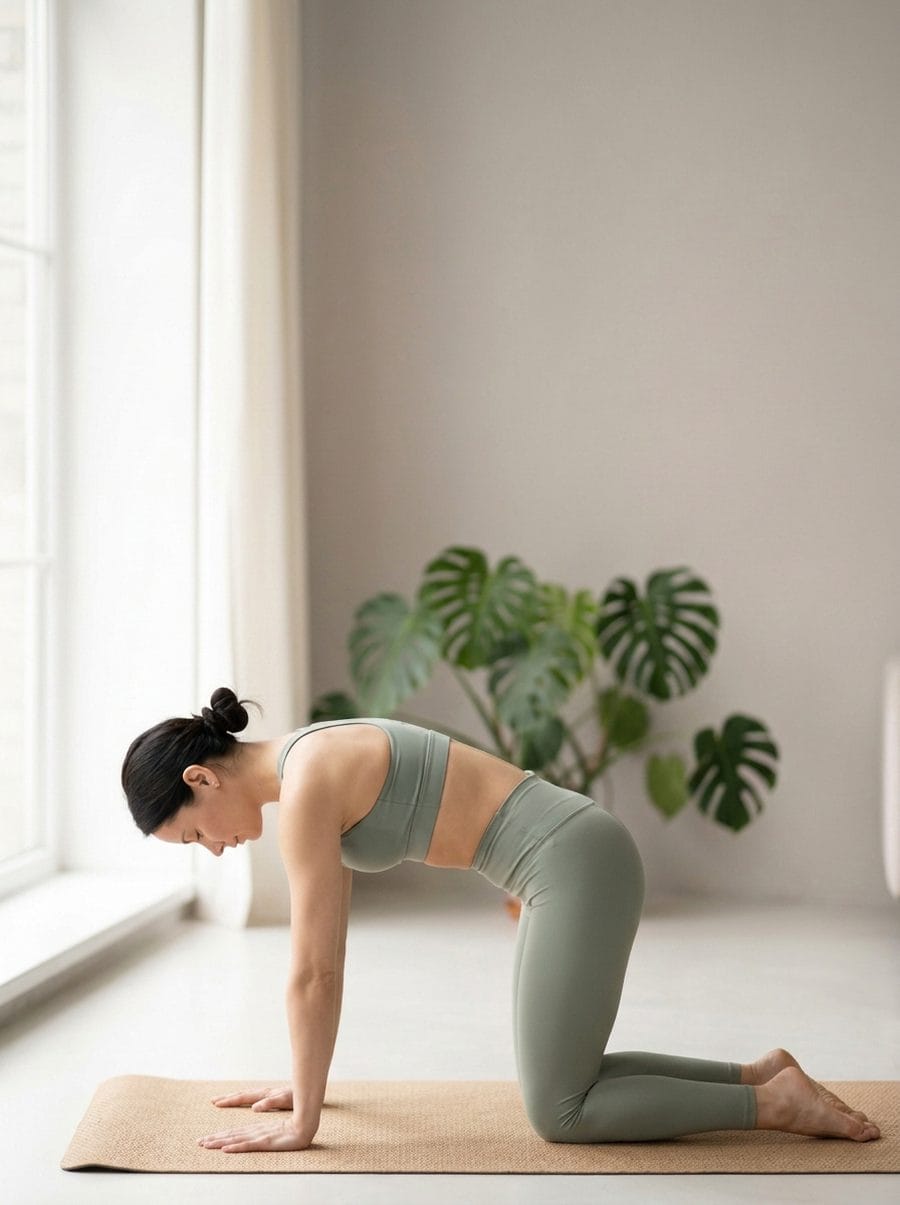
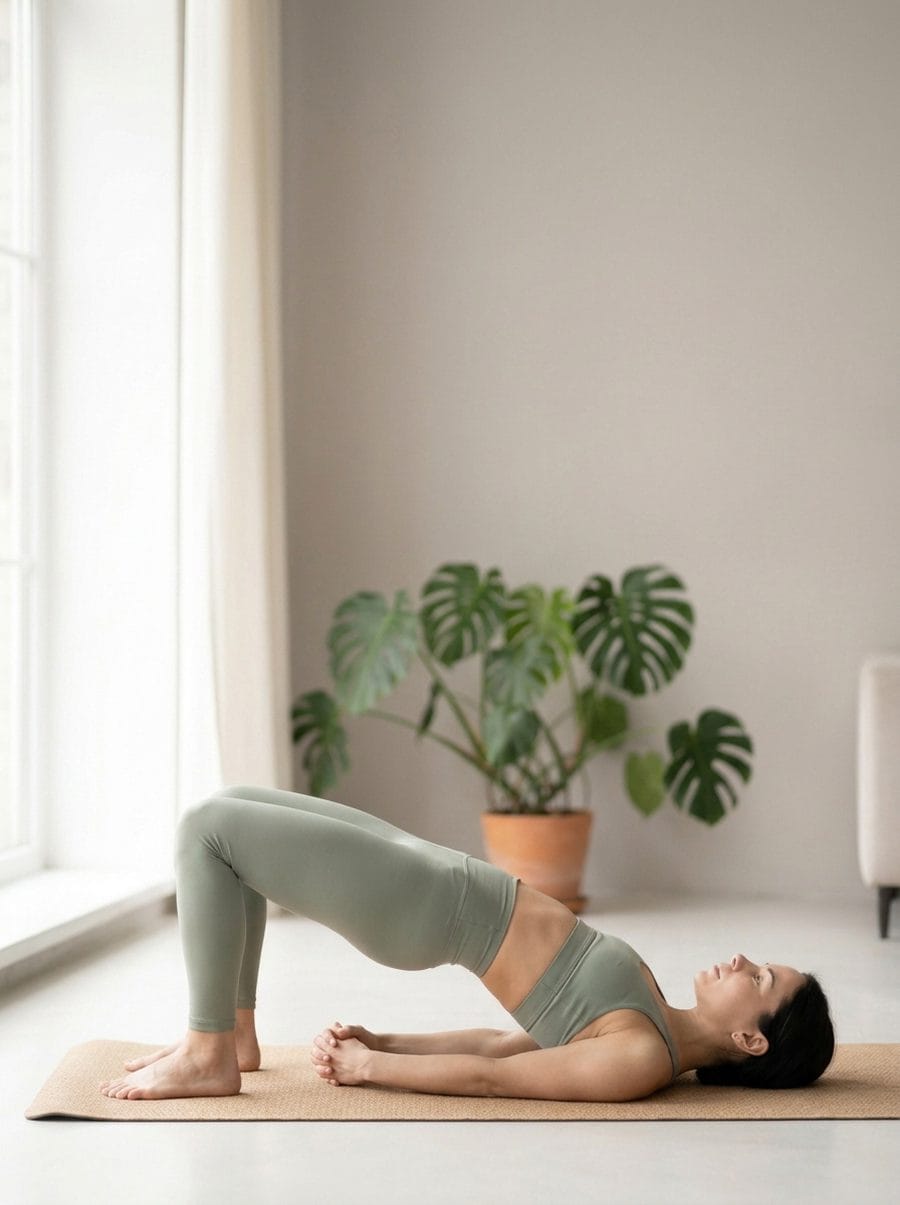
Cat-Cow warms up the spine, Bridge Pose builds the glutes and back muscles, and Child's Pose brings you back to stillness after effort. The app lists neck injuries and flare-ups of lower back pain as limits for Bridge Pose, and knee injuries for Child's Pose. In those cases, skip the pose.

When a hot flash hits: breathing
The app describes Cooling Breath (shitali) as a practice for heat and overheating. You inhale through a rolled tongue, pause briefly, and exhale through the nose on a 4-2-6 count. The app's limits for it are low blood pressure, chronic bronchitis and cold weather.
We didn't find studies of shitali for hot flashes specifically, so think of it as a way to steady your breath in a hot moment.
For the evening, Coherent Breathing is a good fit: a 5-second inhale and a 5-second exhale with no holds. Skull Shining Breath, with its rapid, forceful exhales, is ruled out if you have hypertension.
For hot flashes, the NHS also suggests simple measures: light clothing, a cool bedroom, a fan or a cool shower. Practice in a well-aired room and keep water nearby.
Sleep and mood: the Before Bed routine
This short evening routine has six poses, takes 10 minutes and never leaves the floor: Child's Pose, Reclining Butterfly Pose, Knees-to-Chest Pose, Supine Twist, Legs-Up-the-Wall Pose and Savasana.
With glaucoma or uncontrolled hypertension, the app says no to Legs-Up-the-Wall Pose. Still having periods? Then drop it on period days as well. There's more about evening practice in Yoga for Sleep.
How often to practice
Consistency beats length: two or three sessions a week of 15 to 20 minutes, plus walks on the other days. Standing poses fit well in the morning, and reclining poses and breathing in the evening. If you've never practiced before, begin with Yoga for Beginners and don't chase depth. Muscles and connective tissue adapt to new demands over time.
Safety and when to see a doctor
- Hypertension: no Standing Forward Fold, no Skull Shining Breath, and Box Breathing without the holds.
- Glaucoma: skip Downward-Facing Dog and Legs-Up-the-Wall Pose.
- Dizziness or a hot flash mid-practice: sit or lie down and breathe calmly.
See your doctor if you still have periods and the bleeding has become heavier rather than lighter, if you notice a racing or pounding heartbeat, or if you have any bleeding after 12 months without a period, even once and even just spotting. For general guidance on practicing safely, read Safety and Contraindications.
Pose cautions in this article
- Dizziness — practice near a wall (Tree Pose)
- Knee injuries (Warrior II, Chair Pose, Child's Pose)
- Flare-up of lower back problems (Chair Pose)
- Acute back pain (Cat-Cow)
- Wrist injuries — practice on your fists (Cat-Cow)
- Neck injuries (Bridge Pose)
- Flare-up of lower back pain (Bridge Pose)
- Pregnancy — widen your knees (Child's Pose)
- Groin discomfort — place supports under your knees (Reclining Butterfly Pose)
- Menstruation (Legs-Up-the-Wall Pose)
- Glaucoma (Legs-Up-the-Wall Pose)
- Uncontrolled hypertension (Legs-Up-the-Wall Pose)
This site is for general information and is not medical advice. If you have pain, an injury, a chronic condition, or are pregnant, check with a qualified professional before practicing.
Questions
Is yoga good for menopause? Yes, if your doctor hasn't ruled anything out. Calm standing and reclining poses, breathing practice and relaxation all fit. With hypertension, glaucoma or heart disease, some poses are left out.
Does yoga help with hot flashes? The evidence is mixed. In one meta-analysis, hot flashes eased with yoga compared with no intervention; a newer review found no difference from usual care. Both reported better sleep and mood.
What is the best exercise during menopause? A mix works best: standing poses for leg strength and balance, walking or weight training for your bones, and a calm practice with breathing in the evening.
How often should you do yoga during menopause? Start with two or three sessions of 15 to 20 minutes. Short, regular sessions do more good than occasional long ones.
Sources
- Cramer H, Peng W, Lauche R. Yoga for menopausal symptoms-A systematic review and meta-analysis. Maturitas, 2018.
- Wang H, et al. The effectiveness of yoga on menopausal symptoms: A systematic review and meta-analysis of randomized controlled trials. International Journal of Nursing Studies, 2025.
- NHS. Things you can do to help menopause and perimenopause symptoms and Symptoms of menopause and perimenopause. National Health Service, UK.
- Pose and breathing technique and cautions, and routine contents: the Hatha Yoga app. More on the How We Prepare Our Content page.
Read next
- Yoga for Arthritis and Osteoporosis: How to Protect Your Joints and Bones7 min read
- Ashtanga Yoga Explained: The Series, the Breath and the Difference from Hatha6 min read
- Ayurveda Explained Simply: The Basics and a Daily Routine (Dinacharya)5 min read
- Balance Exercises: 10 Yoga Poses for Balance and Stability7 min read