 Hatha Yoga
Noose Pose
Pāśāsana
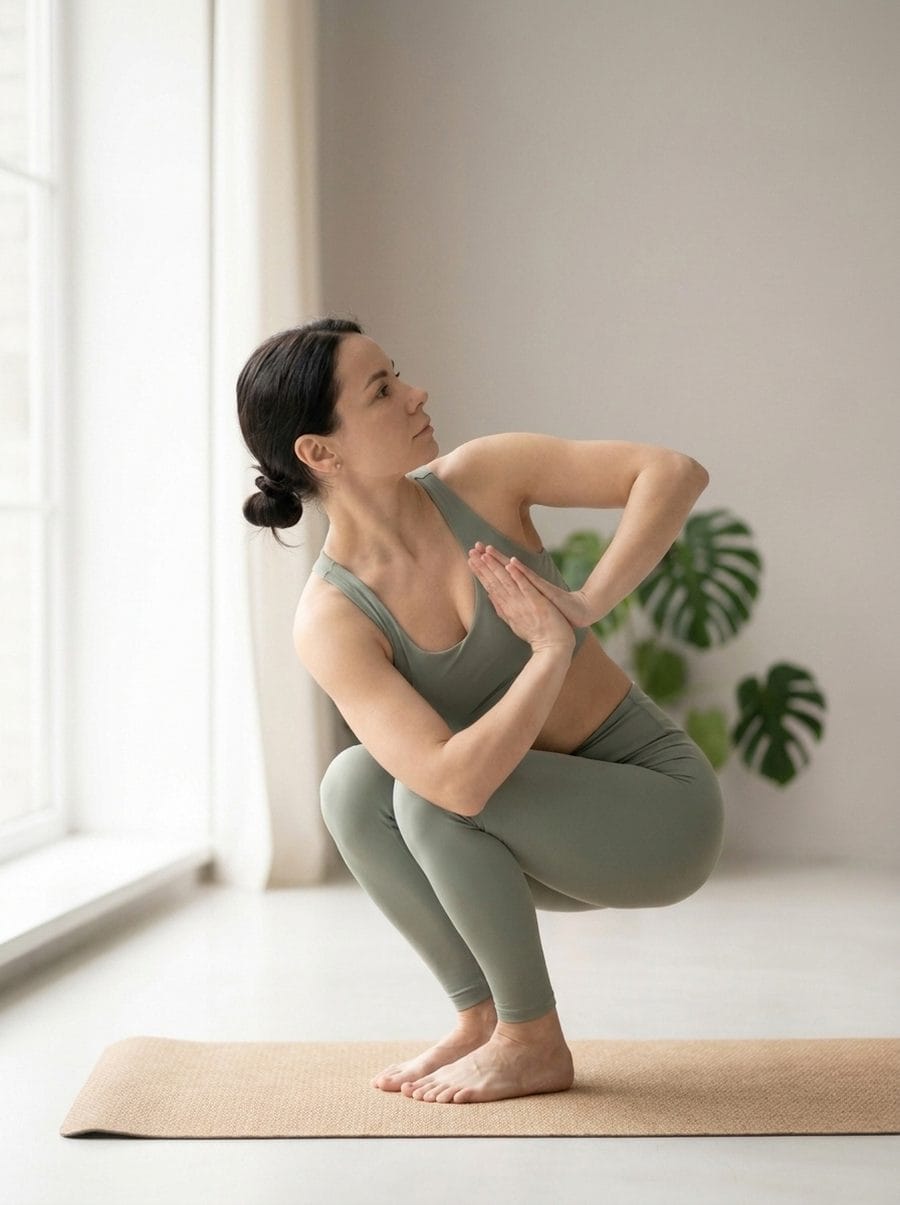
Pasasana, or Noose Pose, is a twist in a deep squat: feet together, one shoulder hooked outside both knees, and your arms wrapping around your legs to meet behind your back like a tightened noose. Advanced level; the card gives each side 30 seconds.
Deep Backbend includes it near the end, after Wheel Pose, for 35 seconds.
How to do it
- EnterLower into a deep squat with your feet together. Twist to one side, bring the opposite shoulder outside your knees, and wrap your arms around your legs, clasping your hands behind your back.
- HoldYour heels reach toward the floor. If needed, place a blanket under them. With each exhale, the twist gently deepens from your lower belly.
- ExitRelease your arms, come back to a squat facing forward, and switch sides.
More detail
Check your squat first. In Garland Pose the feet are wider; here they come together, which is noticeably harder. If your heels hover above the floor, slide a rolled blanket under them, as the app recommends. Squeeze your knees together, lengthen as you breathe in, then rotate as you breathe out and work the opposite shoulder as far past your knees as you can, pressing your side against your thighs.
The lower arm wraps around your shins, the upper arm sweeps behind your back, and your hands find each other. A halfway version without the bind: palms together at your chest, elbow pressing against the outside of the knee.
Benefits
A twist in a squat: deep work for the spine and ankles.
Pasasana combines a deep squat with a twist: your ankles and hips work on mobility, your spine rotates close to its limit, and the bound arms open your shoulders. In Deep Backbend it follows a run of backbends and balances them with spinal rotation.
Cautions
- Spinal disc herniation
- Knee injuries
- Pregnancy
This site is for general information and is not medical advice. If you have pain, an injury, a chronic condition, or are pregnant, check with a qualified professional before practicing.
Common mistakes
- Letting your knees drift apart. Keep knees and feet together, or your shoulder has nothing to press against.
- Tipping backward. Weight slightly forward, heels supported.
- Forcing your hands together. Use a strap.
- Twisting only your shoulders. The turn starts low in your belly.
Where it appears
- Deep Backbend 35 min · Advanced
Similar poses
Questions
What does Pasasana mean? "Pasha" means noose or lasso. Your arms, wrapped around your legs and clasped behind your back, cinch the body like a noose.
What if my hands can't clasp behind my back? Hold a strap with both hands, or stay in the version with palms at your chest and elbow outside the knee. The bind comes as the twist deepens and your shoulders open.
Who shouldn't do Noose Pose? The app lists three contraindications: spinal disc herniation, knee injuries and pregnancy. Any one of them means you should skip the pose.
Updated: