 Hatha Yoga
How to Relax: Relaxation Techniques for Body and Mind
Hatha Yoga editorial team · Updated · 6 min read

Telling yourself to "just relax" almost never works: the tension lives in your body, and pep talks don't reach it. What does work are simple techniques that act through your breath and muscles. This guide gathers proven relaxation methods: breathing with a longer exhale, a body scan, progressive muscle relaxation and gentle yoga poses.
You'll also get short 1-, 5- and 15-minute options for when you need to unwind fast after work or before bed.
What relaxation actually means
Relaxation is the opposite of the stress response. Under stress, your breathing speeds up, your muscles brace for action and your heart beats faster. When you relax, everything moves the other way: breathing slows, heart rate and blood pressure drop, and muscles let go of extra tension.
The US federal agency NCCIH calls this the relaxation response and describes relaxation techniques as ways to bring it on.
Many people don't notice how tense they are. Check yourself right now: is your jaw clenched, are your shoulders creeping up, are you breathing only into your upper chest? If even one answer is yes, the techniques below are for you.
Relaxing is a skill: the more often you practice it, the faster your body finds its way back.
Breathing: the fastest way to relax
Your breath is the one thing you can change within a minute, anywhere. The ground rule: breathe out for at least as long as you breathe in, and ideally longer.
- Full Yogic Breath. 4 seconds in, 6 seconds out; the belly fills first, the ribs next, the chest last. 5 minutes.
- Coherent Breathing. A steady rhythm: 5 seconds in, 5 seconds out. For stress, the UK's NHS suggests a very similar exercise: breathe gently into your belly, counting slowly to five as you inhale and again as you exhale, for at least 5 minutes.
- Bee Breath. Inhale for 4, exhale for 8 with a soft hum. A good fit for evenings. Avoid it while an ear is inflamed.
For more detail, see Breathing Exercises for Beginners.
Body scan meditation, step by step
A body scan teaches you to notice tension in places you didn't realize were tight. It's easiest lying on your back in Relaxation Pose with a blanket over you. Plan on about 10 minutes.
1. Lie down, arms a little apart from the body, palms facing up. Take three slow exhales. 2. Bring your attention to the toes of your left foot. What do you feel there: warmth, coolness, the touch of your sock, tingling, or nothing at all?
Any answer is fine. 3. Slowly move your attention upward: foot, shin, knee, thigh. Then the right leg, pelvis, belly, lower back, chest and upper back. 4. Hands, forearms, shoulders, neck. Linger on your face: forehead, eyes, jaw, tongue. 5.
If you find a tight spot, don't force it to release. Simply send your exhale there and let it soften. 6. At the end, feel your whole body at once, rest for a minute, roll onto your side, and only then sit up.
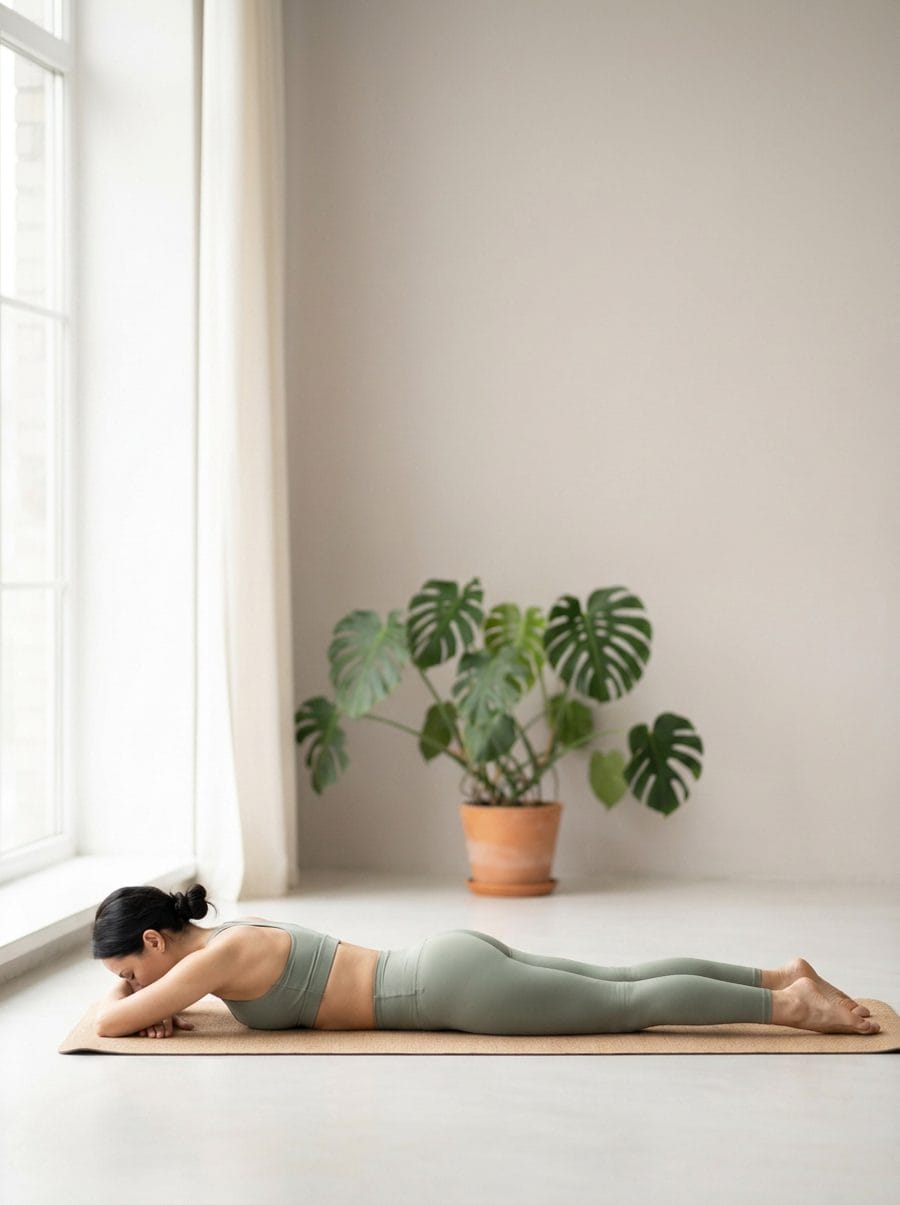
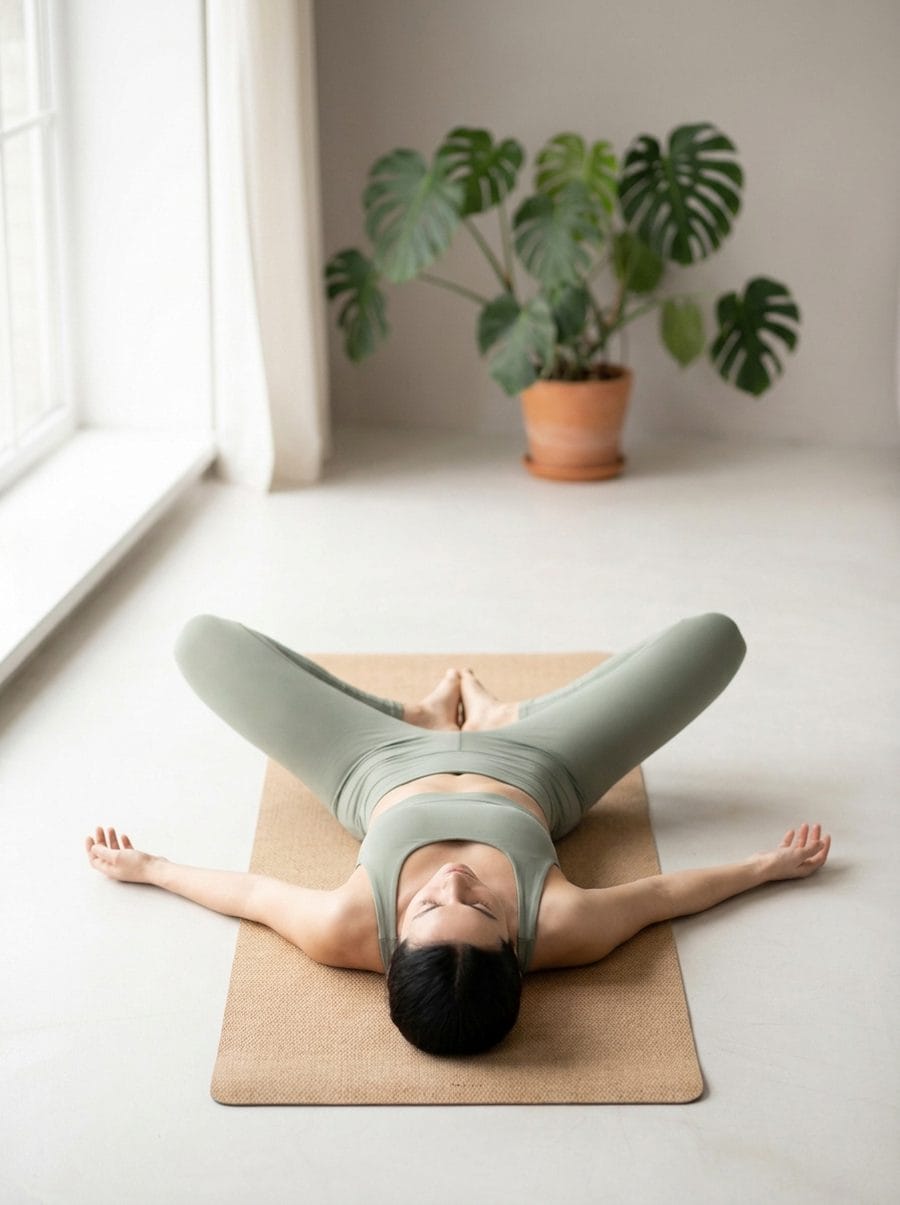
If your mind drifts into thoughts, go back to the body part where you left off. If lying on your back is uncomfortable, Crocodile Pose on your belly works too. Reclining Butterfly Pose with pillows under your knees is another good position for a scan.
Progressive muscle relaxation
Progressive muscle relaxation (PMR), often called the Jacobson method, works in reverse: you tense your muscles first, then release them and notice the difference. It's a good method if relaxing "on command" feels impossible.
- Lie down or sit comfortably. Tense your feet by curling your toes for about 5 seconds at half effort.
- Let go all at once, and for 15 to 20 seconds notice the muscles growing warm and heavy.
- Repeat the same pattern with your calves, thighs, glutes, belly, hands made into fists, arms, shoulders lifted toward your ears, and face.
- Keep breathing while you tense. Skip any injured areas, and if a muscle starts to cramp, ease off.
Finish with a couple of minutes of lying still. Paired with a body scan, this makes a complete evening relaxation session.
Yoga poses for relaxation
The poses below take almost no effort: the floor carries your weight and the breath gets deeper on its own. Stay in each one for one to three minutes.
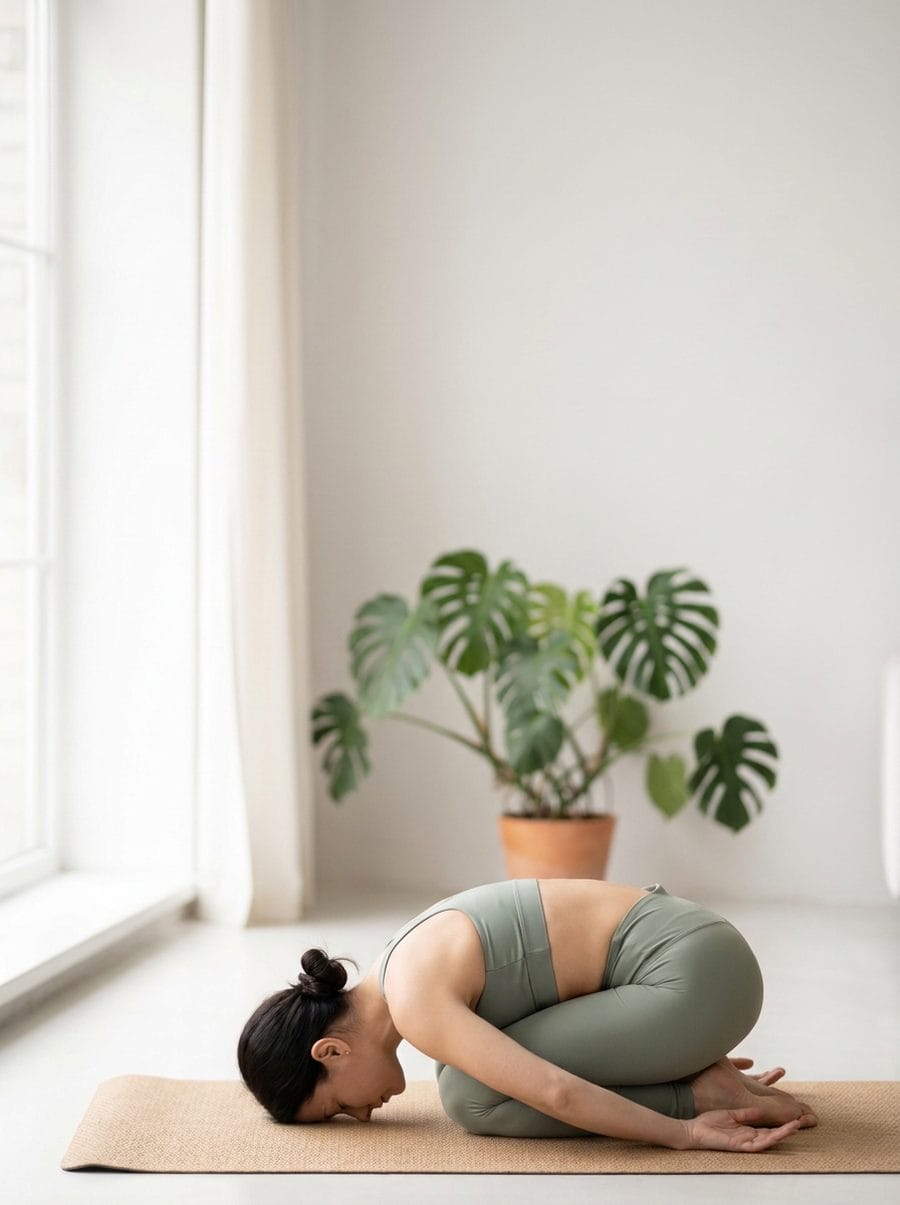
- Child's Pose. Forehead on the floor or a pillow, arms alongside your body. Your back rounds gently.
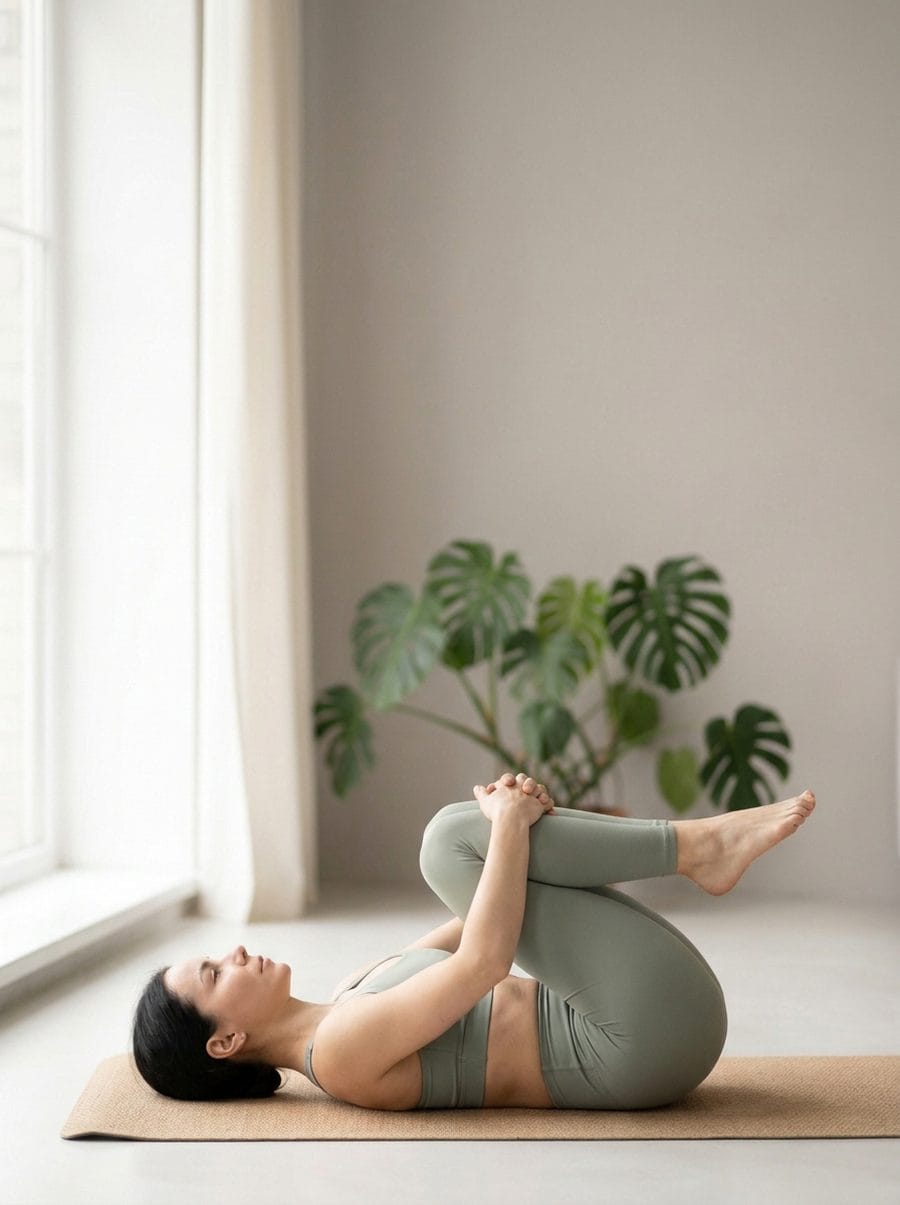
- Knees-to-Chest Pose. Hug your knees and rock a little from side to side to ease your lower back.
- Legs-Up-the-Wall Pose. Hips on a pillow, legs up the wall. A welcome rest after a day on your feet.
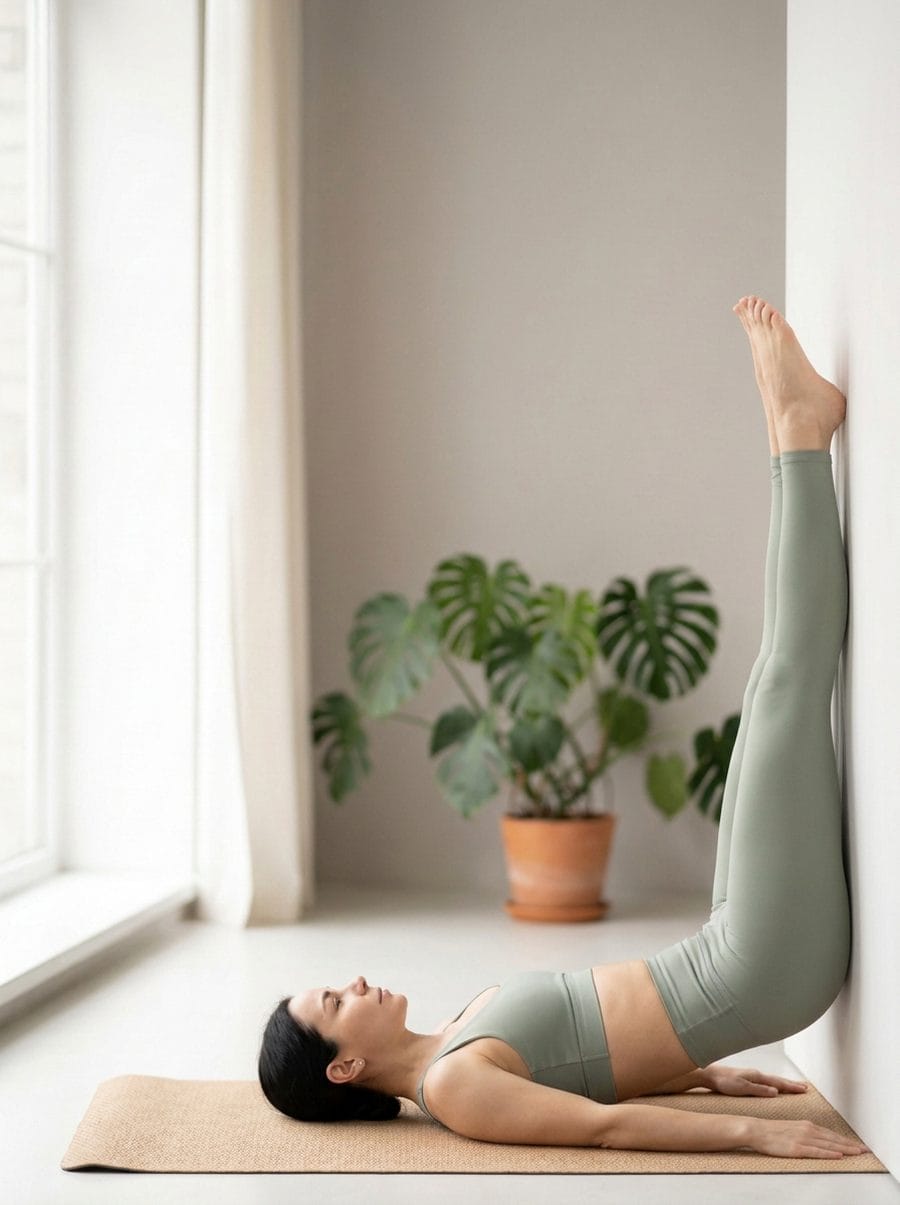
For evenings when you're completely drained, try the app's Low-Energy Day program. It lasts 14 minutes and has no standing poses at all: you sit, loosen your neck and shoulders, move your spine gently, rest on your belly, and finish with a long rest, legs up the wall, followed by close to four minutes of savasana.
How to relieve stress quickly: 1, 5 and 15 minutes
- 1 minute. Drop your shoulders, unclench your teeth, let your tongue rest on the floor of your mouth. Take three exhales that are longer than your inhales.
- 5 minutes. Coherent Breathing while seated, or Child's Pose while you feel your breath widen your back.
- 15 minutes. A short body scan or the Low-Energy Day program.
Before bed, stick with lying-down poses and a long exhale; there's more in Yoga for Sleep. If stress has been building for weeks, read Yoga for Anxiety and Stress.
Safety
For healthy people, relaxation techniques are generally safe. According to NCCIH, though, they occasionally trigger unpleasant reactions: more anxiety, intrusive thoughts, or a fear of losing control. There are also rare reports of symptoms getting worse in people with epilepsy, certain psychiatric conditions, or a history of abuse or trauma.
If that applies to you, choose a technique together with a professional.
Now the pose cautions. Per the app data, Legs-Up-the-Wall Pose does not suit menstruation, glaucoma or uncontrolled hypertension. Leave out Child's Pose with a knee injury; during pregnancy, widen your knees in it. From the second trimester on, don't lie on your belly in Crocodile Pose, and in Knees-to-Chest Pose the knees must open wider than the belly; otherwise leave the pose out. More in Safety and Contraindications.
Pose cautions in this article
- Pregnancy from the second trimester onward — the pose is done lying on the belly (Crocodile Pose)
- Groin discomfort — place supports under your knees (Reclining Butterfly Pose)
- Pregnancy — widen your knees (Child's Pose)
- Knee injuries (Child's Pose)
- Pregnancy from the second trimester onward — take your knees wider than your belly or skip the pose (Knees-to-Chest Pose)
- Menstruation (Legs-Up-the-Wall Pose)
- Glaucoma (Legs-Up-the-Wall Pose)
- Uncontrolled hypertension (Legs-Up-the-Wall Pose)
This site is for general information and is not medical advice. If you have pain, an injury, a chronic condition, or are pregnant, check with a qualified professional before practicing.
Questions
How can I relax my body and mind quickly? Take a few slow breaths with exhales that outlast the inhales, and let your shoulders drop. Within a minute or two, your breathing and pulse will slow down.
What's the difference between a body scan and progressive muscle relaxation? In a body scan, you only observe your body. In progressive muscle relaxation, you tense the muscles first and then release them, so the contrast is easier to feel.
How do I unwind after a stressful workday? Choose a gentle floor practice with no standing poses, such as the Low-Energy Day program, and end with a few minutes of body scan.
What if I just can't relax? Start with movement or with progressive muscle relaxation: tensing and releasing is easier than lying still. If the tension doesn't fade for weeks, talk it over with your doctor.
Sources
- NCCIH. Relaxation Techniques: What You Need To Know.
- NHS. Breathing exercises for stress.
- Pose technique and cautions, pranayama rhythms, program contents: the Hatha Yoga app. How we verify our texts is explained on the How We Prepare Our Content page.
Read next
- Yoga for Arthritis and Osteoporosis: How to Protect Your Joints and Bones7 min read
- Ashtanga Yoga Explained: The Series, the Breath and the Difference from Hatha6 min read
- Ayurveda Explained Simply: The Basics and a Daily Routine (Dinacharya)5 min read
- Balance Exercises: 10 Yoga Poses for Balance and Stability7 min read